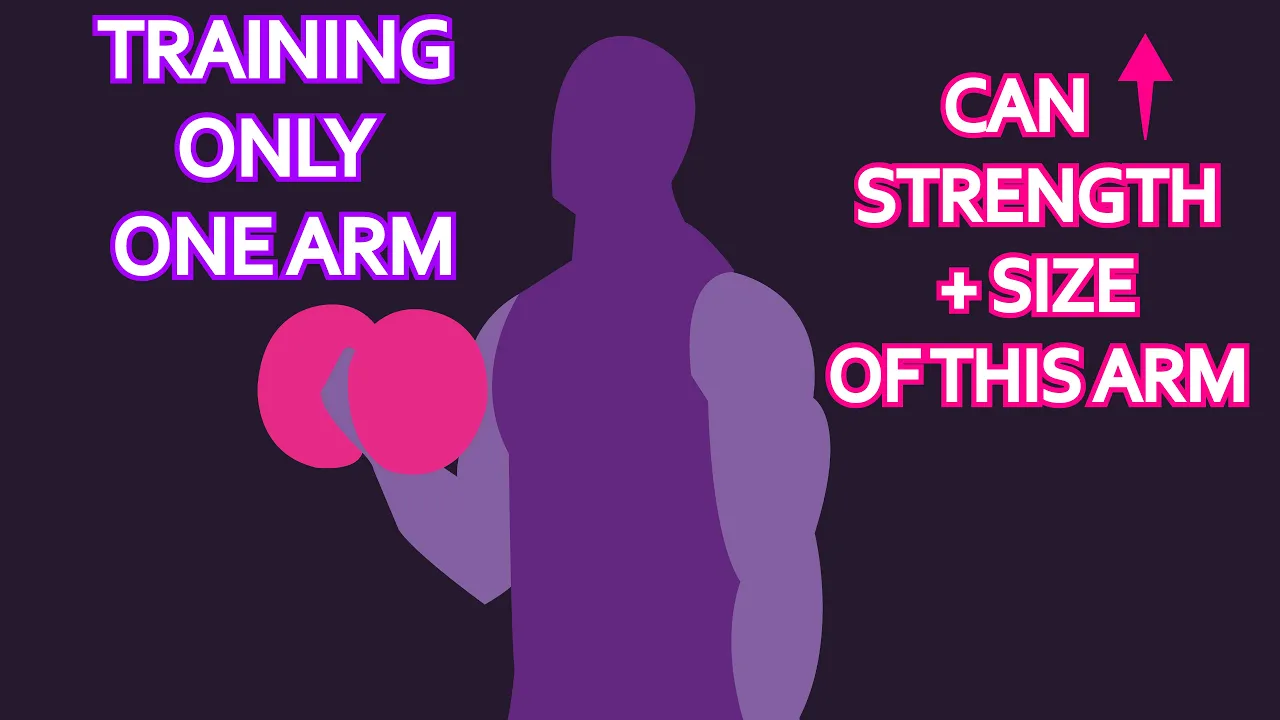
cross-education is the term given to the increase in strength and potentially even size of an opposite limb after training only one limb for example let's say you trained only your left arm with dumbbell bicep curls for the next few months before and after doing this you test a one rep max dumbbell biceps curl with your left arm and right arm additionally you measure the size of both of your biceps the left arm the arm you trained would of course experience increases in strength and size however despite you not training the right arm it will also likely experience some increases in strength and perhaps even some size this is cross-education there are many other synonyms for cross-education like the contralateral effect cross-limb transfer interlimb transfer bilateral transfer and many others i'm sure many would be questioning the mechanisms behind cross-education how is it possible that training only one limb results in strength and potentially size gains in an opposite limb that you did not train we'll explore the potential mechanisms a little later but first let us explore just how much strength and size gains we might expect with a cross-education effect let's first explore strength gains a meta-analysis by manca and colleagues gives us an insight into this area by the way meta-analyses are studies that combine the results of numerous individual studies that address the same topic 31 studies were included in this meta-analysis the average duration of these studies was around five and a half weeks they range from only three weeks to 12 weeks in duration so keep this in mind when interpreting the results based on the 31 studies the untrained opposite limb which could be the muscles of an arm or leg experiences an 11. 9 percent increase in strength straight away we can see this is a meaningful strength increase but it would also be useful to know the strength increase for the trained limb as this would allow us to make comparisons between the two percentages unfortunately this meta-analysis did not report the average strength increase for the trained limb nonetheless from the 31 studies i decided to go out and collect the percentage increases in strength for the trained limb i should note that this isn't exactly the way meta analytics do it there is a little more detail to it but it should give us a rough idea of what we are after out of the 31 studies there were five studies i could not get the data from this was either because i could not get access to the paper or because they did not report the strength increase for the trained limb from the 26 studies i looked at on average training one limb resulted in a 27. 6 increase in strength for that limb putting it all together training one limb increases the strength of that limb by 27.
6 while the opposite limb that you did not train at all experiences an 11. 9 increase in strength we mustn't get carried away with these numbers simply because the 31 studies these numbers are from are quite divergent some studies had participants train the muscles of one side of their upper body whereas other studies had participants train the muscles of one side of their lower body contraction modes also varied some studies use typical exercises that involve concentric and eccentric phases called isotonic exercises some used concentric early training others with eccentric only training and even some with isometric only training fortunately this meta-analysis included sub-analyses that looked at these various areas when isolating the studies that looked at training one side of the upper body the train side experienced a 24. 3 increase in strength while the untrained side experienced a 9.
4 increase in strength when isolating the studies that looked at training one side of the lower body the train site experienced a 30. 9 increase in strength while the untrained side experienced a 16. 4 percent increase in strength note the percentage increases given for the train site is from my analysis detailed earlier not the meta analysis nevertheless it's apparent that the cross-education effect is more pronounced with the lower body for contraction type training one side of your body isometrically resulted in a 22.
9 increase in isometric strength for that side the untrained side experienced the 8. 2 increase in isometric strength training one side of your body concentrically resulted in an 11. 3 increase in concentric strength for the opposite side of your body unfortunately from the 26 studies i assessed none looked at concentric only training so i could not calculate the average increase for the trained limb training one side of your body eccentrically resulted in a 17.
7 percent increase in eccentric strength for the opposite side of your body unfortunately from the 26 studies i assessed only three looked at eccentric only training and the percentage increased from each very dramatically meaning it was not sensible to average them out isotonic training resulted in a 15. 9 percent increase in strength for the untrained limb the trained side based on my analysis experienced a 33. 1 increase in strength so overall eccentrically overloading one side of your body results in relatively the greatest cross-education effect the meta-analysis also found somewhat of a correlation between the strength gained in the trained limb and the strength gained in the untrained limb implying that the greater strength gain you experience for your trained limb the greater strength gain the untrained limb would experience let's now move on to muscle size unfortunately there are no meta-analyses looking at cross-education and muscle size but nonetheless i went out and searched for as many studies as i could assessing how training one name can impact the size of the untrained opposite limb i found 11 studies of these four found that the untrained limb did experience growth but the remaining seven found no growth of the untrained limb of these seven studies three of them did not find growth of the trained limb either in other words the protocols used in these three studies were likely not sufficient to induce muscle growth the other four studies did find growth of the trained limb but no growth of the untrained limb so when looking at the current evidence although some evidence suggests that untrained limb does not experience growth we do have full studies suggesting growth may occur in untrained limb let's get a quick overview of these four studies in hope of drawing some conclusions brown and colleagues had 14 elderly untrained men perform unilateral elbow flexions or two to four sets three times per week for 12 weeks cross-sectional area of the trained elbow flexors increased by 17.
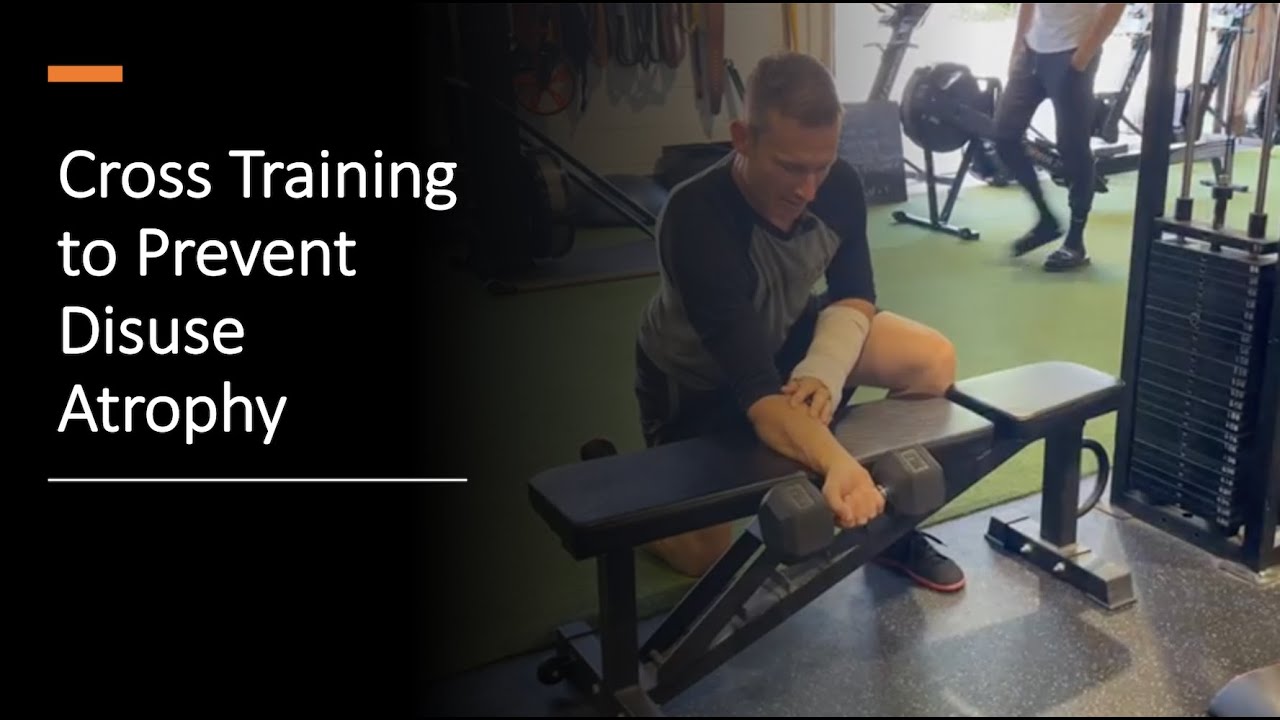
4 percent while cross-sectional area of the untrained elbow flexes increased by 7. 2 percent bezara and colleagues had 10 untrained subjects before maximal isometric knee extensions with their right leg three times per week for six weeks unfortunately they did not provide the actual numbers but they did present a graph looking at the graph we can see that as expected the right leg experienced significant increase in quadriceps cross-sectional area however for the left leg although it was not classified as statistically significant we can still see there was slight increase in quadriceps cross-sectional area magnus and colleagues split 23 untrained subjects into a training group or a control group training group trained one side of their body with a variety of shoulder exercises three times per week for four weeks thickness of the supraspinatus and anterior deltoid increased by a significant amount for the trained side the untrained limb did not experience any supraspinatus growth but there was some anterior deltoid growth despite it not being statistically significant lastly bayer and colleagues split 17 untrained men into a training group or control group the training group trained their dominant leg with a unilateral leg extension for three sets three times per week for four weeks thickness as well as cross-sectional area was measured for the vastus lateralis and rectus femoris as expected significant increases were observed for all measures done on the trained leg as for the untrained leg although the increases were not statistically significant we can see some increases in measurements mainly with the thickness and cross-sectional area of the vastus lateralis so overall we do have some evidence that an untrained limb can grow in response to training the opposite limb but the amount of growth does not seem to be much it only appears to be a slight increase in muscle size moreover the four studies were conducted on untrained individuals although i could not find any research on trained individuals i think it's very likely they would experience smaller increases in muscle size or perhaps even no growth with cross-education one of the real world applications of the cross-education effect is when you injure one side of your body if your injury is severe enough it may need to be put in a cast meaning it is immobilized immobilizing a limb for an extended period often results in strength and size decreases for the muscles in that immobilized limb training the limb that is not immobilized can help attenuate any strength and size loss that may have occurred in the opposite immobilized limb thanks to the cross-education effect none of the studies we have looked at so far in this video had participants immobilized their untrained limb in all of the studies participants continued using their untrained limit in normal life nevertheless there do exist studies investigating the cross-education effect when the opposite untrained limb is put in a cast a review paper by andrew andrewsko and colleagues assess the research in this area five studies have investigated how training one arm can impact the size and strength of an opposite immobilized arm all five of these studies had a control group for comparison purposes these control groups had one arm immobilized but they did not train either of their arms note i am indeed saying arm as far as i'm aware there are no studies assessing the effects of cross-education when one leg is immobilized let's first look at strength when averaging out the five studies the training groups experienced a 26 increase in strength for the trained arm for the opposite immobilized untrained arm they experienced a 4. 6 increase in strength the control groups on average experienced a 2.
5 decrease in strength for their non-immobilized arm and a 13. 3 percent decrease for their immobilized arm therefore cross-education not only attenuated strength loss for the immobilized arm but it also helped to increase strength these five studies were conducted on untrained individuals i think it's highly likely that if they were well trained cross-education would probably not increase strength of the immobilized limb but it likely would go some way to attenuating any strength loss moving on to muscle size the training groups experienced a 3. 9 increase in size for the trained arm and a 0.
2 increase in size for the opposite untrained immobilized arm the control groups experienced a 0. 6 decrease in size for the non-immobilized arm while their immobilized arm decreased in size by 3. 8 percent therefore training one arm was effective at pretty much maintaining the size of the opposite immobilized arm again the subjects were untrained with trained subjects i'm not sure if training one limb would be effective at maintaining the muscle mass of an immobilized limb but it probably would go some way to minimizing decreases in muscle mass okay let's now explore the potential mechanisms behind the cross-education effect let us start with muscle size there are two hypotheses i've come across the first hypothesis relates to hormones the second relates to mirror activity let's explore the first hypothesis muscle growth can simply be thought of as a result of muscle protein synthesis exceeding muscle protein breakdown over time at the cellular level an increase in protein synthesis as well as a decrease in protein breakdown is a result of various signaling pathways signaling pathways are where various proteins interact in a chain reaction fashion and in our case would result in a synthesis of proteins or more simply the creation of the proteins that make our muscles bigger moreover some proteins as part of signaling pathways can inhibit the activation of other proteins one particular pathway involved in muscle hypertrophy is the pi3k akt mtor pathway a protein called pi3k activates a protein called akt akt then activates m2c1 which is a protein complex m2c1 can activate s6k1 s6k1 then initiates muscle protein synthesis in ribosomes ribosomes can be considered the factory in which proteins are created this particular pathway can also decrease muscle protein breakdown akt is thought to inhibit foxoproteins these foxoproteins are involved in muscle protein breakdown i should note this is a fairly simplified view of this pathway but for this video it will suffice so how are signaling pathways initiated one way is through hormones lifting weights temporarily elevates the levels of various anabolic hormones such as growth hormone igf-1 and testosterone growth hormone is believed to primarily exert its anabolic effects through its stimulation of igf-1 production from the liver igf-1 binds to igf-1 receptors on the membrane of muscle fibers this binding initiates the p13k akt m2 pathway similarly i've come across evidence suggesting testosterone could play a role in initiating this pathway too through binding to a different receptor also testosterone is thought to bind to androgen receptors within the muscle fiber this event is also thought to play a role in muscle growth when performing unilateral resistance training these anabolic hormones could be released into circulation and they could potentially through the events just discussed induce growth in the opposite untrained limb however there are no worthy limitations to this proposed mechanism multi-joint exercises that involve large amounts of muscle mass result in the circulation of these anabolic hormones single joint exercises such as the ones that would be used during unilateral training and hope of eliciting the cross-education effect hardly if at all result in the circulation of these anabolic hormones moreover even if unilateral single joint exercises did result in the circulation of anabolic hormones there does not appear to be much of a correlation between acute hormonal responses and muscle hypertrophy meaning that despite the logical rationale behind why exercise-induced elevations and anabolic hormones may contribute to growth the weight of the current evidence suggests that training programs that elicit high elevation of those various anabolic hormones hardly if at all produce greater muscle growth than training programs that do not elicit much elevations in anabolic hormones on to the second hypothesis mirror activity refers to the phenomena that during unilateral resistance training the corresponding opposite muscle not being trained experiences slight activation magnus and colleagues found that during isometric training for one biceps brachii the opposite biceps brachii not being trained which was immobilized was activated at 3.
1 percent of the biceps brachii being trained similarly during isometric training for the triceps brachii the opposite triceps brachii not being trained which was immobilized was activated at 6. 1 percent of the triceps brachii being trained another study by andrewsko and colleagues found that during unilateral wrist flexor training the opposite wrist flexors not being trained which was immobilized was activated at 5.