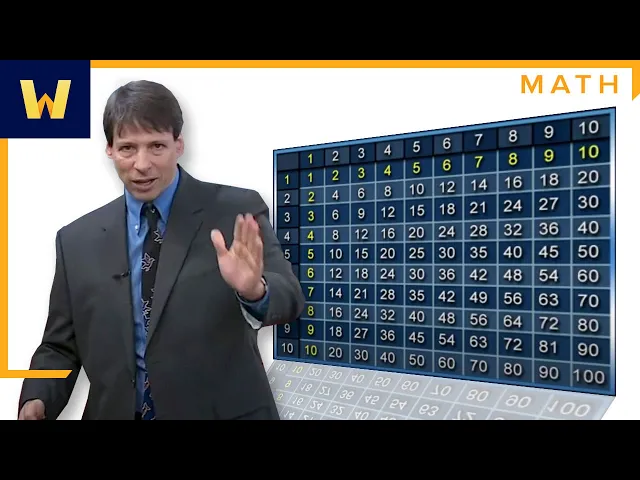
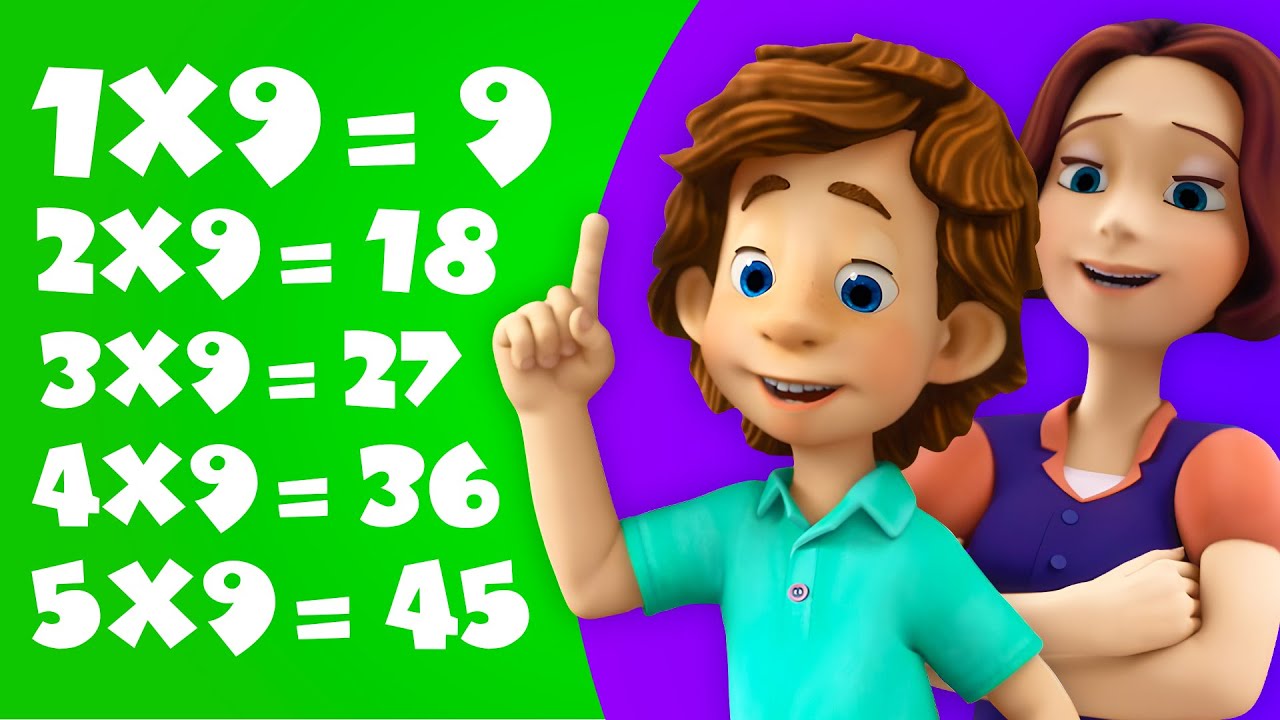
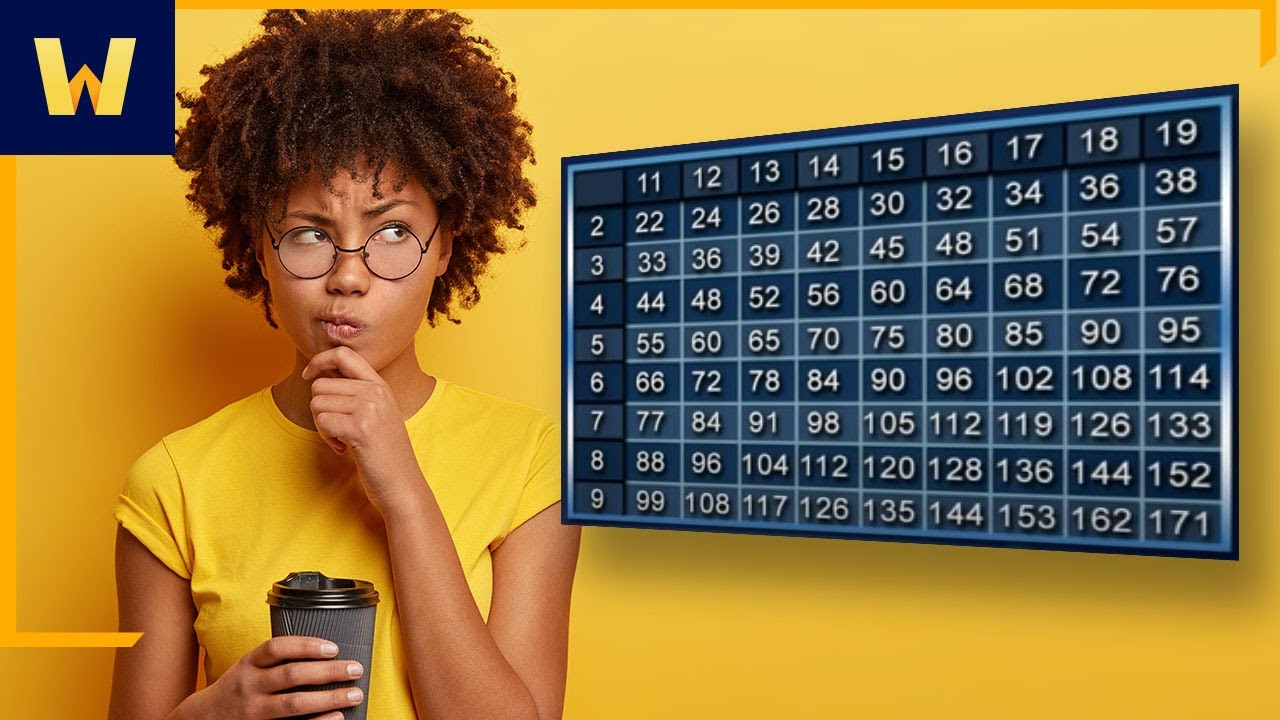
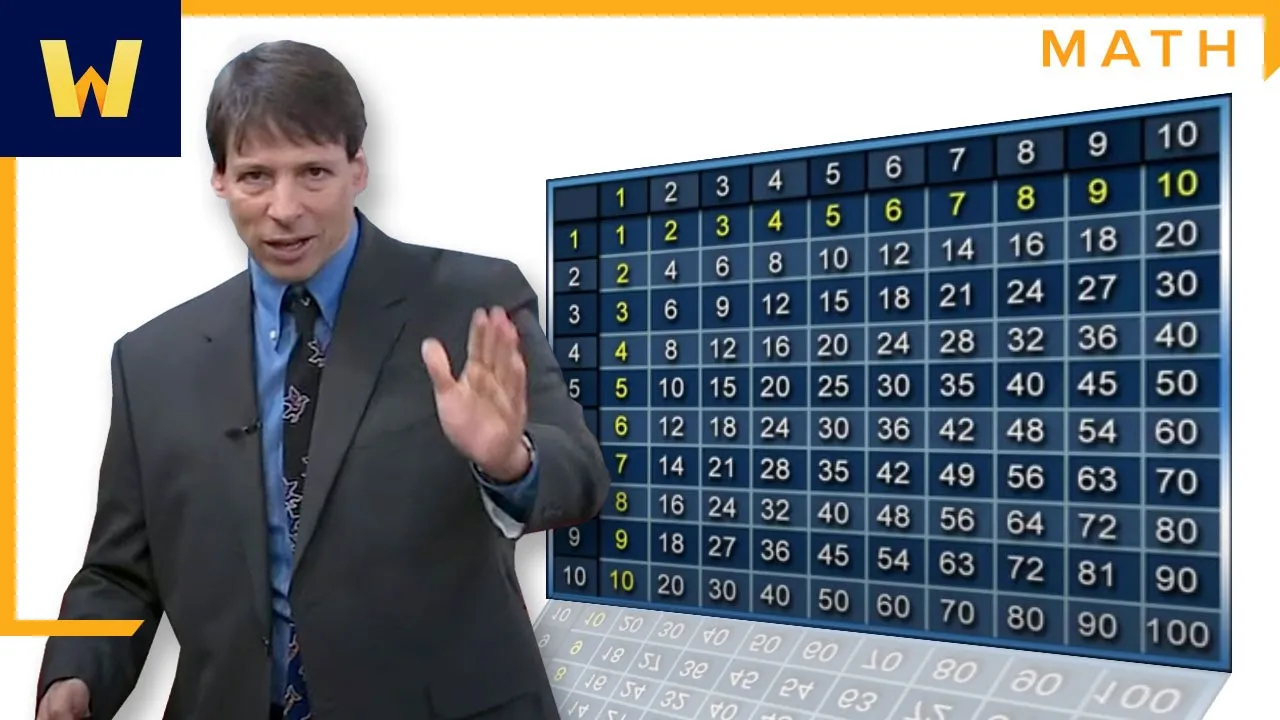
the multiplication table seems to be quite imposing after all it contains a hundred facts look at it how could any child be expected to memorize that and yet i claim that more than half the table takes no time to learn it's obvious how to multiply numbers by 1 and multiply numbers by 10 and multiplying by 2 is just an easy addition problem right 6 times 2 is just like 6 plus 6 12. so if you eliminate 1 2 and 10 we've reduced the problem to memorizing a 7 by 7 table which has only 49 entries in my experience the stumbling block for students memorizing the multiplication table is learning their multiples of three and four once you know that there's really not that much more to learn i teach students their multiples of three by first counting by threes 3 6 9 12 and so on and then we do it faster and then we do it faster and eventually it's 3 6 9 12 15 18 21 24 27 30. then i'll ask them 3 times 1 is 3 times 2 is 3 times 3 is in order so they they associate the multiplication problem with the sequence they've just learned and then we do it in mixed up order until eventually they know their threes table i teach the multiples of four in the same way we learn to count by fours and eventually do it very quickly for a 12 16 20 24 28 32 36 40 and that leads to learning 4 times 1 4 times 2 4 times 3 in order then eventually out of order and learning the multiples of five is even easier since every multiple of five ends in five or zero there's also a simple trick to multiplying by nines you'll notice that the multiples of nine have the property that their digits add up to the number nine right like nine times two is eighteen and one plus eight is nine nine times three is twenty seven two plus seven is nine the digits of 36 three plus six add up to nine and so on also the first digit is one less than the multiplier so nine times two begins with one and nine times three twenty-seven begins with two nine times four thirty-six begins with three and so on so a problem like nine times 4 since it will begin with 3 and it will end so the digits add up to 9 we can figure out the second digit which is 6.
so 9 times 4 is 36. once we know the multiples of 1 2 3 4 5 9 and 10 this reduces the multiplication table to a tiny three by three square and people find it easy to learn the one digit squaring problems 6 times 6 is 36 7 times 7 is 49 and 8 times 8 is 64.