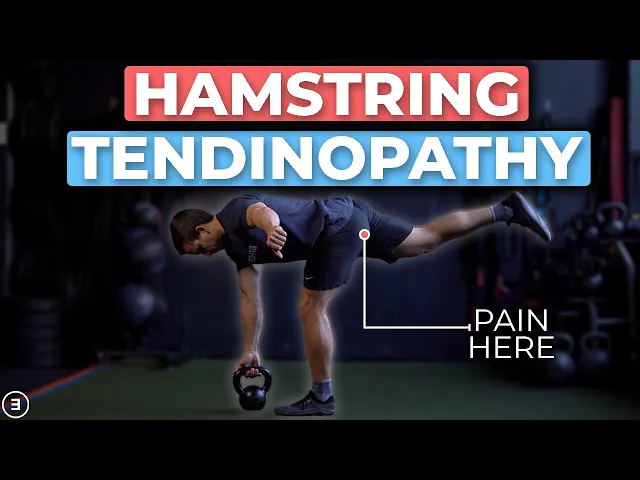
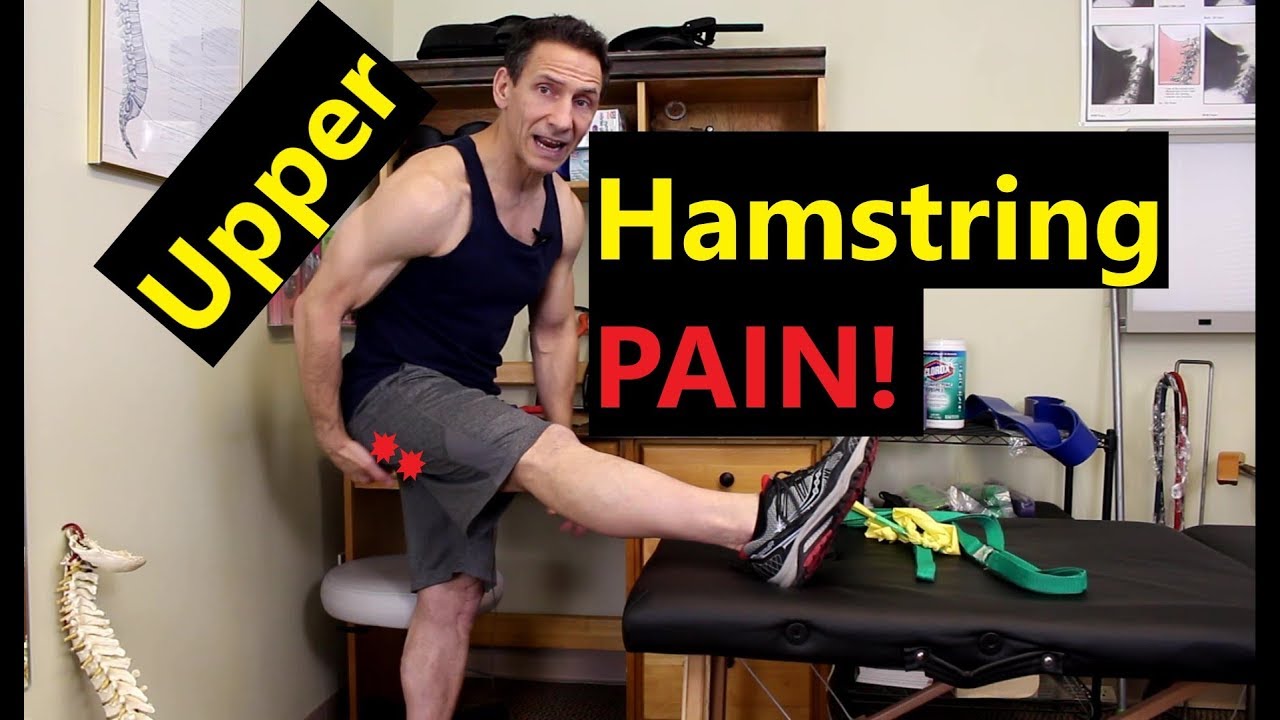
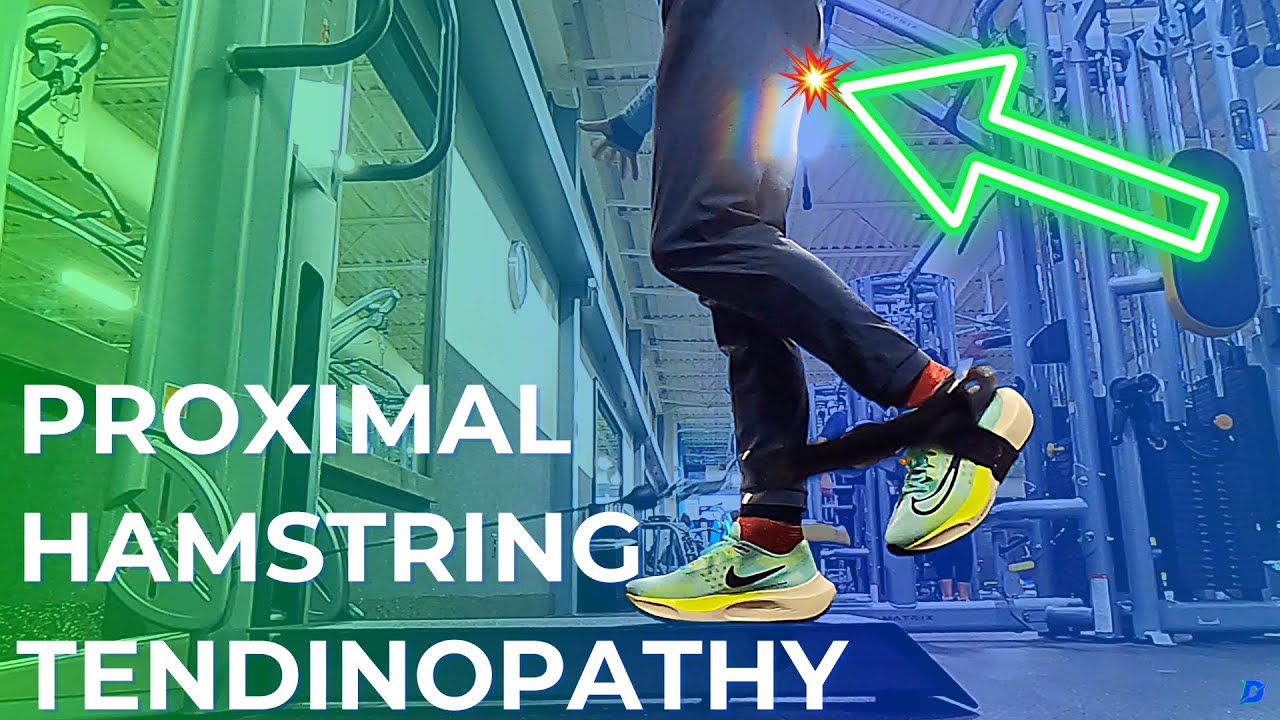
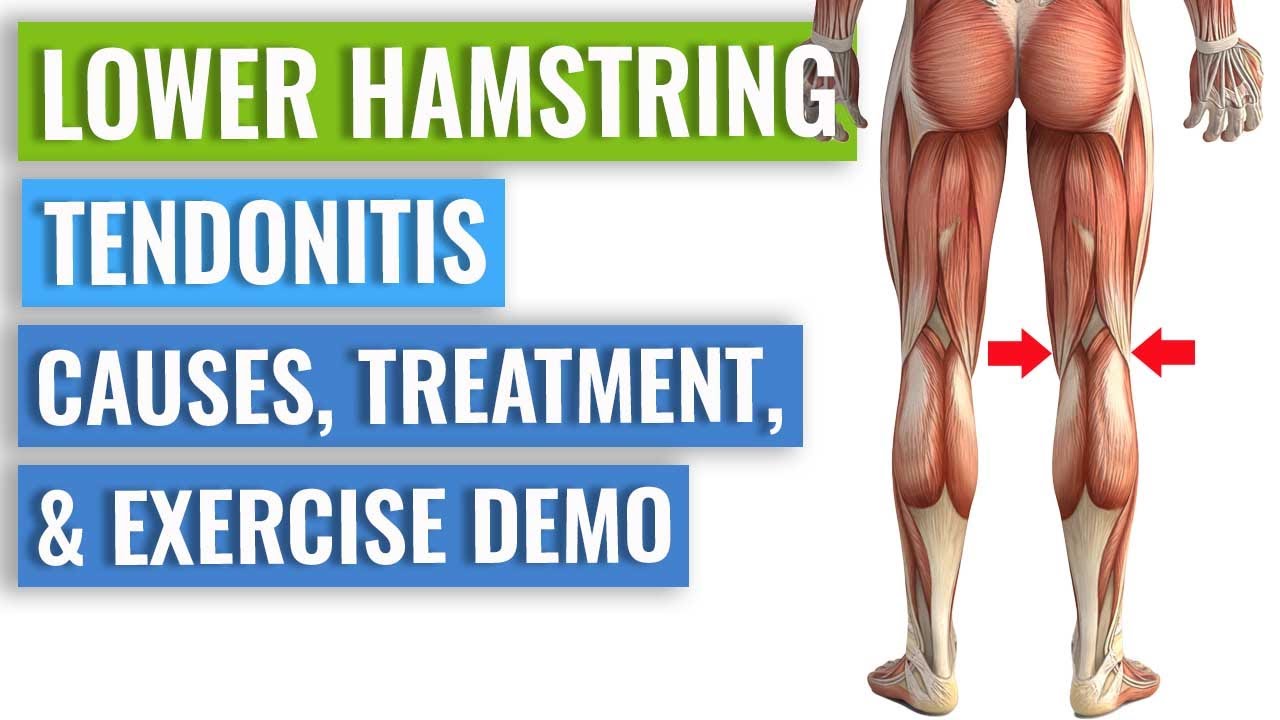
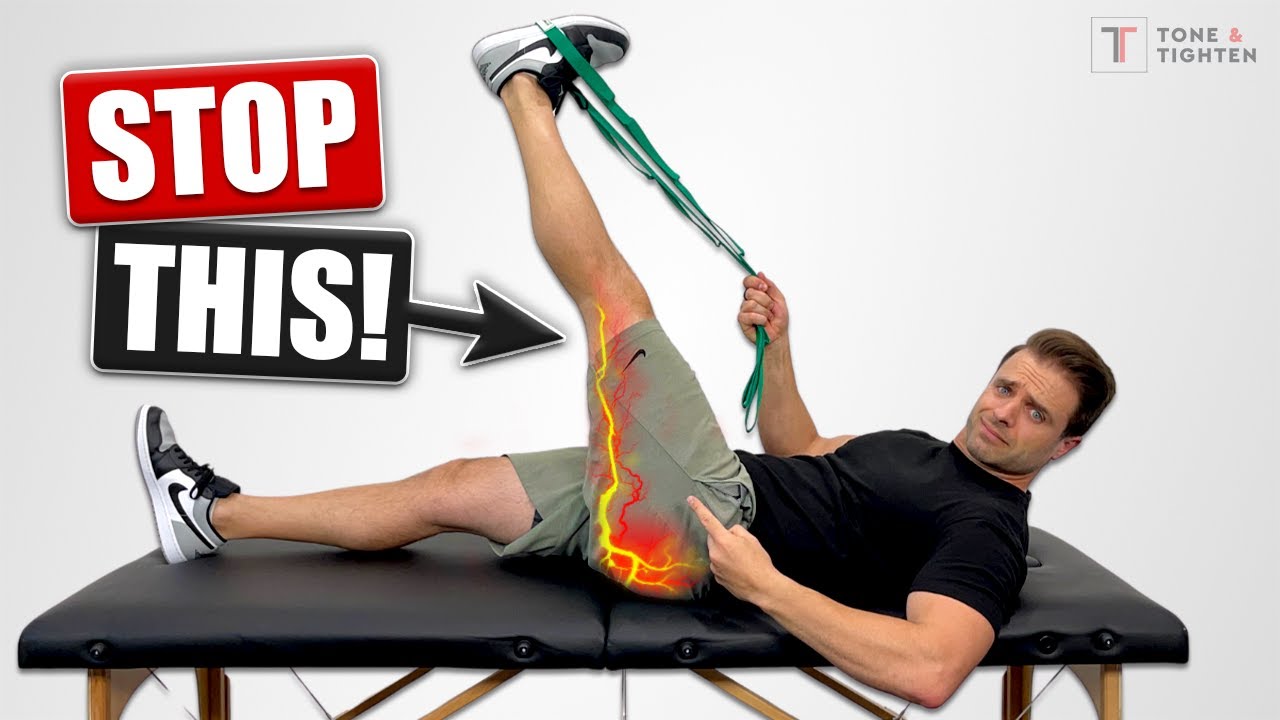
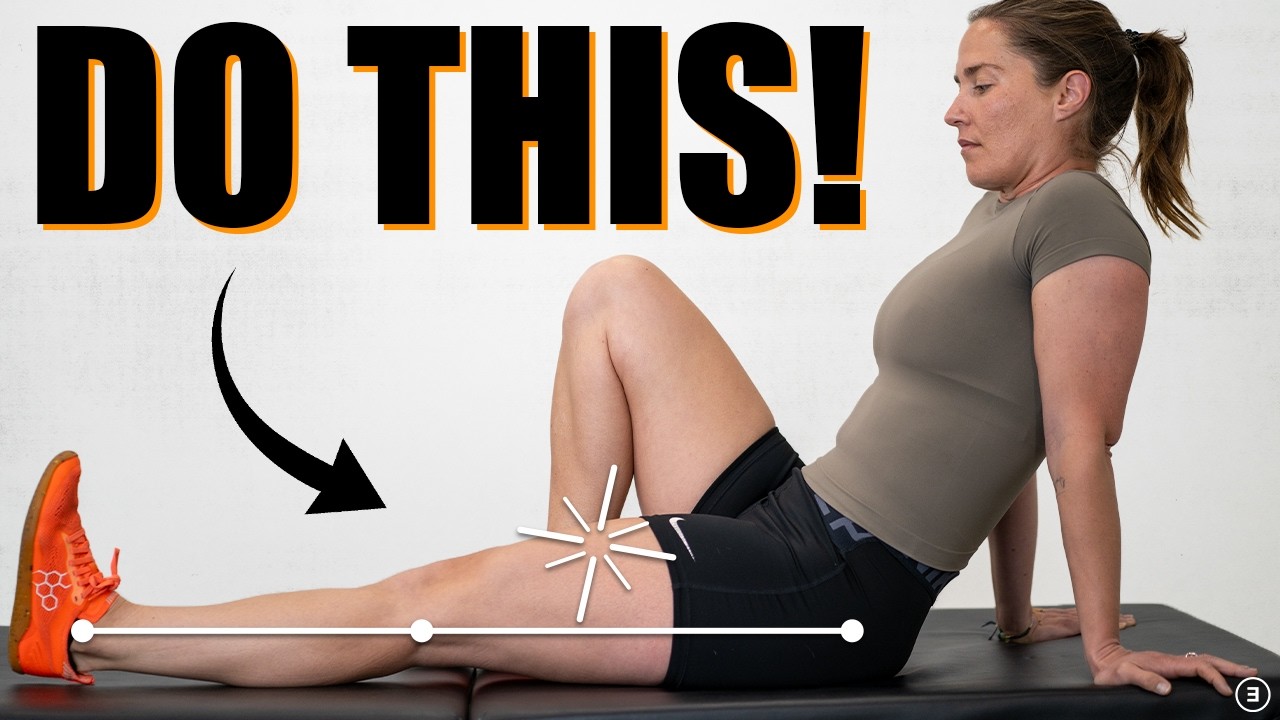
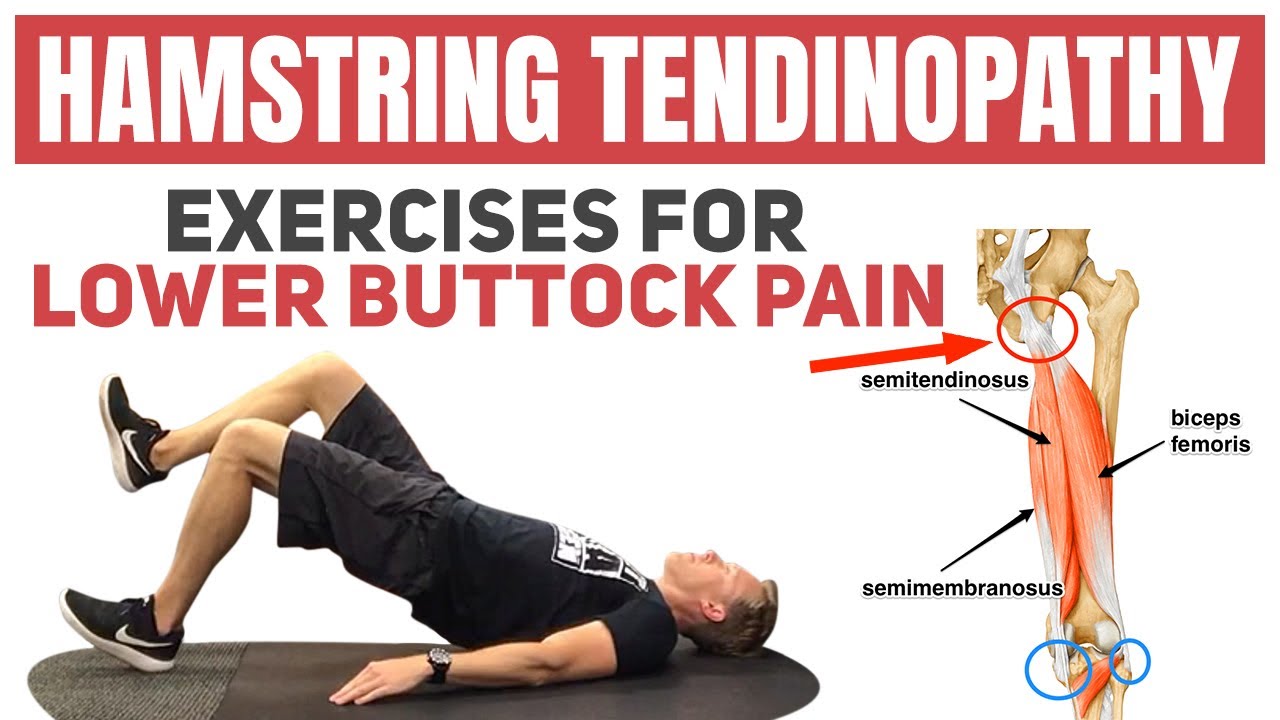
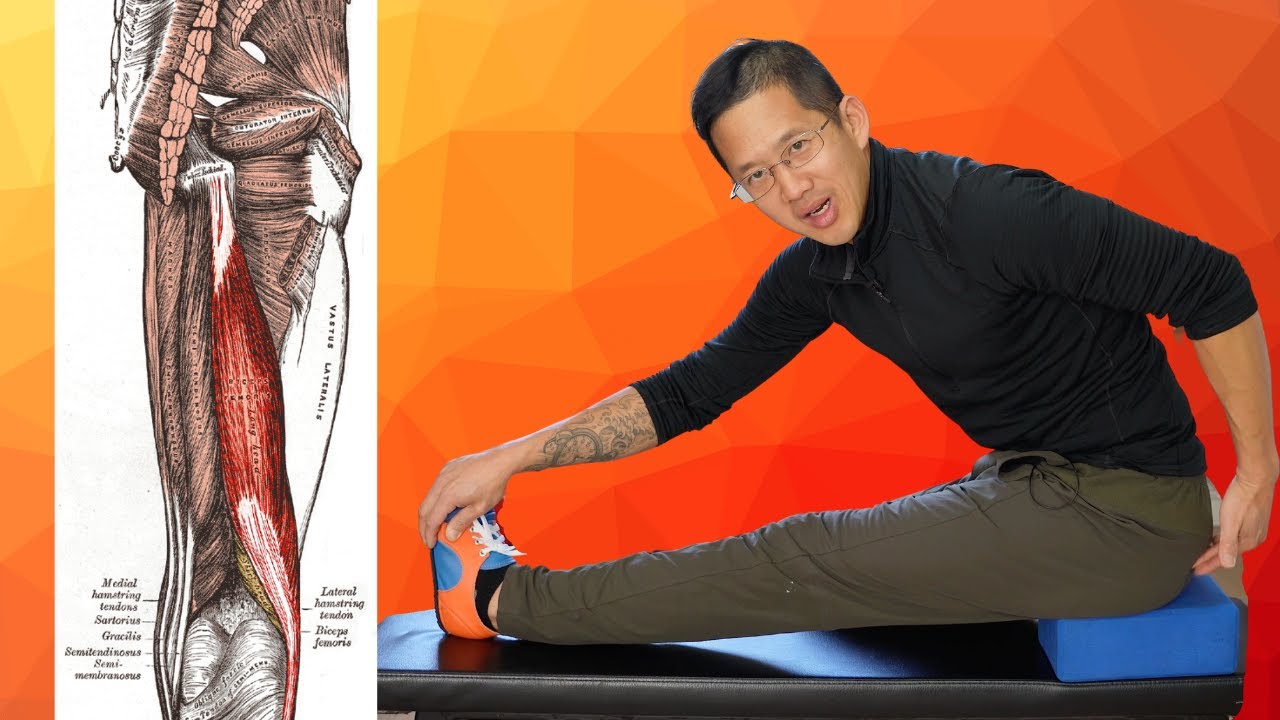
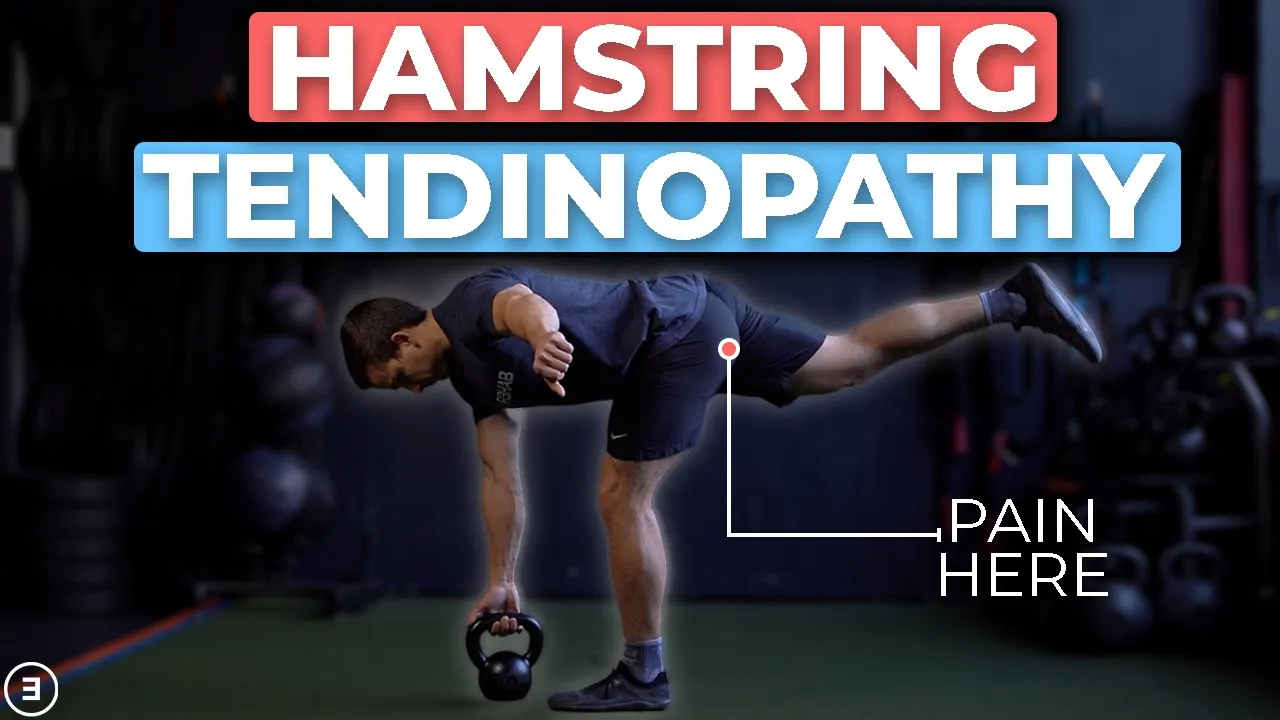
welcome to e3 rehab i'm dr mark sertica physical therapist today i'm going to discuss the assessment and management of proximal hamstring tendinopathy based on a paper by tom goomb peter maliaris mike raymond and craig purdum the hamstrings consist of the semimembranosus semitendinosus and biceps femoris long head that all originate on the ischial tuberosity of the pelvis also referred to as your sit bone an insert on the lower limb at the tibia and fibula they primarily contribute to sagittal plane motion such as hip extension knee flexion and posterior tilting of the pelvis i did not include
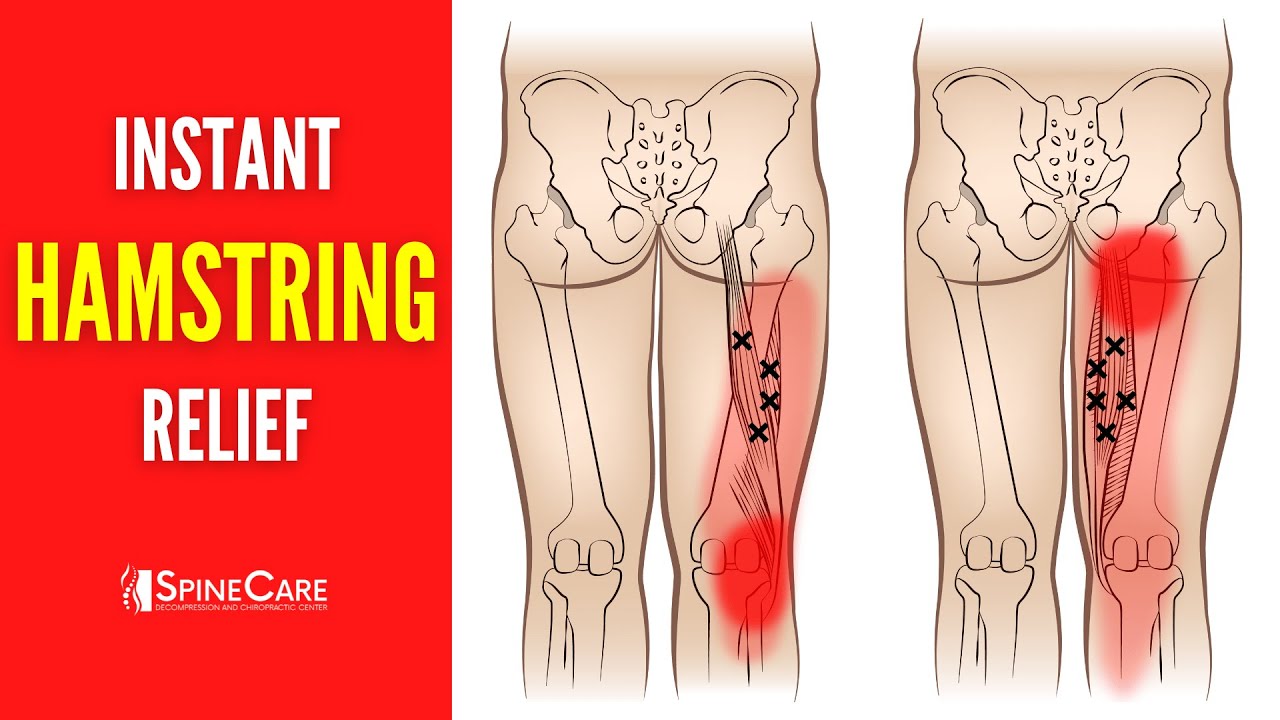
the biceps femoris short head because it is not relevant to this diagnosis and some do not consider it a true hamstring since it has a different origin and innervation proximal hamstring tendinopathy is seen in various athletic populations such as runners sprinters hurdlers football players etc but it can also be seen in yoga practitioners and the less active population the authors suggest that the characteristics of proximal hamstring tendinopathy include deep localized pain in the region of the ischial tuberosity that often worsens during or after running lunging squatting and sitting it's a non-traumatic diagnosis so it has
a gradual onset although tendinitis and tendinosis were previously used to describe tendon issues the preferred terminology is now tendinopathy so the focus isn't on inflammation or degeneration but the balance between load and capacity load can be considered as the stress imposed by various physical factors such as running lunging and even sitting anything that directly contributes to tensile or compressive loads at the tendon attachment at that ischial tuberosity capacity is your ability to tolerate those loads therefore proximal hamstring tendinopathy is thought of as a condition that arises when these various loads exceed your capacity to tolerate
them however lack of sleep stress smoking and just your general health might also influence the balance of the scale almost to the exercises but it's extremely important to understand the nature of these symptoms rehab for tendinopathies is rarely pain-free there are three criteria that you generally want to meet one is your pain tolerable during exercise tolerable is subjective but somewhere around a 3 out of 10 pain or less is probably a good starting point two do your symptoms worsen the same day after exercise and affect your ability to work study sleep etc oftentimes with tendinopathies
some movements might actually make you feel a little bit better but if too much is done it can actually exacerbate your symptoms three and maybe most importantly what are your symptoms like 24 hours later once again if you have a flare-up it might just be an indication that you did a little bit too much it's not usually a cause for concern it doesn't necessarily mean that you damage anything it just means that things are sensitive and you probably need to scale back the next time around the authors propose three exercises that can be used to
monitor symptoms depending on your irritability from easiest to hardest the single leg bent knee bridge the long lever bridge and single leg deadlift these can be modified as needed for you let's say you wake up perform the long lever bridge and rate your pain as three out of ten then you go to work go for a jog go to sleep wake up the next morning and perform that same long lever bridge but this time around your pain is now a 5 out of 10. this is an example of perhaps doing too much the day before
so moving forward you might have to modify your jogging distance intensity or something else that day that perhaps aggravated your symptoms last section before the exercises and arguably the most important if you're constantly pushing your loads too high and provoking your symptoms on a daily basis all of the exercises in the world might not help so you need to determine your aggravating factors and modify them for example is it sitting for eight hours maybe you need to introduce a five-minute standing break every hour is it cycling for two hours maybe you need to cycle for
one hour and then supplement that other hour with swimming you know is it certain exercises in the gym is it certain yoga poses is it a certain distance or intensity while running whatever it is you're gonna have to figure that out and modify to meet your needs you have to find the right balance these are just random examples but making some short term sacrifices or changes can really pay off in the long term and since the most provocative positions are when the hamstrings are in their most lengthened positions hamstring stretches are often discouraged because they
place a high amount of compressive and tensile load which we're trying to minimize early on and so the exercises also are going to be ordered from least provocative to most provocative stage one isometric hamstring load at 20 to 30 degrees of hip flexion or less options include isometric leg curl bridge holds with hip in neutral trunk extension straight leg pull down and isometric long lever bridging you can progress these by going from two limbs to one limb or adding more resistance or effort i'd recommend picking one or two exercises to be performed for three to
five sets of 15 to 45 seconds one to three times per day you want these exercises to be challenging but tolerable with roughly a two minute rest between sets stage two isotonic hamstring load with minimal hip flexion options include a single leg bridge you can go from no weights to weights or double limb to single limb a double limb hamstring slider eccentrically isotonically and then single leg eccentric and single leg isotonic a prone leg curl a nordic hamstring curl pick one to two exercises to be performed every other day for three to four sets of
eight to fifteen repetitions heavy slow and tolerable continue with the isometrics on the other days stage 3 isotonic exercises in positions of increased hip flexion 70 to 90 degrees options include hip thrust bilateral single leg weighted forward step ups low to medium high walking lunges unweighted weighted deadlifts and single leg rdls pick one to two exercises to be performed every other day for three to four sets of six to twelve repetitions heavy slow and tolerable at first but you can gradually increase the speed of the movements over time you can also continue with isometrics on
the other days stage four energy storage loading this is only for individuals returning to sport you have to incorporate higher level activities especially ones that are specific to your sport build up your capacity so you can tolerate high loads options include a skips fast sled push or pull bounding kettlebell swings alternate leg split squats stair or hill bounding cutting sprinting and any sport specific movements pick two to four movements to be performed for one to three sets on every third day so monday you would do stage four exercises tuesday isometrics wednesday stage 2 or 3
exercises thursday rest and then repeat this cycle proximal hamstring tendinopathy is not a condition where you just want to rest and ice you need to monitor symptoms manage loads and build up capacity over time start with less provocative exercises gradually progress and slowly introduce the movements that are specific to your sport or activity this rehab is expected to take three to six months so most individuals need to be patient put in the work and trust the process all right thank you so much for watching if you like the video help us out with this youtube
algorithm tap that like button subscribe hit that notification bell and make sure you comment down below i'm also going to link that paper in the description and it's open access peace