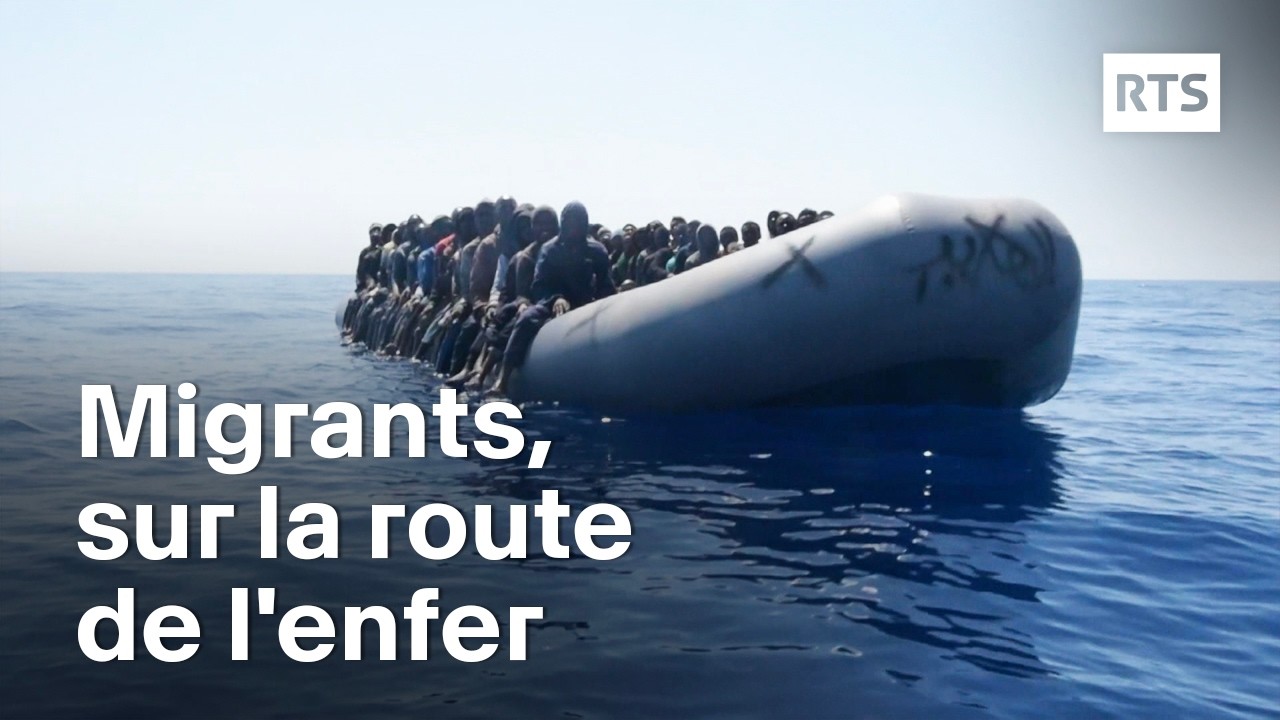
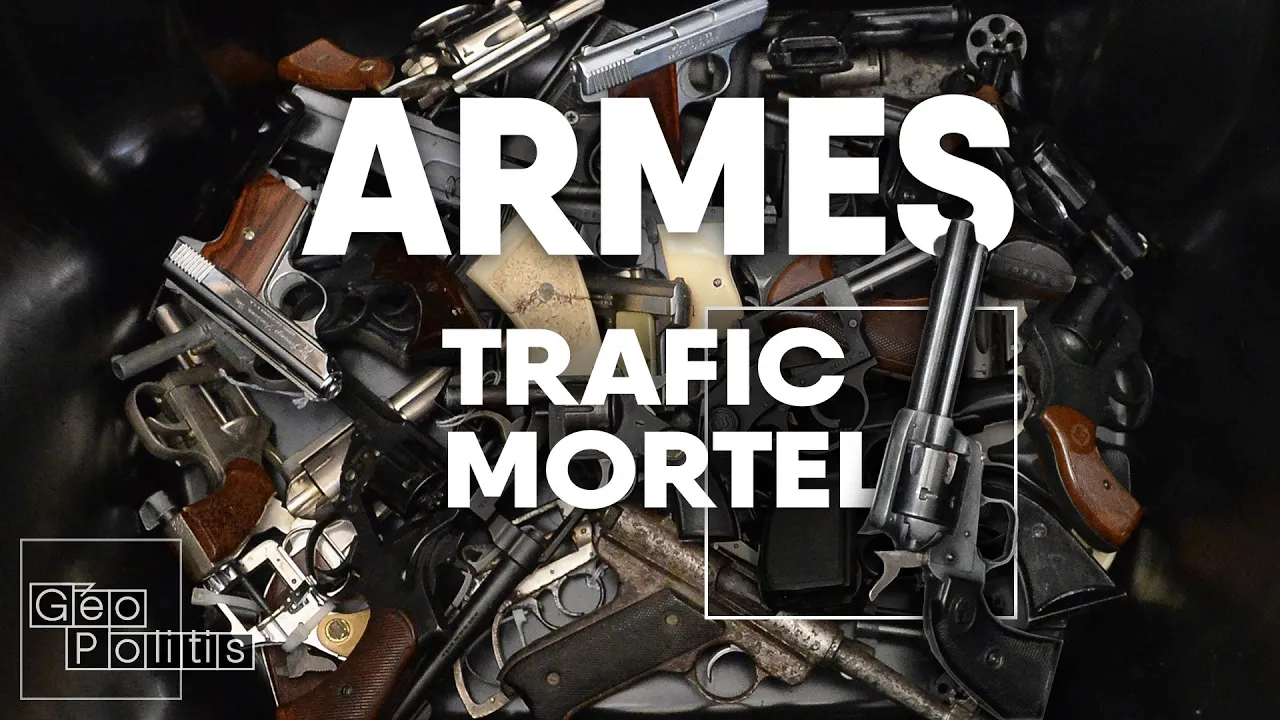
Hello and welcome to "Géopolitis". This week's edition is dedicated to the growing issue of weapons proliferation. PROLIFERATION OF WEAPONS The global phenomenon of light and small-caliber weapons, key tools in criminal violence, poses a major threat to security.
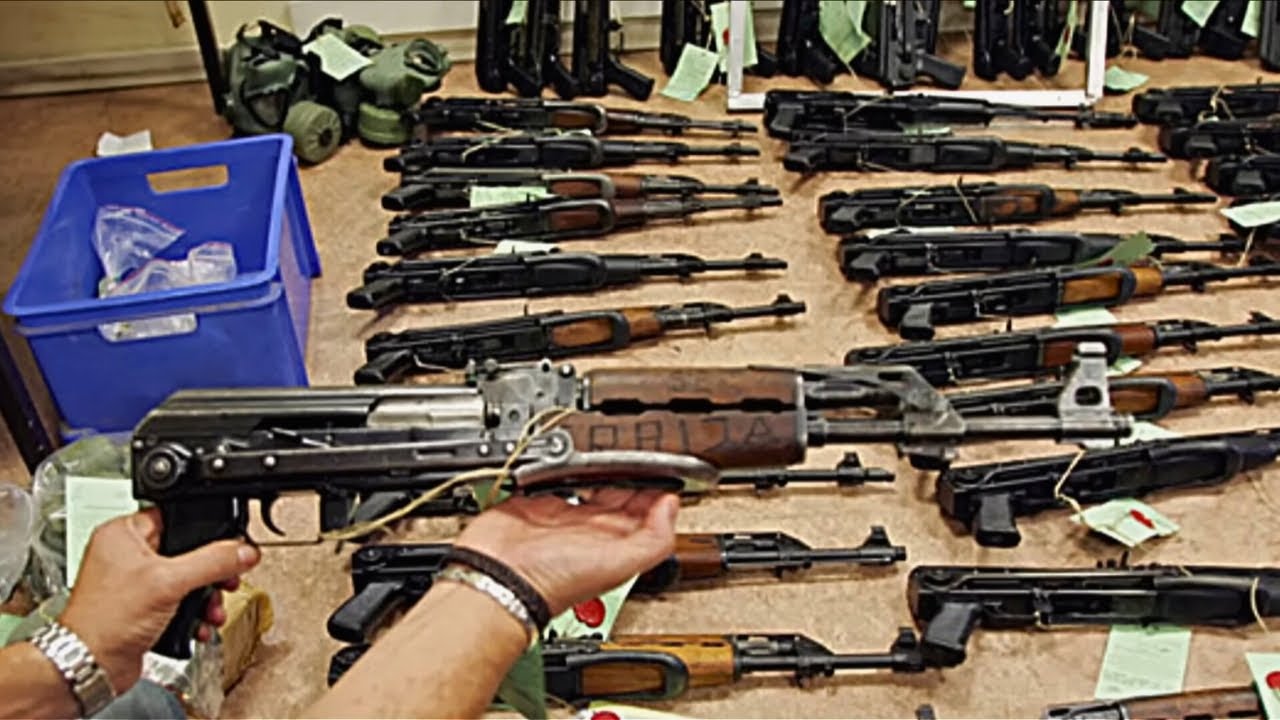
They're proliferating, increasingly trafficked, and exposing the vast networks tied to organized crime. An example in Mexico, where weapons are omnipresent. Of course, conflicts multiply the presence of weapons in the affected countries or regions.
According to a new study by Amnesty International, weapons are imported in great quantities in Sudan, including in Darfur, violating the embargo. 3D technology fuels this threat in a worrying manner. Weapons produced using 3D printers, layer by layer from polymers, are becoming increasingly sophisticated.
A report at the School of Criminal Sciences at Lausanne University. GEOPOLITICS It's a truly deadly market that continues to grow and cause devastation everywhere. Whether they're in the hands of organized groups, terrorists, rebels, drug barons, or simple civilians, weapons perpetuate a vicious cycle of insecurity and violence.
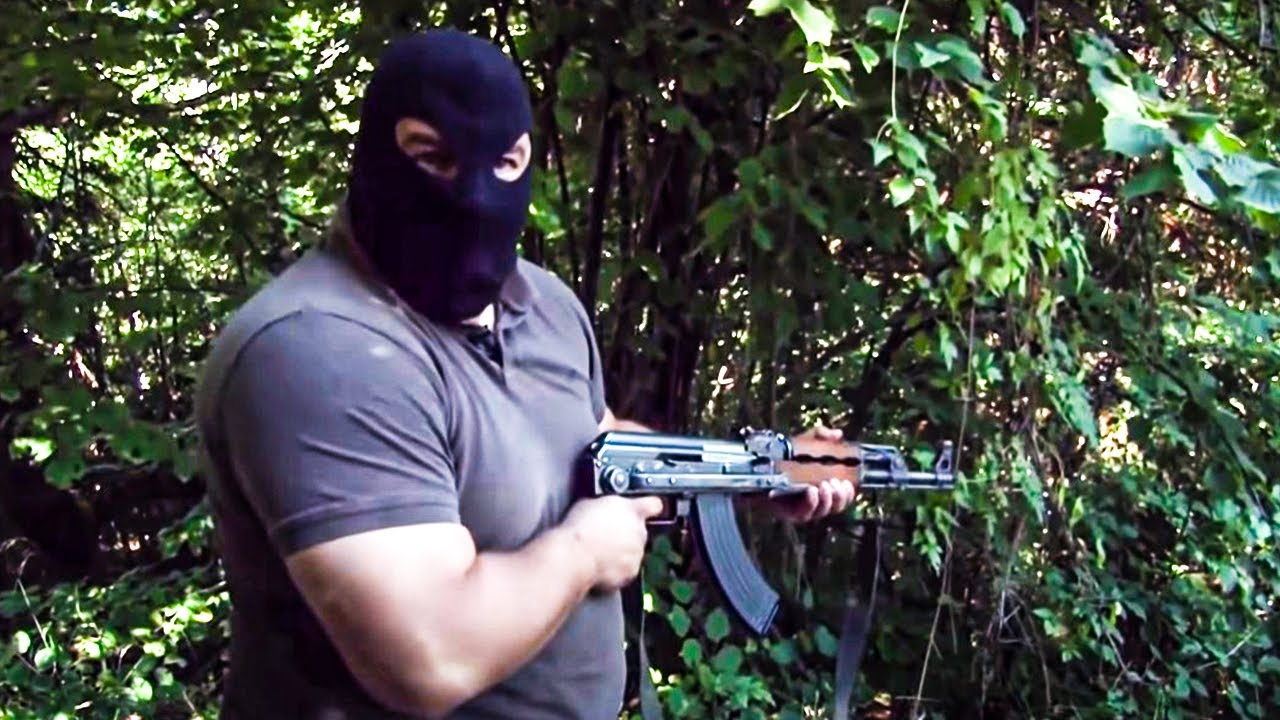
These weapons, like pistols, rifles, or sub-machine guns, are often illegally diverted, but also sometimes made by hand. According to estimations, at least 1 billion light and small-caliber weapons are in circulation on all continents, two-thirds of which are in the hands of individuals. In reality, we know more about the number of nuclear warheads in the world than this threat, due to a lack of reliable data, which is a major problem.
These weapons are portable by design, making them easy to handle and conceal. They can easily slip under the radar. To discuss this, we’ll be joined by Nicolas Florquin, a researcher at Small Arms Survey, an organization based in Geneva, but right away, a look at the state of this traffic that is hard to trace, yet omnipresent.
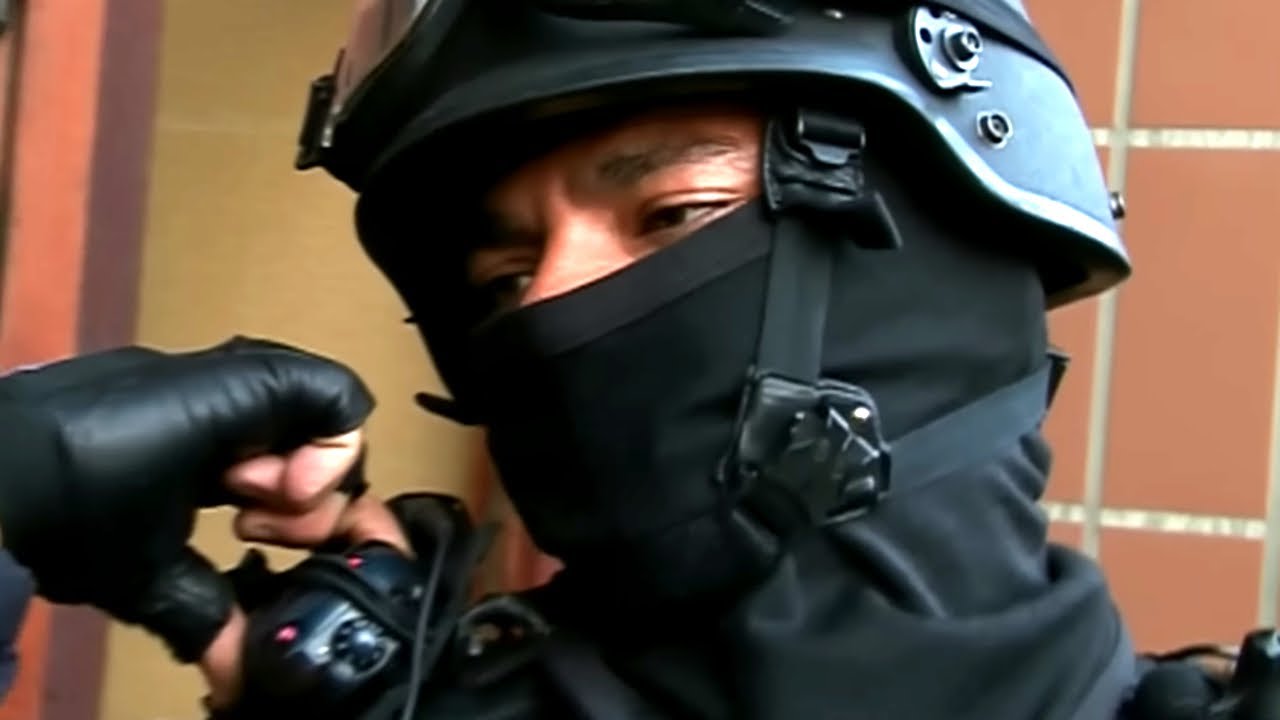
DEADLY TRAFFIC Assault rifles, rocket launchers, machine guns, armored vehicles, a demonstration of force by this powerful Mexican drug cartel, one of the country's most violent and dangerous. In Mexico, weapons are omnipresent, homicides daily. In total, around 30,000 per year, most carried out by firearms.
Confronted with these criminal organizations, against the murders, kidnappings, threats, citizens are standing up. When we started, we had no weapons, and thank God, now, we too have weapons. We bought them.
Over 13 million unregistered weapons are in circulation in this Central American country, while the laws on firearms are very strict and the only armory in the country delivers 50 licenses per year. Around 500,000 weapons enter Mexico from the USA every year. That's quite a low estimation.
LEGAL COUNCILOR They're revolvers or military-style weapons. Weapons that shouldn't be in the hands of Mexican civilians. Between 70 and 90% of weapons seized in Mexico come from traffic with the USA, notably from the many armories in Texas, Arizona, Californie, or Florida, very close to the border.
MEXICAN PRESIDENT JULY 16, 2024 It would really help if the sale of firearms in the USA were controlled. It should be done urgently. In 2021, Mexico reported American firearm companies for illicit and negligent practices, accusing them of facilitating the traffic of weapons to drug cartels.
GLOBAL SCOURGE Just in recent months, huge seizures of weapons in Belgium, Nigeria, off Yemen's coast, in Venezuela. According to estimations by the UN Office against Drg and Crime, which only reveals a fraction of the traffic, pistols are the most-seized firearm in the world, followed by rifles, hunting rifles, revolvers, sub-machine guns, machine guns. The region where these weapons are most seized is the Americas, particularly pistols.
In Africa and Asia, hunting rifles predominate. ILLEGAL FIREARM TRAFFIC North America is the main region these seized firearms leave from. Most of them go to Central America.
Many also go to South America, the Middle East. On a smaller scale, Europe, as well as the Middle East, are also source regions for illegal weapons and supply the local and international markets. To transport these firearms, traffickers tend to use marine transport for big cargos.
Traffic via land remains the most common way. Smaller amounts are transported in several vehicles. There is also what is called ant traffic.
Many people transport small quantities of weapons on their person and deliver to the same place, which has ordered on a large scale. A method used, for example, in Africa and Mexico. We estimate that in Latin America, 75 to 80% of homicides and femicides are committed with weapons from illicit trade.
In Mexico, in a context of violence linked to drug cartels, some 430,000 people have been killed since 2006. GEOPOLITICS -Nicolas Florquin, hello. -Hello.
You're a researcher at Small Arms Survey, a center of expertise based at the Institute of Upper International Studies and Development in Geneva. You lead investigations on the flow of illicit weapons and their sources. You also notably manage a database.
And there, we're immediately at the heart of the problem. The issue of reliable data on light and small-caliber weapons. We can understand that these weapons slip under the radar during trafficking, we'll get to that in a moment, but from the start, most of these weapons were produced legally.
Does that mean even the legal arms trade lacks transparency? Exactly. We must know that there is no universal mechanism that forces states to declare their transfer or production of weapons.
There are voluntary mechanisms in the form of certain international conventions, but we see that today, even in the form of these report systems, very few states. . .
For example, with the Arms Trade Treaty, less than half of the participating states submit their trade reports on time. And with an industry that continues to diversify and expand globally. Exactly.
We're no longer in a situation of weapons produced in the North and exported to the South. We see that today, the top three exporters of weapons globally include countries like Brazil, for example. We see that there are also producers in other regions, in the Middle East, in Latin America, in Central America, even in Africa.
So, the range of producers has really diversified over the last 20 years. And a staggering number at least 1 billion weapons of this type are circulating around the world. That number has doubled in 20 years.
So, estimations have doubled. So we have more information today than before. But this number is definitely rising.
For example, just for the American market, 13 million new weapons are produced every year, so we see that the stock of global weapons is rising every year. Maybe we don't realize, but most of these weapons are in reality in the hands of private individuals. Yes, 80% of these weapons are in the hands of private individuals.
And a problem of accumulation too, because these firearms have a long life expectancy. They were sometimes conceived years earlier, do we find them "on the market", in fact, recirculated? Yes, that happens a lot in big West African conflicts, for example, in the 2000s, we saw 20, 30, 40-year-old weapons going from conflict to conflict from Sierra Leone to Liberia, then the Ivory Coast.
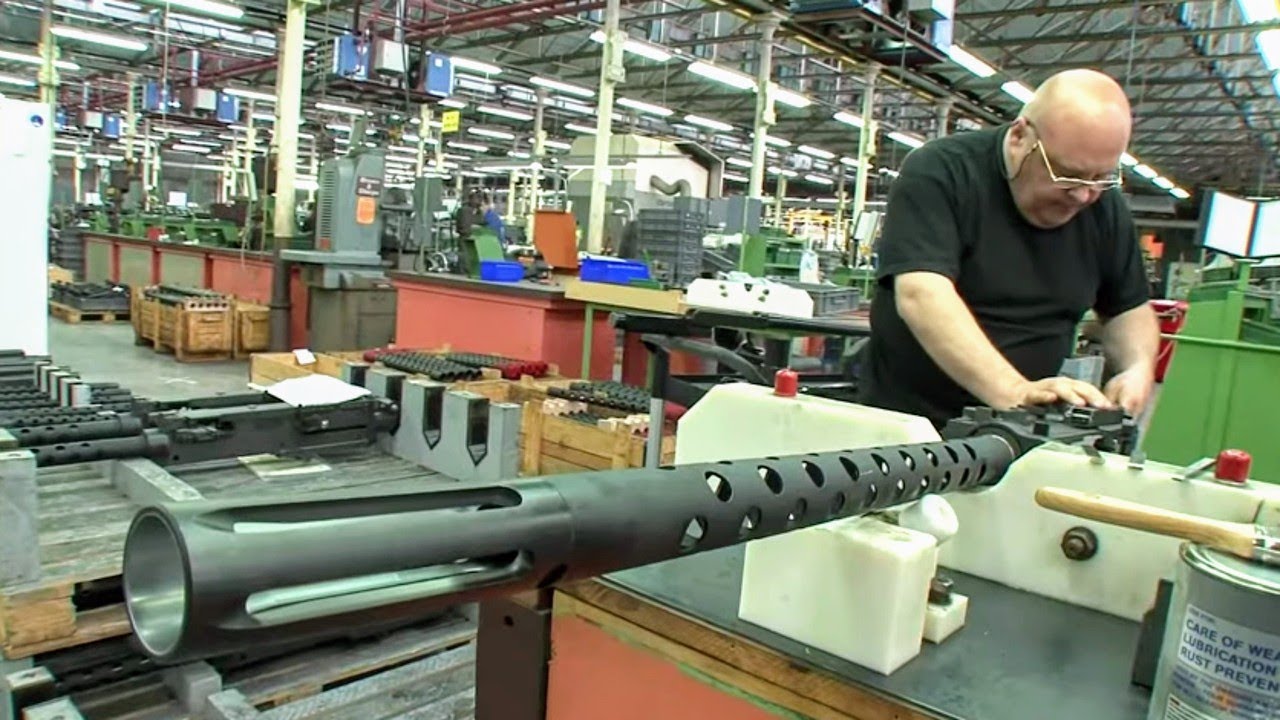
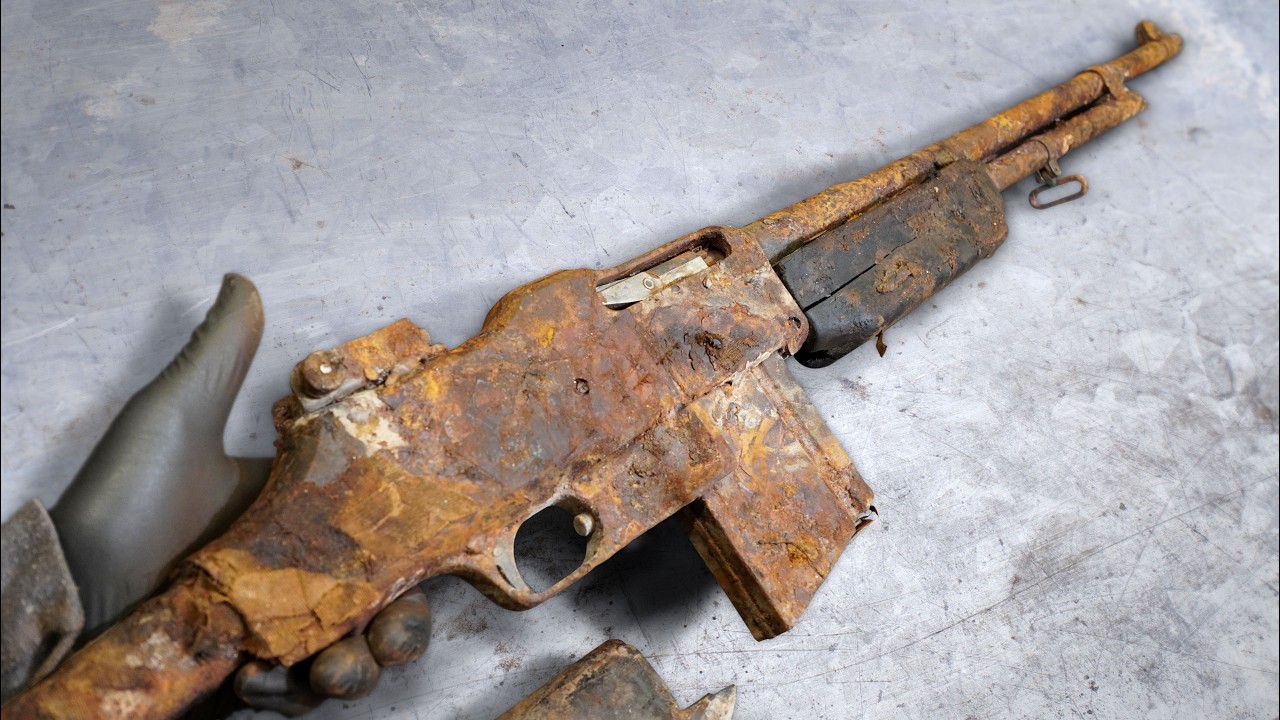
So, they really are weapons that, as long as they're not destroyed or collected or neutralized, they can continue to serve in conflicts. Most of these weapons are originally produced under a license, as we said, how do these weapons then become illicit? It's embezzlement.
There are several scenarios. There is the illegal diversion of transfers, that is, a country exports weapons to another country, they authorize it, but this other country will re-export them without the export country's approval. So, that creates an illegal diversion of transfers.
There’s also the misappropriation of stockpiles. So these can be large-scale diversions, like in the case of Iraq in 2003 or Libya in 2011, where armed groups seized national stocks, massive national stocks, and it created long-term instability. And what about ammunition?
Is that a problem too? Ammunition is also a problem, clearly, and it's also the weak link in weapon checks internationally, because it's not possible to have, in any case for the moment, unique serial numbers on these ammunitions that would let them be traced they were illegally diverted. It's also very difficult to organize surveillance of good use of ammunition.
For example, when they're used in a shooting stand or on a battlefield, for example, how to check that all the ammunition was used in the prescribed manner? So, weapons trade is a real nightmare for civilians trapped in conflicts. That's the case in Sudan, where a violent civil war has been raging since April 2023.
A recent investigation by Amnesty International shows that foreign weapons continue to be delivered there, including in Darfur. Rachel Barbara Häubi. ZOOM It's called the forgotten war.
Since April 2023, Sudan has been the victim of a violent civil war. It opposes the Sudanese army, led by General Al-Burhan, with General Daglo's paramilitary forces. A conflict that has plunged the country to the limits of famine and that has caused the displacement of over 10 million people.
Rape, torture, execution of civilians, the list of war crimes is long according to the UN. This bloody war is supplied by a constant flow of weapons from overseas, according to a recent investigation by Amnesty International. By analyzing nearly 2,000 expedition cases and thousands of images of the conflict, the NGO followed the trace of weapons to the hands of the belligerents of both camps.
We realized that a series of states export weapons to Sudan. And that's a violation of the Arms Trade Treaty, which prohibits the export of weapons where there are probable risks of violations of human rights and, even more serious, war crimes, as is the case now in Sudan. In total, six countries are accused: Serbia, Russia, Turkey, China, the United Arab Emirates, as well as Yemen.
Several of them have signed or are members of the Arms Trade Treaty. Some weapons even reach Darfur, and this despite a UN embargo in the region. One of the characteristics of the weapons we find in Sudan is that they're weapons destined for civilian clients that are diverted to be used in the armed conflict.
And we also notice that blank weapons, which are designed to use non-lethal cartridges, can be converted into lethal weapons to kill people. Enough to alert Amnesty International, which calls for an extension of the embargo. In fact, when you export weapons to Sudan, it's almost guaranteed they’ll be used for human rights violations.
There really needs to be a strict ban on the export of weapons to all of Sudan. The second thing is that states that have signed or are members of the Arms Trade Treaty control their exports and don't authorize their national companies to export weapons to the entire Sudanese territory. Calls that fall on deaf ears according to the international community.
The UN Security Council renewed the embargo for a year in the Darfur region, despite the bypasses. In Geneva, peace talks in August didn't lead to a ceasefire agreement. In the meantime, in Sudan, the war is getting bogged, and famine has set in.
ZOOM Nicolas Florquin, the situation in Sudan is particularly dramatic. The producers and distributers are formidable. They're always able to bypass the rules.
Exactly. We see many different techniques to evade checks on exports, imports, notably the categorization of weapons, let's say, for military use as civilian weapons. For example, sniper rifles that are declared at export as rifles for sports shooting.
So, there are a lot of ways to attempt to bypass the rules, checks on exports. And there is also the problem of "blank" weapons, so weapons that are conceived to only shoot blanks. Can they easily be converted into lethal weapons?
Absolutely. It's a problem that affects different regions. We were aware of this phenomenon in Libya too, but also in the European Union.
One of the main sources of illicit weapons in the European Union is blank pistols that can be easily converted into functional firearms. And it's a problem that is very hard to legislate. We must also mention that most weapons that are used in the conflict remain industrial weapons and that Sudan has its own weaponry industry and so, probably, this production also contributes largely to the conflict in terms of weapons used.
You mentioned conflict, there's also post-conflict management which is important. We see that the homicide rate by firearms in societies with recent conflict, so coming out of a conflict, is often higher than the deaths on the battlefield. Exactly.
We saw, for example, in Ukraine after 2014, 2015, so after the first wave of conflict in the east and in Crimea, that the homicide rate rose dramatically in Ukraine, to reach a peak in 2017. So yes, in some post-conflict zones, if tensions continue, if arms are available, that can contribute to criminality. We also see that in other zones like Latin America, that's where we see the highest homicide rates in the world, and where firearms play a significant role.
And there, we speak more about non-traditional conflicts, that is, gangs, cartels, and organized crime. You just returned from a mission in Ukraine. The demand from civilians is high, but it's hard for them to get a hold of weapons.
Is it relatively contained? Absolutely. The demand on the front line is so high that even civilians seeking weapons for self-defense struggle to obtain them.
This is somewhat reassuring for the rest of Europe, as the risk of these weapons crossing the border remains low, though it's still concerning for Ukraine. It's a veritable vicious cycle. I don't know how we can get out, because weapons aggravate tensions and violence, and this violence itself generates a feeling of insecurity that also leads to a demand for weapons.
Exactly. So, it's essential to place the context, sorry, to place the check of weapons, the supply of weapons in a more global context that also affects, as you said, development, good governance, security, prevention of criminality. Otherwise, policies for checking the supply of weapons will be destined for failure in the mid or long term.
There is one particular type of weapon that represents a rising threat, weapons produced using 3D printers. Becoming cheaper and more effective, they now make up a significant portion of the illegal arms trade. Let's see with Mélanie Ohayon.
PERSPECTIVE SHOOTING STAND OCCUPIED In this laboratory at the School of Criminal Sciences at Lausanne University, plastic weapons have a special place. Yet they're far from being inoffensive. They were all made here by 3D printers.
IMAGES: LAUSANNE AND BERN UNIVERSITIES Thanks to controlled shots, researchers test their performance, observe the particular traces generated by these weapons in order to then distinguish them on crime scenes. For research purposes, this laboratory has special authorization from authorities because, like in many other countries, printed weapons are prohibited in Switzerland. These weapons aren’t commonly used in serious crimes or even in minor ones.
They're not yet very accurate, very reliable. So, if you really want to commit a crime, you wouldn't choose this one first. However, from our point of view, it's becoming a big risk in that it's very accessible, easily accessible.
In just a few clicks, online plans can be sent to a 3D printer to produce these weapons. Since the first pistols like the Liberator, models have progressed a lot. We have relatively simple weapons to use, like we had with the Liberator, which are made basically only in printed polymer, and that are quite unreliable, and that have a high risk of exploding, even on the first shot.
Then, we have more complex things, that integrate more and more metallic parts and perhaps even some existing components in firearms, and we can get to highly perfected weapons. Seizure of these weapons has risen in recent years. Olivier Delémont participated in a study that records the number of cases worldwide involving 3D-printed weapons.
Last year, in North America and Europe, the number of incidents was highest, followed by Oceania, then Asia and South America. None on the African continent. For this, we decided to base ourselves on open sources, that is, public police reports, mentions in the press, in international press, in different countries, on websites, etc.
, of these seizures or uses of these weapons. What's difficult to evaluate is: is this rise a rise in the number of weapons produced or is it also a rise in the sensitivity of media and police to this phenomenon? And that also gives trends on the types of weapons that are printed and seized.
This year, for the first time in France, a network for the fabrication of printed weapons was dismantled. These semi-automatic weapons sold for between 1,000 and 1,500 euros. PERSPECTIVE Nicolas Florquin, 3D-printed weapons are a real problem.
Not only are they very difficult to trace, but are also easily modified. Absolutely. So today, In fact, it’s possible to build your own weapons by printing parts like the frame and by getting spare parts on the legal market, and thus constitute a very powerful weapon.
It's easier in North America, for example, where the legislation allows for the free sale of these spare parts. So, you print the frame and you add spare parts, sometimes even metal, and they're found online? Exactly.
In North America, notably. But of course, these spare parts can also be trafficked. So, we also see a traffic of these spare parts in the goal of composing weapons with parts from different sources.
It's obviously prohibited, at least in most countries. And we're also able to identify the leftovers of polymers now. So there's still this know-how to trace the weapon.
Absolutely. Clearly, it's not possible to trace a 3D-printed weapon with conventional methods based on the serial number, but as we could see, scientists, forensic experts are able to create links between a printer and a weapon found on a crime scene. And these techniques are developed to get better results.
Beyond 3D-printed weapons, what do we know about weapons that are made, let's say, by hand, in workshops, for example? So, around 20 years ago, it was a bit marginal, let's say, and it wasn't really looked at in international conferences. We see that today, the phenomenon has exploded and we mentioned today, there are different variations of these non-industrial weapons.
We mentioned blank weapons that are modified into real weapons, 3D weapons. We can also mention improvised explosives which are the leading cause of death in conflict zones like the Sahel, but other phenomena too, like for example, the modification of commercial drones that are basically transformed into guided missiles and used as anti-tank missiles by adding explosives. And so, we see that there is a range of options, now, to create weapons non-industrially.
There exists, and it's a first victory, a treaty on arms trade, that came into force in late 2014. A victory, sure, but is this treaty really effective? So, clearly, the treaty doesn't have sanctions mechanisms in terms of violation.
Of course, they can be discussed by states, and also with private surveillance organizations, let's say, like my organization, but there isn't really a sanction mechanism. However, what we see, and we've seen results, is when the involved states, of course, apply this treaty into their national laws and so, there are mechanisms, nationally, that can be used to exert pressure on the government to stop certain transfers. We've seen, through pressure from NGOs, through pressure from politicians in certain countries, who decided to suspend some transfers to countries involved in the war in Yemen, for example.
Not all countries have signed or ratified it, that's also a problem. No. So, today, there are 115 member states, so we're far from all countries.
Some big countries are missing, like the USA or Russia. But China joined the treat a few years ago. Many European producer countries are also part of it.
So, it's quite a new treaty, that we hope will be able to create more momentum in coming years. Thank you very much, Nicolas Florquin. A reminder that you're a researcher at Small Arms Survey.
An organization that is celebrating its 25th birthday this year. -Exactly. -Thank you very much.
Thank you. GEOPOLITICS Millions of light and small-caliber weapons exist in countries that have been at war or that are plunged into instability. It's particularly the case in Afghanistan.
Currently, under the Taliban regime, the phenomenon has amplified, but it's not new. During the Afghanistan war that opposed the Soviet army with the Mujaheddins, between 1979 and 1989, Afghan rebels got their weapons mainly from neighboring Pakistan. An extract from a report from Present Day in 1980.
ON THAT DAY This is where Afghan guerrillas come to get their weapons. They're made by hand in workshops and sold freely. It must be said that it's a tradition in this region, everyone here is armed.
Skilled craftsmen copy all the brands of rifles, pistols, and sub-machine guns, from the German Mauser to the American Colt, via, of course, the famous Russian Kalashnikov. All you need is money. War equipment, even handmade, is expensive.
$2, $3, or $4 for a rifle bullet, depending on the caliber. This black market offers something for every budget. There are grenades for around ten Swiss francs, but also much more perfected weapons, like this anti-aircraft cannon capable of shooting down a modern assault helicopter.
It was made in a courtyard in a month. It's these rudimental workshops that Soviet propaganda presents as bases that are aggressively directed against the Afghan revolution. To what point is it possible to confront a great military power with such weapons?
ON THAT DAY Thank you for watching. See you next week for a new edition. This episode, like all before it, can be watched or rewatched thanks to the RTS and TV5MONDE applications, as well as our YouTube channel.
Goodbye and take care.