What lies Beyond the Horizon of our observable universe is it an endless space filled with unexplored worlds and unseen galaxies or could it be where parallel universes and new dimensions exist maybe it holds the origins of mysterious Cosmic events we have yet to understand join us on a journey to the edge of the universe as we explore these questions and uncover the Mysteries that lie at the edge of the universe [Music] the universe is an expansive and ever growing tapestry of space time matter and energy it includes everything from the tiniest subatomic particles to the
vast clusters of galaxies stretching tens of billions of light years across since the moment of the Big Bang approximately 13.8 billion years ago the universe has been continuously expanding pushing galaxies apart at speeds that can even exceed the speed of light this Phenomenon is attributed to a mysterious Force known as dark energy which makes up about 70% of the universe's total energy density alongside dark matter which accounts for roughly 27% these unseen components profoundly influence the cosmos's structure and evolution the very fabric of the universe is woven with galaxies which are magnificent islands of stars
planets black holes and nebuli our own Milky Way galaxy for example is an intricate Spiral housing over 100 billion stars each potentially hosting planetary systems the forces of gravity meticulously choreograph these Cosmic dances pulling Stars into orbits around Galactic centers and binding galaxies into enormous clusters yet amidst this Grand order the universe is also a realm of incredible violence and change where stars explode in supernovas black holes devour matter into a Oblivion and cosmic rays streak through the void at nearly The speed of light this delicate balance of creation and destruction drives the cosmos painting
a dynamic picture of nature at its most extreme and magnificent scientists approach the concept of the edge of the universe not by Imaging a physical boundary one might encounter but rather by considering the limits of our observational capacity the observable universe is defined by how far light has traveled since the Big Bang encompassing roughly 93 billion Light years in diameter this presents a cosmic Horizon Beyond which we cannot see because light from those regions hasn't yet had time to reach us due to the finite speed of light and the universe's continual expansion this Edge known
as the observable universe is constantly stretching as more light from further objects finally arrives after billions of years of travel cosmologists utilize various methods to peer evid deeper into The universe's expanse tools like the Hubble Space Telescope and the upcoming James web Space Telescope capture light from distant stars and galaxies giving us snapshots of the universe as it existed billions of years ago observations of the cosmic microwave background radiation the faint Afterglow of the Big Bang further help delineate the observable boundary by mapping the oldest light we can detect however these tools only reveal the
portion of the Vast Universe within our current object observational window Beyond this lies the unobservable universe which remains cloaked in mystery due to its removal from even the Swift speed of light therefore the edge of the universe is best understood not as an end point but as a horizon of the knowable cosmos inviting ever more profound questions about what might exist Beyond it the observable universe is essentially everything we can see or detect from Earth limited by the finite speed of travels at around 300,000 km/s we can only observe objects whose light has had enough
time to reach us since the Big Bang which occurred approximately 13.8 billion years ago this creates a spherical slice of the cosmos centered around our vantage point and spanning roughly 93 billion light years in diameter within this observable universe we encounter a diverse array of cosmic phenomena galaxies such as our own Milky Way are scattered like Islands in this vast ocean of space each each containing billions to trillions of stars along with an array of planets nebuli and black holes as we cast our gaze further we also Glimpse quers and Cosmic microwave background radiation which
is the Afterglow of the big bang and provides a sort of fossil record of the universe's infancy observing these distant objects not only helps us to map the universe's structure but also to Understand how it has evolved over billions of years the observable universe is a continually expanding Frontier revealing ever more about the Realms Beyond and the fundamental nature of the cosmos itself the observable universe is staggeringly vast with an estimated diameter of around 93 billion light years this means that if we could somehow travel at the speed of light which by the way is
an unfathomable 300,000 km/s it would still take us 93 billion years to Traverse from one edge of the observable universe to the other this colossal span encompasses billions of galaxies each populated with Millions to trillions of stars and an even greater number of planets despite these overwhelming distances it is essential to note that the observable universe is just that what we can currently observe the actual Universe could be far larger Potentially infinite making our observational limits only a small window into a much grander Cosmic tapestry the enormity of the observable universe is further Illustrated by
its expansive scale relative to familiar objects for instance the Milky Way galaxy which is itself massive at about 100,000 light years in diameter is merely a tiny dot in this vast expanse even Grand Galactic clusters like the Virgo supercluster that houses the Milky Way become mere specs within the observable universe the cosmic microwave background CMB the oldest light detectable adds to our comprehension by mapping the universe as it exists Ed approximately 380,000 years after the big bang further reinforcing the sheer immensity and age of the observable realm it's an a inspiring reminder of how vast
and ancient our universe is and how our understanding of it continues to evolve with each technological and Scientific advancement the current theories about the universe's size revolve around two main possibilities that the universe is finite but unbounded or that it is infinite when cosmologists discuss a finite but unbounded Universe they often employ analogies like the surface of a sphere just as the surface of a sphere provides a finite two-dimensional area without edges the universe could be a three-dimensional space that Loops back On itself meaning you could theoretically travel in a straight line and eventually return
to your starting point this idea aligns with the rules of general relativity Einstein's groundbreaking theory that describes gravitation in the fabric of SpaceTime however this doesn't imply a small Universe even if finite it could be unimaginably large on the other hand the concept of an infinite Universe posits that space extends Without End in every Direction this suggestion aligns with observations and mathematical models showing that the overall shape of the universe is flat on large scales a flat universe with zero curvature implies that space might indeed stretch out forever this is bolstered by measurements of the
cosmic microwave background radi ation which scientists study to understand the early universe's conditions these measurements indicate that the observable universe is Incredibly uniform and isotropic suggesting that if it's flat it likely extends indefinitely both theories offer tantalizing insights yet come with their own sets of complexities and Mysteries a finite but unbounded Universe raises questions about the topology and geometry of space while an infinite Universe challenges our understanding of infinity itself moreover the true size of the universe remains elusive as our Observations are inevitably confined to the observable universe leaving what's beyond it whether additional galaxies
different physical laws or even other universes up to theoretical speculation and future [Music] discoveries The Big Bang Theory is the prevailing scientific explanation for the origin and early development of the universe according to this Theory the universe began as an incredibly hot Dense Point roughly 13.8 billion years ago this initial Singularity contained all the matter and energy that would eventually form galaxies stars planets and everything we observe today the term Big Bang somewhat misleadingly suggests an explosion but it was more a rapid expansion from this initial State space itself began to stretch and grow larger
Cooling and becoming less dense over time as the universe expanded it underwent several critical phases in the First fractions of a second it experienced an unimaginable burst of expansion known as Cosmic inflation which smoothed out irregularities and set the stage for the formation of large scale structures after inflation the universe continued to expand and cool allowing subatomic particles to form and eventually combine into simple atoms about 380,000 years after the big bang the universe had cooled enough for electrons and protons to form neutral Hydrogen atoms making the universe transparent to radiation this event known as
recombination released the cosmic microwave background radiation CMB a faint glow that permeates the Universe and provides a snapshot of the infant Cosmos over billions of years gravity gradually pulled matter together to form Stars galaxies and eventually Galaxy clusters ERS observations of distant galaxies show that these structures are Receding from us indicating that the universe is still expanding this ongoing expansion is driven by dark energy a mysterious force that makes up about 70% of the universe's total energy content The Big Bang Theory is supported by a variety of evidence including the CMB the abundance of Light
Elements like hydrogen and helium and The observed red shift of galaxies these lines of evidence converge to form a coherent and compelling picture of a universe that Has been evolving for nearly 14 billion years from a hot dense beginning into the vast complex Cosmos we see today there are several key pieces of evidence that strongly support the Big Bang Theory each contributing to our understanding of the universe's origin and development first the cosmic microwave background radiation stands as one of the most compelling pieces of evidence discovered in 1965 by ano penus and Robert Wilson this
faint glow permeates the entire universe and represents the Afterglow of the Big Bang the CMB is a snapshot of the universe approximately 380,000 years after the big bang when it had cooled enough for protons and electrons to combine into neutral hydrogen atoms making the universe transparent to radiation Precision measurements of the CMB particularly through missions like the Wilkinson microwave anisotropy probe and the plank Satellite have provided a detailed map of temperature fluctuations in the early Universe which align perfectly with the predictions made by The Big Bang model second The observed abundance of Light Elements such
as hydrogen helium and Trace Amounts of lithium provides further support for The Big Bang Theory this predictive success is thanks to a phase known as Big Bang nuclear synthesis which occurred within the first few minutes of the universe's Existence during this brief period conditions were hot and dense enough for nuclear reactions to occur fusing protons and neutrons into light nuclei the resulting ratios of these Light Elements match what we observe in the cosmos today offering robust confirmation of the Big Bang model lastly the red shift of distant galaxies as discovered by Edwin Hubble in the
1920s provides Dynamic evidence for an expanding Universe Hubble Observed that galaxies are moving away from us in all directions with their light stretch to longer redder wavelengths as they recede this red shift phenomenon fits perfectly with the idea of a universe that began in a hot dense State and has been expanding ever since the more distant a galaxy is the faster it appears to be moving away further supporting a model of ongoing Cosmic expansion stemming from a singular Origin together these pieces of evidence form a coherent and compelling case for The Big Bang Theory weaving
a rich tapestry that explains the universe's Genesis and its continuing Evolution The Big Bang Theory explains the creation and early evolution of the universe by positing that everything began from an initial Singularity an infinitely small hot and dense Point around 13.8 billion years ago this Singularity contained all the matter and energy that would Eventually form the observable universe the bang wasn't an explosion in space as we might imagine but rather an expansion of space itself this expansion caused the universe to inflate from this singular Point into a vast and continuously expanding Cosmic expanse at the
very beginning the universe was so hot and dense that particles and forces as we know them today didn't exist in their current forms during the first fraction of a Second the universe experienced an exponential expansion phase called Cosmic inflation this inflation smoothed out any initial irregularities and laid the groundwork for the large scale structures we observed in the universe today such as galaxies and Galaxy clusters following inflation the universe continued to expand and cool leading to the formation of subatomic particles and simple atoms as the universe cooled further a critical Milestone occurred about 380,000 years
after the big bang known as recombination at this time electrons combined with protons to form neutral hydrogen atoms rendering the universe transparent to radiation this process released the cosmic microwave background radiation CMB essentially the Afterglow of the Big Bang which we can still detect today the CMB provides a snapshot of the universe at that early time capturing the conditions that existed When the universe transitioned from an opaque plasma to a transparent Cosmos first stars and galaxies small fluctuations in the density of matter left over from cosmic inflation eventually grew into the large scale structures we
see today Stars evolved and died seeding the cosmos with heavier elements forged in their cores which would go on to form new generations of stars and planetary systems including our own solar System The Big Bang Theory supported by multiple lines of evidence such as the cosmic microwave background radiation the abundance of Light Elements and the observable red shift of galaxies provides a comprehensive framework for understanding the origin Evolution and large scale structure of the universe it presents a coherent narrative that takes the cosmos from an incomprehensibly hot and dense beginning to its current state and
it continues to expand and evolve in Ways we are still striving to fully comprehend the conditions before the Big Bang remain one of the most profound and puzzling mysteries in cosmology according to our current understanding The Singularity from which the Big Bang emerged defies conventional physics this singular point is thought to have been infinitely small and infinitely dense compressing all the matter and energy that would eventually constitute our universe in this extreme state the known Laws of physics including general relativity and quantum mechanics break down thus asking about conditions before the Big Bang can be
problematic because time itself as well as space originated with the big bang rendering the concept of before somewhat meaningless In classical terms one speculative idea is that our universe may not be an isolated event but part of a larger more complex Multiverse this Multiverse Theory suggests that our universe could be just One of many universes each with its own physical laws and constants some models propose a cyclical Universe where each Big Bang is followed by a period of expansion eventual contraction and a subsequent big crunch which then triggers a new Big Bang this cyclical model
implies a series of infinite Cycles negating the need for a beginning or an end another intriguing Avenue of research is quantum gravity theories Such as Loop quantum gravity which aim to unify general relativity and quantum mechanics some of these theories propose that the singularity at the beginning of the Big Bang might be replaced by a Quantum bounce suggesting that a previous Contracting phase of the universe led to the big bang and our current expansion phase while these ideas are highly theoretical and lack empirical evidence they offer fascinating glimpses into possible pre- Big Bang scenarios and
the nature of SpaceTime at its most fundamental level in short while the conditions before the Big Bang remain speculative and wrapped in mystery ongoing advancements in theoretical physics and cosmology may eventually provide deeper insights these efforts continue to challenge our understanding of time space and the Very fabric of the universe itself scientists study the early moments of the Big Bang through a Combination of observational astronomy particle physics experiments and sophisticated computer simulations one of the most crucial Tools in this endeavor is the cosmic microwave background radiation the faint Afterglow of the big bang by observing
and analyzing the CMB scientists can glean information about the conditions of the universe when it was only around 380,000 years old a mere fraction of its current age instruments like the Wilkinson Microwave anisotropy probe W map and the plank satellite have mapped the tiny temperature fluctuations in the CMB with extraordinary Precision providing insights into the universe's initial conditions its rate of expansion and the distribution of matter and energy particle physics also plays a vital role in studying the early Universe facilities like the large hadrin collider at CERN recreate the extreme conditions that existed Fractions of
a second after the big bang by mashing particles together at incredibly High energies these experiments enable scientists to probe the fundamental forces and particles that governed the early Universe testing theoretical models and searching for phenomena such as the higs boson which helps explain how particles acquire Mass discoveries in particle physics can therefore offer indirect evidence about The universe's State during its earliest moments and validate predictions made by cosmological models additionally computer simulations and models play a significant part in understanding the early Universe by inputting data from observations and physical laws into supercomputers scientists can simulate
the evolution of the Universe from The Big Bang onward these simulations can test hypotheses about processes like Cosmic inflation the rapid expansion of The universe in its earliest moments nucleosynthesis the formation of Light Elements and the formation of large scale structures like galaxies and Galaxy clusters by comparing the results of these simulations with actual astronomical observations scientists can refine their theories and better understand the complex dynamics that shaped the early universe together these approaches observing The Relic radiation of the Big Bang recreating high energy environments in particle accelerators and running detailed simulations allow scientist to
piece together the intricate puzzle of the universe's earliest moments through this multi faceted approach they continue to uncover the fundamental processes that set the stage for everything we observe in the cosmos [Music] today Cosmic inflation is a theoretical framework that describes a rapid Exponential expansion of the universe in the first tiny fraction of a second after the big bang according to the inflationary the Theory this explosive expansion occurred approximately 10 to the power of - 36 to 10 to the power of- 32 seconds after the initial Singularity stretching the universe by a factor of at
least 10 to the power of 26 in a minuscule fraction of a second this dramatic growth spurt smoothed out any initial irregularities Setting the stage for the relatively uniform and isotropic universe we observe today the concept of Cosmic inflation was first proposed by physicist Alan Guth in 1980 to address several fundamental problems with the standard Big Bang Theory one of these is the Horizon problem which questions why distant regions of the universe appear so similar in temperature and density despite seemingly not having had enough Time to exchange information or energy inflation solves this problem by
postulating that these regions were once much closer together before being rapidly expanded apart thus allowing them to equilibrate in temp temperature and other properties another problem addressed by inflation is the flatness problem which concerns why the universe appears to be spatially flat rather than curved for the universe to appear flat today its Early density parameters must have been set with astonishing Precision Cosmic inflation helps to explain this fine tuning by suggesting that whatever initial curvature the universe had was drastically diluted by the rapid expansion causing the observable universe to appear flat on large scales moreover
Cosmic inflation provides a mechanism for the origin of the large scale structures we see today such as galaxies and Galaxy clusters Quantum fluctuations in the inflating Universe were stretched to macroscopic scales and later grew into the seeds for these Cosmic structures these primordial fluctuations are imprinted in the cosmic microwave background as slight temperature variations which we can observe today this prediction has been convincingly confirmed by data from missions like the plank satellite which mapped these tiny variations with remarkable Precision Cosmic inflation offers a compelling explanation for the homogeneity isotropy and flatness of the universe while
also accounting for the initial seeds of structure seen in the cosmic microwave background it has become a Cornerstone of modern cosmology providing critical insights into the nature of the universe's earliest moments inflation Theory explains the rapid expansion of the universe by proposing the existence of a Hypothetical energy field known as the inflat field this field drove a period of exponential growth that stretched the universe from subatomic scales to macroscopic Dimensions within a tiny fraction of a second the inflaton field possessed a unique property its potential energy dominated over other forms of energy creating a repulsive
gravitational effect that caused space itself to expand at an accelerating rate this expansion was so rapid and dramatic That in less than a second the universe inflated by a factor of at least 10 to the power of 26 or one followed by 26 Z during this period the energy density of the inflat field remained nearly constant as space expanded maintaining the exponential growth this stands in stark contrast to the behavior of the universe after inflation where expansion slowed and the density of matter and radiation began to decrease eventually the inflat field decayed into Particles and
radiation reheating the universe and leading to the hot dense state that characterizes the big Bang's aftermath this transition from the inflationary phase to the hot big bang phase is known as reheating the rapid expansion driven by inflation has several profound implications for the structure and characteristics of the universe firstly it smoothed out any initial irregularities or inhomogeneities leading to the the Remarkably uniform and isotropic universe we observe today this mechanism elegantly solves The Horizon problem which questions why distant regions of the universe have nearly identical properties despite being causally disconnected secondly inflation explains the flatness
problem by diluting any initial curvature the universe might have had the exponential expansion stretch the fabric of space to such an extent that the observable universe Appears flat aligning with observations that show the universe's geometry is extremely close to Flat furthermore inflation Theory accounts for the origin of the large scale structure of the universe Quantum fluctuations in the inflat field were magnified to Cosmic scales during inflation seeding the density variations that would later evolve into galaxies clusters and vast Cosmic structures these fluctuations are imprinted in the Cosmic microwave background as Tiny temperature variations which have
been mapped in great detail by missions like the plank satellite inflation Theory provides a coherent and elegant framework for understanding the rapid expansion of the universe by positing the inflaton field and its unique properties it explains how the universe transitioned from an incredibly tiny dense state to the vast smooth and structured Cosmos we observe Today the theory of cosmic inflation is supported by several lines of compelling evidence that align with observ OB a and predictions about the early Universe one of the Cornerstone pieces of evidence is the cosmic microwave background radiation The Remnant heat from
The Big Bang another piece of crucial evidence comes from the large scale structure of the universe the distribution of galaxies and Galaxy clusters is not random but displays a cosmic web Structure with vast filaments and voids this Arrangement can be traced back to the initial density fluctuations Amplified by inflation detailed comp computer simulations based on inflationary models can replicate these large scale structures closely matching what astronomers observe through telescopes and Sky surveys further supporting evidence comes from the flatness problem and the Horizon problem that inflation Successfully addresses observations indicate that the geometry of the universe
is extremely close to Flat according to Einstein's theory of general relativity a flat universe would need to have a very specific finely tuned density early in its history inflation naturally accounts for this flatness by rapidly expanding any initial curvature making the observable universe appear flat regardless of its initial State moreover the isotropy of The CMB its uniform temperature in all directions poses a challenge called The Horizon problem regions of the universe separated by vast distances appear to have the same temperature even though they are causally disconnected inflation resolves this problem by suggesting that these regions
were were once in close contact before being stretched apart by the rapid expansion allowing them to reach thermal equilibrium Additionally the recent detection of primordial Gravitational waves if confirmed would serve as direct evidence for inflation these gravitational waves are ripples in SpaceTime generated during inflation and would leave a characteristic imprint known as B mode polarization in the CMB while the initial claims of such a discovery by the bicep 2 collaboration in 14 were later attributed to Interstellar dust the ongoing search continues and Confirmation would be a strong endorsement of inflationary Theory together these pieces of
evidence CMB anisotropies large-scale structure flatness and the resolution of the Horizon problem construct a robust case for Cosmic inflation each line of evidence aligns with the predictions made by inflationary Theory reinforcing it as a Cornerstone of modern cosmology Cosmic inflation has significantly transformed our understanding of the universe's Edge essentially reframing the concept of Cosmic boundaries before the Advent of inflationary Theory questions about the universe's Edge often revolved around whether the universe was finite or infinite and what might lie Beyond its observable limits inflation provides a framework that both addresses these questions and complicates them by
significantly expanding the scope of what we consider the universe during the inflationary period the universe expanded exponentially stretching SpaceTime to such an extent that regions that were initially close together were pushed far beyond the observable Horizon this rapid expansion means that any pre-existing irregularities or initial boundaries were smoothed out creating a uniform isotropic Universe At Large scales as a result the concept of an edge becomes more abstract rather than a physical boundary The Edge is better understood as the limit of our observational capacity the observable Universe due to inflation the observable universe is just a
tiny fraction of the entire Cosmos which could be vastly larger or even infinite inflation also suggests that beyond our observable universe other regions could exist with different physical conditions or constants this idea is often encapsulated in the theory of a Multiverse where our universe is just one bubble in a frothy sea of multiple possibly infinite universes each of These could have undergone its own inflationary period leading to vastly different properties and laws of physics this Multiverse perspective fundamentally Alters the way we conceive of the universe's Edge shifting it from a geometric boundary to a boundary
of observational reach Beyond which lie potentially infinite and diverse Realms moreover inflation affects our understanding of what might lie at the fringes of our observational Capabilities since inflation expanded space so quickly regions that are now many billions of light years apart were once in close contact this suggests that areas beyond our observable universe could be very similar to what we see within it part of a single connected entity vastly larger than what we can currently observe however if the universe is infinite these regions extend forever further complicating the notion of an edge inflationary Theory Redefines
the universe's Edge by expanding our concept of the cosmos far beyond the observable limits it shifts the boundary from a potential physical end to an observational Horizon raising the possibility of a vastly larger possibly infinite Universe this broader framework invites new questions and deepens our understanding of the complex Dynamic and ever expanding fabric of SpaceTime Cosmic inflation is a Mind-bending concept that proposes the universe underwent an exponential expansion in an incredibly brief instant merely a fraction of a second after the big bang this rapid inflation could potentially stretch far beyond our observable universe raising the
tantalizing possibility that it might have given rise to multiple universes often referred to as the Multiverse in this multifarious Cosmic Ensemble each Universe could possess its own distinct Set of physical laws and constants diverging wildly from our own familiar reality imagine a reality where gravity is noticeably stronger or where Stars Burn a different shade the possibilities are as fascinating as as they are endless the idea rests on the theory that inflation wasn't a one-time event but rather an ongoing process that might still be spawning new universes even now in this framework pockets of space that
inflate at varying rates separate and Become distinct universes each encapsulated within its own bubble the scientific underpinnings draw support from Quantum field Theory and general relativity though it's worth noting that the Multiverse hypothesis remains speculative as there's current no direct observational evidence despite this it's a compelling concept that tantalizes the boundaries of what we perceive as reality and it provokes endless questions about our place in a Potentially infinite and varied Cosmos what if in Another Universe someone similar to you is pondering these same Cosmic Mysteries but under stars that shine in colors we've never seen
[Music] the observable universe is limited by the distance light has traveled since the Big Bang roughly 13.8 billion years ago Beyond this Horizon what lies remains an enigma of profound Intrigue cosmologists often speculate that SpaceTime itself extends infinitely beyond what we can observe filled potentially with regions just like our own replete with galaxies stars and planets yet there's also a chance these far-flung areas diverge from our visible Universe in ways we can't even begin to imagine one compelling Theory suggests a vast and varied landscape where the laws of physics might differ a concept known as
The Cosmic variance this suggests that constants we hold dear such as the Speed of light or the strength of gravity could differ in regions entirely out of our observational reach another possibility posits that beyond the observable universe lies the cosmic inflationary field a region where the rapid expansion still continues to occur essentially pushing the boundaries of SpaceTime further and extending the Unseen Frontier while these theories tantalize the edges of scientific understanding They also highlight the inherent limitations imposed by the speed of light and the finite age of the universe ensuring that some Mysteries May forever
linger just beyond the reach of our telescopes the limitations that prevent us from seeing beyond the observable universe are grounded in the very nature of light and the universe's expansive timeline our observable universe is defined by the maximum distance from which light has had time to reach us Since the Big Bang about 13.8 billion years ago light despite its incredible speed roughly 300,000 km/s is finite in its reach over time as the universe continues to expand this boundary currently about 93 billion light years across en encapsulates everything we can potentially see or detect through electromagnetic
radiation furthermore the universe is not static it's been expanding since its Inception this expansion means that regions initially Close are now far beyond our observational reach the light from these regions may never reach us because the space between us is stretching too quickly this expansion is driven by dark energy a mysterious Force accelerating the universe's growth even if we had the most ad Advanced telescopes conceivable the farthest objects are receding from us faster than light can bridge the gap hence no new light can ever reach us to give insight into these Beyond the Horizon Realms
this creates a cosmological Event Horizon Beyond which lies an unknowable expanse sealed off by the Restless March of time and space our current observational technology despite its incredible advancements is constrained by several intrinsic and Technical limitations telescopes like the Hubble Space Telescope and ground-based observatories such as the very large telescope have provided unprecedented Views of the cosmos but they still face challenges due to atmospheric interference and the intrinsic faintness of distant objects even the newest Marvels like the James web Space Telescope which operates in the infrared Spectrum to peer through Cosmic dust and capture the
early stages of Galaxy formation are limited by the Light blocking and distorting effects of interstellar and inter Galactic media future technology promises to expand our Observable universe in groundbreaking ways potentially revealing Realms and phenomena currently hidden from our view one exciting Avenue is in the realm of space-based telescopes which eliminate the distorting effects of Earth's atmosphere the upcoming launch of the Nancy Grace Roman Space Telescope for example aims to provide deeper and wider views of the cosmos than ever before by capturing vast SES of sky in multiple wavelengths it could unlock secrets About Dark Energy
Galactic Evolution and possibly even detect exoplanets with unprecedented Clarity furthermore proposed missions like the louvois large ultraviolet Optical infrared surveyor would offer a giant leap in our ability to observe faint and distant objects extending our Cosmic Horizon another transformative approach is the utilization of gravitational wave observatories building upon the pioneering work of ligo and Virgo these Facilities detect ripples in SpaceTime caused by cataclysmic events like black hole merges providing a novel way to probe the universe that isn't limited by electromagnetic radiation future observatories such as the planned space-based laser laser interferometer space antenna will listen
for gravitational waves with even greater sensitivity potentially unveiling details about the universe's early moments long before the formation of the Cosmic microwave background additionally advancements in computational power and artificial intelligence will enhance our ability to process and analyze the vast amounts of data these instruments will produce allowing us to identify patterns and phenomena previously obscured by noise these technological leaps could open new windows into the cosmos offering insights into the very nature of space time and the universe itself studying the edge of the universe Presents a host of formidable challenges primarily due to the immense
distances and the fundamental limitations imposed by the speed of light as we gaze further out into the cosmos we're also looking back in time observing the state of celestial objects as they were billions of years ago this temporal aspect complicates our understanding because we're piecing together a cosmic history that is constantly shifting in addition to these intrinsic Observational limits technological challenges also abound even the most advanced telescopes are limited by resolution and sensitivity the faint light from the most distant objects is often overwhelm Med by Cosmic dust Intergalactic gas and other obstacles that attenuate and
distort the signals furthermore our instruments are constrained by their operational lifetimes and the need for precise calibrations to minimize errors and Noise achieving the sensitivity required to detect extremely faint signals from the universe's Edge demands continuous advancements in detector technology Optics and data processing algorithms these technological leaps are both timec consuming and costly finally there's the issue of interpreting the data theoretical models often outpace our capacity for empirical testing meaning that our understanding of the universe's Edge and Beyond is largely speculative Complex phenomena such as dark matter and dark energy remain elusive requiring novel approaches
to both detect and comprehend their nature the synthesis of observational data with theoretical models is an ongoing iterative process fraught with uncertainties and requiring International collaboration and Innovation tackling these challenges will necessitate not just technological innovation but also a profound expansion in our theoretical Frameworks and a Willingness to explore Uncharted scientific [Music] territories the Multiverse theory is a provocative idea that suggests our universe may be just one of an enormous perhaps infinite number of universes that make up a grand overarching Multiverse this concept comes in various forms each offering a different mechanism for how these
multiple universes come into being and how they Might coexist the most well-known variant is rooted in the cosmological principle of cosmic inflation which posits that in the fractions of a second after the big bang the universe underwent an exponential expansion this rapid inflation could lead to Bubble universes breaking off and evolving independently each with its own distinct physical laws and constants another intriguing concept arises from the principles of quantum Mechanics and string theory quantum mechanics introduces the idea of many worlds interpretation where every Quantum event branches off into a new parallel universe meanwhile String Theory
suggests the possibility of multiple Dimensions Beyond The Familiar three dimensions of space and one of time according to string theory different configurations of compactified Dimensions could give rise to universes with varying properties thus the Multiverse could Encompass a vast landscape of universes each with its own unique characteristics the Multiverse Theory remains largely speculative and controversial primarily due to the current lack of direct observational evidence it pushes the boundaries of scientific understanding and philosophical inquiry challenging us to rethink the very nature of reality and our place within it if true the Implications would be staggering suggesting
that our universe is but a small fragment in an extensive possibly infinite tapestry of realities this perspective not only widens our Cosmic Horizon but also profoundly shifts how we consider fundamental questions about existence causality and the nature of the cosmos the notion of how many universes might exist within a Multiverse is one steeped in theoretical conjecture rather than empirical Evidence depending on the specific Multiverse model you consider the number of possible universes can range from a very large finite number to an actual Infinity in the context of cosmic inflation for instance the theory suggests that
as inflation rapidly expanded space it caused the creation of countless bubble universes each one pinching off and forming a separate Cosmos this model doesn't predict a fixed number of universes instead the Inflationary process could be eternal ously spawning new universes add infinitum similarly in the realm of quantum mechanics the many worlds interpretation proposes that with every Quantum event or decision point the universe splits creating parallel universes where each possible outcome of the event occurs this branching process could theoretically result in an astronomical perhaps infinite number of universes depending on the complexity And the number of
quantum events occurring also string theory series landscape suggests a nearly unfathomable number of potential universes each defined by different values of fundamental physical constants and dimensions these ideas are tantalizing yet they remain speculative and are difficult to test with current technology while there are compelling mathematical Frameworks supporting these theories the challenge of obtaining Direct evidence for the existence of other universes remains Monumental Advanced observational techniques extremely sensitive instruments and new theoretical breakthroughs will be essential to even begin addressing these profound questions whether the true number of universes is finite or infinite the mere possibility widens
our perspective on reality in ways that are both humbling and Exhilarating Multiverse theories come in various forms each proposing distinct mechanisms by which multiple universes might exist broadly speaking these theories can be categorized into several types each stemming from different scientific principles and theor itical Frameworks one of the most discussed forms is the cosmological Multiverse which arises from the theory of cosmic inflation this concept suggests that our universe is one of many bubble universes Formed during the rapid expansion that occurred fractions of a second after the big bang each bubble is a separate Universe with
its own physical laws and constants physically separated from all others by regions of inflating space another significant category is the Quantum Multiverse rooted in the many worlds interpretation of quantum mechanics this interpretation posits that every Quantum event with multiple possible outcomes gives rise to a Branching of universes where each possible outcome occurs in its own separate Universe thus these branches create a rapidly multiplying and vast tree-like structure of universes parallel to our own each slightly different based on Quantum events then there's the brain Multiverse which comes out of string theory this Theory suggests that what
we perceive as our universe is a three-dimensional brain floating in a higher dimensional Space other brains could exist parallel to ours potentially with entirely different physical laws collisions or interactions between these brains could even lead to observable consequences in our universe potentially explaining phenomena like the big bang another is the landscape Multiverse Theory within String Theory which posits a nearly infinite set of possible vacuum States each corresponding to a different Universe the idea is that the constants Of Nature and the forms of physical laws we observe are just one of many possibilities realized in this
landscape of vacuum States lastly the cyclic Multiverse theories propose that our universe under goes infinite cycles of big bangs and big crunches creating a new universe each time according to this idea each cycle could differ in its laws and initial conditions effectively producing a sequence of distinct universes These varying types of Multiverse theories while speculative push the boundaries of our understanding and challenge us to consider the profound complexity and potential that lies beyond our observational Horizon each type provides a unique lens through which to explore the ultimate nature of reality raising questions that could fundamentally
alter our comprehension of existence currently direct evidence supporting the existence of a Multiverse Remains elusive however several indirect Clues and theoretical Frameworks provide compelling grounds for considering the Multiverse hypothesis one of the primary pieces of indirect evidence comes from cosmic inflation Theory this Theory which explains the rapid expansion of the universe immediately after the big bang suggests that inflation could lead to the formation of multiple causally disconnected regions or bubble universes some variations of cosmic Inflation predict that these bubbles form eternally continuously spawning new UN universes observational data such as the uniformity and flatness of
the cosmic microwave background radiation supports the idea of inflation and while this alone doesn't prove the Multiverse it makes the concept more plausible within inflationary scenarios another line of indirect support comes from quantum mechanics specifically the many worlds Interpretation this interpretation provides a solution to the quantum measurement Problem by proposing that all possible outcomes of a Quantum measurement actually occur each in its own branching Universe though highly theoretical and Beyond current experimental validation this interpretation remains consistent with the mathematical formalism of quantum mechanics and has a growing number of adherence within the physics Community the
anthropic principle is another consideration that feeds into Multiverse discussions it observes that the physical constants of our universe appear finely tuned to allow the existence of life in a Multiverse with a vast or infinite number of universes each having different constants the anthropic principle suggest that we find ourselves in one of the rare universes where conditions are just right for Life while not direct evidence it provides a Potential explanation for why our universe seems so improbably suited for Life lastly theoretical Frameworks such as String Theory propose a landscape of possible vacua each corresponding to different
sets of physical laws or constants this landscape Multiverse Theory implies that our universe might be one of an almost infinite number of possible vacuum States this idea gains traction because String Theory aims to be a fundamental Theory of Everything And suggests that a single unique Universe might not be the most natural or inevitable outcome though these lines of indirect evidence and theoretical support are compelling they still fall short of providing concrete proof future advancements in observational techniques deeper understanding of quantum mechanics and breakthroughs in fundamental physics are needed to provide more definitive answers to the
tantalizing question of Whether we are part of a grand Multiverse the interaction between different universes within the Multiverse is an intriguing subject and the possibilities vary widely depending on the specific Multiverse theory in question generally speaking different universes are often considered to be causally disconnected meaning they do not interact with one another in any any observable way however certain theories propose mechanisms through which some Form of interaction or influence might be possible even if indirect or minimal in the cosmological Multiverse model arising from cosmic inflation bubble universes are typically separated by regions of inflating space
making direct interaction virtually impossible however some hypotheses suggest that if two bubble universes were to collide this could leave observable imprints on the cosmic microwave background CMB these imprints might manifest as unusual Patterns or anomalies in the CMB data such a collision scenario remains speculative and has yet to be confirmed through observational evidence in the quantum Multiverse scenario stemming from the many world's interpretation of quantum mechanics each universe is a parallel Branch resulting from every possible outcome of quantum events these branches are non-interacting by Nature since they exist as separate outcomes within their own reality
ities there is No theoretical framework currently supporting any interaction between them each Universe evolves independently with its own set of events and histories unobservable from the others the brain Multiverse inspired by String Theory presents another fascinating possibility according to this idea our universe is a three-dimensional brain floating in a higher dimensional bulk other brains could exist parallel to ours within this bulk space in some models interactions Between brains might might be possible potentially explaining certain high energy Cosmic phenomena for instance collisions between brains could be responsible for creating new universes or even causing cataclysmic events
like the big bang though theoretically captivating these interactions remain purely speculative and beyond the reach of current experimental verification another interesting Avenue is the concept of quantum entanglement Across universes within the Multiverse some speculative theories propos that entangled particles could maintain connections across different branches of the many worlds Multiverse this intriguing idea hints at potential subtle influences or correlations that might manifest in surprising ways though it remains largely untested overall while some theories suggest possible mechanisms for Interaction most Multiverse models propose that different universes remain isolated each evolving independently confirming any form of interaction direct
or indirect between universes would require significant breakthroughs in both theoretical physics and observational technology until then the potential for interaction remains an open and fascinating question in the study of the [Music] Cosmos brain cosmology is a fascinating framework within string theory and its higher dimensional offshoot M Theory at its core brain cosmology posits that our familiar four-dimensional Universe comprising three spatial Dimensions plus one time Dimension is actually a three-dimensional brain floating in a higher dimensional space often referred to as the bulk these additional dimensions are typically compactified or hidden making them imperceptible to our Everyday
experiences in this context the term brain is derived from membrane suggesting that our universe is just one such entity within the bulk according to brain cosmology other brains could coexist within this higher dimensional expanse each with its own set of physical laws and properties one of the Intriguing aspects of this theory is that while electromagnetic forces and other familiar interactions are confined To the brain gravity is not gravity can seep into the bulk which helps explain why it is so much weaker compared to other fundamental forces it essentially dilutes its strength across multiple Dimensions brain
cosmology opens the door to fascinating scenarios such as the possibility of brain collisions in the bulk space these collisions could result in Monumental events like the big bang essentially giving birth to new universes the cyclical or eerotic brain Cosmology models for instance proposed that our universe could undergo infinite cycles of expansion and contraction driven by periodic brain collisions each Collision could reset the cosmic clock leading to a big crunch followed by another big bang and so forth these ideas while theoretically captivating are challenging to test directly however there are tantalizing implications that might be observable
or inferable through indirect means for instance some Cosmological models predict that brain collisions could leave imprints in the cosmic microwave background or influence the distribution of galaxies and large- scale structures in the universe another potential area of exploration lies in detecting higher dimensional gravitational waves which could reveal new information about the bulk space and the interactions between brains while brain cosmology remains a highly speculative and mathematically Complex field it offers profound insights and challenges our understanding of space time and the Very nature of the universe it extends the boundaries of conventional cosmology and opens up
new Realms of inquiry that could fundamentally alter our perception of reality and our place within the cosmos brains are fundamental components of string theory and its extension M Theory which significantly reshape our Understanding of higher dimensional space in the context of these theories brains short for membranes are multi-dimensional objects that can extend across a variety of spatial dimensions for instance a one-dimensional brain is a string a two-dimensional brain is a membrane and a three-dimensional brain is a three brain which is how some theorists describe our universe these brains are embedded within a higher dimensional Space
known as the bulk the bulk itself can have numerous Dimensions Beyond The Familiar three spatial and one temporal Dimensions that we experience daily according to string theory our entire universe could be seen as a three-dimensional brain floating in this higher dimensional bulk one of the Intriguing aspects of brain theory is how it addresses the hierarchy problem in physics particularly why gravity is so much weaker compared to other Fundamental forces like electromagnetism and the strong Force brain cosmology suggests that while other forces are confined to the brain gravity can propagate through the bulk this extra leaking
into higher Dimensions might explain why we perceive gravity as weak it is being diluted across multiple Dimensions beyond our observable universe the higher dimensional space of the bulk allows for the existence of multiple brains potentially leading to Multiple universes each residing on different brains these universes might have their own distinct physical laws and constants brain collisions and interactions in this multi-dimensional space could lead to phenomena observable in our universe for example one hypothesis suggests that the Big Bang might have resulted from the Collision of our three brain with another brain in the bulk such an
event would inject tremendous energy into our brain Initializing conditions favorable for the Big Bang another fascinating implication of brain and higher dimensional space is the potential for detecting phenomena that arise from these extra Dimensions this might include identifying gravitational waves that originate from interactions within the bulk or observing imprints in the cosmic microwave background that suggest a deeper structure to SpaceTime Advanced Theoretical and experimental work such as probing for microscopic black holes or exploring large-scale Cosmic structures could eventually provide empirical clues about the higher dimensional brain landscape brains are multi-dimensional entities encapsulated within a higher
dimensional bulk offering a framework that expands our understanding of space time and gravity they serve as a bridge between familiar physical laws and the Exotic Possibilities lurking in Dimensions that transcend our perceptual realities this conceptual leap opens an array of scientific inquiries pushing the boundaries of modern cosmology and theoretical physics direct evidence for brain cos mology like much of modern theoretical physics remains elusive due to the extreme difficulty in testing phenomena that occur at energy scales or Dimensions far beyond current experimental Capabilities however several indirect lines of evidence and theoretical motivations Provide support for the
viability of brain cosmology as a compelling framework one key area of indirect support comes from the consistency of brain cosmology within the broader context of string theory and M Theory these Frameworks aim to unify the fundamental forces of nature including gravity in a higher dimensional setting String Theory which posits that particles are actually tiny vibrating strings naturally includes multi-dimensional brains as part of its mathematical structure brain cosmology helps to address some perplexing issues in physics such as the hierarchy problem the puzzling question of why gravity is so much weaker than other fundamental forces but by
proposing that gravity leaks into extra Dimensions brain cosmology provides a plausible mechanism For this discrepancy another supportive aspect is the Insight brain cosmology offers into the initial conditions of the universe for example certain models such as the eerotic or cyclic Universe models suggest that catastrophic events like the big bang might be the result of collisions between brains these models can elegantly explain the homogeneous and isotropic nature of the co mic microwave background radiation and the distribution of large scale structures In the universe moreover cosmological observations provide subtle hints that might be consistent with the predictions
of brain cosmology while current observational data do not yet directly confirm the existence of brains or higher Dimensions they do offer intriguing anomalies for instance some features in the CMB such as unexpected temperature fluctuations or alignments could potentially be interpreted as Signatures of brain interactions or higher dimensional processes Additionally the search for gravitational waves has opened a new frontier that might one day identify waves originating from Dimensions beyond our observable three lastly particle physics experiments such as those conducted at the Large Hadron Collider might offer indirect Clues the discovery of particles that behave in ways
consistent with the existence of extra Dimensions or observing high energy phenomena that suggest interactions beyond the standard model could lend Credence to brain cosmology for instance the appearance of microscopic black holes or particles displaying characteristics predicted by String Theory would bolster the case for higher dimensional brain models while direct evidence for brain cosmology is not currently available various theoretical and observational Avenues provide Compelling indirect support continued advancements in both experimental techniques and theoretical models may eventually provide the empirical evidence needed to substantiate this intriguing framework the pursuit of these questions pushes the boundaries of our
understanding and continues to challenge and refine our perception of the universe the idea that brains might Collide and create universes is a Fascinating aspect of brain cosmology particularly within the context of string theory and M Theory this concept is Central to certain theoretical models such as the eerotic and cyclic Universe models which proposed that our universe was birthed from such a Monumental event in brain cosmology our observable universe is envisioned as a three dimensional membrane or three brain embedded in a higher dimensional space known as the bulk other brains can exist Parallel to ours within
this bulk each with its own set of physical properties and characteristics the Collision Theory suggests that these brains are not static they move or fluctuate within the higher dimensional bulk when two brains approach each other closely enough they can Collide this Collision can be an incredibly energetic event in the EC pyrotic model the collision between brains is proposed as an alternative to The traditional Big Bang Theory according to this model the impact between these brains releases a colossal amount of energy essentially resetting the conditions of the universe and initiating a period of Rapid expansion similar
to the inflationary period in conventional cosmology the aftermath of this brain Collision would set the initial conditions required for the formation of a new universe this Collision could result in a hot dense State that expands and cools leading to the formation of matter galaxies and other Cosmic structures the energy released could create the ingredients necessary for a big bang producing radiation particles and forces that eventually give rise to the cosmos as we perceive it today one of the Intriguing aspects of this theory is that it offers potential explanations for some of the observed features of
our universe for instance The homogeneity and isotropy observed in the cosmic microwave background radiation could be a natural outcome of the brain Collision process similarly this model could offer explanations for the large scale structure of the universe and certain aspects of cosmic Evolution that are challenging to address with the classical Big Bang Theory alone experimentally detecting a brain Collision or confirming this model is Incredibly challenging however some theoretical predictions may offer indirect clues for instance certain patterns or anomalies in the CMB might be indicative of such a collision additionally gravitational waves originating from high energy
events in the higher dimensional bulk could provide indirect evidence supporting the brain Collision hypothesis the concept of brains colliding and creating new universes Offers a revolutionary perspective on the origins of our Cosmos while deeply theoretical and challenging to test directly it opens up new and exciting avenues for understanding the fundamental nature of reality and the underlying processes that govern the birth and evolution of universes as our observational and experimental techniques Advance we may inch closer to uncovering the mysteries of brain cosmology and the true nature Of our universe's origins in the fascinating realm of brain
cosmology the eerotic model presents an extraordinary and mind-bending alternative to the widely accepted Big Bang Theory this model whose name is derived from the Greek word for conflagration proposes that our universe was born not from an explosive Singularity but from a cosmic Collision within a higher dimensional space imagine if you will a vast multi-dimensional space where our Familiar three-dimensional universe is just one of many brains floating soulfully through this insurmountable expanse these brains can occasionally come into contact and it is precisely such a Collision that the EC pyrotic model posits as the origin of our
universe such a conceptual framework is marvelously intricate indicating that the energy released during the brain Collision triggered the hot dense and rapidly expanding state that we Associate with the birth of our Cosmos this model has intriguing implications for some of the biggest puzzles in cosmology such as the observed uniformity of the cosmic microwave background radiation and the formation of large scale structures in the universe by incorporating the principles of string theory and higher dimensional space the eerotic model seeks to provide a more comprehensive understanding of Our universe's Origins challenging us to think beyond the conventional
boundaries and grasp the enigmatic dance of brains that might underly the cosmos we observe [Music] today the holographic principle is a tantalize ing idea that emerges from the Confluence of quantum mechanics and general relativity fundamentally challenging our understanding of space and information proposed initially by physicist Gerard tou and later expanded By Leonard suskind this principle suggests that the entire information content of a three-dimensional space can be encapsulated on a two-dimensional boundary to put it another way just as a hologram on a flat surface can create the illusion of a three-dimensional image our universe might be
a three-dimensional projection of information stored on a distant cosmological boundary imagine wandering into a room Where every 3dimensional object tables chairs and people was actually a projection from a two-dimensional surface this is akin to what the holographic principle suggests about our universe one of the most compelling illustrations of this concept comes from the study of black holes according to the laws of thermodynamics combined with Einstein's theory of relativity the information about everything that falls into a black hole isn't lost but instead Encoded on the two-dimensional Event Horizon the black hole's boundary extending this idea to
the entire Cosmos implies that all the information within our vast seemingly infinite Universe might be fundamentally encoded on a distant Cosmic surface this revolutionary principle reshapes our understanding of dimensions and the nature of reality itself bridging gaps between the Realms of the largest Cosmic scale scales and the tiniest Quantum Phenomena the notion that our universe might be a hologram stems from the holographic principle suggesting an intricate relationship between space information and dimensionality picture a three-dimensional image generated by light waves on a two-dimensional surface a hologram now apply that concept to the cosmos the idea here
is that the volume of our universe with all its galaxies stars and Cosmic dust is akin to a vast Thre diim dional image of information that can be entirely described by data located on a two-dimensional surface much like a hologram this concept is not sci-fi fantasy but has serious roots in theoretical physics particularly in string theory and the study of black holes the concept gains further traction when we consider black holes those mysterious Cosmic sink holes with gravitational pulls so intense that nothing not even light can escape the Physics of black holes suggests that the
information about any object falling into a black hole is not lost but rather stored on its Event Horizon the two-dimensional surface surrounding the black hole this realization LED scientists to ponder whether the entire universe operates under similar principles essentially if the entire volume of a black hole can be described by data on its surface couldn't this apply to the universe as a whole Moreover physicists have found mathematical congruencies between theories describing phenomena in a higher dimensional space and those at the boundary bolstering the holographic perspective these Revelations invite us to reconsider our perception of space
and reality hinting that our tangible multi-dimensional Universe might just be the grandest of cosmic Illusions a hologram projected from a far away Cosmic Surface the exploration of the holographic principle while deeply theoretical is bolstered by several compelling strands of evidence that resonate with the fundamental laws of physics and cosmology one of the most persuasive pieces of evidence comes from the study of black holes where the behavior of entropy which measures the amount of disorder or information within a system aligns intriguingly with the holographic principle when Jacob Beckenstein and Steven Hawking examined black holes they discovered
that the entropy of a black hole rather than being proportional to its volume is proportional to the area of its Event Horizon the two-dimensional boundary this finding suggests that all the information contained within the black hole can be described by data on its surface directly pointing to the holographic nature of information another significant piece of Evidence arises from the realm of string theory particularly the ads CFT correspondence proposed by One malesa ads CFT short for anti-a conformal field Theory correspondence is a theoretical framework that equates a gravity Theory in a higher dimensional ads space with
a Quantum field theory on its lower dimensional boundary essentially it shows a mathematical Duality where a three-dimensional gravitational Theory can be fully Described by a two-dimensional Quantum field Theory encapsulating the essence of the holographic principle this Duality strengthens the idea that a universe with gravity can indeed be represented holographically by a lower dimensional Theory without gravity reinforcing the tantalizing notion that our universe might be a projection from a more fundamental lower dimensional reality such theoretical breakthroughs not only give Credence to the Holographic principle but also pave new Pathways in understanding quantum gravity and the fabric
of our Cosmos inviting deeper exploration into the nature of reality while empirical validation remains an ongoing challenge the mathematical consistency and cross-disciplinary resonance offer substantial support making the holographic principle a captivating and plausible hypothesis in modern cosmology the holographic principle Reshapes our understanding of reality in profound and transformative ways inviting us to reconsider the very fabric of the cosmos from which our perceptions of space time and existence are woven traditionally we perceive the universe as a three-dimensional expanse where objects occupy definite volumes in Space the holographic principle however proposes that this three-dimensional reality with all
its intrinsic complexities might be a projection of Data coded on a two-dimensional boundary this conceptual shift challenges our deeply embedded Notions of dimensions and the intrinsic properties of matter one of the most striking implications of the holographic principle is the potential reconciliation of quantum mechanics and general relativity the two towering pillars of modern physics that have long appeared incompatible quantum mechanics excellently explains the behaviors of The tiniest particles in the universe while general relativity provides a robust framework for the gravitational forces governing large scale structures however combining these two theories into a cohesive description of
the universe has proven extraordinarily difficult the holographic principle offers a tantalizing bridge by suggesting that a lower dimensional framework can encode the complex interactions of a higher dimensional Universe potentially opening new Pathways for a unified theory of quantum gravity additionally this principle urges us to reinterpret the concept of information in the holographic context information that is the fundamental data describing all physical phenomena is more Paramount than the space where it resides this perspective leads to a more informational and relational view of the universe where the fundamental constituents of reality are not Particles in space but
bits of information on a cosmic surface this Paradigm Shift has immense philosophical and scient scentific ramifications suggesting that our experienced reality might be a sophisticated emergent phenomenon arising from deeper underlying informational structures as we continue to delve into this principle it could revolutionize our scientific inquiries and philosophical musings offering new Insights into the fundamental nature of existence the implications of the holographic principle for the universe's Edge are both intriguing and Paradigm shifting Challen in the conventional Notions about boundaries and the fundamental nature of space according to the holographic principle the universe's Edge or boundary could
play a far more significant role than a mere spatial limit rather than being just a frontier Beyond which lies the unknown or a void This Edge could be a two-dimensional surface that encodes all the information about the three-dimensional Universe we experience essentially every particle every event and every interaction within our universe could be described by information inscribed on this cosmological boundary this Revelation also brings new insights into the nature of information and entropy if all the information comprising our vast three-dimensional universe is stored on A two-dimensional surface it suggests that what happens within the volume
of the universe is intrinsically linked to processes on this Edge the boundary therefore isn't just a spatial delimiter but a fundamentally active participant in the dynamics of the universe this perspective upends traditional views that place primary significance on the internal volume of the universe elevating the concept of boundaries and edges to an essential Component of cosmological models moreover this principle disrupts our understanding of locality In classical physics an object's properties are localized in the space it occupies however if our universe is a hologram the interactions and properties of objects Within it are encoded on a
distant boundary suggesting a deep interconnectedness that transcends local interactions this has profound implications for the study of black Holes quantum entanglement and potentially even for the development of future technologies that harness the principles of information Theory and quantum mechanics the holographic principle propels us to a Frontier where the edges of the universe aren't just the ends of space but are fundamental to the creation and understanding of the cosmos itself [Music] Self a black hole is one of the most enigmatic and fascinating objects in the cosmos embodying extreme gravitational forces that warp the fabric of SpaceTime
itself according to Einstein's theory of general relativity a black hole forms when a massive star exhausts its nuclear Fuel and collapses under its own gravity the cause implosion creates a singularity a point of infinite density where the known laws of physics cease to apply surrounding this Singularity is The Event Horizon the boundary Beyond which nothing not even light can escape the black hole's gravitational pull it is this property that renders black holes black as they emit no light and are effectively invisible against the backdrop of space The Event Horizon is a critical feature as it
demarcates the region within which the escape Velocity exceeds the speed of light anything that crosses this boundary is irretrievably drawn Into the singularity where its mass and information are added to the black hole despite their ominous reputation black holes are Not Mere Celestial vacuums indiscriminately consuming matter they play an essential role in the growth and evolution of galaxies super massive black holes which can contain millions to billions of times the mass of our sun reside at the centers of many galaxies including our own Milky Way They shape the Dynamics of Their host galaxies through intense
gravitational interactions and energetic outflows of matter and radiation intriguingly black holes are also fertile grounds for exploring deep questions at the intersection of quantum mechanics relativity and information Theory Hawking radiation a phenomenon predicted by Steven Hawking suggests that black holes can slowly evaporate by emitting radiation due to Quantum effects near the event Horizon this Theoretical Insight proposes that black holes are not Eternal and poses important puzzles regarding the nature of information and its ultimate fate stimulating vibrant scientific debates and ongoing research black holes thereby serve as Cosmic Laboratories offering profound insights into the fundamental principles
governing our universe black holes and the edge of the universe are intricately connected through the profound ideas posed by the holographic Principle and the fabric of SpaceTime while black holes themselves are not the literal edges of the universe they offer remarkable insights into how information and boundaries are conceptualized in modern cosmology the idea that information about everything that falls into a black hole could be encoded on its Event Horizon a two-dimensional surface mirrors the holographic principles broader assertion that all information In our universe might be stored on a distant cosmological boundary this holographic view suggests
that what happens inside the black hole and by extension within the entire universe could fundamentally be described by information on its surface moreover the physics of black holes helps us understand the nature of cosmic boundaries The Event Horizon of a black hole can be seen as a microcosm resembling a potential edge of the Universe anything Crossing this Horizon is lost to outside observers akin to how information might be projected from or encoded on the hypothetical boundary of the universe this analogy encourages scientists to think of the universe's Edge not merely as a physical boundary but
as an informational boundary where the laws of physics might transform in this context the edge of the universe isn't an outermost spatial Frontier but rather a Conceptual surface where all the information of the universe is inscribed Explorations into black hole thermodynamics and Hawking radiation further enrich our understanding suggesting that information trapped within black holes might eventually be rad ated out hinting at possible mechanisms for information retrieval at Cosmic scales this brings to light intriguing questions could the entirety of our universe's history and contents Be similarly retrievable From A Distant encircling boundary thus black holes serve
as critical Windows into grasping how Cosmic information could be stored and transferred shaping our broader understanding of the universe's Edge not as a limit of space But as a fundamental aspect of its information structure a singularity in the context of astrophysics and general relativity is a point in space where the density of matter and the gravitational field Become infinite leading to a breakdown of the laws of physics as we currently understand them singularities are thought to form in regions of SpaceTime where matter is compressed to infinitely small volumes resulting in infinite curvature of SpaceTime itself
the most familiar example is the singularity at the heart of a black hole where the implosion of a massive stars core under the Relentless force of gravity crushes all of its mass into a Single point with zero volume and infinite density because the known laws of physics including general relativity and quantum mechanics failed to describe the extreme conditions present at a singularity they remain one of the most mysterious and intriguing phenomena in theoretical physics within a black hole the path leading to the singularity is shrouded by The Event Horizon Beyond which no information can escape
this Makes direct observation and thus empirical understanding of singularities extremely challenging instead much of what is known about singularities comes from mathematical solutions to Einstein's equations such as the famous Schwarz child solution for non-rotating black holes and the ker solution for rotating ones the concept of singularities pushes the boundaries of our understanding of the universe and highlights significant gaps in our Knowledge for instance singularities are expected to reside at the centers of black holes and potentially in the initial state of the Big Bang suggesting that our universe might have emerged from a singularity these singular
puzzles beckon for a theory of quantum gravity that can reconcile the seemingly incompatible Realms of general relativity and quantum mechanics understanding singularities more deeply could illuminate the Ultimate nature of SpaceTime gravity and the origin and fate of our universe itself itself representing one of the foremost challenges and opportunities in modern theoretical physics singularities challenge our understanding of SpaceTime by representing points where the known laws of physics break down creating profound questions about the nature of reality within the framework of general relativity a singularity occurs when Gravitational forces cause matter to be compressed to an infinitely
small Point resulting in infinite density and curvature of SpaceTime this extreme concentration of mass warps SpaceTime so severely that our current equations can no longer make meaningful predictions about what occurs in such conditions essentially the fabric of SpaceTime itself tears leading to what is often described as a breakdown in the laws governing the Universe one of the most notable implications of singularities is their role in black holes at the heart of every black hole resides a singularity hidden behind the Event Horizon the presence of a singularity suggests that if you were to continue falling into
a black hole you would eventually reach a point where space and time become infinitely curved making it impossible to determine what happens next according to classical physics this scenario poses A stark challenge to our understanding because the predictability and causality that typically govern physical phenomena are entirely lost it forces physicists to confront the uncomfortable reality that our current theories are incomplete necessitating a more comprehensive understanding that unites general relativity and quantum mechanics a Pursuit often referred to as the Quest for quantum gravity singularities are not just isolated Cosmic Oddities but May also have played a
critical role in the very formation of our universe The Big Bang Theory posits that the Universe began from an extremely hot dense state which itself can be considered a type of Singularity if the universe indeed expanded from such an initial point of infinite density then understanding singularities could provide deeper insights into the origins and ultimate fate of everything we observe essentially resolving the Mysteries of singularities could unlock new paradigms in physics revising our understanding of SpaceTime causality and the fabric of the cosmos this investigation is at the Forefront of scientific inquiry promising to reshape the
foundational principles of physics what lies Beyond a black holes Event Horizon remains one of the most compelling enigmas in astrophysics fraught with theoretical speculation and profound implications The Event Horizon Is the boundary surrounding a black hole Beyond which nothing not light matter or information can escape once something crosses this threshold it is irrevocably pulled inward shrouded from the outside Universe the intense gravitational forces within the Event Horizon compress matter to unimaginably dense levels drawing everything towards the singularity at the black hole's core a point of infinite density where known laws of physics break Down inside
the Event Horizon traditional concepts of space and time warp dramatically according to general relativity space and time effectively switch roles time flows irresistibly towards the singularity much like how we experience a flow of space this peculiar transformation suggests that for someone falling into the black hole the journey would result in an inevitable Collision with the singularity in a finite amount of proper time no matter how they Maneuver theories about what happens at and near the singularity abound some suggest that matter is crushed to a single infinitely small Point others hypothesize the presence of quantum foam
or other exotic states of matter that our current models cannot adequately describe more speculative theories even propose that what lies Beyond The Event Horizon May connect to other parts of our universe or different universes entirely via hypothetical constructs Known as wormholes these bridges in SpaceTime could in theory provide a passage to entirely different Realms an idea that tantalizes the imagination but remains purely theoretical due to enormous practical and conceptual hurdles improving their existence Additionally the study of Hawking radiation as proposed by Steven Hawking introduces the astonishing idea that black holes are not entirely secluded entities
instead they may emit radiation Due to Quantum effects near the Event Horizon suggesting that black holes can slowly lose mass and eventually evaporate this radiation hints at deeper connections between the interior and exterior regions of black holes further complicating the mystery ultimately the nature of what exists Beyond The Event Horizon challenges our understanding of physics at the most fundamental levels pointing to gaps in our knowledge that demand a Unified theory combining general relativity and quantum mechanics unraveling these Mysteries could revolutionize our comprehension of the universe involving Concepts as far-reaching as the nature of space time
and the cosmos [Music] itself white holes are theoretical solutions to Einstein's equations in general relativity that represent the opposite of black holes while black Holes are regions from which nothing can Escape due to their immense gravitational pull white holes conversely are hypothetical regions from which nothing can enter imagine a celestial object that expels matter and energy and from which nothing can approach this is the essence of a white hole essentially if black holes consume everything that crosses their event Horizons white holes spew out matter and prevent any exterior influence from Entering their event Horizons the
concept of white holes emerges naturally from the equations of general relativity which are time reversible if you mathematically reverse the flow of time around a black hole you get a white hole this suggests that in theory for every black hole there could be a corresponding white hole however no observational evidence exists for white holes making them more of a mathematical curiosity than an established Astronomical phenomenon interestingly white holes are often discussed in the context of wormholes another exotic solution to Einstein's equations a wormhole can be envisioned as a tunnel connecting two distant points in SpaceTime
potentially even linking different universes in some speculative theories one end of the Wormhole could be a black hole while the other end is a white hole this configuration would permit in Theory the passage of matter from one region of SpaceTime to another Through the Wormhole however such structures would likely be highly unstable and fleeting collapsing in on themselves nearly instantaneously due to immense gravitational forces further the concept of a white hole raises profound questions about the nature of time and entropy white holes would exhibit an entropy decrease Seemingly defying the second law of Thermodynamics which
states that entropy or disorder typically increases over time in a closed system this Paradox indicates that if white holes exist or could exist our understanding of time and thermodynamic laws would need significant revision white holes and black holes while connected through the elegant mathematics of general relativity are fundamentally different entities with Contrasting characteristics and behaviors a black hole is a region in space where gravity is so intense that nothing not even light can escape once it crosses the Event Horizon this gravitational pull results from the collapse of a massive stars core leading to a singularity
a point of infinite density surrounded by the event Horizon matter and radiation that venture too close are inexorably drawn into the black hole plunging toward the Singularity and disappearing from the observable universe conversely a white hole is a hypothetical construct that essentially acts as the time reversed counterpart of a black hole while a black hole's Event Horizon marks a boundary Beyond which nothing can escape a white hole's Event Horizon marks a boundary Beyond which nothing can enter in a white hole matter and radiation are expelled rather than absorbed and it theoretically prevents any outside Matter
or radiation from crossing the Event Horizon inward therefore while a black hole acts as a cosmic sink a white hole would function as a cosmic Fountain ejecting matter and energy the differences extend to their implications and roles within our understanding of space and time black holes are well supported by astronomical observations such as the detection of gravitational waves from black hole merges and the Imaging of the Event Horizon by The Event Horizon telescope these provide substantial evidence confirming their existence white holes on the other hand remain speculative and have yet to be observed they primarily
exist in mathematical models and theoretical discussions without empirical backing another intriguing distinction lies in their relationship to entropy and thermodynamics black holes possess entropy as established by beckenstein And Hawking with the entropy proportional to the area of their event Horizons this aligns with the second law of Thermodynamics asserting that the total entropy of a closed system cannot decrease white holes theoretically exhibiting entropy reduction by expelling matter and energy would reverse this law presenting a paradox that challenges our current understanding of thermodynamics theoretical Frameworks Sometimes explore the idea that black and white holes could be connected
via worm holes forming bridges in SpaceTime this would allow matter to enter a black hole and emerge from a white hole though such structures are considered highly unstable and remain purely hypothetical while black holes are empirically observed entities pulling everything inward white holes remain intriguing unproven Concepts expelling matter and defying the Ingress of matter And energy their differences highlight the Mysteries and complexities of the universe pushing the boundaries of modern physics and cosmology theoretical evidence supporting the existence of white holes primarily stems from the mathematical Frameworks within general relativity at its core the concept of
a white hole is a direct result of the time reversal symmetry inherent in the equations governing general Relativity if one reverses the direction of time in the Schwarz child solution one of the simplest solutions to Einstein's field equations that describe a non-rotating black hole the result is a white hole this demonstrates that within the scope of Einstein's mathematics white holes are as theoretically viable as black holes moreover the idea of white holes is often discussed in the context of extended black hole Solutions such as The maximally extended kusal sheares coordinates for a Schwarz child black
hole these coordinates provide a more complete extension of the black hole solution that includes both a black hole and a white hole region in this extended view the space-time diagram reveals both a black hole through which objects fall in and a white hole from which objects would theoretically emerge while this provides a mathematically consistent picture it remains purely theoretical And lacks observational evidence another domain where the white hole concept surfaces is in speculative theories related to quantum gravity and the resolution of black hole singularities some approaches such as Loop quantum gravity propos that classical singularities
may be avoided replaced instead by Quantum phenomena in these models the highly compressed matter inside a black hole might eventually rebound and explode outward Effectively transforming a black hole into a white hole this idea intriguingly links the birth of new regions of SpaceTime to the death throws of collapsing Stars offering a potential bridge between the Realms of quantum mechanics and general relativity additionally white holes occasionally appear in discussions around Cosmic sensorship and information paradoxes the black hole information Paradox for instance questions whether Information consumed by a black hole is lost forever challenging fundamental principles of
quantum mechanics if white holes were to exist they might provide a mechanism for the release of this information albeit hypothetically thus maintaining the Integrity of information conservation laws despite the elegance and appeal of these mathematical and theoretical Frameworks it is crucial to emphasize that no empirical evidence has been Found to exclusively support the existence of white holes they remain intriguing Concepts within the mathematical confines of general relativity and speculative theories pushing the boundaries of our understanding and inviting further inquiry into the fundamental nature of SpaceTime gravity and the universe the Intriguing concept of white holes
leads to the speculation that they might connect to other regions of SpaceTime through hypothetical constructs known as wormholes a wormhole also referred to as an Einstein Ste Rosen bridge is an envisaged tunnel-like structure that links two disperate points in SpaceTime potentially creating shortcuts for travel between them in some theoretical models one end of a wormhole could be a black hole which pull matter and light inward while the other end could be a white hole which expels matter and forbids Entry this connection is rooted in the mathematics of general relativity where solutions to Einstein's field equations
allow for these complex structures in such models if an object were to enter the black hole end of a wormhole it might Traverse the space-time tunnel and emerge from the white hole end however this idea is riddled with challenges and profound implications one significant hurdle is the inherent instability of wormholes The severe gravitational forces at the black hole end tend to collapse the Wormhole tunnel almost instantaneously making it impractically shortlived for any matter let alone information to Traverse through it furthermore to keep a worm hole open long enough for traversal it is speculated that exotic
matter with negative energy density would be required this exotic matter albeit theoretically permissible has not been Empirically observed and represents another layer of complexity in the already speculative notion of traversible wormholes interestingly the idea of wormholes and their connection to white holes also leaps into the Realms of cosmology and quantum physics some speculative theories suggest that our universe could be born from a white hole emanating from another region of SpaceTime or even Another Universe in such Grand scenarios the Big Bang itself Could be conceptualized as a white hole event spewing out matter and energy that
form the fabric of our Cosmos additionally in the context of quantum gravity particularly in theories like Loop quantum gravity black holes might transition into white holes due to Quantum effects these transitions propose a bounce at the singularity where the Quantum state of the collapsing matter reverses turning into an expanding white hole this radical Notion attempts to sidestep the paradoxes inherent In classical black hole descriptions such as the singularity and the information loss Paradox in summation while the connection of white holes to other regions of SpaceTime through wormholes presents an enthralling theoretical picture it remains very
much in the domain of speculation and mathematical Elegance the Practical realization of these Concepts faces sub substantial Perhaps insurmountable scientific and observational challenges yet they continue to inspire and drive the frontiers of theoretical physics pushing us to rethink and expand our comprehension of space time and the universe white holes the theoretical time reversed counterparts of black holes remain one of the more enigmatic and controversial Concepts in cosmology unlike black holes which draw in everything around them white holes are Thought to expel matter and energy vehemently refusing entry to any form of matter some scientists speculate
that white holes could form under extreme conditions in the universe potentially acting as the other side of a black hole exit if this is true they could play a pivotal role in shaping the cosmos by redistributing matter and energy throughout space thereby contributing to the cosmic balance intriguingly white holes could Also be deeply entwined with the early moments following the Big Bang possibly offering an explanation for the rapid spread of matter and energy in the nent universe although direct evidence continues to elude us some hypotheses propose that our own Universe could emerge from a white
hole process in a higher dimensional space pushing the boundaries of our understanding of SpaceTime while these ideas remain speculative the inclusion of white holes In cosmological theories challenges us to rethink fundamental questions about the nature of time space and the interconnected structure of the universe [Music] bubble universes are a fascinating concept rooted in the idea of the Multiverse suggesting that our universe might be just one bubble among countless others in an expansive Cosmic foam according to the theory of Eternal inflation different regions of SpaceTime Might inflate at disperate rates some regions might stop inflating and
form bubbles each encapsulating its own Universe with varying physical laws constants and even different dimensions of time and space imagine our universe as a solitary soap bubble floating in a vast sea of other bubbles each representing separate universes with potentially unique characteristics and properties the boundaries between these bubble universes are of particular Interest scientists hypothesize that if two bubbles were to collide it could produce observable effects within our own universe possibly explaining certain anomalies in the cosmic microwave background radiation while direct evidence for bubble universes remains elusive the mathematical Frameworks supporting them are consistent with
our current understanding of quantum mechanics and general Relativity the concept challenges us to consider a much larger and more complex tapestry of existence where our universe is just one piece of an endlessly branching and evolving Multiverse this not only stretches the boundaries of our scientific imagination but also raises profound questions about the nature of reality itself bubble universes are thought to form through a process closely tied to the theory of Eternal inflation a phase that might Have occurred shortly after the big bang during this phase SpaceTime itself expanded at an exponential rate due to a
high energy field known as the inflat field as this field fluctuates Quantum mechanically it gives rise to Regions where inflation slows down and eventually stops causing the formation of pockets or bubbles of normal SpaceTime within the ever expanding inflating space each of these bubbles can evolve into its own distinct Universe possibly with its own unique set of physical laws and constants mathematically these bubble universes arise from the diverse ways the inflat field can Decay creating different vacuum states with varying energy landscapes in some areas the field might find a low energy State more quickly halting
inflation and allow a bubble Universe to form in other regions inflation might persist longer separating these emergent bubble Universes from one another by vast expanses of inflating space this eternal inflation model suggests that while our universe may feel finite and singular it is nestled within a complicated ever replicating Multiverse the bubbling off of these universes therefore isn't a singular big event but an ongoing Cosmic process with new universes continuously budding off the inflating space like droplets of water forming and falling from a Fountain the evidence supporting the existence of bubble universes remains largely theoretical and
circumstantial primarily derived from the mathematical foundations of cosmology and quantum mechanics one of the most compelling arguments comes from the theory of Eternal inflation itself the equations that describe inflationary scenarios naturally predict that inflation doesn't stop everywhere at once in instead Pockets where inflation ceases create Isolated bubble universes while inflation continues perpetually in the space between these bubbles therefore if Eternal inflation is correct the formation of bubble universes seems almost unavoidable Cosmic microwave background radiation provides another intriguing albeit indirect hint anomalies in the CMB temperature irregularities or patterns that deviate slightly from predictions could potentially
be Explained by collisions or interactions between our bubble universe and others while no definitive evidence of such collisions has been found some cosmologists argue that specific asymmetries in the CMB might be indicative of such ancient large scale events Advanced telescopes and data from space missions like the plank satellite continue to search for these subtle imprints which might shed more light on the nature of our universe and its Potential neighbors finally the concept of string theory adds another layer as it allows for multiple dimensions and a landscape of possible vacuum States each corresponding to a different
Universe theoretical physicists utilize these Frameworks to explore how bubble universes could arise from the complex interplay of fundamental forces and particles while these ideas are profound and mathematically intriguing direct empirical evidence remains elusive Posing one of the most tantalizing quests in modern cosmology the interaction between bubble universes if it occurs would be a profoundly transformative event with potentially observable consequences one primary way these interactions might manifest is through collisions imagine two bubbles in a frothy sea as they expand their surfaces might meet and merge in the context of cosmology such collisions could have Dramatic effects
on the physical properties and structures within each bubble Universe for instance these interactions could create regions of intense energy potentially visible as unique patterns or anomal in the cosmic microwave background CMB radiation these Collision zones could lead to the formation of exotic structures like domain walls or other high energy interfaces that might influence the development of galaxies or Even the fundamental constants within each Universe the impact of such collisions could be so significant that they leave behind imprints like scars on the fabric of SpaceTime scientists are keen on searching for such evidence in the CMB
as any detected anomalies could provide indirect proof of interactions between our universe and neighboring bubble universes another intriguing possibility involves quantum entanglement where Particles or even regions of SpaceTime within different bubble universes might share a direct and instantaneous correlation no matter the distance in this scenario changes in one Universe could have immediate repercussions in another suggesting a form of communication or interconnectedness that defies classical understanding while highly speculative and current currently beyond our empirical reach these ideas push the Frontiers of theoretical physics offering a glimpse into a far grander interconnected Cosmic Landscape where our universe
is but one chapter in an unfathomably vast multiversal Story the implications of bubble universes for our understanding of the cosmos are profound and far-reaching challenging our very conception of reality and existence firstly the existence of bubble universes would imply that our own universe is not Unique but one of potentially countless others each governed by its own physical laws and constants this would fundamentally alter our perception of the universe as a singular isolated entity suggesting instead a vast intricate Multiverse such a paradigm shift could provide answers to perplexing questions about the fine-tuning of our universe's physical
constants if there are numerous universes with varying properties it Stands to reason that at least one of them would have the right conditions to support Life as We Know It moreover bubble universes might offer new insights into the nature of SpaceTime itself the very mechanism that generates these universes Eternal inflation proposes a continually inflating space punctuated by Pockets where inflation halts creating new universes this scenario prompts us to think of our universe's beginning not as A singular event but as one of many in a larger Cosmic context it could even provide answers to what lies
Beyond beond our observable universe's boundaries expanding the scope of cosmological research and potentially linking quantum mechanics with general relativity in unexpected ways furthermore the concept of multiple universes challenges the anthropic principle which suggests that the Universe must have properties that allow Life because we are here to observe it in a Multiverse each bubble Universe could have different characteristics and we just happen to find ourselves in one that supports our existence this idea recontextualizes our place in the cosmos minimizing the need for fine-tuning arguments and pushing science towards a more probabilistic understanding in some the implications
of bubble universes touch upon the very foundations of cosmology physics and our Existential understanding opening new avenues for exploration and fundamentally transforming the way we view our place in the grand tapestry of the cosmos [Music] the simulation hypothesis posits that our reality might be an artificial simulation akin to an incredibly Advanced and expansive computer program initially sparked by philosophers like Renee deart who questioned the nature of Reality with his famous thought experiment of an evil demon manipulating perceptions the idea gained modern traction through the works of thinkers like Nick Bostrom bostrom's 2003 paper proposed that
if Advanced civilizations could run highly detailed simulations of their ancestral history then it is statistically probable that we inhabit one of these simulations rather than base reality essentially if one civilization reaches a technological Stage capable of creating convincing simulations and they create many such simulations the number of simulated realities could vastly outnumber the singular original reality the hypoth is rests on three main propositions either civilizations go extinct before reaching a technological maturity capable of creating simulations no Advanced civilization would be interested in running simulations or we are almost Certainly living in a simulation if the
first two propositions are false the latter must hold True by sheer probability this raises philosophical and ethical questions about the nature of Consciousness and existence if we are indeed in a simulation the creators of this simulated reality could have Godlike control over our world with the power to manipulate the laws of physics history and even individual thoughts and experiences while the simulation Hypothesis remains speculative and veers into the realm of philosophy more than empirical science it has prompted serious discussion among scientists technologists and philosophers advances in virtual reality artificial intelligence and computational power serve to
make these discussions more relevant as ongoing technological progress could eventually bring us to the threshold of creating our own Simulations if true the simulation hypothesis would fundamentally alter our understanding of existence raising profound questions about free will the meaning of life and the true nature of the cosmos the concept of our universe as a simulated environment suggests that what we perceive as reality could be the product of advanced computational processes much like a highly sophisticated virtual reality this idea starts with the premise that a Sufficiently advanced civilization could possess the technology to create simulations so
detailed and complex that the simulated beings within them would be conscious and have experiences indistinguishable from those in a real Universe to pull off such a simulation the civilization would need computers far more powerful than anything we currently have capable of processing every interaction particle and force at a fundament Al Level to simulate an entire universe such an advanced system would need to manage not just macroscopic objects like stars and planets but also the intricate dance of subatomic particles quantum mechanics which governs the behavior of the smallest particles would be crucial here some have speculated
that the probabilistic nature of quantum mechanics and the phenomenon of quantum entanglement could be indicative of underlying programmatic rules used to Optimize resources much like how rendering engines in computer games only fully render the parts of a game world that the player is interacting with or observing moreover certain computational shortcuts might explain anomalies and limitations observed in our physical laws for instance the finite speed of light could be seen as a constraint in the simulation's processing speed and dark matter or dark energy might be artifacts of underlying computational Elements we haven't deciphered yet the discovery
of a pixel-like structure in SpaceTime or fundamental limits to information processing in the universe could serve as Clues leading us to suspect a simulated nature currently empirical evidence for such a hypothesis is lacking primarily because it borders on the realm of unfalsifiability that is it's difficult to conceive of an experiment that would definitively prove or disprove the Idea nevertheless the very discussion of simulation Theory stimulates valuable dialogue about the nature of reality Consciousness and Technology pushing the boundaries of science philosophy and our understanding of existence while the simulation hypothesis is a compelling idea it remains
primarily speculative and philosophical rather than empirical however several intriguing lines of reasoning and indirect evidence have Been proposed to support the notion that we might be living in a simulated environment one line of reasoning revolves around the idea of computational limits for instance the finite speed of light and the Quant ized nature of SpaceTime could be interpreted as evidence of an underlying computational grid similar to the pixels in a digital image or the refresh rate of a video game these limitations might be necessary constraints of a simulated Universe managed by finite computational resources another compelling
argument comes from The Uncanny coincidences found in the laws of physics known as fine tuning the physical constants of our universe such as the gravitational constant the charge of an electron and the cosmological constant appear to be finally balanced to allow the existence of Life some proponents of the simulation hypothesis argued that this fine-tuning Might be evidence of intentional design by the creators of the simulation within this framework our universe could be seen as a controlled environment optimized for specific outcomes much like a well-designed software program additionally some researchers have pointed to peculiarities in quantum
mechanics such as in entanglement and superposition as potential Clues the observer effect where particles exist in a state of Probability until measured has been likened to a computer program that renders certain details only when they are observed conserving processing power this idea aligns with how modern video games improve efficiency by rendering only the visible parts of a scene while these arguments are thought-provoking they remain circumstantial and subject to interpretation no definitive empirical evidence currently supports the Simulation hypothesis and it remains a topic of philosophical and theoretical Intrigue rather than scientific consensus advanced technology future discoveries
or new theoretical breakthroughs might someday provide greater Clarity but for now the simulation hypothesis serves as a fascinating lens through which to examine the nature of reality and our place within it proponents of the simulation hypothesis often draw Analogies between our universe and computer simulations or virtual environments to explain phenomena like the edge of the universe which remains a deeply complex and mysterious Topic in cosmology one way they address the concept is by suggesting that what we perceive as the edge might be a boundary set by the computational limits of the simulation just as video
games have defined boundaries Beyond which players cannot Venture the universe might have An inherent limit designed to contain the simulation within manageable computational constraints from this perspective the observable universe a sphere approximately 93 billion light years in diameter could be akin to the rendered area in a video game that becomes increasingly sparse or undefined as one approaches its boundaries Beyond this Edge there might be a drop off in computational detail or even a complete Lack of rendered Universe because there is no need to simulate areas that no simulated beings that is us can observe or
interact with this could explain why why we haven't detected or observed anything definitive Beyond this observable Edge the data simply isn't there because it doesn't need to be another theory posits that the edge isn't really an edge but a transition to another phase of the simulated environment akin to entering a new level Or dimension in a game this phase could be fundamentally different from our familiar Universe governed by entirely different rules and constants or it might be a void an area where the simulation runs at a minimum State again conserving computational resources it's worth noting
that these ideas remain highly speculative and philosophical offering imaginative explanations rather than empirical evidence nevertheless these Interpretations encourage us to think about cosmological boundaries from novel perspectives they challenge us to question not just the limits of space but the very nature of reality encouraging interdisciplinary dialogues that span cosmology physics computer science and philosophy while traditional cosmology continues to seek observable evidence and theoretical models to understand the universe's boundaries the simulation hypothesis remains a Stimulating and provocative framework that pushes the boundaries of our imagination and scientific inquiry the philosophical implications of the simulation hypothesis are vast
and multifaceted cutting to the core of deep questions about reality Consciousness and the nature of existence if we truly inhabit a simulated environment it would challenge our understanding of authenticity and reality itself one immediate implication Is epistemological our knowledge based on empirical observation and scientific experimentation would be fundamentally limited or potentially misled by the rules set by the simulation this would cast doubt on the veracity of everything we perceive making our experiences and scientific understanding contingent on the design of the simulation rather than any absolute reality furthermore the simulation hypothesis raises profound questions about Consciousness
if our minds and experiences can be simulated then what does that say about the nature of Consciousness are we simply complex algorithms or does Consciousness require some physical non- simulatable substance this line of inquiry brushes against long-standing debates in philosophy of Mind such as dualism versus materialism and whether or not machines can possess true subjective experiences if Consciousness can emerge From computational processes within a simulation it supports the notion that Consciousness might be substrate independent existing wherever there is sufficient processing power and complexity the ethical and existential ramifications are equally staggering if we are inhabitants
of a simulated world then the creators of the simulation presumably highly Advanced beings would possess god-like Powers over us this realization brings up questions about Their intentions the moral status of our existence and the purpose behind the simulation are we part of an experiment entertainment or educational program the idea that our lives and universe could be manipulated paused or even terminated at the whim of external entities can lead to a sense of existential vulnerability finally the simulation hypothesis intersects with religious and metaphysical questions if our creators exist do they hold a role Akin to Deities
this concept might resonate with or completely upend traditional religious and spiritual beliefs offering a modern technological Twist on age-old questions about creation purpose and the [Music] Divine dark matter is one of the most intriguing and mysterious components of our universe constituting about 27 % of its total mass and energy content unlike ordinary matter dark matter doesn't emit absorb or reflect light making it Invisible and detectable only through its gravitational effects its presence is inferred primarily from its influence on visible matter radiation and the large scale structure of the universe for instance dark Matter's gravitational pull
affects the rotation curves of galaxies causing Stars at the outskirts to move faster than can be accounted for by the gravitational influence of visible matter alone this discrepancy LED scientists to hypothesize the Existence of an unseen Mass Dark Matter moreover Dark Matter plays a crucial role in Cosmic structure formation in the early Universe fluctuations in Dark Matter density would have acted as seeds around which galaxies and Galaxy clusters eventually formed without Dark Matter the formation of such large scale structures in the universe would be significantly different perhaps even impossible the gravitational lensing effect where light
from distant objects Is bent around massive objects like Galaxy clusters also provides evidence for dark matter the amount of bending observed often exceeds what can be attributed to visible matter alone again pointing to the presence of some invisible Mass scientifically dark matter is classified into two broad categories cold dark matter which moves slowly compared to the speed of light and hot dark matter which moves at relativistic speeds the prevailing Models and most observational evidence support cold dark matter as the primary constituent suggesting it consists of heavy slow moving particles various candidate particles have been proposed
including weakly interacting massive particles and axians but despite significant experimental efforts no direct detection of Dark Matter particles has yet been achieved understanding Dark Matter remains one of the frontier challenges in cosmology and Particle physics offering a tantalizing glimpse into to the Unseen bulk of the cosmos Dark Matter exerts a profound influence on the structure and evolution of the universe acting as the invisible scaffolding upon which galaxies clusters of galaxies and larger Cosmic structures form and evolve its gravitational effects are essential to understanding the large scale distribution of matter in the cosmos in the early
Universe shortly after the big bang tiny Quantum Fluctuations in the density of Dark Matter provided the seeds around which ordinary matter could congregate these fluctuations grew over time due to gravitational attraction forming dense Halos of dark matter which then attracted gas and dust leading to the creation of galaxies and Galaxy clusters without Dark Matter the process of Galaxy formation would be vastly different ordinary matter alone wouldn't Clump together quickly enough to form The complex structures we observe today computer simulations that include dark matter show a cosmic web structure where filaments of Dark Matter connect vast
void regions with galaxies forming at the intersections of these filaments this webik structure has been confirmed through large scale astronomical surveys aligning closely with the intricate patterns predicted by simulations essentially Dark Matter acts as a gravitational backbone guiding the Formation and growth of visible matter throughout the Universe moreover Dark Matter helps maintain the stability of galaxies observationally the rotation curves of galaxies plots showing the velocity of stars as a function of their distance from the galactic center reveal that stars in the outer regions rotate faster than would be expected if only visible matter were present
this discrepancy suggests there is additional unseen Mass Dark Matter providing the Necessary gravitational pull in Galaxy clusters dark Matter's gravitational influence helps to bind Galaxy together counteracting the tendency of individual galaxies to fly apart due to their High velocities the influence of Dark Matter extends to cosmological phenomena such as gravitational lensing where its mass bends the light from background objects creating distorted magnified or multiple images these lensing effects have provided maps of Dark Matter Distribution further illustrating its pervasive role in shaping the universe dark matter is a Cornerstone of cosmic structure essential for Galaxy formation
stability and the large scale architecture of the universe its gravitational effects anchor the cosmos helping to weave the complex tapestry of matter and light we observe in the night sky dark energy is a mysterious and pervasive force that makes up approximately 68% of the universe's Total energy content unlike dark matter which exerts gravitational attraction dark energy is believed to produce a repulsive Force driving the accelerated expansion of the universe this phenomenon was first discovered in the late 1990s through observations of distant type A supern noi which revealed that these exploding stars were dimmer and therefore
farther away than expected based on a decelerating universe model the discovery implied that the Universe's expansion rate had begun accelerating about 5 billion years ago suggesting an unknown energy component called dark energy while its exact nature remains elusive dark energy is generally modeled in two primary ways the first is the cosmological constant a term introduced by Albert Einstein in his equations of general relativity which represents a constant energy density filling space uniformly this concept aligns with the idea that empty Space itself has an intrinsic energy causing the universe to expand at an accelerating rate the
cosmological constant is simple and well supported by current observational data including studies of the cosmic microwave background radiation and large-scale structure surveys the second model treats dark energy as a dynamic field often referred to as quintessence that changes over time such Fields could vary in density And provide a different mechanism for the accelerating expansion though this model introduces additional complexities and parameters researchers are exploring other possible explanations as well including modifications to our understanding of gravity and alternative theories of general relativity dark dark Energy's implications extend to the ultimate fate of the universe if it
continues to dominate the universe may keep expanding forever leading to a big Freeze scenario where galaxies drift apart Stars die out and the cosmos becomes a cold empty and desolate space alternatively variations in Dark Energy could lead to other outcomes such as a big rip where the accelerating expansion eventually tears apart galaxies stars planets and even Atomic matter while its nature remains one of the most significant puzzles in cosmology dark energy is essential for a comprehensive understanding of cosmic Evolution Ongoing and future research such as observations from the uclid spacecraft and the James web Space
Telescope aim to shed more light on this enigmatic Force potentially revolutionizing our understanding of the universe's fundamental properties and ultimate Destiny Dark Energy plays a crucial role in driving the accelerated expansion of the universe counteracting the gravitational forces that would otherwise slow down the rate of Expansion the key piece of evidence for this comes from the observation of distant type a supernova in the late 1990s researchers found that these Supernova were dimmer and farther away than expected in a universe where expansion was decelerating this unexpected result indicated that the universe's expansion had started to speed
up approximately 5 billion years ago the way dark energ energy affects the expansion can be Likened to a repulsive Force permeating Space itself causing galaxies to move away from each other more rapidly over time unlike ordinary and dark matter which exert attractive gravitational forces dark energy generates a kind of anti-gravity effect this is seen in the cosmological constant initially introduced by Albert Einstein in his equations of general relativity Einstein originally included this term to achieve a static Universe model though he later Discarded it upon learning that the Universe was expanding however modern observations have revitalized
the concept showing that a positive cosmological constant can account for the observed acceleration by providing a constant energy density uniformly filling space another model treats Dark Energy not as a static constant but as a dynamic field known as quintessence in this model dark energy density varies over time and space Potentially offering a more nuanced understanding of the accelerating expansion however as of now the cosmological constant Remains the simplest and most widely accepted explanation the influence of dark energy also has significant implications for the universe's future if Dark Energy continues to dominate the expansion of the
universe will carry on accelerating potentially leading to a scenario known as the big freeze in this outcome Galaxies will move so far apart that stars will exhaust their fuel leaving behind behind a cold dark and empty Universe on the other hand if Dark Energy varies in unexpected ways other scenarios could play out such as the Big Rip where the accelerating expansion eventually tears apart galaxies stars planets and even Atomic matter as space itself elongates dark Energy's role in The Cosmic expansion is essential for understanding both the past and future Evolution of the universe ongoing research
aims to refine our models and observations thereby shedding light on one of the most enigmatic forces shaping the cosmos imagine traveling to the furthest reaches of the universe to the very edge where galaxies seem like mere Whispers of light against a vast dark backdrop here the Unseen and enigmatic forces of dark matter and dark energy reveal their roles in the cosmic dance dark matter which constitutes about 85% Of the total mass of the universe acts as the invisible scaffolding upon which galaxies are built though it neither emits nor absorbs light its gravitational pull can be
observed Through the Motions of stars in galaxies without Dark Matter holding galaxies together these star systems would simply fly apart like marbles scattered from a loose net consequently Dark Matter ensures the structural Integrity of galaxies even at the universe's distant Frontiers but beyond holding things together there's Dark Energy a mysterious Force thrusting them apart making up nearly 70% of the universe dark energy is believed to be responsible for the accelerated expansion of the cosmos think of it as a cosmic anti-gravity pushing galaxies away from each other at increasing speeds this phenomenon was a stunning Revelation
in the late 20th century when scientists observed that the expansion Of the universe wasn't slowing down as expected but speeding up at the edge of the universe dark energy drives the galaxies into an Ever widening Abyss stretching the fabric of SpaceTime itself hence while Dark Matter provides the adhesive for Cosmic structures Dark Energy pulls the universe towards an unknown future possibly leading to scenarios like the big freeze where galaxies and stars grow so far apart that the Universe becomes a cold dark And distant landscape [Music] the Quest for a Theory of Everything often abbreviated as
toe is one of the most ambitious and tantalizing objectives in modern physics it aims to unify the four fundamental forces of nature gravity electromagnetism the weak nuclear force and the strong nuclear force into a single coherent framework these forces govern the behavior of everything in the universe from the Smallest subatomic particles to the vast Cosmic structures a successful toad would elegantly combine the principles of general relativity which explains gravitation and the large-scale structure of SpaceTime with quantum mechanics the theory that describes the bizarre and often counterintuitive behaviors of particles at the atomic and subatomic levels
to date no single theory has managed to bridge this Chasm completely but several candidates have Emerged with string theory and loop quantum gravity being the most notable String Theory posits that the fundamental constituents of reality are not point-like particles but rather tiny vibrating strings whose oscillations correspond to different particles this Theory operates in multiple Dimensions Beyond The Familiar three spatial dimensions and one of time on the other hand Loop quantum gravity attempts to quantize SpaceTime itself Suggesting that space and time are composed of discrete Loops despite considerable advancements both Frameworks encounter significant challenges and are
not universally accepted thus The Theory of Everything remains an alluring mystery promising a profound leap in our understanding of the universe akin to the Revolutionary shifts brought by relativity and quantum theory in the last century the search Continues driven by the hope of one day unraveling the ultimate laws governing all of existence a Theory of Everything toe aspires to shed light on the universe's enigmatic edges by reconciling the macroscopic and microscopic Realms under one unified framework in the vast theater at the universe's Edge where the cosmic and Quantum scales intertwine traditional physics often stumbles here
general relativity Grapples with the immense gravitational forces and space-time curvature while quantum mechanics navigates the probabilistic behavior of subatomic particles a fully developed toe aims to bridge this Gap offering a cohesive understanding of phenomena at these extremes and proposing mechanisms by which the universe is bound Aries are governed for instance String Theory a leading toe candidate provides a unique perspective on the universe's Edge by Suggesting that particles Might Be one-dimensional Strings rather than point-like dots these strings vibrate at specific frequencies manifesting as different particles in the context of the universe's edges String Theory accommodates extra
Dimensions beyond the commonly known four dimensions of space and time that could influence how these edges behave this could mean that what we perceive as the edge might be a projection from higher dimensional Spaces making our understanding inherently limited by our four-dimensional perspective such theories also propose fascinating prospects like Cosmic brains which could be boundaries or interfaces between different regions of the universe Concepts like these push the frontier of what we think of as the universe's Edge offering a tantalizing glimpse into the Exotic possibilities that a toe seeks to explain In the grand quest to
discover a Theory of Everything two leading contenders have emerged prominently within the scientific Community string theory and loop quantum gravity both seek to reconcile the seemingly incompatible Realms of general relativity and quantum mechanics yet they approach this Monumental Challenge from distinct perspectives String Theory revolutionizes our understanding of fundamental particles by proposing that They aren't point-like dots but rather tiny vibrating one-dimensional strings different vibrational modes of these strings correspond to different particles much like strings on a musical instrument produce different notes String Theory naturally incorporates gravity and suggests the existence of multiple additional Dimensions Beyond The
Familiar three spatial dimensions and one of time these extra Dimensions might be compactified or curled up in Such a way that they're imperceptible to current experiments a subset of string theory known as M Theory posits an 11 dimensional Universe where objects called membranes or brains exist alongside strings one of the major attractions of string theory is its mathematical elegance and its potential to unify all fundamental forces within a single framework on the other hand Loop quantum gravity takes a different approach by attempting to quantize SpaceTime itself rather than treating space and time as a continuous
fabric it posits that they are composed of discrete finite Loops woven into a granular structure at the smallest scales similar to The Weave of a fabric when viewed up close these Loops are quantum states of the gravitational field providing a possible resolution to the problem of quantum gravity Loop quantum gravity doesn't require extra dimensions and offers Explanations for the quantum properties of black holes and the Big Bang Singularity potentially leading to a better understanding of the universe's birth and its most extreme environments both theories have their strengths and limitations String Theory sweeping unification comes with
the trade-off of requiring extra dimensions and complex mathematics making it challenging to test experimentally Loop Quantum gravity's More conservative approach respects the dimensionality we observe but faces difficulties in fully integrating the other fundamental forces Beyond gravity despite the hurdles both string theory and loop quantum gravity represent profound strides toward achieving the ultimate goal of a Theory of Everything promising a future where the deepest Mysteries of the cosmos might finally be unraveled the ambition of a Theory of Everything Is Not Just to stand as a solitary Monument to theoretical physics but to seamlessly integrate with and
enrich existing cosmological theories this synthesis is vital for a cohesive understanding of the universe one of the principal goals of a toe is to create a unified framework that explains phenomena across all scales from the nure of quantum particles to the expansive structures of the cosmos take for instance the Big Bang Theory which Posits that the Universe originated from an incredibly hot dense State approximately 14 billion years ago and has been expanding ever since a toe aims to delve into the quantum aspects of this initial Singularity a point where traditional physics breaks down for example
String Theory could offer insights into the pre-big bang era through its higher dimensional models and brain collisions potentially providing a coherent picture of what Triggered the Big Bang itself similarly Loop quantum gravity introduces the concept of a Quantum bounce suggesting that a previous universe may have contracted to a point before undergoing a bounce and expanding into our current Cosmos this idea aligns with and extends cyclic models of the universe proposing a Prelude to the Big Bang that's rooted in quantum physics moreover a toe could offer significant contributions to our understanding of Cosmic inflation the rapid
expansion of the universe that occurred fractions of a second after the big bang string Theory's landscape which features a multitude of possible vacuum States and dimensions might elucidate the energy Dynamics driving inflation in turn the various possible field configurations in string theory could correlate with different inflationary scenarios offering testable predictions about the cosmic microwave background Radiation meanwhile Loop Quantum gravity's discrete SpaceTime could impart a granular structure to this early period of Rapid expansion leading to potential observable effects such as primordial gravitational waves integrating toes with existing cosmological theories not only promises a more unified understanding
of the universe's birth Evolution and ultimate fate but it also aims to resolve long-standing puzzles like dark matter And dark energy if a toe can elucidate the properties of these elusive components it would fill significant gaps in the current standard model of cosmology painting a more complete picture of the universe therefore while toes strive to unify the fundamental forces they also serve to enhance and refine our broader cosmological understanding driving the Quest for knowledge forward into Uncharted territories the implications of Achieving a theory of everything for our understanding of the universe are nothing short of
transformative at its core a toe aims to unify the fundamental forces and particles into a coherent framework offering unprecedented insights into the workings of the cosmos such a unified theory would Herald a profound leap in our comprehension akin to how Newton's laws and Einstein's theories of Relativity reshaped scientific paradigms in their Times with a toe one immediate implication is the potential resolution of long-standing mysteries such as the nature of dark matter and dark energy which together constitute about 95% of the universe currently these elusive components are understood only through their gravitational effects a tow could
elucidate their true properties and interactions unveiling their roles in the cosmic tapestry this could in turn revolutionize our models of Galaxy Formation the expansion of the universe and the ultimate fate of all Cosmic structures moreover a tow might offer groundbreaking insights into black holes Bridging the Gap between general relativity and quantum mechanics to explain phenomena like Hawking radiation and the information Paradox thereby deepening our understanding of these enigmatic objects and even potentially informing practical Technologies in the far Future on a broader scale the implications extend to our conception of SpaceTime itself and the ultimate laws
governing reality understanding the universe at the most fundamental level can change how we perceive the nature of existence from the fabric of SpaceTime to the intricate dance of subatomic particles philosophically it would offer a more cohesive story of the universe's origin structure history and Destiny potentially answering questions that Have puzzled Humanity for Millennia practically a tow could pave the way for technological advancements we can barely imagine akin to how quantum mechanics gave rise to transistors and modern Electronics a more profound grasp of the universe's workings could unlock new Realms of Technology energy sources and material
the realization of a theory of everything would Mark a pivotal milestone in Humanity's quest for Knowledge integrating and enriching our understanding of both the Grand and the minuscule aspects of the universe it is a Pursuit that promises not just scientific Enlightenment but profound shifts in how we live think and explore the mysteries of the cosmos [Music] exploring the edge of the universe through the lens of various religious perspectives offers a fascinating glimpse into Humanity's diverse belief Systems and their interpretations of the cosmos while the concept of a physical Edge to the universe is a modern
scientific curiosity many religions have their own metaphysical or symbolic understandings of boundaries and the nature of existence in Christianity the universe is often viewed as a creation of an omnipotent God while the Bible doesn't explicitly discuss the physical structure or edge of the universe it implies a finite creation that is Overseen and sustained by divine power passages like in the beginning God created the heavens and the Earth Genesis 1:1 suggest a universe brought into existence for a purpose and with an inherent order the concept of the heavens is often interpreted spiritually rather than physically emphasizing
a metaphysical Edge where God's Dominion Reigns Supreme beyond the physical Cosmos representing an ultimate infinite boundary that transcends human Understanding in Hinduism the universe is cyclically created preserved and destroyed through the mechanisms of Brahma Vishnu and Shiva the cosmos is seen as a manifestation of Vishnu supported by the intricate and eternal dance of Shiva Hindu philosophy often views the physical universe as one of many possible Realms within an infinite Cosmic ocean reflecting a more fluid and boundless concept of the universe instead of a fixed Edge the boundaries Of the cosmos in Hindu thought are more
about transitions between states of Consciousness and existence layers upon layers of reality perceived through the lens of Spiritual Awakening and understanding Buddhism with its focus on inner Realms of Consciousness and Enlightenment often interprets the boundaries of the universe in more abstract terms the physical dimensions of the cosmos are less significant compared to the mental and spiritual Landscapes explored through meditation and mindfulness the idea of an edge is symbolic representing the limits of individual perception and the potential for transcending suffering and ignorance to reach a state of Nirvana an Ultimate Reality Beyond physical constraints Islam like
Christianity sees the universe as a creation of an all powerful God Allah the Quran references the heavens and the Earth being created by Allah and speaks to the vastness and Meticulous order of the cosmos while it does doesn't specify a physical Edge it emphasizes that everything within the universe is subject to God's will Allah's knowledge and power extend beyond any physical Frontiers suggesting that the true edge of the universe is where human understanding ends and divine wisdom begins these religious interpretations offer Rich varied perspectives on the concept of the universe's Edge blending Physical metaphysical and
spiritual Dimensions to provide a holistic understanding that transcends mere physical bound boundaries they remind us that the Quest for understanding the cosmos is as much a journey of inner Discovery as it is an exploration of outer space Christianity's perspective on the concept of the universe's Edge is deeply intertwined with its theological worldview which emphasizes creation Divine order and the omnipresence of an all powerful God while the Bible does not specifically address the physical boundaries of the universe in the modern scientific sense it does offer a framework through which Believers can contemplate the cosmos and its
limits Christian doctrine holds that God is the creator of all things a belief rooted in scriptures such as Genesis 1 1 which states in the beginning God created the heavens and the Earth this foundational Verse suggests that the universe is a finite creation brought into being by Divine Fiat but it does not Venture into the specifics of its physical dimensions or edges instead the Bible often uses poetic and metaphorical language to describe the cosmos emphasizing God's sovereignty and omnipotence for example Psalm 19 one declares the heavens declare the glory of God the skies proclaim the
work of his hands illustrating a view of the universe as a Testament to Divine craftsmanship and Majesty the concept of an edge of the universe in Christian thought is more symbolic than literal it represents the limits of human understanding and the point at which Earthly knowledge gives way to the mystery of divine wisdom verses like Isaiah 40:22 which speaks of God sitting enthroned above the circle of the earth and job 267 which describes God stretching the northern sky over empty space and suspending the Earth Over nothing highlight the immeasurable and or inspiring nature of God's
creation these passages underscore that while the universe may have physical boundaries comprehending them fully is beyond human capacity and Only God possesses complete knowledge of the cosmos additionally Christianity posits an Ultimate Reality that transcends the physical Universe the promise of eternal life and the existence of a Heavenly realm as described in texts like Revelation 21 one which speaks of a new Heaven and a new Earth suggests an existence beyond the finite confines of the known universe this realm is depicted as a place where God's presence is fully realized and where Believers are united with the
Divine Christianity views the edge of the universe not just as a phys physical boundary but as a metaphor for the limits of human understanding and the boundless nature of God's creation the focus is less on The specifics of where the universe ends and more on the glorification of God as the Creator and sustainer of all existence both seen and unseen finite and infinite Hinduism offers a rich and intricate perspective on the universe and its boundaries blending physical cosmology with profound metaphysical Concepts unlike the linear and finite interpretations often found in Western thought Hindu cosmology envisions
the Universe as cyclically created preserved and destroyed in a grand and endless loop at the core of Hindu cosmology are the principles of cyclic time and the repeated creation and dissolution of the universe or yugas these Cosmic Cycles are governed by the Trinity of deities Brahma the Creator Vishnu the preserver and Shiva the Destroyer Brahma is believed to create the universe over billions of years a day of Brahma which is followed by an equally Long period of disolution or KN of Brahma this cycle repeats endlessly emphasizing the temporality and everchanging nature of the cosmos the
ancient Hindu texts like the vdas and the puranas describe the universe as composed of multiple Realms or locers each with its own qualities and inhabitants these Realms are often visualized as concentric spheres or ascending Plaines that extend both below and above our visible World these locers Range from the Earthly plane bulca to the higher spiritual Realms sagala and vicuna where Divine beings and enlightened Souls reside interestingly Hindu scriptures often allude to the universe being like a cosmic ocean boundless and infinite reflecting the Hindu concept of the universe as anant meaning endless the pagata purana for
instance describes the universe as an immense lotus flower floating in the causal ocean with Innumerable such universes originating from the paes of Lord Vishnu during his yogic sleep this imagery conveys a universe without rigid boundaries one that is part of a larger infinite expanse teeming with countless worlds and dimensions each undergoing cyclic processes of birth life and dissolution moreover Hindu philosophy often emphasizes the unity of the Atman the individual soul with Brahman the Ultimate Reality or World Soul this Perspective inherently blurs the lines between the microcosm and macrocosm suggesting that the Universe and its boundaries
are not just external but intrinsically linked to an individual's spiritual journey and Consciousness Hinduism perceives the universe as an infinite cyclical manifestation of divine principles with boundaries that are more metaphysical Than Physical the focus is on the Eternal cycles of creation and Destruction the multiplicity of Realms and the ultimate unity of all existence in the Divine Essence of Brahman this perspective encourages a holistic understanding of the cosmos one that transcends physical limits and encompasses the spiritual dimensions of existence Islam provides a rich and multi-layered understanding of Realms beyond our observable universe deeply rooted in its
theological philosophical and metaphysical teachings the Quran the Holy book of Islam alongs Hadith literature sayings and actions of the Prophet Muhammad offers insights into these Dimensions emphasizing both the Grandeur of God's creation and the existence of Realms Beyond human perception one of the fundamental concepts in Islam regarding the cosmos is the belief in multiple Heavens or samat the Quran mentions seven Heavens in several verses such as Surah al- Mulk 67 three he who created the seven Heavens in layers you do not see in the creation of the most merciful any inconsistency these Heavens are often
understood to represent vast layered Realms beyond our Earthly experience each with its unique characteristics and perhaps even inhabitants though the exact nature of these seven Heavens is not detailed in scientific terms they are believed to be part of the sophisticated tapestry of God's creation reflecting the complexity And Grandeur of the universe Islamic eschatology also sheds light on Realms beyond our physical Universe the concept of the Kira the Hereafter plays a crucial role positing that after the physical death Souls transition to a different plane of existence this includes Janna paradise and Janam hell which are described
in Vivid detail in the Quran and Hadith literature these Realms are depicted as either Rewards or punishments based on One's actions in life and they transcend the physical properties of our known universe Paradise is portrayed as a place of Eternal Bliss and Beauty with descriptions of gardens rivers and palacial dwellings as found in Surah albakara 225 and give good tidings to those who believe and do righteous Deeds that they will have Gardens in Paradise beneath which rivers flow conversely hell is described as a place of severe suffering and torment additionally Islam Incorporates the concept of
algy the Unseen which includes not just paradise and hell but also other Spiritual Beings and dimensions Beyond human senses this encompasses Angels Jin supernatural beings created from smokeless fire and other elements that interact with the physical world but exist primarily in Realms Beyond sensory perception the Quran often encourages belief in Al Gabe as an expression of faith in the Unseen aspects of God's creation Islam enriches Our understanding of the universe by introducing multiple Realms beyond the physical world we perceive these Realms encompassing the seven Heavens the Hereafter and the domain of the Unseen serve to
illust illustrate the vastness and complexity of God's creation while distinct from the empirical approach of modern cosmology these beliefs underscore a broader framework where the physical universe is but one aspect of a much larger multifaceted reality Orchestrated by the Divine mystical and esoteric Traditions across various cultures and spiritual systems often propose the existence of higher Plains of reality that transcend our ordinary sensory experiences these planes are envisioned as Realms of Greater spiritual or metaphysical complexity each with its own unique characteristics and laws these teachings suggest that higher Plains are accessible through inner transformation Spiritual practices
and heightened States Of Consciousness in Western esoteric Traditions such as those found in theosophy and the works of Mystics like Emanuel swedenborg the universe is viewed as multi-layered consisting of several PLS of existence beyond the physical theosophy in particular postulates a series of planes the physical astral mental and higher spiritual Realms each corresponding to different forms of existence and Consciousness according to these teachings the physical world is the most dense and material while higher ples are more subtle and ethereal the astral plane for example is believed to be a realm of emotions and desires where
one's thoughts and feelings have tangible effects ascending further the mental plane is associated with intellectual and rational thought and Beyond it lie various spiritual Plains where Unity with the Divine becomes more Pronounced in Hindu and Buddhist esoteric Traditions there are detailed descriptions of higher Realms often referred to as Locus in Hinduism or buis in Buddhism Hinduism describes a cosmology with multiple layered worlds including the Earth boka the intermediate worlds buvala and the higher Celestial Realms swaga Loa these higher Plains are inhabited by gods sages and advanced Spiritual Beings in Buddhism the concept of the pavak
kakra Or The Wheel of Life depicts various Realms of existence each representing different states of Consciousness and moral development ranging from hellish Realms to Heavenly Plains inhabited by deities and enlightened beings Sufi mysticism within the Islamic tradition also explores the idea of multiple layers of reality Sufi teachings speak of the journey of the Soul through various stages or stations mamat and States AAL toward achieving Ultimate Union with the Divine or God the L faita or six subtle organs or centers are seen as intermediary Realms of Consciousness that facilitate this journey these centers reflect different aspects
of Spiritual Development and perception leading the Seeker through layers of inner reality toward the ultimate truth mysticism often emphasizes that these higher ples are not merely exter external locations but states of being that individuals can Experience internally practices such as meditation prayer rituals and the cultivation of Virtues are seen as means to purify the mind and soul allowing one to ascend through these Plains for many these higher Realms represent stages of Enlightenment where the soul realizes its true nature and its Unity with the greater Cosmos or Divine Essence mystical and esoteric beliefs propose that higher
PLS of reality exist as Realms of Greater spiritual significance each with its own unique attributes these planes are accessible through spiritual practices and inner transformation leading the Seeker toward deeper understanding Enlightenment and unity with the Divine these Traditions provide a multi-dimensional view of existence where the physical world is just one of many layers in a profoundly interconnected and dynamic universe [Music] Philosophical inquiries into the nature of the universe span a vast array of questions delving into both the physical properties and the deeper metaphysical implications of existence these questions seek not only to understand the structure
and origin of the cosmos but also to probe the essential meaning and purpose of the universe and our place within it one of the central philosophical questions is the nature of reality itself philosopher have long Debated whether the universe is fundamentally material composed of physical matter and energy or if it has a dualistic nature comprising both material and immaterial components like mind or spirit this inquiry branches into discussions about the nature of Consciousness and whether it is emergent from physical processes or indicative of a deeper non-material reality another key question involves the origins of the
universe what existed Before the Big Bang if anything classical physical theories often struggle with concepts of before the Big Bang as time and space as we understand them are thought to have originated with this event philosophically this leads to the question of whether the universe had a first cause often inviting theological interpretations such as the cosmological argument for the existence of God alternatively some theories propose a self- causing or Eternal Universe which Challenges our understanding of causality and time the question of why the universe exists at all is another profound area of philosophical exploration as
famously framed by the philosopher and mathematician gotfried vilhelm liit why is there something rather than nothing this query delves into metaphysical considerations about existence itself questioning whether the universe's existence can be explained through necessity chance or Design philosophy also grapples with the fundamental laws governing the universe are these laws intrinsic to the cosmos or are they imposed by some external principle or mind the fine tuning of the universe where physical constants appear unusually precise for the development of Life prompts further questions about whether this is due to chance necessity or some form of intentional design
echoing debates in cosmology and theology about the anthropic Principle the Multiverse Theory adds another layer of complexity suggesting that our universe may be just one of an infinite number of universes each with differing laws of physics and constants this raises philosophical questions about existance and reality such as whether every conceivable possibility exists somewhere in the Multiverse and what this implies about causality and identity lastly the nature of time and space themselves remains a rich field of Philosophical inquiry is time a linear progression an illusion or a cyclical process are space and time fundamental aspects of
reality or are they emergent properties dependent on more basic principles these questions touch on the work of renowned physicists and philosophers alike reflecting ongoing debates about the very fabric of reality philosophical questions about the nature of the universe Encompass a broad range of fundamental issues including the Nature of reality the origins and purpose of the cosmos the underlying principles governing existence and the structure and nature of time and space space these inquiries not only seek to solve scientific Mysteries but also aim to provide deeper understanding and meaning to our existence within the cosmos philosophers approach
the boundaries of the Universe from multiple perspectives blending scientific understanding with metaphysical and Epistemological considerations these diverse viewpoints often reflect the complexities and uncertainties inherent in contemplating the vastness and limits of the cosmos from a metaphysical standpoint philosophers question whether the universe has any boundaries in a physical sense at all some argue that the universe is infinite extending indefinitely in space and time this perspective hinges on the idea that the Universe does not have an end point but is boundless and expands without a perimeter such a view challenges our finite Minds to grasp the concept
of infinity and raises questions about the nature of space itself what does it mean for space to be infinite and how does that affect our understanding of existence and real real ity conversely some philosophical interpretations consider a closed finite Universe in a closed universe space is curved back on Itself akin to the surface of a sphere this implies that if one travels far enough in a straight line they would eventually return to their starting point this model supported by certain interpretations of general relativity blurs the line between boundaries and the lack thereof suggesting that any
boundary is more a feature of perception than a physical reality epistemologically philosophers are concerned with the limits of human Knowledge regarding the universe's boundaries our understanding is bound by observable phenomena and the limits of our instruments the observable universe defined by the furthest distances from which light has had time to reach us since the Big Bang acts like a horizon Beyond which we cannot see due to the finite speed of light however the true extent of the universe could far exceed this observable portion in introducing an element of the Unknown philosophers like Emanuel Kant have
posited that our understanding of space and time is inherently limited by the structures of human cognition suggesting that the ultimate nature and boundaries of the universe may be beyond our grasp another integral aspect is the notion of conceptual boundaries philosophical discourse includes examining the limits imposed by our conceptual Frameworks and language the Way we Define universe shapes our understanding of its boundaries for instance if the universe is defined as all that exists then by definition it cannot have an external boundary because there is nothing beyond all that exists this leads to the contemplative question can
something lie beyond the universe or does the universe inherently include all of existence in cosmology the idea of a Multiverse introduces yet another layer Of complexity if our universe is just one of many the boundaries of our universe might be defined not in absolute terms but relative to other universes philosophers then Ponder the implications of interactions or the lack thereof between these universes and what it means for the concept of a cosmic boundary philosophers Define the boundaries of the universe through various lenses considering infinite and finite models the limits of human Cognition conceptual Frameworks and
the possibility of a Multiverse these perspectives collectively highlight the profound intricacies of of contemplating the universe's boundaries blending empirical observations with deep metaphysical and epistemological Reflections asking about what lies outside the universe when the universe is defined as all that exists is a question steeped in both philosophical Profundity and Paradox on the surface it might seem inherently contradictory if the universe encompasses everything then by definition there cannot be anything outside of it however this question in invites deeper reflection on the nature of existence the limitations of our understanding and the Frameworks we use to describe
reality from a metaphysical perspective when people inquire about what is outside the universe they are often Grappling with the limitations of spatial and temporal boundaries as we perceive them the universe is traditionally understood as the sum total of space time matter and energy to Envision something outside this totality challenges our intuition about space and boundaries philosophers might argue that any talk of outside is a misunderstanding an attempt to apply spatial metaphors beyond their meaningful Scope consider the analogy of a two-dimensional being living on the surface of a sphere like a flatlander on the surface of
a balloon to this being there is no outside of their two-dimensional Universe asking what is outside the universe in a similar way might reflect our three-dimensional limitations while the actual nature of existence could be beyond our comprehension theologically and philosophically some traditions and Thinkers posit that what is outside the universe could be something non-material or Beyond physical existence such as a realm of pure abstraction Consciousness or Divinity for example certain religious views might propose that God or a Divine realm exists outside the universe in a manner not constrained by physical dimensions this exteriority is not
spatial but ontological standing as a fundamentally different sort of reality that interacts with the universe In profound yet non-spatial ways from a scientific perspective the idea of a Multiverse opens intriguing possibilities the term Multiverse refers to the notion that our universe might be one of many each governed by different laws of physics Dimensions or constants in this context outside the universe could refer to other separate universes within an overarching multiversal structure this redefines the universe from being the totality of existence to Being one constituent in a larger framework in epistemological terms asking about what is
outside the universe often reflects the limits of human knowledge and language Emanuel Kant for instance argued that human cognition is structured in such a way that we can never know the thing in itself D Ding and S suggesting that some aspects of reality including possibly what lies outside the universe are Beyond human comprehension this inquiry Pushes the boundaries of our conceptual and perceptual limits underscoring the intrinsic limitations in our Frameworks for understanding existence asking about what lies outside the universe challenges our concepts of space existence and reality it raises metaphysical theological and epistemological questions that
probe the limits of human understanding suggesting that some inquiries might extend beyond our current capacity to fully comprehend Or articulate this question invites a rich tapestry of interpretations blending scientific curiosity with profound philosophical and Theological musings about the nature of reality itself philosophical perspectives have historically played a crucial role in shaping scientific theories about the universe influencing the development of key Concepts methodologies and the interpretation of empirical data the interplay between philosophy And science is a dynamic one where philosophical questions and Frameworks both guide and challenge scientific inquiry here are several ways in which philosophical
perspectives have influenced scientific theories about the universe philosophical perspectives often provide the conceptual foundations upon which scientific theories are built for instance the notion of natural laws governing the universe a Cornerstone of modern science has roots in Philosophical thought the IDE a that the Universe operates according to consistent and discoverable laws can be traced back to ancient Greek philosophers like Aristotle and Pythagoras and later to Enlightenment thinkers like Newton and deart who framed their scientific inquiry within a philosophical context that emphasized order and rationality philosophy addresses fundamental questions about the nature Of knowledge and the
methods by which we acquire it epistemological considerations in philosophy have significantly influenced the science ific method for example The Works of KL popper on falsifiability as a Criterion for scientific theories have shaped how hypotheses are tested and validated in scientific practice Poppa's philosophy emphasized that for a theory to be scientific it must be refutable an idea that has since become Central to Scientific experimentation the interpretation of scientific data often goes beyond empirical observations necessitating philosophical reflection the Copenhagen interpretation of quantum mechanics developed by Neil bour and Vera Heisenberg involved substantial philosophical considerations about the nature
of reality observation and measurement the interpretation posits that physical systems do not have Definite properties until they are measured a concept that has profound philosophical implications and has sparked extensive debate about the nature of reality philosophical inquiry into the fundamental nature of real ity often drives scientific exploration questions about the origin structure and ultimate fate of the universe are as much philosophical as they are scientific theories such as the Big Bang Theory General relativity and quantum mechanics all engage with deep metaphysical questions for instance Einstein's theory of general relativity which describes the curvature of SpaceTime
due to mass and energy was influenced by his philosophical beliefs about the nature of space and time philosophical perspectives also help guide ethical considerations in science particularly when scientific discoveries have profound implications for society the Development and use of nuclear technology genetic engineering and artificial intelligence are areas where philosophical ethics intersect with scientific advancement guiding responsible and ethical application of scientific knowledge philosophers often engage in thought experiments to explore theoretical Concepts a practice that has been adopted by scientists as well thought experiments such as schinger cat In quantum mechanics or Einstein's thought experiments on relativity
are powerful tools for elucidating complex theories and exploring their implications these mental exercises often serve to challenge refine and deepen scientific understanding philosophical perspectives continually challenge scientific theories pushing the boundaries of current understanding and prompting new avenues of Investigation for example the Philosophical critique of the completeness of quantum mechanics by scientists like Einstein Podolski and Rosen epr Paradox led to significant advancements in the field such as the development of quantum entanglement Theory and Bell's theorem philosophical perspectives deeply influence scientific theories about the universe by providing foundational Concepts guiding methodologies and shaping the interpretation of empirical
data Philosophy challeng es science to consider broader questions about the nature of reality knowledge and existence fostering a robust and dynamic interplay that drives the Quest for understanding the cosmos this symbiotic relationship underscores the importance of interdisciplinary thinking in The Pursuit Of Truth and knowledge about the Universe imagine if you will reaching the edge of the universe what lies Beyond it's a mind-bending question that Takes us to the limits of human understanding and perhaps even and Beyond according to the leading scientific theory the universe is constantly expanding it's like an inflating balloon where every Galaxy
is a DOT on the surface if you travel far enough you might think you'll reach the edge but instead you would find yourself looping back much like traversing the surface of a sphere without ever encountering an edge this idea wrapped In the geometry of space time suggests that searching for a physical boundary may be a futile Endeavor the universe could be finite yet unbounded influencing how we perceive our place in the vast Cosmic expanse these theories prompt profound existential questions if the universe has no Edge and is infinite in its nature where do we fit
in are we merely an insignificant blip in an endless Cosmic ocean conversely if there are boundaries or multiverses does that Imply the existence of other realities perhaps even other versions of ourselves such possibilities stretch the imagin and challenge the meaning of existence itself the very Act of contemplating the edge of the universe forces us to confront the limitations of our knowledge and reflect on the nature of reality pushing the boundaries of both science and philosophy the search for the universe's Edge is as much about expanding our own minds as it is about Mapping the [Music]
cosmos as we here into the vast expanse of the cosmos our current observational technology including the Hubble Space Telescope and new advancements like the James web Space Telescope allow us to capture or inspiring images of the universe yet even these technological Marvels have their limits for instance the furthest object observed by any telescope is about 13.4 billion light Years away a profound distance but still a fraction of the observable universe the finite speed of light means we're essentially peering into the past glimpsing celestial objects as they appeared eons ago there's also the pesky problem of
cosmic background radiation a relic of the Big Bang which creates a sort of foggy Veil impeding our view of anything beyond the limitations aren't only at the far extremes dark matter and dark energy which together make up Approximately 95% of the total mass energy content of the universe remain largely mysterious our instruments can detect their influence indirectly through gravitational effects and the accelerated expansion of the universe but observing these components directly remains beyond our current capabilities moreover phenomena like black holes and neutron stars present significant observational challenges due to their extreme conditions and the limitations
Of wavelength detection presently we rely on indirect measurements and computer simulations to fill in these gaps The Continuous quest to improve our observatories and techniques is a testament to our insatiable curiosity Bridging the Gap between our current understanding and the infinite Mysteries that lie beyond our reach imagine a future where our ability to observe the universe is exponentially enhanced by advances in technology merging the Realms of Science Fiction and tangible possibility one potential breakthrough is the development of space based interferometry where multiple telescopes spread across vast distances in space work together to create a single
incredibly detailed image of celestial objects this technique could vastly improve our resolution allowing us to observe exoplanets in distant star systems with enough Clarity to detect surface features and even Signs of Life Moreover advancements in Quantum technology might revolutionize The Way We Gather and interpret data from the cosmos Quantum senses and improvements in Quantum communication could provide us with more precise measurements of cosmic phenomena bypassing some limitations currently imposed by chaos and noise in the Universal signals we study artificial intelligence and machine learning will likely play significant roles automating the sorting And interpretation of massive
data sets collected by Next Generation observatories combined with new materials and propulsion Technologies such as those envisioned in Concepts like light sails and nuclear fusion powered spacecraft Humanity could deploy telescopes to previously unreachable regions of space in these ways future technology holds the promise of expanding our observable universe not just in terms of distance But also in the richness of detail and depth of understanding unlocking Mysteries we can only begin to Fathom today venturing into the study of the universe's Edge is akin to navigating uncharted waters fraught with numerous challenges one of the primary difficulties
lies in the sheer vastness of cosmic distances the most distant objects we can currently observe are seen as they were billions of years ago thanks to the finite speed of light this Makes it incredibly challenging to form an accurate understanding of their present State let alone what lies even further Beyond as we look deeper into space we are essentially looking back in time which means that the farther we aim our instruments the more we are limited by the age of the universe itself furthermore the universe's expansion complicates this endeavor not only is it expanding but
it's doing so at an accelerating rate driven by The elusive Force known as dark energy this constant expansion stretches light waves red shifting them to longer wavelengths which makes distant objects increasingly difficult to detect our telescopes no matter how advanced struggle with this red shift as Vital Information gets stretched out and dimmed Additionally the cosmic microwave background radiation a faint glow left over from The Big Bang acts as a boundary Beyond which traditional telescopes cannot see Effectively ser serving as a smoke screen obscuring our view of what lies further out finally theoretical and observational gaps
also pose significant hurdles our understanding of phenomena like dark matter and dark energy which constitute the majority of the universe's content is still rudimentary these components have profound effects on the universe's large scale structure but remain elusive to direct measurement current mathematical Models and simulations can only hypothesize about these unknown leaving astronomers and cosmologists in a constant struggle to distinguish between observable facts and theoretical constructs in some studying the edge of the universe is a Monumental challenge that pushes the boundaries of our technology our understanding and our imagination requiring a multifaceted approach to inch ever
closer to the cosmic Horizon to tackle the Monumental challenges of studying the edge of the universe scientists are employing a multi faceted approach that integrates cuttingedge Technologies Innovative methodologies and international collaboration one promising Avenue lies in the deployment of Next Generation space telescopes like the James web Space Telescope which with its Advanced infrared capabilities can peer through Cosmic dust and gas to observe the Earliest galaxies formed after the big bang this telescope is designed to detect the faint red shifted light from these distant objects thereby expanding our observational Horizon another key strategy involves enhancing ground-based
observatories with Adaptive Optics and very large Baseline interferometry vbi Adaptive Optics systems correct for distortions caused by Earth's atmosphere in real time resulting in sharper images Of distant astronomical objects meanwhile vbi links telescopes across vast geographical distances to function as a single giant telescope providing unprecedented resolution and the ability to scrutinize Ultra faint Cosmic phenomena additionally scientists are pioneering the use of gravitational wave detectors like ligo and its upcoming successors these instruments listen to the ripples in SpaceTime caused by Massive Cosmic events offering a new Sense with which to explore the universe International cooperation is
also pivotal projects like the square kilometer array ska aim to create the world's largest radio telescope Network pooling resources and expertise from numerous countries this will drastically improve our capacity to map the universe study dark energy and even search for extraterrestrial intelligence lastly advancements in computational astrophysics leveraging the power of Supercomputers and artificial intelligence promis to better simulate Cosmic events and interpret massive data sets thus providing deeper insights into the underlying structures and physics of the universe by combining these Innovative technological advancements enhancing Global collaboration and embracing new scientific methods scientists are steadily pushing the
boundaries of our Cosmic understanding inching closer to Unveiling the Mysteries that lie at the edge of the universe the potential future discoveries that could radically alter our understanding of the universe's boundaries are both exciting and profound one of the most tantalizing prospects is the direct detection of Dark Matter this mysterious substance which makes up about 27% of the universe's mass energy content has so far eluded direct observation should Future experiments successfully detect Dark Matter particles it could revolutionize our understanding of the universe's structure and provide critical insights into what lies beyond the observable Horizon another
groundbreaking development would be the discovery of evidence for the Multiverse current theories in quantum mechanics and cosmology such as the inflationary model suggest that our universe may be just One of many in a vast Multiverse if we could find concrete evidence of other universes perhaps through the detection of unique Cosmic microwave background anomalies or gravitational waves this would drastically expand our concept of the universe's boundaries instead of searching for the edge of a single Universe we'd be grappling with the idea of infinite parallel realities we also anticipate advances stemming from high energy particle collider experiments
Such as those at the Large Hadron Collider these experiments probe the fundamental forces and particles that govern our universe potentially uncovering New Dimensions Beyond The Familiar three spatial and one temporal Dimension we experience discovering extra Dimensions could help explain why our universe is expanding and provide unprecedented insights into the very fabric of reality finally advancements in observational technology particularly Through deep space probes and interferometry networks could enhance our ability to map the cosmos and detect Celestial phenomena previously hidden to us the notion of cosmic strings hypothetical one-dimensional defects in SpaceTime could for instance offer another
clue about the universe's makeup and its ultimate boundaries these future discoveries promise to push the limits of our understanding not just of where the Universe ends but of what lies Beyond forever altering our conception of existence itself what do you think exists at the edge of the universe let us know your thoughts and ideas in the comments below thanks for watching
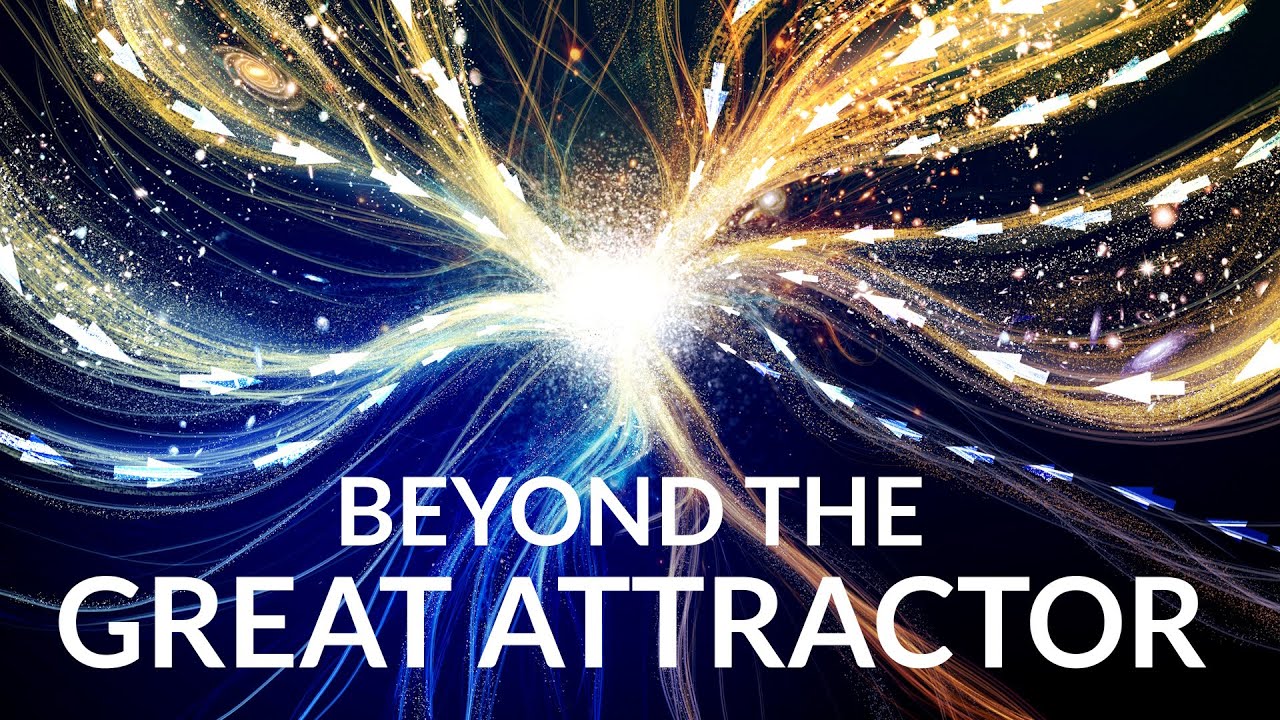

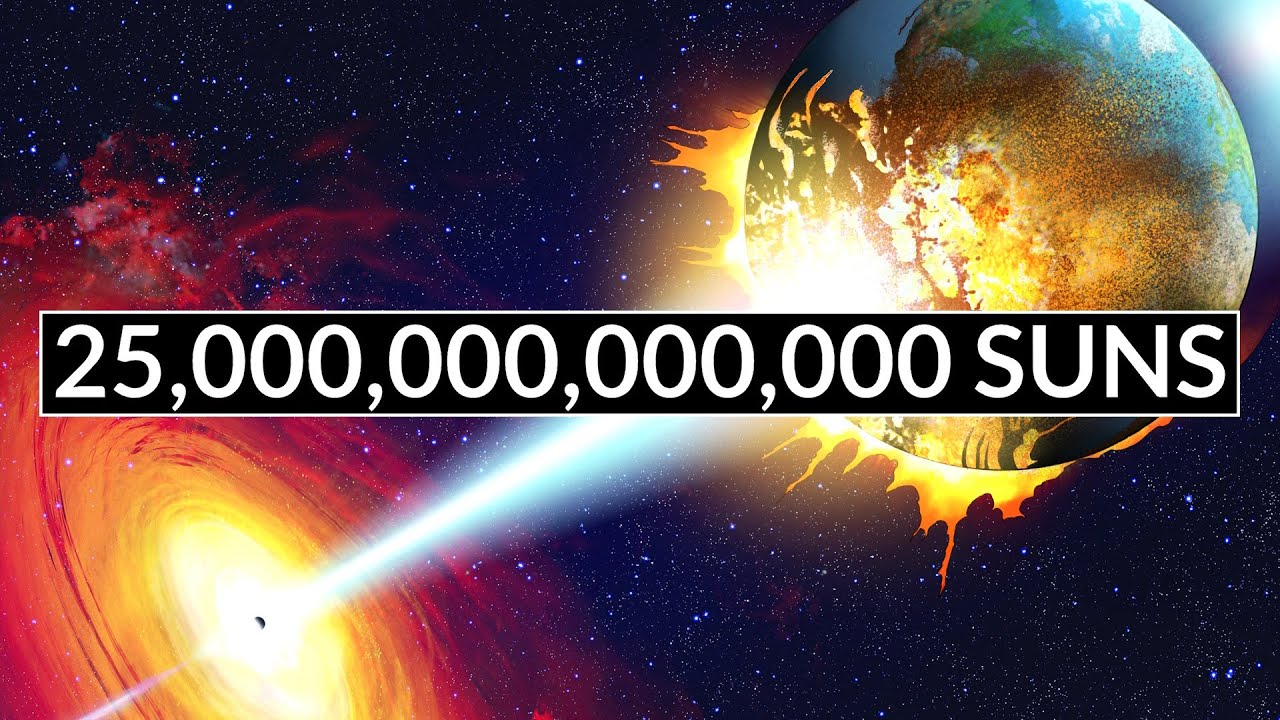




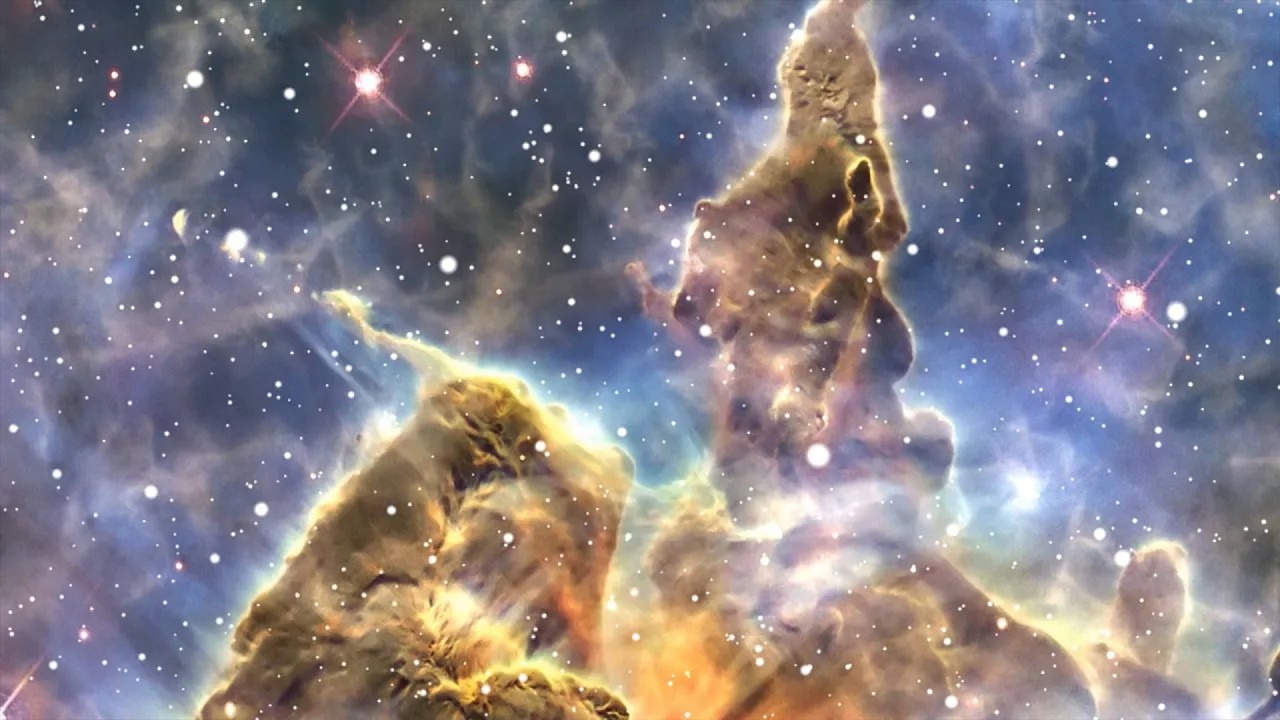

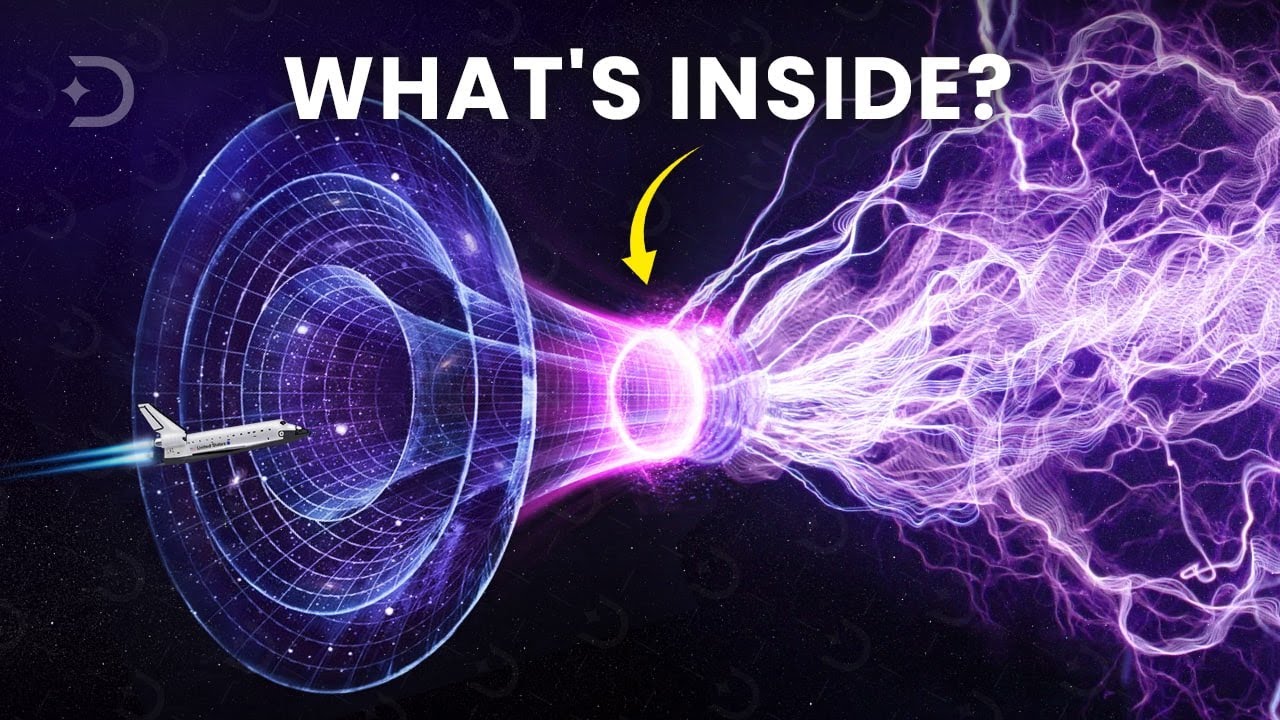


![To Reach the Nearest Stars [Space Documentary 2023]](https://img.youtube.com/vi/LTxuUs9YWoc/maxresdefault.jpg)