marketing is Icky it's deceptive it's overwhelming either I don't put food on my table uh or I do but I sell my soul someone who's gone through this process and is right here versus right trying to skip to right here this person is so much more educated on what you do and their problem and the potential solutions they can now fully value your offer and so then I discovered oh man I can just erase a headline on my website and write a new one and sales any [Music] increase hey everyone I am here today to
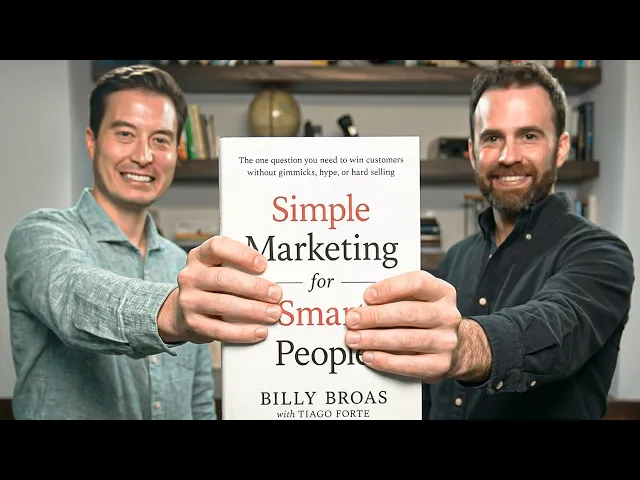
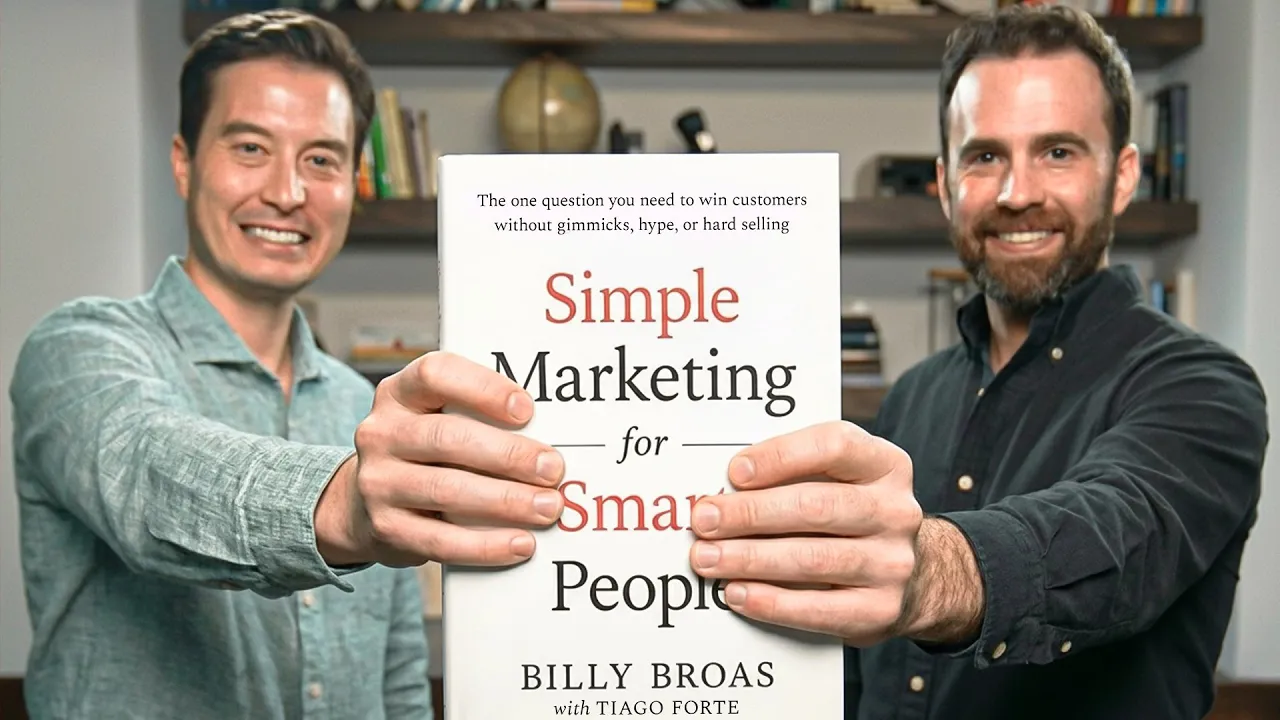
share with you a new book called Simple marketing for smart people which I co-authored together with Billy Ross a friend marketing expert who was really pivotal transformational in the Journey of building a second brain so welcome Billy thank you excited to be here what was the first moment that you can remember us speaking it was at the teachable summit and they were featuring ing online course creators and I said oh Thiago I took thiago's course a few years ago when I was going through a course I thought man this material is so good but I
see the way that you're marketing it and it's working for super productivity nerds like me but the average person is just not going to see the full value that you're providing here we need to describe this thing differently so we did that I joined your program you coached me helped me through different things and we basically created what I would say is the first real marketing a series of emails for building a second brain and the next year when the pandemic hit it just exploded so if you had to summarize who this book is for
and what you're trying to do for them how would you do that the book is really for the person who needs to do marketing to sell their products and services but they're not a professional marketer there are a lot of smart people out there these days and by smart people I mean they have a subject matter expertise there's a topic that they know a lot about and because of that they get great results for their customers and clients but they struggle to Market that thing and they realize oh my gosh I need to Market this
thing to reach new people but I'm not a professional marketer marketing is Icky it's deceptive it's overwhelming I wanted to write a book for that person the person who has a great product or service but struggles to Market it which describes me perfectly back in 2019 exactly yeah and me when I first started going into business for myself leaving the 9 to5 world and I loved that job but eventually I just had to do my own thing I wanted to be free and so I went into a a topic that I knew a lot about
and was really passionate about which was brewing beer at home so as I worked that day job on nights and weekends I built this blog and then I started launching online courses and despite having this background I had an MBA so I had this fancy business degree and I thought oh yeah I can totally sell online beer brewing course it uh not the case it turned out to be one of the hardest things I ever did it was a very humbling experience and then I dove right in and said okay let me figure this thing
out let me learn this thing right that's the answer is more education that's always been my answer I eventually realized that marketing is not what I thought it was it wasn't all this deception and gimmicks and hype and everything at the end of the day it really is educating your reader so they can fully value what you do and that takes really good messaging and that's why this book is largely about messaging so this book is kind of encapsulating not just your work but your own life story and your own experience into almost what you
wish I'm guessing what you wish you could have read back then oh absolutely I tried so many things you know all the typical things that we try all the the WordPress plugins and doing social media and all that and then you know it was when I discovered copywriting again speaking of words right discovering copywriting which at first I thought was a legal term right I thought it was like copyright with an R but no it's with a W right it's writing and so then I discovered oh man I can just erase a headline on my
website and write a new one and sales increase and it was amazing to me why was I fiddling around with these WordPress plugins when I can just rewrite the words and that became the biggest leverage point for me and I'm always looking for leverage I want to get maximum output for minimal input I know you look at things the same way and so that's when I said let me stop all this other stuff that I'm doing all these other marketing activities they're all Downstream from finding the right words I want to dive more into something
you said casually but that is so critical it was such a such a kind of life-changing realization for me which is that marketing is not deception why is that such an important point to to emphasize yeah if you have to sell something so if you're a self-employed a freelancer an entrepreneur a Creator then you're in this position where you need to sell to put food on your table but if you go into it thinking that marketing is deception or that you're fooling people or that it's evil then that doesn't give you very many choices does
it like okay either I don't put food on my table uh or I do but I sell my soul I refuse to make that decision so of course there are people who use marketing for evil but you have a choice and you don't have to and there are plenty of examples out there of people who do marketing for good because they truly have something that can help someone and so all you have to do is look at those examples those models and say I choose to follow that example not that deceptive one so instead of
mar marketing being about deception and manipulation what is it about it's really about educating people so you are coaching them educating them informing them you treat people like they're smart and you know David ogelby a a famous Advertiser he has an ad agency named after him he talked about this and he said treat your reader treat your perspective customer or client as if they are intelligent because they are and so I like this idea of the the golden rule of marketing Market to other people how you you want to be marketed to and when I'm
being marketed to I can tell when they're treating me like I'm dumb it's like really like I don't buy what you're saying right now I just don't believe you treat me like I'm smart and so that's how we should Market to other people as well and when you take that approach it leads you down this path of educating and informing and being brutally honest even if that means telling the person you know what I'm not right for you right now but this other person is let me make an introduction and if you're doing marketing correctly
there should always be cases where you're telling that perspective customer or client I'm not the best fit for you this person is I I just love this because instead of marketing being you know as as a as a teacher and a content creator I love the teaching part I love delivering value through knowledge instead of marketing being like okay let me turn off that part of myself and go into this other identity that is completely the opposite of everything that I yeah it's like the inversion the opposite of everything I want to do and and
enjoy doing marketing as teaching as an extension as a really uh continuation of the teaching that you're already doing anyway is so is so much more accessible to this kind of person and it's really survivorship bias were the examples that we know and we talk about this in the book The examples we know about marketing are these loud glaring ones it's the snake oil salesman it's the used car salesman I always say marketing is like a Tay you only notice the bad examples right so it's no no surpris that we think that that's what marketing
is but you know if you set aside those examples and you look at even the best marketers and copywriters throughout history they were not about making these big outlandish claims no they were about making solid arguments backed up by proof and yes really educating your customer so that they can make an informed decision and not just make that buying decision but then on the delivery side on the product side of things and and and you can attest to this that they're going to be good customers right because of the way that they were brought in
the way they were brought into your product or your service really matters and you want to think about that on the marketing side as well because it's very easy to just shove people through the door right and twist arms and force them through and often we only see that side of it we say oh well the sale was made what you don't see is one month 6 months a year down the line and often if you bring them in with that heavy-handed approach a lot of those people refund or just have a lot of customer
support tickets or just headaches for you it's not pretty but you often don't hear about that side of it so that's why it's so important to focus on how you get that sale so this book was written for the typical smart person uh which is a wonderful kind of person to be but also comes with its own very specific blind spots and pitfalls what would you say are the main pitfalls of the typical smart person your gift of knowing so much about your topic and being so good at what you do there's that double-edged sword
there where it becomes very difficult to meet people who aren't down in the weeds with you to meet them up here where they are if you try to meet them down here you're going to lose them these are my weeds right so you learn a lot you notice all these distinctions about your topic all the advanced Maneuvers Advanced Techniques and you're trying to meet the customer let's draw your customer at this point they're not your customer they're your prospect down here and you're just going to lose them if you do that so what you need
to do which is very difficult for the smart person is to come up and meet this person here instead kind of rise above the weeds and the details yes exactly which is going to hurt for a lot of people because this process coming up here is going to feel like dumbing it down but it's actually a word that you use all the time which is distilling or simplifying right so you don't give them all the details yet because it's not good for them it really doesn't help them you're going to they're going to turn around
and go to someone else so what you do is you distill it down you simplify it meet them where they are and then you only take them as far down as they need to go to get the results so coming up to this point that's what marketing is meeting your customer where they are and they're up here not here and what does this this mean concretely like what what are you speaking to what are the topics you're discussing at this higher elevation so the key question that we pose in the book is this question what
does my customer need to believe in order to buy kind of a provocative question but it's a really powerful one and when you take this approach when you look at marketing through that filter that question automatically jumps you out of the weeds and so that's why it's so useful because it's hard to get out of the weeds otherwise so what you're doing when you ask that question is you say okay well what are the things that I've been taking for granted or the assumptions that I've been making and then you go back and you challenge
those assumptions and you actually give voice to them and you use them to help educate your perspective customer and that turns into your marketing content that meets them where they are and then can take them deeper let's dive into a little bit of belief building this is really one of the central ideas in the book uh for someone who's wondering you know why why beliefs why do I have to build them like how do beliefs enter into marketing great question and yeah that is the main technique that we teach in the book so let me
draw it for you and what we really need to do is ask the question first what is marketing and what is sales okay so I'm going to draw the Spectrum and this is you can think about this as the buyer's journey and so it's really split up into two phases but they're not equal so this phase is about 25% of the process and this is sales so what happens what is what are the earlier stages of that Journey well this is marketing so there's a lot of definitions of marketing but I this for me made
it the most clear is to think about it this way through this Visual and so this is what marketing is and it lets us ask the question okay well what's the job of this stage and to answer that question I love the quote from the famous Management Consultant Peter Ducker and he says that the goal of marketing is to make selling unnecessary and so this is really for the smart person who doesn't like the selling phase because selling we we think of as like twisting arms making the pitch making the offer offering discounts whatever it
is all those merchandising tactics that we think of slashing out the price and writing a discounted one right and if you do this right as trucker said this becomes unnecessary or at least a heck of a lot easier so the mistake a lot of people make is they take someone who's completely cold and they jump right into selling and of course if you're pitching someone in hard selling and they're way over here it's going to turn them off right so it's it's no surprise that salespeople have this negative uh impression so what you want to
do is do marketing and that's where belief building comes into play so you want to ask that question which we posed in the book what does my customer need to believe in order to buy so over here where they are completely unaware they know that there's something wrong they can feel that unease that tension in their body but they can't articulate their problem and so you've probably been in the situation where then someone comes along and articulates your problem even better than you can and you're like oh man that is it right so that gets
you to about right here right now they're looking for Solutions solutions to the problem and again we're educating them we can't take anything for granted we need to educate them on these different solutions so that gets them about right here and then we need to take them a little bit further and talk about your potential solution your the way that you go about solving the problem and that gets them about here and then only then are they really ready for the sales process because you know someone who's gone through this process and is right here
versus right try to skip to right here this person is so much more educated on what you do and their problem and the potential solutions they can now fully value your offer and they're much more likely to take you up on it and it's also a much more ethical way of doing it and a lot more enjoyable for the business owner this is also kind of um especially relevant into the internet right because in the past if someone's at a store or on the street or whatever if you have one interaction one shot with them
to turn them into a customer you have no choice but to try to skip to the end but with the internet we have these different touch points they're subscribed to your newsletter they're subscribed to your YouTube channel they're seeing your posts on social media whatever it is so you you basically have the opportunity to take them on this journey right exactly yeah I use a golf analogy for this one so a lot of people people try to hit a hole in one whack it off the tea and hit the hole in one like that maybe
um vendor on the street who they they got to capture that person who's walking by so they try anything right but on the internet we have this huge advantage and that we can continue to follow up with people and so we don't have to hit that hole in one we can just hit it down the Fairway get it pretty far down and then keep hitting that ball and getting it closer and closer and closer and if you think about all your customers your whole audience as all these different golf balls eventually you're going to be
at this point where you're right here and you have all these golf balls around the hole and all you got to do is just tap them in let's make this super tangible because I remember when I when you were first introducing this idea to me I thought well people already know everything they need to know about no taking and Knowledge Management but we actually found through talking to people through surveying them that there are some beliefs very early on in the journey for example the one I'll always uh remember is my knowledge is valuable and
worth capturing and revisiting I had never considered that there are a lot of people in fact the vast majority of people that don't even believe that it's never occurred to them that they have knowledge and expertise and and insights and things like that and so as long as I didn't address that belief which is quite a core fundamental belief the market of people that I could reach was drastically limited yeah yeah uh a assumptions will destroy your marketing efforts so question every assumption and if you're a smart person you're probably making a lot of them
you know so you were doing a lot of tutorials on note taking and and really being in the weeds of that which assumed that people one knew that their knowledge was valuable and two had gone all the way down the Spectrum towards doing something about it so you're operating right here but everyone else is way Upstream here so what we did was we questioned that assumption and and didn't just question it internally but turn into words on the page into emails and marketing material and once we did that then we met people where they were
which was right here and only then could we take them further Downstream here to where we were doing these more detailed tutorials yeah it's like at the time at the beginning I thought I was teaching a course on how to use Evernote it was a it was a it was a technology it was a software tutorial course but over time I've kind of gone upstream and realized it's really about development it's believing in themselves trusting that they have something to say that's worth saying uh trusting that technology can be their friend not their enemy these
things which really don't have much to do at all until later with the technical details of how to use a particular piece of software exactly yeah a lot of especially online course creators that I work with get caught in what I would call Help Desk mode because you're teaching Evernote and you're putting out YouTube videos and doing tutorials on it and so that's what people think that you specialize in and so they ask you questions about that and you feel like you're the help desk for Evernote now what you did was you took a step
back and said no Evernote only really is part of this larger thing which is really more personal development and achieving my goals and and creating great works and when you do that you serve your your customers so much better and you can charge higher prices because what you're doing is more valuable it's higher leverage for them than just learning how to click a drop- down menu on Evernote uh there's so many benefits to taking this approach where you pull yourself out of the weeds and you meet your customer where they are at the same time
it's so hard right I remember how hard it was because it was like all this the ironically the the doubts and the fears that we address with personal development came up things like who am I to speak to things like their psychology their beliefs their I mean their past their background their relationship with their with themselves so I had to almost expand myself and believe in myself more to speak to those issues is that a common what are some what are some common things that people have to do or learn as they go kind of
Upstream here you have to really value yourself and what you know and that's a big Pitfall I see with smart people and and look this happened to me too I had this beer brewing website and I was really in the weeds of beer brewing I mean really Advanced Techniques how to harvest your yeast how to brew all these Advanced styles of beer and when I took a step back and started being more of a Storyteller and talking about why we brew beer in the first place and how much we love it and how much it
can change our lives it was a little bit weird for me at first but I gave it a shot I experimented because I I I heard from someone else that this is the better approach to take kind of like we're telling everyone right now and that's what I would recommend is you just experiment with this and you will notice you will notice a difference in your audience you will it's a palpable reaction and it's funny because I remember one of the first big responses that you got and it was from the person who wrote the
forward to our book who is Ali abdall yes and because he posted this I think it was on his blog and he said oh man I just came across this guy Thiago Forte and when he was writing Tiago is like he was speaking directly to me and I remember that you highlighted that and said that's why I'm taking this approach because of people like Ali yeah because he doesn't use Evernote and never will so as long as I was stuck in help DUS dusk mode I could not access the vast majority of people who are
simply using other software that's been another effect of this is as you go Upstream there's just more people over here right and so for example once I started realizing oh I'm actually teaching a set of principles that apply to any software suddenly the people who could be part of this journey at all went from the Evernote user base which is Tiny to anyone who uses practically any software that vastly expanded my market increased my sales and also by the way LED to other things like my book you can't write it doesn't really make sense to
write a book on one software program you write it once you have the confidence that you have a set of principles that expand beyond that narrow thing for someone who is not convinced or they think I can't change someone's beliefs or people's beliefs those are just what they are and they can never change or's anything like that how do we actually figure out what beliefs our potential customers currently have and then how do we change them yeah it's a good question because you do need to identify those current beliefs before you can instill these new
beliefs this is this whole idea of meeting people where they are meeting people where they are in terms of their current beliefs so let me give you three questions that you can ask to help you with this okay so the first one is what are the bad questions that they're asking you might call these dumb questions don't say that to them you might think that though in your head any expert has experienced this where someone asked you a question who's a office in your topic and you really don't even want to answer that question you're
like I got this as an example with my beer brewing website all the time and I would have people ask me these really Advanced questions about Brute you're Brewing like what yeast strain should I use should I use a strain from northern Belgium or Southern Belgium which is a good question for a really Advanced Brewer who's maybe trying to win some big competition but for someone just starting out that is way too in the weeds and it would be wrong for me to answer that question because it's a disservice to that person because it tells
it validates that question and it says that's a good question to ask so this goes back to this whole idea of we're operating at this higher level trying to send someone down the right path for them before pulling them down in the weeds so really listening for those bad questions is a great indicator of the current beliefs that they have uh funny enough uh a bad question in my field is which note taking app should I use at least for a first question people think that's the first step but well how can I even engage
in this without a not taking app but asking that question doesn't make any sense it has no meaning until you know what you're trying to accomplish so I try to get them instead maybe we'll get to this later to ask well what are you trying to accomplish which projects which goals cu the answer to to that question which note-taking app should you use might be radically different depending on what you're trying to accomplish so let me give you a a second question you can ask here which is what are the myths that my audience believes
good example of this I was doing work with a client who's a photography expert SS online courses in photography has a big audience and a huge myth in the photography world is that the most important thing is the quality of the camera that if I just get a better camera and spend more money on that fancy camera it's going to automatically improve my photos and what you actually find is that it often makes them worse because you don't know how to operate the thing and you don't have the skill set so asking yourself what are
the myths or maybe the misconceptions that my audience has that's a great way to identify their current beliefs and you can meet them where they are and take them further you know my dad's a professional lifelong artist he buys his Supply like at the cheapest hardware store he gets the cheapest canvas he gets paint that's like not even like professional paint it's like house paint or something he looks for the most Bare Bones utilitarian you know the most the cheapest brushes because he knows those things don't matter and often he'll comment that he'll you know
he'll go to someone's house who's a very occasional hobbyist painter and they have the most fancy expensive premium materials it's all untouched it's just sitting there almost just as a as a as the scenery so the third one is behaviors it'd be nice if we could just ask someone well what are your current beliefs around X topic but it's usually not that easy people aren't aware of these things so what you want to do is look at their behaviors look at the things that they are doing look at how they are spending their money look
at what they are spending their time on does anything come to mind from your topic yeah it really does it's uh people who are spending tons and tons of time you know meticulously organizing uh setting up fancy labeling systems and tagging systems and databases with many rows and all these properties and basically a lot of fussy in the weeds uh uh kind of meticulous effort and it really takes a lot of effort instead of spending that effort on actually moving forward the things that are important to them yeah so you looked at these behaviors you
saw that they were always organizing their Evernote or their second brain tool and what that shows is really their value system yeah right that's another way to think about this belief building effort is what do people think is important what do they value the most they say this is super valuable and how can you look at that and say No actually that's down here and this other thing that you weren't even looking at is up here it's way more valuable it's way more important yeah it's their value system and it's also just their theories about
what is going to work the reason they're putting in all that effort sometimes it's because they actually inherently enjoy it that is true but many times they think oh if I just organize you know all my notes according to this seven criteria tagging system then the thing I really want to do which is always some sort of creative project some sort of creative Endeavor will be easier and often I just have to shine a light on that and say it won't the root issue here is that you're afraid you need to face the fear and
you need to face it usually through taking action so this is a great framework to identify their current beliefs but I think there there's kind of an elephant in the room here that I want to I want to address which is how do you change them how do you actually instill a belief that someone doesn't currently have you can't just leave these as answers on a worksheet something that's just internal for you what you need to do is give voice to these false beliefs that they have and so you do that through your marketing content
and that becomes the goal of your marketing content and this is something that I I really preach because it's so important and it's not very well known today is that what you're doing in marketing is making an argument a lot of people with their marketing content they're just talking about their topic just kind of generally talking about their topic or teaching these implementation details these tutorials but we talked about this value system right and identifying what's important while you can't just take for granted that people are going to believe you or that people know that
you need to argue for that it is a stand that you are taking these are assertions that you're making and we talk about this in more depth in the book and so this becomes the goal of your marketing content is making an argument for your recommended way of doing things and that is that second phase of the belief building process so the first phase is identifying these current beliefs and we gave you some ways to do that the second phase then is making an argument for your way of doing things and that way they can
properly value your product and decide whether or not to invest with you so let's kind of unpack that a bit so you are making an argument in favor of a new belief or a certain a certain point of view how how do you like I really want to zoom in on what makes that person accept that how do you present that argument in a way that they go oh I see that point of view I am now going to accept that belief yeah so a great way to think about this is to think about a
lawyer in a courtroom so the lawyer is making an argument to the judge or to the jury so you can ask well how does a lawyer do do that well one you have to make these claims or assertions in the first place so to take one of yours you're making this assertion that well it's not really the tool that's important it's actually what you want to achieve with the tool that matters and unfortunately you can't just say that right because that would just be the claim you need to back that up with proof and so
what the lawyer does in the courtroom and we've all seen this whether we've been in court or we've seen the courtroom dramas exhibit a exhibit B Exhibit C right that is proof or evidence and there's a variety of forms that that can take but that is the basic one two punch is making these claims or assertions and backing them up with proof and if you do that and you do it well then you will sway the judge or the jury they will say okay I've seen enough I believe you and that proof like you said
can take different forms right like what are a few of those of those forms that that proof can take yeah so my favorite framework for this goes back funny enough thousands of years to the ancient Greeks and Aristotle and the field of rhetoric today in marketing we've largely forgotten what marketing is it really is rhetoric and so the proof points that we can use my favorite ones come from Aristotle and he has three primary ones ethos pathos logos so ethos this has to do with the character of the person making the argument so an authoritative
figure someone who has experience like you do in your field is going to be more credible than someone who doesn't have have that kind of experience or authority so ethos is the character of that person it can be the person who's selling the product or you might bring in someone else may be an outside expert who has credibility next we have Pathos and so you can think about pathos as emotion so you think about that lawyer in the courtroom and it's not always a dry and boring argument it's often not the best lawyers often tell
stories I mean we are humans at the end of the day and we respond to stories so telling emotional stories whether it's your story or someone else story is another great way to get your point across to make your argument to back up your claim and you can deliver these these different kinds of proof via many channels right this can be a blog post on your blog uh some text in email that you send out can be something on social media a YouTube video you you are free to choose the specific format that you're going
to use to deliver those right exactly that's the great thing about this approach is that it's platform agnostic so you can use it in your emails you can use it on Facebook and it's medium agnostic you can do this through written text through audio or video I think that point that its platform agnostic is so crucial I mean as we're speaking right now uh the US Congress is basically going to ban Tik Tok and I just think of all those creators just as an example who invested in some cases years of their lives in that
platform it's just going to disappear or maybe it won't disappear but it'll be worse than it was before um you really if you're in it for this for the long term and I think we want people to be you really can't be wedded to any specific tactic or platform right exactly and and now you can see the mistake in thinking of marketing and immediately thinking of Tik Tok or Facebook or a platform I mean the stuff we're talking about is way Upstream of that and that's why we say get that core message correct which has
to do with making an argument and backing up with proof and then you can send that core message down any of these distribution channels including Tik talk or if you don't have access to that anymore no big deal we'll send it down email or Facebook or any of these other ones this is actually something I want to I want to double down on a little bit um how does this overall philosophy this overall approach simplify the burden the effort that goes into marketing for for creators and experts that burden is largely caused by those Downstream
tactics and marketing channels if you don't do any of this upfront work and you dive right into Faceook or Instagram you're going to be overwhelmed by things we've all seen these articles uh 50 Instagram hacks 20 ways to go viral on Facebook those things only really matter if you get this Upstream core message correct and you know I'm showing it like this as a single Circle single simple it's it's one thing it's not easy but it's simple meaning it's not complex and it's it's so true I mean i' I've built a sizable business and we
still haven't done most of those Downstream tactics we're not on Instagram we've never run a paid ad we've never done a webinar uh it's like we've actually built a sizable business with a sizable teams still Focus really just mostly on email email is kind of the ultimate uh for just delivering you know compelling convincing words to people's brains uh and I just love that I I get to ongoingly ignore I feel like 70 or 80% of the whole noise that is marketing and still have great business uh a great amount of Revenue a great team
I don't have to occupy my brain which doesn't like occupying itself with that information with all the fine grain tactics and tricks of marketing yeah it's fun when you can say no and still win yes and who would you say this book is not for not for what I would call the Bro marketers the ones who would just churn and burn and have their Lamborghini in the background and don't care at all about the the quality of customer they're getting they're just trying to maximize like okay how much money can I make and and get
refunds even as high as possible without getting into major trouble uh so if you have that churn and burn mentality or you're just a short-term thinker uh or you're just really into all these these gimmicks and hype and all that stuff then this really isn't right for you this is a much classier approach even a more academic approach that might sound boring but um but I don't think having a thriving business doing what you love and having great clients is boring at all this conversation has even though I also uh co-author of the book has
further clarified for me kind of what our main messages with this book A lot of people especially smart people think that marketing is inherently deception and it is very much not the case they think it's channels they think it's Tik Tok oh no now it's Snapchat oh now it's Instagram reals or whatever it is it's really not about that and lastly they think it's tactics a little trick a little technique that is somehow going to juice up sales and it really is not about tactics instead marketing at its core at its heart at least if
you do it this way is really about education exactly you're educating them so they can properly value your offer Billy thank you for being here uh I'm so excited for this it's been a long time in the making we've been working on this many months especially you and I've you know I've never put out a marketing course or product or book of any kind there's no other methodology or philosophy that I've been able to stand behind but I'm proud to put my name on this book and you can see the cover here because anytime someone
asks me about marketing which they often do I'm just going to direct them straight here to this book it really is the best approach to what I think is such a core skill for so many creators thank you yeah it is something that's so necessary and we might even see it as a necessary evil but I hope after this like me and like you you have this realization that it doesn't have to be that way and it can actually be a really good and valuable thing so thanks so much we've had a heck of a
a story together to this point I can't wait for this next chapter sorry the pun in our story together uh but it's going to be a really fun one and uh thank you for everyone who reads the book and watches this video if anything we've said today resonates with you go ahead and pick up a copy of simple marketing for smart people on amazon.com it's available as an ebook and a paperback and I really hope you get the value and really the transformation for yourself that I got for me and my business they're not about
tricking or manipul man if anything we've said today resonates with you go ahead and pick up a cop