In the endless stretches of space where stars shine and galaxies drift incredible Mysteries await from the wild storms on distant planets to the strange depths of black holes the universe is full of secrets that defy our understanding join us on an exciting journey to uncover the most mindblowing mysteries in our universe [Music] the Great Red Spot on Jupiter a massive Storm larger than Earth has baffled scientists since its Discovery in the 17th century one of the most mysterious features of this colossal Tempest is its longevity despite the dynamic and chaotic nature of Jupiter's atmosphere the
Great Red Spot has persisted for over 300 years researchers initially thought thought such a storm would be short-lived due to turbulent winds surrounding it yet it has remained a dominant feature on the planet Scientists now suggest that the spot's impressive size and depth extending possibly 100 miles into the planet's atmosphere contribute to its prolonged existence by preventing smaller storms from dissipating its energy another Enigma surrounding the Great Red Spot is its characteristic Crimson Hue while the storm is visually striking the precise reason for its red coloration remains elusive various hypotheses propose that the color could
be due to complex Chemical reactions involving the Trace Amounts of sulfur and phosphorus containing compounds in Jupiter's atmosphere these compounds might be altered by the sun's ultraviolet radiation resulting in the Ruddy appearance of the storm indeed understanding the spot's coloration could offer insights into the chemical composition and environmental processes of Jupiter's upper atmosphere a region still cloaked in mystery Saturn's rings are one of the most captivating features in our solar system spanning hundreds of thousands of miles yet astonishingly thin no more than roughly 30 ft thick in some places the primary factor that helps these
Rings maintain their structure is the gravitational influence of Saturn's numerous moons often referred to as Shepherd moons these small moons exert gravitational forces that confine the ring particles preventing them from Dispersing into space for instance the moon's pan and Atlas play crucial roles in maintaining the Integrity of the A- ring and the thin F ring respectively by corralling the particles within defined boundaries Additionally the ring stability is enhanced by the orbital resonance between certain Moon and ring particle orbits this phenomenon occurs when particles in the Rings and the moons orbit at integer ratios Reinforcing gravitational
interactions that help maintain the structure and organization of the Rings the result is a series of intricate and dynamic patterns that are continuously shaped and reshaped over time astronomers believe that the Rings are composed primarily of water ice mixed with dust and other chemical compounds reflecting sunlight and creating their luminous appearance despite being an ancient structure believed to be over a 100 Million years old these rings are constantly evolving offering a vivid lesson in Celestial mechanics and the delicate balance maintained by gravitational forces in solar system the hexagonal storm on Saturn's North Pole is one
of the most intriguing atmospheric phenomena observed in our solar system initially discovered by the Voyager spacecraft in the early 1980s this geometric weather pattern is a vast persistent Cloud pattern in the shape of A hexagon with each side exceeding the diameter of earth scientists attribute the formation of this hexagon to a combination of atmospheric Dynamics and fluid mechanics essentially the hexagon is a standard wave pattern in Saturn's atmosphere caused by the interaction between Jets of air moving at different speeds these atmospheric Jets incircle the pole and are shaped by the planet's rapid rotation which completes
a full turn on its axis in just about 10 Earth Hours laboratory experiments and computer simulations have further elucidated how such a shape could naturally occur when fluids at different rotational speeds create sheer regions polygonal patterns can emerge in Saturn's case the differential rotation speeds in its atmosphere create a stable wave that takes on a hexagonal form moreover the hexagon's stability and persistence suggest it is deeply embedded in Saturn's atmospheric layers Influenced by deeper rotational currents another layer of complexity is added by the shifting colors observed within the hexagon over time driven by seasonal changes
that affect the planet's chemical composition and sunlight exposure understanding this hexagonal storm not only provides insight into Saturn's meteorological mechanisms but also offers broader implications for the study of fluid dynamics and atmospheric sciences Uranus's peculiar rotation Almost sideways compared to the orbital plane of the solar system is one of its most mysterious and distinctive features this extreme axial tilt about 98° means that Uranus essentially rolls around the sun on its side leading to extreme seasonal variations scientists believe this unique orientation was likely caused by one or more colossal collisions during the planet's formative years over
4 billion years ago a massive impact with A protoplanetary body possibly as large as Earth could have knocked Uranus into its sidewood tilt forever altering its rotation further supporting this Collision theory is Uranus's internal heat distribution and magnetic field which are both highly irregular compared to other planets the giant impact hypothesis posits that the force of the Collision would not only tilt Uranus but also disrupt its internal structure affecting its heat distribution from the Core to the surface this disruption might explain why Uranus radiates relatively little heat compared to its fellow gas giants Additionally the
planet's magnetic field is tilted approximately 60° from its rotational axis and offset from the planet's Center suggesting that its internal Dynamics are quite unusual this asymmetric magnetic field could also result from the turbulent aftermath of the proposed ancient Collision making Uranus a Captivating subject for further astronomical study Neptune's dark spots first observed by the Voyager 2 spacecraft in 1989 are enigmatic and dynamic storms that Fascinate astronomers unlike the Great Red Spot on Jupiter these storms are temporary appearing and disappearing over several years the leading theories behind their formation revolve around the planet's atmospheric Dynamics and
unique composition primarily these dark spots Are thought to be high pressure systems akin to anticyclones on Earth formed much higher in Neptune's atmosphere they appear as dark spots because they lack the translucent ammonia-rich clouds that permeate other parts of the planet revealing deeper layers composed of methane and hydrogen sulfide the stability and movement of these dark spots are attributed to Neptune's differential rotation and intense wind speeds which can exceed 1200 mph these rapid winds and the planet internal heat create turbulence in the atmosphere likely fostering conditions conducive to the formation of dark spots furthermore the
extreme cold in Neptune's upper atmosphere around- 373 de F contributes to The Peculiar chemistry and Cloud Dynamics allowing these storms to manifest with their distinct dark appearance the temporary nature of the dark spots in contrast to Jupiter's persistent Great Red Spot Suggests that Neptune's atmospheric condition are highly volatile and undergo significant changes over relatively short time scales providing an area ripe for ongoing investigation and Discovery in planetary science the asteroid belt a vast region populated by Rocky remnants lies between the orbits of Mars and Jupiter its formation is closely tied to the early dynamics of
our solar system dating back about 4 and a half billion years the Prevailing Theory suggests that the asteroid belt is comprised of primordial materials that never coales into a planet in the nent solar system planetesimals the building blocks of planets collided and merged to form the planets we know today however in the region of the asteroid belt Jupiter's immense gravitational influence disrupted this process the gas Giant's powerful gravity stirred up the region causing collisions to be too violent for Accretion into a larger planetary body resulting instead in a collection of countless smaller fragments these remnants
hold profound secrets about the early solar systems conditions and composition by studying the asteroids scientists can glean insights into the primordial material from which the planets formed offering a window into the processes of planetary formation and differentiation certain asteroids are Composed of relatively unaltered material preserving the original chemical signatures from the Solar System's birth these ancient rocks can reveal information about the distribution of water and organic compounds shedding light on the origins of water and possibly life on Earth furthermore missions like NASA's Osiris Rex to benu and Japan's Hayabusa two to ryugu aim to return
samples from these bodies promising to unlock more secrets Bound within their ancient surfaces Venus often referred to as Earth's twin due to its similar size and composition presents a stark contrast to our own planet with its hellish environment of scorching temperature and crushing atmospheric pressure the transformation of Venus from a potentially habitable world to its current inhospitable state is attributed to a runaway greenhouse effect billions of years ago Venus may have had liquid Water and conditions conducive to life however intense volcanic activity released vast quantities of carbon dioxide into the atmosphere without a robust mechanism
to sequester this carbon like Earth's carbon cycle involving Rock weathering and biological processes the greenhouse gases accumulated unchecked the thickening carbon dioxide atmosphere trapped increasing amounts of solar heat leading to skyrocketing temperatures as the Temperatures Rose any existing oceans started to evaporate adding water vapor a potent greenhouse gas into the atmosphere further amplifying the heating in a vicious cycle this runaway greenhouse effect LED Venus to reach surface temperatures exceeding 800° F hot enough to melt lead and pressures over 90 times that of Earth's at sea level Additionally the lack of a significant magnetic field allowed
the solar wind to strip away lighter Elements from the atmosphere including hydrogen from any water vapor making the loss of water irreversible the dramatic transformation of Venus serves as a cautionary tale about the impact of greenhouse gases on planetary climates understanding Venus's past and its climatic Evolution provides critical insights into atmospheric Dynamics and offers valuable lessons for comprehending Earth's climate system and The potential future impacts of anthropogenic climate change Olympus Mons on Mars stands as the tallest volcano and one of the most striking features in our solar system Rising around 13 Mi above the Martian
surface more than twice the height of Mount Everest its immense size can be primarily attributed to Mars's lower gravity which is about 38% that of Earth this reduced gravitational force allows Martian volcanoes to grow taller before Their structure collapses under their own weight Additionally the lack of plate tectonics on Mars plays a crucial role unlike Earth where tectonic plates shift and new volcanic structures form over them Martian volcanoes remain stationary over their magma sources this allows them to undergo prolonged eruptions and continuous lava flow accumulating vast amounts of material in one location over millions of
years despite its prominence Olympus Mons Holds several Mysteries that continue to Intrigue scientists one of these is the volcano's relatively young age in geological terms with estimates suggesting its last eruption occurred around 25 million years ago a mere blink in the planet's history this raises questions about the current state of volcanic activity on Mars and whether the planet could still Harbor some geothermal activity beneath its surface another Enigma is the existence of the Caldera complex at its Summit which consists of multiple overlapping collapse craters indicating a series of eruptive phases understanding the exact sequence and
scale of these eruptions could provide deeper insights into the planet's geological and Volcanic history furthermore the sheer size and structure of Olympus Mons with its broad shield-like shape and immense lava flows suggest that the volcano's formation Involved not only typical basaltic eruptions but potentially unique volcanic processes not fully understood the study of Olympus Mons thus offers a significant opportunity to learn about comparative planetology volcanic activity on other planets and the evolutionary trajectories of volcanic features in varying planetary environments the Kyer belt a vast region Beyond Neptune's orbit teeming with icy bodies and dwarf planets like
Pluto is a Relic from the early solar system and provides crucial insights into its formation and evolution these Kyper Bel objects kbos are thought to be remnants of the primordial solar nebula that never coalesced into full-fledged planets during the solar systems nent stages the outer regions contained a vast dis of gas and dust that gradually clumped together into larger bodies through a process called accretion however the Region's low Density and the presence of massive planets like Neptune disrupted the aggregation process leaving behind a swarm of smaller icy objects over billions of years gravitational interactions especially
with Neptune have significantly shaped the Kyper belt structure for example many kbos including Pluto are in a special orbital resonance with Neptune Pluto follows a 2 to three resonance meaning it orbits the sun twice for every three Neptune orbits This gravitational dance ensures their paths do not intersect stabilizing their orbits such resonant interactions have sculpted the Kyer belt into a complex and dynamic region segregating objects into different populations based on their orbital characteristics the evolution of kbos like Pluto involves not just their orbital Dynamics but also their internal and surface changes Pluto's surface for instance
exhibits a variety of terrains Suggesting a history of geological activity the New Horizons mission in 2015 revealed that Pluto has mountains Plains and even evidence of possible cryovolcanism volcanoes that erupt with water ammonia or methane instead of molten rock these features indicate that despite their distance from the Sun the kbos could experience internal heating driven by radioactive decay or tidal interactions which might cause these icy worlds to remain geologically active Over immense time scales understanding how Kyer Bel objects formed and evolved sheds light on the conditions and processes that occurred in the outer solar system
studying these distant icy bodies helps scientists piece together the broader Narrative of planetary formation and migration providing a fuller picture of our Cosmic neighborhood's intricate history Mercury the smallest and innermost planet in our solar system Presents a variety of enigmatic features that continue to Intrigue scientists one of the most puzzling anomalies observed on Mercury's surface is the presence of Hollows these are shallow irregular depressions with bright reflective Halos that differentiate them from typical impact craters the formation mechanisms Behind These Hollows remain unclear but they are hypothesized to result from the sublimation or direct transition from
solid to gas of volatile elements such Volatiles might have been brought to the surface by volcanic activity or outgassing from the planet's interior resulting in the creation of these mysterious everchanging depressions as they evaporate under the sun's intense heat another anomaly on Mercury's surface is the existence of unusual large and unexplainable scarps or Cliffs known as low baate scarps these are believed to be thrust faults formed as Mercury's core cooled and contracted Over billions of years however what perplexes scientists is the recent evidence suggesting that some of these tectonic features may still be geologically active
data from NASA's messenger Mission indicated that these scarps might have experienced seismic activity in relatively recent geological time scales which challenges our understanding of Mercury's thermal Evolution and raises questions about the planet's current internal dynamism Additionally Mercury's extreme temperature fluctuations which range from 800° fah during the day to minus 290° fah at night contribute to surface anomalies for instance the planet's surface is dotted with secondary craters and ejector patterns that seem more chaotic than those on other solar system bodies this could be due to the interaction between Mercury's regolith and its tenuous exosphere influenced by
solar radiation and micrometeorite Impacts these anomalies on Mercury's surface not only add layers of mystery to the planet but also hold keys to deciphering the broader processes of planetary formation and evolution as scientists continue to study Mercury through missions like beepy Colombo our understanding of these surface features will likely expand offering deeper insights into the dynamic history of the smallest rocky planet in solar [Music] System detecting exoplanets which are planets orbiting Stars beyond our solar system is a challenging Endeavor given their vast distances and faint visibility compared to their host Stars however scientists have developed
several ingenious methods to discover and study these Distant Worlds one of the most successful techniques is the asterisk asterisk Transit method asterisk asterisk which involves observing the periodic dimming of a Star's light caused by an exoplanet passing in front of it these tiny decreases in brightness though often less than 1% can be detected by space telescopes like NASA's Kepler and Tess transiting exoplanet survey Satellite by analyzing these Transit events astronomers can deduce the exoplanet size orbital period And even some at atmospheric properties if the planet's atmosphere filters staright another prevalent method is the Asterisk asterisk
radial velocity or Doppler technique asterisk asterisk which measures changes in a star's spectrum of light caused by the gravitational pull of an orbiting Planet as the planet orbits it induces a small wobble in the Stars motion shifting its light spectrum toward the red end when moving away and toward the blue end when moving closer High Precision spectrometers can detect these minute shifts allowing scientists to infer the Presence of an exoplanet and estimate its mass and orbit ground-based observatories equipped with sensitive instruments like the harps high accuracy radial velocity Planet Searcher have been particularly effective in
utilizing this method another fascinating technique is asterisk asterisk direct Imaging asterisk asterisk which involves capturing pictures of exoplanets directly by blocking the light of the host star the this method is more suited For young massive exoplanets located far from their Stars often employing specialized instruments and techniques like coronagraphs or Star Shades to suppress the staright while challenging due to the planet's faintness and proximity to their bright parent Stars advancements in Adaptive Optics and Next Generation telescopes like the James web Space Telescope aim to enhance the feasibility of this method there's also the asterisk asterisk gravitational
Microlensing asterisk asterisk method method which takes advantage of the gravitational field of a star and its planet to bend and magnify the light of a more distant background star when such an alignment occurs the resulting light curve can reveal the presence of the planet this technique is particularly useful for detecting planets that orbit far from their host stars or are not easily detectable by other methods each detection technique has its strengths And limitations often providing complimentary information that when combined offers a richer understanding of these Distant Worlds as technology and observational methods continue to advance
the discovery and study of exoplanets will only become more precise expanding our knowledge of the universe beyond our solar system hot Jupiters are a class of exoplanets that are physically similar to Jupiter in terms of their massive Size and gaseous composition but orbit extremely close to their host Stars often closer than Mercury is to the sun these exoplanets can have orbital period perod as short as a few days resulting from their close proximity to their star this proximity causes them to be intensely heated with temperatures soaring to several thousand de fah the intense radiation from
the parent star can cause the atmospheric composition of these planets to differ significantly From cooler gas giants leading to phenomena such as strong winds significant atmospheric expansion and potential Mass loss by atmospheric evaporation the exact mechanisms behind the formation and migration of hot Jupiters are still subjects of ongoing research and debate one leading hypothesis suggests that these giant planets initially form in the cooler outer regions of Their Stars protoplanetary dis much like Jupiter in Our own solar system over time gravitational interactions with the dis or other giant planets lead them to migrate inwards these interactions
can be explained by different mechanisms such as dis driven migration where interactions between the planet and the gas of the protoplanetary disc create waves that transfer angular momentum and cause the planet to spiral inward another possible explanation involves Dynamic interactions with other planets Or Stellar companions in such scenarios gravitational perturbations from these bodies could send a giant planet into an elongated elliptical orbit that gradually circularizes and tightens due to Tidal forces ultimately resulting in a close stable orbit the Hallmark of a hot Jupiter the presence of hot Jupiters so close to their Stars challenges traditional
models of planetary system Evolution offering valuable insights Into the dynamism and diversity of planetary systems beyond our own these extreme worlds also serve as natural Laboratories for studying atmospheric physics under intense irradiation contributing to our broader understanding of exoplanetary atmospheres and the Myriad ways planet star interactions can shape planetary systems the discovery of potenti potentially habitable exoplanets worlds that might Harbor conditions conducive To life remains one of the most intriguing and challenging Frontiers in modern astronomy one major mystery revolves around the precise definition of habitability traditionally scientists have focused on the habitable zone or goldilock
Zone around a star where conditions are just right for liquid water to exist on a planet's surface however recent discoveries suggest that other factors such as the planet's atmosphere geological activity and Magnetic field play significant roles in sustaining life for instance the detection of exoplanets around red dwarf stars like the seven earth-sized planets in the Trappist one system raises questions about the potential for habitability around such Stars given their propensity for Stellar flares and varying Luminosity another mystery is the complex nature of these exoplanets atmospheres and compositions while the Transit method can reveal a lot
about a planet's size and orbit and the Ral velocity method can provide its mass understanding the atmosphere's composition is far more challenging recent advances in spectroscopy have allowed astronomers to analyze the light filtered through an exoplanet's atmosphere during a Transit event revealing the presence of compounds like water vapor methane and oxygen however interpreting these data Is fraught with ambiguity for example while the presence of oxygen might suggest biological processes it could also result from non biological processes such as photo dissociation of water molecules the discovery of potentially habitable exoplanets also poses the Enigma of their
true climatic and geophysical States the detection of exoplanets with earthlike Dimensions does not automatically mean they have Earthlike conditions for instance the planet's rotation and tilt ocean currents and volcanic activity can drastically affect its climate and potential to support life instruments like the James web Space Telescope aim to offer more detailed analyses of exoplanetary atmospheres but for now many questions remain about these distant world's true nature finally the mystery extends to the potential for life itself what if Life on other planets does not conform to the biochemistry we know on Earth the search for Bio
signatures indicators of life might need to be broader than looking for earthlike conditions and chemistry the discovery of extremophiles on Earth organisms that Drive in conditions previously deemed uninhabitable has broadened our perspective on where life might exist hence scientists are also considering habitability beyond the traditional Scope including subsurface oceans on moons like Europa and Enceladus which might be mirrored on exoplanets each discovery of a potentially habitable exoplanet brings us closer to answering one of Humanity's most profound questions are we alone in the universe yet each Discovery also underscores the complexity and diversity of planetary systems
continually expanding our understanding of what it means for a world to be truly Habitable super Earths are a fascinating class of exoplanets that are more massive than Earth but significantly less massive than the ice giants Neptune and Uranus typically their masses range from about 1 to 10 Earth masses despite the name super Earths are not necessarily similar to Earth in terms of composition or habitability they offer a diverse range of character istics that can differ significantly from our own Planet one of the primary ways super Earths differ from Earth is in their size and mass
which have significant implications for their structure and geology a higher Mass generally leads to Stronger gravitational forces which in turn affects the planet's atmosphere super Earths might have denser thicker atmospheres potentially dominated by gases like hydrogen and helium particularly if they formed in the outer regions of Their Stars protoplanetary disk and migrated inward these thick Atmospheres could lead to higher surface pressures and temperatures making conditions very different from those on Earth the interior composition of super Earths can also vary widely some might be Rocky worlds with large iron cores While others could be water-rich resembling
scaled up versions of Earth's oceans the presence of large quantities of water could lead to extensive Global oceans possibly hundreds of miles deep creating what are known as water water Worlds in such environments the oceanic pressure at the bottom would be immense potentially affecting the geochemical cycles and any potential life forms another intriguing aspect of super Earths is their potential for tectonic activity larger planets might retain internal heat for longer periods supporting vigorous plate tectonics which could be crucial for maintaining a stable climate and recycling essential minerals and gases however the exact Nature of tectonic
processes on super Earth's remains speculative given that we currently understand tectonics only in the context of Earth furthermore the climate and weather systems on super Earths could be radically different thick atmospheres and strong Greenhouse effects might maintain high surface temperatures while rapid rotation could lead to intense weather patterns and storm systems conversely some super Earths may have atmospheres with Compositions that allow for more temperate climates potentially creating habitable conditions given their divers super Earths represent a broad class of planets that challenge our understanding of planetary formation and habitability they might range from hostile High Press
worlds with crushing atmospheres to temperate ocean covered planets with conditions potentially suitable for Life the study of super Earths is still in its infancy but with advancements in Telescopes and observational techniques the mysteries of these intriguing planets will likely continue to unfold deepening our understanding of the Myriad ways planets can form and evolve when scientists began detailed investigations of exoplanet atmospheres they encountered a series of astonishing discoveries that extended our understanding of planetary science one of the most unusual features detected was the presence of elements and Compounds not commonly found in such forms within our
solar system for instance on the exoplanet hd189733b researchers discovered traces of silicate particles within the upper atmosphere the silicates likely form rain made of molten glass which Falls sideways due to the planet's extreme wind velocities of up to several kilom per second this intriguing atmospheric phenomenon creates a vision of a celestial object quite foreign to Earth's more Placid weather systems equally fascinating are the photochemical processes occurring in the atmospheres of gas giants that orbit very close to their host Stars known as hot Jupiters the intense heat from the nearby Stars causes a separation of molecular
hydrogen into Atomic hydrogen and ultraviolet light from the Star can energize these atoms to create a glowing escaping cloud of hydrogen gas this was directly observed in the exoplanet Hd209458b where astronomers noted a comet-like tail composed of hydrogen trailing behind the exoplanet it points to Dynamic atmospheric Escape processes that can significantly alter a planet's complex over astronomical time scales reshaping our understanding of atmospheric Evolution and planetary life life cycles rogue planets also known as Interstellar planets or orphan planets are celestial bodies that wander through The vast expanse of space without the gravitational anchor of a
parent star unlike planets within a solar system that have stable elliptical orbits around a star rogue planets drift through the galaxy moving in trajectories set by their often tumultuous past these solitary Travelers are thought to have been ejected from Young planetary systems due to gravitational interactions which may involve close encounters with other Massive planets or passing stars as developing planetary systems undergo chaotic phases gravitational forces can impart significant velocities to planets flinging them into Interstellar space the Journey of a rogue planet is in many ways a solitary and cold Expedition without the warmth of a
nearby star these planets rely solely on residual heat from their formation and potentially internal radioactive decay to maintain any semblance of warmth Surprisingly it's hypothesized that some rogue planets could Harbor subsurface oceans kept liquid by geothermal energy despite their frigid outer environs these planets continue their silent Voyage traversing the Milky Way at speeds often reaching tens of kilometers per second their paths are influenced only by the gravitational pull of the Galaxy and any stars they might pass close to occasionally altering their trajectory but never providing the Stable orbit they once knew studying exoplanetary weather systems
presents a myriad of profound challenges primarily due to the vast distances between us and these Distant Worlds unlike weather observations on Earth which can be conducted using a plethora of complex instruments and satellites providing high resolution data astronomers must rely on indirect methods such as spectroscopy when examining Exoplanets spectroscopic observations require incredibly precise measurements of light emanating from or passing through a planet's atmosphere this task is particularly daunting because the light from the exoplanet is often faint and easily drowned out by the overwhelmingly bright light of its host star distinguishing between the two typically involves
complex data processing and advanced telescopes equipped with sophisticated instruments Including space-based observatories like the Hubble and James web space telescopes moreover the dynamic nature of weather systems adds another layer of complexity to these studies weather on exoplanets especially those with extreme environments such as hot Jupiter's can change rapidly and is driven by factors far more diverse than what we're accustomed to on Earth these include intense Stellar radiation high-speed winds and unusual atmospheric Compositions differential heating on the day side and night side of tidily locked planets which never rotate to show their night side to the
star can lead to Fierce storms and broadscale Atmospheric circulation patterns that are incredibly difficult to model with our current understanding in addition The Limited observational time available on powerful telescopes and the occasional interference from our own atmospheric conditions further hinder the ability to Create accurate long-term weather models for exoplanets these considerable challenges make the study of exoplanetary weather a frontier filled with both obstacles and exciting potential discoveries the formation of exoplanets in binary Stars systems complicates an already intricate process presenting scenarios where gravitational forces interplay in fascinating and often chaotic ways in a binary system
where Two stars orbit a Common Center of mass the gravitational influence of each star can shape the protoplanetary dis a rotating disc of gas and dust from which planets coales in unique ways generally two primary scenarios dictate how planets might form in these environments the circumbinary and circumstellar configuration in a circum benary setup planets form in a dis that encircles both Stars here the combined gravitational pull of the Binary Stars influences the protoplanetary material potentially stabilizing or destabilizing certain regions of the dis however the inner parts of the circumbinary disc are usually void of solid
material due to Dynamic perturbations pushing the planet formation regions further out despite these challenges discoveries of planets like Kepler 16b a circumbinary planet Pro that planet formation can and does occur in such conditions albeit with Unique orbital characteristics influenced by the Dual Star Dynamics conversely in a circumstellar scenario planets form around just one of the stars in the binary pair the gravitational forces from the companion star can induce eccentricities in the protoplanetary disk leading to variations in the disc's density and temperature these variations can either hinder or Foster Planet formation depending on how pronounced these
Gravitational perturbations are important factors include the distance between the two stars and the mass ratio of the binary system planets in these configurations often have more eccentric orbits compared to those in single star systems due to ongoing perturbations by the secondary star this distinctive environment prompts planets to follow unique Developmental Pathways showcasing the diverse possibilities of planetary Formation in our universe when scientists search for potential Signs of Life on exoplanets they focus on a broad spectrum of BIOS signatures indicators that could imply the presence of biological Activity one of the primary bios signatures is the
detection of certain gases in a planet's atmosphere particularly those that are often associated with Life as We Know It oxygen for instance is a key indicator because it is continually replenished by Biological processes such such as photosynthesis on Earth in the absence of ongoing biological activity free oxygen would typically react with other elements and not remain in a planet's atmosphere in significant amounts similarly methane is another compelling bio signature especially when found alongside oxygen as it would likely need a constant source to maintain equilibrium given its relatively short lifespan in atmospheric conditions Beyond individual gases
scientists look at the overall atmospheric composition and the potential for complex interactions that could suggest life for example the simultaneous presence of gases like ozone and nitrous oxide or a specific ratio of carbon dioxide and water vapor might suggest biological processes in addition to gaseous components the detection of organic molecules complex carbon-based compounds that are fundamental to life can also be A significant indicator instruments like those on the James web Space Telescope are designed to identify such molecules through detailed spectroscopic analyses of staright filtered through an exoplanet's atmosphere moreover scientists also observe planetary surface conditions
and potential habitability factors signs of liquid water either on or beneath the surface are considered quintessential markers of life-supporting conditions as water is a Solvent for many biochemical reactions the planet's position within the habitable zone of its star where temperatures are conducive to the presence of liquid water also plays a crucial role the search for Life involves a holistic approach that combines these potential bio signatures the atmospheric and surface conditions and understanding the planet's environmental stability over time giving scientists the tools to make educated Guesses about the likelihood of life beyond Earth exoplanetary moons often
referred to as exomoons could significantly contribute to the habitability of the host exoplanets or even be potential sites of habitability themselves these moons can play several roles in creating and maintaining environments where life might flourish one of the primary mechanisms is through tidal heating which can provide a substantial And consistent source of internal heat particularly for moons orbiting large gas giants tidal heating occurs due to the gravitational pull between the Moon and its Planet causing flexing and frictional heating within the moon's interior this process can maintain subsurface oceans in a liquid state as is theorized
for moons like Europa and Enceladus in our own solar system thereby offering potential niches for Life additionally an exom moon's orbit Can influence the axial tilt of its host Planet which in turn can stabilize the planet's climatic conditions a stable axial tilt ensures more regular seasonal variations which could Foster an environment conducive to complex Life by preventing extreme climatic swings moons can also Aid in bolstering the protection of the host planet's atmosphere from solar wind stripping particularly if the moon itself possesses a magnetic field this magnetic Shield can create a more stable atmosphere essential for
sustaining liquid water and consequently life furthermore exomoons might themselves Harbor conditions favorable to life independent of their host planets if such moons exist within the habitable zone of their star system they could potentially have atmospheres liquid water and other lifeup supporting characteristics observations with current and upcoming astronomical Instruments aim to measure and analyze the atmospheres and compositions of these moons searching for signs of geological activity water vapor and even bio signatures similar to those sought after on exoplanets the presence of exomoons adds additional layers of complexity and opportunity to the search for habitable environments beyond
our solar system their contributions to Tidal heating climatic stability and Atmospheric Protection all enhance the potential for Life supporting conditions on both the exomoons and their host exoplanets making them exciting targets for future exploration and [Music] study black holes some of the most enigmatic objects in the universe come in various types differing primarily in size and mass these Cosmic entities can be broadly classified into into three main categories Stellar Mass black holes Super massive black holes and intermediate Mass black holes each with distinct formation processes and characteristics Stellar Mass black holes are the most common
type and form from the remnants of massive stars when a star with a mass greater than approximately 25 times that of our sun exhausts its nuclear fuel it undergoes a supernova explosion the core that remains can collapse under its own gravity to a point of infinite density Known as a Singularity enveloped by an event horizon Beyond which nothing can escape these black holes typically range from a few to several tens of solar masses and are scattered throughout galaxies including our Milky Way super massive black holes residing at the centers of most galaxies are a different
Beast altogether boasting masses ranging from hundreds of thousands to billions of solar masses their formation is a subject of ongoing research and debate But several theories exist one hypo is suggests they form from the merging of many smaller black holes and massive stars in the dense central regions of young galaxies another theory posits that they could have originated from the direct collapse of massive gas clouds in the early Universe over time these enigmatic Giants grow by accreting matter from their surroundings and merging with other black holes thus becoming the Colossal structures that Anchor galaxies intermediate
Mass black holes occupying the size range between Stellar mass and super massive black holes remain somewhat Elusive and less well understood these black holes are thought to form through the merging of Stellar Mass black holes in Dense Star clusters or via the direct collapse of very massive stars in low metallicity environments they range from hundreds to thousands of solar masses and might represent an evolutionary bridge between Stellar mass and super massive black holes although few confirmed examples of intermediate Mass black holes exist they offer critical Clues about the scaling and growth processes that lead to
super massive black holes each type of black hole provides a unique window into the universe's fundamental processes offering insights into Stellar Evolution Galaxy formation and the Mysterious nature of gravity itself their formation mechanisms albeit varied and complex Underscore the dynamic and everchanging Cosmos that continues to Captivate scientists and enthusiasts alike black holes warp SpaceTime through the found effects of their immense gravitational fields a concept that stems from Albert Einstein's general theory of relativity this Theory formulated in the early 20th century revolutionized our understanding of gravity revealing that massive objects cause a curvature in the fabric
of SpaceTime itself a black hole With its intense gravitational pull represents one of the most extreme examples of this phenomenon imagine SpaceTime as a two-dimensional rubber sheet when you place a massive object like a star on this sheet it creates a depression or a dip bending the sheet around it a black hole however acts like placing an enormously heavy and compact object on the sheet creating a well so deep and steep that it forms a kind of funnel the closer you get to the black Hole the steeper the curvature becomes culminating in a singularity at
its Center where the curvature of SpaceTime becomes infinite this warping has several observable effects for one light traveling near the black hole takes a curved path due to the highly curved SpaceTime this phenomenon known as gravitational lensing can bend distort or even multiply the images of background stars or galaxies creating spectacular astronomical observations in The vicinity of the Event Horizon the boundary Beyond which nothing can escape the black holes pull time itself appears to slow down when observed from a distance a consequence of the intense gravitational field this effect predicted by Einstein is known as
time dilation and has been confirmed through various experiments and observations moreover the escape Velocity within the Event Horizon exceeds the speed of light rendering Regular matter and signals unable to escape once they cross this threshold additionally black holes can dramatically influence their surroundings through the accretion of matter as matter spirals into a black hole it forms an accretion disc heating up to extreme temperatures and emitting x-ray and other forms of radiation this process further underscores the black hole's ability to warp SpaceTime and energy around it the warping of SpaceTime by black holes offers profound insights
into the nature of gravity and the underlying structure of the universe these intriguing objects continue to be the focus of intense scientific study pushing the boundaries of our understanding and unveiling new Mysteries of the cosmos The Event Horizon of a black hole stands as one of the most enigmatic boundaries in the universe enveloped in various Mysteries that challenge our Understanding of physics as the defining edge of a black hole The Event Horizon is the point Beyond which nothing not even light can escape the gravitational pull of the singularity at the center this boundary marks a
region where our conventional understanding of space and time begins to break down one of the most profound Mysteries surrounding the Event Horizon is what happens to the information about matter that falls into a black hole this conundrum known as the Information Paradox arises from the apparent contradiction between general relativity and quantum mechanics according to general relativity any information about the matter that crosses the Event Horizon is ultimately lost to the singularity where it is thought to be compressed into an infinitely small point however quantum mechanics which governs the microcosmic world dictates that information must be
conserved the clash between these two Foundational principles of physics has led to various theories and debates most notably involving Steven Hawking's proposal of Hawking radiation Hawking suggested that black holes could emit radiation due to Quantum effects near the Event Horizon gradually evaporating over time and potentially allowing information to be released back into the universe in some scrambled form this idea has spurred countless discussions and remains an active area of Research another significant mystery revolves around the exact nature of the singularity that lies within the Event Horizon The Singularity is a point where gravitational forces become
infinite and SpaceTime curvature reaches an extreme our current laws of physics particularly general relativity cannot adequately describe conditions at the singularity this has led scientists to explore theories of quantum gravity such as string theory and loop quantum Gravity in the hope of developing a unified framework that can reconcile the discrepancies between between quantum mechanics and general relativity these efforts aim to unveil the true nature of black hole's cause and the ultimate fate of the matter and energy trapped within the Event Horizon also raises questions about the observable effects experienced by an object approaching it from
the perspective of a distant Observer an Object falling into a black hole appears to slow down and become increasingly red shifted as it approaches The Event Horizon due to extreme gravitational time dilation however from the Viewpoint of the object itself it would cross the Event Horizon without experiencing any dramatic changes heading towards the singularity this Paradox of perspectives underscores the complex and counterintuitive nature of Relativity in The realm of intense gravitational fields The Event Horizon of a black hole serves as a Frontier where our understanding of the universe is put to the test posing deep
and tantalizing mysteries about the fundamental nature of matter energy space and time these unresolved questions continue to inspire theoretical and observational Endeavors driving the Quest for new physics that can illuminate the darkest corners of our Cosmos inside a black hole current Theories suggest a realm of extremes where our conventional understanding of physics bends and possibly breaks the journey toward comprehending what happens within a black hole begins at the Event Horizon the boundary Beyond which nothing can escape once an object crosses this threshold it is inescapably drawn toward the core of the black hole experiencing conditions
unlike any in the observable universe as one falls into a black hole The Experience would drastically differ depending on the black hole size for a stellar Mass black hole the gravitational forces at the Event Horizon are immensely strong causing a phenomenon known as spaghettification this results from a steep gradient in gravitational pull between the head and feet of an object or person stretching it into a long thin shape as it approaches the singularity in contrast for a super massive black Hole being several million to billion times the mass of the Sun the tidal forces at
the Event Horizon are less severe allowing one to cross the boundary without immediate spaghettification but this relative calm is short-lived as one moves deeper toward the center the core of a black hole contains a singularity a point where density is sore to infinity and the curvature of space time becomes infinite according to general relativity All matter and information entering a black hole inevitably collapse into this infinitely small point where gravitational forces are immeasurable however this depiction confronts the limits of general relativity prompting numerous theoretical physicists to seek a unifying theory that incorporates quantum mechanics often
referred to as quantum gravity competing theories like string theory or Loop quantum gravity Endeavor to describe the singularity in Terms of quantum mechanics potentially replacing the singularity with a more comprehensible structural core Beyond these internal Dynamics another perplexing question is the fate of information that crosses the Event Horizon this leads to the so-called information Paradox quantum mechanics posits that information is never truly lost while the classical view of black holes suggests it is irretrievably destroyed within the Singularity to reconcile these differences Steven Hawk proposed that black holes emit radiation now known as Hawking radiation through
Quantum effects near the Event Horizon this radiation could result in the gradual evaporation of black holes over Cosmic time scales suggesting that the information could be diffused back into the universe albe it in an exceedingly altered state this hypothesis is still a topic of vigorous debate and study Seeking to unify these apparent contradictions between the Realms of quantum mechanics and general relativity while our understanding of what transpires within a black hole remains incomplete and highly theoretical current models portray it as a stage for Extraordinary gravitational phenomena and extraordinary Quantum effects as research advances we may
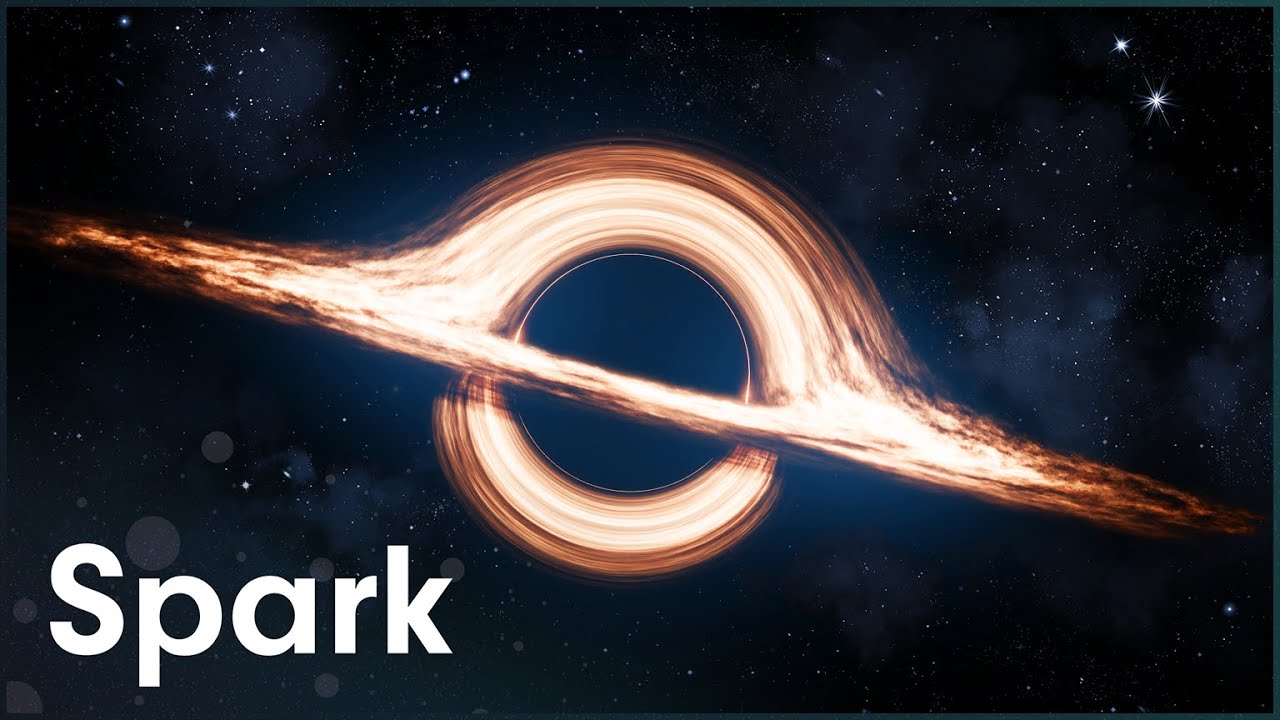
Edge closer to unraveling these Mysteries potentially discovering new Realms of physics that Transcend our current scientific boundaries black holes consume matter and energy from their surroundings through the process of accretion a gravitationally driven mechanism that contr transform seemingly empty space into regions of intense activity and light the accretion process plays a crucial role in the growth and evolution of black holes allowing them to gather Mass from nearby Stars gas and even light when matter such as gas dust or Stars Ventures too close to a black hole it becomes trapped by the black hole's extreme gravitational
pull instead of plunging directly into the black hole this material often forms an accretion disc a swirling in disc of matter spiraling inward the matter in the disc experiences friction and compression heating up to extremely high temperatures sometimes reaching millions of degrees this superheated material emits various forms of radiation Particularly in the X-ray Spectrum allowing astronomers to detect and study black holes even though the black holes themselves emit no light the intense gravitational gradient near the black hole ensures that the infalling matter loses angular momentum and energy progressively spiraling closer to the event horizon as
the matter approaches The Event Horizon relativistic effects become significant the emitted radiation from this region is subject to Gravitational red shift whereby light is stretched to longer wavelengths a phenomenon predicted by Einstein's theory of general relativity this red shift serves as a powerful observational tool providing clues about the behavior of matter in extreme gravitational fields in addition to consuming ing matter from its immediate vicinity black holes in binary systems can siphon material directly from a companion star this happens when The star fills its Ro lobe allowing matter to flow through the inner lrange point toward
the black hole forming an accretion stream this stream feeds the accretion disc leading to intensified radiation and energetic outbursts detectable across vast distances the process is not entirely efficient and some fraction of the accretion material is expelled from the black hool's vicinity in the form of powerful Jets and winds these Jets often observed in Super massive black holes at the centers of galaxies can shoot out material at velocities approaching the speed of light extending across thousands or even millions of light years this phenomenon known as relativistic jet emission demonstrates the extraordinary power of black holes
and their capacity to influence their Cosmic environments the resulting feedback where the Jets interact with the Galaxy and Intergalactic medium can play a Significant role in regulating Galaxy formation and evolution black holes consume matter and energy through gravitationally driven accretion processes forming highly energetic discs and jets these mechanisms allow them to grow and exert significant influence over their surroundings transforming in particular through the emission of high energy radiation and Powerful relativistic Jets despite their profound gravitational pull these processes let Black hle Escape their otherwise invisible nature offering Windows into the extreme physical conditions near their
event Horizons super massive black holes residing at the centers of most galaxies including our own Milky Way are among the universe's most intriguing and enigmatic objects despite significant advances in astronomy and astrophysics many Mysteries still surround these colossal entities from their Origins to Their roles in Galactic Evolution one of the most profound Mysteries is how super massive black holes form and grow to their immense sizes ranging from Millions to billions of times the mass of our sun two leading theories aim to explain their Origins one posits that super massive black holes formed from the direct
collapse of massive gas clouds in the early Universe bypassing the intermediate stages of star formation the other Theory suggests they Grew from smaller seed black holes which could have originated from massive stars or earlier generation star clusters accumulating Mass through the cretion of gas dust and merges with other black holes however neither Theory fully accounts for the presence of super massive black holes in the very early Universe observed to exist just a few hundred million years after the big bang the relationship between super massive black holes and their host galaxies Presents another profound puzzle observations
have revealed a tight correlation between the mass of a super massive black hole and the properties of the galactic bulge such as the velocity dispersion of stars this empirical relationship known as the M Sigma relation suggests that black holes and their host galaxies co-evolve yet the mechanisms driving this co-evolution remain unclear super massive black holes significantly affect their environments Primarily through energetic feedback processes involving Jets and radiation emitted from accretion discs these processes can suppress or trigger star formation regulate Gas Distribution and sculpt Galactic structures understanding ing these feedback mechanisms in detail is essential to
developing a cohesive picture of Galaxy formation and evolution Additionally the nature of the accretion processes near super massive Black holes continues to challenge our understanding the physics governing the behavior of matter in the extreme gravitational and electromagnetic environments near black holes including how some matter forms relativistic Jets remains a topic of active theoretical and observational research instruments like the Event Horizon telescope which provided the first direct image of a black holes Event Horizon in 2019 are crucial for probing these extreme Conditions and shedding light on the complex Dynamics at play super massive black holes also
raise questions about the ultimate fate of galaxies as galaxies merge their Central black holes are expected to form binaries and eventually coales into a single more massive black hole the detection of gravitational waves from such mergers as observed by Li and Virgo is beginning to provide insights into these Cosmic events however direct observation and Detailed understanding of the intermediate stages of black hole mergers offer a fertile ground for future discoveries while we have made tremendous strides in observing and understanding super massive black holes many Mysteries remain from their formation and growth to their intricate relationship
with their host galaxies and the Dynamics of accretion and feedback processes super massive black holes continue to pose some of the most Captivating questions in modern astrophysics ongoing and future observations combined with sophisticated theoretical models promis to deepen our understanding of these colossal enigmas and their role in shaping the universe black holes by their very nature emit no light and thus cannot be observed directly however scientists have developed ingenious methods to study these enigmatic objects indirectly relying on their interaction with Surrounding matter and the gravitational effects they exert on nearby objects one of the most
effective ways to observe black holes is by studying the X-ray emissions from their accretion discs when matter from a companion star Interstellar gas or other sources gets drawn toward a black hole it forms a swirling accretion disc as this matter spirals inward it heats up due to friction and compression reaching temperatures of millions of degrees this Hot material emits x-rays before crossing the event Horizon space-based telescopes like NASA's Chandra x-ray Observatory issa's xmm Newton and now the James web Space Telescope provide detailed observations of these high energy emissions revealing the presence and properties of black
holes another crucial method involves observing the gravitational influence of black holes on nearby stars and gas clouds for instance astronomers cont Trct the orbits of stars near the center of our galaxy where the super massive black hole sagittari ious a asterisk resides by meticulously measuring these Stellar orbits scientists can infer the mass and the location of the black hole that is exerting the necessary gravitational force to govern such orbits this technique was instrumental in providing compelling evidence for the existence of Sagittarius A asterisk earning the 2020 Nobel Prize in physics For Reinhard gensel and Andrea
gz additionally gravitational lensing provides another indirect method to study black holes when a black hole passes between a distant light source like a star or Galaxy and an observer on Earth its immense gravitational field warps the SpaceTime around it bending and magnifying the light from the background object this lensing effect can create multiple images or distortions of the light source which Scientists can analyze to gather information about the black hole's mass and properties more recently the detection of gravitational waves has opened a new Avenue for studying black holes predicted by Einstein's general theory of relativity
and first detected by the ligo and Virgo observatories in 2015 gravitational waves are ripples in SpaceTime generated by the acceleration of massive objects such as the merging Of black holes the wave patterns recorded by these observatories provide insights into the masses and Spins of merging black holes giving us a direct look at black hole interactions furthermore The Event Horizon telescope EHT represents a groundbreaking development in imaging The Event Horizon the boundary Beyond which nothing can escape a black hole's gravitational pull in 2019 the EHT collaboration released the first ever image of a black hole Shadow
in the Galaxy m87 this achievement relied on a Global Network of radio telescopes working in unison to simulate a planet-sized Observatory capable of resolving the fine details in the vicinity of a black hole by analyzing the light bending and radiation near the Event Horizon scientists can test predictions of general relativity and gain deeper insights into the nature of black holes while direct observation of black holes Is impossible due to their light absorbing nature scientists have developed a multitude of indirect methods to study them by examining x-ray emissions Stell Dynamics gravitational lensing effects gravitational wave signals
and direct Imaging of event Horizons researchers can unveil the properties and behaviors of these elusive Cosmic Giants enriching our understanding of the universe Hawking radiation proposed by The eminent physicist Steven Hawking in 1974 is a theoretical prediction that Bridges the Realms of quantum mechanics and general relativity suggesting that black holes are not entirely black but emit radiation this groundbreaking concept has profound implications for our understanding of black holes and the fundamental principles of physics Hawking radiation arises from the peculiarity of quantum field theory In the context of curved SpaceTime around a black hole according to
Quantum Mechanics even in the vacuum of space particle antiparticle pairs continuously pop into and out of existence near the Event Horizon of a black hole the intense gravitational field can separate these pairs in some cases one particle falls into the black hole while its counterpart escapes into space the escaping particle appears as radiation emitted from the black hole to an External Observer this phenomenon results in the gradual reduction of the black hole's mass and energy over time a process that theoretically could lead to the black hole's eventual evaporation the significance of Hawking radiation in black
hole research is multifaceted firstly it introduces the idea that black holes have a finite lifetime challenging the notion of black holes as Eternal unchanging objects the evaporation process is slow for massive Black holes and Rapid for smaller ones suggesting that primordial black holes formed shortly after the big bang might have already evaporated completely or be in the final stages of their Decay potentially leaving observable effects that astronomers could detect this theoretical radiation also touches on the heart of one of the most profound puzzles in modern physics the information Paradox according to classical mechanics Any information
about the matter that falls into a black hole is lost forever within the singularity however quantum mechanics insists that information cannot be destroyed Hawking radiation suggests that over immense time scales information might be encoded in the radiation emitted from the black hole thereby reconciling this apparent contradiction while the exact mechanism for how information is preserved remains unclear the hypothesis has spurred Significant discussions and research efforts aimed at understanding the nature of information conservation in the universe moreover haw radiation Bridges the gap between quantum mechanics and general relativity two pillars of modern physics that typically operate
in very different regimes by demonstrating that Quantum effects can have macroscopic consequences in the strong gravitational fields of a black hole Hawking's Theory provides key Insights into the Quest for a unified theory of quantum gravity such a theory would encapsulate all fundamental forces in one framework representing the ultimate goal of theoretical physics Hawking radiation is not just a theoretical curiosity but a significant Cornerstone in our understanding of black holes it reshapes our perception of these Cosmic entities hints at deeper principles governing the universe and energizes the quest to reconcile the Inconsistencies between quantum mechanics and
general relativity opening doors to new Realms of Discovery in the physics of the cosmos black holes often viewed as the dark consumers of the cosmos Harbor potential for revolutionary applications in space travel and energy generation albeit these ideas still hover within the domain of speculative science harnessing black holes given their extreme gravitational and energetic properties Could radically transform our technological capabilities one intriguing concept for space travel involves using rotating or Cur black holes as Cosmic shortcuts through SpaceTime according to Solutions of Einstein's field equations a rotating black hole might possess a region known as the
urg spere where SpaceTime is dragged around at high speeds some theories most notably involving hypothetical constructs like wormholes Proposed that Cur black holes could form gateways between distant points in space and time if traversible wormholes exist they could potentially allow spacecraft to travel vast Cosmic distances instantaneously by entering one end of the Wormhole and emerging at another location in the universe such a mechanism while currently beyond our technological reach and perhaps speculative stimulates imagination about future possibilities developing Technology capable of navigating and surviving the intense gravitational and tidal forces near a black hole remains a
formidable challenge energy extraction from black holes on the other hand appears to be a more grounded possibility leveraging phenomena like the Penrose process and Hawking radiation the Penrose process theorized by physicist Roger Penrose suggests a method to extract energy from the the ergosphere of a rotating black Hole in this process an object or particle entering the ergosphere could split into two with one part being consumed by the black hole while the other escapes the escaping part could gain energy extracted from the black hole's rotational energy this harvested energy in theory could be used for various
applications potentially offering an incredibly potent power source moreover theoretical Research into Hawking radiation posits another Method of energy generation as black holes slowly evaporate via Hawking radiation they emit particles that carry away energy capturing this radiation could hypothetically provide a steady stream of energy a more extreme idea involves creating microscopic black holes which would evaporate much faster providing intense bursts of energy some proposed scenarios involve particle accelerators or other Advanced Technologies to intentionally create and Harness such micro black holes for energy production however these Notions face significant technological and safety hurdles before becoming feasible in
addition black holes could theoretically power Interstellar propulsion systems one speculative idea involves the use of a black hole as a power source for a black hole bomb propulsion system this involves placing a black hole within a massive reflecting shell that could amplify energy Extracted from the black hole's rotational energy creating a powerful thrust for propulsion science fiction has also explored Concepts like the black hole Starship using controlled black holes as energy sources to propel spacecraft at relativistic speeds while these ideas currently lie in the realm of theoretical speculation ongoing advancements in our understanding of quantum
mechanics general relativity and particle physics might bring some of These Concepts closer to reality harnessing the power of black holes could revolutionize our Energy Systems and Propel Humanity toward an era of interstellar exploration showcasing the potential of these mysterious Cosmic objects to unlock extraordinary new capabilities in energy and space travel recent discoveries about black hole mergers have dramatically expanded our understanding of the universe in ways we couldn't have predicted one of The most captivating findings emerged when the ligo and Virgo observatories detected gravitational waves those subtle ripples in the fabric of SpaceTime brought about by
the Collision of black holes these events which often involve black holes several times the mass of our sun unleash an unfathomable amount of energy equivalent to several solar masses being converted directly into gravitational waves the Precision of These detections allows scientists to confirm the existence of intermediate Mass black holes which fill in the long-standing gap between small Stellar Mass black holes and the super massive ones found at the centers of galaxies equally exciting are the broader implications for our understanding of the cosmos black hole mergers serve as natural Laboratories for testing Einstein's theory of general
relativity under extreme conditions recent findings Hint at the possibility that these merges might not always produce a perfect ringdown or settling of the newly formed black hole suggesting there might be more exotic physics at play additionally these events are key to solving the mystery of heavy element formation the intense gravitational interactions and resulting high energy phenomena have been proposed as sites where elements heavier than iron could be forged something Stellar Nucleosynthesis alone struggles to fully explain the continuous observation and Analysis of such Cosmic phenomena could potentially unlock answers to some of the universe's most profound
Mysteries reshaping our understanding of its very [Music] fabric dark matter is is an elusive and mysterious substance that does not emit reflect or absorb light making it invisible to current telescopes despite its invisibility it exerts a Gravitational pull influencing the motion of galaxies and Galaxy clusters in fact about 85% of the universe's total mass is thought to be comprised of Dark Matter suggesting that the ordinary matter we see from stars to planets makes up only a minor fraction of the cosmos the discovery of dark matter traces back to the early 20th century in the 1930s
Swiss astronomer Fritz zwicki observed the coma cluster of galaxies and found that the galaxies were moving Too rapidly to be held together by just the visible matter he coined the term dunkl Materia meaning Dark Matter to describe this unseen Mass further compelling evidence was provided by Vera Rubin in the 1970s when she studied the rotation curves of spiral galaxies Reuben found that stars at the outer edges of galaxies were rotating just as quickly as those near the center a phenomenon that couldn't be explained by the presence of visible matter alone This suggested that a significant
amount of unseen Mass was present exerting a gravitational force modern technological advancements continue to shed light on Dark Matter albeit indirectly observatories like the Hubble Space Telescope have offered insights through gravitational lensing where the light from distant galaxies is Bent by Mass invisible objects between them and us even though scientists have yet to directly detect Dark Matter Particles numerous experiments are underway to identify what dark matter is actually made of with hypotheses ranging from wimps weakly interacting massive particles to axians understanding Dark Matter remains one of the most pressing and tantalizing challenges in cosmology today
promising to revise our comprehension of the universe's structure and evolution dark matter plays a pivotal role in shaping the structure of the Universe on both Grand and local scales its influence is omnipresent sculpting the cosmos from the formation of galaxies to the behavior of entire galaxy clusters due to its invisible nature dark Matter's presence is inferred through its gravitational effects on visible matter radiation and the large scale structure of the universe in the early Universe shortly after the big bang Dark Matter acted as a cosmic scaffold around which ordinary Matter could gather this scaffolding facilitated
the formation of the first galaxies and Galaxy clusters without the gravitational pull of dark matter the gas needed to form stars and galaxies would not have clumped together as efficiently the so-called Cosmic web an immense network of filaments made primarily of Dark Matter linking galaxies and clusters demonstrates how dark matter organizes matter on the largest scales these dark matter Filaments attract ordin matter guiding the formation and distribution of galaxies and Intergalactic gas along their lengths on a smaller scale Dark Matter also influences the internal dynamics of galaxies observations of the rotation curves of spiral galaxies
Where Stars at the outer edges rotate faster than predicted by visible Mass alone indicate the presence of vast amounts of unseen Mass Dark Matter extending well beyond the visible edges of these Galaxies this invisible Halo of Dark Matter stabilizes galaxies preventing them from tearing apart due to their rapid rotation consequently dark matter is fundamental in the formation structure and ultimate fate of the universe understanding its properties and interactions remains one of cosmology's most compelling quests as we uncover more about dark matter we will inevitably gain deeper insights into the Evolution of cosmic structures and the
Very makeup of the universe potentially revealing new Realms of physics beyond our current know detecting Dark Matter given its elusive nature is one of the most intriguing challenges in modern science because Dark Matter does not emit absorb or reflect light scientists rely on indirect methods to infer its presence and properties one primary Avenue of detection involves observing its gravitational effects on visible Matter radiation and the large scale structure of the universe gravitational lensing is a powerful tool in the detection of dark matter when light from distant galaxies passes through a cluster of galaxies the immense
gravitational field of the cluster which includes a significant component of Dark Matter bends the light distorting and magnifying the images of the background galaxies by mapping these distortions astronomers can infer the Distribution and amount of Dark Matter within the cluster the lensing effects often reveal more mass than what is visible indicating the presence of Dark Matter another method hinges on on the rotation curves of galaxies when astronomers like Vera Rubin studied the rotational speeds of stars in spiral galaxies they found that stars at the outer edges of these galaxies were rotating as fast as those
near the center defying expectations based solely On observable matter this uniform rotation speed suggests the existence of a dark matter Halo enveloping the galaxies providing the extra gravitational pull needed to keep the stars in such rapid motion on a more experimental front scientists are utilizing underground detectors to capture potential Dark Matter particles these direct detection experiments like those involving cryogenic detectors or liquid Xenon Targets in facilities such As the large underground Xenon luex experiment seek to observe the rare interactions between Dark Matter particles and regular matter when a dark matter particle collides with a nucleus
in the detector it can produce a minuscule amount of energy in the form of light or heat which sophisticated instruments can detect finally particle accelerators like the Large Hadron Collider LHC at CERN probe the existence of dark matter by Smashing protons Together at high energies the collisions might produce Dark Matter particles which could be inferred from missing energy and momentum in the resulting particle tracks though dark matter has not yet been directly observed these methods provide compelling evidence of its existence and continue to narrow down its possible properties the quest to detect Dark Matter directly
remains a captivating Frontier in the ever Revolving field of cosmology promising to unlock new dimensions of our understanding of the universe the composition of Dark Matter remains one of the most tantalizing mysteries in cosmology and several leading theories have emerged to explain its elusive nature one of the most prevalent theories posits that dark matter consists of wimps or weakly interacting massive particles these hypothetical particles are thought have Been produced in large quantities during the early universe and could account for the vast amount of unseen Mass based on their weak interactions with normal matter and electromagnetic
radiation wimps are appealing because they fit well within the framework of the standard model of particle physics and its extensions such as super symmetry which predicts the existence of such particles another compelling candidate is the Axion a particle first Proposed in the late 1970s as a solution to the strong DP problem in Quantum chromodynamics axians if they exist would be extremely light and interact very weakly with ordinary matter making them difficult to detect they could be produced in the early Universe in sufficient quantities to account for dark matter and are being actively searched for in
experiments such as the axian Dark Matter experiment admx and other Initiatives sterile neutrinos are another intriguing possibility unlike the known active neutrinos which interact via the we weak nuclear force sterile neutrinos would interact only through gravity their Mass could help explain the observed properties of dark matter and they might also play a role in the formation of large scale structures in the universe the detection of sterile neutrinos would have profound implications for our understanding of Both dark matter and particle physics there are also more exotic theories such as the notion of dark matter being composed
of primordial black holes these black holes could have formed during the very early stages of the universe due to extreme density fluctuations although challenging to detect they could contribute to the gravitational effects attributed to Dark Matter additionally there are theories suggesting that dark matter might not be Composed of particles at all but instead could be a modification of the known laws of gravity one such theory is modified Newtonian Dynamics Mond which proposes changes to Newton's laws on Cosmic scales to account for the mass in the universe however this idea is less favored because it struggles
to explain observations on multiple scales as comprehensively as the particle-based Dark Matter theories each of these theories is the subject of rigorous Experimental and observational scrutiny progress in this area not only promises to solve the Enigma of dark matter but also has the potential to unveil new physics that could revolutionize our understanding of the universe dark energy and dark matter are two of the most enigmatic components of our universe each playing a distinct and pivotal role in its Evolution yet they differ fundamentally in their nature and effects together they constitute Approximately 95% of the universe
with dark energy making up around 70% and dark matter about 25% dark matter is a form of unseen mass that exerts gravitational forces contributing to the formation and clustering of galaxies and Galaxy clusters its gravitational influence helps keep galaxies intact by providing the additional Mass necessary to explain the observed rotation speeds of stars at the outskirts of these galaxies though It does not interact with electromagnetic forces making it invisible to Light Dark Matter still clumps together under the force of gravity guiding the formation of large- scale Cosmic structures in the universe in stark contrast dark
energy is a mysterious force that appears to drive the accelerated expansion of the universe first inferred in the late 1990s through observations of distant type A supern noi Dark Energy acts as a Sort of anti-gravity counteracting the attractive force of gravity on Cosmic scales unlike dark matter which clusters together dark energy is thought to be uniformly distributed throughout space affecting the universe's geometry and its rate of expansion the nature of dark energy remains one of the central puzzles in modern cosmology and it is often modeled through the cosmological concept Conant a term introduced by Einstein
or through more Dynamic Fields Such as quintessence the effects of dark energy are most evident when looking at the universe's large scale structure and its accelerated expansion rate it stretches space itself influencing the rate at which galaxies move apart from one another this accelerating expansion poses profound implications for the universe's future suggesting that it could continue to expand forever leading to a cold dark and increasingly diffused Cosmos while Dark Matter binds galaxies and clusters together through its gravitational pull dark energy drives them apart dominating the dynamical evolution of the Universe on the largest scales understanding
both phenomena is crucial for a complete picture of the universe's origin structure and ultimate fate researchers continue to employ a range of observational strategies including Cosmic microwave background measurements large-scale Galaxy surveys And gravitational lens ing studies to probe these dark components and unravel the Mysteries they present Dark Energy exerts a profound influence on the expansion of the universe acting as a mysterious force that accelerates this expansion this discovery which upended previous Notions of a decelerating cosmic expansion emerged from observations of distant type A supern noi in the late 1990s these supern noi considered Standard candles
because of their consistent intrinsic brightness allowed astronomers to measure the distances to far off galaxies they discovered that galaxies were not just moving away from us but were accelerating in their recession implying that some unknown force was pushing them apart with increasing speed the role of dark energy in the universe's accelerated expansion can be understood through its effect on SpaceTime itself unlike ordinary matter And dark matter which Clump together and exert gravitational attraction dark energy is believed to have a repulsive effect it is uniformly distributed Across the Universe resulting in a constant energy density even
as space expands this characteristic can be modeled as a cosmological constant denoted by the Greek letter Lambda Lambda in Einstein's field equations of general relativity signifying a form of Vacuum energy that permeates all of space as dark energy dominates the universe's energy content its repulsive Force overwhelms the gravitational pull of matter this causes is the fabric of SpaceTime to stretch accelerating the rate at which the universe expands current measurements suggest that dark energy makes up about 70% of the total energy content of the universe leading to an accelerating expansion that was initially counterintuitive to many
Cosmologists the implications of this accelerated expansion are profound over time galaxies will move farther apart and the observable universe will grow increasingly isolated this phenomenon might lead to a big freeze scenario scenario where galaxies recede Beyond the Horizon and become unobservable Stars burn out and the universe cools to the point where thermodynamic activity ceases another intriguing possibility is the Big Rip a far future event where the Influence of dark energy grows so strong that it eventually tears apart galaxies stars and even atomic structures research efforts are ongoing to better understand Dark Energy utilizing methods such
as studying the cosmic microwave background radiation analyzing large-scale Galaxy surveys and observing the effects of gravitational lensing by gaining insights into the nature of dark energy scientists hope to unlock deeper truths about the Fundamental forces shaping our Cosmos and perhaps unveil new Realms of physics that lie beyond our current understanding the most compelling pieces of evidence for dark Energy's existence arise from diverse astronomical observations and measurements that consistently indicate the universe's accelerated expansion these lines of evidence collectively paint a coherent picture of dark energy as a dominant force in the cosmos one of the first
and Most persuasive pieces of evidence came from the study of distant type IIA supern noi in the late 1990s two independent research teams the Supernova cosmology project and the highz Supernova search team observed these Supernova as standard candles owing to their uniform intrinsic brightness by measuring their apparent brightness and red shift scientists discovered that distant supern noi was systematically dimmer than expected this dimming Suggested that the universe's expansion rate has been accelerating over the past several billion years implying the presence of a repulsive Force dubbed Dark Energy counteracting gravity another significant line of evidence comes
from the cosmic microwave background CMB radiation the Afterglow of the Big Bang the Wilkinson micro wave anisotropy probe W map and the plank satellite have measured the CMB with unprecedented Precision the data reveal Tiny temperature fluctuations that provide a snapshot of the early Universe by analyzing these fluctuations scientists can infer the universe's geometry and its overall energy content the cmbb measurements indicate that the universe is flat implying a specific total energy density however visible matter dark matter and radiation together account for only about 30% of this density suggesting that the remaining 70% must be due
to Dark Energy Large scale structure surveys of galaxies offer additional support projects such as the Sloan digital Sky survey sdss map the distribution of galaxies Across the Universe these surveys help trace the universe's large- scale structure and the clustering patterns of galaxies observations show that galaxies are not only moving away from each other but doing so at an Accel accelerating Pace this acceleration aligns well with the presence of dark Energy further Evidence comes from the phenomenon of barion acoustic oscillations Bao in the early Universe pressure waves propagated through the hot plasma leaving imprints in the
distribution of galaxies these imprints or acoustic Peaks act as a cosmic yard stick by measuring the distance between these peaks in the Galaxy distribution astronomers can track the expansion history of the universe Bao measurements are consistent with an Accelerating universe driven by dark energy lastly gravitational lensing studies where the light from distant objects is Bent by Massive foreground structures also provide evidence by examining how galaxies and Galaxy clusters warp the light from background sources scientists can infer the distribution of both dark matter and dark energy the results support a model of the universe dominated by
dark energy that influen is the overall mass energy Balance and the expansion rate collectively these diverse and converging lines of evidence make a robust case for the existence of dark energy profoundly shaping our understanding of cosmology and the universe's Evolution the potential interaction between dark matter and dark energy is a topic that delves into some of the deepest questions about the universe's composition and evolution while both are crucial to our Understanding of cosmology they possess fundamentally different properties and rolls dark matter with its gravitational clumping acts as the backbone for Cosmic structures whereas dark energy
drives the accelerated expansion of the universe in the current cosmological model the standard Lambda cold Dark Matter lcdm model dark matter and dark energy are usually considered to be distinct and non-interacting components Dark Matter contributes to the formation And stability of galaxies and clusters through its gravitational pull whereas dark energy often modeled as a cosmological constant Lambda exerts a uniform repulsive Force throughout space driving Cosmic acceleration however some theoretical models hypothesize potential interactions between dark matter and dark energy these interactions could modify the behaviors of both components over Cosmic time one such model involves The
notion of coupled Dark Energy where the dark energy density varies over time potentially interacting with dark matter in a way that alters it Properties or distribution for instance Dark Energy might Decay into Dark Matter particles or vice versa affecting the relative abundances and distributions of these substances in the universe another interesting model is scalar field Dark Energy where dark energy is described by a dynamic Scala Field rather than a constant value in these models the Scala field could interact with dark matter influencing its clustering Behavior and the overall dynamics of cosmic structures this interaction might
lead to observable signatures in the large scale structure of the universe such as modifications in the clustering of galaxies or deviations in the cosmic microwave background radiation experimental and observational efforts have not yet provided definitive Evidence for such interactions however precise measurements of the cosmic microwave background Galaxy clustering Baron acoustic oscillations and the distribution of large- scale structures continue to offer insights for example deviations from the expected behavior in these observations might hint at interactions between dark matter and dark energy another Avenue of exploration is high energy particle Physics experiments which might uncover new particles
or forces that could mediate interactions between dark matter and dark energy experiments at facilities like the Large Hadron Collider LHC and various Dark Matter detection experiments could provide indirect evidence for such interactions by identifying aom IES that cannot be explained by the current model while the standard cosmological model currently treats dark matter and Dark energy as independent conceptual models and ongoing research explore the possibility of their interaction detecting any such interactions would significantly enhance our understanding of these mysterious components and might lead to revolutionary changes in our comprehension of the universe's fundamental forces and the
underlying physics understanding the true nature of dark energy presents a multitude of Challenges both observational and theoretical that scientists are striving to overcome these challenges are rooted in The elusive properties of dark energy and the limitations of our current models and Technology one of the foremost challenges is its detection and direct measurement unlike dark matter which exerts gravitational forces observable through its effects on galaxies and Cosmic structures dark Energy's Influence is more subtle manifesting primarily in the accelerated expansion of the universe this acceleration is inferred from indirect observations such as the red shifts of distant
type A supern noi and the patterns in the cosmic microwave background radiation these methods while robust do not provide a direct measure of dark energy itself leaving its nature somewhat ambiguous adding to the complexity is the fact that dark energy constitutes About 70% of the universe's energy density yet it remains uniformly distributed and does not Clump like ordinary matter or dark matter this large scale uniformity makes it difficult to isolate specific regions of space where dark Energy's effects can be individually studied complicating the design of experiments capable of probing its properties from a theoretical standpoint
integrating dark energy into the existing framework of physics poses Significant difficulties the most commonly used model the cosmological constant Lambda represents dark energy as a constant Val vacuum energy density this model while fitting current observations suffers from the cosmological constant problem this problem arises because the predicted value of the vacuum energy from quantum mechanics is vastly larger than what is observed bridging this enormous discrepancy remains one of the deepest Unsolved problems in theoretical physics alternative theories suggest that dark energy could be a dynamic field such as quintessence this field would vary over time and space
potentially interacting with other Cosmic components such as dark matter however these models introduce additional parameters and complexities making them harder to test and validate against observations moreover theoretical tools needed to fully describe these Dynamic Fields Often require extensions to the standard model of particle physics or modifications to general relativity creating tension with well-established physical laws Precision in cosmological measurements also poses a challenge observing the universe with the required accuracy to constrain dark Energy's properties demands Next Generation telescopes and instruments projects like the dark energy survey Dees and the uid Mission are designed to map large
portions of the sky with high Precision but interpreting the data from these massive surveys requires sophisticated statistical tools and deep theoretical understanding lastly reconciling Dark Energy with other fundamental forces and particles might necessitate new new physics beyond the current paradigms this could involve extra Dimensions modifications of Einstein's theory of gravity such as F gravity or Scala Tensor theories or entirely new particle species and interactions developing and testing these ideas remains a formidable task requiring advancements in both experimental technology and theoretical Frameworks the quest to understand dark energy is hampered by its indirect detectability the theoretical
challenges of incorporating it into established physics the need for precise cosmological measurements and the Potential requirement for new physics despite these hurdles ongoing research holds the promise of unraveling this profound mystery with each new observation and experiment bringing us one step closer to comprehending the true nature of dark energy the influence of dark matter and dark energy extends far beyond their roles in shaping the cosmos' large scale structures these mysterious components also signific ly impact the universe's ultimate Fate understanding their interplay is essential for predicting How the Universe will evolve and what it might eventually
become dark matter which constitutes approximately 25% of the universe's energy density acts as the primary gravitational scaffold around which galaxies and Galaxy clusters form its gravitational pull helps to bind these Cosmic structures together counteracting the dispersive effects of the universe's expansion the presence of Dark matter has allowed galaxies to coales and persist over billions of years forming the rich and varied Cosmic Landscape we observe today in contrast Dark Energy making up about 70% of the universe's energy density functions as a repulsive Force driving the universe's accelerated expansion its influence became apparent through observations of distant
type IIA Supernova in the late 1990s which indicated that the universe's expansion rate is not slow Down but rather speeding up this acceleration suggests that dark energy works Against Gravity causing space itself to stretch at an increasing rate the balance between dark matter and dark energy will ultimately determine the universe's fate if Dark Energy continues to dominate the expansion will accelerate indefinitely leading to what is often called the big freeze or heat death in this scenario galaxies will drift further apart Stars will burn out And the universe will become an increasingly cold and dark place
as it expands over trillions of years the remaining Cosmic structures will become isolated with any residual heat dissipating leading to a state of thermodynamic equilibrium where no significant physical processes occur an even more extreme possibility is the Big Rip scenario if the repulsive force of dark energy grows stronger over time contrary to the current Cosmological constant model the acceleration could increase to the point where it tears apart galaxies stars planets and eventually even atomic structures disintegrating all matter in the universe this would culminate in a cataclysmic end where SpaceTime itself is ripped apart conversely if
dark matter or a future understanding of dark energy reveals some new physics that counterbalances this acceleration the universe might reach a stable state or Even undergo a big crunch in this scenario the expansion would eventually Halt and reverse leading to contraction that culminates in a singularity possibly followed by a new Big Bang According to some speculative models additionally theoretical models exploring Dynamic forms of dark energy such as quintessence introduce more nuanced possibilities these include oscillating universes where periods of expansion and contraction follow each Other in Cycles or scenarios where Dark Energy diminishes over time allowing
gravitational forces to reclaim dominance current observations and cosmological data such as the cosmic microwave background radiation large scale structure surveys and Supernova measurements strongly support a future dominated by dark energy and an accelerating expansion however as research continues our understanding of these dark Components May evolve potentially revealing new insights and altering our long-term predictions for the universe while Dark Matter binds the cosmos together through its gravitational influence dark energy drives its accelerated expansion the balance between these forces not only shapes the universe's present structure but also dictates its future trajectory presenting varied and profound possibilities
from an ever expanding Cosmos heading toward a cold dark fate to more dramatic and speculative outcomes [Music] the formation and evolution of the Milky Way galaxy are processes that span billions of years offering a fascinating glimpse into the complex mechanisms that shape galaxies the Milky Way formed approximately 13.6 billion years ago not long after the big bang through a series of hierarchical merges and accretions of Smaller gas clouds and Proto galaxies initially small over densities in the matter distribution of the early Universe began to collapse under their own gravity forming primordial Dark Matter Halos these
Halos served as the gravitational scaffolds around which gas and dust gathered Cooling and condensing to form the first stars and star clusters over time these early star forming regions merged and coalesced gradually building up larger structures Some of these early Stars known as population 3 stars were massive and shortlived ending their lives in Supernova explosions that enriched the surrounding gas with heavier elements setting the stage for subsequent generations of star formation the Milky Way's Evolution was notably influenced by its interactions and merges with other galaxies these hierarchical merges are a fundamental aspect of the lcdm
Lambda cold Dark Matter cosmological Model which describes how structures in the universe form and grow as The Milky Way's progenitor Galaxy accreted smaller systems it grew in size and complexity this process also led to the formation of its Halo a spherical distribution of older stars and globular clusters enveloping the Galaxy evidence of past mergers can be seen in features like Stellar streams which are remnants of smaller galaxies that were tidily disrupted and absorbed by the Milky Way The Milky Way's thin disc where most of its Stars including those in the spiral arms are located formed
about 8 to 10 billion years ago this dis emerged from the gravitational collapse of gas that settled into a rotating disc dis structure Act star formation within the disk created new generations of stars including population one Stars which are rich in heavier elements the ongoing formation of stars in the Milky Way's disc is sustained by gas accretion from The Intergalactic medium and the infall of smaller satellite galaxies one notable feature of the Milky Way is its spiral structure characterized by distinct spiral arms that house a significant fraction of the Galaxy's star forming regions the spiral
arms are thought to be density waves regions of higher density that propagate through the dis triggering the collapse of gas clouds and the formation of new stars These Arms play a crucial role in The ongoing star formation and the dynamical evolution of the Galaxy the central bulge of the Milky Way populated by older stars and containing a super massive black hole known as Sagittarius A asterisk is another key component the Bulge likely formed through a combination of early rapid star formation and subsequent merges that funneled stars and gas toward the Galaxy's Center over time dynamical
processes like bar formation And secular Evolution also contributed to shaping the Bulge the Milky Way continues to evolve interacting with its satellite galaxies such as the large and small melanic clouds and absorbing smaller systems through tidal interactions these interactions influence the Milky Ways structure and star formation activity enriching its Stellar population and contributing to its growth the Milky Way's formation and evolution are complex processes driven By hierarchical merges gas secretion star formation and dynamical interactions from its origins in the early Universe to its current structure as a majestic spiral galaxy The Milky Way's history encapsulates
the rich and dynamic nature of Galaxy formation and evolution offering insights into the broader processes that shape our Cosmic environment the super massive black hole at the center of the Milky Way known as Sagittarius A asterisk pronounced Sagittarius A star is a subject of intense study and Fascination surrounded by numerous Mysteries and unanswered questions discovered in the 1970s through radio observations this enigmatic Behemoth has an estimated mass of about 4 million times that of our son despite extensive research many aspects of its nature and behavior remain puzzling to astronomers and physicists one of the primary
Mysteries involves understanding how Sagittarius A asterisk And other super massive black holes form and grow to such enormous sizes while it's believed that they might originate from the collapse of massive gas clouds or the merger of smaller black holes the exact mechanisms and time scales for their growth are not well understood observations suggest that super massive black holes exist in the centers of most galaxies indicating a fundamental role in Galaxy formation and evolution yet the details of this Relationship ship are still unclear another intriguing mystery is the relatively quiescent nature of Sagittarius A asterisk compared
to the super massive black holes in active Galactic nuclei AGN or quers which emit vast amounts of energy as they accrete matter Sagittarius A asterisk is unusually quiet while it occasionally flares up emitting X-rays and other radiation these events are infrequent and far less Energetic than those observed in more active G Galactic centers understanding why Sagittarius A asterisk is not as active raises questions about the availability of surrounding material for accretion and the physical processes governing Its Behavior the precise Dynamics and environment surrounding Sagittarius A asterisk also pose challenges the region around the black hole
known as the galactic center is densely populated With stars dust and gas the orbits of stars near Sagittarius A asterisk particularly the so-called s star s provide crucial data for measuring the black hole's mass and for testing predictions of Einstein's general relativity in strong gravitational fields however the complex interplay of gravitational forces magnetic fields and Stellar interactions in this crowded region makes it difficult to build a comprehensive model of this Environment furthermore there are questions about the event horizon of Sagittarius A asterisk the boundary Beyond which nothing can escape its gravitational pull the EV Horizon
telescope EHT collaboration aims to capture images of the Shadow or silhouette of the Event Horizon providing direct evidence of its existence while initial images of the black hole in the nearby Galaxy m87 have been obtained capturing similar images Of Sagittarius A asterisk proves more challenging due to the interstellar material obscuring our view and the rapid variability of the accretion flow around the black hole additionally the role of Sagittarius I a asterisk in influencing the Milky Way's structure and Dynamics remains an open question while it's known that super massive black holes have significant gravitational impacts on
their host galaxies the exact ways in Which Sagittarius A asterisk affects star formation Galactic rotation and the overall evolutionary trajectory of the Milky Way are topics of ongoing research finally exploring the quantum properties of black holes such as Hawking radiation a theoretical prediction that black holes emit radiation due to Quantum effects near the Event Horizon remains speculative for Sagittarius A asterisk given current observational limitations detecting such effects would require Highly sensitive instruments and could revolutionize our understanding of black hole thermodynamics and quantum gravity the super massive black hole at the center of the Milky Way
Sagittarius A asterisk continues to be a profound source of scientific mystery its formation growth quiescent nature in environment Event Horizon characteristics and broader influence on Galactic Dynamics constitute some of the foremost questions driving current Astrophysical research solving these Mysteries will provide deeper insights into not only Sagittarius A asterisk but also the fundamental properties and behaviors of black holes throughout the universe galaxy collisions play a transformative role in the structure and evolution of galaxies profoundly impacting their morphology star formation activity and overall Dynamics these interactions are relatively common in the universe and are crucial Processes that
drive the recycling and redistribution of matter and energy within galaxies one of the most dramatic effects of Galaxy collisions is the alteration of Galaxy morphology when two galaxies Collide their Mutual gravitational interactions can distort their shapes leading to the formation of tidal taals Bridges and shells these features arise due to the gravitational forces stretching and pulling the stars And gas in the interacting Galaxies for example the iconic antenna galaxies display long sweeping tidle Tales formed by their interaction over time the galaxies May merge resulting in a Remnant Galaxy with a morphology that could differ significantly
from the progenitors this process can transform spiral galaxies into elliptical galaxies as seen in many massive evolved Galaxy clusters where ellipticals dominate collisions also trigger bursts of star Formation known as star bursts as the gas clouds within the galaxies are compressed and shocked by the interaction this heightened gas density leads to the rapid formation of new stars The increased star formation activity can result in brilliant star burst regions contributing to the overall Luminosity of the merging system the Milky Way and Andromeda galaxies are on a collision course expected to merge in about 4.5 billion years
and this Event will likely trigger extensive star formation as well another consequence of Galaxy collisions is the fueling and activation of super massive black holes within the galactic centers as gas and dust are funneled towards the central regions during a merger they can accrete onto the super massive black holes igniting active Galactic nuclei agns and potentially transforming a quiescent Galaxy into a luminous quaser this intense activity Not only affects the central black holes but also drives powerful outflows and jets that can influence uence the entire galaxy regulating further star formation and redistributing material Galaxy collisions
also impact the distribution and properties of Dark Matter Halos surrounding galaxies during interactions the Dark Matter Halos can merge and relax into a new equilibrium affecting the gravitational potential and dynamics of the resultant Galaxy the combined Dark Matter Halo provides the necessary gravitational binding to hold the newly formed Galaxy together additionally mergers and collisions influence the growth and evolution of Galaxy clusters as galaxies within clusters interact and merge the cluster evolves into larger more massive systems the ongoing interactions within clusters contribute to their complex structure and the distribution of intracluster gas observed in x-ray Wavelengths
theoretical models and simulations such as those performed using powerful supercomputers Have Been instrumental in understanding the complex dynamics of Galaxy collisions these simulations help astronomers visualize the stages of interaction predict resulting structures and compare them with observational data to validate current theories of Galaxy Evolution overall Galaxy collisions are catalysts for significant structural and Evolutionary changes they mold galaxies into new forms trigger star formation and AG activity redistribute dark matter and drive the growth of large-scale cosmic structures through these interactions galaxies continuously evolve enriching the universe with Dynamic and diverse structures understanding Galaxy collisions thus provides
vital insights into the fundamental processes that shape the Cosmos the Andromeda galaxy also known as M31 is the closest spiral galaxy to the Milky Way and one of the most studied objects in the sky despite its relative proximity and extensive research the Andromeda galaxy Harbors several mysterious features that continue to Intrigue astronomers one of the most puzzling aspects of Andromeda is its double nucleus observations have revealed that the Galaxy's central region contains not one but two closely Spaced bright cores one potential explanation for this phenomenon is that the Galaxy's double nucleus may result from the
presence of a super massive black hole offset from the true Center due to past interactions with a smaller Galaxy alternatively it could be a sign of a complex dynamical process involving Stars orbiting a central black hole creating an illusion of Duality another area of study is the unusual population of andromeda's globular clusters the Galaxy contains a surprisingly High number of these ancient star clusters compared to the Milky Way this abundance raises questions about the history of andromeda's formation and its past interactions with other galaxies which may have stripped globular clusters from smaller systems or induced
star formation in the galactic Halo the Halo of Andromeda itself is also a subject of fascination the extended Halo is populated with numerous faint stars and Star streams remnants of smaller galaxies torn apart and absorbed by Andromeda over billions of years these streams provide a history of Galactic merges and interactions yet their full extent and the detailed history remain mysterious further mapping of these streams using deep Sky surveys will help unravel andromeda's past and the role such interactions have played in shaping its current structure another enigmatic feature is the prominent ring-like Structure observed in the
Galaxy's disc discovered in Far ultraviolet images this ring could be a result of a past collision with a smaller Galaxy or an ongoing interaction that has induced ring-like star formation understanding the origin of this ring could reveal insights into the dynamical processes and past events that have influenced the Andromeda galaxy moreover the Dark Matter Halo of Andromeda presents its own set of mysteries while it is known That Andromeda like most galaxies contains a substantial amount of dark matter the precise distribution and density profile of this dark matter Halo are subjects of ongoing research observations and
simulations aim to provide a clearer picture of how dark matter contributes to the Galaxy's gravitational potential and overall structure the eventual collision between the Milky Way and Andromeda predicted to occur in about 4.5 billion years adds Another layer of intrigue while this future event Falls outside the classical study of andromeda's current features understanding the Dynamics and orbital Pathways leading up to this colossal merger helps inform predictions about the future combined galaxies structure and the fate of their constituent stars and planetary systems finally studying andromeda's super massive black hole with an estimated mass of about 100
million Times that of the sun is a key area of Interest while it is less active than the super massive black holes found in quers investigating how it influences the surrounding Stellar populations and its role in the Galaxy's Evolution remains an open question the Andromeda Galaxy's double nucleus abundant globular clusters Halo features ring structures Dark Matter distribution and impending collision with the Milky Way all represent compelling Mysteries Ongoing observations and theoretical modeling continue to deepen our understanding of these enigmatic elements enhancing our broader comprehension of Galactic formation Evolution and Dynamics scientists utilize an array of
sophisticated ated techniques to study the large scale structure of the universe often referred to as the cosmic web one foundational method involves astronomical surveys which map the Distribution of galaxies across vast expanses of space instruments like the SLO digital Sky survey have been pivotal compiling data on millions of galaxies to reveal the intricate patterns of cosmic filaments and voids the light from these distant galaxies takes millions or even billions of years to reach us serving as a a time machine that allows astronomers to peer back into different epochs of the universe's history with this information
they can Trace the formation and evolution of cosmic structures from near the Big Bang to the present day in addition to Optical surveys scientists also employ radio telescopes to detect neutral hydrogen gas which can outline the cosmic webs filaments even in regions where galaxies are sparse Advanced simulations on supercomputers play a crucial role as well allowing researchers to model the gravitational dynamics of dark matter and the bionic Matter it influences by comparing these simulations with observational data scientists can test and refine theories about the universe's composition including the elusive dark matter and dark energy that
govern its expansion employing a blend of observational data and computational models they strive to unravel the mysteries of the immense and complex structure we are a part of quazar or quazy stellar objects are among the most luminous and enigmatic Entities in the universe at the heart of these Celestial powerhouses lies a super massive black hole with masses ranging from Millions to billions of times that of our sun this black hole accr surrounding gas and dust creating an extremely hot and dense accretion disc as matter spirals into the black hole it heats up to temperatures exceeding
millions of degrees emitting an extraordinary amount of energy across the electromagnetic spectrum from radial Waves to visible light to x-rays it's this intense radiation that makes quers visible even from billions of light years away offering a glimpse into the early Universe what makes quers particularly mysterious is the sheer scale of their energy output and the mechanisms driving it a single quazar can outshine an entire galaxy of stars yet it is confined to a region no larger than our solar system this poses questions about the efficiency of energy Transfer in such extreme conditions additionally quers vary
in brightness over relatively short time scales leading scientists to probe the chaotic environments near the event Horizons of super massive black holes understanding quers not only sheds light on the behavior of matter under extreme gravitational forces but also provides clues about Galaxy formation and the evolution of the cosmos itself Galaxy clusters the largest Gravitationally bound structures in the universe are formed through a process that spans billions of years and involves the convergence of smaller groups of galaxies initially small fluctuations in the density of matter in the early Universe rendered by the big Bang's aftermath began
to attract additional matter through gravitational attraction over time these regions of higher density continued to pull in surrounding matter eventually becoming The expansive clusters we observe today as smaller Galaxy groups merge the process generates shock waves that heat up the surrounding gas to temperatures of millions of degrees rendering the intracluster medium detectable in x-ray wavelengths the secrets that Galaxy clusters hold are manifold and crucial for our understanding of cosmology one key mystery lies in the composition of these clusters which are dominated by dark matter and dark energy observations Of the gravitational effects on visible matter
light from distant galaxies gravitational lensing and the cosmic microwave background radiation all Point towards a dark matter component that far outweighs the bionic ordinary matter by studying the distribution and effects of Dark Matter within Galaxy clusters scientists can glean insights into its properties and role in Cosmic Evolution moreover the hot gas that permeates these clusters studied through x-ray Astronomy acts as a cosmic laboratory offering clues about the chemical enrichment of the universe and the behavior of gases at extreme temperatures and pressures through this composite lens Galaxy clusters serve as Cosmic beacons Illuminating the vast interconnected
components of our universe the cosmic microwave background CMB radiation is one of the most significant discoveries in cosmology offering a snapshot of the universe when It was just 380,000 years old a fraction of its current age of about 13.8 billion years this faint glow of radiation uniformly spread across the sky is the residual heat from the the Big Bang its Discovery in 1965 by arop penzias and Robert Wilson provided compelling evidence for the Big Bang Theory forever Transforming Our understanding of the universe's origins The cnb's Importance lies not only in its existence but in the
wealth Of information encoded within its subtle fluctuations in temperature these tiny variations on the order of one part in 100,000 correspond to the initial density fluctuations that eventually evolved into the Lar large scale structure of the universe we observe today galaxies Galaxy clusters and the cosmic web by mapping these minute differences missions like Cobra W map and plank have provided critical insights into the universe's content Including the proportions of dark matter and dark energy the Hubble constant which describes the rate of expansion and even the geometry of the cosmos the CMB serves as a cosmic
blueprint revealing the initial condition and subsequent evolution of the Universe on Grand scales the evidence that the universe is expanding originates from several groundbreaking observations the most prominent being Edwin Hubble's 1929 discovery of the relationship between The distance of galaxies and their red shift Hubble observed that galaxies farther from us appear to be moving away faster as indicated by the red shift of their light where wavelengths are stretched shifting towards the red end of the spectrum this phenomenon known know as the Doppler effect clearly suggests that the universe is not static but expanding uniformly in
all directions the implications of an expanding Universe are profound and have Reshaped our conception of cosmology one immediate consequence is the affirmation of The Big Bang Theory proposing that the Universe began from an extremely hot and dense State and has been expanding ever since this expansion also implies that the universe is finite in age giving us a timeline for the evil ution of cosmic structures from initial Quantum fluctuations to the formation of stars galaxies and larger scale structures additionally an expanding Universe leads to considerations about its ultimate fate whether it will continue expanding forever eventually
slow down or even contract in a big crunch the expanding Universe also encompasses the mysterious phenomena of dark energy a form of energy that drives the accelerated expansion discovered in the late 1990s this has led to the Intriguing conclusion that about 68% of the universe's energy content is composed of Dark energy with dark matter making up about 27% leaving a mere 5% to bionic matter the ordinary matter that forms stars planets and US thus the expansion of the universe is not just a Cornerstone observation it is Central to our broader quest to uncover the fundamental
makeup and Destiny of the cosmos the ultimate fate of the universe is a subject of profound speculation and research woven through with numerous leading theories that depend largely on The nature of dark energy the universe's overall geometry and its mattera density one of the primary scenarios known as the big freeze or heat death posits that the universe will continue to expand indefinitely in this cold desolate future galaxies will drift apart star formation will cease as raw materials are depleted and existing Stars will entually burn out leaving behind a dark Cosmos populated by black holes neutron
stars and cold dead remnants Contrastingly the Big Crunch Theory suggests a scenario in which gravitational forces could eventually halt the universe's expansion and reverse it causing all matter to coales into a singularity reminiscent of the pre-big bang State this Theory while intriguing has lost traction with the discovery of accelerating expansion driven by dark Energy's repulsive effects another fascinating theory is the Big Rip this concept hinges on the idea that dark Energy's influence might increase over time if Dark Energy strengthens significantly it could eventually tear apart galaxies Stars planetary systems and even atomic structures leading to
a cataclysmic end where the fabric of SpaceTime itself is ripped aunder finally there is the possibility of a cyclic universe or oscillating Universe model in which the cosmos experiences an endless sequence of Expansion and contraction phases each culminating in a big crunch followed by a new Big Bang though compelling this Theory remains speculative and requires mechanisms to reset conditions after each cycle these theories underscore the profound and still largely mysterious forces shaping our Cosmos each scenario offers not just a prediction about the future but a deeper understanding of the underlying physics governing the universe inviting
more questions and Further exploration in our quest to comprehend the totality of [Music] existence Albert Einstein's theory of relativity encapsulating both the special theory of relativity 1905 and the general theory of relativity 1915 fundamentally altered our understanding of SpaceTime and the Very fabric of the universe special relativity introduced the Revolutionary concept that time and Space are not absolute but relative and interwoven into a single four-dimensional Continuum known as SpaceTime prior to Einstein Isaac Newton's framework of absolute time and space reigned Supreme however Einstein's equations showed that the measurements of time and space depend on the
observer's velocity relative to what is being observed this led to mind-bending consequences such as time dilation where a moving clock runs slower compared to a Stationary one and length contraction where objects contract in the direction of motion as their speed approaches the speed of light Einstein's general theory of relativity extended these ideas to include gravity which was reconceived not as a force acting at a distance as Newton had described but as the warping of SpaceTime by mass and energy massive objects like stars and planets create curvatures in the SpaceTime Fabric and These curvatures at the
motion of objects and the flow of time this concept was spectacularly confirmed during the 1919 solar eclipse when observations showed that light from distant Stars was bent around the Sun exactly as Einstein's equations had predicted the implications of general relativity have been profound and far-reaching it has provided vital insights into phenomena such as black holes whose immense gravitational fields Warp SpaceTime to the extent that not even light can escape it also predicted gravitational waves ripples in SpaceTime caused by accelerating masses which were directly detected a century later in 2015 by the ligo experiment furthermore general
relativity is indispensable for understanding Cosmic expansion and the curvature of the universe laying the foundation for modern cosmology Einstein's theory revolutionized not just our conceptual Framework but also our practical understanding influencing everything from GPS Tech ology to the deepest questions about the origin and fate of the universe time dilation a key concept derived from Einstein's theory of relativity has profound practical implications for space travel this phenomenon occurs due to the interplay of velocity and gravitational fields leading to scenarios where time can pass At different rates for observers in various states of motion or gravitational influence
in the context of space travel especially at velocities approaching the speed of light time dilation can create pronounced differences between the experiences of astronauts and those remaining on Earth One significant implication is the potential for long duration space missions to result in age discrepancies between astronauts and people on Earth For example if astronauts were to travel at speeds close to the speed of light they could return from their Journey having aged only a few years while decades or even centuries might have passed on Earth this effect known as twin Paradox is not merely theoretical but
has practical ramifications for planning future Interstellar missions influencing both the logistics and psychological aspects of deep space exploration Beyond theoretical Implications time dilation also affects current space travel Technologies for instance the precise synchronization of clocks is critical for the operation of the global positioning system GPS satellites in orbit experience both gravitational time Dil ation and velocity related time dilation causing their onboard atomic clocks to run at slightly different rates compared to clocks on Earth Engineers must account for these differences to ensure accuracy In position calculations and everyday application of time dilation principles moreover understanding time
dilation helps in designing strategies for human exploration of distant celestial bodies missions to planets like Mars which involv significant travel times and exposure to different gravitational fields require meticulous planning for communication and coordination factoring in the relativistic effects of both velocity and gravity looking ahead to Potential Journeys to other star systems the relativistic effects become even more crucial demanding Advanced propulsion Technologies and innovative solutions to harness the benefits of time dilation while mitigating its challenges time dilation is not just a fascinating theoretical Insight but a fundamental aspect of practical space travel in influencing the way
we plan execute and conceptualize Humanity's Ventures into the Cosmos gravitational waves ripples in the fabric of SpaceTime predicted by Einstein's general theory of relativity have opened an unprecedented window into the cosmos these waves are generated by some of the most violent events in the universe such as the Collision of black holes merging neutron stars or even the remnants of the Big Bang itself when these massive objects accelerate they distort space time sending out ripples that propagate at the speed of light the Detection of these waves provides insights into the universe's structure and the fundamental forces
at play the primary way gravitational waves deepen our understanding is through their ability to convey information about Cosmic events that are otherwise difficult or impossible to study for instance when ligo laser interferometer gravitational wave Observatory made the first direct detection of gravitational waves in 2015 it was observing the Merger of two black holes this event not only confirmed the existence of gravitational waves but also provided the first direct evidence of black hole binaries such merges emit gravitational waves that carry unique signatures allowing scientists to deduce the masses distances and Spins of the black holes involved
through continuous observations we can build a detailed catalog of black hole collisions contributing to our understanding of black hole formation And EV Evolution moreover gravitational waves offer insights into the extreme environments and physics at play during neutron star mergers these cataclysmic events can produce kovi emitting elements heavy as gold and platinum and enabling studies of nuclear physics under the most extreme conditions the detection of gravitational waves from such events coupled with electromagnetic observations creates a multimessenger approach to astrophysics providing a Comprehensive picture that can reveal the composition structure and behavior of neutron stars gravitational waves
also hold potential in probing the early Universe shortly after the big bang violent processes would have generated primordial gravitational waves providing direct clues about the universe's infancy if detected these primordial waves could offer empirical evidence about the inflationary period and Fundamental particles further Illuminating the conditions that shaped the cosmos at its very beginning gravitational waves are a transformative tool in our quest to understand the universe by allowing us to observe and analyze Cosmic phenomena that are otherwise hidden or opaque they expand our knowledge of the structure Origins and fundamental laws governing the cosmos this burgeoning
field promises to answer some of the deepest questions in Astronomy and cosmology melding observation with theory in new and enlightening ways wormholes also known as Einstein Rosen Bridges are theoretical passages through SpaceTime that could create shortcuts between distant regions of the universe the concept arises from solutions to Einstein's field equations in general relativity imagine SpaceTime as a two-dimensional sheet a wormhole would be akin to folding the sheet so that two Distant points touch providing a direct path between them the idea is tantalizing because it suggests the possibility of faster than light travel circumventing the vast
distances that currently limit human space expl ation however the existence of wormholes remains speculative while general relativity allows for such structures they present several formidable challenges firstly a traversible wormhole would require exotic matter Material with negative energy density to keep the Wormhole stable and open exotic Matter's existence is not confirmed and creating or harnessing it if possible poses significant scientific and Engineering hurdles furthermore even if a stable Wormhole could be created the intense gravitational forces near the entrance could pose severe risks to any wouldbe Travelers moreover maintaining the stability of a wormhole against the pertubations
of particles and radiation Passing through it is another significant challenge calculations suggest that traversible wormholes if they exist might be extremely unstable collapsing quickly under natural conditions practical considerations also include the energy requirements and technological advanc ments needed to locate or create such Cosmic phenomena which are far beyond our current capabilities despite these challenges the study of wormholes continues to Captivate and drive theoretical physics research Concepts from quantum mechanics and the burgeoning field of quantum gravity might eventually provide new insights or even technological Pathways while wormholes currently reside in the realm of Science Fiction they
stimulate valuable discussions about the nature of SpaceTime the limits of human travel and the fundamental laws governing our universe in some while wormholes hold an intriguing potential for revolutionizing Space travel they remain a theoretical construct with numerous scientific and practical barriers to overcome future discoveries in physics could either bring this concept closer to reality or reveal new avenues for achieving rapid space travel continuing to fuel Humanity's dreams of exploring the cosmos scientists study the curvature of SpaceTime around around massive objects through a combination of precise observations and sophisticated Theoretical models based on general relativity one
of the primary techniques involves observing the effects of gravitational lensing when light from a distant star or Galaxy passes near a massive object like a black hole or Galaxy cluster the massive object's gravity bends the light's path this bending or lensing can produce multiple images of the same star magnify the distant object and even create arcs and rings of Light by analyzing these Distortions scientists can map the distribution and magnitude of the gravitational field thereby inferring the curvature of SpaceTime in that region another method involves studying the orbits of stars and planets around massive objects
for instance by tracking the paths of stars near our Galaxy's Central super massive black hole scientists can derive the black hole's mass and the curvature of SpaceTime around it the most famous example is the Orbit of the star S2 around the Milky Way's Central black hole Sagittarius A asterisk the star's fast and curved trajectory provides evidence of the intense gravitational field confirming predictions made by general relativity more recently the observation of the star's relativistic red shift as it approached its closest point to the black hole has provided more direct evidence of SpaceTime curvature scientists also
detect the curvature of SpaceTime via gravitational web aves ripples created by Massive accelerating objects such as merging black holes or neutron stars instruments like ligo and Virgo have detected these waves providing insights into the Dynamics of SpaceTime around these cataclysmic events the waveforms produced carry information about the mass and spin of the bodies involved and the nature of their Collision revealing the characteristics of SpaceTime under Extreme conditions further precise measurements of satellite orbits within our our solar system like those conducted by missions such as gravity probe B have provided confirmations of frame dragging and geodetic
effects subtle shifts in the orientation of satellite gyroscopes caused by Earth's mass and rotation again validating the predictions of general relativity in all these cases the interplay between observational data and Theoretical models allows scientists to deeply understand the curvature of SpaceTime around massive objects this not only confirms Einstein's theories but also enhances our understanding of the universe's fundamental properties from the behavior of black holes to the Dynamics of Galaxy clusters and potential insights into new physics beyond our current models SpaceTime singularities enigmatic points where gravitational forces become infinite and The known laws of physics cease
to function are surrounded by profound Mysteries that challenge our understanding of the universe the most well-known examples of singularities are found at the centers of black holes and the very beginning of the universe akin to the big bang these regions are characterized by densities and curvatures of SpaceTime that are so extreme that standard concepts of space and time break down one of the most Perplexing aspects of singularities is their very existence in solutions to Einstein's equations of general relativity these equations predict that under certain conditions such as the collapse of a massive star the gravitational
field can become so strong that SpaceTime is curved infinitely however this prediction leads to a breakdown in determinism where the future and past conditions of physical processes can no longer be precisely Predicted this naked Singularity scenario contradicts the cosmic censorship conjecture an idea proposed by physicist Roger Penrose which posits that singularities should always be hidden within event Horizons Beyond which they cannot influence the observable universe the interface between general relativity and quantum mechanics is another significant area of mystery surrounding singularities general Relativity successfully describes the macroscopic world of stars galaxies and the cosmos at large
while quantum mechanics excels at explaining microscopic phenomena like particle interactions yet these two pillars of modern physics are fundamentally incompatible in situations involving extreme gravitational fields and very small scales such as its singularities a fully developed theory of quantum gravity which seamlessly integrates These two Frameworks is essential to resolving the paradoxes posed by singularities hypotheses like string theory and loop quantum gravity aim to address these issues but a definitive solution remains elusive compounding these Mysteries is the information Paradox particularly significant for Black Hole singularities according to classical general relativity any information that falls into a
black hole is lost to the Outside Universe preserved only at the singularity however quantum mechanics contends that information cannot be destroyed the reconciliation of these conflicting views challenges current theories and has led to various speculative ideas such as the holographic principle which suggests that information within a volume of space can be thought of as encoded on a boundary to that space finally the Big Bang Singularity Presents its own set of questions as we approach this initial Singularity the universe becomes incredibly hot and dense and classical explanations break down what existed before the Big Bang and
what triggered it are profound Mysteries currently beyond the reach of observational science deeply interwoven with the Quest for a unified theory singularities thus sit at the frontier of physics representing both the limits of our current theories and the Tantalizing promise of deeper understanding these Cosmic enigmas compel us to push the boundaries of knowledge driving ongoing efforts to develop a more complete and unified description of the universe partical accelerators are sophisticated tools that provide vital insights into the fundamental nature of matter and SpaceTime by accelerating particles to nearly the speed of light and colliding them these
machines recreate conditions Similar to those just after the big bang allowing scientists to probe the fundamental forces and particles that make up the universe one of the most famous examp examples is the Large Hadron Collider LHC operated by CERN which accelerates protons and heavy ions to immense energies before smashing them together these high energy collisions produce an array of particles some of which exist only fleetingly under ordinary conditions by studying these Particles and their interactions scientists can test and refine the standard model of partical physics a theory that describes the electromagnetic weak and strong nuclear
interactions notably the lhc's discovery of the higs boson in 2012 confirmed a crucial aspect of this model elucidating how particles acquire Mass through the higs mechanism this breakthrough has ramifications for our understanding of SpaceTime as it Offers insights into the field that permeates the Universe influencing the structure of the cosmos itself moreover particle accelerator experiments explore phenomena that might offer clues about the nature of SpaceTime at extremely small scales for instance examining proton proton collisions at very high energies can potentially reveal deviations from the standard model hinting at new physics like super symmetry or extra
Dimensions theories That extend beyond the standard model including string theory suggest that SpaceTime could have more than the familiar four dimensions three spatial and one temporal high energy collisions might produce particles or effects that indicate the existence of these additional dimensions thus directly affecting our understanding of the universe's underlying structure particle accelerators also investigate the Properties of Quark gluon plasma a state of matter thought to have existed micros seconds after the big bang by colliding heavy ions physicists can recreate and study this plasma providing valuable insights into the behavior of strong nuclear forces at extremely
high temperatures and densities understanding these forces and states of matter helps piece together the early Evol ution of the universe providing a clearer picture of how SpaceTime and the fundamental forces have evolved furthermore particle accelerators can simulate conditions that test the principles of quantum field Theory and general relativity for example predictions about how particles should behave in strong gravitational fields can be compared against observed behaviors in high energy collisions offering indirect tests of these theories Mutual consistency this is fundamental to advance ing toward a Theory of quantum gravity a goal that seeks to unify general
relativity and quantum mechanics particle accelerators serve as both microscopes and time machines allowing us to explore the deepest layers of reality and the earliest moments of the universe through these experiments scientists not only confirm existing theories but also uncover new phenomena stretching the boundaries of our knowledge about SpaceTime and the Myriad forces shaping the cosmos theoretical implications of faster than light FTL travel are profound and far-reaching touching upon the very foundations of physics and our understanding of the universe according to Einstein's special theory of relativity as an object approaches the speed of light its mass
effectively becomes infinite and the energy required to continue accelerating it grows without bound this implies that FTL Travel at least in the conventional sense is fundamentally impossible however speculative Concepts explore the consequences and theoretical Frameworks that might allow FTL travel one of the most famous hypothetical constructs is the concept of a warp drive inspired by Miguel alcubierre's 1994 proposition alcubierre's model suggests that it might be possible to contract SpaceTime in front of a spacecraft and expand it behind effectively allowing the craft to Surf a wave of space time thus traveling faster than light relative to
the external space but without locally breaking the light speed barrier this still respects relativity because the spacecraft itself is not moving faster than light within its local space-time bubble however this requires exotic matter with negative energy density something that has not been proven to exist or be feasible to utilize another speculative Avenue Involves wormholes or Einstein Rosen Bridges if these hypothetical structures could be stabilized they might serve as shortcuts through SpaceTime potentially allowing instantaneous travel between distant points however the stability and creation of traversable wormholes would require exotic matter and energy conditions that are currently
beyond our technological and theoretical reach theoretical implications of such FTL mechanisms if they could exist are Staggering FTL travel would challenge causality the principle that cause precedes effect relativity implies that FTL travel could lead to scenarios where an effect could precede its cause potentially allowing for paradoxes such as traveling back in time this raises complex issues about the nature of time and reality itself requiring new physics or modified interpretations of existing theories moreover the existence of FTL travel would revolutionize our Understanding of distances and connectivity in the cosmos Interstellar and even Intergalactic travel could become
conceivable fundamentally altering our perspective on the universe's size and our place within it such capabilities would have profound implications for the search for extraterrestrial life colonization of other planetary systems and the ultimate future of humanity interestingly some recent Theoretical advancements in quantum mechanics suggest phenomena that might mimic certain features of FTL Communications such as entanglement where particles act in correlation instantaneously over vast distances however these spooky actions at a distance as Einstein called them do not actually transmit information faster than light and hence do not violate relativity in some while the concept of FTL travel
remains in the realm of Theoretical speculation and science fiction its implications are deeply intertwined with the foundations of physics the exploration of these ideas whether through warp drives wormholes or Quantum phenomena challenges us to rethink the nature of space time and the universe itself such Endeavors push the boundaries of current scientific knowledge potentially leading to re evolutionary breakthroughs or profound new understandings of the cosmos String Theory a prominent Contender for a unified theory of quantum gravity introduces a fascinating reconfiguration of the traditional concept of SpaceTime at its core String Theory posits that the fundamental entities
in the universe are not point-like particles as traditionally conceived in particle physics but rather one-dimensional strings that can oscillate in various modes the vibrations of these strings correspond To different particles where each vibration mode represents a distinct particle species this shift to one-dimensional Strings has profound implications for our understanding of SpaceTime firstly String Theory necessitates additional spatial Dimensions Beyond The Familiar three dimensions of space and one dimension of time while the precise number can vary depending on the specific formulation of string theory the most commonly studied Versions suggest a total of 10 or even 11
dimensions these extra dimensions are not directly observable because they are thought to be compactified or curled up at Scales so small that they are effectively hidden from current experiments the existence of additional Dimensions offers potential solutions to several challenges in physics for example it provides a framework for unifying all fundamental forces including gravity Within a single theoretical architecture in traditional general relativity gravity is despised as the curvature of four-dimensional SpaceTime caused by mass and energy in string theory gravity is still a manifestation of SpaceTime geometry but now within a higher dimensional context this higher dimensional
SpaceTime can manifest in various forms leading to different physical laws in different dimensional contexts furthermore string Theory's Higher dimensional view allows for the potential resolution of conflicts between general relativity and quantum mechanics in the classical four-dimensional framework singularities such as those in black holes or at the Big Bang can lead to Infinities that break physical laws string Theory's extended framework through mechanisms like string interactions and the inclusion of extra Dimensions might smooth out these singularities Potentially avoiding nonsensical Infinities and providing a more coherent quantum theory of gravity one of the most intriguing aspects of string
Theory's SpaceTime implications involves D brains multi-dimensional objects within the theory to which strings can can attach their end points these brains introduce new Dynamics and lead to scenarios where our universe could be a four-dimensional slice within a higher dimensional space This scenario often called the brain World hypothesis opens the door to phenomena like gravity leaking into extra Dimensions offering potential explanations for the relative weakness of gravity compared to other fundamental forces moreover String Theory revives the idea of dualities connections indicating that seemingly different physical scenarios are actually equivalent when viewed correctly these dualities can relate
different types of String theories or even connect higher and lower dimensional theories suggesting that space and time might be emergent properties rather than fundamental constructs this concept further reshapes our understanding of the very fabric of reality String Theory revolutionizes the concept of SpaceTime by introducing extra Dimensions proposing new fundamental entities and offering a unified framework that reconciles gravity with quantum Mechanics these Innovations not only challenge traditional Notions but also provide a fertile ground for addressing some of the deepest puzzles in physics potentially leading to a more profound and comprehensive understanding of the universe in the
realm of Relativity one of the most profound and perplexing questions that remains unanswered is the reconciliation of general relativity with quantum mechanics general relativity formulated by Albert Einstein Beautifully described describes gravity as the curvature of SpaceTime itself affecting masses big and small on the other hand quantum mechanics governs the microscopic world with uncanny Precision explaining the behaviors of particles at the smallest scales however these two Frameworks operate on fundamentally different principles that are not easily synthesized the challenge of merging these two giants into a coherent theory of quantum gravity is an enigma that has Puzzled
physicists for decades this Quest seeks to unlock deeper layers of reality possibly unveiling the nature of black holes the Inception of the universe and the fabric of SpaceTime at the plank scale a mind-bogglingly tiny scale where classical and Quantum effects are believed to meld together another tantalizing mystery in the study of Relativity is the true nature of dark energy and dark matter observations have shown that normal matter the stuff Making up stars planets and all visible structures only accounts for approximately 5% of the total energy content of the universe an astounding 70% is attributed to
Dark Energy an unknown Force driving the accelerated expansion of the universe while Dark Matter comprises roughly 25% influencing the formation and clustering of galaxies through its gravitational effects despite knowing their significant roles scientists are Still in the dark quite literally about the composition and mechanisms of these unseen entities understanding dark energy and dark matter could revolutionize our grasp of not only relativity but also the fundamental workings of the cosmos painting a more complete picture of the universe's past present and [Music] future when it comes to the search for extraterrestrial life scientists employ A fascinating array
of methods that blend cuttingedge technology with timeless curiosity one of the primary approaches is the study of exoplanets planets that orbit Stars beyond our own Sun using instruments like the Kepler space telescope and its successor the transiting exoplanet survey satellite Tess scientists identify potential exoplanets by observing the dimming of a star's light as a planet transits or Passes in front of it once identified these exoplanets are analyzed for their habitability potential this involves calculating the planet's distance from its star which determines whether it lies within the habitable zone where conditions might be right for liquid
water a key ingredient for Life as We Know It additionally powerful observatories like the upcoming James web Space Telescope will probe the atmospheres of these Distant Worlds Searching for Bio signatures which are chemical markers Like Oxygen methane or water vapor that could suggest the presence of life another intriguing method involves the study of extremophiles here on Earth extremophiles are organisms that thrive in extreme conditions such as the intense heat of hydrothermal vents at the ocean floor the acidic environments of sulfuric hot springs and The Frigid radiation bathed terrains of Antarctica By understanding how life can
survive in such harsh conditions scientists gain insights into the potential for life to exist in similar environments elsewhere in the solar system and be beond in our own solar system missions such as the Mars rovers including the latest perseverance Rover are equipped with sophisticated instruments designed to detect signs of past or present life on the red planet similarly missions to icy moons like Europa which Harbors a Subsurface ocean beneath its frozen crust aim to uncover biochemical evidence of Life additionally radio telescopes involved in the search for extraterrestrial intelligence setti listen for potential signals from Advanced
extraterrestrial civilizations each method whether grounded in the observation of distant exoplanets or the exploration of nearby moons and planets represents a step forward in Humanity's enduring quest to Answer one of our most profound questions are we alone in the universe the study of extremophiles on Earth has profoundly informed and expanded the horizons of our search for life on other planets extremophiles are organisms that thrive under conditions previously thought to be uninhabitable extremely high or low temperatures intense pressures high acidity or alkalinity and high levels of radiation these remarkable adaptations challenge The traditional parameters of what
constitutes a life-supporting environment and suggest that life could potentially exist in a much wider array of conditions than previously believed for instance the discovery of thermophiles which flourish in the boiling Waters of hydrothermal vents deep in the ocean has led scientists to consider the possibility of Life on celestial bodies with similar environments take for example the icy Moons of Jupiter and Saturn Europa and Enceladus which are believed to Harbor subsurface oceans kept warm by the gravitational interactions with their parent planets creating conditions akin to these deep sea vents similarly acidophiles and alkaliphiles which live in
highly acidic or basic environments have inspired the search for life in the sulfuric acid clouds of Venus or the alkaline hydrothermal vents on Mars moreover the study of extremophiles such As radioresistant microbes which can survive extreme levels of radiation broadens the potential habitability zones within our own solar system and beyond Mars with its thin atmosphere and high radiation levels at the surface might still Harbor microbial life underground where it could be shielded from the harshest conditions analogs like Antarctica's dry valleys where psychrophiles cold loving organisms Thrive also provide a terrestrial model For potential life forms
that might exist on the Frozen Plains of moons like Europa or Enceladus or even in the polar regions of Mars extremophiles demonstrate the incredible resilience of life and encourage scientists to think more broadly and creatively about where life might exist the discovery that life can thrive in Earth's most extreme environments extends the range of conditions considered habitable guiding astrobiologists to seek Signs of Life in Places once deemed improbable this pioneering perspective underscores our expanding understanding of life's versatility and fuels the optimism that we might someday find life beyond Earth one of the most compelling pieces
of evidence for possible extraterrestrial life is the discovery of exoplanets within their Stars habitable zone or the goldilock Zone where conditions could be just right for Liquid water to exist on the planet's surface since the launch of the Kepler space telescope scientists have identified thousands of exoplanets with several located in this habitable zone these planets like Kepler 452b and Proxima centor B offer intriguing possibilities due to their earthlike conditions which theoretically could support life the detection of organic molecules in space adds another layer to the evidence organic molecules such as Amino acids are the building
blocks of life and their presence in meteorites comets and the interstellar medium suggests that the ingredients for life might be widespread throughout the Galaxy notably the discovery of complex organic compounds on Saturn's moon Titan and within the plumes of water vapor ejected from the ocean beneath the icy crust of Enceladus hints at chemical processes that could potentially support life closer to home Mars has provided Tantalizing hints of past and possible present life the Curiosity Rover detected methane spikes in the Martian atmosphere which on Earth is largely produced by bi biological activity while methane can also
be generated by geological processes its seasonal variation on Mars leads scientists to consider the fascinating possibility that microbial life could be producing it furthermore sedimentary rocks analyzed by rovers have revealed ancient Riverbeds and Lake deposits suggesting that Mars once had liquid water running on its surface for extended periods a crucial ingredient for Life another persuasive piece of evidence comes from the study of extremophile on Earth organisms that can survive in the most inhospitable environments these include microbes found in the acidic Hot Springs of Yellowstone the freezing ice of Antarctica and the crushing depths of the
Mariana Trench the existence of such Resilient life forms broadens our understanding of the possible diversity of life and signifies that life could potentially survive in the extreme conditions found on other planets and moons these Clues collectively generate strong enthusiasm and ongoing exploration in the quest to find extraterrestrial life while none of this evidence confirms the existence of life beyond Earth each Discovery builds a case that Life as we know it or as we Might not yet know it could very well exist somewhere else in the cosmos the evolution of life in environments vastly different from
Earth challenges our imagination and scientific understanding but the principles of biology and evolution provide a framework to hypothesize how such life forms might develop on a high-gravity planet for for instance evolutionary pressures could produce organisms with strong robust structures to withstand the increased Force these beings might have much denser muscles more powerful Limbs and compact squat physiques to support their body structure The increased gravity would also likely influence the development of cardiovascular systems designed to efficiently combat the force pulling blood downwards in an environment with high radiation levels such as a planet orbiting a star
that emits intense UV or x-rays life forms might evolve extraordinary mechanisms For DNA repair and radiation resistance for example microbial life equivalents could possess highly efficient enzyme systems that rapidly repair damaged genetic material while multicellular organisms might develop protective layers of pigment or exoskeletons to Shield their internal organs these adaptations would mirror some of the extrema files on earth like the radioresistant bacteria dinus radio durans which can survive in incredibly High doses of radiation due to its impressive DNA repair capabilities in chemical environments vastly different from Earth's such as the methane Lakes of Titan life
could evolve utilizing entirely different biochemistries instead of water these organisms may use Liquid methane or ethane as a solvent for their biological processes leading to biochemistries that are profoundly different from our carbon water-based life their cellular structures might be Composed of membranes that withstand the extreme cold and their metabolic processes would need to be highly efficient to generate energy under such conditions scientists speculate that silicon rather than carbon could be the backbone of such biochemistry providing a theoretical basis for silicon-based life that might function in these exotic environments photosynthesis a fundamental process for many life
forms on Earth might also undergo radical Changes under different star Types on a dim Red Dwarf star illuminated planet photosynthetic organisms might evolve pigments that can absorb infrared light which is more abundant from such Stars conversely on planets orbiting hotter stars that emit more UV radiation organisms might develop protective mechanisms and pigments that effectively capture and utilize this more energetic light while protecting against its damaging Effects these hypothetical scenarios demonstrate the incredible adaptability of Life governed by the principles of evolution by natural selection while the exact forms and functions of extraterrestrial life remain speculative studying
extremophiles on Earth gives us invaluable insights into how life might Thrive under conditions that are vastly different from our own this expands our understanding of life's potential diversity and adaptability fueling our Exploration and search for life beyond our home planet the discovery of microbial Life on Mars would be a scientific Milestone with far-reaching implications reshaping our understanding of life in the universe and our place within it first and foremost it would provide concrete evidence that life is not unique to Earth suggesting that the conditions necessary for life might be more common than we currently assume
this would significantly boost the Probability of finding life elsewhere in the cosmos particularly on the many exoplanets identified within their star systems habitable zones one of the major scientific implications would involve the study of Mars geology and climate history microbial life would likely have adapted to Mars's present conditions but understanding its Origins could reveal Vital Information about Mars's past environments if life originated Independently on Mars it would suggest that life can emerge under a broader range of conditions than those found on early Earth alternatively if Martian microbes share characteristics with Earth life it might support
theories of panspermia which propose that life can be distributed across planets via meteoroids comets or or other celestial bodies the discovery could spur significant advancements in astrobiology particularly in developing methods and Technologies for detecting life in extreme environments such findings would drive missions to other celestial bodies in our own solar system like Europa Enceladus and Titan which are also considered potential habitats for life it could also accelerate funding and Research into more sophisticated space missions designed to explore these distant moons and planets with the Precision needed to uncover microbial communities ethically and Philosophically discovering Martian
microbes would challenge Humanity's self-perception it would prompt profound questions about the uniqueness of human life and the broader potential for intelligent civilizations in the universe the discovery might also influence discussions about the moral considerations of colonizing Mars or other celestial bodies protecting and preserving extraterrestrial ecosystems could become a priority transforming the Legal and ethical Frameworks governing space exploration on a practical level the discovery would have significant implications for planetary protection protocols current measures aim to prevent contamination of both Earth and other celestial bodies if life is found on Mars ensuring that Earth's microbes do not
interfere with Martian ecosystems would become even more critical and vice versa this could lead to more stringent Sterilization processes for spacecraft and advanced quarantine procedures for sample returned to Earth the discovery of microbial Life on Mars would be a watershed moment in science influencing our understanding of biology driving technological and exploratory advancements and prompting deep ethical and philosophical Reflections it would Mark a transformative step in Humanity's quest to comprehend the full scope and diversity of life in the Universe seti researchers who are dedicated to the search for extraterrestrial intelligence utilize a range of sophisticated techniques
and Technologies to listen for signals from intelligent civilizations beyond Earth at the core of their efforts are powerful radio telescopes which scan the sky in search of radio waves that might be indicative of artificial rather than natural Origins these telescopes are capable of detecting a broad spectrum of Frequencies yet set scientists often focus on a narrow band around 1,420 MHz known as The Water Hole this frequency is significant because it is naturally emitted by neutral hydrogen the most abundant element in the universe and might be a logical choice for an intelligent civilization attempting Interstellar communication
the quest involves more than just random listening it requires an organized approach to data collection And Analysis Advanced algorithms and software are employed to sift through the immense volumes of data collected filtering out Earth originating noise and other Celestial sources of radio waves the aim is to identify narrow bandwidth signals that stand out against the random hiss of the cosmic background because such signals are generally understood to be produced by technological Sources projects like setti at home have even Enlisted the help of millions of volunteers around the globe to use their personal computers processing power
to analyze chunks of data democratizing the search and exponentially increasing the computational capacity available to the researchers Optical set is another promising Avenue involving the use of optical telescopes searching for brief but powerful laser pulses that might be sent by distant Civilizations these pulses detectable over vast Interstellar distances would be a clear indicator of intelligent technology state-of-the-art photod detectors attached to telescopes scan the sky for such fleeting bursts of Light which are distinct from The Continuous luminescence of stars a further layer of sophistication is added by the targeted sech which focus on specific star systems
identified as having potentially Habitable exoplanets as our understanding of exoplanets has improved thanks to missions like Kepler and Tess seti researchers can now direct their instruments toward the most promising candidates thus increasing the likelihood of detecting something noteworthy additionally seti research doesn't operate in isolation but collaborates with other astronomical surveys and observatories around the world this coordination enhances their Ability to verify potential signals quickly and rule out terrestrial interference thereby ensuring that any candidate signal is scrutinized from multiple perspectives the implications of detecting a signal from an intelligent extraterrestrial civilization would be Monumental forever altering
our understanding of Humanity's place in the cosmos as such seti researchers meticulously document their findings and Engage in robust peer-review processes to validate any potential discoveries until that momentous day comes the ongoing efforts represent Humanity's enduring curiosity and quest to answer one of our most profound questions are we alone in the universe the wow signal detected in 1977 remains one of the most tantalizing and enduring mysteries in the search for extraterrestrial Intelligence on August 15th of that year Jerry r aan a Volunteer astronomer working on the Ohio State University's Big Ear radio telescope obser oberved
an anomalous 22 times stronger than typical cosmic background narrow bandwidth radio signal the signal which lasted 72 seconds was so striking that aan circled it on the computer printout and wrote wow in the margin giving the signal its now famous name one of the key Mysteries surrounding the wow signal is its origin the signal appeared to emanate from a Region within the constellation Sagittarius close to the chi sagittari star group about 120 light years away however despite numerous follow-up attempts to locate the signal neither Aman nor subsequent astronomers have been able to reproduce or detect
it again this Singularity has led to extensive speculation about whether the wow signal was a genuine extraterrestrial transmission or the product of some rare and poorly Understood natural phenomenon the signals specific characteristics add to the Intrigue the wow signal exhibited a narrow bandwidth only about 10 khz which is consistent with an artificial origin Cosmic sources typically produce a broad range of frequencies making such narrow band signals highly unusual and consistent with the kind of focused broadcasts we might expect from an intelligent civilization attempting to communicate across vast Interstellar Distances moreover its frequency at approximately 1,420
MHz coincides with the emission line of neutral hydrogen a universal marker that scientists speculate would be an ideal frequency for Interstellar communication several hypotheses have been proposed to explain the wow signal ranging from Interstellar ctil to terrestrial interference however none have been definitively proven the possibility that it might have been a Deliberate broadcast from an alien civilization continues to Captivate imaginations although the lack of repeat detection makes it difficult to draw firm conclusions some Skeptics suggest the signal may have been an earth-based trans transmission reflected off a piece of space debris but this remains speculative
with no concrete evidence adding to the layers of mystery is the fact that the Big Ear telescope was designed to survey the sky in two Orthogonal directions but only one channel detected the signal while the other did not if the signal had a terrestrial or near Earth origin it would likely have been detected in both directions the duration and shape of the signal also do not match known satellite Transmissions further complicating efforts to explain it away with conventional sources the wow signals elusiveness underscores the challenges inherent in The search for extraterrestrial intelligence it serves as
a reminder both of the vastness of the cosmos and the limitations of our detection capabilities decades later the mystery of the wow signal continues to inspire both professional astronomers and amateur stargazers to keep watching the skies hoping that perhaps one day a similar signal might offer more conclusive evidence of intelligent life beyond Earth until then the Wow signal remains one of the most compelling enigmas in the annals of astronomy life's potential existence on the moons of Jupiter and Saturn has become a focal point of astrobiological research primarily due to the unique environments these Distant Worlds
offer Europa one of Jupiter's moons and Enceladus orbiting Saturn are particularly compelling due to their subsurface ocean which are kept in a liquid state by Tidal heating a result of gravitational interactions with their parent planets and neighboring moons Europa with its smooth icy Surface crisscrossed by dark streaks and ridges is believed to possess a vast ocean beneath its frozen crust the evidence comes from observations by the Galileo spacecraft which detected a magnetic field indicative of a salty conductive liquid beneath the ice this subsurface ocean might be in contact with a rocky mantle Potentially allowing for
the chemical interactions necessary to support microbial life if hydrothermal vents exist on europa's seaf Flor similar to those found in Earth's oceans they could provide the energy and nutrients needed for life these deep sea vents on Earth host ecosystems teeming with life independent of sunlight relying instead on chemosynthesis to convert chemicals into energy Enceladus although smaller Presents an equally fascinating case the Cassini spacecraft made remarkable discoveries during its flybys capturing images of geysers erupting from the moon's South polar region these plumes are composed of water vapor molecular hydrogen and organic compounds suggesting a Subterranean ocean
beneath the icy shell the presence of molecular hydrogen detected during cassini's investigations indicates hydrothermal activity on the ocean floor where water Rock interactions produce hydrogen this environment could provide a source of chemical energy for life similar to the ecosystems found near Earth's hydrothermal vents Titan another moon of Saturn offers a different yet intriguing environment for potential life unlike Europa and Enceladus Titan has a thick nitrogen-rich atmosphere and liquid hydrocarbon Lakes on its surface primarily composed of methane and ethane While this is vastly different from the water-based life we know it is conceivable that life could
evolve using these hydrocarbons as solvents scientists theorized that Titan's exotic chemistry might allow for the formation of complex organic molecules and possibly Prebiotic chemistry which could serve as precursors to life ganam and Kalisto two of Jupiter's other large moons also exhibit signs suggesting subsurface oceans while less studied the Potential for liquid water underneath thick ice layers adds them to the list of intriguing candidates the idea that life could survive in these alien environments is supported by the discovery of extrema on Earth organisms that thrive in extreme conditions from boiling acidic Springs to deep Subterranean rocks
demonstrating life's remarkable adaptability exploring these moons to confirm the existence of Life involves Several technological challenges and future missions instruments designed to analyze the composition of surface ice study plumes and potentially drill through ice layers to reach underlying oceans are in various stages of development NASA's upcoming Europa clipper Mission aims to conduct detailed reconnaissance of europa's ice shell and subsurface ocean while the European space agency's juice Mission will study Jupiter's icy moons including ganam in All the moons of Jupiter and Saturn represent some of the most promising locations in our solar system to find extraterrestrial
life the presence of subsurface oceans organic molecules and energy sources in these Distant Worlds offers compelling conditions that might support living organisms uncovering such life would revolutionize our understanding of biology biochemistry and the potential prevalence of life in the universe Offering profound implications for our place in the cosmos confirming the existence of extraterrestrial life is a Monumental scientific task fraught with numerous challenges spanning technological methodological and philosophical domains one of the primary challenges is the vast distance and scale of space even within our own solar system destinations like Mars Europa and Enceladus require significant travel
time and resources to reach Interstellar Distances magnify this challenge exponentially the nearest star system Alpha centu is over four light years away making direct Exploration with current technology impractical another significant hurdle is the detection and identification of indirect evidence of life or bio signatures these can take many forms chemical markers unusual atmospheric compositions or even complex organic molecules for example the presence of Methane spikes on Mars detected by the Curiosity Rover remains intriguing but inconclusive as such methane could be produced by geological processes rather than biological ones similarly observing oxygen methane or water vapor in
exoplanet atmospheres with telescopes like the upcoming James web Space Telescope could hint at life but distinguishing between biological and abiotic sources is challenging the environment it's self poses formidable Obstacles harsh conditions such as extreme radiation low temperatures or high pressures necessitate specialized equipment for exploration and Sample collection Rovers and Landers designed to explore these environments must be robust and capable of conducting sophisticated analyses remotely with minimal error technological limitations also extend to our current inability to drill deep through ice shelves to access subsurface oceans on moons like Europa And Enceladus where life could potentially exist
contamination control is another critical issue ensuring that any potential life detected on other planets or moons is genuinely extraterrestrial rather than a stow away from Earth requires rigorous sterilization of spacecraft and instruments conversely bringing extraterrestrial samples back to Earth must be done with Extreme Caution to avoid contaminating our biosphere with Potentially unknown and hazardous microorganisms scientific consensus and reproducibility further complicate the confirmation process any claim of discovering extraterrestrial life must undergo thorough scrutiny peer review and independent verification the implications of such a discovery are so profound that the scientific Community mandates exceptionally high standards for
evidence this means that even if a potential bio signature is detected it Must be observed consistently and corroborated through multiple lines of evidence and by different teams of researchers detection of intelligent extraterrestrial life presents its own set of challenges projects like seti involve listening for radio signals from intelligent civilizations but deciphering these signals distinguishing them from human-made interference and confirming their extraterrestrial origin is a complex and daunting task the Famous wow signal detected in 1977 is a prime example of an intriguing yet unrepeatable anomaly leading to ongoing debates and further investigations without definitive conclusions finally
there are philosophical and definitional challenges what constitutes life traditional definitions based on Earth biology might not apply to life forms with fundamentally different biochemistries the concept of Life As We Don't yet know it forces scientists to expand their criteria and approaches ensuring they don't overlook non- earthlike forms of life simply because they don't fit preconceived notions confirming extraterrestrial life requires overcoming immense distances developing advanced technology olog managing contamination risks ensuring reproducible and robust scientific evidence deciphering potential intelligent signals and broadening our Understanding of what life could be these challenges are daunting but also Drive innovative
solutions and interdisciplinary collaborations pushing the boundaries of Science and our understanding of the universe the discovery of extraterrestrial life would revolutionize our understanding of life on Earth in several profound ways impacting Fields as diverse as biology philosophy astronomy and even theology From a biological perspective finding extraterrestrial life would provide invaluable insights into the diversity and adaptability of life it would expand our understanding beyond the Earth Centric view of biochemistry and provide a comparative framework within which to study the principles of life for instance if extraterrestrial life were discovered to utilize biochemistries different from carbon-based life
perhaps silicon based or based on an entirely Unforeseen molecule it would prompt a re-evaluation of the fundamental prerequisites for life and might reveal new biochemical processes previously considered impossible this discovery would invigorate evolutionary biology by offering a new context for studying how life evolves under different environmental conditions on earth evolution is driven by various pressures such as climate geography and chemical Availability discovering life that evolved under different conditions say in the high radiation environment of an exoplanet orbiting a red dwarf star or in The Frigid methane Lakes of Titan would offer new evolutionary Pathways and
mechanisms broadening the scope of evolutionary theory philosophically the confirmation of extraterrestrial life would challenge long-held views about Humanity's place in the universe the cernic principle which posits that Earth Is not the center of the universe would gain even more significance suggesting that life is a ubiquitous phenomenon rather than than an Earthbound anomaly this Paradigm Shift could influence philosophical discussions about the uniqueness of human life our ethical responsibilities toward other life forms and our role in a broader perhaps teeming Cosmic ecosystem theologically the discovery might prompt reinterpretations of religious doctrines And texts particularly those concerning the
uniqueness of human life and the concept of creation different religions might integrate these new discoveries into their World Views in various ways potentially leading to a richer more nuanced understanding of spirituality that encompasses a universe filled with life in terms of scientific methodology discovering extraterrestrial life would underscore the power and importance of interdisciplinary research combining Astronomy chemistry biology and environmental science among other fields it would necessitate the development of new scientific instruments and methods for detecting analyzing and understanding life forms with potentially unfamiliar anatomies and biochemistries this technological and methodological Innovation could have spillover benefits
for other scientific fields and disciplines from a societal and cultural perspective the discovery Could Foster a new sense of unity and purpose Humanity might come to see itself as part of a larger Cosmic Family prompting Global cooperation in scientific environmental and exploratory Endeavors it might also incite scientific curiosity and inspiration similar to the excitement and wonder generated by the Apollo moon landings but on an even grander scale economically such a discovery could drive investments in space exploration Biotechnology and related Industries leading to technological advancements and New Market opportunities the quest to explore understand and perhaps
even communicate with extraterrestrial life could become a major driver of innovation and economic growth the discovery of extraterrestrial life would have transformative implications for our understanding of life on Earth reshaping scientific paradigms philosophical perspectives theological beliefs and Societal values it would confirm that life is a fundamental Cosmic phenomenon prompting Humanity to rethink its place in the universe and its relationship with other forms of life potentially leading to a more united and enlightened Global Community as Humanity advances what new discoveries do you think Could Happen could we ever find evidence of extraterrestrial life in the universe
or will we be the only ones let us know Your thoughts in the comments below thanks for watching