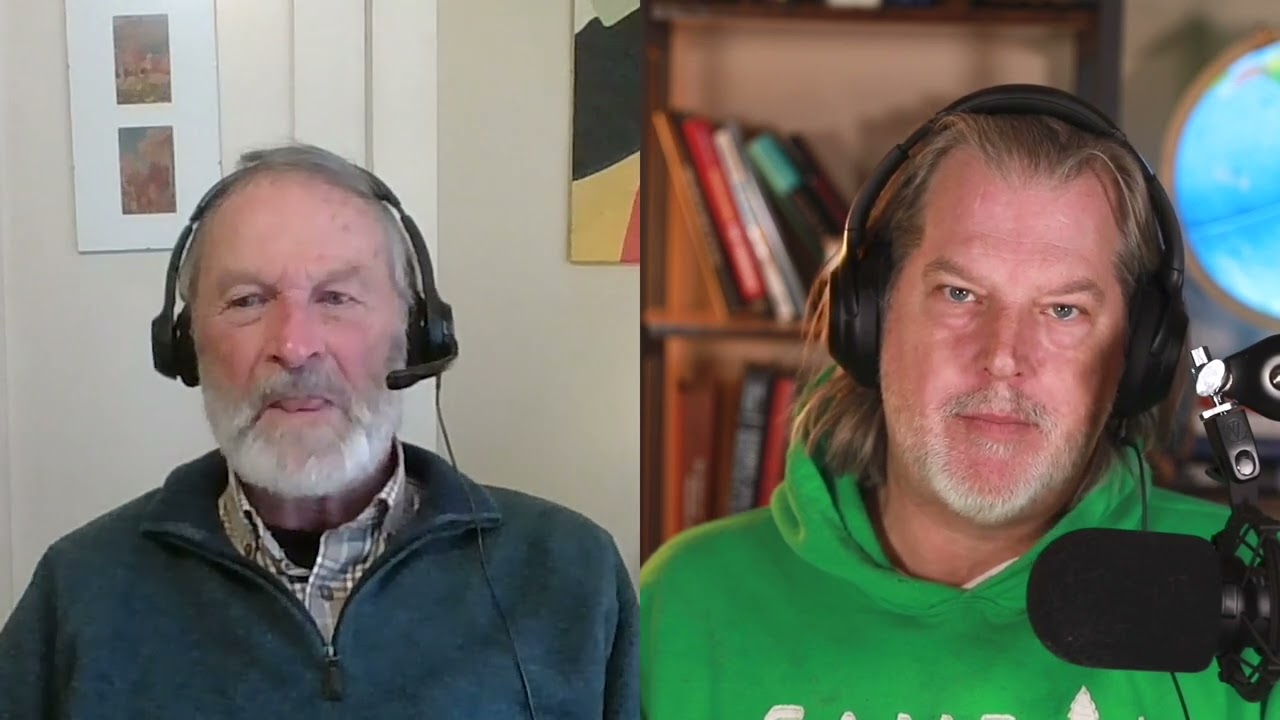
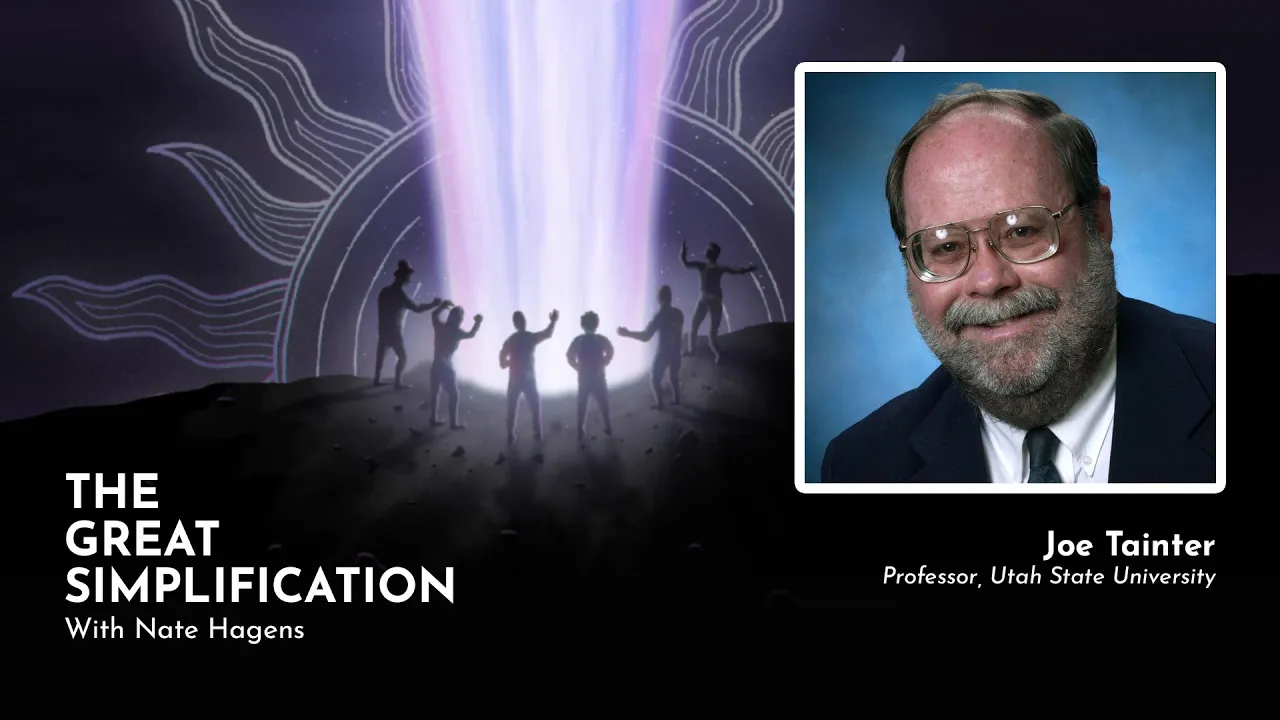
Nate Hagens: You're listening to the Great Simplification with Nate Hagens, that's me. On this show, we try to explore and simplify what's happening with energy, the economy, the environment in our society. Together with scientists, experts and leaders, this show is about understanding the bird's eye view of how everything fits together, where we go from here and what we can do about it as a society and as individuals. Nate Hagens: One reason I settled on The Great Simplification as a moniker is that the long trajectory of human societies that solve problems by adding more energy will
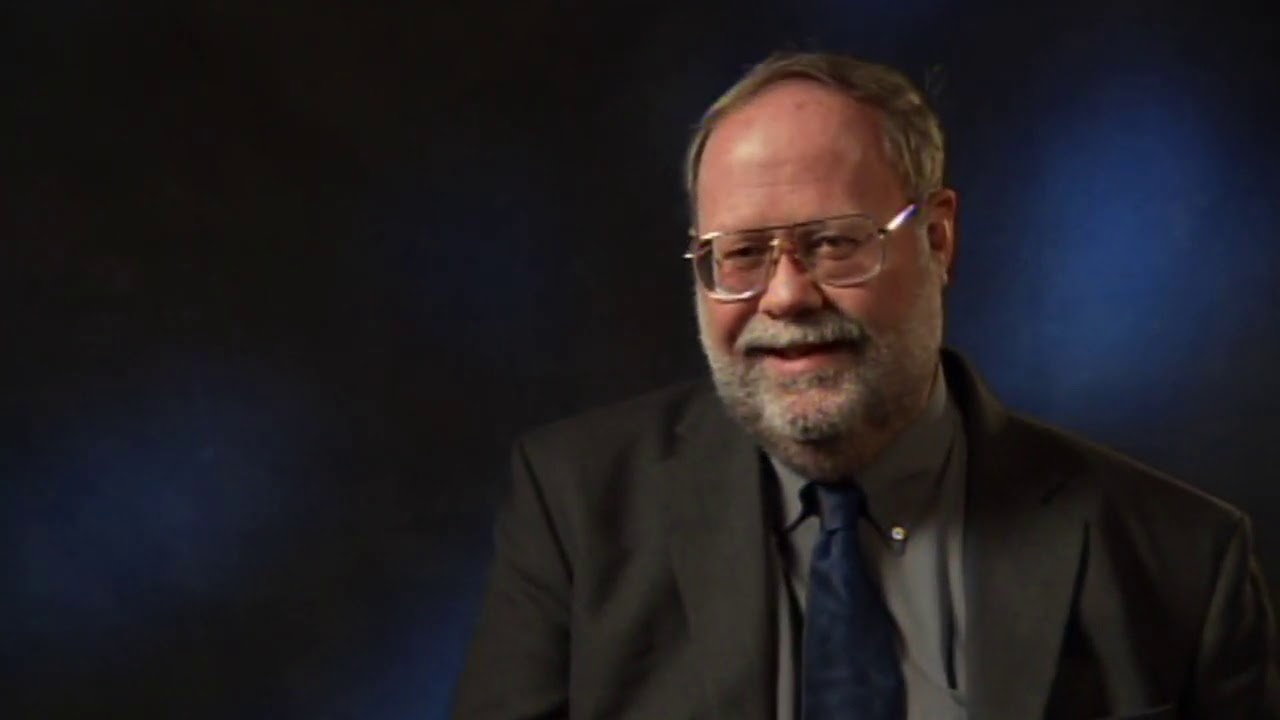
reverse this century. More energy allows for more complexity, less energy implies a simplification of processes, Lifestyles and expectations. Nate Hagens: With me today is renowned archeologist, Joseph Tainter, who is perhaps best known for his book, The Collapse of Complex Societies, where he outlines the history of human social organization and access to energy surplus. Joe and I discussed the difference between complicated and complex, the core findings of his lifelong research into this topic and possible pathways ahead. Nate Hagens: The unspoken question is how might human cultures solve or mitigate problems with less surplus energy? I hope
you enjoy and learn from this, another foundational discussion with professor Joseph Tainter. Nate Hagens: Hello, Joe. Good to see you. Joe Tainter: Well, good to see you. Nate Hagens: The last time I saw you on the screen was in the Jeff Bridges movie that Susan Kucera made and you and I were both. In the last time that I saw you in person, I don't know if you'll remember this, it was 2006, an energy and environmental conference. I organized with Max Christian in Washington, D.C. And you were the evening speaker along with Governor Schweitzer and you
were the evening speakers. Here we are 16 years later and the world is still energy blind. Joe Tainter: Yes, and I still don't have a solution to any of it. No simple solution. Nate Hagens: You've been thinking about this and writing about it and teaching about it for a long time. We have a lot to cover because you're one of the many icons in this field that I've learned from, people in my circle have learned from. How did you personally become interested in complex societies energy, the issue of collapse. You wrote your tome, The Collapse
of Complex Societies in 1988, I believe. That's over 30 years ago. How did you first get started in this? Joe Tainter: Well, my background is that I am an archeologist. I've always been in love with archeology and history and with studying the past. And then my degrees are in anthropology, which is how archeology is taught in the United States. One of the big questions in archeology has always been why and how did human societies grow from simple foraging, hunters and gatherers, simple small bands who were highly mobile to the great complex societies we have today.
How and why did that happen? Joe Tainter: It's always been an interest of mine. I had made perhaps some small contributions to that question in my own archeological research in the American Midwest and in the American Southwest. But one of the questions that has proven elusive is why is it that complex society seem periodically to collapse or occasionally to collapse? Think of the famous cases like the collapse of the Western Roman empire or the collapse of the classic Maya. Joe Tainter: It's a topic that has interested me for some Time. It's a very important topic.
I had written some small things about it, but felt I didn't really have enough information to write my own contributions to the topic. Then one day, it was actually in 1983 that this project started, I was at my desk reading something entirely different. I was actually doing some reading in ecology, readings that had to do with how animals forage. Joe Tainter: The authors were giving an economic explanation for foraging. And I suddenly realized what they were describing could also apply to understanding why societies collapse. It had to do with costs and benefits of various kinds
of strategies. Joe Tainter: The human strategy for perhaps the last 5,000 years at least are the strategy among much of the human earth has been to grow in complexity and to solve problems, to grow in complexity and to solve problems that way. I realized that to understand why societies collapse, which is to say why they suddenly lose complexity was just the flip side of understanding how and why they increase in complexity. The ideas that I developed have to do or apply both to increase in complexity and also to collapse. That, in a not short answer,
is how I came to be working on the topic. Nate Hagens: Just out of curiosity and we're going to dive deeper into everything you said, in your early archeological days, you said you did some work in the Midwest. Did you actually do any digging on sites sort of archeology or was it all scholarship in the library type of digging? Joe Tainter: No, I was in graduate school at Northwestern University, which had a field program in the lower Illinois Valley. At that time there were excavations underway. I worked on a couple of excavations. But as a
student, I was not in charge of those excavations. One of the professors was in charge of them. But yes, I had done field work in the Midwest. Nate Hagens: In another lifetime, I would've loved to done that type of work. Where I live here in Northern Wisconsin, where the glaciers came down and you can find agates, Which are a billion years old. And you can also find stromatolites which are fossilized cyanobacteria which are 2 billion years old from the ancient oceans. Nate Hagens: I just think it's fascinating to hold something in your hand that was
alive in deep time. I've always wanted to hold a pre-hominid ancestor skeleton or something. But of course, those are all walled off in museums. Okay. I didn't know that, that you came across optimal foraging theory in ecology. Could you explain other scientists and scholars use different terms, net energy, EROI or energy return on investment. You use the word energy gain. Can you explain what energy gain is and why it's important? Joe Tainter: Yes, of course. It takes energy to get energy. What matters is how much you get for what you put in. Now, this is
referred to by variety of terms. It's referred to as energy gain. It's also referred to as energy return on investment or energy return on energy invested. That's usually given by the acronym EROI, E-R-O-I. It sounds like something out of archaic Greek, but in fact, it refers to the situation we're facing today. Nate Hagens: The origin of this is from animals, right? Animals have a payoff and if they can't get enough energy, you wrote about beaver colonies And complexity. Humans are animals as well? And we construct societies that gradually become complex. We're subject to these same
natural trends and natural laws with respect to energy. Joe Tainter: That's correct. Yes. Nate Hagens: Your book, Collapse of Complex Societies written in 1988, can you define the word complex in this framework and how does complex differ from complicated? I think a lot of people get confused by those two terms. Joe Tainter: So complexity as I approach it has two dimensions, what I call structure and organization. The structure of a society and the organization of a society. The structure of a society is all the parts and bits and things that go to make it up.
Those can be social roles, positions, technologies, aspects of our economy, aspects of our way of life. Things that we use every day. Joe Tainter: These are all what I call the structure of a society. But to make these into a functioning whole, to make these things into a society requires organization. Organization is what makes the parts work together. Complexity consists of structure and organization. Increase in complexity means that structure and organization have grown. That the society has become more differentiated let's say in its social roles, in bureaucratic positions, in technologies. Joe Tainter: As these things
increase, that is one aspect of increase in complexity. But it also takes increase in organization to make a complex society function. Increase in organization means increase in controls over behavior. So that behavior becomes constrained and channeled in certain directions. This is what I mean by complexity. It consists of increases in structure and organization. Joe Tainter: How does that differ from the term complicated? As we use the term, as I use the term and some of my colleagues use the term, complication would refer to a change in the structure of a society or an activity or
a technology without A change in organization. I have used some events to illustrate this in a book that I did with Tad Patzek a number of years ago. In this book that I did a number of years ago with Tad Patzek. I used an illustration of how the United States military forces landed in North Africa in November 1942. Now, at the time that we did this, it was something completely new to us. Joe Tainter: We had never done a massive overseas military landing like that before. Right from the beginning, we didn't really know what we
were doing very well. One example of that is that as the material items, the military material came onto the docks on the East Coast, it was simply loaded haphazardly onto ships. Now, the anthropologist, Julian Stewart was attempting to describe complexity many years ago and he pointed out and this is what got me interested in this example. He pointed out that for the landings in North Africa, we shipped from the United States to North Africa, 500,000 different types of military artifacts. Joe Tainter: Now, you look at the figure 500,000 different types of items, things, artifacts. This
could be weapons, uniforms, lots of other things, boots, helmets, all of the things that you need to conduct a major military operation today, we shipped 500,000 different kinds of things to North Africa. Joe Tainter: You might look at that and say, "Well, that's a complex system." But it's not. In fact, it's not a complex system. It's a complicated one because it was disorganized. It lacked organization. As I said, items were loaded onto ships haphazardly, which is not the way you're supposed to load a ship for a military campaign. Joe Tainter: You load a ship in
what's called reverse order where the items that are going to be needed last are loaded first. The items that you're going to need first when you land are right on the top and you can find them right. Away as it was in our landings in North Africa in 1942, we hadn't done a military loading. The ships had been loaded haphazardly. What it meant was that in order to find anything, we had to unload just about everything. This is an example of a system that was complicated, but not complex. Joe Tainter: What would've made it complex
would've been adding organization and the organization would've consisted of what's called a combat loading. That's what I mean by a difference between complex and complicated. Nate Hagens: Okay. The difference is that complex requires organization on top of the structure that already exists. Would that imply that a complex system is more efficient with respect to energy? Joe Tainter: No. This is one of the challenges is that complex systems tend to have higher metabolic costs. They have higher energy costs. If you compare well at the opposite extremes, what did it cost to maintain a hundred gatherer society
300,000 years ago? If you measure that in terms of calories, it's not very many. It's basically just the human metabolism of a handful or maybe even a couple of dozen people. Joe Tainter: Compare that to the thousands of kilo calories that every individual in our society uses today to maintain complexity. Complexity always has a cost. Ultimately, the cost is energy. Now, we're largely not aware of that today. It doesn't occur to us because to us, complexity seems to be free. We pay for it through fossil fuels. But in the past, increase in the complexity of
a society meant that people had to work harder so that there were always constraints against growth in complexity because people Realized that complexity would cost. That growing a more complex society would be costly. Joe Tainter: As ancient societies engaged in campaigns of conquest, as they grew complex themselves, they required higher and higher levels of taxes from their support population who would've been primarily farmers. Complexity always has a metabolic cost. Joe Tainter: Increase in the complexity of a society means that it takes more energy to support that society. Well, in terms of the long term evolution
of human societies, this brings up a fundamental question and that is why did human societies ever grow more complex? If growing more complex costs more, why didn't we just stay as simple hunting gathering bands? Joe Tainter: Well, the answer I've proposed is that most Of the time, complexity increases to solve problems. That in other words, we might develop new technologies to solve a problem. We might develop new kinds of social structures to solve a problem. We might increase the size of a bureaucracy to solve a problem. We might have the government initiate new kinds of
programs to solve a problem. Joe Tainter: All of these things are increases in complexity and they're undertaken to solve problems. So, so the approach I took to understanding the evolution of complexity in human history and also the occasional collapses of human societies focused around the evolution of complexity to solve problems. Nate Hagens: Let me frame this in a modern context. The average American in the United States consumes around 2,000 calories a day, but Our exosomatic, or how much energy we use outside of our bodies, is around 200,000 kilocalories a day. We have almost a 100:1
exosomatic magic wand that we invisibly see as part of this complex society. Nate Hagens: But what you're implying is that because most of that is this subsidy we get from mining fossil hydrocarbons and only paying for the cost of extraction, not the cost of creation, nor pollution. That in the past, there would've been a disincentive to complexify too much because without fossil fuels as a subsidy, we would've had to work much harder and there would've been a natural cap and disincentive to complexify too fast because it would've meant we would've had to work 80 hour
weeks and no leisure or music or storytelling or whatever. Without an exosomatic honey pot of high energy gain fuel available to us, there was a natural Cap to how complex we could get? Joe Tainter: Yes, that's correct. It would've been not much more than that 2,000 calories per person per day. That's not quite what an agricultural society can produce, but it's pretty close to it. In the past, 90% of human populations were involved in producing energy that is primarily through agriculture. Joe Tainter: This means that there's only 10% of the economy and the society left
for such things as education, training, specialization, learning, developing new technologies, innovation. That all had to come from something like 10% of the population and also 10% of our energy budgets. Yes, increase in complexity requires higher energy costs per capita. But this seems to come about regularly through solving problems. Nate Hagens: Which comes first? Which is the chicken or the egg in this energy gain story? Is it complexity? Is it the problems or is it the access to energy gain? Joe Tainter: There are occasions in human history when access to energy gain has allowed human societies
to grow complex. And we think this is normal because we're in a period like that now with our reliance on fossil fuels. Joe Tainter: Because of that, we think this is normal. That this has been the normal course of human evolution. But in fact, it's highly abnormal. It has occurred in human history only a few times and it's never lasted very long. You can think of the famous example being perhaps focused on when people developed a focus on intensive agriculture, that this would've given human populations, a short term energy gain per capita. Joe Tainter: But
then we quickly used that up by the development of sedentary communities, by having more children, by having more children survive because we had more calories with which to feed people. All of these things fit into our conception of why we think complexity has grown in human societies. We tend to think that it has grown because we've worked hard and been innovative. But in fact as I've said, those are rare occasions in human history. Most of the time in human history, complexity grows to solve problems. Nate Hagens: There was a tweet in my feed this morning
from a friend of mine, Paul Maidowski, and he wrote, "Empirical evidence shows that individuals can make choices, but species cannot. Ultimately a species will mindlessly choose the path of easiest energy access." Do you agree with this or how would you caveat that? Joe Tainter: That's a very simplistic suggestion. One can even question the idea that humans make choices. There's very interesting work going on in brain imaging and brain studies today. What it is showing is that even very early socialization causes synapses to form in the human brain in certain patterns that an individual has for
a lifetime. The formation of these synapses conditions what the person is going to become, who the person is going to become, how the person will think, how the person will value. Joe Tainter: This all raises the question of, "Well, just how much choice do humans have?" There's an old nature versus nurture debate. Are humans hardwired by nature? Do we become who we are through nurture and socialization? Joe Tainter: Well, the brain imaging studies are showing that in fact, this is a false question. It's a false dichotomy. We become essentially hardwired very early in life. Referring
to human choice as an explanation for let's say complexity is just simplistic. Nate Hagens: I think the larger... Well on that note, I don't so much believe in free will but I do believe in free won't In that you can use your intelligence and neocortex to make plans that ahead of time will trump your limbic mammalian emotional response in the moment. I try to do that, I'm successful like one chance in eight. Nate Hagens: But in any case, I think my friend's point was more that aligned with the Maximum Power Principle that organisms and ecosystems
in nature, self-organized to access an energy gradient. And that if there's a pool of unused energy, that some species will go towards that path. Though individuals have a little bit of ability to reject that path. Are there any examples in history of human societies coming across a large energy access and they didn't access it completely and they rejected it or moved away from it or anything like that? Joe Tainter: Nate, I can't think of one. Nate Hagens: Okay. You mentioned earlier a book you wrote with Tad Patzek called Drilling Down. And in that book, you
describe something called the energy complexity spiral. Can you explain what that is? Joe Tainter: Well, yes. As complexity and energy grow, they have to grow together. On the rare occasions when humans have had little bits of surplus energy. I think on those occasions, complexity has grown because of having surplus energy. Joe Tainter: But then becoming more complex requires still more energy so that they spiral together. Energy and complexity spiral together. As one increases, the other increases. As energy increases, complexity increases and then as complexity increases, energy has to increase also. This is what I mean
by the energy complexity spiral. Nate Hagens: So in 2000, you wrote a paper which I assigned to all my freshman students in Reality 101, in which you describe the Byzantine empire as the only example of a society that planned its own soft landing through a simplification. Can you expand on this example and are there other examples that have come up since you wrote that paper? Joe Tainter: Well, I'll answer the second part first because it's the easiest. The answer's no, I have not come across any other society that survived by simplifying, by systematically collapsing. The
Byzantine case study is not normally recognized as a collapse, but when I began to study it, I realized that it was. Joe Tainter: But the Byzantines did not plan simplification, they were forced into it. They were forced into it because the Arabs burst out of the Arabian Peninsula and conquered half the Byzantine empire. They conquered all of the near east up to what's now the nation of Turkey. They conquered North Africa. Ultimately, they conquered Sicily. These things deprived the Byzantine empire of about half of its revenue, which is to say half of its energy. It
was forced to simplify. Joe Tainter: The ways that it simplified are first that it reduced its full-time professional army and instead settled soldiers on the land to become essentially a peasant militia so that the cost of the army decreased substantially and most of the cities across the empire were abandoned. Only two cities survived. The main one being Constantinople itself. What's now Turkey, was also known by the term Anatolia, had become part of the core of the Byzantine empire after the Arab conquests. Joe Tainter: Anatolia had been a land of cities since the time of Alexander
the Great. Just about all of those cities had to be abandoned and populations either dispersed to the countryside to become farmers or they aggregated on fortified hilltops. Joe Tainter: If you go to the Turkish Capital of Ankara today, you can see this. That at the top of the Central Hill in Ankara, you will see a set of ninth century Byzantine fortifications. And these are the results of the collapse of cities in the countryside that people had to go to fortified hilltops or had to go to hilltops and fortify them in order to be safe and
to be able to survive. The collapse in Byzantine history beginning in the early seventh century was not a planned simplification. It was forced on them. Their backs were to the wall. Nate Hagens: I'm going to jump around here, Joe, a little Bit from my reading and recent refreshing, the main inferences from your book Collapse of Complex Societies are number one, human societies are problem-solving organizations. Number two is sociopolitical systems then require energy to be maintained. Nate Hagens: Number three, this increased complexity carries with it increase in costs per capita and investment in sociopolitical complexity as
a problem solving response, as you've said, often reaches a point of declining marginal returns. You wrote that over 30 years ago. Are there any things that have happened since you wrote the book that would change the nature of how you think about that phenomenon and is there anything that's changed about our society that would make you alter your conclusions and inferences? Joe Tainter: No. Again, I'll answer the easy part first. I don't see any changes in our society that would require me to alter those conclusions. What I will say is that I have learned more
about problem-solving and complexity since then or I have realized more about it. And one of the important things I've realized is that growing in complexity to solve problems is what I call a seductive process. Joe Tainter: It's seductive in the sense that it is natural for us to want to solve problems. Each increment in complexity seems small and affordable at the time because we don't look at the longterm cumulative costs. Ultimately, it's the cumulative costs that seem to do the damage, that make a society susceptible to collapse. By accumulative cost, the cost of solving the
last problem before and the last problem Before that and the last problem before that, all of which may have required increases in complexity and increases in the society's energy budget. Joe Tainter: Again, I want to emphasize that people today are largely unaware of this because complexity to us appears to be free. We pay for it through fossil fuels. Nate Hagens: Well, and underpinning that. I think people look at the world using a technology in a monetary lens. And then other people like us look at the world from an ecology and energy lens. If you understand
that we're using these monetary markers, either linen money in our pocket or digits in the bank, to buy things that require energy and materials, that energy underpins the entire thing. Nate Hagens: I think it's energy blindness. And I don't know if this is willful ignorance that we would rather not know how much our lives and future expectations and institutions are dependent on the capital that we're treating as interest, pulling it out of the ground or if it's truly because of a lack of education in our systems that we don't teach ecology to young people. Joe
Tainter: Certainly, the lack of education is important and I think we'll probably get back to that during this interview. But the work I did in collapse brought me into working increasingly and seriously in the topic of the future complexity of our way of life. Joe Tainter: The future survival of our way of life, the sustainability of our way of life. Coming from my background in anthropology, I realized that the human species is not suited to develop long term sustainability. That's because we did not evolve to be broad scale thinkers. That is to say we didn't
evolve to think broadly in space or in time. Our ancestors going back again, 300,000 years ago down to maybe about 10,000 years ago lived lives that were short. They had no knowledge of the landscape beyond their immediate territory and their immediate neighbors. They had no concept of a distant future because they didn't need to have that concept. Joe Tainter: Life for them was lived by the seasons. They lived by hunting and gathering or later by planting and life was determined by the seasons. These things were fundamental to the human way of life. Because of them,
there was never natural selection in the human species for the ability to think Broadly in time and space. We don't. We never evolved the capacity to do so. Now, I don't want to suggest that no human ever thought broadly in terms of time, because of course clearly many did. The classic example would have been the ancient Maya who had a remarkable calendrical and astronomical knowledge. Joe Tainter: It has been showcased just recently in one of the most recent issues of science. It's sitting next to my easy chair right now. I'm reading through that article. But
this was a very small part of the society. Ultimately their calendrical observations would've been almost certainly tied to the agricultural cycle and also the need to integrate their complex societies. Joe Tainter: There was an energy cost to supporting a small number of specialists in astronomy and developing calendars. The society seemed to need these things, but this was just a small part of the society. This small part of the society had a high energy cost, but it was just a limited number of people. Joe Tainter: I emphasize again that humans did not evolve to be broad
scale thinkers. But in terms of the sustainability of our way of life, that's precisely what's required today. It's been pointed out very often that we are not equipped to deal with longterm problems That are in the distant future and whose effects we don't feel today. Joe Tainter: For example, it's been well noted that this is one of our problems for addressing the problem of climate change, because we just tend to think, "Oh yeah, well, that'll be... We can deal with that in the next generation." Or some such, "We don't need to deal with it today."
Of course the climate does seem to be changing today and at least some people are becoming aware that the climate change is real and it's beginning to affect us. But the bulk of the population as a whole will not follow suit until they really see it affecting their lives. Nate Hagens: At which point it'll be too late to mitigate. Joe Tainter: That may well be. Nate Hagens: Is there a way that we can, including modern society, but just human societies generally, is there a way to solve problems without using more energy? Joe Tainter: Well, I
suppose you could stop doing certain things. You could curtail some activities in favor of others and it can be pointed out that governmental appropriating bodies do this all the time. The United States Congress or parliaments in other parts of the world. State legislatures, they do this all the time. They either decide not to solve certain problems because they don't want to have to come up with the money or they will solve the problem, but they're going to reduce the budget somewhere else. Joe Tainter: Maybe we can solve problems without an increase in energy cost on
a net basis. But it seems to involve simply reducing the energy cost somewhere else. Nate Hagens: Well, it's a little bit of a tautology because the problem we need to solve right now is we're using too much energy. Joe Tainter: Yes. Nate Hagens: Is there any chance that we could via yours and others' research kind of have this Hari Seldon from Asimov's Foundation Map where we become aware that we need energy to solve problems. And instead of continuing to kick the can in a biophysical sense, when Thomas Malthus existed, he didn't know about fossil hydrocarbons.
When Paul Ehrlich wrote about the population decline, he didn't know about globalization And debt. Nate Hagens: In the early 2000s, we didn't know about central banks and access to debt to increase the shale bonanza and kick the can further. All these can kicks that we've done have been ways of we're accessing more pools of energy, but maybe the next can to kick is one in our minds where we don't need a 100:1 exosomatic surplus to live a meaningful life or, in Spain, 50:1. Granted there are many countries in Africa that have very tiny energy gain.
Nate Hagens: My refrigerator uses more energy than a lot of countries in Africa per capita use the entire year. Is there any way that we could have the next can kick be in our minds instead of using energy and materials? I don't know the answer to that, but I'm wondering if you have an opinion. Joe Tainter: Well, I'm not optimistic. Politics seems to make that impossible. I think it was the senior George Bush, who said, this was back when global warming was becoming more widely known. I think he said something like, "I'm not going to
ask the American people to curtail their standard of living." Joe Tainter: That's the problem in a nutshell, is that people won't accept a life of lower consumption, of lower material wellbeing when they can't see that it will do them individually any good and they can't see that it's necessary. In a way, this is a variety of the tragedy of the commons because people reason, "Well, I only contribute a little pollution to the atmosphere. So it's okay. I don't contribute very much." Joe Tainter: But of course everyone thinks that way. All this pollution keeps going into
the commons, the atmosphere. I wish I was 40 years younger, but know what I know now. I think I might want to try to talk to K-12 educators about this. If any of them are listening to this, please feel free to contact me about it. I don't know how to do it. I'm not a K-12 educator. I don't even know whether it's possible, but if I have hope for our future, that's the reason for it. Nate Hagens: I agree with you, which is why I taught my college class reality 101. I think the learning of
our situation and the recognition of how important energy is to our lives at least gives individuals the options for choosing certain paths that aren't quite as energy intensive as our current culture is promoting. Nate Hagens: But it seems to me that as the years go by, we're getting more energy blind not less. There was a lot... When you came to that conference with me in 2006, we were talking about oil depletion and things like that. Now, the concept of peak oil is completely discarded in the discourse and yet we're accessing, shale oil which is the
source rock. There's nothing left after that. It depletes at 40% a year. We just assume that we will always have this amount of energy into the future. And if we don't, we just stop using fossil fuels and go to renewables. Do you have an opinion on renewable energy as it pertains to this energy complexity spiral? Joe Tainter: There are no simple answers. I think we must eventually go to low polluting, renewable sources of energy, but I don't suppose that we could do so without problems. One of the things I got interested in a few years
ago was the role of petroleum in World War II. Joe Tainter: In 1940, we produced oil and gas in the United States at an EROI of 100:1. For every barrel of oil we'd invest in finding and producing oil, we got a 100 barrels back. Today, that's now down to 15:1 and the trend is not reversible. But the reason why I bring up this example is mainly because in 1940, something like 30% of our oil production capacity was shut in. All we had to do in World War II was open valves. We didn't actually have to
find more petroleum to fight World War II. Joe Tainter: We provided all the oil we needed and much of the oil that our allies needed. And we did this simply by opening valves and using up that 30% of oil production capacity that had been shut in. I look at it, renewable energy sources, and I wonder if we were faced with a crisis, could we increase energy output as quickly as we did at the start of World War II. I'll emphasize that I'm not a technology specialist. I'm a social scientist. I don't know whether it's possible
to increase energy production rapidly under a renewable energy economy or whether it's not possible. Joe Tainter: Whether it takes investment of several years. I suspect it takes investment of several years to do it. Just look at the problems we are having with oil supply today and the massive increases in price that are affecting people's lives. Joe Tainter: I'm fortunate. I mostly work out of a home office except for days when I go to the university to teach or to hold my office hours. But for the most part, people have to drive to work. They're stuck.
They have to drive to work. One hears news stories and reads news stories about how badly people are being affected by this and yet we seem unable to overcome it rapidly now. Because we have used up the supply of what's called easy oil. Oil that we could get just by essentially sticking a straw in the ground. Those days seem to be over and increasing energy supply today, even with fossil fuels seems to take time and increasing energy supply in the future under a renewable energy economy, I don't know whether it can be done. Nate Hagens:
A couple of responses there. You mentioned sticking a straw in the ground. I think what we've done with fracking technology has made the straw bigger so we get stuff out faster, but we're much closer to the slurping sound at the end of the milkshake. I think we can see in contrast to your World War II example, where we just had to turn The valves. With what's happening in Ukraine and Russia right now, countries like Germany and Japan, that aren't like the United States where we produce 80-some percent of our own energy, they have to import
the majority of their energy. Nate Hagens: Lo and behold, Germany and Europe are becoming less energy blind under the fire as it were because they have to pay a lot more for the natural gas and oil that they get from Russia. Paradoxically, the Euro has significantly weakened against the Ruble since this war started. Nate Hagens: They're not massively building new solar and wind because that stuff is intermittent. It has a lower energy gain and it's not quickly turn-on dispatchable like oil and gas are. I don't know Joe, if you've seen, but this Freeport LNG explosion
a couple weeks ago, now today, they announced that it's going to be at least 90 days, if not the rest of the year that this is going to need repairs. Nate Hagens: What's happening is our natural gas prices are crashing and Europe's are skyrocketing because we are not going to be able to export that gas to Germany and the UK, which means we're going to have to use it here so it depresses prices here. But the LNG that would've made it to Germany is now not going to be there until at least three months from
now. They're in a real pickle with access to energy, which is why this entire story of energy in society is about to become much more prevalent. Joe Tainter: Back in 2008, I was severely worried. What worried me was not The Great Recession that we were experiencing then, it was the price of oil and the declining EROI on oil. Back in those days, most people don't remember this, oil was up to $140 a barrel. People were paying $4.50 a gallon for gas in the United States. Up to about the levels that we're experiencing now, after a
lot of inflation, of course. Joe Tainter: Even taking inflation into account, we're not paying now what we did in 2008. I was seriously worried, but fracking bailed us out. Fracking came along at just the right time to bail us out. Now, we all deplore the environmental consequences of fracking, but fracking gave us a reprieve. It allowed us to have a space of a few decades in which to develop alternatives to oil. Without fracking in 2008, I strongly suspect that industrial societies would've experienced A collapse and it would've been the most catastrophic thing in human history,
but we didn't because fracking came along. Nate Hagens: Have we used the intervening 15 years wisely? Joe Tainter: No. Well, to a certain extent we have. It takes 40 to 60 years to undergo a major energy transition. Where are we in that transition? I don't know. I don't know where the starting point is, but what I see today in terms of planning and referring to dates for reducing carbon emissions or eliminating them all together as if that were possible. It does give me a certain optimism that we may make the transition although we won't Find
the transition easy. It may affect the way of life that a lot of people have come to expect. Joe Tainter: That will mean even more political conflict than we experience now. But it's possible that we'll make the transition, but I think we're going to find that an energy future based on renewables and electricity just has certain drawbacks to it that we don't have with fossil fuels. Joe Tainter: One of the things that's often pointed out is that a liquid fuel is the most versatile thing you can have for transportation. We're looking at a future where
we won't have that or we'll have much less of it than we use now. As I say, I'm a realist. I'm not an idealist. I don't think that renewable energy is going to be some sort of panacea or the ultimate human paradise. I think it's going to be a challenge, but it's a challenge we're going to have to meet. Nate Hagens: Well, I think the issue isn't renewable energy or fossil energy, that's not the problem that needs to be solved. The problem that needs to be solved is we're optimizing our societies for growth and even
all the net zero and all the different forecasts for a more sustainable future still say that the aggregate size of the human economy will be bigger because politically, like you mentioned earlier, we can't say, "We have to have a smaller economy in the future. Here's how we're going to get there." Nate Hagens: Then if that was the case, we could use our Robust, renewable technology in tandem with our remaining hydrocarbons towards some sort of a glide path to a non-collapse sort of thing. But how can that conversation even politically happen? Has there ever been a
society that had a ruler in a democratic or otherwise where it's said, "You know what? We're going to have to use less and here's the pathway we're going to get there." Could that happen even? Joe Tainter: Well, it's a curiosity and I'm going to refer to Jared Diamond's book, Collapse. The main thing I took away from that book was that Diamond likes dictators. The most interesting case in that book was I think that Dominican Republic ruled by a dictator named Trujillo for several decades, who simply protected the forests. Joe Tainter: Even though people were poor,
his people were starving, they needed to use the forest and he wouldn't allow them to do it. He preserved the forests and he had the political power to do so. I certainly would not advocate a future of autocracy, but if you're concerned about requiring people to live a simpler way of life with lower material consumption, that is an efficient route. Nate Hagens: By the way, you probably don't know this, but when I was getting my PhD, my colleagues, fellow students, we referred to you as Jared Diamond's Jared Diamond. Joe Tainter: Yes. Yes. I've also been
referred to as the real thing. Nate Hagens: Right. That was the sentiment. How does modern finance fit into your model of complexity? Does it add another layer of risk? I say that because the way that money is created and the availability of leverage to hedge funds and money managers means we have a lot more of paper claims representing energy than there actually is energy available to solve problems. Is this a big part of the risk to complexity that you see today? Does this change anything in your thesis? Joe Tainter: Yes, you're absolutely right. It's been
pointed out, I think probably by you among others, debt assumes a growing economy. And then of course, a growing economy means a growing supply of energy. That depends on energy. In the future, if we have less energy per capita, and it's harder to get energy than what we experience now, what does this mean for all of the outstanding debt? Though I'm not a finance specialist, I'll let others address that, but I can foresee some serious problems emerging from that but you'd probably be better placed to answer that than I am. Nate Hagens: This podcast is
called The Great Simplification in part, because we are simplifying complex science topics to a general audience. But mostly because after The Great Complexification that has resulted from the last two centuries of the carbon pulse human societies self-organizing and growing our access to fossil hydrocarbons, that the coming century is going to be the reverse, a Great Simplification. Nate Hagens: In your research, you posit that collapse Is specifically a sociopolitical phenomenon that affects other areas of human society to varying degrees over differing time horizons. But to my knowledge and correct me if I'm wrong, you don't mention
complexities inverse specifically simplification. Would you please comment on whether the simplification of complex societies is a feasible outcome of collapse, or what are your thoughts on this? Joe Tainter: A rapid simplification is my definition of collapse. That a collapse is the rapid loss of a level of complexity, an established level of complexity. That's the language that I used when I published the collapse book in '88. I didn't use the term simplification in that, but I could have, because a rapid simplification and a rapid collapse are the same thing. A collapse is a loss of an
established level of complexity, a rapid loss of an established level of complexity. Joe Tainter: I teach a class in sustainability and much of it focuses on energy and innovation. I start the class with a little anecdote. I tell students what life would've been like in, let's say someplace in Northern and Western Europe, let's say about the year 1750. What would people's lives have been like. Life expectancy would've been about 40 years. 90% of us would be farmers. Being a farmer is a noble occupation, but it doesn't appeal to everyone. Joe Tainter: What we know today
as education would be almost Nonexistent. It would exist only for Nobles and for the clergy. There would be very little of what we know today as medicine. Something that we take for granted as simple to deal with like appendicitis would become once again, a simply gruesome way to die. I tell my students that the difference between that and the way we live today is what we want to sustain. Joe Tainter: I would say we don't want a rapid simplification because a rapid simplification would be a collapse and it would be the worst calamity in human
history. Now, a transition to a moderate simplification. Well, if we can aim toward that, if we can figure out a way to achieve it, that is a Possibility but it involves people thinking differently which brings me back to my points about K-12 education. Joe Tainter: Can children be thought to think differently in terms of their expectations for their material wellbeing going into the future? I have to defer to the K-12 educators on whether it's possible to teach young children that and to change society in that way. One of the challenges that I put to my
students in that class is that based on factors that I look at or trends that I look at, what I see as a possible future is what's called a steady state economy, an economy that doesn't grow. Joe Tainter: I ask them to think about what the consequences of that would be and to talk to me about it at the end of the semester. Well, they can't conceive of it. They cannot conceive of an economy that doesn't grow or what the consequences of that would be. Now, as I say, I'm a realist, I am not advocating
a steady state economy. I see a lot of problems with it, but I wonder often, if is that what we're headed toward? Nate Hagens: I don't see a steady state economy either. I could see a rapid simplification or a miniature simplification followed by then a continued smaller growth after that. I just don't know that a human society could have literally a steady state. It's one of the only disagreements I've had over the years with Herman Daley who was one of my mentors and got me into this path. I just wonder biologically, are we capable of
something kind of flat? What do you think about that? Joe Tainter: Well, consider what some of the consequences would be. For one thing, birth rates have to equal death rates. What does that mean? It means you have to have a permit to have a child. How many of us are willing to put up with that? Joe Tainter: It also means that for someone to ascend the economic ladder, someone else has to go down by the same amount. This is what steady state means. These are two of the main reasons why I just don't see a
steady state economy as politically feasible. Nate Hagens: Yeah. What have you been writing about and researching about since you wrote the Collapse of Complex Societies? What are the interesting questions to you today in your research and your thinking? Joe Tainter: Well, I've always been concerned about the human future. I don't know why. I grew up in San Francisco in the Cold War. San Francisco would've been a target. I grew up doing exercises of crouching under my desk and putting my arms around my head. Joe Tainter: This is the sort of thing I grew up with.
I look back on how I thought and felt in those days, I realized that I just assumed it was going to happen. I assumed it would be a nuclear exchange and San Francisco would be blown up. And I think that has conditioned a lot of my feeling in life. Joe Tainter: Remember what I said, that early experiences and early socialization conditions a person's brain for life. So perhaps that's one of the reasons why I became interested in collapse. Nate Hagens: Because you had already grieved for the outcome so you were psychologically more prepared to research
it? Joe Tainter: Well, as I did the Collapse book, I realized that what I was learning and doing the research for, it wasn't just about ancient societies. That it applied to us today and to our future very explicitly. I began working on sustainability. Joe Tainter: After several years of thinking about sustainability And working on the issue of complexity in problem solving in sustainability, I came to the conclusion that sustainability boils down to two factors; Energy and innovation. Energy we've been talking about and we know by this point how important it is. Joe Tainter: But innovation
is largely not discussed except where people assume that innovation is going to solve all our problems, that we don't need to worry about the future. It's sometimes suggested that resources are never scarce, they're just price strong. That as a resource seems to become scarce, as long as we have a market economy and the government doesn't mess things up, there will always be incentives to innovate, which would mean inventing new technologies, finding new resources, finding new ways to use the resource and so forth and so on. Nate Hagens: Well, what you just described is exactly what
Any economist listening to my show would say is what I'm missing is that innovation, if oil gets scarce, the price will go up high enough and we'll develop an alternative, so no problem. Joe Tainter: Yeah. Well, I don't want to disparage my colleagues in economics. Some of them are quite bright and are aware of the things we're discussing, but it seemed to me that there's a basic assumption in relying on innovation for the future. And it's assumption that economists and technological optimist don't know they're making. The assumption is that the productivity of innovation in the
future will be the same as it is today. Joe Tainter: I thought, that's a problem. For one thing, the research process grows increasingly complex and costly over time. If you think back to the 18th and 19th centuries, the days of what are called Lone Wolf Naturalists like Charles Darwin, Marie Curie, Gregor Mendel, people who worked as lone individual scientists and revolutionized entire fields of learning and we still benefit from the legacy of their efforts today. Joe Tainter: But science today is largely a multidisciplinary effort. When I was an up and coming young scholar, you could
pick up an issue of science or nature to the two top journals in the, in the area of science. And you would see maybe one or two or three authors per paper. Today, you pick up a copy of one of those journals or any journal, and you're very likely to see five or six or ten authors per paper. Joe Tainter: What has happened is that the research process Has grown in size and has grown in complexity and costliness because largely we have depleted the stock of easy innovations to achieve. I like to say electricity is
no longer out there waiting for us to discover it. We did discover it. So now what do we do? For a number of years, I didn't know what to do with this thought. Although it always nagged at me. Joe Tainter: Then a few years ago, when I spent some time in Arizona State University, I met a couple of colleagues Deborah Strumsky and Jos Lobo. I want to give a lot of credit to them who had a database from the United States patent and trademark office. I thought, "Here's a database we could use to investigate this
question, 'Does innovation Become less productive over time?'" And what we found with a database of over 3 million patents beginning in the early 1970s, is that in fact, the productivity of our system of innovation is declining. Joe Tainter: We measure this as how many authors does it take to achieve a patent and conversely patents per author? What we find is that it takes more and more individual scientists, which means more and more scientific fields to achieve a scientific breakthrough that merits a patent. Conversely, the productivity of innovation measured as patents per author is declining and
has been declining throughout. Now, this was in the patent database as a whole. Joe Tainter: We then broke it down into individual fields and we find the same thing in individual fields. It may surprise people to learn that even in information technology, in both hardware and software, the productivity of innovation has been and is declining today and it will continue to do so. What does this mean for our future? Joe Tainter: Well, innovation has to yield a net profit of one form or another and we are looking at a future where innovation continues to grow
in complexity, meaning it has to integrate, meaning an individual breakthrough has to integrate more scientific fields, more technical fields and innovation will become increase inly cost and decreasingly productive. I think by the end of this century, our system of innovation will be very different from how it is today. This is why I'm very concerned that innovation is not going to bail us out forever as many People assume that it will. Nate Hagens: Let me summarize that. Our wealth is described by our productivity. An economist would say how productive our capital and our labor are. Both
of those variables are actually dependent on energy. We have energy and innovation that are describing our wealth, our productivity, and if energy declines or becomes more expensive, we can offset that by increases in innovation. Nate Hagens: What you're saying is there's an embodied energy component that's growing because of the complexity embedded in our system on the innovation and discovery itself so that the amount of new productivity we're getting from innovation is declining over time. All that is happening while our energy globally total amount of access to energy has been Increasing. What happens with innovation once
our energy starts to decline is a really central question. Joe Tainter: Well, yes. That a decline in energy would lead to a decline in innovation. But what I would argue also is that a decline in innovation will lead to energy problems in the future because we will not be able to invent our way out of the problem. Joe Tainter: I want to use again, the example of Charles Darwin working in his study in the mid-19th century compared to how innovation is done today with large teams in large institutions with buildings that have energy costs, with
support staff who need salaries and have energy costs with equipment and fleets of vehicles and so forth. That innovation today simply costs much more than it used to. It's more complex and that depends on energy. Without fossil fuels, we'd be back in the days of Charles Darwin. Nate Hagens: As the benefits of social complexity diminish and eventually become outweighed by the costs, do the benefits of voluntary simplification increase? Is there a way that people as individuals can use the knowledge from your book and your research and other inferences to personally step outside of this energy
complexity spiral and make simplifications in their own life facing what we do as a culture? Joe Tainter: Well, some people do. Certainly this is a choice that individuals can make to a certain extent. It's not possible to get away from fossil fuels entirely, but we'll never get away from fossil fuels entirely. Joe Tainter: Among other things, we're going to need them for lubricants and for petrochemicals. The challenge is that we need to greatly reduce our, particularly burning of fossil fuels. I always think of the old Shah of Iran who used to say that petroleum was
too valuable to burn as a fuel. What he meant by that was that it's so valuable for other things for, as I say, lubricants and petrochemicals. Nate Hagens: Well, we conflate the difference between price, cost and value. I think the value of this stuff on a long term human time scale is indistinguishable for magic. It's the civilizational equivalent of burning a Picasso for heat. But in the short term, it doesn't feel that way. Nate Hagens: In the short term, we want our hamburgers and Netflix and airplane junkets to Vegas and what have you. So if
you don't mind, Joe, I will conclude with asking you some personal questions that I ask all my guests. Nate Hagens: Firstly, you are a college professor. What recommendations do you have specifically for young people who become aware of our energy environment and biophysical constraints to the human enterprise. Do you give your students some advice at the end of every semester? Joe Tainter: Well, one of the things I teach them and what I say to audiences when I get questions like this is that the first step is awareness. We have to be aware of what sustains
our way of life and most fundamentally, that's energy. I try to make students aware of issues in energy, in issues in innovation and in the challenges to sustainability. Joe Tainter: I don't teach a happy talk course. I don't give them simple solutions. I teach them the true complexity of the subject and how difficult it is to come up with a solution to developing a sustainable society with anything like our material way of life. I suggest at the end of the semester, what I say to them is that if you pay attention to anything in your
lives other than your families, pay attention to what's happening in the energy field because it's going to condition how your lives will turn out. Joe Tainter: I don't know how well they take this advice. I know I've had a few students who do, who get in touch with me after they've left and tell me how much they appreciated what I taught them, but I suspect most of them just become Average people. They live their daily lives concerned about paying the mortgage, getting the car repaired, driving the kids to piano lessons or soccer practice, that sort
of thing. Joe Tainter: That's what occupies people's lives. I will admit that when our son was young, a lot of my energy was consumed by that. Fortunately, I've always been interested in human history and in energy questions. Even during the years when I was focused, primarily on studying ancient North American societies, I always had in mind the questions of sustainability and collapse. That's not a short answer to your question, but it is an answer. Nate Hagens: Excellent. Thank you. Do you have suggestions for how people living in advanced economies today like the United States and
Europe can prepare themselves and their communities for, what I refer to as The Great Simplification, you refer to as the inverse of the built complexity. Whether it's a rapid or a slow simplification, do you have any broad recommendations? Joe Tainter: Again, it's the same answer. Awareness, try to become aware, try to understand what drives events today, the fundamental things that drive events today. But I don't mean politics and wars. Energy and innovation as the fundamentals that drive things today and will in the future and for the rest of my students' lifetimes and probably their students'
lifetimes and forever after that. Joe Tainter: That awareness is the most critical thing. Once people achieve awareness, there's some real possibilities that open up. When I'm asked a question like this, I don't give any definitive answer or guidance or suggestions. What I say is that we're a species that muddles through. That's all we've ever done and all we ever will do. But if I'm going to be optimistic, it would be on the basis of an educated, intelligent population muddling through. This is again where we come back to early childhood education. Nate Hagens: Well, I agree
with you and I've stopped using the word solutions because solutions implies that it's a problem with a solution. I prefer the word responses and that's what we're trying to do, Joe, is change the initial conditions of the future via awareness of the importance of energy and systems to our human society so that better reactions can happen in the moment. Of all the things we've talked about and or anything else, what personally are you most concerned about in the coming decade or so in the world? Joe Tainter: I am concerned about how changes in our material
standard of living, the possibility of a steady state economy, declining innovation, declining energy per capita will generate political conflict in the industrialized countries. Joe Tainter: That's my immediate and short term concern. For the long term, say going into the next century, your great simplification could be correct. It could be that's what's going to happen. I just don't know. Nate Hagens: In contrast, what are you most hopeful about in the coming decade or so? Joe Tainter: Well, I am hopeful that people become aware, that the population becomes educated and more intelligent than it is now. I
don't know how to bring it about, except through as I've said so many times in this interview, early childhood education. Nate Hagens: If you were a benevolent dictator and there was no personal recourse to your decision, what one thing would you do to improve human and planetary futures? Would it be the changing in our education system from K-12 or what other idea would you have? Joe Tainter: I think it would be education. Nate Hagens: Can we change our education system? Joe Tainter: I don't know. Nate Hagens: It seems to me that universities today are, are
miniature super organisms and there's all kinds of hierarchy and built complexity in the education system itself. That they need more energy and resources. I think we are not preparing young people for the future that's ahead with all this complicated and complex education and teaching that mattered the last 50 years, but might not be so relevant to the next 50 years. What do you think? Joe Tainter: Well, I'm always gratified when students who've finished up and left, write back to me and thank me for what I have taught them. But as far as optimism for the
future, I don't think it relies on university level education. Because by the time they get to college, their thought patterns are already set. We have to start earlier in life. Once they get to college, we can teach them things but we can't teach them to think. Nate Hagens: A Montessori sort of model scaled more widely perhaps? Joe Tainter: I don't have firsthand familiarity with that. Nate Hagens: Excellent. Joe, thank you so much for spending your time today and thank you for your career of researching what to me, was a life changing recognition. Reading your book
along with Herman Daly and some others caused me to leave my Wall Street Job and spend time full-time learning and educating people on the importance of energy to our society and to our future. Do you have any closing thoughts or advice or wisdom for the listeners of this show? Joe Tainter: No. I don't know if I have any wisdom, just the things I've suggested. Mainly, become aware. Nate Hagens: Thanks so much, Joe. Joe Tainter: Okay. My pleasure. Nate Hagens: If you enjoyed or learned from this episode of The Great Simplification, please subscribe to us on
your favorite podcast platform and visit thegreatsimplification.com for more information on future releases.