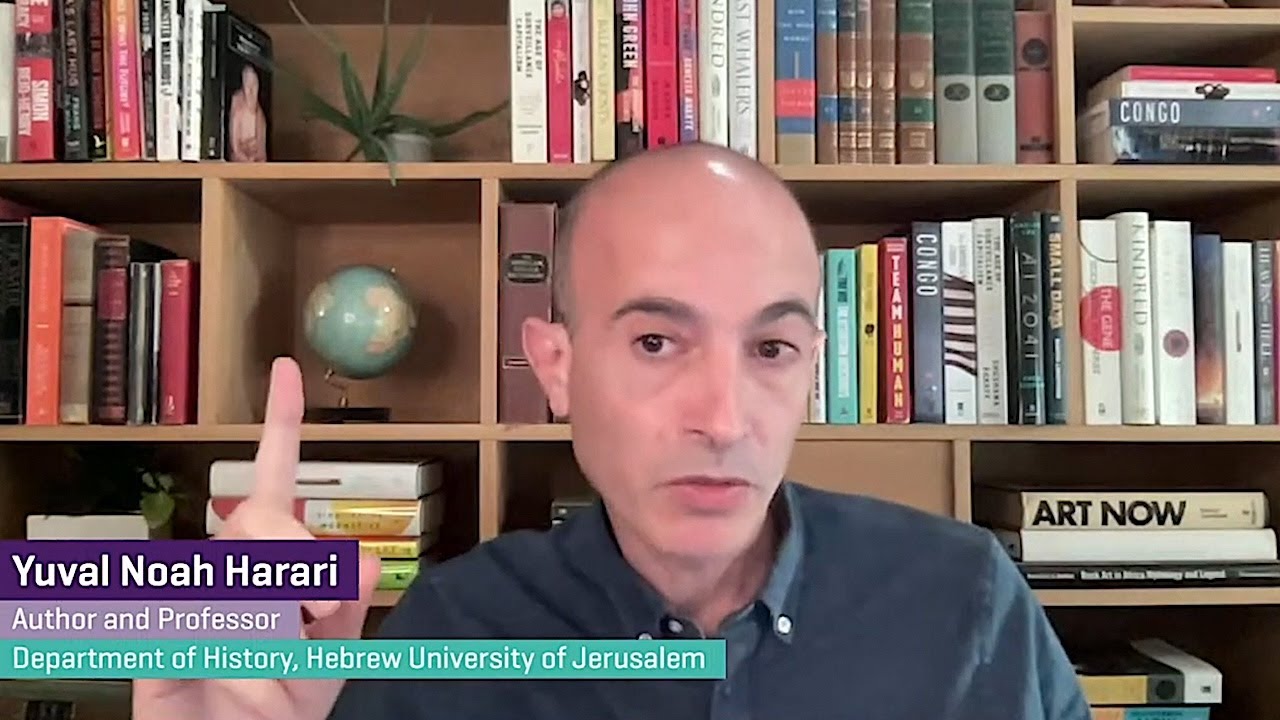
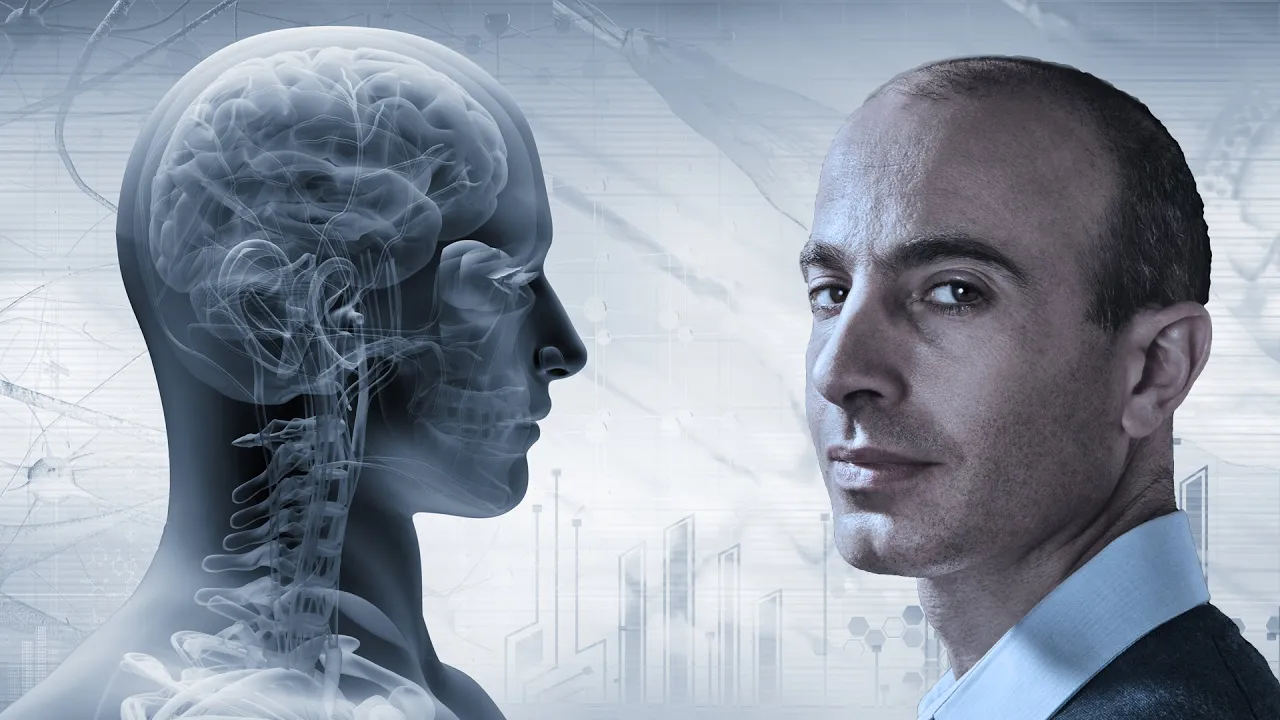
[Music] we live in a world of never-ending change as we progress and introduce new technologies and innovations the way we interact with society and even the planet around us will change [Music] dr yuval noah harari macro historian professor and best-selling author of sapiens as well as one of the world's most innovative and exciting thinkers has a few hypotheses of his own on the future of humanity he examines what might happen to the world when old myths are coupled with new godlike technologies such as artificial intelligence and genetic engineering we are probably one of the last
generations of homo sapiens within a century or two earth will be dominated by entities that are more different from us then we are different from neanderthals or from chimpanzees because in the coming generations we will learn how to engineer bodies and brains and minds now how exactly will the future masters of the planet look like this will be decided by the people who own the data those who control the data control the future not just of humanity but the future of life itself because today data is the most important asset in the world in ancient
times land was the most important asset and if too much land became concentrated in too few hands humanity split into aristocrats and commoners then in the modern age in the last two centuries machinery replaced land as the most important asset and if too many of the machines became concentrated in too few hands humanity split into classes into capitalists and proletariats now data is replacing machinery as the most important asset and if too much of the data becomes concentrated in too few hands humanity will split not into classes it will split into different species as technology
advances faster than our understanding of it you will also allow us to upgrade our brains and nervous systems connecting our brains directly to the internet also means that hackers will have direct access into our minds they can steal information from us and modify our beliefs and opinions we've reached the point when we can hack not just computers we can hack human beings and other organisms there is a lot of talk these days about hacking computers and email accounts and bank accounts and mobile phones but actually we are gaining the ability to hack human beings now
what do you need in order to hack a human being you need two things you need a lot of computing power and you need a lot of data especially biometric data not data about what i buy or where i go but data about what is happening inside my body and inside my brain until today nobody had the necessary computing power and the necessary data to hack humanity but this is now changing because of two simultaneous revolutions on the one hand advances in computer science and especially the rise of machine learning and ai are giving us
the necessary computing power and at the same time advances in biology and especially in brain science are giving us the necessary understanding biological understanding harare suggests the possibility that humans are algorithms and as such homo sapiens may not be dominant in a universe where robots and ai will most likely replace us in our jobs once they become intelligent enough although he is hopeful that ai might help us solve many problems such as healthcare climate change poverty overpopulation and terrorism we can no longer be certain about anything including things that previously seemed fixed and eternal you
can really summarize 150 years of biological research since charles darwin in three words organisms are algorithms this is the big insight of the modern life sciences that organisms whether viruses or bananas or humans they are really just biochemical algorithms and we are learning how to decipher these algorithms now when the two revolutions merge when the infotech revolution merges with the biotech revolution what you get is the ability to hack human beings and maybe the most important invention for the merger of infotech and biotech is the biometric sensor that translates biochemical processes in the body and
the brain into electronic signals that a computer can store and analyze and once you have enough such biometric information and enough computing power you can create algorithms that know me better than i know myself and humans really don't know themselves very well this is why algorithms have a real chance of getting to know ourselves better we don't really know ourselves the algorithm tracks your eye movements your blood pressure your brain activity and tells you who you are once we have algorithms that can understand me better than i understand myself they could predict my desires manipulate
my emotions and even take decisions on my behalf and if we are not careful the outcome might be the rise of digital dictatorships in the 20th century democracy generally outperformed dictatorship because democracy was better at processing data and making decisions democracy processes information in a distributed way it distributes the information and the power to make decisions between many institutions and individuals dictatorship on the other hand concentrates all the information and power in one place now given the technological conditions of the 20th century distributed data processing worked better than centralized data processing which is one of
the main reasons why democracy outperformed dictatorship only under the unique technological conditions of the 20th century in the 21st century new technological revolutions especially ai and machine learning might swing the pendulum in the opposite direction they might make centralized data processing far more efficient than distributed data processing and if democracy cannot adapt to these new conditions then humans will come to live under the rule of digital dictatorships by hacking organisms elites may gain the power to re-engineer the future of life itself because once you can hack something you can usually also engineer it professor harari
looks to the future and explores how global power might shift as the principal force of evolution natural selection is replaced by intelligent design after four billion years of organic life the era of inorganic life is now beginning in the coming decades ai and biotechnology will give us god-like abilities to re-engineer life and even to create completely new life forms after 4 billion years of organic life shaped by natural selection we are about to enter a new era of inorganic life shaped by intelligent design our intelligent design is going to be the new driving force of
the evolution of life there are many ways in which the future of humanity might play out in the coming decades we already see the impact of infotech and biotech in the present day but as we wait for them to grow and expand it's only natural to wonder what will happen in the next few decades we can expect to see some really interesting developments as all these fields of science and technology will continue to rapidly advance one thing is for sure humanity has some pretty big decisions to make thanks for watching did you like this video
then show your support by subscribing and ringing the bell to never miss videos like this you

![How Did The Wealthy Gain Power In The Past? - Yuval Noah Harari [2015] | Intelligence Squared](https://img.youtube.com/vi/TYAKHLrr51w/maxresdefault.jpg)