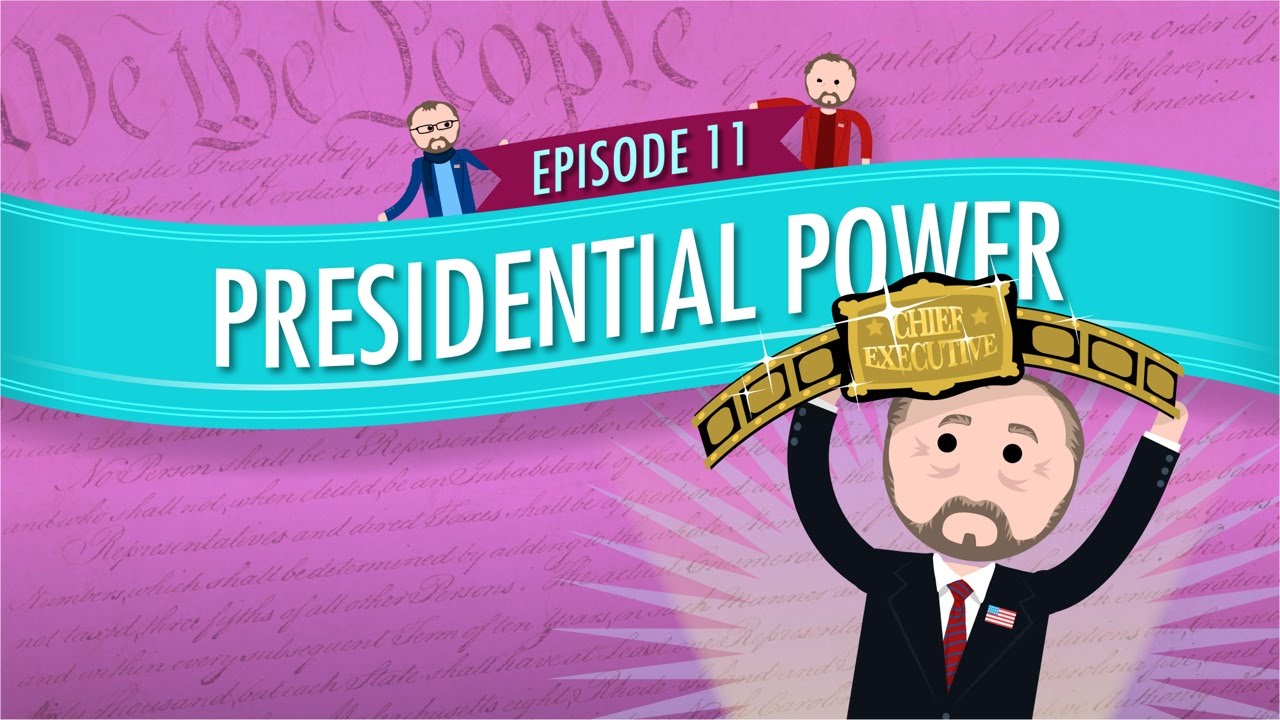
[Music] today we're going to talk about the presidency and executive power will read what the constitution says about the presidency we'll discuss how executive power has been transformed with the rise of executive orders and we'll discuss the leading case on presidential powers it's called youngstown sheet and tube and it involved president harry truman's seizure of the steel mills in 1952. so what does the constitution say about the president let's begin with the text we usually think of the presidency as the most powerful elected office in the world but the constitution grants fewer specific powers to
the president in article 2 than it does to the congress in article 1. article 2 vests the executive power of the united states in a single president it sets out the details for how we elect a president and how we could remove one from office and it lists some of the president's core powers and responsibilities including commander in chief of the army and navy of the united states the power to appoint judges and executive branch officials with the advice and consent of the senate to make treaties to grant reprieves and pardons and perhaps most importantly
to take care that the laws be faithfully executed how did we end up with article 2 and this vision of the presidency so let's return to the constitutional convention and there were five big and important debates about presidential power at the convention and they involved first the logistics of structuring the presidency second how to elect the president third how long the president's term should be fourth whether to grant the president a role in the legislative process and fifth how the president can be removed from office so let's begin with the first debate the delegates had
a heated discussion about how powerful the president should be after all they just fought a revolution not to have a king and there was a really important question whether to have a single president or to divide the executive power between a lot of people some delegates wanted a strong executive maybe the biggest advocate for presidential power at the convention was alexander hamilton he was accused of being a closet monarchist because he proposed a president elected for life on the other side of the spectrum roger sherman from connecticut wanted a weak president responsible for carrying out
the will of congress and he suggested leaving the entire structure of the presidency itself up to congress to decide the most important voice on presidential power ended up being james wilson of pennsylvania he argued vigorously that the executive should consist of a single person and not a multi-member body as had been created in the pennsylvania constitution of 1776. delegates who wanted a weaker presidency criticized wilson's proposal as what governor morris called the fetus of monarchy but wilson eventually convinced his colleagues of the viability of a single president who combined energy with responsibility and it was
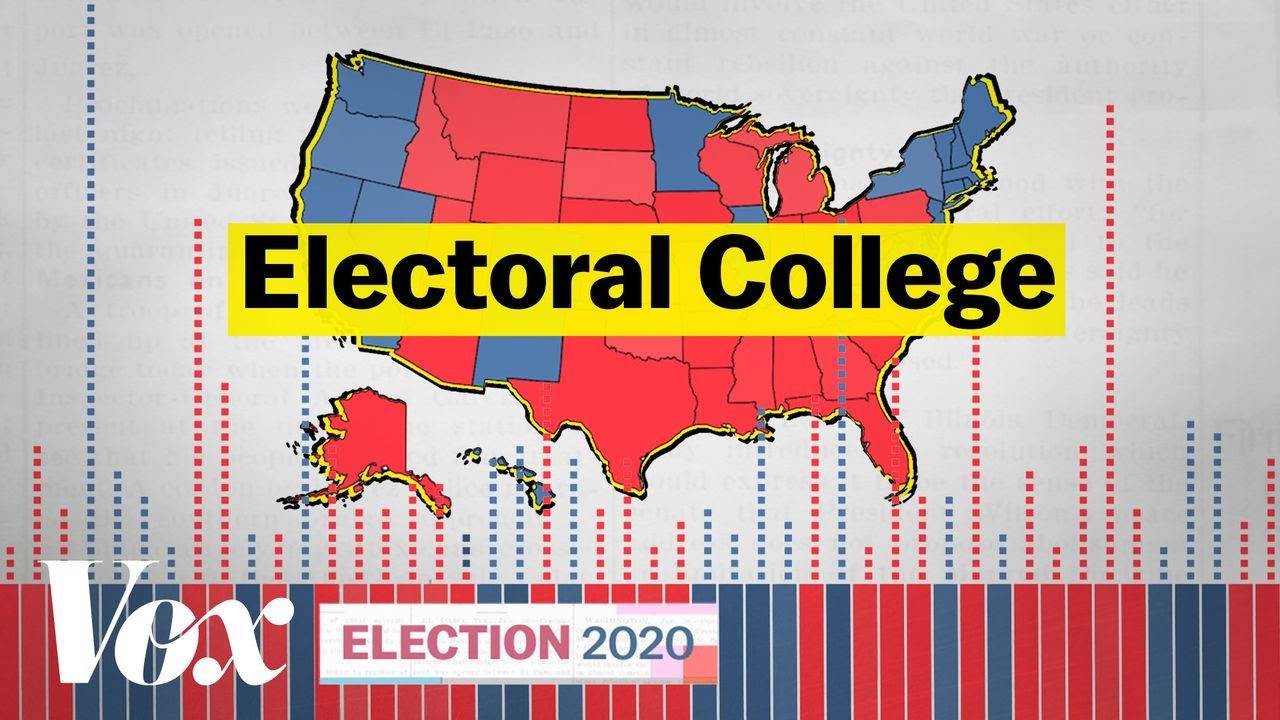
this desire for energy in the executive as wilson put it that led to the choice of a single president overcoming fears of monarchy the second big debate was how to elect a president once again james wilson was the visionary here he proposed popular election by the people that was too much for most of the delegates and james madison countered that the president should be elected by congress the compromise was the electoral college under the theory that the president should be chosen by a wise group of electors specifically chosen by state legislatures to select the most
virtuous candidate with the rise of political parties after 1800 things did not turn out according to plan the third big debate was the length of the president's term and whether to have term limits for the president at one point in the convention in july the delegates agreed to a single term of six years for the president but they settled on a four-year term with the president eligible to run for re-election the fourth debate was whether to grant the president a role in the legislative process as a check on congress james madison was very big on
having what he called a council of revision with the president sitting with members of the federal judiciary to review laws passed by congress and the power to veto any unconstitutional ones james wilson and alexander hamilton pushed for an absolute veto for the president one that couldn't be overridden by a vote in congress that again was too much for majority delegates to accept and the compromise was elbridge gary's proposal for a limited veto that could be overridden by two-thirds votes of congress and that passed decisively and the fifth and final debate about presidential power was how
to remove a president from office before the end of his term that's the process of impeachment and removal the first proposal for the impeachment clause was pretty broad it allowed removal for malpractice or neglect of duty but the final text settled on a narrower list of high crimes that were eligible for impeachment namely treason bribery or other high crimes and misdemeanors now when we think about debates about presidential power today the constitutional question often comes down to can the president do that can she put government money toward building a border wall can her administration issue
a sweeping regulation to regulate air pollution battles like this both yesterday and today often involve executive orders so what's an executive word the executive order is a written directive of the president and it's an order by the president to tell someone in the executive branch what to do the statistics about the rise of executive orders over history give us a really vivid sense of how presidential power has been transformed over time george washington issued eight executive orders in his two terms of office john adams and james madison issued one executive order executive orders hovered around
in the low teens for most of the first decades of the presidency but they spiked up to 48 executive orders issued by abraham lincoln during the civil war many of them involving these four powers between presidents grant and mckinley the numbers of executive orders fluctuated between about 100 and 200 a year but then they soared up really dramatically to 1081 under theodore roosevelt and 1803 under woodrow wilson during the progressive era there's a further spike up to 3728 executive orders issued by franklin roosevelt during his four terms that's the highest number ever and the number
of executive orders then settled back down and modern presidents from ronald reagan to barack obama have issued between two and 300 executive orders during their two terms in office so that spike during the progressive era is really interesting what happened to make the number of executive orders spike up under theodore roosevelt and woodrow wilson from you know about 50 under lincoln all of a sudden to more than a thousand well what happened was a completely changed conception of the presidency the thing that impresses me most said president william howard taft in 1909 is not the
power i have to exercise under the constitution but the limitations and restrictions to which i'm subject under the instrument taft is operating under the founders original conception of the presidency as a kind of chief magistrate he believes that the president can only do what congress explicitly authorizes whereas theodore roosevelt his predecessor and opponent in the election of 1912 says that the president can do anything that the constitution doesn't explicitly forbid taft is appalled when theodore roosevelt delivers his famous new nationalism speech in which roosevelt declares this new nationalism regards the executive power as the steward
of the public welfare that introduces the idea of the president as a steward of the public welfare of the people who derives his power directly from the people rather than from the constitution here's more from the new nationalism speech by roosevelt the new nationalism puts the national need before sectional or personal advantage it is impatient of the impotence which springs from over division of governmental powers this new nationalism regards the executive power as the steward of the public welfare it demands of the judiciary that it shall be interested primarily in human welfare rather than in
property just as it demands that the representative body that's congress shall represent all the people rather than any one class or section of the people so that's a very different vision the stewardship vision of the presidency is very different than taft's chief magistrate vision and justice roosevelt saw the president as a steward of the people woodrow wilson two criticized the separation of powers and natural rights of the declaration of independence as a kind of 18th century anachronism wilson insisted that the 20th century demanded a large energetic federal government overseen by a president directly responsive to
the people's will here's woodrow wilson writing in constitutional government in the united states which he published in 1908 when he was president of princeton university the makers of the constitution said wilson seemed to have thought of the president as what the stricter whig theorist wished the king to be only the legal executive the presiding and guiding authority in the application of the law and the execution of policy his veto upon legislation was his only check on congress was a power of restraint not of guidance he was empowered to prevent bad laws but he was not
to be given an opportunity to make good ones as a matter of fact he's become very much more he's become a leader of the party and the guide of the nation in political purpose really interesting and you can hear resonances between roosevelt's stewardship vision and wilson's notion of the president as a guide of popular will taft by contrast approaches the presidency not as a politician but like a judge as i mentioned unlike roosevelt who says the president can do anything the constitution doesn't forbid taft insists that the president can only do what the constitution explicitly
allows and this causes a dramatic breach with roosevelt leading to the historic election of 1912 which taft views as a crusade to defend the constitution against what he considers the demagogic populism of roosevelt and wilson taft insisted that founders intended to create a republic rather than a pure democracy and the direct communication between the people and their representatives could lead to the rule of demagogues and the mob he would not have been a fan of tweeting presidents for taft the president's authority comes from the constitution for roosevelt and wilson it comes directly from the people
and taft defends his view in a collection of lectures called liberty under law an interpretation of the principles of our constitutional government which he published in 1922. he became chief justice of the united states and he published important reflections on the constitution and as taft emphasized we are not a pure democracy governing by a direct action and the great men who framed our fundamental law did not intend that we should be the people do rule and always have rules in the united states they have their will but they have it after a wholesome delay and
deliberation which they've wisely forced themselves to take under the restrictions of a constitution during the election of 1912 the people disagreed taft and roosevelt split the republican vote and wilson the democrat is elected president and all presidents since franklin roosevelt have adhered to what the historian arthur schlesinger called the imperial presidency drawing on theodore roosevelt and woodrow wilson's idea of the president as a steward of the people a channel of popular will that vision of the president as a channel of popular will was most dramatically tested at the supreme court by the leading case challenging
the use of executive orders and that's called youngstown versus sawyer it's also known as the steel seizure case really dramatic setting the case took place during the korean war steel workers are going on strike and president harry truman responds by arguing that a steel strike is a threat to national security because the army needs steele to conduct the war truman then decides on his own without congressional approval to seize the steel mills and he invokes his article ii power as commander-in-chief truman argues that article 2 of the constitution makes him commander-in-chief and broadly this power
gives him wide authority to take actions necessary to fight and win a war if the steel workers uh go on strike that'll undermine the war effort and therefore he has the power to seize the steel notes the dispute ends up at the supreme court and in a surprise to truman since the chief justice fred vincent who he'd appointed uh told him that the court was gonna support him the court ends up ruling against president truman it concludes that he couldn't seize the steel mills on his own and writing for a six to three majority justice
hugo black declared that the constitution gives congress not the president the power to make laws and congress refuse to authorize this heavy-handed approach to settling labor disputes the takeaway from the steel seizure case is that all executive orders from the president have to be supported by the constitution either from a clause granting a specific power to the president or by some act of congress delegating the power to the executive branch justice black read his opinion from the bench even though theater of war be an expanding concept he drawed in his calm and deliberate southern accent
we cannot with faithfulness to our constitutional system hold that the commander-in-chief of the armed forces has the ultimate power as such to take possession of private property in order to keep labor disputes from stopping production truman was both surprised and and livid at his rebuke by a court that had been appointed entirely by him or by his predecessor franklin roosevelt but justice black soon made amends he invited the aggrieved president and the entire court over to his house in alexandria virginia for bourbon and a barbecue and as the canopies were passed around truman declared hugo
i don't much care for your law but by golly this bourbon is good more comety and all those forgiven the most influential opinion in the case was a concurring opinion by justice robert jackson and justice jackson identified three different categories for analyzing presidential power and these categories are still widely invoked today first when the president acts with congressional approval he has the maximum authority to act here's justice jackson when the president acts pursuant to an express or implied authorization of congress his authority is at its maximum for it includes all that he possesses in his
own right plus all that congress can delegate second when the president acts in the face of congressional disapproval he has the least authority to act here's justice jackson again when the president takes measures incompatible with the expressed or implied will of congress his power is at its lowest ebb for then he can rely only upon his own constitutional powers minus any constitutional powers of congress over them and third when congress has neither approved nor disapproved of the president's actions the president acts in a kind of zone of twilight that can never resist doing the twilight
zone music and the zone of twilight is somewhere between his maximum and his minimum powers here's justice jackson when the president acts in the absence of either a congressional grant or a denial of his authority he can only rely upon his own independent powers but there is a zone of twilight in which he and congress may have concurrent authority or in which its distribution is uncertain and jackson said here's the tough area for the supreme court to balance the competing considerations in this area jackson said any actual test of power is likely to depend on
the imperatives of events and contemporary imponderables rather than abstract theories of law so applying this very clear analysis to the steel seizure case jackson reasoned congress hasn't authorized the seizure of the steel mills the president has no non-military or independent source of authority to act and therefore jackson concluded that the president acted unconstitutionally today disputes about the constitutionality of executive orders remain among the most controversial questions involving presidential power critics of unilateral action by presidents of both parties argue that presidents today are using executive orders to circumvent congress achieving by executive fiat what they're unable
to achieve by legislation sometimes the supreme court agrees and sometimes it disagrees but in all these cases it's applying the basic youngstown framework for analyzing the scope of presidential power you