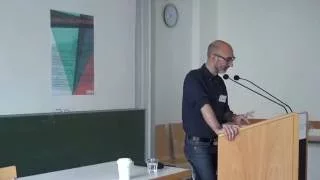
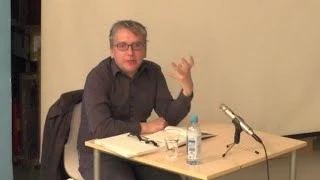
so you can see it's richer his research field is the one of political Theory social theory democratic theory political discourse analysis and so on and it's also the principal investigator of the ERC project main prefiguring democracy Futures cultural and theoretical responses to the crisis of political imagination and where you address if I understand correctly the crisis democracy and representation on a global escape and you give Suite a response in terms of reinvigorating our political imagination right so Eileen thank you again very much for accepting our invitation and I also want to detect the master in
political Theory and Democratic culture and the department of philosophy and Society program making it possible for make this seminar possible and you're going to deliver a talk today entitled always apologize antagonism and the Primacy of politics and whatever you want Oliver the floor is yours thank you very much again well thanks a lot for the introduction and thank you so much for the invitation it's always a pleasure to be here ahead um five or six years ago I had the opportunity to at this very floor I think just on the other side to be present
at a fantastic conference there's a number of also Spanish speakers which was amazing and all the more I'm delighted to be here today at this and I'm delighted that you are here actually at this time of the day at what I learned from Christina in Spain is the time for the second breakfast so instead of having second breakfast whatever that is I don't know you're here to listen to which will be definitely a very very abstract talk I must confess uh it is a preparatory talk for also a more concrete presentation of population populism I
will give tomorrow afternoon so this is as it were the ontological basis for us that talk of populism which will be more political this is more philosophical and it is about the question of political ontology or what an ontology of the political or even an ontology of politics could be and it is based on what we have witnessed in recent years in political thought namely sometimes called ontological term a turn towards ontology that is a turn towards the science of being in general from a political perspective of course so the science of being from a
political perspective must be something political so it's not ontology in a medieval sense of ontology it's a post-metaphysical form of political ontology and therefore it is also a term what we could you know witness over the last decades a turn towards the political as differentiated from politics in the narrow sense so that's the emergency microphone comes in from the moment when my when my voice working can you hear Theory is it okay so far so I continued so the actual key to any political ontology or to most of the political ontologies developed in the last
couple of years lies in the very differentiation between ordinary politics let's say the optic form of Politics on the one hand and an ontological notion of the political and this is ontological because it belongs to what IT addresses the entire field of the social all social facts therefore of social being in general rather than a particular field of practice like politics or the system of Politics as a functional system however you want to find it and this differentiation as most of you know in French between LA polytic and blue politic is a household conception that
can be traced back to Paul because article in 1956 the political Paradox but was also taken up by many other people and um from that historical moment on what imposed foundational political thoughts which is my previous book on this intellectual Paradigm of those who are used that differentiation between politics and the political in what I would think of as a form of left-handarianism so from that historical moment on what I have called the political difference uh this political difference came to be canonized as a basic conceptual differentiation in political thought and it has to do
with political ontology because the political has an ontological function it speaks to the entire just to repeat to the entire realm of social facts to social being in general and politics to a particular subject practice so it's ontic and the political is ontological however as I have also tried to demonstrate in that book the political difference does not imply a hierarchy where the political on the ontological site would be an elevated term and political practice on the object side would be devalued but some critics have approached that conception of the political difference and of political
ontology uh with criticism Susan Buck Morris for instance suspected that the move from everyday politics to political ontology is and our quarter a one-way Street never leading back to political practice so her claim is that we just we become ontologists we have nothing to do with politics anymore that would be her criticism others have criticized the what they call social weightlessness that is an insensitivity towards social suffering Lois McNay has made that point or as Bruno steals called it the negative Aura conferred upon political processes labeled by political oncologists as merely positivist social sociologists empiricist
or antique so a devaluation of beyonding is what is criticized by these authors so very often ontologies I would claim to be an ontologist so I feel addressed to a certain degree by that criticism so very often ontologists are confronted with allegations of excessive abstraction at the cost of sociological concretion and political engagement I do not believe however that this is the case on the contrary the aim of current political autology in the majority of cases is to rejuvenate political practice in order to open up spaces for precisely challenging patterns of subordination in this period
its attack is not directed against ordinary politics and such but against a post-conflictual politics that seeks to divest politics of anything political so post-politics if you wish what is more by redirecting attention to the ultimately conflictual nature of all things social and this is what the ontology of the political does such an ontology compels us to develop a comprehensive political perspective on the social not in the sense of assuming that everything is political in terms of systemic Politics the political system but in the sense that all social Affairs are political in terms of being grounded
by the political that is to say of being grounded through instances of conflict power subordination oppression exclusion and decision as much as of course resistance or position of Confrontation Association or consensus building these are all political modalities that structure our social world and political ontology tends to highlight the politicality of our world which is a move similar to what feminists did in the 1970s when they diagnosed the the same political the same politicality with regard to the person and the private that what appears non-political on the surface May in fact have deeply political rules the
private might be very much political and political ontology does very much the same thing it directs how you at the political roots of things which at the surface do not seem to be political sensitized by such an ontology social analysis will be prompted to search for modes of the political in the most unexpected places so if you take on your ontological classes so I have my autological classes if you take them on you see conflict power subordination everywhere so fuku took on his ontological classes he would not of course agree with that description he would
not think of himself as an optometrist but nevertheless he was and he took it on what he saw was power everywhere right so famous famous thing um so it made sense to you know put on your ontological classes therefore I claim against Frederick Jameson's famous injunction always a story size that was his imperative it makes sense that in order to have a really political perspective on the world we should always ontologize but what do I mean when speaking about the ontological character of the political be it granted that you speak about the political as such
does not say very much yet we have to specify the bulletin ornament as I learned about you once remarked to think is to give a name to be waifu but you being is of a mathematical nature Antonio negri would call being by the name of the multitude there are many more proposals for naming being but from the perspective of a slightly different Marxist tradition I were told that the appropriate name for the political as that which describes the ontological nature of all social facts is antagonism a term with a long intellectual tradition it has to
do with conflict but not only conflict Hindi optic sense of people fighting each other but in a broader ontological sense that is more fundamental than a friend enemy relation for what we see at work in Marx from a philosophic perspective is nothing other than hagel's famous labor of the negative one of the latest inheritance to this tradition is Ernesto La Clau who's most decisive theoretical contribution in my view is precisely his conception of antagonism and in my book thinking antagonism think this is a presentation based on this book I've tried to tease out the full
ontological implications of that approach while in the other book mentioned by Christina entitled conflictful Aesthetics I have developed the implications of such an ontology for practices of artistic activism claimed every society every political order every social identity in short everything social can only be instituted with respect to a negative outside to something which brings together dispersed elements into some sort of precarious whole some precarious totality simply by way of negating them thus antagonism institutes order but also prevents order from totalizing itself Society is instituted politically and being instituted politically means being instituted through the labor
of the negative that is through antagonism the fact that the social world as a rule appears rather peaceful and not antagonistic at all has to do with the fact that it consists of sedimented routines which we can take for granted institutions organizations processes but these routines are all founded upon a moment of political grounding of political institutions they are grounded in antagonism because Alternatives were suppressed relations of subordination were established and this instituting moment of the political remains present somehow if only in a latent mode or a sleeping mode but it can always be reactivated
as soon as new antagonisms emerge and the sedimented routines of our lives and our institutions are suddenly questioned so we see this all the time when a general strike breaks out as yesterday in France so there is no way of having a routine my my flight to Spain was re-routed we went over the Mediterranean because we could not cross France because they were on strike you know we could not have landed probably so it was safer to make it so the routines you know get distracted this is in the moment of antagonism now keeping this
conception of the political whose name is antagonism in mind I would now like to turn to politics as follows from what was said so far there is nothing intrinsically bad about politics in in its ordinary models this is what the critics you know claim that that ontologists think of Politics as something you know not interesting or neither political is interesting there's nothing bad about politics on the contrary without politics it would make no sense to speak about the political one which is precisely the point of the political difference because both sides belong to each other
and nonetheless it's not the same so there is a necessary relation between both sides of the political difference in what follows I would therefore like to present the thesis then the ontological current and political thought does not simply consist in attributing Primacy to an ontological notion of the political this is how it is usually framed it's the Primacy of the political over ordinary politics uh I think that's only half of the picture and we we could talk about maybe later in the discussion where this comes from because it has something to do with an internal
criticism in the history of Marxism in the 20th century the Primacy of the economy from a deterministic traditional Marxist perspective the economy was granted privacy over the superstructured that the Primacy of economy was criticized and supplanted by political theorists also marxists who claimed that the political has privacy you know that's an internal debate in in Marxism and so at the Historical point in the 1970s and 1980s and 19. it was very important to talk about the Primacy of the political but I would claim that if we think about the political difference then we need to
contribute equal privacy as paradoxical as this may sound equal privacy to the Arctic practice of doing politics to politics the optic side of the political difference political acting in the most ordinary sense would then in turn acquire a certain ontological dignity as well what do I mean by that to put it in the most succinct way possible being is acting and to assert that being is acting is to reverse the order of priority between the antic and the ontological between politics and the political we may not only insist as it is usually done in the
first foundational Paradigm of political thought on the Primacy of the political because the picture changes if the political difference is envisaged as difference and if we take into account that the play between the antic and the ontological cannot be stopped and the two instances may very well change places so we need also to revert our perspective what if we were to think politics not as a derivative function of the political but rather as a practical a priori of the political want to be more precise if the political did not exist as such except when brought
to life by politics the order of priority between politics and the political would-be reverse Primacy would have to be granted to politics rather than the political proceed from this angle it is not the ontological instance of antagonism that takes on the function of an ultimate ground of all social things it is the antic practice of politics in its grounding capacity the claim actually is not so far removed from al-haide again in starting point one of the most amazing ideals of the 20th century foreign metaphysical Quest foregrounds by understanding any ground is grounding as a verb
not a noun rather than imagining ground in terms of a solid base we have to think of it as an activity it was three months enormous achievement in his Landmark study on being and acting to point out Heidegger's inversion of the ah old hierarchy between being and acting word being was dominating that being becomes a form of active an activity rather than a verb rather than a noun such an inversion of course only makes sense in the post foundational framework work around any ground has become questionable when Sherman Who belongs to with Miguel Abel maybe
shark once yeah and many others belongs to the unarchic current and contemporary post-fundational thought when Sherman advocated a paradoxical Anarchy principle he did not refer to an anarchistic program of action referred to the quasi-transcendental structure of being anarch Anarchy designates the withering away to portrayment of the rule always to seek a first from which the world becomes intelligible and masterable of establishing principles for thinking and doing schumann's important point was that the withering away of first principles will in turn assume the paradoxical function of a principle the principle of withering a way of principles this
Paradox of an anarchy principle the Schumann continues is dazzling because at this boundary line which marks the end of metaphysical foundationalism The Perennial question of politics re-emerges you call chuma what happens to the question what is to be done at the end of metaphysics so you see we come full circle we go through an autology of being to thinking being as a form of activity which leads us precisely to a political question which is the the political question what is to be done schumann's answer is clear as the age of metaphysics draws to a close
action is set free from Ultimate principles and thus crore proves to be anarchic or principle yet there is a corresponding implication that remains to be carved out if all principles are as it was claimed action based it follows that action in turn becomes the new principle of the withering away of principles on the grounds of the absence of automatic grounds acting becomes the grounding instance of social being and we can now begin to see why being May in itself be of active nature once having lost its status as a solid foundation all being is grounded
on acting on the primordial activity of grounding which in turn cannot be grounded translated into a theory of political difference the ontological ground or abyss of social being has to actualize itself in the Practical form of optic politics and then at this point we must part company with Sherman and Heidegger who in actual fact shy away from a truly political notion of acting what they defend is a form of acting without activism indeed what they defend is nothing other than a higher form of pacifism of an utterly passive activity you may remember Heidegger the later
Heidegger in the Pastoral scenery sketched by the later Heidegger man the guardian of being as he calls man is supposed to remain passively active that is to say man acts by retaining a passive attitude towards the unfolding play of being it hardly needs to be pointed out that such a notion of passive activity comes at a heavy price the depolitization of acting the political nature of being is repudiated in the very moment in which it is Affirmed Sherman's search for and other politics is a search for our politics without politics a way of acting in
his words other than being effective or strategic any kind of strategic and effective action would be dismissed by Heidegger as well as suraman as metaphysical and if for sure man actions are supposed to turn into as he says a groundless play without why this might be a good portrayal of maybe the hotological nature of the political but it does not capture the Arctic nature of politics is there any kind of politics that would ever amount to a play without why a politics that does not involve strategic reasoning or is seek to achieve particular goals would
be hardly imaginable as politics because of their elevated ontological pre-assumptions hiding and Sherman are ill-equipped to develop a truly political notion of politics not notwithstanding his Nazi episode there is an anti-political bias of Heidegger's thinking that may derive from his philosophical rather than political insistence on an ontology of difference at the expense of an ontology of negativity the growth of politics is removed from you so my claim is that we need to think about negativity not only difference negativity is the most important dimension of the political in the Essex School tradition that was initiated by
Ernesto La Clan chanta move and given its theory of hegemony is arguably the school of thought closest to real life politics among all the other political ontologies and political theories from our sea to but you whoever antagonism in this trajectory is the name of the political effect s and the political assumes its grounding function by erecting a line of demarcation without being the entirely negative or negatory outside of Any Given political order it is true Heidegger also knows about the terror before nothing and medilation and he criticized Hagel for for retaining a notion of negativity
that was not sufficiently radical but he did not provide us with a better alternative instead he reverted to a second life passages to develop a more realistic picture of political acting the hegelian tradition has to be taken on board and I would submit that today's post-traditional notion of antagonism has its historical roots in hegel's famous labor of the negative a post-frontational ontology of difference therefore has to be supplemented by an ontology of radical negativity the letter must inform our notion of hunting politics a form of acting that exhausts itself in the diridian play of difabas
in an endless postponement of its political goals could hardly be called politically politics begins with negation from an ontological perspective that was that was would of course imply the emergence of an antagonism as an event yet from the perspective of object practices negation has to be brought about negativity in other words it's not simply out there it's a cosmic principle or an objective feature of the world negativity is to be produced by our actions therefore when trying to invert the order of priority between the ontological and Deontay one has to insist on negativity as an
optic practice because antagonism will only emerge when activated by our worldly actions there is antagonism because politics proceeds through negation in order to fully account for this reversible or circular relation between politics and the political Heidegger should be supplemented with the left hegelian tradition in fact the intuition that being is acting is is inherent to the whole tradition of radical negativity the drugs from hegarth via Marx to Lucknow nobody had a clearer idea of the activist nature of being then Alexander koshev who inaugurated an entire series of 20th century ontologies of negativity so he was
You Know instrumental in getting Santa to his theory of negativity and many others in his celebrated lectures on hager's phenomenology of spirit cochef inspired by Heidegger and bugs insisted on the conception of being as acting but being is acting through negation to give you the quote the central quote by crochet so man is not a being that is he is a nothingness through the negation of being now the negation of being is action that is why Hegel says the true being of men is his action not to act therefore is not to be as a
truly human being it is to be a sign as given natural being hence it is to fall into Decay to become brutish in this metaphysical truth is revealed to man through the phenomenon of boredom the man who like a thing like an animal like an angel remains identical to himself does not negate does not negate himself I.E does not act is or it and only man can be born end of the Court this is one of the key passages in kosher's lecture series and in my view it's also one of the key passages of 20th
century philosophy so there's unfortunately no space to develop an index interpretation but let me indicate just one of the most important aspects cochef has been charged with anthropologizing Hegel and Heidegger yet what is called Man In this passage is devoid of any positive human essence the human being is non-identical with herself if any kind of being is to emerge from this non-identity it can only be grounded on human actions and all action in turn is devoid of a positive Essence too as to act simply means to negate being ESC continues explaining quote in fact man
can be satisfied only by action now to act is to transform what is real and to transform what is real is to negate the given end of quote the end of action if achievable would mean the act of negation which would lead to the end of politics and focusev to the end of History and from there right to write into a post-political world of boredom and self-identical animality in two steps kosher presents us with an activist anthropology or rather an ontology of active being first antagonism especially the hegelian antagonist between Lord and bondsman is brought
down to the worldly ground of action and second action the negative essence of human being is defined by crochet as the negation of the given the negation of the given now who or what would be the subject of political acting evidently evidently for a post-traditional conception of agency action is not reducible to class struggle but remains anarchic in order to determine the function of the political subject the task will be to reconnect a Montague view on action with the general ontology of antagonism which is not a trivial task because it's a circular as I said
a reversible logic between the antic and the ontological politics and the political so we cannot avoid moving back and forth between these two registers adhering to if we want to escape heideggerian pacifism on the one hand and activism for activism's sake on the other hand so the first would mean that we end up in political paralysis and the second if we entirely focus on agency would mean that we fall into the Trap of political volunteerism The Dilemma is obvious acting proceeds by activating antagonism however antagonism is an outside instance of radical negation cannot be activated
by sheer will by our by our sheer group instead of bypassing the dilemma I propose to hold onto these two apparently contradictory claims a in order to act politically antagonism must be activated politics in other words is the antique business of activating the political and B from an ontological perspective antagonism cannot be activated because antagonism belongs to the order of the event it either breaks out or not and you I all have this experience which might sound very abstract but it isn't I have this experience of the fact that antagonism cannot be activated by sheer
will uh whenever you try to organize the demonstration and nobody shows up right so that's the experience of the impossibility of activating antagonism by a sheer will I cannot will antagonism into the world it's either there or not it's in a certain sense objectively out there it's an autological event so you see the Dilemma on the one hand we need to activate antagonism on the other hand we cannot activate it antagonism May emerge at any point in the social fabric yet it cannot be forced into the open moreover no self-identical source of action exists from
where and Target as a ground from where antagonism could be forced to emerge there is no willing subject that could serve as the foundation for our action that would be a metaphysical idea of subjectivity but how to activate what cannot be activated and who is the subject supposed to activate what escapes activation facing this conundrum the only answer congruent with the post-fundational framework of political difference is the following political agents act as if they could activate antagons which is the famous famous formula the as if which goes back to cut but then reappears it was
here at many other places Sato for instance and here I turn it into that formula political agents act as if they could activate antagon themselves they actually cannot because you all have this experience that you cannot activate on targets so you need to act as if you could act ORS the volitional subject of Politics as an impossible yet necessary metaphysical fiction political actors are not but think of themselves as the subject of their actions for otherwise they would not start acting in the first place why we are not the source of our actions we must
attribute to ourselves the capacity to act unless we want to remain passive bystanders what is more political agency results from an encounter with antagonism while at the same time an agent is supposed to act antagonistically that is to negate the given so rather than being the source of their actions political agents emerge from this circular process in our manner not entirely different from kosabian dialectics a given social identity a social group for instance is activated into becoming a political agent by a purely negative instance of experience negativity and by starting to negate the given in
turn comes to emerge as a political hacker an actor who may very well pronounce I am because I need gays and I negate because my being is negated this is the experience of my being being negated for instance in Israel the experience of many people in Civil Society feel their being negated by governmental actions so we have a general strike today yesterday we had a general strike in France today we have a general strike a lot of general strike today we have a strike of many people in the transport business in Germany why do they
strike because they feel that their being is negated and what they do they do they negate the given in turn politics therefore is a truly circular affair as political agents we are activated by antagonism in the very moment we encounter conflict and contingency and yet our task as political agents is to activate antagonism in the first place from this follows what I would call the political imperative act as if you could activate what activates you rather than acting in the mode of Heidegger's passive Activity one has to to shift a mode of active passivity as
it were acting amounts to not more than putting a wager on the emergence of antagonism Act by thinking that if I act that antagonism May emerge by virtue of being an attempt and not more than that it may easily fail and yet antagonism must be activated there is no other possibility for antagonism to emerge as it does not in any substantial sense pre-exist its activation biotic practice antagonism as an instance of radical negativity far from constituting something of the order of a natural force Somewhere Out There detached from our practices is always politically produced what
from an ontological perspective is the name for an insurmountable blockade of society and insurmountable negativity at the ground of society in fact is constructed from an aunting perspective through a particular political practice the negation of the given no doubt there could always immerse the problem that contributely the given does not bother you very much the dominant Powers may be too strong hegemony too deeply entrenched for a particular politics to succeed in reactivating sedimentic antagonisms but be that as it may a dormant antagonism does not awake from its Slumber by itself its Awakening must be provoked
without any guarantee for success politics by way of protest is about provoking antagonism with regard to the letter the political agent acts as this agent is kosher's man the nothingness that nihilates through the negation of being now you may ask and here I come to an end you may ask so where's the positive side of all this there must be something positive to that location and you're right as we have seen to act politically that is to negate the given requires the capacity to act a capacity an agent does not possess a prior the passage
from passivity to activism is premised upon an experience of frustration of negation but more is needed for the given to be negated the capacity to act has to be asserted by the agent so the agent need to assert her own capacity to act an agent has as we saw to act as if it were equipped with the capacity to act let me expand on the metaphysical implications of such a mode of action because it does have metaphysical implications political action presupposes a quasi-metaphysical will a will to will as a will to Foundation the agent acts
as if it were a volitional subject in command of its own will so an entirely metaphysical idea of course right with a subject in command of its own will and we know since at least five that the social subject does not exist except in politics so the ancient acts as if it were a volitional subject in command of its world and in order to do so the agent must will its own will foreign willing is to will yourself the circularity is unavoidable if we are to move from a foundationalist to a post-foundational theory of acting
when ultimate grounds dissipate political subjects must pull themselves up their bootstraps but the point does require two specifications first from a political perspective this world has to be willed this world that has to be world does not pertain to an individual it can only belong to a collective agent which is why Antonio graci speaks of a collective world therefore the capacity to will flows from the collective nature of the ancient it results from the force of politically being in common and of organizing with a view to attaining hegemony if individuals or aggregate members of a
hegemonic project are also equipped with a capacity tool then they then because they participate in a collective faculty of volition they are capacitated to act by the power radiating from a hegemonic project they as individuals that what I'm saying here is that as individuals we can only Act because we are members of a collective room so the collective world is the source of our own capacity to act because entirely in an entirely solitary individual is not able to act politically so if individuals don't have a real right they are so these individuals are capacitated uh
to act by the power radiating from a hegemonic project should this power weigh their capacity to act will also be debilitated and secondly we should not make the mistake of imagining this world to world to be a destructive force in order to negate the given I said an agent has to affirm capacities that it does not possess in a moment of self-assertion once will to act has to be Affirmed for otherwise we would remain in a state of couch potato passive nihilism becoming active in other words is premised upon the affirmation of our capacity to
act that is our will to Will to act and to negate means to affirm affirmation the letter inside which may appear counted intuitive find support in what arguably was one of jildred Lewis's greatest achievements his early interpretation of Nietzsche's philosophy where this formula of affirming affirmation comes from the Lewis points out that in nature becoming active is affirming and affirmative now this might at First Sight seem to contradict my definition of acting as the negation of the given and Duluth himself rejects any compromise between nature and here however pure affirmation as presented in nature does
involve negation only in simple affirmation in the year of the ass of the pack animal that bears the burden of the given only in that form of simple information is the given accepted as it is Nietzsche attacks this idea of simple information simple information means that I accept the given and now grandiosli I think the lures speaks about the very point of feature argument can be summarized as follows the yes which does not know how to say no the yes of the s is a caricature of affirmation this is precisely because it says yes to
everything which is no because it puts up with nihilism it continues to serve the power of denying which is like a demon who is every burden it carries the dionysian yes on the contrary knows how to say no it is pure affirmation it has conquered nihilism and divested negation of all autonomous power but it has done this because it has placed the negative at the service of the powers of affirming to affirm is to create not to Bear put up with or accept so and therefore to affirm the given with the simple Yes of the
the yes of the S is to affirm the nihilistic condition of the world it is to make peace with those relations of exclusion oppression and subordination the to a large extent Define the given the ass is a burden-carrying creature devoid of political agency a single yes is therefore not sufficient as the Lord says two affirmations are necessary to turn the whole of negation into a mode of affirming acting means to affirm affirmation we can conclude from this political agency agency therefore must not be confused with either pacifism or nature called passage violism or Destruction for
destruction's sake as in cases of adventurism or blind insurrectionism true political activity begins when in the Lewis's words the will to nothingness is converted and Crosses over to the side of affirmation when it begins to relate to a power of affirming when it becomes a will to Will affirmation is needed because it was argued an agent must assert itself as the subject of its actions that is to say it has to metaphysically affirm its capacity to negate as a capacity to work but what is more affirmation is necessary because to negate the given only makes
sense when put in the service of the creation of a positive project a project that has the potential for recruiting widespread consent and for becoming major to universalize itself hegemonically in this letter sense to affirm is to create would mean that we must bring to life as grouchy would put it with reference to Machiavelli or modern prints by affirming our own will to act we also affirm this project of collective will formation there are good reasons for turning toward a theory of double affirmation in recent years especially in the anarchic current or post foundational political
thought adventurous and insurrectionist theories have gained attraction think of the manifesto entitled The Coming Insurrection running the invisible committee a couple of years ago the insurrectionary Paradigm is premised to pomerada one-dimensional notion of attacking this state or the police order as if the state existed as homogeneous block that could be frontally attacked by Maverick grouplets is more sophisticated notion of a wild democracy pitted against the state Bear's traces of the same misconception and even the bosierian famous disagreement of a part of no part appears to be modeled upon a binary logic of insurrection as Francia
says Whoever has no part the poor of ancient times the Third Estate the modern Planetarium cannot in fact have any part other than All or Nothing but subjecting politics to a logic of all or nothing means to relegate political action which in reality unfolds in a complex terrain of a multiplicity of antagonisms to the realm of the imaginary we are given a blood Choice by these authors but either possibility or insurrection no space is left in this framework for any positive political program that could provide us with a starting point for constructing a new hegemony
yet the creation of a new Collective will is precisely what is needed today at an historical conjunction when neoliberal hegemony crumbles and the political vacuum grows we are not living through a revolutionary situation though that would warrant a politics of All or Nothing what we experience rather is increasing dislocation of the hegemonic formation in most Western countries in a historical situation like this the political task consists in bringing to life a new Prince that is in affirming affirmation such a project to come to land is not furthered by insurrectionary fantasies nor is it furthered by
the empty phraseology of a metaphysical idea of Communism as in Batu or the invocation of a pseudo-leninist avant-garde party as by Jody Dean approaches like these I think have historically exhausted themselves for practical reasons because a new hegemon a new Prince can only result from what in France in France you would call the convergence dilute the convergence of actually existing struggles but they also have exhausted themselves for theoretical reasons as in politics the given cannot be negated in total in order to attack the totality of what is given one would have to find an Archimedean
Point Beyond this totality without a point that could provide us with an ultimate foundation for our actions it is impossible to negate abstract totalities such as the system or the state the very idea of a monolithic system of Oppression is fantasmatic as is the attempt at attacking that system head off negation therefore can only mean the negation of something concretely given rather than merely imagined as something all as a as an all-powerful totality and the same is to be said about affirmation it only makes sense as determinate affirmation the creation of an actually existing project
and Collective role which is a new hegemonic project and this is precisely the point that will lead me to the talk tomorrow which is on populism and the possibility of a radical democratic form of populism which is precisely the question of how should a new hegemonic project that negates the given should look like so I leave it here rather than talking for another hour thank you very much [Applause]