Level one, the raw recruit. You were 18 years old. Yesterday you were working in a factory, punching a clock, eating your mother's cooking, sleeping in your own bed.
Today you are standing in a muddy field in France, wearing a uniform that does not fit, holding a rifle you have fired exactly three times during basic training. The sergeant screams in your face. His breath smells like tobacco and rage.
He calls you maggot. He calls you worthless. He says you will die in a week unless you learn to follow orders without thinking.
You believe him. Everything about him suggests he has seen things you cannot imagine. Around you, a thousand other boys stand in crooked lines.
Some of them were clerks. Some were farmers. Some were students at university.
Their education interrupted by conscription. Now you are all the same. You are replacements.
Cannon fodder. The army needs bodies because the army keeps losing bodies at a rate the generals did not anticipate. The train brought you here in cattle cars packed with men.
You could not sit. You could not sleep. You could barely breathe.
The journey took 3 days. Now you march. Your boots give you blisters within the first hour.
The leather is stiff and poorly fitted. No one cares. You march until your feet bleed.
And then you march some more. At night you sleep in barns, in fields, in the mud. The food is terrible.
Hard biscuits called hard attack that can break your teeth if you bite wrong. and canned beef that the men call bully beef. It tastes like metal and salt and despair.
The older soldiers look at you with pity. They've been where you are going. They know what is coming.
You do not. Level two, the private. You have reached the front.
The trenches stretch as far as you can see in both directions. Zigzagging across the landscape like a scar that will never heal. They tell you the western front runs from Switzerland to the sea.
400 m of ditches filled with men trying to kill each other. You climb down into the trench and immediately step in. 6 in of cold water.
This is your home now. You will live in this ditch for weeks at a time, rotating between the front line, the support trenches, and the reserve. The walls are reinforced with wooden planks and sandbags.
The floor is duck boards laid over mud. Wooden slats that sink and shift under your weight. The mud is everywhere.
It gets into your boots, your clothes, your food, your soul. Men have drowned in this mud. Shell holes fill with water and become death traps.
You learn the daily routine quickly because learning it keeps you alive. Stand two at dawn. Every man on the firestep, bayonet fixed, watching no man's land for a German attack.
The halflight of dawn is when attacks usually come. The attack rarely comes, but you stand ready anyway because the one time you relax will be the time they come. Then stand down breakfast, work parties.
You fill sandbags endlessly. You repair walls damaged by shelling. You pump out water that seeps in faster than you can remove it.
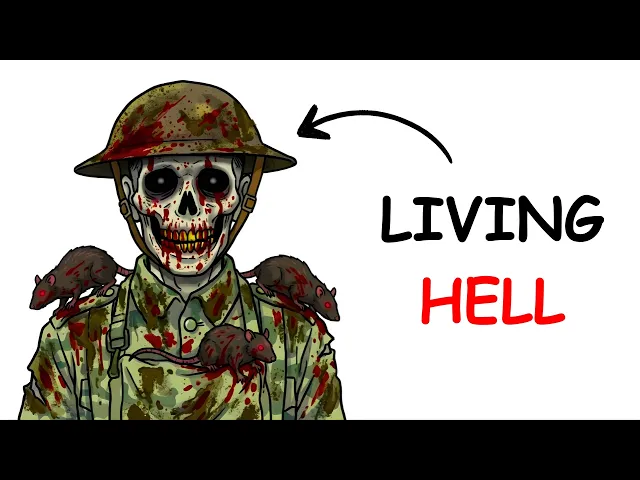
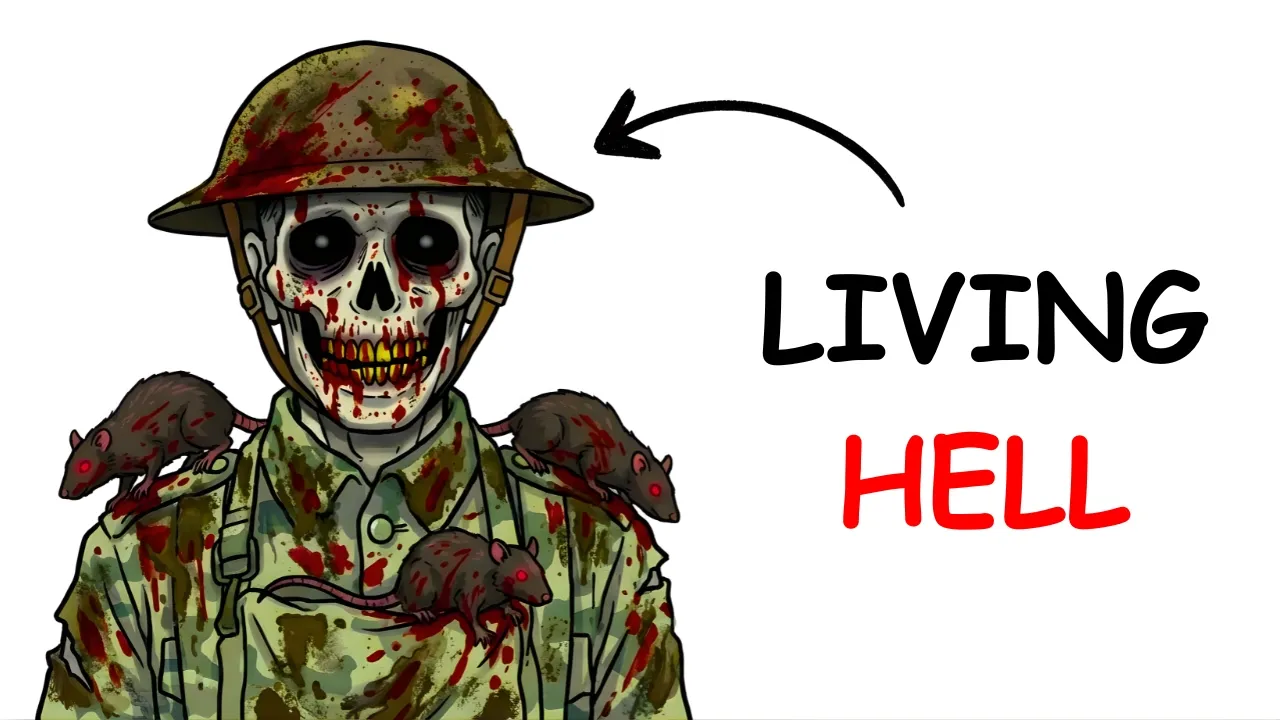
The rats are everywhere. They are fat the size of cats grown huge on the corpses rotting in no man's land between the lines. At night they run over your face while you sleep.
You scream the first few times. You stop screaming after the first week. The lice are worse.
They infest your uniform, your hair, every crack and crevice of your body. The itching never stops. Men scratch until they bleed.
Until their skin is raw and infected. Trench fever spreads through the ranks. A mysterious disease carried by the lice that leaves you weak and shaking.
You get sick. You recover. You get sick again.
This is life now. Level three, the lance corporal. You survive 3 months.
That is enough to make you a veteran in this war. Men who were here when you arrived are mostly gone. Dead, wounded, sick, transferred.
The sergeant pens a single stripe on your sleeve. You are a lance corporal now. The lowest rank of leadership.
You have four men under you, a fire team. Your job is to make sure they do not die stupidly. Stupid deaths are common.
Men who stand up to stretch and catch a sniper's bullet. Men who light cigarettes at night and give away their position. Men who fall asleep on watch and get their throats cut by German raiders.
You are responsible for fire discipline. When the Germans probe your section with patrols, you decide when to shoot and when to stay silent. Shooting too early gives away your position.
Shooting too late means they are already in your trench. You learn the sounds of the front, the crack of rifles, the thump of mortars, the scream of incoming artillery that means you have about 2 seconds to dive into a dugout before the world explodes. You learn to tell German shells from British shells by their sound.
You learn which parts of the trench are safe and which will get your head taken off by a sniper if you stand up at the wrong time. Their periscopes for looking over the parapit. Use them.
Your men look to you for guidance. Some of them are older than you. Some were respectable before the war.
Married men with children. Now they wait for a teenager to tell them when to sleep and when to eat. The responsibility weighs on you.
You make mistakes. One of your men stands up to stretch and a bullet punches through his skull. You wrote the letter to his mother.
You lied about how he died. Everyone lies about how they die. The truth is too ugly.
Level four. The corporal. Another stripe.
You are the second in command of your section now. 8 to 12 men depending on casualties. The section is almost never at full strength.
Someone is always dead or wounded or sick. The section leader, a sergeant, relies on you to handle the details. You organize the watch rotations.
You make sure ammunition is distributed evenly. You inspect rifles to make sure they are clean because a dirty rifle jams and a jammed rifle kills its owner. You lead small patrols into no man's land at night, crawling through the wire on your belly, listening for German voices in the dark.
The wire is everywhere. coils of barbed wire strung on wooden posts [snorts] designed to slow attackers while machine guns cut them down. You learn to cut it silently.
You learn to move through it without getting tangled. The first time you kill a man up close, he is as scared as you are. A German soldier, maybe 19, caught in the wire during a raid.
He sees you coming and raises his hands. Surrender. But you have been told not to take prisoners on raids.
They slow you down. They make noise. They compromise the mission.
You use your bayonet because a gunshot would bring the whole German line down on you. It is not like the training dummies. He struggles.
He grabs at the blade. He makes sounds you will never forget. The look in his eyes stays with you.
Some nights you see his face when you close your eyes. He had a photograph in his pocket. A girl.
You left it with his body. You tell yourself it was necessary. You tell yourself he would have done the same to you.
Maybe that is true. You stop thinking about it. Thinking is dangerous.
You focus on the job. Keep your men alive. Kill the enemy.
Survive until tomorrow. Level five. The sergeant.
You have been promoted over the bodies of the men who came before you. The sergeant who trained you took a piece of shrapnel through the throat during the bombardment. You were standing next to him when it happened.
His blood sprayed across your face. He tried to speak, tried to give you final orders, but only gurgling sounds came out. He died in your arms.
Now you are the sergeant. You run a section of 10 men, sometimes more when other sections are depleted. You are the backbone of the company.
Officers come and go. They get killed or promoted or transferred or invalidated out with shell shock. The average life expectancy of a second lieutenant is 6 weeks.
NCOs's like you hold everything together. The captain gives orders. You make those orders happen.
When the order is stupid, and many orders are stupid, issued by men who have never seen the front line, you modify it just enough to keep your men alive without getting shot for insubordination. This is the art of the sergeant. Knowing how far you can bend, knowing when to push back and when to shut up.
The men respect you because you have been here longer than any of them. You have survived four major attacks and a dozen small ones. You have been gassed twice and wounded three times.
You must know something they do not. The truth is you are just lucky. Skill matters less than luck in the trenches.
A random shell can kill the best soldier in the army. You have seen it happen to men far better than you. But the men need to believe in something.
So you let them believe in you. You are their father, their priest, their protector. You accept this role because someone has to.
Level six. The company sergeant major. The commanding officer has noticed you.
The captain calls you into his dugout. a hole in the side of the trench reinforced with timber and corrugated iron and offers you promotion. Company sergeant major.
You are now the senior enlisted man in a company of 200 soldiers, four platoon, a small army. Your job is to be the bridge between the officers and the men. The officers have been educated at expensive schools.
Many of them have never worked a day in their lives. They speak differently, think differently, move through the world with an ease that comes from wealth and privilege. They do not understand the common soldier.
They speak a different language. You translate. When the captain issues an order, you turn it into something the men can understand and execute.
When the men have complaints, you filter them and present them to the captain in a way he will accept. Complaints about food, about equipment, about the endless waiting, about the death all around them. You handle discipline.
When a man falls asleep on watch, you decide whether he gets a warning or a court marshal. Falling asleep on watch can mean execution. You have that power now.
When supplies arrive, you make sure they are distributed fairly. Rum rations, cigarettes, mail from home. When mail comes, you deliver it personally because you know how much those letters mean.
A letter from home can save a man's sanity. You know which men have troubles at home. Which ones have wives cheating on them while they rot in the mud, which ones have received word that their children are sick or dead.
You carry the emotional weight of 200 men and you cannot let it crush you. Level seven, the second lieutenant. The colonel sees something in you, a natural leader.
They are desperate for officers. The old aristocratic officer corps has been decimated by casualties. They need replacements and they are promoting from the ranks.
They send you to an officer training course behind the lines. For six weeks, you sleep in a real bed and eat hot food. You learn tactics and map reading and how to walk like a gentleman.
You learn which fork to use at dinner, as if that matters when shells are falling. Then they pin a pip on your shoulder and send you back to the front as a second lieutenant. You are in charge of a platoon now.
40 men. The sergeants who used to be your peers now salute you. The adjustment is strange.
You know how they talk about officers when officers are not around. You used to talk the same way. Now you are the officer.
Your life expectancy is 6 weeks. That is the average for a second lieutenant on the Western Front. The Germans target officers.
They know that killing the leaders creates confusion. Breaks the chain of command. Snipers look for the telltale signs, the pistol instead of a rifle, the map case, the binoculars.
The way other men cluster around you for orders. You paint over the brass on your uniform to make yourself less visible. You carry a rifle instead of a pistol because pistols mark you as an officer.
You try to look like just another private, but the men still follow you over the top. When the whistle blows and you climb the ladder into no man's land, they climb behind you. Some of them will not make it to the German wire.
Some of them will die screaming in shell holes, drowning in mud, tangled in barbed wire while machine guns sweep back and forth. You lead them anyway. It is your job.
It is the job you asked for. Level eight, the lieutenant. You survived your first 6 months as an officer.
You have beaten the odds. You have been promoted, Lieutenant. You are now second in command of the company.
When a captain is killed or wounded or rotated out, you take over. This happens more often than anyone planned. Captains die frequently.
The war consumes them. You find yourself commanding 200 men in the middle of attacks, making decisions that determine who lives and who dies. You learn the brutal calculus of trench warfare.
If you send a patrol into no man's land, some of them will die, but you will gain intelligence about German positions. Is the intelligence worth the lives? Sometimes yes, sometimes no.
You make the call and live with the consequences. You learn to read terrain, to understand fields of fire, to predict where the enemy will place their machine guns. You learn that frontal attacks are suicide.
In flanking attacks are difficult, and there are no good options, only less bad ones. The men under you have faces. They have names.
They have families waiting for them at home. You try not to learn their names anymore because learning their names makes it harder when they die. But you learn them anyway.
You cannot help it. You are still human despite everything this war has tried to do to you. Level 9, the captain.
You command a company now. 200 men on paper. In practice, closer to 150.
The gaps are filled by replacements who arrive green and terrified and die before you learn their names. Fresh faces that blur together. You stop trying to remember them all months ago.
Your job is to hold a section of the line. A few hundred yards of mud and wire and death. Not particularly important, not strategically significant.
But if you lose it, the men on either side of you are exposed. So you hold it. You rotate your platoon through the front line, the support line, and the reserve.
[sighs] Front line is the worst. Constant shelling, constant tension that never lets up. Support line is slightly better.
You repair trenches and carry supplies forward. Reserve is almost peaceful. Hot food, sleep, letters home.
You become a logistics expert. You learn that ammunition matters less than food and food matters less than water. Men can fight hungry.
They cannot fight without water. You bribe the quartermaster to make sure your company gets enough. Everyone bribes the quartermaster.
It is the unofficial economy of the war. You write condolence letters every week. Dear Mr.
Smith. Your son died bravely in defense of his country. He did not suffer.
He was a credit to his regiment and his family. The truth is usually uglier. Your son was blown apart by a shell while eating breakfast.
Your son drowned in mud within sight of our lines and we could not reach him. Your son shot himself because he could not take it anymore. You did not write those truths.
No one does. The lies are kinder. Level 10, the major.
You have been promoted to battalion staff. You are the second in command of a battalion now. 800 men, four companies.
Your job is to make sure everything runs smoothly. Supplies, communications, coordination with artillery. You spend less time in the frontline trenches and more time in headquarters dugouts, staring at maps and writing reports.
You hate it. You miss the simplicity of the line. In the trenches, you knew who was trying to kill you.
The enemy was in front of you. Here at headquarters, the danger is more subtle. Colonels who want scapegoats for failed attacks.
Generals who demand impossible objectives and blame you when reality intrudes. Other majors competing for limited promotions. The politics are exhausting.
You learn to play the game. You learn to phrase reports so that failures sound like partial successes. You learn to blame unavoidable factors, the weather, the terrain, unexpected enemy reinforcements, rather than admitting that the plan was flawed from the beginning.
This is how you survive as a staff officer. You spend hours on the telephone coordinating artillery barges. You schedule attacks down to the minute.
You calculate how many shells will fall on each art of enemy trench. The war has become a machine, an industrial process, and you have become a technician. The romance is gone.
There is only the grind. Level 11, the lieutenant colonel. You command a battalion now.
800 men if you are at full strength. You rarely are. Casualties bleed the unit constantly.
Your job is to execute the orders given by brigade headquarters. Those orders come from generals who have never seen the front line. Who live in chataus miles behind the fighting, who drink wine while your men drown in mud.
They look at maps and draw arrows and expect you to turn arrows into reality. Sometimes the orders make sense. A limited attack on a weakened position.
A raid to gather intelligence. Sometimes they demand you attack fortified positions across open ground with no artillery support because the shells have been allocated elsewhere. You follow the orders anyway.
Refusing means court marshal. Complaining too loudly means removal from command and the next commander might be even worse. You might at least save a few lives with your modifications.
You modify what you can. You delay when possible. You argue in planning meetings, pointing out the flaws, the impossibilities, the certain casualties.
The generals nod politely and tell you to proceed. Your battalion takes 40% casualties. You write the report.
You attend the next meeting. The cycle repeats. You drink more than you should.
You sleep less than you need. You develop a twitch in your left eye that never quite goes away. Level 12.
The colonel. You command a regiment now. 2 to 3,000 men.
You are no longer close to the fighting. You are too valuable to risk in the front lines. too senior to be wasted on a sniper's bullet.
Your job is to coordinate the battalions under your command to make sure they work together to allocate reserves where they are needed most. You have a staff of dozens, agitants and aids and specialists for everything from signals to supply to medical evacuation. You live in a headquarters several miles behind the front.
You can hear the guns, a constant rumble like distant thunder, but you do not feel the shells. You read reports. Casualties 127.
Casualties 89, casualties 203. The numbers lose meaning. You cannot think about each one as a person or you will go mad.
They become statistics. Units become percentages of fighting strength. A battalion at 60% is still combat effective.
A battalion at 40% needs to be pulled back and rebuilt. You make these calculations coldly because cold calculation is what the job requires. Emotion is a luxury you cannot afford.
But sometimes late at night when you are alone in your quarters with a bottle of whiskey, you remember what it was like to be a private in the trenches. You remember the faces of men who died under your command. Men whose names you still know.
You pour yourself another drink and stare at the wall. Then you go back to work. There is always more work.
Level 13. The brigadier general. You have left the trenches behind entirely.
You command a brigade now. Four to 6,000 men, three or four regiments. Your world is meetings and reports and telephone calls.
You argue with other generals about artillery allocation. You study maps and try to predict where the Germans will attack next. You plan offensives that will consume thousands of lives.
The men who will die in those offensives are abstractions to you now. You do not see them. You see unit markers on a map.
Blue rectangles and red rectangles. Move this rectangle here. Attack with that rectangle there.
The rectangles bleed and scream and drown in mud, but you do not hear them. You cannot. The distance between your headquarters and the front line is only a few miles, but it might as well be a thousand.
You are fighting a different war. The war of resources and logistics and railway timets. The war of politics and public opinion and newspaper headlines.
If your attacks succeed, you receive medals and praise, mentions and dispatches, perhaps a title after the war. If they fail, you receive polite criticism and a transfer to a quieter sector. No one shoots you for failure.
No one sentences you to die. You are protected by rank in a way the private can never be. You are insulated from consequences.
Sometimes you visit the front. You walk through trenches that have been cleaned up for your arrival. The bodies removed, the worst of the filth scraped away.
Men salute you. Officers brief you on conditions. They tell you what they think you want to hear.
You nod and ask questions and then return to your headquarters, satisfied that you understand the situation. You do not understand. You cannot.
The gulf between your experience and theirs is unbridgegible now. You started this war as a recruit in the mud. You remember the rats.
You remember the lice. You remember the fear. Now you ended as a general in a chateau, signing orders that kill men who remind you of who you used to be.
That is the ark of military life. You survive long enough to send others to die. And when the war finally ends, when the guns fall silent and the armistice is signed, you will return home a hero.
You will attend parades and receive honors. You will shake hands with politicians who never heard a shot fired. No one will ask about the men who did not return.
No one will remember their names. They will be statistics and history books, numbers without faces. You will carry them with you forever, a weight that does not show in photographs, a debt that can never be repaid.
This is what victory looks like. This is the cost. You survived.
You rose. You commanded. And somewhere along the way, you became exactly the kind of general you once despised.
That is the final lesson of war. It changes everyone. Even the survivors.
especially the survivors. Level one, the raw recruit. You were 18 years old.
Yesterday you were working in a factory, punching a clock, eating your mother's cooking, sleeping in your own bed. Today you are standing in a muddy field in France, wearing a uniform that does not fit, holding a rifle you have fired exactly three times during basic training. The sergeant screams in your face.
His breath smells like tobacco and rage. He calls you maggot. He calls you worthless.
He says you will die in a week unless you learn to follow orders without thinking. You believe him. Everything about him suggests he has seen things you cannot imagine.
Around you, a thousand other boys stand in crooked lines. Some of them were clerks. Some were farmers.
Some were students at university. Their education interrupted by conscription. Now you are all the same.
You are replacements. Cannon fodder. The army needs bodies because the army keeps losing bodies at a rate the generals did not anticipate.
The train brought you here in cattle cars packed with men. You could not sit. You could not sleep.
You could barely breathe. The journey took 3 days. Now you march.
Your boots give you blisters within the first hour. The leather is stiff and poorly fitted. No one cares.
You march until your feet bleed. And then you march some more. At night you sleep in barns, in fields, in the mud.
The food is terrible. Hard biscuits called hard attack that can break your teeth if you bite wrong. and canned beef that the men call bully beef.
It tastes like metal and salt and despair. The older soldiers look at you with pity. They've been where you are going.
They know what is coming. You do not. Level two, the private.
You have reached the front. The trenches stretch as far as you can see in both directions. Zigzagging across the landscape like a scar that will never heal.
They tell you the western front runs from Switzerland to the sea. 400 m of ditches filled with men trying to kill each other. You climb down into the trench and immediately step in.
6 in of cold water. This is your home now. You will live in this ditch for weeks at a time, rotating between the front line, the support trenches, and the reserve.
The walls are reinforced with wooden planks and sandbags. The floor is duck boards laid over mud. Wooden slats that sink and shift under your weight.
The mud is everywhere. It gets into your boots, your clothes, your food, your soul. Men have drowned in this mud.
Shell holes fill with water and become death traps. You learn the daily routine quickly because learning it keeps you alive. Stand two at dawn.
Every man on the firestep, bayonet fixed, watching no man's land for a German attack. The halflight of dawn is when attacks usually come. The attack rarely comes, but you stand ready anyway because the one time you relax will be the time they come.
Then stand down breakfast, work parties. You fill sandbags endlessly. You repair walls damaged by shelling.
You pump out water that seeps in faster than you can remove it. The rats are everywhere. They are fat the size of cats grown huge on the corpses rotting in no man's land between the lines.
At night they run over your face while you sleep. You scream the first few times. You stop screaming after the first week.
The lice are worse. They infest your uniform, your hair, every crack and crevice of your body. The itching never stops.
Men scratch until they bleed. Until their skin is raw and infected. Trench fever spreads through the ranks.
A mysterious disease carried by the lice that leaves you weak and shaking. You get sick. You recover.
You get sick again. This is life now. Level three, the lance corporal.
You survive 3 months. That is enough to make you a veteran in this war. Men who were here when you arrived are mostly gone.
Dead, wounded, sick, transferred. The sergeant pens a single stripe on your sleeve. You are a lance corporal now.
The lowest rank of leadership. You have four men under you, a fire team. Your job is to make sure they do not die stupidly.
Stupid deaths are common. Men who stand up to stretch and catch a sniper's bullet. Men who light cigarettes at night and give away their position.
Men who fall asleep on watch and get their throats cut by German raiders. You are responsible for fire discipline. When the Germans probe your section with patrols, you decide when to shoot and when to stay silent.
Shooting too early gives away your position. Shooting too late means they are already in your trench. You learn the sounds of the front, the crack of rifles, the thump of mortars, the scream of incoming artillery that means you have about 2 seconds to dive into a dugout before the world explodes.
You learn to tell German shells from British shells by their sound. You learn which parts of the trench are safe and which will get your head taken off by a sniper if you stand up at the wrong time. Their periscopes for looking over the parapit.
Use them. Your men look to you for guidance. Some of them are older than you.
Some were respectable before the war. Married men with children. Now they wait for a teenager to tell them when to sleep and when to eat.
The responsibility weighs on you. You make mistakes. One of your men stands up to stretch and a bullet punches through his skull.
You wrote the letter to his mother. You lied about how he died. Everyone lies about how they die.
The truth is too ugly. Level four. The corporal.
Another stripe. You are the second in command of your section now. 8 to 12 men depending on casualties.
The section is almost never at full strength. Someone is always dead or wounded or sick. The section leader, a sergeant, relies on you to handle the details.
You organize the watch rotations. You make sure ammunition is distributed evenly. You inspect rifles to make sure they are clean because a dirty rifle jams and a jammed rifle kills its owner.
You lead small patrols into no man's land at night, crawling through the wire on your belly, listening for German voices in the dark. The wire is everywhere. coils of barbed wire strung on wooden posts [snorts] designed to slow attackers while machine guns cut them down.
You learn to cut it silently. You learn to move through it without getting tangled. The first time you kill a man up close, he is as scared as you are.
A German soldier, maybe 19, caught in the wire during a raid. He sees you coming and raises his hands. Surrender.
But you have been told not to take prisoners on raids. They slow you down. They make noise.
They compromise the mission. You use your bayonet because a gunshot would bring the whole German line down on you. It is not like the training dummies.
He struggles. He grabs at the blade. He makes sounds you will never forget.
The look in his eyes stays with you. Some nights you see his face when you close your eyes. He had a photograph in his pocket.
A girl. You left it with his body. You tell yourself it was necessary.
You tell yourself he would have done the same to you. Maybe that is true. You stop thinking about it.
Thinking is dangerous. You focus on the job. Keep your men alive.
Kill the enemy. Survive until tomorrow. Level five.
The sergeant. You have been promoted over the bodies of the men who came before you. The sergeant who trained you took a piece of shrapnel through the throat during the bombardment.
You were standing next to him when it happened. His blood sprayed across your face. He tried to speak, tried to give you final orders, but only gurgling sounds came out.
He died in your arms. Now you are the sergeant. You run a section of 10 men, sometimes more when other sections are depleted.
You are the backbone of the company. Officers come and go. They get killed or promoted or transferred or invalidated out with shell shock.
The average life expectancy of a second lieutenant is 6 weeks. NCOs's like you hold everything together. The captain gives orders.
You make those orders happen. When the order is stupid, and many orders are stupid, issued by men who have never seen the front line, you modify it just enough to keep your men alive without getting shot for insubordination. This is the art of the sergeant.
Knowing how far you can bend, knowing when to push back and when to shut up. The men respect you because you have been here longer than any of them. You have survived four major attacks and a dozen small ones.
You have been gassed twice and wounded three times. You must know something they do not. The truth is you are just lucky.
Skill matters less than luck in the trenches. A random shell can kill the best soldier in the army. You have seen it happen to men far better than you.
But the men need to believe in something. So you let them believe in you. You are their father, their priest, their protector.
You accept this role because someone has to. Level six. The company sergeant major.
The commanding officer has noticed you. The captain calls you into his dugout. a hole in the side of the trench reinforced with timber and corrugated iron and offers you promotion.
Company sergeant major. You are now the senior enlisted man in a company of 200 soldiers, four platoon, a small army. Your job is to be the bridge between the officers and the men.
The officers have been educated at expensive schools. Many of them have never worked a day in their lives. They speak differently, think differently, move through the world with an ease that comes from wealth and privilege.
They do not understand the common soldier. They speak a different language. You translate.
When the captain issues an order, you turn it into something the men can understand and execute. When the men have complaints, you filter them and present them to the captain in a way he will accept. Complaints about food, about equipment, about the endless waiting, about the death all around them.
You handle discipline. When a man falls asleep on watch, you decide whether he gets a warning or a court marshal. Falling asleep on watch can mean execution.
You have that power now. When supplies arrive, you make sure they are distributed fairly. Rum rations, cigarettes, mail from home.
When mail comes, you deliver it personally because you know how much those letters mean. A letter from home can save a man's sanity. You know which men have troubles at home.
Which ones have wives cheating on them while they rot in the mud, which ones have received word that their children are sick or dead. You carry the emotional weight of 200 men and you cannot let it crush you. Level seven, the second lieutenant.
The colonel sees something in you, a natural leader. They are desperate for officers. The old aristocratic officer corps has been decimated by casualties.
They need replacements and they are promoting from the ranks. They send you to an officer training course behind the lines. For six weeks, you sleep in a real bed and eat hot food.
You learn tactics and map reading and how to walk like a gentleman. You learn which fork to use at dinner, as if that matters when shells are falling. Then they pin a pip on your shoulder and send you back to the front as a second lieutenant.
You are in charge of a platoon now. 40 men. The sergeants who used to be your peers now salute you.
The adjustment is strange. You know how they talk about officers when officers are not around. You used to talk the same way.
Now you are the officer. Your life expectancy is 6 weeks. That is the average for a second lieutenant on the Western Front.
The Germans target officers. They know that killing the leaders creates confusion. Breaks the chain of command.
Snipers look for the telltale signs, the pistol instead of a rifle, the map case, the binoculars. The way other men cluster around you for orders. You paint over the brass on your uniform to make yourself less visible.
You carry a rifle instead of a pistol because pistols mark you as an officer. You try to look like just another private, but the men still follow you over the top. When the whistle blows and you climb the ladder into no man's land, they climb behind you.
Some of them will not make it to the German wire. Some of them will die screaming in shell holes, drowning in mud, tangled in barbed wire while machine guns sweep back and forth. You lead them anyway.
It is your job. It is the job you asked for. Level eight, the lieutenant.
You survived your first 6 months as an officer. You have beaten the odds. You have been promoted, Lieutenant.
You are now second in command of the company. When a captain is killed or wounded or rotated out, you take over. This happens more often than anyone planned.
Captains die frequently. The war consumes them. You find yourself commanding 200 men in the middle of attacks, making decisions that determine who lives and who dies.
You learn the brutal calculus of trench warfare. If you send a patrol into no man's land, some of them will die, but you will gain intelligence about German positions. Is the intelligence worth the lives?
Sometimes yes, sometimes no. You make the call and live with the consequences. You learn to read terrain, to understand fields of fire, to predict where the enemy will place their machine guns.
You learn that frontal attacks are suicide. In flanking attacks are difficult, and there are no good options, only less bad ones. The men under you have faces.
They have names. They have families waiting for them at home. You try not to learn their names anymore because learning their names makes it harder when they die.
But you learn them anyway. You cannot help it. You are still human despite everything this war has tried to do to you.
Level 9, the captain. You command a company now. 200 men on paper.
In practice, closer to 150. The gaps are filled by replacements who arrive green and terrified and die before you learn their names. Fresh faces that blur together.
You stop trying to remember them all months ago. Your job is to hold a section of the line. A few hundred yards of mud and wire and death.
Not particularly important, not strategically significant. But if you lose it, the men on either side of you are exposed. So you hold it.
You rotate your platoon through the front line, the support line, and the reserve. [sighs] Front line is the worst. Constant shelling, constant tension that never lets up.
Support line is slightly better. You repair trenches and carry supplies forward. Reserve is almost peaceful.
Hot food, sleep, letters home. You become a logistics expert. You learn that ammunition matters less than food and food matters less than water.
Men can fight hungry. They cannot fight without water. You bribe the quartermaster to make sure your company gets enough.
Everyone bribes the quartermaster. It is the unofficial economy of the war. You write condolence letters every week.
Dear Mr. Smith. Your son died bravely in defense of his country.
He did not suffer. He was a credit to his regiment and his family. The truth is usually uglier.
Your son was blown apart by a shell while eating breakfast. Your son drowned in mud within sight of our lines and we could not reach him. Your son shot himself because he could not take it anymore.
You did not write those truths. No one does. The lies are kinder.
Level 10, the major. You have been promoted to battalion staff. You are the second in command of a battalion now.
800 men, four companies. Your job is to make sure everything runs smoothly. Supplies, communications, coordination with artillery.
You spend less time in the frontline trenches and more time in headquarters dugouts, staring at maps and writing reports. You hate it. You miss the simplicity of the line.
In the trenches, you knew who was trying to kill you. The enemy was in front of you. Here at headquarters, the danger is more subtle.
Colonels who want scapegoats for failed attacks. Generals who demand impossible objectives and blame you when reality intrudes. Other majors competing for limited promotions.
The politics are exhausting. You learn to play the game. You learn to phrase reports so that failures sound like partial successes.
You learn to blame unavoidable factors, the weather, the terrain, unexpected enemy reinforcements, rather than admitting that the plan was flawed from the beginning. This is how you survive as a staff officer. You spend hours on the telephone coordinating artillery barges.
You schedule attacks down to the minute. You calculate how many shells will fall on each art of enemy trench. The war has become a machine, an industrial process, and you have become a technician.
The romance is gone. There is only the grind. Level 11, the lieutenant colonel.
You command a battalion now. 800 men if you are at full strength. You rarely are.
Casualties bleed the unit constantly. Your job is to execute the orders given by brigade headquarters. Those orders come from generals who have never seen the front line.
Who live in chataus miles behind the fighting, who drink wine while your men drown in mud. They look at maps and draw arrows and expect you to turn arrows into reality. Sometimes the orders make sense.
A limited attack on a weakened position. A raid to gather intelligence. Sometimes they demand you attack fortified positions across open ground with no artillery support because the shells have been allocated elsewhere.
You follow the orders anyway. Refusing means court marshal. Complaining too loudly means removal from command and the next commander might be even worse.
You might at least save a few lives with your modifications. You modify what you can. You delay when possible.
You argue in planning meetings, pointing out the flaws, the impossibilities, the certain casualties. The generals nod politely and tell you to proceed. Your battalion takes 40% casualties.
You write the report. You attend the next meeting. The cycle repeats.
You drink more than you should. You sleep less than you need. You develop a twitch in your left eye that never quite goes away.
Level 12. The colonel. You command a regiment now.
2 to 3,000 men. You are no longer close to the fighting. You are too valuable to risk in the front lines.
too senior to be wasted on a sniper's bullet. Your job is to coordinate the battalions under your command to make sure they work together to allocate reserves where they are needed most. You have a staff of dozens, agitants and aids and specialists for everything from signals to supply to medical evacuation.
You live in a headquarters several miles behind the front. You can hear the guns, a constant rumble like distant thunder, but you do not feel the shells. You read reports.
Casualties 127. Casualties 89, casualties 203. The numbers lose meaning.
You cannot think about each one as a person or you will go mad. They become statistics. Units become percentages of fighting strength.
A battalion at 60% is still combat effective. A battalion at 40% needs to be pulled back and rebuilt. You make these calculations coldly because cold calculation is what the job requires.
Emotion is a luxury you cannot afford. But sometimes late at night when you are alone in your quarters with a bottle of whiskey, you remember what it was like to be a private in the trenches. You remember the faces of men who died under your command.
Men whose names you still know. You pour yourself another drink and stare at the wall. Then you go back to work.
There is always more work. Level 13. The brigadier general.
You have left the trenches behind entirely. You command a brigade now. Four to 6,000 men, three or four regiments.
Your world is meetings and reports and telephone calls. You argue with other generals about artillery allocation. You study maps and try to predict where the Germans will attack next.
You plan offensives that will consume thousands of lives. The men who will die in those offensives are abstractions to you now. You do not see them.
You see unit markers on a map. Blue rectangles and red rectangles. Move this rectangle here.
Attack with that rectangle there. The rectangles bleed and scream and drown in mud, but you do not hear them. You cannot.
The distance between your headquarters and the front line is only a few miles, but it might as well be a thousand. You are fighting a different war. The war of resources and logistics and railway timets.
The war of politics and public opinion and newspaper headlines. If your attacks succeed, you receive medals and praise, mentions and dispatches, perhaps a title after the war. If they fail, you receive polite criticism and a transfer to a quieter sector.
No one shoots you for failure. No one sentences you to die. You are protected by rank in a way the private can never be.
You are insulated from consequences. Sometimes you visit the front. You walk through trenches that have been cleaned up for your arrival.
The bodies removed, the worst of the filth scraped away. Men salute you. Officers brief you on conditions.
They tell you what they think you want to hear. You nod and ask questions and then return to your headquarters, satisfied that you understand the situation. You do not understand.
You cannot. The gulf between your experience and theirs is unbridgegible now. You started this war as a recruit in the mud.
You remember the rats. You remember the lice. You remember the fear.
Now you ended as a general in a chateau, signing orders that kill men who remind you of who you used to be. That is the ark of military life. You survive long enough to send others to die.
And when the war finally ends, when the guns fall silent and the armistice is signed, you will return home a hero. You will attend parades and receive honors. You will shake hands with politicians who never heard a shot fired.
No one will ask about the men who did not return. No one will remember their names. They will be statistics and history books, numbers without faces.
You will carry them with you forever, a weight that does not show in photographs, a debt that can never be repaid. This is what victory looks like. This is the cost.
You survived. You rose. You commanded.
And somewhere along the way, you became exactly the kind of general you once despised. That is the final lesson of war. It changes everyone.
Even the survivors. especially the survivors.