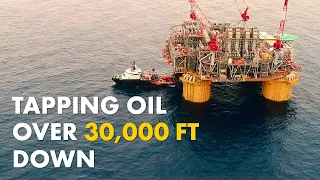
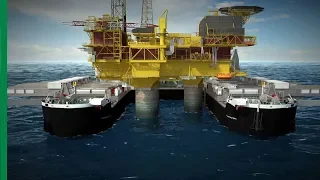
Shell's Perdido platform in the Gulf of Mexico. It's one of the deepest floating oil and gas platforms on the planet, but for 10 years, Perdido has struggled with an engineering puzzle. After this long to not have a resolution this supremely frustrated.
It's subsea pumps are mysteriously disrupted without warning. Now, Shell are turning to a new solution to help solve the problem, artificial intelligence. 8000 feet below the waves, lie Perdido pumps.
Key to production, they separate a mixture of oil and gas that's sent to the surface. But occasionally the pumps stop separating, causing a complete loss of production. It causes a lot of headache so we can solve this problem, then we can be more proactive in trying to stop the event before it happens.
At these depths, inspecting inside the pumps is impractical. Shell must find a different solution. They're calling in a crack team.
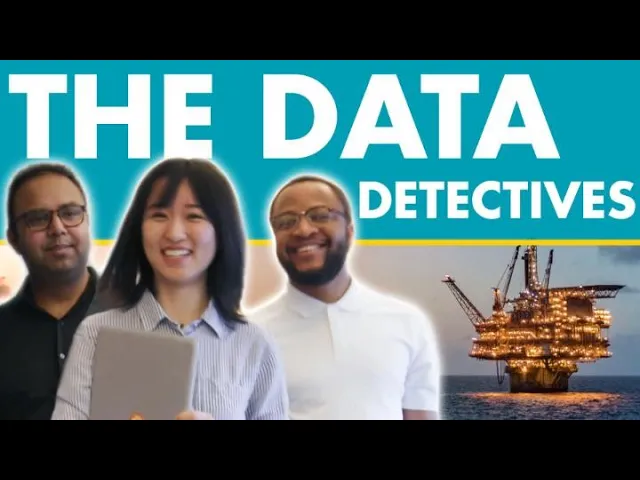
Their mission, to predict partidos pump problems using artificial intelligence. Meet the data detectives. I think what makes me a good detective is always being skeptical of the assumptions.
We want to do well. We want to find a possible solution through data science if we have it. Each pump generates a constant stream of data, recording its temperature, pressure and chemical mix.
The data detectives plan to apply artificial intelligence to sift through the gigabytes of stored data to search for patterns which might predict when pumps fail, but it's easier said than done. We had such a humongous dataset that it's like finding a needle in the haystack. Three thousand tags, five years of data.
It's too much for the computer to process. After weeks of work sifting through a decade of data, their search draws a blank. They wanted prediction, they wanted possible causes.
Sometimes people feel that artificial intelligence is going to solve everything, and that's not really the case. Show me a sign that you're able to predict something for us. It's research.
It just takes time. But as the detective soon discover, it'll take more than time alone to solve this mystery. We had some early wins, some early successes, and then it seemed like the progress plateaued.
There were times where I considered maybe we should stop. And at that moment, it didn't feel like we were progressing. In a bid to break the impasse, the detectives call on the experience of operator Jimmy Johnson.
Jimmy's worked in the oil industry for 25 years and his knowledge of partidos pumps is second to none. I said that you need to have individuals from the field looking at this with you, because we understand what this means. When you're saying this is out of normal.
Tapping into Jimmy's knowledge, the team refine their computer code and finally uncover what they're looking for. A telltale chemical signature seen in the data a few days ahead of a pump disruption. So, Vanessa, how far in advance did we see something on this one?
It was about two days. Two days! Awesome.
Wow. Is that something we can do? Yeah, this is something that we can work with.
It wasn't until they showed off some of their results and I felt that there was a sense of breakthrough, that they were truly on the verge of discovering something. Continuing crunching through the data, the team's refined algorithm identifies the chemical fingerprint ahead of 70 percent of pump disruptions. Awesome.
Good work, guys. Helping predict when a disruption event might occur, means Perdido can avoid lost production, making even the most skeptical appreciate the power of artificial intelligence and the work of the data detectives. It took the results kind of hitting me in the face multiple times.
You can't deny the results. A treisman in me says Nobody's going to know this machine better myself. The realism of that is that's not always true.
Once you start seeing the results, there's no refuting numbers. That's the beauty about math, right? I mean, math is math.
If we're able to tap into that, we can truly succeed and make this company a more successful place to work.