We're at 1 32 i think we are going to get started um so a huge welcome to everybody this afternoon it's a little bit gloomy outside but certainly not gloomy here we're going to have a really really interesting discussion um we would have wanted to be but the questions we're asking the work we're doing is really um is really great i'm really proud of It that was brilliant comedy moment um we are going to try and keep all of you on mute for the moment just to avoid any uh you know commercial breaks like that
um but we are delighted to have you all here um we've got a really good session lined up for you we've got two great speakers um and we're going to really be looking at mentoring a coaching in a number of different ways firstly We're going to define it we're going to talk about the benefits of both mentoring and coaching we're going to look at this subject through the lens of skills the skills that you need need for coaching and the skills you need to be a great mentor and then we're going to finish up wrap
up with a how how to get started um we're hoping that the talking at you bit is going to last approximately 30 Minutes um and then um we are going to turn over to question and answers we want this to be a really interactive session um so please do post your questions in chat um and then there will be a moment obviously when we wrap up to invite you either to uh directly address your questions to the two panelists or obviously i'm very happy to feel those questions for you Um but we're gonna start with
um a quick poll so which one do you feel you know more about coaching or mentoring and really easy there should be a little pop-up oh fantastic we're just gonna see what the result is coming in coaching is just ahead okay i think that's that's almost almost even steven's there and obviously we've got some people in The audience who um who were probably going to really enjoy just having some some definitions um and understanding both so thank you for thank you all for taking part in that poll we will have a second poll later on
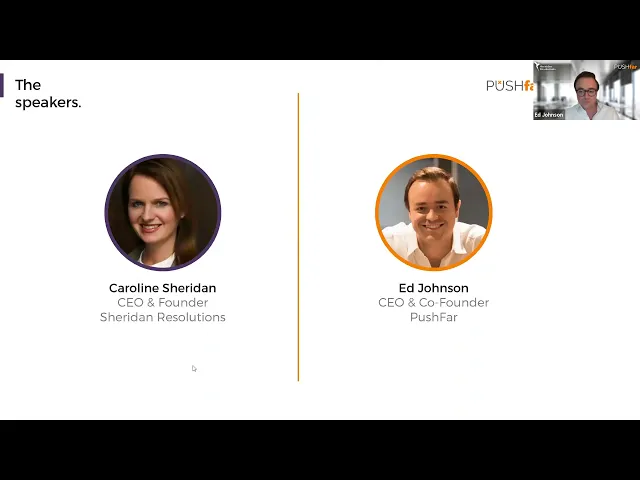
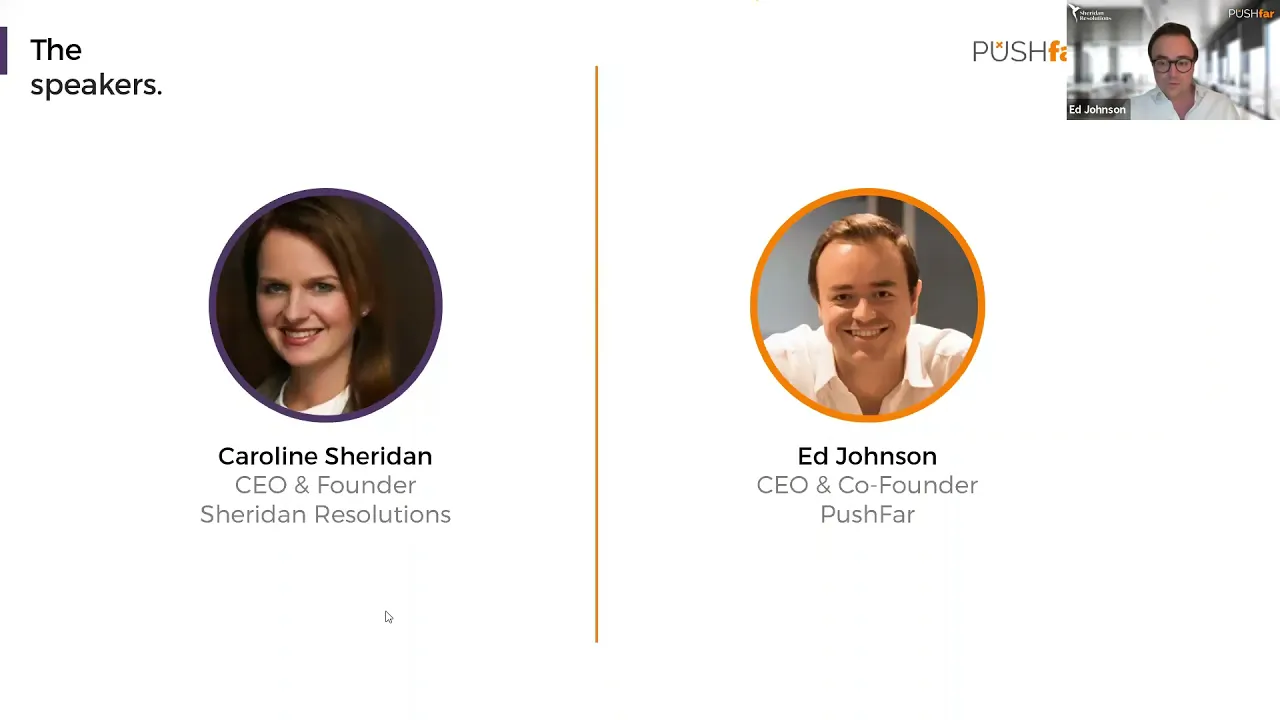
but at this point um i'm going to hand you over to caroline and ed um to introduce themselves Over to you both thank you delighted to be here with you all today so those who you who don't know me i'm caroline sheridan um many of you that do know me though will know that i'm founder and ceo of sheridan resolutions the global coaching and leadership development consultancy i'm also myself a trained coach and mediator and at sheridan we believe that everyone has potential which is hidden to a Greater or lesser extent we like to think
about hidden potential as possible future brilliance we aim to maximize potential in both people and organizations by realizing that brilliance and that's very much at the heart of what we do worldwide i mean globally we're seeing a trend in organizations and individuals who are looking at how to best maximize potential within their people Whether that's via coaching mentoring or other development and employment engagement activities and today we're going to talk about the first two of those coaching and mentoring and the synergy between us and push far is that in very broad terms we shared and
tend to operate more on the coaching side um we obviously do some mentoring and push up on the mentoring side By way of example we've just launched our latest ilm accredited coaching and mentoring program online and we run in-house division for internal coach faculty and we run also a number of programs on coaching high performance coaching to engage and motivate performance coaching master classes as well as one-to-one 360 group and team coaching then of course there's coaching as part Of a range of development activities and one-off coach sessions as well as the more traditional executive
coaching programs certainly creating a coaching and mentoring culture for many is increasingly at the top of the agenda so we're very pleased to be here today to talk to you about both and to be here alongside ed of bushfire bushfire sheridan our strategic partners And it's a pleasure now that i hand over to you ed to talk a little bit about what you do fantastic thank you caroline um really great to have the opportunity to connect with so many of you today um and uh great to be alongside as karen caroline said um sharing resolutions
um who are a fantastic strategic partner um and we have the privilege of working jointly with a few clients already um and i'm certainly learning a lot Along the way about coaching as well and i think this is going to be a really informative session um hopefully for everyone but i think i will learn quite a lot about this as well as i have been doing through the preparation um so i'm the ceo and co-founder of push far what we do is we try and make mentoring more accessible and effective to everyone and what that
means is Uh first and foremost through our platform that we've developed helping mentors and mentees to really make the most of mentoring and be that through giving them a bit of structure helping them to set their goals keep track of progress um and and uh understand really how they can make the most of it whilst also helping organizations to run mentoring programs at scale as well so when we look at mentoring there's often Quite a lot of manual process involved in trying to match up and manage mentoring and report on it so our platform that
we've developed really helps to streamline that whole process and make it as engaging as possible i actually come at this from a from a personal experience i set up push for when i was looking for a mentor myself a few years ago and i certainly learned a lot along the Way about mentoring and i'm now both a proactive mentor and also mentored by a couple of people too so uh really excited to to share a bit about that um and uh and and help define that all of that so i think what we're going to
start with is a is a definition on on both mentoring and coaching and just to set the groundwork so it's we all know what that looks Like um so i'll go first with mentoring and so what is mentoring just a single sentence there to summarize what mentoring is um a mentor is someone who shares their knowledge skills and or experience to help another to develop or grow or hand grow and i think what's really interesting about mentoring is the fact that you'll notice in that definition we didn't mention Uh hierarchy seniority age a lot of
the time particularly at the moment we're seeing uh discussions going on about reverse mentoring um and actually one of our advisory board members last week or week before last brother used the term mutual mentoring i think what's great about mentoring and coaching as well is actually the fact that it is mutually beneficial There are benefits to being mentored which are perhaps more obvious some of the time but actually there are so many benefits to mentoring other people as well and sharing that knowledge and and those experiences um as i mentioned it was it was me
looking for a mentor myself i was a bit lost in my own career i needed someone to sort of guide me on what my next step should be in my Journey which led me to finding a mentor to help share their experience of the industry and what my next my next career move should be um that led me to uh to setting up push for um one of the one of the great quotes here is um one of the greatest values of mentors is the ability to see ahead um uh what others uh cannot see
uh And to help them to navigate um a course to their destination it really is all about that guidance and that advice i'm often experienced based as well um so caroline um sort of summarize very briefly what uh what mentoring is um but tell us a bit about what coaching is so coaching is what happens in the mind the coaching more than anything more formally defined it's the process of getting someone who has The skills and knowledge to challenge their own views of what is really possible to to i suppose to challenge the assumptions that
they've been operating under and to look behind some closed doors and lift up some flat stones in their own mind it assumes the individual has the answers to the questions they ask of themselves they just may not be able to get at Those answers as they are covered up by layers of life experience beliefs conflicting understandings and anything else that may come up so one definition here is a coach is someone who provides guidance to a client on their goals and helps them realise their full potential and this is why it fits within the realizing
brilliance banner As nancy klein a leading coaching expert says the brilliant coach is the one who brings out the brilliance in others so coaching is not about a particular style or magic wand words or incantations it's not about formality or a set piece sit down session and it's not necessarily about formal training although i will come back to that Being a coach is about supporting a coachee get from a to b more quickly and more effectively than they might do on their own some people might never get to be without the coach at all but
as a rule it's about helping people get to where they have the potential to get rather than completely change direction and so there are many definitions of coaching i mean How would you define coaching asking our audience maybe post your comments in the chat we'd love to hear what your definition is but as whitwell john whitmore says it's about unlocking a person's potential to maximize their own performance it's about helping people learn rather than teaching them but narrowing the question to coaching the workplace it's an ongoing process designed to help coaches gain Greater competence and
overcome barriers to performing at their very best and it provides people with the opportunity to better assess their strengths as well as their developmental areas and the role of a manager as coach is to raise awareness of their team member and encourage them to take responsibility for their own actions on the job coaching peer-to-peer Team and group coaching are also all great ways to make everyday coaching the norm by enabling people to share their challenges focus on particular themes and create coaching environments where people can learn and mutually support themselves but mandarin's coach is not
a complete solution working with an accredited coach who Provides coaching as their full-time job must and is often an option used for executive and senior leaders where aspects of their performance need particular attention you know building influencing skills confidence presence and impact and so forth so caroline obviously sort of a lot of overlap and a lot of things that are sort of similar with coaching and Mentoring and a lot of things that are different as well which we'll cover off but when we look at them uh together what are they both how would you describe
that well in this diagram smiles down even from anyone on the call today so miles down is coaching spectrums is his work uh coaching and mentoring are philosophically very similar the core of each Practice is the relationship between two or more people we think about team and group coaching as well there may be many more both coaching and mentoring as we state here are about helping people to get where they want to go by leveraging the experience of the coach or mentor they can be seen to evolve from directives mentoring to non-directive coaching Mentors can
utilize coaching tools and methods for the effective development of their mentees and the very best mentors are often also great coaches and they have also developed a coaching approach both approaches require the coach and mentor to build trust be objective and non-judgmental and importantly maintain confidentiality unless of course You know a coachee or mentee is at risk clear professional boundaries do need to be maintained so the relationship between mentor and mentee coach and coachee does not develop unhealthy dependencies and both offer a more practical cheaper more effective alternative to more formal performance or conduct management
procedures in the workplace even though i'm a mediator Obviously i say this it's true or dismissing existing talent to find the missing 10 also quick and easy usually um to arrange confidential covered by professional codes of conduct fantastic oh ed i mean i think now i'm handing over to you on on how they're different please yeah absolutely um and really great to hear you hear that you say that point about you know Actually some of the most effective mentors are also coaches we're certainly seeing that is the case in our in our programmes um it's
obviously um lots of things that are overlapping but there are some key differences with mentoring and coaching that it's important to highlight and so the first one is that often uh mentoring is longer term we see some mentoring programs lasting for six 12 months but actually we see some programmes and some mentoring relationships lasting for years and years you only have to sort of google and research famous mentoring relationships um to to find out that actually there are some mentoring individuals who've been in mentoring relationships for sort of decades and are still going to that
mentor so it's often often longer term is probably Um the first key difference um with mentoring there are no qualifications required maybe that says a lot about me as to why i went to mentoring rather than coaching um but actually this idea that it is flexible um that you don't need qualifications to share that knowledge and experience uh is is really something that is one of the key i suppose differences with mentoring The next one as caroline spoke about on the previous previous graphic or illustration is that mentoring is more directive and the way we
would describe that and the way i've heard that described in the past and caroline i'm sure you'll correct me if i'm wrong but actually with mentoring it's more the mentor doing the talking um and uh the mentee sort of listening um so It's that direction it's that mentor sharing that experience and and directing the mentee um accordingly typically uh mentoring is also less structured so whilst we always recommend having an agenda or meeting notes in place before your mentoring meeting to make the most of mentoring and there's typically less structure around it um comparatively with
them Than with coaching um and actually it's very much about what the mentee is looking to get out of it and they can put together essentially their own structure as to what they want from it and then finally one of one of the other key differences with mentoring is that it's very much development driven so it's about what the mentee wants to do in terms of developing and growing Their career um and the advice that they're looking for from from the mentor um to to progress effectively and so caroline would you like to talk through
some of the the key differences then for coaching absolutely so in as a regards coaching um typically seen more as a short-term engagement um in this engagement a coach works for the client with specific goals and when those goals have been Achieved the relationship is reevaluated may end um may though be a one-off coaching conversation maybe an everyday coaching conversation between peers between line manager and their and their member of staff it may though be over a defined period of time so we think about executive coaches coming in certainly it could be over contracting over
a particular three or six month Period can be longer term occasion can be extended um it is always so important to re-contract on goals so as alignment i think the other point to make then is around training um in coaching skills maybe qualifications um generally people who receive special training to guide others in in any field towards achieving their goals so when we're helping others um in this Way then it can be really helpful for um individuals to understand a couple of good coaching frameworks they can use such as the role model around what's your
goal what you're looking to achieve what's the current situation what's happening right now options around what options might there be what have you considered what you know And then what are you going to do what's your next step your way forward so that would be something to help people be able to find their own solution to be able to have some tools that can be you know widely learned within an organization and then non-directive we've talked about that already coaches want to be catalyst for change and not Supplying the ideas so we operate more at
that end of the spectrum typically structured line manager sponsor involvement here as well so meetings can be scheduled on a regular basis with an agenda focused on specific immediate goals come back to the contracting and and the midpoint review around that as well so are we on track do we need to reevaluate You know what next in terms of where this conversation needs to go to get to your desired outcomes and the line manager sponsor involvement here is key that three or four way often contracting around coaching objectives with roles and responsibilities being clearly defined
so there is understood between everyone what's the commitment here as me as sponsor For a program um what's my role and and as coachee how do i factor in the time required to make my goals a reality and then performance driven rather than development driven really this is about the purpose of coaching is to improve the individual's performance on the job it revolves around specific developmental areas issues very much task focused focused on concrete issues that require A context at new as well some key differences there ed i think absolutely fantastic and and so now
if we can talk about some of the skills uh involved and required for for both coaching and mentoring and caroline if you'd like to go first and talk about some of those key skills and that you're seeing coaches possessing yeah i just noticed a chat about someone who's Mentioned chat about equals and absolutely i think the first thing is about this partnership of equals it's really important where the aim here with coach kochi is to achieve speedy increased and sustainable effectiveness through focused learning in every aspect you know really looking at that how do we
do that around focusing on the quality of the attention Our ability to really listen deeply how do we keep agreement with our coaches how do we recontract when it's appropriate to do so manage boundaries and give and receive appreciation and ask great questions um those things coming together as an equal partnership is one of the foundational and most important aspects of how we work well um with our coaches maximizing resources and inspiring this is the ability to Make things you know happen it's the extraordinary quality that solves problems and helps the individual come to a
new understanding of what is really possible and it's the skill and talent to influence and guide others to make real breakthroughs and create lasting change so it's really about maximizing the resources so coaches will have um people who've been trained will have tools at their Disposal we how to maximize those and tailor them because one size does not fit all and it may not be that any tool is necessary but just your quality of your attention when you're listening to somebody and you're really holding yourself with curiosity as well so recognizing strengths and challenge Um
to propel uh forward focusing on improving existing skills even further will give coaches a boost combined with consolidation to constructively challenge to push people to the next level and then of course um coaching tackling problems head-on and and not working with a coach themselves who dwells on them it's really Important to help and focus on improving existing skills even further because that gives coaches that boost and um coaches who are honest with themselves and about where they stand have a firm grasp on reality so they've got the proper skills and knowledge to assess the situation
and find the best path forward um supervision for coaches to Help them have a safe space as well so they can reflect and resource themselves to always you know be what they need to be when they're present with their clients and of course raising awareness and self-responsibility awareness raises input learning interest and recall and responsibility is generated by offering choice which leads to self-esteem And confidence and self-motivation to vital ingredients really of performance and then it's how we make it real um it's much more than having feel good conversation we need to translate the ideas
um into real life say by formalizing them as part of the three or four way contracting process where that's applicable because obviously sometimes it's just a Conversation between two people and we're talking about making coaching real and every day as well um but we're appropriate um also looking at the individual's personal objectives maybe a personal development plan maybe setting a future date to revisit this as well to review and track progress and and make it living breathing document and striking The right balance always between interpersonal and practical application of coaching techniques is key i'll pause
there on that one ed um [Music] so i'll go through some of the some of the mentoring skills required now as well so i think um the first one um it may sound rather Obvious but a keen interest in helping others is vitally important with mentoring we've seen some mentoring programs in the past that have been compulsory um and potentially individuals have been so forced into mentoring um in fact i've heard stories in certain mentoring um training courses where a mentor has been told they have to be a mentor Um and actually they don't really
have that much of an interest in doing say so they've gone to the mentee and they said right i'd be told i've got to be your mentor so let's go to the pub for half an hour and have a conversation about what you want to do that's not great for mentoring so i think the first one is having a key keen interest in helping other people is vitally important as A skill required for successful mentoring the second one is that first hand experience knowledge and insights so actually um giving concrete advice um built on your
own insights that you've learned throughout your career really important as a skill required to be an effective mentor you have to sort of understand um what the the mentee has gone through or Is going through and the challenges they're facing um you don't necessarily have to have been successful in um that firsthand experience in the past i've heard about people who've maybe made mistakes in the past and helping their mentee to avoid making that same mistake again and they're they're not only they haven't only learned from the failure themselves but they're helping others to avoid
That failure as well and some of the most successful mentors um in particular in certain industries where there's sort of high risk such as entrepreneurship are actually people who've maybe made mistakes and learnt from them and can pass those on so that firsthand experience is really important the next one relationship building and interpersonal skills so going off the back of what caroline said Um interpersonal skills really really important um they're not necessarily vital at the beginning of a mentoring relationship or if it's your first time in mentoring and you'll organically learn how to improve your
interpersonal skills over time and the more mentoring relationships you enter into the better you will become at relationship building and interpersonal Skills and but going back to the earlier point that caroline made about um coaches being some of the effective most effective mentors that's certainly the case with relationship building um dedicated long-term uh time commitment is is a really important factor when it comes to successful mentoring um mentoring is a commitment um and as We've covered off it's usually a longer term commitment so actually make sure you're dedicated to your to your to your time
as a mentor and to your mentee and making sure you're making the the time for them is really important and and certainly required and then also motivating encouraging and inspiring um so um hopefully if you if you've got A keen interest in helping others um then you will want to uh also inspire and motivate them and be encouraging um and certainly if you've had that firsthand experience already um you're sort of halfway there in terms of inspiring but um really important for mentors to be motivating and inspiring and that's that goes to to asking the
right questions in a positive manner um and really reflecting on that So those are some of the some of the key skills required um and the final one um is of course helping to identify the mentees goals so um sometimes actually we see mentors um and mentees in relationships where the mentee has a really clear understanding of what they want to achieve in other mentoring relationships actually um that may not always be the case so Helping the amenity to identify their goals um and helping them to work out what they don't necessarily know and what
they should know um is also a required skill what would be um fantastic now to do is just cover off some of the key benefits um and obviously there's a bit of an overlap in in these key benefits of mentoring and coaching but caroline what are some of the key benefits from a Coaching perspective um so that coaching can be conducted immediately on any topic can be literally as short as a five-minute conversation over zoom or by the coffee machine when we get back to work um as short as that when you have the opportunity
to really listen to an issue a challenge that someone has and all that might be even required Is is is opening a door through your presence and the attention in order to you know enable someone to have a that light bulb moment and group coaching has been successfully used to accelerate the progression of you know of people such as you know certain groups um in organizations that we work with and the impact of that for example when we're working with Female leadership has been that you know people have been promoted retention rates of those particular
group have increased and people have performed much more effectively in their roles and widened their networks so i'd say one of the key benefits of coaching is that it is a sustained intervention the coachee and the coach connect on a regular basis And the coach's progress can be closely monitored and so in short really however coaching is being used um in all its different formats in within organizations it does foster behavior and cultural change brilliant fantastic so a couple of uh a couple of benefits i suppose on the mentoring side now um the first one
as we've kind of covered off minimal training required To mentor of course you can go on training courses to be a mentor um but actually it's not required to to get started with mentoring there are lots of mentoring guidelines out there that you can read and that'll take some 10 or 15 minutes to read um and then and then you can you can kind of get started and you're going to learn a lot about being an effective mentor as you engage with the mentoring Experience and as you uh enter into new and multiple mentoring relationships
um the second key benefit is is that first-hand experience so as a mentor you're going to have that experience and that obviously benefits the mentee hugely knowing that the mentor has been in those situations knowing that the the mentor has already been through what the mentee might be struggling with Or the challenges they may be facing and that first-hand experience can be a real benefit um to the to the mentee in knowing how to go about what they want to achieve in terms of their goals and their objectives for that mentoring relationship and then as
mentioned there are sort of lots of benefits to both and there's a huge overlap here so actually we put most of them into the Into the both section um i think the first one is that uh both are really effective learning techniques that they're not um by any means um one or the other um we see a lot of people who are both mentors and coaches and we see a lot of people who are mentored and coached and so both really effective learning techniques the second part that we've covered um is That they can both
be formal and informal and they both have real benefits in terms of that that formal maybe six 12-month mentoring or coaching program but also that informal so going back to what caroline said and i think we're all looking forward to um being able to uh interact in office environments by um by the water cooler or the in the uh in the office environment actually that informal mentoring and Coaching is is a real benefit the third one one that we've certainly seen um with mentoring programs that we're running is increased employee engagement so looking at engagement
surveys with mentoring programs we've definitely seen that those in mentoring programs have higher employee engagement and carolina i'm sure you've probably seen the the same with coaching absolutely And um it really is that um i guess really people feel motivated there are typically higher levels of empathy employees feel valued and heard and importantly you know have increasingly sense that they matter and these days when we're talking about you know creating environments where people really feel they belong i think this is a key um tool that we will have at our disposal For that um both
are easy to implement in any organization and we are seeing heightened activity certainly it can be powerful to have identified internal stakeholder champions to be those all important ambassadors for the service and increased confidence and interpersonal skills i guess here it's really inspiring to see people Isn't it for all of us it's inspiring to see all of us thriving at work um and um even as a mediator when you know myself and others who who work in workplace mediation um have witnessed the power of having a coaching toolkit as a mediator as well when you're
working with people where their relationships have have broken down and it's incredible to See how fast people can adapt and take on new behaviors when faced with seeing the impact of their behavior and their actions on others so that is something that um you know i i've seen time and again and lastly improved individual and collective performance with people taking on aspects of their career And their performance in a very focused way whether individually or as part of a structured group or team approach so those are the things ed i think that i'd add um
and we both agree in all of these we've been discussing them so um so yeah very pleased to to share those i think you know i'm gonna we have another slide but we're parking that for now we have a and just Top tips to get started um but we thought we'd hand back to catherine for the poll and um q a for now and we'll see how we go time caroline and ed thank you so much for incredibly informative talk so our poll everybody is do you currently run mentoring or coaching programs in your organization
we'd love to hear from you just you'll See a pop-up window in a moment and you can vote do you currently run mentoring and or coaching programs in your organization okay so 35 or so percent running both mentoring only at 16 coaching only at 12 and gosh quite a quite a large slice approaching 40 percent are running neither coaching or mentoring programs Very very interesting thank you so much um really really appreciate that um that feedback um caroline and ed are you both ready for questions or do you want to do your wrap-up slide i
think we'll take questions now ed won't we and then we'll do the slide yeah yeah i think questions sound good and we may well cover off some of the some of the wrap up slide in the questions as well Wonderful wonderful we have some incredible questions people have been incredibly uh generous and busy on chat so i'm just gonna um grab some of these these questions and ask them to you um first question uh from gwen thomas will the slides be available following this event yes absolutely uh gwen grinter of our ilm center so we've
got some learners on Here um and i've had one call me this morning actually to say please can we have a recording so yes the answer is yes to that wonderful thank you caroline um a great question from uh meryl april in organizations where senior people are being allocated say two or three mentees um and they're meeting with them regularly and they're assisting them in Achieving their appraisal goals is it best to move the mentors around on for example an annual basis ed possibly that question to you yeah absolutely i think i think what i
would say is actually ask the mentor and mentee what they want to a certain extent if if the mentor and the mentee feel like and maybe ask them separately rather than in the same room to to give them the opportunity to say what they Really think um but actually if it's working well if the mentor and the mentee are getting a lot out of it they feel like the mentor feels like they're helping the mentee and the mentee feels like there's a lot of benefit there still then there's no reason why you wouldn't want to
extend that and keep that running um what we do often see though is that actually over time Um mentoring relationships will both individuals will at some point feel that they've got the most out of it and what they can out of it and in those cases of course um it's okay to then um you know end a mentoring relationship and move on to the next one but i think the most important thing i would say is is ask the mentor and the mentee if they're happy with that um and There's no reason why you can
have multiple mentoring relationships and maybe there's one that's working really well but you want to have another mentor that's helping you with a different focus in your career and we're seeing some mentoring programs now focused on education around diversity and inclusion so you might have a mentor that's educating and empowering you there and you might then have a separate mentor Who who's been your mentor for two or three or four years potentially and that's working really well as a longer-term one so i would say i would say ask ask the employees what's working for them
wonderful ed thank you question to really for both of you this is from colin spiller thinking about the definitions of Mentoring and coaching where does problem solving come into mentoring and where does problem solving come into coaching caroline would you like to go first on that one yeah well thank you um it's around creating a space for someone to really think aloud or internally because they can have silence as part of you know the contracting and just holding the space to someone to to ask a question around a challenge They've got to listen to the
challenge they've got and then to be able to ask them you know where are they in relation in relation to that problem you know what progress have they made for example what progress have you made and what's happening now what's the current situation um and what have we done so far okay and what options do you have at your disposal And what option have what what haven't you yet considered and in creating um good i suppose combining good questioning with quality of attention it's always incredible that people can go where they hadn't even thought you
know maybe privately um just having someone who is really focused on them really deeply curious and digging deep about Where they are in relation to that problem can ignite all sorts of possibilities and that's i would say that coaching provides you know being able to tap into what obstacles are in the way what what ideas do you have about how you might remove them what if anything was possible um and things do emerge ed yeah great great points on the coaching Front i think with mentoring it's probably more less about reflection and more around direction
so um actually it goes back to that experience and if there's problem solving um the mentor is going to be the best place to respond to that if they maybe face similar problems in the past themselves um and so it's not gonna be so much about asking the the the individual to try and figure it out And reflect on it but actually give them a bit of direction and and sign post them in the right in the right place not necessarily giving them all the answers um i don't think that necessarily helps anyone um but
being a bit more directive about it and a bit less reflective when it comes to problem solving and mentoring relationships is probably the key uh that i would see with with Problem solving and mentoring and can i just add really there it's also everything can also go into a question really um and even the water you know what if actually a or what if b so it still enables this is one great mentors from great coaches as well thank you just be able to tap into that empowerment and around actually this is this is what
i'm going to do i'm feeling i've made that decision rather Than i've been told so this is this is what i think ed and i are exploring isn't it around you know the development of mentors as coaches as well can be very powerful thank you caroline ed i'm putting you back in the hot seat and from our very own helen may how is the effectiveness of mentoring programs measured it's a really really good question Um i think it depends what the objectives are to your mentoring programs in the first place so with some mentoring programs
we see um let's spoke about it slightly earlier so i'll highlight this one again for example improved education around certain inclusion groups for example other programs an organization might say okay we want our mentoring program to include improve employee engagement or employee Retention um or actually um cross channels of communication between different departments so actually encouraging mentors to have mentees in different departments and vice versa i think the first thing you need to do is look at what those objectives are and then to measure the effectiveness of that you can do so either with surveys
um and feedback forms um and you can do those kind of midway through or you Could do one at the start of the mentoring program so actually you know asking questions about um employee engagement at the beginning of your mentors and mentees and then looking at it at the end and if you employ engagement was the the objective can then help you to measure them one thing though there's always a challenge with Measuring the effectiveness of mentoring um is that actually every single mentor and mentee are probably going to have their own objectives and goals
within the mentoring relationships and i think so to that end quantitative feedback and quantitative analysis of mentoring success is good to a certain extent but you should also be asking those qualitative questions and it may be that actually Every mentor and mentee feels that it's really benefited them they may have seen different benefits but um yeah it starts with the objectives and then you can ask the right questions in in sort of feedback forms and engagement uh off the back of that great thank you ed it was always a tricky one those measurement questions Um
caroline to you from sangeeta shopra a really really interesting question around this whole remedial or developmental on coaching which is it is it both well it's typically developmental well it's about aspects of performance that we need to improve so it is more developmental side remedial a lot of organizations have tried to move away from that um remedial piece um and you know completely support that um but you know When we look at coaching in all its guises there are absolutely cases um i can think of where i've where coaching is coming back from mediation for
example so it might be that you've got someone top performer fund manager really um you know second virtual final written warning goes into remediation who's actually been turned around and it's a very high quality organization Um asset management company where they could have taken a different route and they could have just dismissed him um actually he is someone now who is a real shining example within that firm um has developed a real coaching style and has been to some events that we've run as well so it's it's it people will look at how do i
want coaching to be perceived In our organization and if you have a stigma around it it's used remedial then people who are your top talent people you want to develop you want to kind of stretch they're just not going to be comfortable engaging so it is really important what kind of culture are we creating how is coaching you know i suppose viewed with our organization it doesn't stop those altercations Actually where um people may well benefit from some form of focus coaching but they remember coaching is very widely viewed so it could be i'm a
manager i've got to perform someone in my team now how do i want to do that you know again i can use a coaching style so what's getting in the way of of of of achieving this particular Objective you know what's what are you assuming that's stopping you actually just tapping into um some aspect of themselves that maybe is blocking them um be successful and that's a powerful toolkit for all of our people to have within every company and certainly you know i i would say that creating those spaces for people to really Contract and
understand how to be managed or managed can be very empowering and then perhaps minimize those remedial situations because perhaps we've done much more effective work at developing our people developing our managers developing my leaders around a coaching mentality that that that pushes away completely the situations where the word remedial is even Top of the agenda wonderful thank you caroline um i'm just conscious we've got about 20 minutes left so if we can pick up the pace a little bit um because we've got we have got quite a few questions um still to go through this
is a really lovely one from sean parker hornsey we found it can be really useful to have a hybrid approach um where certain elements of perhaps Being coached um and some others for mentoring how can the two techniques coaching and mentoring be integrated for clients and it all comes back to contracting i'd be really clear about contracting um and um often in supervision so i've survived for heavenly business school for a number of years we run supervision as well it um when things break down And when things got a little bit sour or or a
coach might struggle or doesn't feel necessarily there you know at the top of their game it's because some level of contracting has not effectively taken taken place or re-contracting hasn't happened so it's really been clear about the purpose clear around the the how i'm going to show up on what what i'm going to receive um and and It doesn't mean you can only be one of the other but it does mean that um contracting is an important part of that to make that hybrid work effectively yeah this is a i'm gonna jump ahead um just
to get some new people's uh questions in so this is a great question from keelan taylor um ed could you tell us a bit more about reverse mentoring and how it works Practically yeah absolutely um reverse mentoring is an interesting one because actually it's got a lot of the same qualities that traditional mentoring does um so reverse mentoring is essentially when an individual who you typically consider to be the mentee and by that i mean um potentially probably younger less experienced or more junior in a business and has more experience in a certain Area so
one of the examples of mentoring reverse mentoring is someone who has a real understanding and insights into technology and trends in the workplace so they may just have come out of university or school they may be an apprentice or a graduate but they could actually be a really effective mentor to someone who's a senior leader in the business Who's maybe got 30 40 years experience under their belt but but needs you know to to be mentored on you know how to use technology effectively um another example of that is is diversity inclusion program so actually
educating senior leaders um the mentor could be someone um from the lgbtq plus network for example in a business um and educating the senior leader on The certain challenges that uh that they may be facing that the senior leader just is unaware of so that that's the idea of reverse mentoring it's someone who has more experience in a certain area and is sharing that and then the way to get started with that is just to approach senior leaders ask them if they they are keen to or willing to be mentored and learn new things I
mean if so where they want to learn new things and then approach um the individuals who you'd want to be mentors in this so reverse mentors and by that it might be going to the inclusion groups and asking who would like to be a reverse mentor for example ed keep you in the spotlight here because we have another question from agnes i hope i pronounced that correctly We've run a very basic mentoring program in the in our london office but we're looking to expand to other locations um across emea any top tips top tip i
think the the main one the first one is give the mentors and the mentees a bit of a choice give them control over who they're right who they would like to be mentored or mentor who they'd like to be mentored by or mentor and if you're giving them a bit Of a choice and you're going to see higher engagement with mentoring because actually they'll feel like they they've engaged at the front uh and uh and they've opted into it and they've proactively said actually i want you to be my mentor you're going to see higher
commitment levels um and then really it's just putting the right infrastructure in place Um so you know whether that is a technology like peshwa um or whether that's still running running mentoring programs through an excel spreadsheet to keep track of things um either of them works you know we're all used to using zoom and teams now um but just setting those expectations up front um and actually we're seeing on our platform now more than 40 i think 44 Of our mentoring relationships are international so you don't need to be in the same country as your
mentor or mentee anymore and that's got lots of benefits that go with that wonderful ed thank you great question john burgess um caroline for you this this one one of the greatest benefits of mediation is the ability to apply mediation principles outside of the Dispute resolution arena is there or are there mirror situations regarding coaching and also mentoring we start with coaching perhaps on that one i'm not clear on the question um so yes i mean my answer is so we use mediation mediation um i mean obviously we're not focused on mediation today but mediation
techniques of course can be used every day they're fantastic Skill sets some of them are mirrored by some coaching skill sets around active listening around deep curiosity around being heard around not interrupting giving people a space to speak and and with no fear that someone's going to step in and correct them and we can track very carefully around that of mediation um understand that impact doesn't equal intention far removed from that but These are things that go right out into every day so the workplace mediators who again maybe have a coaching approach um because the
some of these things we're talking about are what great leaders should have in their toolkit every day everyone um you know can benefit from some of these skills that cross a number of different whether it's Mentoring whether it's mediation whether it's hrbp's role whether it's a consultant you know whether it's a counselor everyone has similar tools they draw on um and tailor it to the individual so i don't answer a question but i hope it gives some application i think i think these are skills for life aren't they yeah they are and i mean approaching
mentoring skills for life Yeah whether you're a mediator or a coach or a mentor you're a line manager you're a leader or a ceo whoever you are you know really holding a space and and really um getting good at asking great questions and listening and and and to what's being said rather than the mind wandering and being holding your presence these things matter whoever we are they Matter as a mom you know well the most powerful thing for me when i heard nancy trying to speak many years ago my kids were young and i was
henry and i heard her for the first time talk about the thinking environment and the 10 principles of thinking environment it transformed my relationship because i realized that i was distracted i was on my computer i was Listening to my kids i was doing something else or trying to cook and actually just holding the space to my kids and just say hey you know how was your day what was one great thing that you that you did today now let's focus on the positives tell me on stuff later you know plenty of that but it
transformed my relationship with my kids and that was My i suppose light bulb moment for wow you know if we could do this if we could do this in every walk of life wouldn't that be amazing caroline thank you so much that up completely i cannot disagree with everything you've said um in fact my children now say to me mom stop coaching me [Laughter] Ed over this is we've got time probably for for maybe a couple maybe three more questions so this one this one is from bethina saseron uh to ed in coaching we have
models such as the grow model do such models exist in mentoring too uh not that i've come across uh is the surest answer there then there may be some um but not that i've come across from From any of the programs that we've run for so hundreds of clients and we know or i know that there are some clients that will use models like the grey model and apply them to a certain extent with mentoring um but uh not not really um is the short answer there i think that the models you know ed isn't
it the models of the robot or the oscar model oscar's not a great model by The way we teach that on our island programs outcome you know situation what's happening right now choices and consequences you know action and review these are all models that can be again what what's most appropriate what do you want to develop your people in um um and they don't have to be used linearly you can just take just choices so what choices have what have you Thought of what what might the consequence of doing x be what the pros and
cons of that that's just one one part of a framework all you might need in that five minute conversation with somebody it's just one question around what have you thought about what's what something like that um i think you know mentor mentee training cause i've seen that's come up certainly ed that's something that we Advocate isn't it is actually helping people tap into what it means to be a great mentor what it means to be you know a mentee because of course they've got you know a contract as well about commitments and and and you
know how how are they when they show up as well because um that those things are very important so the training will cover all those things As well i know it's 28 minutes past and i know we didn't get a final slide ed which was how we set up or steps of setting up so um we wanna we run out of time i think um it's been very enjoyable from my perspective of today the engagement has been fantastic and with the subject and i think i know speaker both of us edward it's been very enjoyable
working with you i have to say And catherine thank you and helen i know in the background she helped with the slides and helped order my thoughts so helen a big call out to you it's deeply appreciated your support as ever yeah fantastic just yeah okay it's been really great to have the opportunity to connect with so many people i've certainly learned a lot from all the comments and particularly Questions at the end where obviously i i've gone through the slides before with caroline and learned a lot then but i've learned a lot from these
these questions as well which is brilliant so um thank you to everyone for for taking part thank you catherine um for being such a great uh great host and managing everything my absolute pleasure i have lots of people behind the scenes uh sending me the right prompts so Thank you to the team behind the scenes uh to jesse to dan to evan thank you all so much and wishing you a very wonderful rest of your week thank you all thank you thank you thank you the recording will be available it won't rent it so that
will be we have recorded it so it will be available thank you everyone have