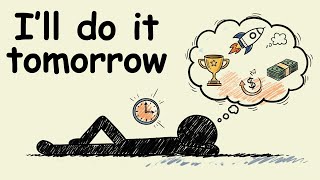
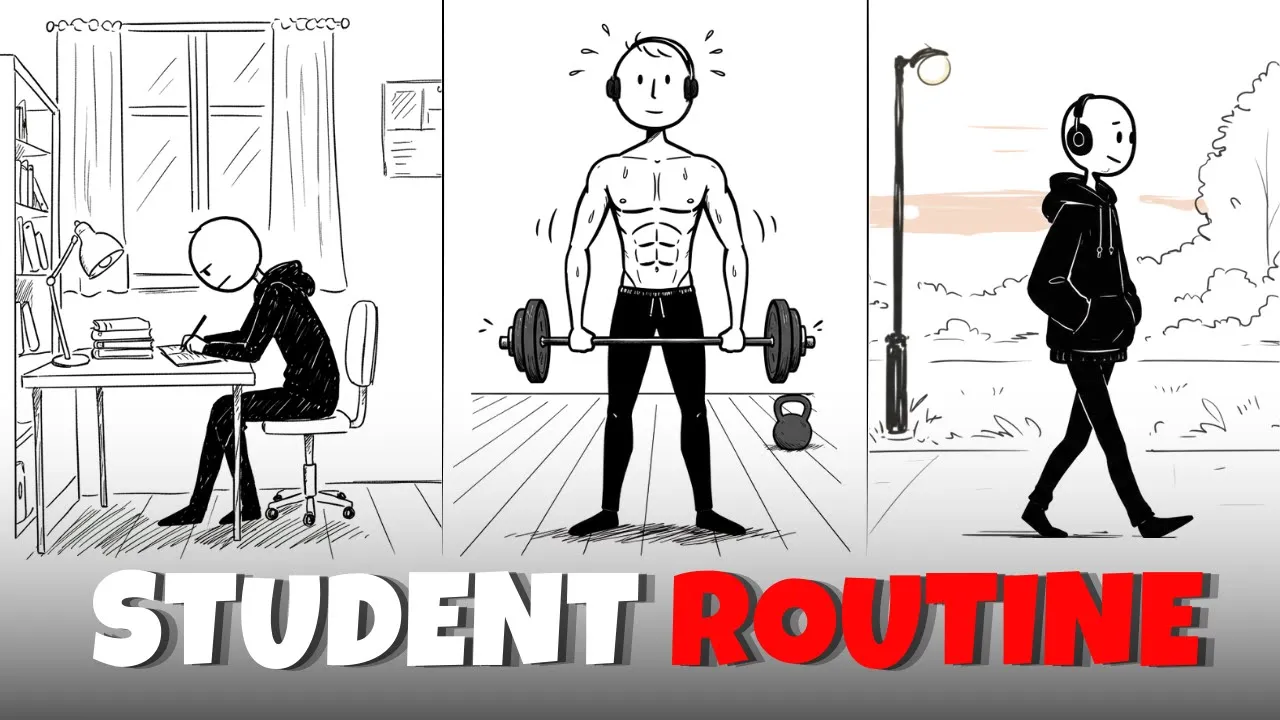
Let me ask you something. How many times have you said to yourself, "Tomorrow, I'll finally fix my routine. " You set the alarm for 5:00 a.
m. You imagine yourself studying for hours, exercising, reading, maybe even cooking a healthy breakfast. But then tomorrow comes, and what happens?
You snooze, you scroll, you delay, and suddenly it's night again. If this sounds familiar, don't worry. You're not alone.
Every student struggles with routines. But here's the good news. Once you master your daily routine, you'll have more focus, more energy, even more free time for yourself.
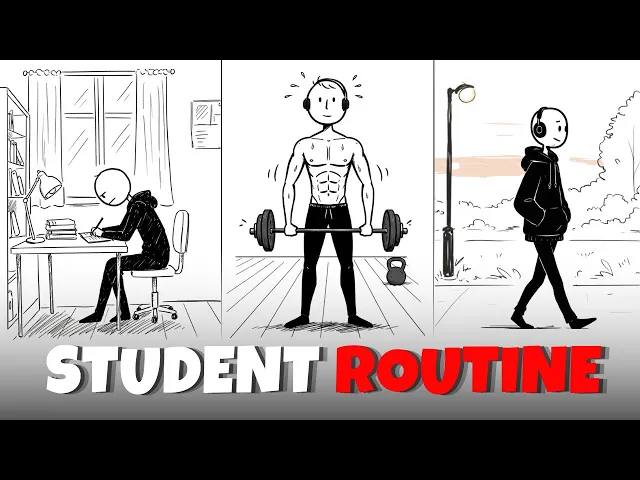
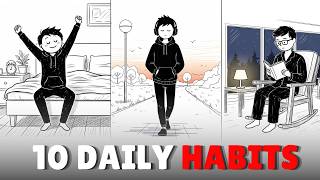
So, in this video, I'm going to give you the perfect daily routine for students. Not one of those crazy 18-our study schedules that make you miserable, but a balanced routine that actually works in real life. Stick with me till the end because I'm also going to share the psychology of habits and some real life tips that students use to boost focus, beat procrastination, and actually enjoy their day.
Let's get into it. First, let's talk about why having a routine is even important. Think about your phone.
Without a charger, without updates, without apps running smoothly, it becomes useless. Your brain is the same. Without proper rest, energy, and structure, your mind crashes.
The truth is, students don't fail because they're not smart enough. Most fail because they don't know how to structure their time. They either overwork and burn out or they underwork and fall behind.
That's why a balanced daily routine is like your operating system. It keeps you consistent, sharp, and stress-free. Discipline beats motivation.
You won't always feel like studying, but if your day is designed right, your routine will carry you through. Morning routine. Wake up.
Let's be honest, most students either set alarms they never wake up to, or they set 10 alarms and still end up waking at 9:00 a. m. But here's the truth.
You don't need to torture yourself with a 4 a. m. routine.
Waking up between 5:30 and 7 is the sweet spot. Why? Because the world is quiet.
No notifications, no noise, no one asking you for anything. It's just you and your thoughts. And here's the mistake most students make.
The very first thing they do after waking up is check their phone, Instagram, Snapchat messages. That's like inviting 50 strangers to dump their thoughts into your brain before you've even brushed your teeth. Instead, get up, stretch your arms, and drink water and open your window and let natural light hit your eyes.
It signals your brain to wake up naturally. And just breathe for 2 minutes. No rushing, no panic, because how you start your morning sets the tone for your entire day.
If you start with chaos, you'll feel chaotic all day. If you start with calm, you'll feel in control. Second, light movement.
Most students think, "I don't have time to exercise in the morning. " But I'm not asking you to hit the gym at 6:00 a. m.
Just 5 minutes stretching, yoga, or a few push-ups, or even walking around your room. Think of it like turning on the Wi-Fi before you start browsing. Your body is the router.
Your brain is the device. If the body doesn't wake up, the brain won't connect properly. Light movement in the morning improves blood flow, which means more oxygen to your brain.
You'll actually understand and remember what you study instead of just staring at the page. Breakfast and hydration. Here's something students underestimate.
Your brain eats too. When you study, your brain burns glucose, energy. If you skip breakfast, your brain runs on empty.
That's why you feel tired, cranky, or sleepy during your morning class. So, keep breakfast simple, like a banana plus oats or eggs plus toast or even a smoothie. You don't need some fancy diet.
Just something light but filling. And don't forget water. So, drink lots of it.
Here's a fact. Dehydration feels almost exactly like tiredness. So, the next time you think, "I'm lazy," maybe you're not.
Maybe your body is just screaming, "Give me water. " Morning study session. Now comes the most powerful part of your morning, studying.
Here's the golden rule. Your brain is sharpest in the morning. Why waste that time on Instagram or random YouTube videos?
Use it for your hardest subject. For example, if you struggle with math, solve problems in the morning. Or if you're learning history, memorize key dates and events.
Or if you're doing coding, practice writing code when your brain is fresh. One focused hour in the morning is equal to three tired hours at night. And here's how to do it.
Use the Pomodoro method. 50 minutes of pure focus. 10 minutes break.
No multitasking. No background TV. No endless playlist scrolling.
Just need deep work. And during the 10-minute break, don't touch your phone. Stand up, stretch, drink water, look outside.
Give your brain actual rest, not more stimulation. Your brain isn't a machine. Even the machine also need the rest to work well.
So treat your mind with kindness. Afternoon routine, classes, study blocks. If you're in school or college, your afternoons are usually filled with lectures, tutorials, or practical sessions.
And honestly, this is the point where most students lose focus. They sit there, nod their heads, maybe write down a few things, but later nothing really sticks. Here's the trick.
Don't be a passive learner. Take notes in your own words. Don't just copy everything the teacher says or writes.
Your brain remembers better when you process the information first. Ask questions. Even small questions can clarify concepts and make the lesson interesting.
Summarize what you learned. After class, spend 2 to 3 minutes quickly writing or speaking aloud what you understood. This little habit makes revision later so much easier.
Like learning something twice without extra effort. Think of it this way. Active learning is like planting seeds.
The more care and attention you give, the stronger your understanding grows. Passive learning, it's like throwing seeds on dry ground. Most of it doesn't grow.
Lunch and power break. After a few hours of classes, your brain and body are tired. And what most students do is eat a heavy, oily lunch and then crash on the couch or scroll on their phone.
Heavy meals send your energy into digestion mode. Your body becomes sluggish. Your brain slows down and suddenly you feel sleepy, even if you just had lunch.
Here's what works instead. Eat light, nutritious meals. A small portion of protein, eggs, lentils or chicken, some veggies or fruit, and water is perfect.
Avoid sugary drinks or fried food. They give a quick spike in energy, but a big crash right after. After lunch, give your brain a small recharge.
Take a short power nap of 15 to 20 minutes. Don't overdo it, or you'll feel groggy. If naps aren't your thing, go for a quick walk outside.
Even 10 minutes of fresh air wakes up your mind and body. Think of this as hitting the reset button. Your brain has been learning for hours.
It deserves a mini break before tackling more. Midday study session. Now comes to the tricky part, the post lunch afternoon slump or energy drops or attention drifts.
And it's tempting to scroll your phone or just stare at your books. Instead of fighting this, uh, use it smartly. Afternoon is perfect for hands-on practice-based work, not heavy theory.
Solve math problems, practice exercises, or do past papers or revise with flashcards or make small summaries of key points or write essays, reports or anything that requires active doing rather than passive reading. The idea is simple because your brain is slower in the afternoon. So don't waste that time on difficult high concentration work, evening routine, movement.
Let's be real. After a long day of classes and study, your body feels heavy and your brain is fried. That's exactly why even 20 to 30 minutes of movement can completely change how you feel.
You don't have to hit the gym or lift weights. Keep it simple. Play football, basketball, bad mitten, or any sport you enjoy.
Or go for a short run or brisk walk outside. Or even dancing to your favorite songs in your room counts. Because exercise doesn't just keep your body fit.
It sharpens your memory, reduces stress, boosts energy, and improves mood. Students who move in the evening often sleep better, and wake up with more focus the next day. Creative time.
After moving your body, it's time to move your mind in a different way. Even the best students in the world don't spend every hour studying. They take time for hobbies, and you should too.
Do something that's fun and creative. Drw, paint, or craft, or write stories, blogs, or journals, or play an instrument, or work on a personal project, or sing, dance, or even cook something new. Because creativity acts like a reset button for your brain.
It prevents burnout, keeps you motivated, and makes studying feel less like a chore. Plus, it helps you discover skills and passions outside of academics. Is what makes life exciting.
Evening study session. Now that your body and mind are relaxed, it's time for light revision. But remember, this is not the time for your toughest subject or heavy concepts.
Instead, review your notes from earlier in the day and solve easy or medium practice questions and plan and organize tasks for the next day. Summarize key points in your own words. This makes recall easier later.
If you do this consistently, you'll notice that by the time night comes, you feel accomplished rather than guilty about wasted hours, and your brain will be calmer, making it easier to fall asleep and retain what you studied. Night routine. Plan tomorrow.
Before you hit the pillow, spend 5 to 10 minutes planning your next day. Write down three to five specific tasks you absolutely want to complete. Not vague things like study, but precise tasks like finish chapter 4 of physics and solve 20 math problems and read 10 pages of a book.
Here's why this works. Your brain constantly thinks about unfinished tasks. That's why sometimes, even when you lie down, you can't stop thinking about all the stuff you haven't done yet.
When you write things down, your brain relaxes because it knows there's already a plan. You can sleep without feeling guilty about forgetting something. It's like telling your mind, "I got this.
You can rest now. " Digital sunset. Here's a tough one, and I know it's hard for most students.
No screens at least 30 minutes before bed. Why? Because your phone, laptop, and TV all emit blue light, which tricks your brain into thinking it's still daytime.
That's why you scroll Instagram or Tik Tok until 2:00 a. m. Even when you know you should be sleeping.
Instead, replace screen time with something calming. Read a light book or interesting article. Listen to soothing music or a podcast journal about your day.
Even 15 to 20 minutes of this can make a huge difference in sleep quality. Your brain begins winding down naturally instead of being overstimulated by social media notifications or YouTube videos. Sleep.
Never sacrifice sleep for study. I know it's tempting, exams, assignments, last minute cramming. But here's the hard truth.
Sleep is when your brain converts what you studied into memory. Think of your brain like a computer. Studying loads the data, but sleep is the save and process button.
Cut your sleep short and you're literally throwing away your hard work. So, aim for 7 to 8 hours of quality sleep every night. Now, here's something most students ignore.
Your routine is useless if your mindset is weak. Stop comparing your study hours to others. Some people claim they study 14 hours a day.
Most of them are lying. Focus on quality, not quantity. Remember, consistency beats intensity.
It's better to study 4 hours every day for a month than 12 hours for 2 days and then burn out. And don't be afraid of mistakes. Every student fails at sticking to routines at first.
The key is to restart the next day, not give up completely. So, there you have it. The perfect daily routine for students.
One that balances study, health, and life. Morning equals deep focus. Afternoon equals practice and application.
Evening equals movement, creativity, and light revision. Night equals reset and recharge. If you follow this for just 30 days, you'll see the difference.
More focus, less stress, better results in exams and in life. If this video helped you, please hit that like button and subscribe and share it with your friends.