It is the 7th of October 1885. In the port of Bremen in northern Germany. A ship, the SS Eider, is about to pull out of the harbour. It is newly built, launched two years earlier by Norddeutscher Lloyd, a German shipping company looking to meet the endless demand for passage from Germany to the Americas. Many head for Argentina, Brazil, Chile or Canada, but the Eider is bound for New York City. There are over a thousand people on board, just a fraction of the more than 1.4 million Germans who migrated to the US in the 1880s. Most
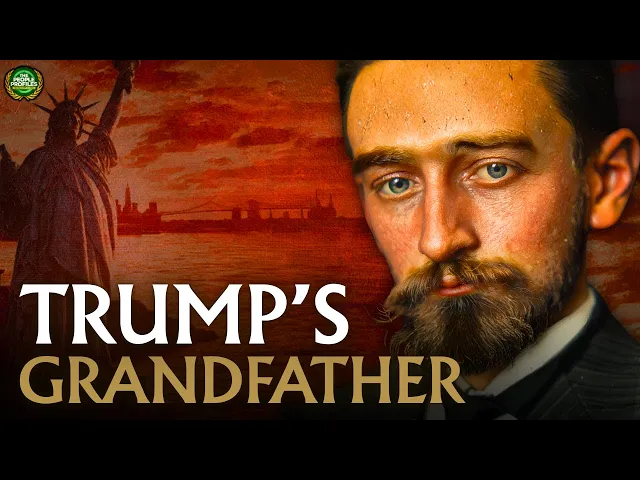
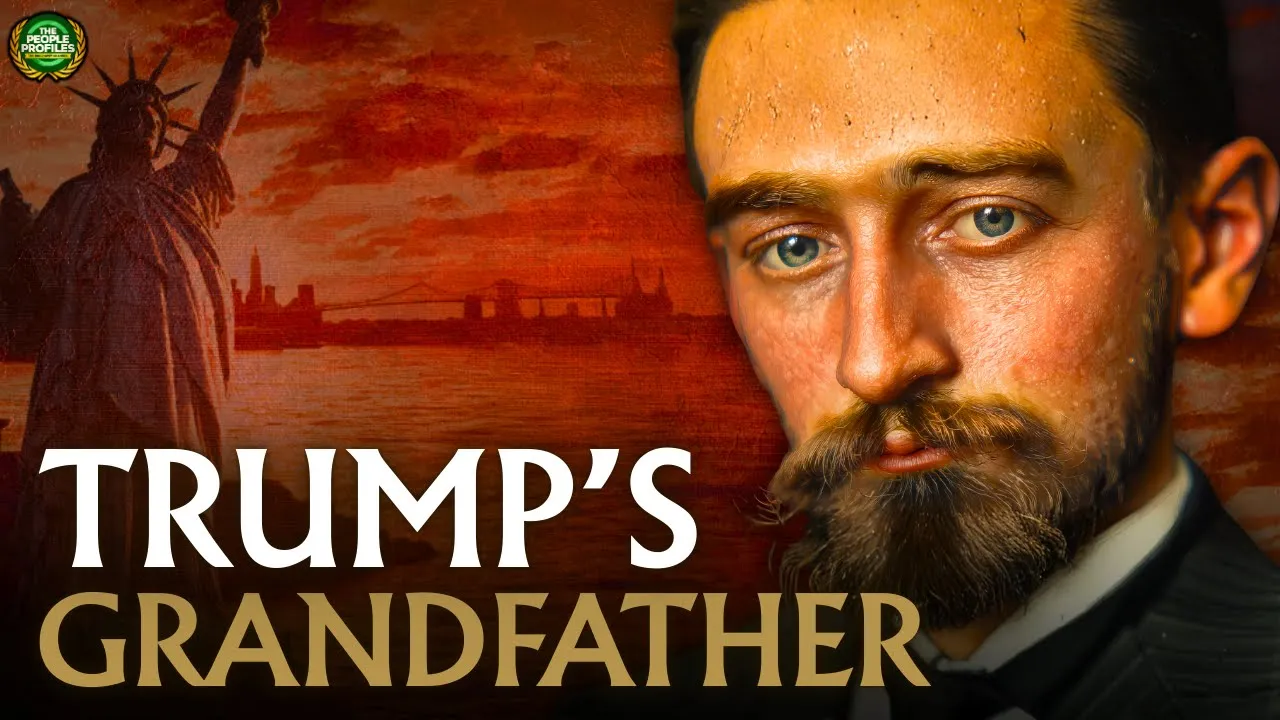
of their names are barely known today; that is except for one 16-year old, a barber’s apprentice from the village of Kallstadt. Although no one knows it, in October 1885, his decision to leave Germany will change the course of US history forever. The boy’s name …….. Frederick Trump…….patriarch of the Trump family. The man known to history as Frederick Trump was born on the 14th of March 1869 in the Village of Kallstadt in the north-western territory of the Kingdom of Bavaria. The German version of his name was Friedrich and this is what he would have been called
in Kallstadt, in western Germany in the Rhineland-Palatinate region. This area had been ruled for centuries as a territory of the House of Leiningen, a prominent German aristocratic family which controlled much of the region near the modern-day Franco-German border. Later, Kallstadt and the surrounding area were conquered by the French during the French Revolutionary Wars and subsequently became part of the Napoleonic Confederation of the Rhine. After the Napoleonic Wars its fate remained unclear for a short period of time before it was given to the Kingdom of Bavaria in 1816, the dominant power in what is now southern
Germany in the nineteenth century. This is important, as Frederick’s life story was significantly influenced by the fact that the Kingdom of Bavaria retained compulsory military conscription for young men. This was even after the Kingdom joined over two dozen other German states to form The German Empire in January 1871, shortly before Frederick’s second birthday. Frederick’s father was Christian Johannes Trump. He was born in 1829 and joined the family business as a vintner, a wine-producer in the Rhineland region that remains famous for its quality white wine. Christian Trump married a woman named Katharina Kober and together they
had eight children, of which Frederick was the sixth. By the time he was born, two other sons, Johannes and Konrad, had both died in infancy. Frederick’s other five siblings, Katherina, Jakob, Sybilla Louise, Elisabetha and Barbara, would all live relatively long lives. Frederick might have been born in Kallstadt, but the family’s roots lay slightly further away in Germany. His grandfather on his father’s side, Johannes Trump, was born in Bobenheim am Berg, north of Kallstadt and southwest of the larger town of Worms. He was born there in 1789 and he had consequently grown up against the backdrop
of the French Revolutionary and Napoleonic Wars. Back then the family name was Drumpft, spelled d-r-u-m-p-f-t. By the time Frederick moved to The United States as a teenager it had become Trumpf, spelled t-r-u-m-p-f, while the f was later dropped in America to form the modern Trump family name. Further ancestors of Frederick had also lived in Bobenheim am Berg and they had traditionally worked in the wine trade too. Frederick’s earliest recorded ancestor on his father’s side was Johann Philipp Drumpft who lived in the late seventeenth century. Beyond this point it becomes difficult to trace the genealogy of
many families, especially so regarding those who lived outside of the larger towns. This is because the first national censuses only began to appear from the mid-eighteenth and nineteenth centuries in Europe, and church records are often spotty. A certain Hanns Drumpft, an itinerant lawyer, recorded in the Kallstadt and Bobenheim am Berg region as far back as 1608 was quite possibly a paternal ancestor of Frederick as well. The Trump family had a history of the male members dying relatively young. Frederick’s grandfather, for instance, had died in 1836 when Christian Johannes was only a child. In turn, Christian
Johannes died in the summer of 1877 at 48 years Of age, having suffered from severe respiratory problems for many years. Frederick was only eight years old at the time and the family was left in a very difficult financial situation as a result of his father’s premature death. Several different doctors had been consulted during Christian Johannes’ lengthy illness, each failing to help him but leaving a hefty bill behind. They lived in a modest two-storey home on Frankenheim Strasse in Kallstadt, where Frederick shared a room with several siblings. He was apparently a sickly child, meaning that his
mother avoided sending him off to work in the fields for long stretches of time. The family farmed a small plot of land growing grapes after Christian Johannes died. Instead, with the family facing penury, Katharina Trump sent Frederick off to the town of Frankenthal about twenty kilometres to the east when he turned 13. There, in 1883, he became an apprentice to a barber named Friedrich Lang. This period was a tough time for young people at work. Despite emerging laws when it came to child labour, teenagers were considered semi-adults and Frederick worked seven days a week In
Frankenthal. He would open up Lang’s shop in the mornings and sweep up hair in the evenings, while also learning to use a razor and the various alternate tools of the trade. By 1885, after two years and a bit of training, his apprenticeship was complete and he returned to Kallstadt as a trained barber. He would not remain there for very long, as he quickly joined the enormous exodus of Germans to the Americas that was already underway in the late nineteenth century. Frederick Trump was growing up against a backdrop of mass migration from the Old World to
the New. Europeans had first started migrating to the Americas at the very end of the fifteenth century, after the Spanish reached the Caribbean and established their first colonies there. The period prior to 1800 is often characterised as the age of colonisation in the Americas. However, in reality there were only a few million Europeans that migrated from Europe to the American colonies controlled by the Spanish, French, English, Portuguese, Dutch and Danish in this era. This migration had also involved some Germans, notably the movement of German religious Groups like the Baptists and Moravians to Pennsylvania from the
1680s onwards. While migration had been relatively small before 1800, the nineteenth and twentieth centuries saw an explosion of European arrivals to the New World. Medical and dietary advances in Europe led to a sharp increase in life expectancies and as population levels swelled, tens of millions of people began boarding the new steam ships and heading off to live in Canada, the United States and parts of Latin America. This migration was particularly acute from specific countries and often occurred during a window of several decades, in some cases as a result of persecution or hardship. For instance, the
potato famine of the 1840s triggered the exodus of millions of Irish migrants to the New World. The Italian diaspora between 1860 and 1920 was similarly enormous, rising to fifteen million people by most estimates. The new German Empire was one of the greatest sources of arrivals to the Americas from 1871 onwards. A large number headed for South American countries like Argentina, Chile And Paraguay. The greatest share, however, came to the United States. In the 1880s alone around 1.4 million Germans migrated to the US, spreading out from the ports of the East Coast to places like Texas,
the Midwest and the American West. This was the absolute peak of German migration to the United States and Frederick Trump was one of those who, at this time, arrived on American shores. The exact circumstances of Frederick’s decision to join the mass migration of his fellow Germans to the New World in the mid-1880s has to be inferred to an extent. This is because personal motives and thoughts are so rarely recorded for historians. When Frederick returned home to Kallstadt in 1885 his family’s financial fortunes had not greatly improved. Feeding an extra person was an expense and, unfortunately,
Kallstadt was a small town where Frederick would find it difficult to support himself as a barber. Furthermore, as was so regularly the case when it came to migration to the New World in the nineteenth century, families moved gradually over a number of years. In Frederick’s case, his older sister Katherina had left for New York City a year earlier to join her Fiancé there, Fred Schuster, a figure who already had two cousins of his own living in America. Thus, Frederick would have some family in the city if he migrated. He left Kallstadt in the early autumn
and headed north to the port of Bremen. There he acquired a spot for the equivalent of twenty dollars on board the SS Eider which left for New York on the 7th of October 1885. Frederick spent ten days onboard the ship, a journey which was likely to have been very unpleasant given that few people had the luxury of bathing, and food and drinking water were scarce for economy passengers. Having crossed the Atlantic, the steamship pulled into New York Harbor and Frederick Trump transited through the immigration centre at Castle Garden in Battery Park in Manhattan. The famous
immigration centre on Ellis Island was not to open until the beginning of 1892. In New York, Frederick quickly made his way to live with his sister and brother-in-law. They lived on Forsyth Street which is near the intersection of the Bowery and Grand Street, slightly north of Chinatown and on the Lower East Side. Here he was surrounded by an enclave of German-American migrants. Migrants banded together in distinct areas of New York during those days of mass European migration. While this provided a sense of comfort, the apartment that Frederick and the Schusters lived in was extremely cramped
and had been formed out of a larger apartment that had been divided in two. The apartment was stiflingly warm in summer and, a few months after Trump arrived, he would have started to see people sleeping on fire escape stairwells in the summer at night. This was a familiar sight in New York, one way in which many could escape the oppressive sauna-like conditions of their cramped apartments in the Manhattan summer. Trump was soon a veteran employee in the city. His sister and brother-in-law had helped find him a job in a barber shop before he even arrived
at New York. He had also started cutting hair and shaving faces within days of stepping off the boat. A further change in living conditions occurred in May 1886 when the family moved uptown to East 17th Street, near Stuyvesant Square Park. This move occurred after another of Frederick’s siblings, Louise or Luisa, joined them in New York and the wider Trump-Schuster family earnings increased to allow them to live in a larger apartment. This dispensation lasted for less than a year before a more dramatic move uptown to the corner of 104th Street. This was to an even more
spacious apartment, though it required Frederick to make a longer trip downtown each day to his work as a barber. It was also soon tinged with sadness for the extended family. Not long after moving in, Frederick’s niece, Emma Katherine, who was only two years old and was the first member of the extended Trump family born in the United States, contracted meningitis and died soon afterwards. Such was the precarious nature of life in the sprawling tenements of late Gilded Age New York. Frederick remained in New York City until 1891. Then, as he moved into his twenties, he
made the decision to head out west. This was towards the later stages of the history of the American West. The West had been opened up at the end of the 1840s as a number of developments initiated a period of huge migration west of the Great Lakes And the Mississippi River. First the US annexed the Republic of Texas in the final days of 1845. This directly led to the American-Mexican War of 1846 to 1848, which ended in the US acquiring territory all the way west to California and Oregon. The beginning of the California gold rush in
the months following the war, and measures like the Homestead Act of 1862, brought millions of settlers to the American West between the 1850s and 1880s. These settlers were often drawn by oil, gold and silver rushes in places like the Black Hills of the Dakota Territory and Tombstone, Arizona. The Pacific Northwest region experienced some of the lowest levels of migration throughout this period. This was for numerous reasons, most notably the lack of a major gold, silver or oil rush between the 1850s and 1880s and the comparatively cooler and wetter climate there. Consequently, Washington State was not
admitted to the Union until 1889 when it became the 42nd State. Things were changing though by the time Frederick reached the US in 1885. Seattle had grown from A small town of around 3,500 people in 1880 to a major urban centre of over 40,000 people in 1890. This growth was in spite of the fact that the city saw the Great Seattle Fire in 1889. Thus, in the 1880s and early 1890s, the newly created Washington State and its towns and cities were fast becoming new focal points of settlement. This was due to the insatiable thirst for
land with more and more people flooding into the emerging superpower of the Western Hemisphere. These people continued to come from places like Ireland, Italy, Poland, Scandinavia and Trump’s native Germany. Frederick joined the migration and decided to seek his fortune out west in the early 1890s. There he would seek to make the most of vast opportunities available in a rapidly developing economy. Trump’s first port of call out west was Seattle. Here the city was rebuilding and expanding fast after the Great Fire of 1889. Trump had saved carefully during his six years in New York and when
he arrived at Washington State he was able to spend $600 purchasing an establishment known as the Dairy Restaurant. The restaurant was situated at 208 Washington Street in Seattle, A small business with two dozen chairs, two dozen stools, a cash register and one range oven for cooking on. In shiny new lettering outside he had a sign erected reading ‘Dairy Restaurant, Proprietor, Fred Trump’. Much of what followed is conjectural rather than known beyond absolute doubt. Frederick had acquired a small establishment in a part of Seattle where a huge number of restaurants and saloons doubled as brothels. It
was not uncommon for even very modestly sized establishments like the Dairy Restaurant. Many such establishments had one or two rooms upstairs which the proprietor of the restaurant downstairs either rented out to women or actively organised to provide clients for her. It is unlikely that Frederick, who was living in a tiny apartment himself in Seattle and had to try every means necessary to make a decent living, was any different in how he ran his establishment. Not long after he arrived at Seattle he also acquired his naturalization papers. This made him eligible to vote for the first
time, which he did on the 8th of November 1892 in the US Presidential Election. We don’t Know who he voted for. What we do know is that in a peculiar coincidence, Grover Cleveland, who had been US President already between 1885 and 1889, won the election. His feat in becoming the first man to serve two non-consecutive terms as president would only be equalled by one other man: Frederick Trump’s grandson, Donald, when he won election at the end of 2024. Frederick’s decision to head out west to Washington State appears to have been driven by a general trend
of migration to the Pacific Northwest in the 1880s and early 1890s. However, there was soon an increased incentive towards migration to this region, with some going even further north of the border to Canada. Ever since the early 1880s, gold and silver prospectors had been assessing sites along the Yukon River in western Canada and had reported small finds of precious metals. These were not substantial enough to cause a vast gold or silver rush of any kind, but they did encourage further investigation of the river streams and creeks and foothills of the Pacific Northwest, This was the
case in the United States, Canada or Alaska. Eventually, in mid-August 1896, a substantial gold discovery was made in the Klondike region of Yukon in Canada. Within weeks word had reached the towns and cities of the Pacific Coast region and by 1897 thousands of people were making their way to the region. The renaming of sites with place names like Bonanza Creek and Eldorado Creek, names that promised vast riches for those willing to brave the cold climate of Yukon, likely incited many more migrants to the northwest. Way stations developed along the migration routes in tandem in British
Columbia, the huge region of western Canada between Washington State in the south and the Yukon Territory in the north. As the Klondike Gold Rush drew tens of thousands of settlers from California and other parts of the American West north to British Columbia and onwards to Yukon, Frederick moved northwards himself. He had little intention of becoming a gold prospector, though he occasionally dabbled in this too. He instead realised that the most secure way to become wealthy during a gold rush isn’t to look for the precious metal one’s self, rather, Trump Would sell tools to those drawn
by the allure of the shiny ore. What’s more, he would put a roof over their heads and meals in their stomachs. Trump left Seattle in the spring of 1894 to seek his fortune in the mining towns of the Pacific Northwest. The Klondike Gold Rush had not commenced yet, but a mining camp had developed not far from Seattle at Monte Cristo. Here, a syndicate in which the oil tycoon, John D. Rockefeller, was involved was actively mining for gold and silver on the slopes of the Cascade Range. Trump choose this location to open a restaurant and hotel,
which again may have doubled as a brothel. He spent several years here before it became clear that the Monte Cristo prospect was a dead end and the mining settlement slowly turned into a ghost town. Trump consequently closed up his establishment and joined the exodus further north as the Klondike Gold Rush commenced. He eventually settled at the town of Bennett which emerged in the far northwest of British Columbia, right near the border with the Yukon Territory. This was one of the last major sites for intrepid gold prospectors to stop at before they braved the Increasingly cold
and harsh terrain of Yukon. In Bennett, Frederick used the money he had made further south and his know-how about the hospitality industry to set up the New Arctic Restaurant and Hotel. He had a partner here, Ernest Levin. The duo were like everyone else in the area in making the most of local resources. They initially sold horsemeat retrieved from horses that had died from the cold on the northern trail. However, over time as Bennett grew and conditions improved, they spruced up their offerings and the Arctic hotel and restaurant soon garnered a reputation as one of the
better eateries in the frontier mining town. The influx of money into the region as gold wealth was acquired meant that by 1898 the Arctic was advertising that it sold ‘Every Delicacy on the Market’, including fresh oysters. Women also rented out rooms here by the hour. Bedrooms came complete with small weighing scales where tiny amounts of gold dust could be measured out to pay for their services. On that note, it was highly likely that Frederick Trump earned his money in the Pacific Northwest During the 1890s through a combination of legitimate hospitality businesses and more shady dealings.
Prostitution was everywhere in the American and Canadian West in those days. This was a time and place where single women had a limited range of activities from which they could earn a living. Similarly, most gold prospectors were single men living out on the frontier. It was hardly unusual for the New Arctic Restaurant and Hotel to offer such services, and this aspect of Trump’s services drew little criticism. Though one writer in the Yukon Sun newspaper did write disapprovingly of the practice in the hotel, he also noted that it housed the best restaurant in Bennett at the
same time. Money was made in whatever way it could be here, though the North West Mounted Police did make an effort to keep life more respectable than it was in other parts of the West. Blackjack, for instance, was the only type of gambling allowed in Bennett and there was less public drunkenness and violence than was often found in places like Tombstone, Arizona or Deadwood in the Dakota Territory. By the end of the nineteenth century, the gold rush was starting to come to an end as the volume of gold being retrieved from Klondike and surrounding regions
declined. Equally, the amount of effort to retrieve it in this inhospitably cold part of the world started to become too much for even seasoned prospectors. In 1900 Trump and Levin decided on a final move to White Horse in the Yukon Territory, where hopes for successful copper mining were growing. The pair literally had the bulk of their hotel loaded on board a barge and shipped around 200 kilometres to the town of White Horse. Here they rebranded it as the White Horse Restaurant and Inn. The new town’s mining prospects, however, did not live up to the standard
expected. Furthermore, Trump’s relationship with Ernest Levin had soured, in part because of Levin’s excessive drinking. This led to legal proceedings between the pair over ownership of their establishment. With these issues mounting, Trump decided to take the money he had earned over this decade in the Pacific Northwest. He now made his way back east to New York City. Frederick did not return to live permanently in New York. Both then and now, many migrants initially viewed a move to a country like the United States as a temporary measure. They would make their money and then return home
to start a better life in their home place. This is exactly what Frederick Trump planned on doing. Thus, in 1901 he returned to his native Kallstadt. Other than a visit home in 1896 for the marriage of his sister, Elisabetha, to Karl Freund, this was the first time back in sixteen years. He was now a wealthy man by comparison with most of the residents of his hometown, returning home with around 80,000 German marks, a sum equivalent to upwards of around $400,000 in modern economic terms. Newly minted, and now in his thirties, he intended to start a
family and settle down. He soon found a prospective wife, someone he would have vaguely known before he left, first to undertake his apprenticeship in Frankenthal in 1883 and then for America in 1885. Elisabeth Christ was born in 1880 into a family that lived across the street from the Trumps on the Frankenheim Strasse in Kallstadt. She was still a Child when Frederick left for the US and he would barely have known of her existence, but when he returned to Kallstadt in 1901 he became smitten with her. Perhaps they had met on his previous visit in 1896.
Whatever, the circumstances, and despite his mother’s objections, who viewed the Christ family as socially and economically beneath the newly wealthy Frederick, Trump married Elisabeth on the 26th of August 1902. While Frederick and Elisabeth had determined to marry and start a family, there was a problem for them if they wanted to remain in Germany. Frederick had left Kallstadt back in 1885 when he was sixteen years old. There was no major legal issue with doing so at the time, but in returning to the Kingdom of Bavaria as a man in his early thirties, Frederick had created an
issue for himself. In the late nineteenth century and into the twentieth, Bavaria retained its own rules about military conscription. Military service was obligatory for all able-bodied men at twenty years of age and they were expected to serve at least two to Three years actively, and then a further four to five as army reservists. Even after this they had to act as part of the Landwehr or home defence until the end of their thirties. They could be called upon for national service if Germany went to war at any stage up until they were 45 years old.
This meant that if Frederick wanted to try to remain in Germany with his new wife and start a family back in his homeland, he was facing a potentially lengthy period of military service. He clearly didn’t fancy this and so began legal steps to see if he could avoid conscription. His steps to do so, however, did not work out and the newlyweds soon departed for the US. Consternation followed as Elisabeth, a country girl who was used to small-town life and the nearby grape fields of Kallstadt, found life in New York difficult. As severe homesickness set in,
Frederick and Elisabeth briefly returned to Germany in 1904. Once home again he began to seriously contest his military conscription duties, but it was all to no avail. After months of legal wrangling and petitioning of the government, arguing that he was now a Married man in his mid-thirties and should be excused military service of any kind, Frederick was informed that he faced legal prosecution if he did not comply. And so, in 1905 the Trumps yet again set sail for America. It was Frederick’s third and last time immigrating to the United States, where he would remain for
the rest of his life, cementing the Trumps as a family of German-American migrants. By the time the Trumps set off across the Atlantic Ocean yet again in 1905, Elisabeth was pregnant with what would be their second child. She had already given birth to a daughter, named Elizabeth after herself, in April 1904, right before they left New York to return home to Germany. Hence, while Frederick had fought his military conscription back in Kallstadt in late 1904 and into 1905, Elisabeth had been rearing their infant daughter. Now, back in New York again, she gave birth to a
son in October. They named him Frederick after his father, though he would become known simply as Fred Trump, rather than Frederick Jnr. He was also given his mother’s maiden name, Christ, as his middle name, A common naming practice in nineteenth and early twentieth-century America. The family moved several times after returning to New York, setting up for a time in the Bronx where, because of Frederick’s comparatively wealthy status following his escapades out west in the 1890s, they were able to acquire an apartment with a nice view over the South Bronx. This was special as it featured
modern amenities such as an icebox and a private bathroom, not one shared with other denizens of the floor of the building. Although he had cash reserves to fall back on, Frederick soon returned to work, falling back on his childhood trade as a barber. He first opened a shop in the Bronx before relocating to a much busier establishment in the heart of Manhattan’s financial district on Wall Street. Inevitably, though, cutting hair had not appealed to him in the 1880s and he would soon move on from it in the 1900s too. By the time he settled in
America permanently with his wife and young family in 1905, Frederick Trump was a 36-year old who had seen a fair bit of the world, had started numerous businesses and had an entrepreneurial spirit. While he Had primarily made his living and money in the hospitality industry out west in the 1890s, in the process he had also learned a fair amount about construction. After all, he had established hotels and restaurants in Monte Cristo, Bennett and White Horse and had even overseen the dismantling of the New Arctic Restaurant and Hotel in Bennett so it could be pulled by
barge nearly 200 kilometres to White Horse. It therefore wasn’t too large a leap of the imagination for him to decide to break out into the real estate industry in New York in 1907. His timing was good. This was the absolute peak of the European mass migration to America and to New York in particular. On a single spring day in 1907 a record was set when 20,000 immigrants arrived at the Lower East Side of Manhattan in a 24-hour period. Parts of Manhattan were becoming so overcrowded that the city was heaving at the seams and expanding outwards
like never before. In tandem, many well-established migrant families had made a bit of cash as upwardly mobile New Yorkers now wanted to get away from the stench and noise of places such as the Lower East Side and move to more comfortable surroundings. Thus, A building boom began in previously undeveloped parts of New York in the 1900s, notably in Queens. It was here that Frederick Trump decided to try his hand at being a construction magnate in the late 1900s. However, this was not without a final attempt by Trump to write home to the authorities in Germany,
again seeking a reprieve from his military service and to have his citizenship status normalised. He was unsuccessful on this final attempt and would never try again. The Queens area where Frederick Trump began his building career around 1907 is a teeming part of New York City today. However, it was not at all like this at the dawn of the twentieth century. Although it was the largest of the five boroughs in terms of sheer geographical size, Queens was comparatively under-populated. Only around 150,000 people lived there in 1900, approximately 4% of the total population of the city. Indeed,
Queens had quite a rural feel to it and a lot of the food which fed the inhabitants of overcrowded Manhattan was produced in Queens. Life here felt more like residing on the quasi-rural outskirts of a large city rather than in the city itself. That was all set to change when Frederick decided to start work as a builder here. After decades of ferries being used to transport people across the East River from Manhattan to Queens and aborted plans for a bridge, work on the Queensboro Bridge had finally commenced in the early 1900s. It was initially hoped
that it would open in 1907, but this schedule was revised to the summer of 1909, a deadline that was met. Thus, Frederick Trump was betting on a large influx of new residents to Queens once the bridge was completed and that property prices would go up. He was correct in this assessment and the population of Queens started to grow quickly in the 1910s. In tandem with moving into the construction industry in Queens, Frederick had also moved his own family to the borough in advance of the bridge being completed, one of many German American migrant families that
relocated to the Queens region in the 1900s and the 1910s. The move was part of his reasoning for his shift into construction. Commuting to his barber’s shop on Wall Street every day would be unfeasible, while the final abandonment of his hopes of returning to Germany Meant that Trump was now staking his future on making it as a builder on the other side of the East River. It would prove to be a shrewd move. Frederick Trump began his modest real estate empire in Woodhaven in Queens. He spent his own fairly substantial savings on getting started, a
decision that meant he was relatively asset rich but cash poor for a time. As such, he took up a second job as a manager at the Medallion Hotel on the east side of 6th Avenue, a German American establishment. Consequently, Frederick worked very long days in these years, continuing to transit over to Manhattan to work at the Medallion. Though this was a long commute, at least he didn’t have to undertake the even more arduous trip all the way downtown to his former barber shop on Wall Street anymore. Life was made tougher by the fact that the
Trumps’ first house in Queens was in a very loud area next to a teeming street of businesses and with a tram service running nearby. However, things started to look up at the start of the 1910s. They moved house yet again to a quieter part of Queens just south of Jamaica Avenue and Frederick Dedicated himself more firmly to his construction work in and around the Jamaica neighbourhood. It was also a nice area for the children to grow up, with room to play outside away from the bustling overcrowded streets that so often characterised New York. The population
of Queens shot up by 40% in the first half of the 1910s and Frederick’s business started to prosper, aided by further investment by his extended family. By the middle of the decade he was becoming a prosperous real estate developer in Queens with his own office and a growing business. At the same time, the area was losing the idyllic nature which it had briefly had after the Trumps moved there. The open areas where the Trump children had played in the early 1910s were replaced by mounds of construction material and the ever-present noise of building became the
background hum to their lives. Such was the price of progress. While Trump’s construction business was prospering by 1914, developments back across the Atlantic Ocean in Europe were about to create difficulties for him and many other German migrants in the US. For years there had been Tensions brewing between the great powers of Europe. Armed alliances had developed, drawing together the German and Austro-Hungarian Empires. Similarly, the Triple Entente had been formed comprising of Russia, France and Britain. Rivalries to acquire colonies in Africa, Oceania and Asia were a factor too, as were nationalist clashes in places like the
Balkans. In the end it was the assassination of the heir to the Austro-Hungarian Empire, Archduke Franz Ferdinand, in Sarajevo in the summer of 1914 which sparked the outbreak of the First World War. Germany and the Ottoman Empire joined the Austro-Hungarians against the British, French, Russians and Serbians. The United States remained neutral in the war for nearly three years. Yet, its position as a country with strong ties to Britain meant that anti-German sentiment escalated as the war went on. This was compounded by German submarine warfare in the Atlantic Ocean which claimed the lives of many Americans
and disrupted US marine activity. A notable incident was the sinking of the RMS Lusitania on the 7th of May 1915 on the way from New York to Liverpool with 139 Americans on board, 128 of whom died. Secret German negotiations with Mexico for aid in the war also ignited further tension between Germany and the USA. All of this finally led the US to declare war on Germany in April 1917. With the entry of the US into the conflict, anti-German sentiment escalated and life for migrant families such as the Trumps became more difficult. Some German American businesses
were boycotted or even attacked, while German American contributions to American war bonds became an especial point of contention. Frederick Trump responded to the anti-German sentiment which had escalated from May 1915, after the sinking of the Lusitania, with a touch of stubbornness. Many families of German origin in New York and other cities in the US began changing their surname to make it sound less German. Frederick insisted on retaining the name Trump, though this had already been slightly anglicised anyway from the German Trumpf with an ‘f’ at the end many years earlier. For instance, he had been
recorded with the modern Trump as his surname in the US federal census of 1910, Four years before the war broke out. He also maintained contact with relatives back in Kallstadt, who were living precariously near the Franco-German border. Although the worst of the fighting was in north-eastern France and Belgium, the possibility existed following the American entry into the war in April 1917 that a combined American, French and British invasion of western Germany would eventually occur, bringing Frederick’s family and relatives back home closer to the front lines. Elsewhere in the US, German families responded in all kinds
of minor ways to the emergency. In German American restaurants ‘hamburgers’, a German dish before it was co-opted by McDonalds as quintessentially American, was rebranded as ‘Salisbury steak’. Hundreds of thousands of German American families were registered by the government and told not to move home so long as the war was underway in Europe. This was not the only time that the Trump family’s German ancestry would become an issue. During the Second World War, the issue of German Americans forming a Nazi fifth column within the United States arose too. Frederick’s son and his De-facto heir as a
New York construction business owner, Fred, would respond on that later occasion by claiming that his parents had been Swedish instead of German. Sweden was neutral in World War Two. Fred subsequently went on to enjoy a large amount of government largesse through military contracts between 1941 and 1945. Thus, far from being damaged by their German origins, the Trumps managed to go through the two world wars in America relatively unscathed. In the Second World War, Fred Trump even benefitted from government contracts. That said, Frederick Trump’s business inevitably suffered somewhat during the First World War. It wasn’t just
his German origins that created problems. The absolute nature of modern warfare meant that when the First World War and especially the Second World War occurred, entire sections of the American economy were repurposed to fit wartime needs. With trade flows and economies disrupted, domestic construction declined and home builders like Trump found they had less business. On top of this, the primary driving force behind construction in New York in the late nineteenth And early twentieth centuries, the arrival of millions of migrants from Europe, slowed to a crawl. Still, there continued to be people who were already living
in the city, especially Manhattan, who wanted to move from the crowded tenements of the island across the East River to Queens. In light of this, Frederick Trump’s business did not collapse. For instance, where Queens was recorded as having 284,000 inhabitants in 1910, the figure had increased to nearly 470,000 people by the time of the federal census in 1920. While much of that increase happened prior to the First World War, some of it occurred during the war years and construction workers like Frederick Trump continued to help provide housing for the newly arrived residents of the borough.
That being said, there is no doubt his business suffered, but Trump’s wealth cushioned the impact which was felt to a much greater extent by other German American families. By the late spring of 1918 the complexion of the war was changing in Europe. Although the US had joined the conflict in April 1917, it had taken months to properly mobilise. There were still only about 200,000 US soldiers in France by the start of 1918. Moreover, the Russian Revolution of 1917 and the cessation of hostilities between the Germans and Russians on the Eastern Front, culminating in the eventual
Treaty of Brest-Litovsk on the 3rd of March 1918, had allowed the Germans to redeploy resources to the Western Front. However, by Easter that year, the influx of American soldiers into Western Europe was turning the tide of the war decisively against the Germans. By mid-1918 there would be one million Americans fighting in France and eventually about two million would be deployed there. As this happened, and the Austro-Hungarian war effort collapsed in the Balkans and the Alpine region, it became clear that the war would end in German defeat. Once that happened, businessmen like Frederick Trump looked forward
to getting back to their old way of life in the United States. The anti-German sentiment would dissipate and peacetime economic conditions would return. Frederick, however, would not live to see this happen though. Although it is Erroneously known as the Spanish Flu, the first deaths from a major influenza epidemic were recorded in field hospitals at Camp Funston in Kansas at the start of March 1918. The disease was possibly present in the state as early as January 1918, although its precise origins continue to be debated. By the start of the summer the Spanish Flu was spreading like
wildfire and it was all over the East Coast of America. From there it would be imported into Europe, where it became known as Spanish Flu for the simple reason that the media in neutral Spain did not excessively censor news of the epidemic in the way that the wartime press did in countries like Britain. Over time, the Spanish Flu would claim the lives of an estimated fifty million people worldwide before it started to peter out in 1920. Frederick Trump is now believed to have been a relatively early victim of the Spanish Flu. There are slightly differing
accounts of exactly how his death occurred, although the broader facts are well established. The most extensive account of Frederick’s life states that he became quite ill while out for a Walk around Queens with his young son, Fred, on the 30th of May 1918. As they were making their way down Jamaica Avenue talking with various shop owners that they knew, Frederick stated that he felt unwell. They went home and Frederick went to bed. He died very quickly. This, at least, was how Fred had allegedly recollected his memory of the event many years later. It’s likely that
there was some error in his memory of a traumatic event from when he was only twelve years old. The onset and pathology of Spanish Flu would have been more protracted and different accounts state that Frederick became ill in mid-May. His condition appeared to deteriorate over the space of around a week and a half before he died, on the morning of the 30th of May, from pneumonia-like symptoms. This was later identified as a case of the Spanish Flu. Clearly the influenza virus was spreading within the wider Trump family. Five days after Frederick’s death, his brother-in-law, Fred
Schuster, in whose apartment he had lived many years earlier after first arriving to America back in 1885, also died from a pulmonary illness. Frederick Was buried in the Lutheran All Faiths Cemetery in the Middle Village area of Queens in what would become the Trump family plot. He was 49 years old at the time of his death. Frederick Trump had died comparatively young and very suddenly, leaving behind a widow in her late thirties and three children entering or near to reaching their teenage years. Elisabeth Christ Trump and her children, however, did benefit from her late husband
having left them a sizeable property portfolio and considerable wealth when he died. Firstly, at the time of his death, they were living in a two-storey house with seven rooms in Queens. This was very much a comfortable middle-class home by the standards of early twentieth-century New York. On top of this, documentation from the time indicates that he had fourteen mortgages on various properties that he had worked on in one fashion or another and from some of which rent was accruing. Frederick had also died owning five vacant lots that he presumably intended to build further housing units
on. In terms of liquid assets, he had $4,000 in savings, $3,600 in stocks and a life insurance Policy. In modern terms, this was well in excess of half a million dollars’ worth of assets in addition to the Trumps having a nice home over their heads. It was nothing like the wealth that the family would later acquire based primarily on the business acumen of Frederick’s eldest son, Fred Trump, but it was a major start. As Warren Buffett’s right-hand man, Charlie Munger, once said, the hardest part of becoming wealthy is acquiring the first $100,000. After that, compound
interest and numerous additional factors like not having monthly rental payments on a home start to take care of a lot of problems and lead to faster wealth accumulation. If the Trumps became wealthy in the twentieth century it was primarily because Frederick had accumulated the difficult first $100,000 out in the Pacific Northwest in the 1890s, and in Queens later in his life. Frederick had not left behind an immense estate or vast sum of money to his wife and young children. It was considerable, but at the same time it would only be enough for Elisabeth to raise
the kids and give them a good start in life. After that, inflation, especially of the kind which Occurred because of the war and the economic boom that began in the 1920s, would start to reduce the value of what he had left them. Moreover, rental properties need to be maintained and improved over time. They aren’t an endless source of income without further periodic investment. Therefore, the Trumps would have to get to work on making fresh wealth before too long. In the interim, Elisabeth managed the small property portfolio they had in Queens and the children finished their
basic schooling. Thereafter, the family business was largely taken over by Fred Trump, the eldest of Frederick’s sons, who ran it with his mother under the name Elizabeth Trump & Son. Fred demonstrated a natural ability as a construction worker and real estate investor from his early twenties. First he went to work for some other builders to learn the industry quickly from the ground up. Then, within a year or two he began translating what he had learned into building a handful of modest homes in Queens on plots of land there. This was not large-scale construction. He used
what money the family had to build one or two houses quickly. Once they Were sold on at profit, he used the proceeds to begin work on a larger number of houses. In this way he scaled up the family business and soon became a successful home builder in Queens. That was, until the Wall Street Crash of the autumn of 1929, and the Great Depression which followed came along. The Depression largely wiped out the New York real estate market and Fred Trump’s burgeoning business with it. Thus, while Frederick Trump’s legacy to his family certainly gave them a
hand up in life, it by no means guaranteed long-term wealth and security. What really made the fortune of the Trump family was the advent of the New Deal welfare and economic programme inaugurated by President Franklin Delano Roosevelt who took office in 1933. By then, Fred Trump had abandoned construction and had set up a supermarket. He was making a decent enough living, however, his ascent to real riches began when he started taking advantage of the New Deal housing programmes initiated by Roosevelt’s government. This provided lucrative tax breaks for construction companies and soon Fred Trump was building
hundreds, then Thousands of housing units and apartments. During the Second World War he continued to benefit from government largesse as he acquired contracts to build a large amount of residential units near the US Navy’s largest marine bases in Norfolk, Virginia. After the war he acquired tax breaks to build homes back in New York in places like Queens and Brooklyn for wartime veterans. In this way, Fred Trump became a billionaire in modern terms by the 1960s. In the 1970s he began to hand over the business to one of his younger sons, Donald, who wanted to break
into the flashy Manhattan real estate market which his father Fred had always avoided. At first Donald was successful, but in the late 1980s and early 1990s he started to incur huge losses on poor real estate investments, particularly on a series of casinos in Atlantic City. Despite numerous bankruptcies in the 1990s and 2000s, Donald survived by constantly re-inventing himself, first as a game-show host and then as President of the United States. This was a remarkable ascent. Donald, the grandson of a humble immigrant from Germany in the late nineteenth century, was to become The most powerful person
in the country. Frederick Trump was not entirely responsible for the rise of the Trump family in modern America. The person who really created the family riches in a way which allowed for Donald Trump to become the US President was Donald’s father, Fred Trump. Fred was aided in turn by twenty years of government support in the shape of the New Deal and both wartime and post-war contracts. Yet, the Trump family story would also not have played out the way it did had it not been for Frederick Trump’s comparatively smaller, but still very consequential success. It was
Frederick who was responsible for bringing the family to the United States in the first place, emigrating from his native Germany in 1885 when he was only a teenager. After several years in New York City, he headed out west towards Seattle in the last stages of the history of the American West. There he made his first fortune in the 1890s, in Washington State and then over the border in British Columbia as part of the Klondike Gold Rush. Frederick wasn’t picky about how he made his money. He operated restaurants and hotels, seemingly Facilitating everything from the personal
services of women to the consumption of frozen horsemeat retrieved from the gold-miner trails. After falling out with his business partner and having made enough money to set himself up as a wealthy individual back in more settled society, he returned to his native Germany and married Elisabeth Christ. However, his efforts to return to start a family in Germany were crushed by the regional government of Bavaria that was determined to prosecute him for avoiding mandatory military service years earlier. Thus, despite Elisabeth’s homesickness, the young family settled permanently in New York. There, Frederick began to translate the money
he had already acquired into more success as a small-scale construction magnate in Queens, a borough that was experiencing a boom in the late 1900s and into the 1910s. The First World War brought some difficulties for Germans like the Trumps, but in all likelihood Frederick would have continued to prosper in the aftermath of the war had his life not been cut short by the early waves of the Spanish Flu in 1918. Nonetheless, he had done enough in his 49 years to establish the Trumps in America and lay down the foundations for their success as real estate
magnates in New York City in decades to come. For this, if nothing else, the grandfather of the 45th and 47th President of the United States, Donald Trump, has his own place in the annals of history. What do you think of Frederick Trump? Was he an uncompromising, hard-nosed businessman who set the mould for his son Fred and grandson Donald? Or was he a fairly honest figure who made some money through his own hard work and ingenuity, setting the family on the road to riches and fame? Please let us know in the comment section, and in the
meantime, thank you very much for watching.