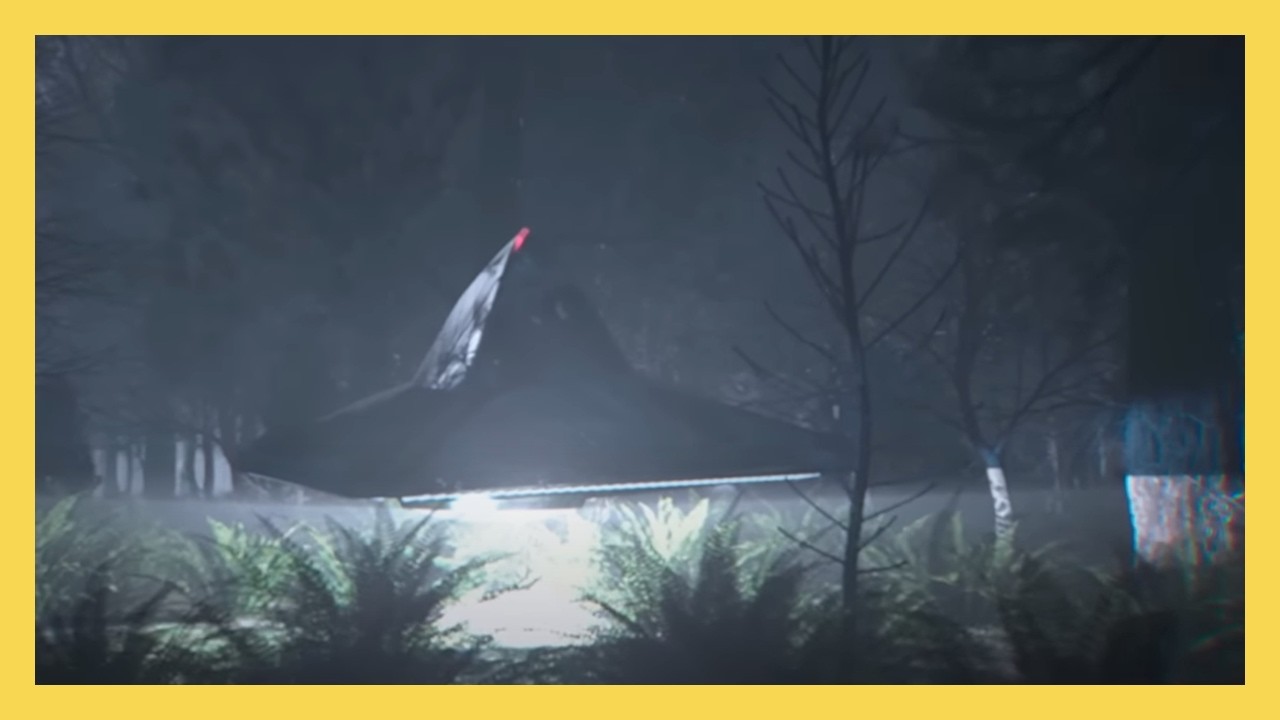
More objects like this have landed around the world. For more than four decades, astronomers have been searching for technosignatures signals coming from distant technological civilisations. [.
. . ]So far, scientists have found no convincing evidence for biology beyond Earth.
Nonetheless, many astronomers believe there's a decent chance, statistically speaking, that intelligent extraterrestrials are out there somewhere. [. .
. ]In about 1950, the famous American Italian physicist Enrico Fermi says so where is everybody? What he was saying was this look, the galaxy is big.
Everybody knows it's big, about 100,000 light years across. [. .
. ]But if you could build a rocket that could go 1% the speed of light, imagine an advanced society that could go 1% the speed of light. They could cross the entire galaxy in 10 million years.
But what if they stopped along the way and set up some sort of society on suitable planets, and they spent a couple of thousand years setting up their society again, maybe only 1% the speed of light. Let's assume they never build rockets that are any faster. Well, this is a pretty simple calculation.
And it turns out that it will take them on the order of 10 million years to have visited every star system in the galaxy. Who's going to be able to do that? What we don't know.
There should be aliens everywhere. We should see evidence all over the sky, and we don't. So how do you reconcile this apparent paradox, the Fermi paradox?
For decades, the famous Drke Equation has been used to estimate the number of technologically advanced species in the universe. Now, Adam Frank from the University of Rochester has slightly different approach to the problem and suggests a modification of the Drke Equation. The Drke Equation is an equation which has seven different terms in it that are multiplied by each other.
And each term is a sub problem that you need to answer in order to get to how many civilizations are there. So the first term is the rate of star formation. The second term is how many of those stars that have formed, or the fraction of those stars that have planets.
The next term is the number of planets in the right place for life to form. And then there's the fraction of those planets in the right place for life to form, where life actually does form. Then there's the fraction of that life that goes on to become intelligent.
Then there's the fraction of that intelligent species that actually go on to build a civilization. And then finally, there's the lifetime had the average lifetime of a civilization. So each one of these terms was something that Frank Drke thought when he wrote down the Drke Equation.
Only one term of the seven was known, and that was the rate of star formation. We knew that there was, like, one star forming per year. What's been amazing in the last just the last 20 years or so or just the last ten years?
The other two terms, the next two terms we've nailed. So now the fraction of stars that have planets one. Every star in the sky has planets.
And then the number of habitable zone planets, goldilocks zone planets, planets in the right place to form life. And we know that number is one in five, which basically means if you count up five stars, one of them has a planet in the right place for life to form. So that's amazing.
That's a lot of knowledge that we've gained in just the last 20 years for this amazing problem in science, you can only answer the questions for which you have the data for, right? And so we have to figure out what question could we answer, given this new data that the telescopes, things like the Kepler satellite had shown us. And here's the question we could answer.
How bad does the probability perhaps own planet have to be for forming a civilization in order for us to be the only time there's ever been a civilization? How bad does it have to be? How unlikely does it have to be for us to be the only time that a civilization has ever occurred?
And it turns out that number is one in 10 billion trillion. It's really just one over the number of habitable zone planets. So as long as the actual nature's probability is bigger than one in 10 billion trillion, we're not the first time it's happened.
[. . .
] There are many international scientific projects devoted to searching for evidence of life beyond Earth. From biomolecular detection, to exoplanet atmospheres, to biomarker detection and potentially habitable planets and satellites of the solar system. But when it comes to detection of technological signatures of other intelligent or technological civilizations, there is much speculation as to what signatures these might be.
In 2017, a strange object came hurtling through our solar system. Astronomers only spotted it once. It was already heading away from the sun, so they didn't get a proper look.
Five years after spotting this first known object from beyond our solar system, scientists are still not sure what it was. Most astronomers concluded that Oumuamua was a natural object, but its exact characterization is debatable. Given the limited observation window, could this object be a piece of advanced technology created by a distant alien civilization?
Some astronomers believe that we should at least be open to the possibility. [. .
. ] I would like us to take photographs of every interstellar object that looks as weird as Oumuamua that comes to view in the future. And it shouldn't be too expensive to send those cameras that would take close up photos.
And I really hope that space archaeology will become a major frontier. I don't think anyone would deny [. .
. ] the evidence presented by a close up photo. I mean, you cannot argue that something is a rock when it's not a rock.
That's the way for us to proceed rather than say it's always rocks and not take the data. [. .
. ] In 1990s, Project Phoenix marked the first systematic search for techno signatures. What if we had the ability to chase down interstellar objects passing through our solar system?
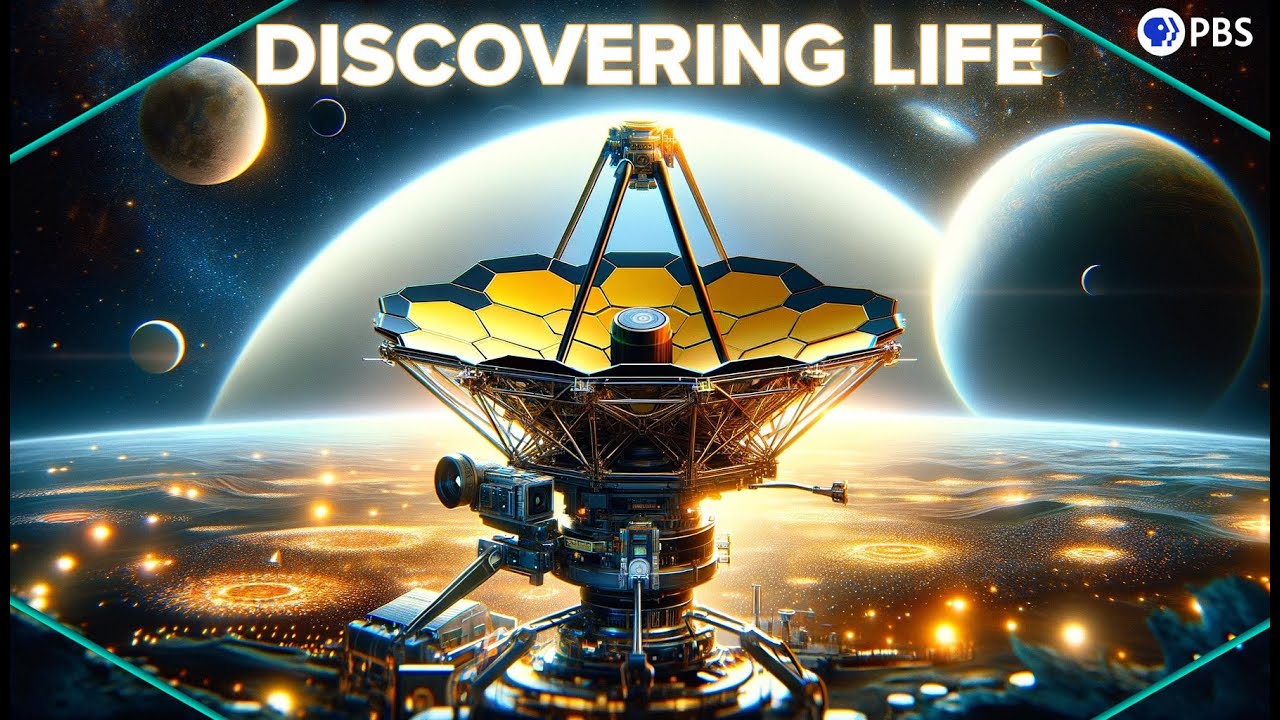
Such a spacecraft would need to be ready to go at a moment's notice with the capacity to increase speed and change direction quickly. That's the idea behind a new mission concept called the Extrasolar object interceptor and sample return spacecraft. It has received exploratory funding from NASA with the launch of James Webb telescope last year.
We are very close to an important milestone in the search for extraterrestrial intelligence. According to a recent paper that is published in the Planetary Science Journal, the JWST is capable of detecting consistent passive technosignatures. Atmospheric pollution is one unique hallmark of industry that does not occur from other forms of biology on Earth.
So finding such pollution in an exoplanet atmosphere would be compelling evidence that the planet has technology. [. .
. ] Our universe has existed for 13. 8 billion of years and most of the stars have been formed long before our sun.
A civilization need only be older than ours to have technology that we are incapable of understanding. If we were to meet life [. .
. ] from a planet that had no contact with Earth, I think it would be most likely shocking to us. And it's very likely that other planets had different histories of cooking their soup of chemicals and making life out of it.
And as a result, I would think that it would be shocking. There is another reason for that. Most stars are different than the sun.
Most of them are smaller and colder and fainter than the sun. They are dwarf stars and they emit mostly infrared light. So if there are any creatures near them, they have infrared eyes.
That may explain why interstellar tourist agencies never advertise Earth as a desired tourist destination, because all we can offer them are green grass vacation sites illuminated by visible light. And that light hurts their eyes and they are used to dark red grass. The other possibility is that civilizations far more advanced than we are close themselves in the cocoon and they don't want to interact with lower level civilizations because that would degrade their quality of life.
Recently, researchers from Applied Physics, a research institute in New York, have calculated the size and speed an aircraft would have to be and the distance it would have to be from Earth to create gravitational waves large enough for our current instruments to detect them. One of the largest spacecrafts in science fiction is the mothership of the alien species that attacks Earth in the film Independence Day. The ship is almost 600 km long across its longest axis.
If such an aircraft was lurking in our galaxy, it would still be too small to be detected by our current instruments. Our best gravitational wave detector today is the Laser Interferometer Gravitational Wave Observatory, LIGO. LIGO has the capacity to detect spacecraft the size of Jupiter that travels around one 10th the speed of light at a distance within our own galaxy.
But a new endeavor to detect alien civilizations could be made possible with the upcoming GW detectors. Thanks for watching. Did you like this video?
Then show your support by subscribing ringing the bell and enabling notifications to never miss videos like this.