giving your money to causes you care about is a wonderful thing to do but a lot of people in retirement are no longer able to take advantage of the tax deductions of those charitable contributions in today's video i'm going to explain why that is and i'm going to explain what you can do to maximize the effectiveness of your gifts as well as how can you maximize the deductions you're able to take for them hey everybody i'm james canoll founder of root financial partners and i'm here to teach you what you need to know to create
a secure retirement so a lot of people aren't actually able to take advantage of the deductions that they're doing for charitable giving why is that well in 2018 tax law changed and as part of that change standard deductions were increased for 2022 the standard deduction for a couple that's married filing jointly is 25 900 now if both spouses are older than 65 that standard deduction is actually 28 700 dollars so what does that mean what means when you file your taxes you add up all the potential things you could deduct that includes things like mortgage
interest it includes things like state and local taxes paid up to a cap of ten thousand dollars it includes charitable giving it includes certain medical expenses so if you add all those things up and they're under the standard deduction then you're able to use just the full standard deduction amount so for this year twenty five thousand nine hundred dollars for a couple that's married finally jointly now if you add all those things up and they're over the standard deduction then you itemize your deductions meaning you're able to take advantage of all of those so why
is it that most people particularly people in retirement are not able to deduct their charitable deductions or their charitable gifts well what happens is for a lot of people in retirement not all of them but a lot of them have their mortgage paid off also because of the cap for state and local taxes at ten thousand dollars most people aren't able to take advantage of the full deduction for any state or local taxes they paid so let's look at an example of this again to take advantage of deductions of itemized deductions you need to have
25 900 of total deductions or more so if we walk through an example let's assume that a couple is about 60 years old and they just retired let's assume that they have paid off their mortgage before they retire so if we go out to add up all the different things they could deduct well number one the first thing i want to see is any mortgage interest well that's zero so there's nothing they can deduct on mortgage interest the next thing they could deduct is any state and local taxes they paid now let's assume that they've
paid fifteen thousand dollars between property taxes and state taxes they can't deduct that full fifteen because it's capped at ten so whether they paid ten or fifty or a hundred thousand dollars in state and local taxes local taxes as essentially property taxes the cap is ten so for this couple zero in mortgage interest ten thousand dollars in state and local taxes that they can deduct now the next thing we look at is let's assume that they're giving fifteen thousand dollars it's a tithe or they're given to a charity they're doing something with their money to
give to causes they care about well in this example if you add that fifteen thousand to the rest of their deductions you don't have 10 000 for state and local taxes zero for mortgage interest and 15 000 for charitable giving and let's assume there's no medical expenses they can deduct so what you have is you have 25 000 of things that they can deduct but you compare that to the standard deduction which is 25 900 which technically means they're not able to deduct any of that they're just going to use the standard deduction instead because
it results in a larger deduction for them so you can see this is why so many people aren't actually able to take advantage of the charitable given they do is they're just using the standard deduction because until they cross that threshold everything underneath it isn't being deducted let's now take this a step further let's assume that this couple lives for 30 years and let's assume that every single year they continue to give fifteen thousand dollars in charitable contributions over the course of their lifetime that's four hundred and fifty thousand dollars that they've given to wonderful
causes and i want to take a quick second to say that the reason people are giving is not for the tax deduction i want to fully acknowledge that people would give even if it wasn't for the tax deduction but if you are going to give can we maximize the effectiveness of that deduction so this couple they've given 450 000 over the course of their lifetime they have deducted zero dollars from it because of the way the tax code works they just took the standard deduction instead so this is a shock to a lot of people
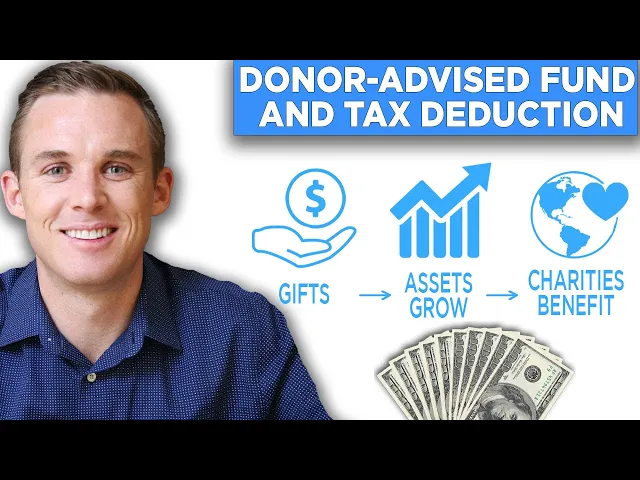
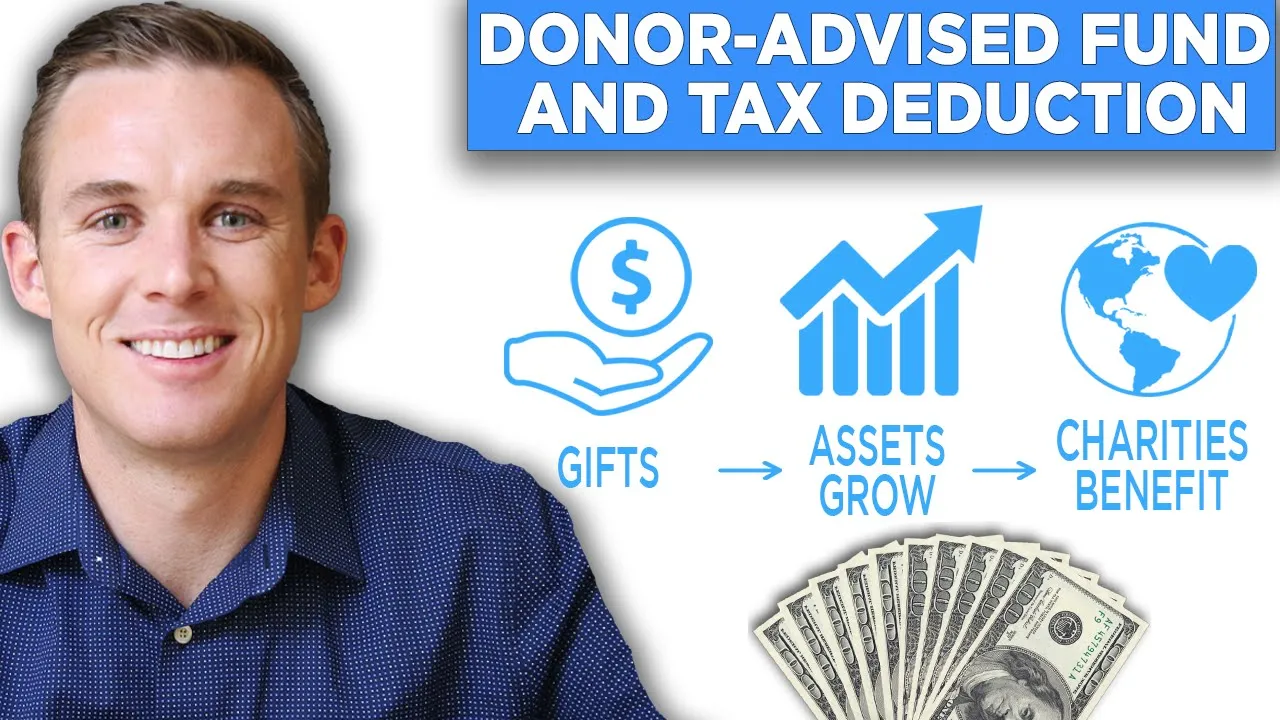
they say i'm giving all this money and i'm doing it for other reasons but i'm not able to deduct any of it what can i do well in this case if this couple has a non-investment or non-retirement investment account i'm going to explain why that matters in a second so not an ira not a 401k but cash or non-retirement investment accounts this would be a great time for this couple to use something called a donor advised fund so what's a donor advised fund a donor advised fund is almost like a charitable investment account that you
retain full control over but you make an irrevocable gift to it meaning once you gift the money to this fund you can't take this money back it's irrevocable in a sense so once it's there it's there but you retain full control over it so for example if this couple were to gift funds to a donor advised fund say they gifted a hundred thousand dollars well they can retain control over that hundred thousand they could even invest that hundred thousand and as it grows it grows tax-free and then they can start giving from it fifteen thousand
dollars every single year it's almost like your own private mini foundation if you get to control where the gifts are sent to as long as it's to a qualified charity but you get to retain the assets and you get to get to control how those assets are invested in the meantime so why does this make any difference you're saying okay it's not giving any more giving any less why would i give to the donor advised fund as opposed to just giving the charity outright well here's why imagine if going back to that example this couple
who's giving 15 000 every single year for 30 years but deducting none of it what if they could take all those charitable gifts they made over the course of their lifetime not actually make the charitable gifts today but take advantage of all that deduction or a lot of that deduction in one single year that's what the donor advised fund allows them to do again if we use that example they put a hundred thousand dollars into it they can deduct that full amount now there are limits and you can only deduct up to fifty percent of
your adjusted gross income so if you're adjusted gross income say a hundred thousand dollars and you put a hundred thousand dollars into the donor advised fund you can't deduct the whole amount you can't wash out all of your income but you could deduct fifty percent of it of your agi so if your adjusted gross income is a hundred thousand dollars you could take fifty thousand dollars of that contribution and deduct it on your current year's tax return now that's 50 000 plus now keep in mind you can also deduct your state and local taxes it's
another 10 000 in this example because you're able to fully itemize now and any amount that you're not able to deduct this year it rolls over into future years so next year you could get another nice deduction as well so as we come back to this if this couple implements this they say gift a hundred thousand dollars to their donor advised fund what happens is they take advantage of that full deduction today and now in future years as they're giving money to these charities or church or whatever it is they're not giving it out of
cash flow they're giving it out of their donor advised fund so it's not an expense anymore on an annual basis it's money they've already put into a fund taking the full deduction for it and now that's where the gifts get distributed from so it's a way of having one major or a couple major deductions as opposed to not being able to deduct any of those contributions over the course of their retirement so this is the beauty of a donor advised fund it allows you to take a really significant tax deduction for the giving that you're
already going to do just by being smart about how you're implementing that giving now that being said i want to walk through when does this make sense first when doesn't this make sense because it certainly doesn't make sense for everyone so let's start with when does this make sense well this typically makes sense if you do a fair amount of giving ideally at least eight to ten thousand per year there's no magic number that's just kind of an ideal amount because let's say that you give a thousand dollars per year wonderful but if you want
to say okay how do i take advantage of all these giving all this giving i'm going to do over the course the next 25 30 years well if you put 10 000 or 15 000 into a donor advised fund to do the giving for you for the next several years you still might be under the itemized deduction amount or the standard deduction amount so it's really if you're doing more significant gifts on an annual basis eight to ten thousand is not a magical number it's just kind of a good amount as a baseline if you're
doing that amount that's where you maybe want to front load some of those deductions or some of those contributions so that you can actually get the deduction for it now another time when this makes sense is if you don't have a mortgage or if you have a small mortgage and you're probably saying what on earth does a mortgage have to do with the charitable contributions i'm making well all goes back to that itemized deduction scenario that we looked at if you're already itemizing your contributions or itemizing your deductions because you have a lot of mortgage
interest or you have a lot of medical expenses you have a lot of things you're already able to write off you might already be above the standard deduction amount the beauty of that is now any gifts that you're doing are fully deductible because you're over the standard deduction amount it's really if you're way under the standard deduction amounts that any gifts you're doing is still keeping you under that threshold which today is 25 900 for 2022 but if you have a larger mortgage typically your mortgage interest is one of the things that you're going to
deduct most when it comes to itemizing your deductions so this does typically make sense if you have no mortgage or a very small mortgage where there's not a whole lot of mortgage interest that's being added into your itemized deduction amount when else does this make sense if you're in a medium to high tax bracket if you're in a very low tax bracket either because you have a pension that's not taxable or a lot of social security income which is subject to less taxes or you're living all on roth ira money or alimony money or whatever
it is this may not make sense the goal of this is to see how can we get a larger tax deduction and if we're not in a high tax bracket to start with the deductions just aren't as impactful if you compare that to someone who's in the top tax bracket if you're in a state like like i am so say california you could potentially be in a marginal tax bracket of 50 or more between state taxes and federal taxes if you're at the highest income tax bracket you compare someone who does a donor revised fund
or is maximizing their itemized deductions there they're saving fifty percent on the dollar of every dollar that they put into that because they're in high such a high tax bracket well compare that to someone who's maybe in a ten percent bracket uh federally and then maybe doesn't have any state income taxes well even if you get a huge deduction amount it's only saving you 10 cents on a dollar in that scenario so for people who are in higher tax brackets the effectiveness of this makes a lot more sense versus someone who's not in a high
tax bracket the benefit might not go as far so that's when it does make sense when does it not make sense well number one if all of your money is in a traditional ira in a roth ira say well why does that matter well to implement this donor advised fund strategy you need to have funds that you can gift to the donor advised fund and ideally those funds are cash or appreciated stock which we'll talk about in a second here if all of your money is an ira to gift money to a donor advised fund
you would have to take a distribution from your ira which is fully taxable and then turn around and gift it to the donor advised fund for the tax deduction but you're limited on how much you can deduct so you may have cost yourself more money in taxes to take money out pay taxes and then put them in the donor advice fund then you would if you just simply kept them in your ira or roth ira going forward so really this is if you have a brokerage account or non-retirement account or cash or some asset that's
not inside of a qualified retirement account that's ideally what you want to gift to a donor advised fund another instance in which it doesn't make most much sense and we talked about this a second ago is if you don't do much charitable giving if you're giving a couple hundred bucks here or a few hundred bucks there amazing that's wonderful but the donor advised fund is typically most impactful when you're making more significant gifts because when you can group those gifts together that's when you get the benefit of a huge deduction whereas if it's just a
couple hundred bucks here or there even if you group together a whole bunch of those gifts you still might not be above the standard deduction threshold in which case it maybe doesn't make a lot of sense for you the last case where it doesn't make a whole lot of sense to do this is if you would itemize your deductions even without charitable giving i shouldn't say it doesn't make a whole lot of sense it still can there's certainly use cases where it can make sense but if you already have a bunch of mortgage interest or
state and local taxes or medical expenses and you're already pushing yourself out of that standard deduction limit and you're into the itemized side anything above and beyond that which is your charitable gifts you're able to deduct so it might not make as much sense to do the donor advised fund so that's when it does and doesn't make sense a couple of additional benefits on this there's a lot of details but want to throw out the high level ones is one of the benefits of a donor advised fund is you can gift appreciated stock to it
as opposed to cash so let's say you bought apple stock 20 years ago and you bought it for five thousand dollars and now it's worth i don't even know what it would be say two hundred thousand dollars well if you wanted to gift two hundred thousand dollars in cash to the donor advice fund you could do so so people look at that and say okay well i'm going to sell my apple stock at 200 000 but then i'm going to pay a whole bunch of taxes because there's so much gains on that and maybe i'm
left with 150 or 160 000 they can donate to the donor advised fund well instead of doing that you can just gift that apple stock to the donut advised fund the beauty of that is you get to take advantage of the full deduction the full 200 thousand dollars and then if the donor advised fund sells the stock they're not paying any taxes on it the account's not paying any taxes on it so you can get the full value of the gift even if the full value of that gift isn't worth the full value to you
because if you were to sell it you'd have to pay pretty significant capital gains taxes now keep in mind when you do this you're limited on the amount you can deduct it's no longer 50 percent it's 30 of your adjusted gross income that you can write off that gets a little bit complicated but all that's saying is you're gonna take some of the deduction the first year potentially all of it but in most cases some and then any unused amount will carry forward to future years so it might not be one big deduction today it
might be a pretty significant deduction today but then that deduction will carry over to future years until you fully use it up another benefit is a donor advised fund can grow for you so if we want to talk about the effectiveness of these gifts if we go back to that example that couple who is gifting 15 000 per year every year well if they're making a one-time contribution to a donor advised fund that fund can keep growing for them so what does that mean well they're giving 15 000 per year but because their account balance
is growing they're actually going to be able to give a lot more than that just that 15 000 per year because they're getting growth on that money as well and that growth is completely tax-free so it's a way not only of amplifying the deductions you get but also potentially amplifying the gifts you're actually able to make over the course of your lifetime the final benefit i want to talk about today and this gets a little bit more complicated of is the timing of these gifts is when you're in retirement you've probably heard me talk a
lot about the benefits of a roth conversion strategy well if you do charitable giving and if roth conversions are an important aspect of your financial plan implementing something like a donor advised fund in the same year that you're doing a roth conversion can be a huge win-win for everyone involved here's why when you do the roth conversion it's increasing your taxable income so whatever amount is converted from your ira to your roth ira that increases your taxable income when you do the donor advised fund it decreases your taxable income because you're front loading a bunch
of deductions you're taking advantage of all those deductions in year one so can you do something like roth conversions that's going to increase your income intentionally because you know that that's going to be tax free for you in the future and then offset it with a donor advised fund to bring your income down to a more manageable level where you're not paying as much in taxes as you ordinarily would so it's a beautiful thing to pair together of how can you do something that increases your income today for the future tax benefits then also having
a way of offsetting that taxable income through some giving you're already going to do it can be a really beautiful strategy when paired together charitable giving is a wonderful thing and at the end of the day people aren't doing it just for the tax benefits however if you are doing charitable giving if you are supporting the causes that you care about most i want to ensure you're able to get the maximum deductions available for those charitable gifts you're making if you're looking for more ways that you can save taxes in your retirement be sure to
click on the video above [Music] thanks again for watching this is james knoll with root financial partners if you enjoyed this video please be sure to share it with someone else who you think can find value from it and also be sure to like this video and subscribe for more content like this and if you want more resources about how you can create a secure retirement be sure to check out our podcast called ready for retirement and finally if you're interested in seeing how our services can help you create a secure retirement check us out
at rootfinancialpartners.com [Music] you