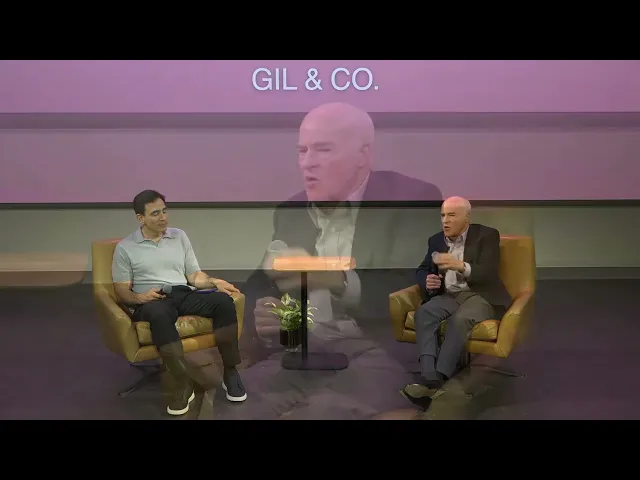
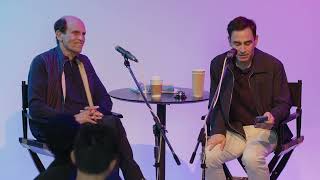
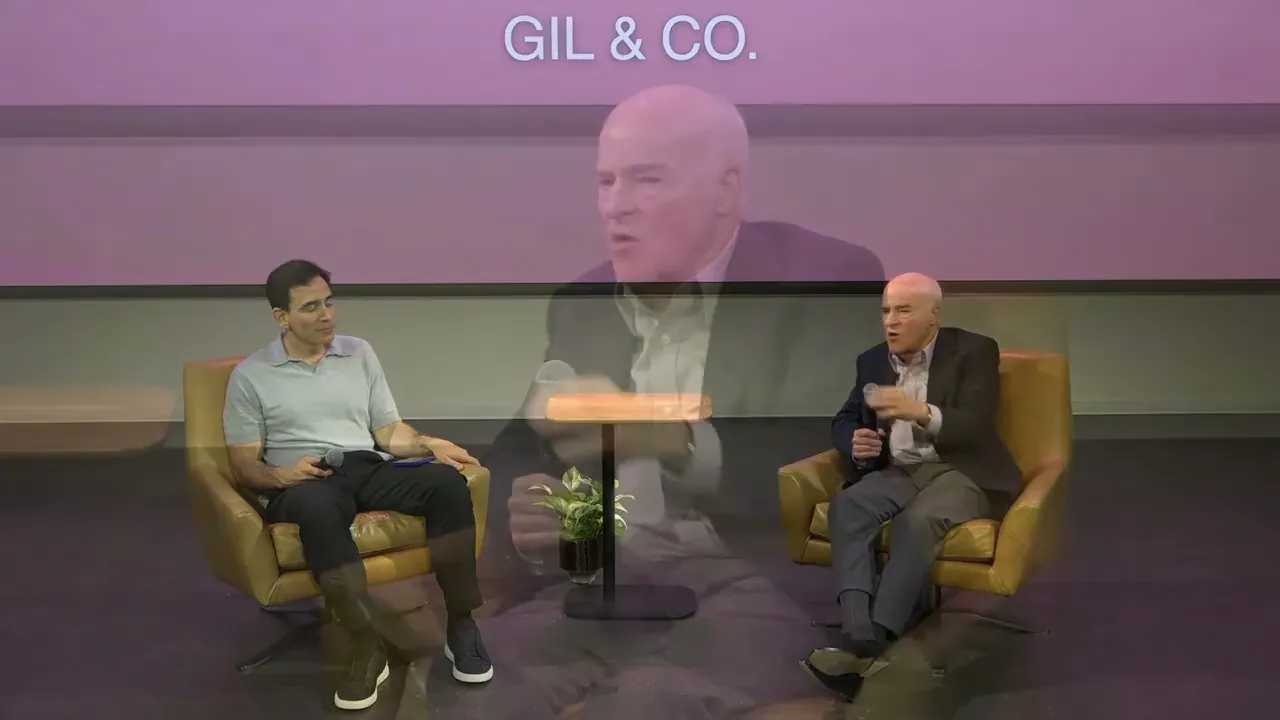
Um, so thanks everybody for coming. Thanks a ton uh to Stripe for hosting us today. Um, we're lucky to be here with I think um a true business legend, Henry Kravis. Um, Henry co-founded KKR in 1976 with his partners with $120,000 of his of their own money. Uh, since then KKR has scaled into one of the largest private equity firms in the world. It has over a hundred billion dollar market cap as a public company itself and um has over $670 billion in assets under management. Um which basically means they're involved with some of the
world's most interesting and important companies at real scale. And so if you think of the impact of that, it's truly enormous. Um Henry was one of the first to pioneer the private equity industry uh with the insight to create value by purchasing companies using uh borrowed capital and operationally improving them, which is really key. and um he and Kiki are often credited with the rise of PE or private equity as an asset class. Beyond investing, you've also been involved with quite a bit of philanthropy and I think we'll touch upon that a little bit as
well. Um education, the arts, um you serve as a chairman of the director for the partnership for New York City, Mount Sinai Hospital. You're involved with sponsors for educational opportunity and many other um causes in terms of giving back. And so I think he's both contributed to the business world uh but also to the worlds of education, healthcare, philanthropy, etc. over time. So, thank you so much for joining us today, >> Eliot. Thank you for having me. Uh, happy to be here. And I guess you all didn't have anything to do uh better than come
here, but thank you. Appreciate it. >> Yeah, it's funny. I told him, um, just in this front row, uh, alone there's like a ton of amazing founders, and he's like, "Oh, they must be really bored tonight." And I was like, "No, no, no, no. You know, these people usually don't don't come out just for anything." Um, [clears throat] so, uh, you started Kick in, uh, 1976, uh, using your and your partner's initial, uh, own money or capital. Can you tell us a little bit more about how you got started? Why did you start this really
interesting new type of business and what what motivated you? >> Well, we [clears throat] got started actually in what is now known as the alternative investment area. Uh while we were at Beer Sterns, uh we were Jerry Colberg, George Roberts and I were at Beer Sterns um and bought our first company really in uh 1969 I believe and um sort of came about because uh man came to see Jerry who he knew and uh said I got a problem and the problem is uh I've got a private company called Stern Metals made dental equipment and
I don't want to go public. I don't want to sell the business. And by the way, I have a son who I don't think's capable of running the business. What do I do? And uh Jerry came up with the thought, well, why don't we form a group to uh to buy the company? You keep 25%, we'll buy 75%. And uh we'll take care of your son so you don't have to have that burden. And that was the first deal we did. That was in 1969. Uh we bought a number of companies in the 60s through
Beer Sterns. Now you have to understand Beer Sterns never put a penny into any deal we did. They hated what we did. They were sales and trading firm and for them uh long-term was overnight. Uh for us 5 to 10 years was was longterm and that's really what we uh what we wanted. Um, we left the uh left the firm in 1976 and uh George and I were 32. We didn't have any money and Jerry was older. Uh, each George and I first cousins, we each put up $10,000 to start KKR and Jerry being 19
years older put up a hundred,000. So, we started with 120,000 went out to raise a $25 million fund. You got to understand there were no uh funds in that in those days. nobody doing what we were doing and uh we couldn't raise money on terms that made sense. Uh the we dealt with a credential insurance company Mass Mutual and uh but our idea was we saw a a a discrepancy in the market for companies and that was uh boards of directors were not holding managements accountable. institutions weren't doing much either except owning the stock and
companies were in in the 1970s and the early 80s were really poorly run. And we felt that we could buy companies and if you tie in management and make them an owner as opposed to I call it a renter of the corporate asset actually make them an owner they're going to act differently and they're going to have the same interest in mind that uh that uh the shareholders have in mind. So you have to have an alignment of interest between management and um uh and and the shareholders. And our idea elad was uh we thought
we could buy companies and um uh make them better and that was our whole premise when we got when we got started and that's what we've done. But um when we got started uh you could buy a company uh maybe seven eight times earnings. Today you're paying 15 20 times earnings or more. Um, so and in those days, I'll give you an example. A company you all will know is Safeway. So in 1985, we bought Safeway for 5.6 billion. We put up uh $126 million out of the 5.6 billion, and that was for 100% of
the equity. And that was called leverage. She had 5.4 $4 billion or $5.5 billion in round numbers of debt and $126 million of equity. At one point we actually made uh on a sale we made in the public markets, we had taken a private then took it back public. Uh we actually um made [clears throat] u about 50 times our money. Those are venture kind of returns. Now what did we do when we bought the company? Everybody said you guys are crazy. You can't buy a retail company. You got 1% margins. There's not much you
can do with a company like that. Well, we found a terrific management team, which was actually the team that was part of our consulting group within KKR. We had our own consulting group in KKR. They went in to run the company. They took margins from 1% to 9%. And for a grocery store chain, it's incredible. Probably too high, quite frankly, but they knew where to spend the money. And of course, there was no AI in those days. And so um that you could lever a company to just to put it in perspective. So today if
you buy a company, I don't care how hard you work at it, you still have to pay probably 15 times earnings for the company on average, you might be able to get uh the equity uh or debt, let's say seven times uh debt to IBIDA. So the rest of it you're going to have to put in in equity. So what went from 126 million today you would have to put in probably $3 billion of equity. So that has really changed from where we were. Now why did we get started? First of all we saw this
discrepancy in the market and we really believe that we could make companies much better and that's that's been our premise all along. But I want to back up for a minute because something very important. Um when Jerry George and I uh had our very first meeting as KKR May 1st 1976 we had two conversations. First conversation was how to divide the economics. That was a 35 second conversation. Jerry you take 40% you're putting up a 100,000 and George Knage take 30. And uh when we hire anybody else and give them equity, the first 10 points
will come from you, Jerry, until we're even and we'll come down after. That was easy. The second part was just as easy. We came out of an environment at Beer Sterns which was an eat what you kill culture and we hated it. Everybody ran around and said my idea, my deal. I literally, no kidding, had to lock uh my desk drawer at night even though I was a partner at the firm because I found people would come and rumage around see what I was working on because you were only paid on what you worked on
or what you did. We hated that. So, u we wanted a firm exactly the opposite. We wanted a firm where everybody participated in everything we did. Whether you're a partner at the firm or you were not a partner, whether you worked on a deal, you didn't work on it, whether you brought it in or you didn't bring it, didn't matter. And the reason was very simple because if we got the best thought process from the entire firm to help us, we thought we would do much better. So 49 and a half years later, we have
exactly the same culture except rather than having three of us, we now have 5,000 employees and 28 offices around the world. and you know not a not $120,000 but but over $700 billion of assets under management 45 different products. So got started really because we had an idea and there was nobody doing it uh that we could make companies better. Yeah, I I think um one of the things that you've talked about a lot and I think is reflected in what you just said in terms of how you both quickly divided up equity amongst yourselves,
how you thought about compensating early employees, how you thought about culture is you've always had a really keen eye and focus on talent and there's almost two types of talent in your business. I'm extrapolating. You know, one is the management that you'll help bring on board or hire or get to reinvest in a company. The other is talent for KKR itself. How do you think about the key attributes of what you look for in employees for KKR? And how has that changed over time or what is a new thing that got added or something that
got dropped? >> Well, first of all, I'm going to start with the premise and I don't know whether you all would agree with it or not, but I really believe very strongly in this that I don't think you can be a great investor if you're not curious. And I'm not talking about curious just about your business, but curious about a lot of things. Curious about history, curious about the arts, uh, literature, you name it, whatever it is. And I think that's very important. So what we're looking for are are people that uh have that kind
of of talent in them that they really uh because we're only as good. We we don't have a product. All we have is a lot of ideas and and and I think investing capability. But if you if you're not curious, so if I took somebody any one of you to the window of at my office on the 77th floor at 30 Hudson Yards and I said to you, what do you see in the out there? Oh god, it's a trick question. Let's see. Oh yeah, I see the tugboat in the Hudson River. I said, you
failed. I want you to be able to see everything. You have to see the entire landscape because you got to connect the dots. You got to see possibility. Ah, there's a vacant lot over here. I can go build a building. Whatever it is. And so what we're looking for are are people that uh are willing to take risk and and I think that's one of the hardest things for young people that are investing uh today to do. I've um we get all the the best and the brightest from different schools and they are they struggle
uh to pull the trigger. They want uh you know they used to come in with a 50page memo and it would tell you how many blue trucks in the business and so forth. It didn't matter a damn thing about the blue trucks. What want to do is how are you going to make this company better? How do you create value out of the investment we're making and if you can't do that and sort of four or five pages probably don't understand the business very well. But all I can think about and maybe I'm I'm wrong
about this and that is that they're taught in school today uh to be able to answer every question. So when they come out they got to be they come into the investment committee they want to make sure that they can answer every question. I I'm waiting for the day for somebody to say look I don't know the answer to that and quite frankly I don't think it's that important. That to me would be great but I won't tell you what I can do with a business once you buy it. I said, "Think about this. You
you run a model. You're running his models." So I'll say to him, "How much money you have?" He said, "Well, what do you mean?" And I said, "Well, I want to bet you every penny of your net worth that your model's wrong." I'm sure they're thinking it can't be. I went to Stanford, you know, it can't be. How could that be wrong? So they're uh I said, "I'll tell you why it's going to be wrong. We're either going to be higher than what you say it the returns are going to be or it's going to
be lower. There's so many things we do. We're not just buying a stock. We're buying a company. So once you get control of a company, just think about all the things you can do. We can develop new products. We can go into new markets. We can sell a a non-core subsidiary. It's not doing return capital back to uh we can refinance the company and get there's lots of ways to get returns. And models that are run in the private equity world are static models. You go from point A to point B. I've never seen a
model which uh had a downturn. Everything just goes straight up, you know. That's not life, you know. But that's how the model works. So, you run a static model and uh I wish that uh you know that you think more like a you're the conductor. You're the conductor of uh or director of a movie. What do you want the movie to be? Where do you want it to go? How do you want this company to to be? You're in charge now. You can do whatever you want with it. We didn't just buy stock. You now
control the company. You control the board. You make the decisions. How do you want the company to go and in which direction? That to me is what how we think at KKR. And we act and think like industrialists. And I'm using industrialists in a in a broad sense today. Eli, it takes so much more to uh be successful in investing uh in a company. Used to be very simple. Companies were so poorly run. Today they're much uh more efficient, much more uh capital efficient, etc. And better run than they were. So today we have uh
over 100 person operating group within KKR that are part of KKR. We have a 43 person macro and asset allocation group. We've got a something called uh the KKR global institute uh headed by General David Petraeus to focus on uh regulation to focus on uh geopolitical issues as we invest all over the world. Uh we've got a uh a very large ESG team that focuses on because uh regulations, environment, uh government uh situations all play an impact today on investing uh if you're going to going to buy a company. Uh we've got a capital markets
team today which we never had before because we do the financing ourselves. So the question is how do you refinance a business once you have it? what's the right capital structure for it? And it used to be that our teams worked on the deal, they would do the financing, too. That's a waste of time. So, we have a capital markets team that the debt and the equity uh placement uh and we go from there. So, the the world has changed as far as uh as far as investing. So what we're looking for are people willing
to take risk. Um people who are innovative, people who are curious and u I want people to tell me the mistakes they've made. If if you ask me what are the mistakes you made, we'd be here all night because I can tell you every mistake that we have made and most of them were just stupid mistakes on our part. We went into industries we shouldn't have. we're going in the auto parts business in Japan. Uh and and and in bought Fiat's auto parts business and then doubled down buying uh uh uh uh Nissan's business. And
so, you know, you that was mistake. Wat Toys are us didn't change the management fast enough. What am I looking for? Also, I'm looking for people that aren't afraid to make management changes. One of the things I can almost assure you is that uh what you see in a in an executive is what you're going to get. I'll repeat that because it's really important. People don't change. You know, you can fix them around the edges, particularly if it's a CEO of a company. And uh I'll tell you a quick story. In 1978, we bought a
company called Lily Tulip and they made paper plates and cups. McDonald's was the largest customer and we bought that company and in the first year the management didn't even come close that we inherited with the company. Didn't come close to meeting uh the budget. Okay. I said, "You got to do better." Second uh went through two more quarters, not much better. And I said, "I'm going to have to let you go." And he said, "You can't let me go." And I said, "Why is that?" He said, 'Because you're going to lose the McDonald's account.' So,
I was young and I thought, well, gez, you know, maybe he's right. So, I let him go one more quarter. I said, I've had enough. I'm I'm going to bite the bullet. I let him go. I called the head of purchasing at McDonald's. And I said, uh, we've just let this guy go and I hope you'll still do business with us. And he laughed. He said, first of all, we do business with the company, not with any one person. And by the way, the only thing I liked about that guy was that he used to
take me hunting every year. And that was that was a lesson for me because now I promise you what you see is what you get. And and I and if if you look back if I look back and say mistakes I made, I didn't move fast enough. And I asked that question often times to CEOs of major companies. And I said, do you agree with me? And I've never found a CEO yet that has disagreed with that with that statement. He said, most of them will tell me, "I'm sorry I didn't do it faster with
people I had in my company that I should have moved out." >> One of the best anecdotes um I've had recently where I was talking to a founder about people not changing was um we were talking about employee happiness and how do you cause it and all these things and he said, "Well, you know, the number one way to have happy employees and I said, "What?" And he said, "Hire happy people." And I thought that was actually a real good insight because if you think about it in other aspects of life, who your partner is
dating, whatever, you're like, "Oh yeah, I'm not going to try and change somebody and a happy person." So why would you do that in the context of an employee? And to your point, I think there's a lot of other traits like that that um are things that people are at the job with and they either build on those and get better or they're not going to change. And so I think that's a really great insight. So just to continue on with what we're looking for, we go through an interview process and we're probably for hiring
people at KKR because we have this culture of uh inclusion where everybody participates in everything we do and even today it's exactly the same culture we started 49 plus years ago. And so when we're hiring senior people, we want to take them out for dinner because it's funny, if you get people away from just across a conference table and after they've had a glass or two of of wine and they relax, watch them. What do they say? How how do they treat the waiter or waitress? How do they treat their partner they're with, etc.? These
are things we're looking for. Do they talk about themselves all the time? If somebody if I'm interviewing for a CEO for one of our companies and and they come in and all I hear for an hour is I I I I did this, I did that. Whoa, whoa, stop. Did you have a team? None. Nobody, I don't care who you are, can do it by yourself. And you all know that. But I have I can't tell you how many times people come in and they trying to impress you and they only talk about themselves. And
that's a big mistake. >> Absolutely. One thing you talked about is um the degree to which the industry has been changing over time since you helped really pioneer it um at this point almost 50 years ago and uh you know you mentioned changes in terms of operational efficiency of the companies and excellence there. Obviously there's been changes in scale of this business in terms of private equity and you know the size of uh rollups or bios that people have done over time. What do you think is coming in the next 10 or 15 years in
the industry or how do you think it changes or do you view it as more static now? >> Well, first of all that people keep talking about as the private equity industry. It's it's it's not private equity anymore or only that. Today, just take KKR today. We've got over 45 products. We're global uh 28 offices. And if you go back when we started, uh, there were only maybe four or five banks that would lend on a cash flow basis and that was First Chicago, Continental Illinois, Bankers Trust, and Manufacturers Handover. Now, probably most of you
never heard of those banks because they're all gone now. But that but that that's all there were. and you had to go to the credential insurance company or Mass Mutual, Connecticut General, uh, and one or two other insurance companies. And the way that we would, uh, put the structure together and literally George and I would have to back into [clears throat] a capital structure, how much capital was available in each of those pots. Today, there's money everywhere. So in those days you if you didn't if the deal was halfway large and you didn't get the
credential you couldn't get the deal done. There was no high yield market. High yield market didn't come into effect until the mid 80s. So and that was Mike Milin's doing. It was brilliant. And so that really changed the the market uh totally. And so what what uh has I I say don't talk about the uh private equity industry, talk about the alternative investment industry because like I say, we've got 45 products at KKR. They range all the way from credit products, uh private equity, growth equity. Uh we don't do venture capital at KKR. Uh but
we've got uh uh we have real estate, we've got uh an insurance company uh Global Atlantic that does uh life and annuity business, we have uh infrastructure investing. Uh and we have a capital markets business. We have a climate fund. We have a a an impact fund and so forth. So I wouldn't call those just private equity. They're they they fit into the alternative investment uh area. So the things that have really changed, it takes a village today to to uh uh in in in uh Hillary Clinton's parliament to to buy a company. Used to
be simple. George and I just go and buy a company. It used to be literally uh I we bought Beatatric Foods for $8.6 billion. And I just I had called uh the the banker and I said, "Do you think that they would sell the company?" because I just saw they fired the CEO and George and I have been chasing this company and the guy wouldn't even talk to us. And when they fired him, uh, and he said, "Well, I don't know. I don't think so." He said, "By the way, if you have anything to say,
uh, send us a letter." So, I called my secretary in a dictated a letter, no lawyers, nothing. Sent it out to to them and the next thing I know, I get a call back and said, "This interim CEO and I'll come see you." And we bought the company. That's pretty simple, straightforward. Um, today everything's an auction or most things are auctions today. Uh, you've got to you've got to go through all sorts of regulatory issues which is totally different than what we used to have to do. Um, when there's money everywhere today, there's probably not
a bank in the world today that hasn't lent to uh to some uh alternative investment uh that has come in to them. It used to be as I said there were four banks. That has changed dramatically. The high yield market changed dramatically. It used to be just uh Drexel Burnham. Then it became everybody in on Wall Street was doing that. The banks all do it today. And so there's plenty of capital. There's more competition than there's ever been today. Um and you just have to be smarter and pick your spots. Where can I make a
company better in in our view? We have a lot of um founders, CEOs, builders, engineers in the audience here today. And one of the uh sort of trends that's happening right now at least in Silicon Valley is more and more people are getting excited about doing rollups but in the context of a deeper application of AI or uh software or technology as part of that shift in terms of the margin structure or leverage on the business. How do you think about that or what do you think is important in addition if you are trying to
do an AIdriven rollup like how should you think about that or what other factors should you consider? >> You know George and I have had an unbelievable partnership. We ran it together ran KKR together for 45 years and finally we got a promotion uh up to executive chair co-executive chair which is great. Um I said I'd go buy one company and I'd use it as a vehicle. And I said I wouldn't go out raise a fund. You know, the world needs another fund like a hole in the head and and I don't care what kind
of fund, whether it's a venture fund or private equity fund. I mean, there's a fund for everything today. So, uh I would personally I would have bought one company and I'd use it as a rollup vehicle and and I would u uh find uh as u you know the best CEO I could find. Now I I'm in I'm in AI land out here. I got it. understand uh you know everything's going to be autonomous. Everything's going to be uh run by uh by AI and so forth. And I I talked to a lot of people
that are now doing rollups and they're putting AI in. I think that's great except there's a couple things you have to add. You better have good management because AI is not going to run the company. That's that's a productivity improvement. Absolutely. Without a doubt. and we put them in our put AI in our companies and it does improve productivity without a doubt. Uh you can improve your margins without a doubt [clears throat] but you got to have a corporate development guy because he's got to go find the companies. You better find companies where um uh
the cultures fit because I've seen more companies that say I can just go buy companies and they start buying all these companies and the cultures uh have a collision and and they don't fit and the companies blow up. I've seen uh situations where uh you buy all these companies and you don't integrate them. So you're not getting the benefit of buying the other companies. You just you buy them and yeah, you gotten bigger, but you haven't become more efficient or more profitable because you never integrated. You got to figure out how to integrate. So, you
know, being um uh you know, doing rollups and using AI, that's just a tool and it's not going to you can't have AI run the business. You have to have a really good management team that's going to run the business and use AI as a component of how you run the business and how you run it more efficiently. uh and the idea is if I can buy all these and at a say a six multiple six times EBA and once I have uh size and it looks like I'm really growing quite fast uh then then
I can I'll trade it 12 or 15 times. The problem today that arbitrage is closing because companies uh are are waking up and say whoa I'm not going to sell my company at six when I look at comparables in the whole business are trading at 15. So you don't have the same arbitrage that you used to have in in a lot of these roll-ups. And so you know as I say uh AI is great in in these rollups important but you still you better run the company. And most importantly you better have a culture that
that fits because you don't have a culture in these companies I promise you can have all the AI you want and it won't work because you're going to have the management blow up. One thing you you've mentioned a few times is your um cousin George with whom you've uh started this business and who you've had a decades long partnership with. What do you view as the key of having a sustainable partnership over such a long time period or how did how did you navigate that and what advice would you give to people as they look
at their own co-founders or people >> George Roberts is my closest friend my and uh we were cousins first cousins and we met when we were two so pe people ask us um said you two must really fight a lot he said yeah that's that's true I think the last fight we had we both were seven I got a new bicycle and I was in Tulsa and he came up from Houston and and I wanted to it was a Christmas and I wanted to ride my new bicycle first and I was told I was a
bad host and I got chased in the house by the housekeeper and I ran in the corner of a wall, cracked my head open, had 26 stitches. That's the last fight we've had. So, um first of all, um we've been close friends. Went to Claremont together. Uh spent summers together, drove cross country from Claremont uh to New York. He worked at Beer Sterns and the summers and I worked at Goldman Sachs. Uh and um uh you know if you have the same values you and you have the same objection object objectives um it's amazing how
far you go and if you don't worry about who gets credit. I'm pulling for him and he's pulling for me and that's how we've made this work. Now, uh, about three years ago, [clears throat] George and I moved up from from co-CEO to co-executive chair. And, um, we brought on two fantastic guys that had been at the firm for 25 years. Joe Bay, who had started Asia for us, and Scott Nuttle, who had started our credit business and our capital markets business and and some other things. And, um, they were really close friends. Uh, and
that uh uh changeover uh literally took us seven years. George and I started thinking about it 7 years before we finally uh and we started with seven people and we moved them around and we narrowed them down to three and we had a choice. You pick one, you're going to lose the other two. You pick two, you're going to lose one. So, and you got to pick two that are really close. So the one of the most important things that we thought about when [clears throat] we um were uh passing the mantle was one and
most important number one do they believe in our culture? They live our culture and they do. Secondly, how close are they? Well, they're really close. They came into the firm within a month of each other, been there 25 years when we made them chief operating officers first, which they were for four and a half years before we pro promoted him to co-CEO. And um and so [clears throat] uh George and I uh today uh it it's pretty simple. I seem like I'm busier today than I was before, but uh I'm doing more things that I
enjoy doing. And so, um, and we work very closely with Joe and Scott, and we meet, uh, basically every two weeks, uh, officially, our offices are right next to each other. George is out here in California, but Joe, Scott, and I are in New York on the same floor and just down the hall from each other, and we're in each other's office all the time. So, if you don't worry and you really are doing the best for what what's best for the company, you can you can really, as I've said, you can go a long
way. So, I think we're going to move to a lightning round now and then, uh, just two or three questions for that and then we'll open up to questions in the audience. Um, I guess the first one is, if you could have dinner with anyone, who would it be? >> That's easy. I' I'd have dinner with my wife. I know that's not what you're looking for, but I'm telling you that's true. My wife's brilliant, so I love having dinner with her. >> It's actually interesting. So, I met Henry through his wife originally and um this
was years ago and the number one thing that people would say when they described her was that she's very smart. And so, every conversation I ever had was you have to meet this person. She's incredibly smart. She's incredibly talented. And so, um I definitely understand your answer. Um, so if you could go back and talk to, you know, 32-year-old Henry Kravis, um, just as you were leaving Bear Sterns, your starting kick here, what advice would you give yourself, uh, or give him, uh, given what you know now? >> Look, you [clears throat] know, I've always
been a risk taker, you know, for right or wrong. In fact, you know, I had no money. I had three children. um uh George the same, three children, uh no money, uh when we started KKR and we could we went out to raise a $25 million fund and couldn't raise it on terms that made sense for us. So there we were. Well, you all are entrepreneurs in this audience and uh you're either going to get through the wall or over the wall, but you're going to get to the other side. And that was how we
were. We're entrepreneurs and except [clears throat] we're just old entrepreneurs now who've been doing it for so long. And so, uh, the the thing was we said, "Okay, how much money do we need to to run the business?" And we sort of held our finger in the air and said, "Okay, $500,000. So, let's go to eight individuals and ask them to put a $50,000 each. That's $400,000." And we said, "If we buy a company, uh, we'll get a fee and that'll be the the other uh 100,000 that will uh cover our overhead." and all we
wanted to do is get set up so that we could survive for five years. And uh we said we've got to get going because we have no job, no money, and three children. And so that's not a great position to be in. And so um I look back and I say, "Okay, what was it that uh that I would do differently?" I said the only thing I'd probably do differently was I I'd move on people faster, which I talked about earlier. That's that's the one thing that I've that I wish we had learned very early
on. >> Okay. And then uh last question before we open it up is what do you think is the best advice you've ever been given? [clears throat] >> Best advice? Well, let me let me I'm I'm going to reframe it if I may. [clears throat] I'd say the best opportunity I've ever been given and this is instruction instructional to me when I I just graduated from college and I had worked my first three summers at Goldman Sachs after freshman, sophomore, junior my senior year. Then I went to work for a fund because I wanted to
see how a fund made decisions on buying stock. And I arrived and Ed Merkel was running the fund and uh he said he used to call me kid. He said, "Kid," and I was just there for the summer before I went on to get my masters at Colombia, and he said, "Um, I want you to follow these two industries and I want you to buy stock." And I said, "Well, Mr. Merkel, I've never bought a stock in my life." And he said, "Doesn't matter. We got bumpers here. You're not going to blow us up." And
so, he basically just threw me in. And I'm positive a monkey would have done just as well, but everything I suggest we buy went up. Well, the whole market was going up, but he didn't pay attention. I just thought I was knew what I was doing. So one day he comes in and he says to me, "Uh, kid, I want you to go call on Roy Disney." And I said, "Well, that's not in my group." And he says, "I know, but I want you to go out to California in Los Angeles and meet with Roy."
Walt and he had started the business. And Walt died the year before. This is now summer 67. And and uh said, "Who's going with me?" He said, "No one." So the best advice out of that was he just basically threw me in and he said, "You're going out there alone." Now I'm a kid who's just graduated from college. I am scared to death to be sitting with Roy Disney. And I studied everything I could study. I looked at every uh annual report, uh going back 10ks, 10 Q's, footnotes, you name it, research reports. And I
got out there and uh Roy is said to me, "Thank you for coming." 9 in the morning. um I've got an hour for you. And and Eddie said 15 minutes. That probably been fine, too, because I am scared to death to be sitting there. Got halfway into the conversation and he said to me, "Uh, geez, you know a lot about my business." I didn't tell him I'm scared to death. The reason I knew what I did was because I had to study everything. And he said, "I know I told you I had an hour for
you." He said, "I'll tell you what. I want you to spend the day with me." He said, "Most analysts that come out here haven't even asked uh uh haven't even read my annual report. They just expect me to tell them everything." So, the lesson out of that for me was if you've done your work, um you can go a long way. He never asked me was I a partner at the Madison Fund or was I a summer trainee, which I was. Um all he cared about was that I cared about his company and I'd spent
the time to study it. And so if you if you do your work um and you're prepared and don't try to cut corners and think you can wing it because you can't wing it, uh you can go a long way and and people will pay attention to you and they don't care how old you are. And at the end of the day, he took me on a tour of the of the studio and I thought I'd died and gone to heaven spending the day with him. >> That's great advice. Uh maybe we can up for
uh two or three questions from the audience and I think there's microphones coming. So is there a microphone or something? >> When you when you purchase a business, like what are the beyond management hires and improving the management team? What are the core kinds of levers that you're targeting? Is there some through line with the types of things that you're focused on for a business? >> And I'll just repeat the question so when this goes up on YouTube, people can hear it or understand it. So I guess the question is when you buy a business,
what are the through through lines or main points of leverage that you look for in that business? So one of the things that's very important where does this company fit in an industry is the industry have growth or not or is the entire industry broken and if it's sort of number seven you know out of 10 companies probably no interest but if it's one or two or three and you can buy it right that makes sense. You want to find out where it is in the industry. Number two, uh can can we make that business
better? If if we're going to buy the company and the only thing we can count on is hoping that the multiples will increase that we can actually get a higher exit multiple when we exit or take it public. That's a bad bad deal. You have to we have to look at it and say can we make it better and how can we make it better? Uh that's very important. and and three I would say we look at the management and now the first thing we do once we have an agreement we've signed an agreement before
we even close uh we'll start working at a 100 day plan how to improve the business and that's where our consulting group comes in and we the team that's working on the deal plus the consulting group called KKR Capstone will go in and work uh with the management and and we'll evaluate the management early on but then you get a better look at them between the time you uh uh sign a deal and you close. So those are the three things we're really looking for. Uh you know and and can we improve the productivity in
a company and I say make it better that's all part of it. Will AI help? That's just part of productivity improvement etc. >> Next question maybe in the middle. Oh go please. >> James. >> Oh um well you spoke about how KPR doesn't do venture capital investing. But you yourself are very very prolific both in funds as well as startups. [clears throat] I'd be very interested in just hearing you speak about that side of your personal investing. >> So the the question is uh my personal investing is in venture [clears throat] capital and KKR doesn't
do it and that that's true as I said because um that enabled me to do it. I started doing this in uh the.com period 1998 to the 01 period and I'd come out here to Silicon Valley [clears throat] and I talk to uh all these geniuses and I'd say, "Okay, tell me uh what your strategy is." Oh, that's easy, Mr. Kravis. We're going to go public. Okay, why don't we try that question again? No, you don't understand, Mr. Kravis. all about eyeballs. I said, "So, what do eyeballs do? They're looking at the screen. Does money
come out of the screen? I I don't get it." [laughter] They had not a clue what to do. All they wanted to do was get rich. And so, the only thing I'll say about that period, I had an airplane that I had owned for 15 years. I paid 21 million, $20 million for it uh 15 years earlier. And all these geniuses had to have a plane because if you didn't have a plane, you were nothing. And so uh so I sold my plane for $21 million 15 years later. So yeah, that was then fast forward
and I uh started investing and one of the reasons I do it now I'm I'm really allin but I did it because I'm curious and and I love what young companies are doing, what entrepreneurs are doing. uh it keeps me fresh in in my thinking as I said I don't think you can be a great investor and maybe a great manager for that matter if you're not curious so to me that's just part of my whole curiosity uh there I love I love learning from from those companies and those people and so today what happened
was about four years ago uh head of my family office said do you know how many of these companies you have I said I don't have a clue and he he shows me a I said, "Oh my god, you guys are accountants and lawyers. You're not investors. We better hire somebody who uh knows uh you know can oversee the company and and help us." So I did a search and I was really fortunate and I came up with my venture partner now Jed Lensner who had eight years experience at Allen and Company and then went
to Tusk Ventures and uh joined me almost four years ago and he in turn has hired [clears throat] two terrific people uh Ryan Joseph and and Olivia Schmidt and so I just enjoy it. I have I have more fun doing it. Let them do the work and uh I get I get all the pleasure out of it. Other questions? Yes. Right here. >> In scaling KKR from a few people in a room to a 5,000 person global company, what's been the most challenging skill that you've needed to master as you've led the company to its
current scale? I [clears throat] don't know if you heard that, but the question is uh as we've grown from three people to 5,000 people, what's the most important skill that we've had, uh focus on to uh to master the growth? Um I'd say the most important is culture. That is the number one. If if you don't have a culture and you have people who fit in and live by it, when we made some acquisition for just for KKR itself, not for our funds, like we bought Global Atlantic, which is an insurance uh business and annuity
business, we spent more time focused on their culture. Would that mesh with our culture? When we hire people today, particularly senior people, they may have, this will sound strange to you, they may have as many as 20 or 25 interviews. And uh and what we're looking for is uh a consensus of people's not, yeah, I can hire anybody I want, but it but we want people say, "No, this person be great. They would definitely fit in." And and and that that would be important. So, I'm also looking for people that made mistakes. If you're not
making mistakes, you aren't doing anything. You know, number one, uh, as I said, I could give you a chapter and verse about mistakes that I personally have made and that we've made at a firm and, uh, and why we made those mistakes. And so, we're looking for people that that fess up. I want to know one of the things I do if I'm meeting with a with a an institutional investor or a family office. Sometimes I like to start with I said I know you're going to think I'm going to tell you all the great
things about Karee. I am. I'll get to that. But I want to tell you the mistakes first. They are so caught off guard by the fact that I would talk about mistakes we've made and we make mistakes. You know, you're human. And fortunately the the record is extremely good. you know, it's picking the right people. Make sure they fit in. Uh these uh interviews are very important to us. And uh and I say the other thing is get people out of their comfort zone. I'll tell you a story. We all can interview across a table.
Just not a not not that hard. So, a friend of mine, Tom Cousins, had a company called Cousins Properties, and he had started the company, decided he wanted to move up to become chairman. So, he was interviewing a CEO. I thought he had the guy. He said, "Well, I'll take him to Augusta to play golf." And he invited one of his directors to go with him. And I don't know how many of you play golf in this audience, but when you're on the green, you you put a you can pick the ball up, put a
marker behind the ball, behind the ball, and clean it. this guy would uh put a marker in front of the ball, pick it up, clean it, and put the ball in front of the marker. Maybe get that much advantage. And he watched him do it a few times. Now, he would never have seen that in a uh just across a conference table. So, the thing I would tell you is uh does the person fit your culture? Does the person uh own up to their mistakes? Does the person have uh an innovative bone in their body,
you know, to be creative? Because if you're not, you know, it's just you're you're just a machine. And so those are the things that we're looking for. And uh and do they believe in our culture, which is a culture of inclusion? And if if they only want to be, you know, me me and I don't want to go to any meetings. We have guys made us a ton of money. We fired them because they wouldn't go to meetings. that wouldn't help anybody else and they'll ruin a place. Our culture is one of everybody participates in
everything. We to this day we pay everybody off the balance sheet and it doesn't matter whether you're based in Sydney, Australia, you're in New York, San Francisco, wherever you are in any one of our businesses, we pay everybody and we're going through that process right now because it's year end. >> Okay, last question please. >> One over here I think. >> First of all, thank you both so much. >> I can't hear you. I'm sorry. >> Sorry. I said thank you so much both for being here. >> Thank you. >> You mentioned the importance of
curiosity and I'm very curious what are some ways that you keep on learning about the world of >> so the question is uh talking about curiosity what are the ways that I personally uh keep uh keep myself learning uh and learning about the world and so forth. Well number one um I love reading. So, I read history. I read biographies. Number two, I love traveling. I travel all over the world constantly. I'm in I used to be in Asia four times a year. Uh, you know, I'll go anywhere. Uh, because I love meeting people. I
love learning about cultures and that's really important in my view. Um, I uh uh philanthropically very involved in three areas. Uh my wife and I are one in cancer care in particular in medicine and science. Uh my wife chairs uh Memorial Song Ketering's research institute. Um I'm very involved with Mount Sinai Hospital in New York. Um that's on that side. Secondly, education. I chair something called sponsors for educational opportunity and I've done that about 12 years now. I love it. These are underserved uh students who uh we can get through high school and college. It's
an eight-year program and that keeps me focused on that part which is a very important part of society in my in my uh my view. And the last are the arts. So I'm constantly going to museums. I go to galleries and anytime I'm in New York or travel if I've got time I want to go to a museum because just looking at paintings in my view opens my eye. I like looking at furniture, you know, different design. And so, you know, I used to be the most boring human being. I promise you, when I was
young, because when we started KKR, all I want to do is talk about business. I go to a cocktail party, all I want to do is talk about business. And all of a sudden, it hit me in the head, you are boring as hell. You know what? Why anybody want to listen to you? I don't know. And I said, okay, we're going to change. And then I started expanding uh there. And so, um, let's, you know, coming here, you know, you say, why'd you do this? Well, I did it because I met Eli, I don't
know, we were trying to figure that out probably about 2015 or 16, something like that. And it was through my wife. Uh, I became fascinated with what Eli was doing. And, uh, by the way, I don't know what you all think, but today's been El's day. I got to tell you, as I was going around, they said, "Oh, we hear you're going to go do this uh fireside chat with Eli." You know, he's one of the best investors in the valley. And you didn't pay me to say that either. I know >> my mother did.
So, um >> she's very good to me. [laughter] >> So, it's just trying different things. And I' I'd sum it up by telling you, get out of your comfort zone. The worst thing most people, there's one sentence I tell young people to to take out of their vocabulary. I wish I had. Think about it. Don't look back and say, "God, I wish I had tried that." What if you try it and you failed? So what? Live in a great country. Got that ability. Pick yourself up and go try it again. Think about the number of
entrepreneurs that failed and tried the [clears throat] second time and got it right or the third time and got it right. you know, get out of your comfort zone and go try things and even if you fail, you're going to learn from it. So, >> I think that's a wonderful place to end. Thank you, Henry, so much. And uh >> thank you >> and a big thank you uh to Stripe as well for hosting us and thanks again. >> Thank you. >> [music]