Listen closely. You can consume endless books, absorb every lecture, and tell yourself a thousand times that you are worthy of love. But if you miss this one truth, the love you seek will always feel just beyond your grasp.
What I'm about to share isn't just another theory; it's the key—a revelation hidden in plain sight, yet overlooked by most. This insight, deeply explored by Carl Jung, has the power to shift how you relate to yourself and others in ways you've never imagined before. If you're here, it's because a part of you already senses that there's something more: something missing yet close enough to touch.
This is not just about embracing your shadow or seeking balance between your inner energies; it's about taking those insights and turning them into real transformation. By the time we're done, you won't just understand why love and connection have felt elusive; you will have a clear, actionable path to completely redefine how you experience relationships, beginning with the one you have with yourself. This isn't passive learning; this is a call to awaken.
Before we go further, write in the comments: "I am whole, I am love, and I attract what aligns with my highest self. " Let this be your affirmation of self-worth and true connection. Nothing in your relationships happens by chance.
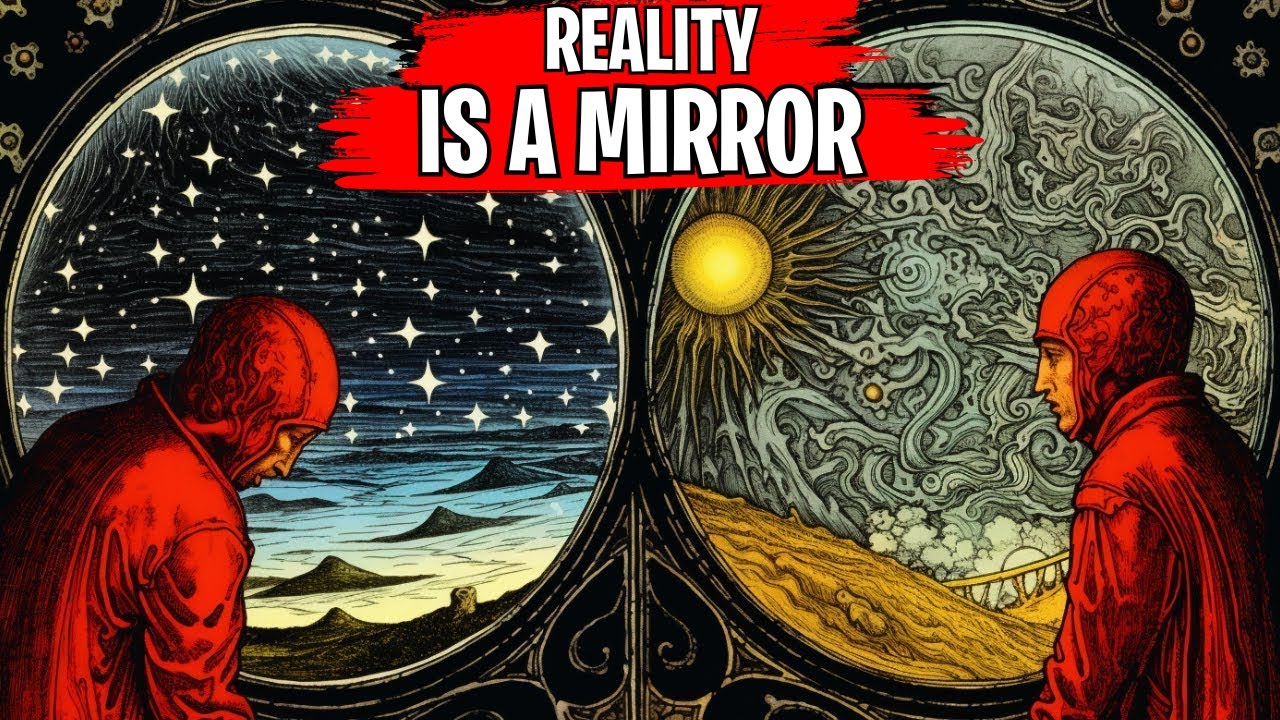
The way people make you feel—whether deeply loved or painfully unseen—is not random; it is a direct reflection of what remains unresolved within you. Think of the last person who evoked a strong emotional response in you, be it admiration or irritation. That person is not just someone passing through your life; they are a living mirror revealing something unspoken, something buried deep inside.
Maybe you're drawn to those who make you feel insecure, or maybe you reject those who display traits you've long denied in yourself. Today, you're going to learn how to read that mirror with clarity, because until you do, you will keep searching for love in the wrong places, looking for wholeness in someone else instead of within. The real question is never, "Why does this person act this way?
" The real question is, "What part of myself is this person showing me? " This is where the relational mirror becomes your greatest tool. When someone triggers a powerful emotional reaction in you, it is not merely about them; it is a reflection of your own unconscious wounds and projections.
Look at the patterns in your life. Are you repeatedly drawn to similar types of people, or do you find yourself consistently avoiding certain personalities? Attraction and avoidance are not accidents; they are signals.
They reveal what remains unintegrated in your inner world. If you deeply admire someone, ask yourself, "What do I see in them that I have not fully expressed within myself? " Perhaps you are captivated by someone's confidence because you've spent your life suppressing your own.
Maybe their fearlessness awakens a longing in you to break free from your own self-imposed limitations. Now look at what irritates you in others. What exactly about them bothers you?
Could it be that you reject in them the very traits you've denied in yourself? Maybe arrogance angers you because, deep down, a part of you has struggled with the same tendency, but instead of acknowledging it, you buried it under a mask of humility. This level of self-inquiry demands honesty.
It requires you to see yourself in ways you may have avoided for years. But in that recognition, healing begins, and the search for external validation starts to dissolve. The people who challenge you the most are often your greatest teachers.
The one who frustrates you beyond words might be showing you the very thing within yourself that needs healing. No one crosses your path by accident; every difficult relationship, every emotional trigger, carries a lesson if you are willing to see it. And just as others reflect you, you are also a mirror for them.
When you understand this, you no longer take reactions personally. You begin to realize that when someone resists or reacts to you, they are often reacting to their own reflection. Instead of meeting resistance with resistance, you meet it with awareness.
The purpose of this work isn't just to recognize patterns; it's to break them and reshape them into something new. Awareness alone is not transformation. Once you identify how a difficult relationship mirrors an unintegrated part of yourself, the real work begins: the work of healing, not through rejection but through understanding.
Integration does not happen overnight; it requires patience, a willingness to sit with discomfort, and the ability to observe your emotional responses as if you were studying a landscape unfolding before you—not with judgment but with curiosity, as if uncovering an ancient truth about yourself that had long been buried beneath layers of conditioning. In time, something profound happens. The people who once triggered frustration, anger, or longing in you begin to lose their hold over your emotions.
You will notice that the same patterns no longer repeat—not because the world has changed, but because you have. Your relationships shift effortlessly—not through force but through alignment. No longer will you unconsciously gravitate toward those who reflect your wounds; instead, you will find yourself drawn to those who reflect your wholeness.
The search for love will cease to feel like a desperate pursuit; instead, connection will arise from a state of inner completeness where love is no longer about filling an absence but about sharing an overflowing presence. Genuine love can only emerge from this space. When you love not from a place of scarcity but from a deep sense of inner sufficiency, your relationships stop being a means of validation and become spaces for mutual expansion.
You stop seeking in others what you refuse to recognize in yourself. And here lies the most difficult truth: What you reject within yourself is what continuously sabotages your ability to. .
. Experience deep, meaningful love. You cannot receive love fully if you are unwilling to accept all parts of yourself.
To resist an aspect of yourself is to create conflict with the very essence of your being. Think about the parts of yourself you disown, the traits you deny, the emotions you suppress, and the aspects of your personality you try to hide from others and even from yourself. This is your Shadow, and until it is acknowledged, it will continue to manifest externally, shaping your interactions and distorting your connections.
If arrogance in others triggers you, is it possible that deep down you fear being seen as arrogant yourself? If you constantly find yourself in relationships where you feel small, could it be that you have yet to claim your own power? The more you suppress, the more life will reflect it back to you through others, forcing you to face it over and over again until integration occurs.
The Shadow isn't just made up of the traits you consider negative; it also holds your hidden strengths—the power, creativity, and confidence that you have buried under years of conditioning. When you deny any part of yourself, you fracture your being, creating an invisible wall that separates you from the deep connection you desire. But when you embrace all that you are, love stops being an external pursuit; you become love.
From that space, connection ceases to be an act of need and transforms into an expression of truth. The illusion of separateness dissolves because there is nothing left to seek outside of yourself, only to share, to expand, to experience. This fragmentation is what drives us to look for in others what we refuse to claim within ourselves.
Every time you harshly judge someone, take a closer look, for they are holding up a mirror. The quality that irritates you most in another is often the same trait you have buried deep within your own psyche. Pay attention to your strongest reactions; within them lies your greatest insight.
Perhaps you judge those who show vulnerability because you fear your own softness, or you criticize ambition because you haven't yet given yourself permission to want more. What you fight in others, you resist in yourself. The same applies to attraction; we are drawn to those who embody the very qualities we have denied.
If you find yourself irresistibly captivated by someone who radiates confidence, ask yourself, "Have I silenced my own voice? " If you continually choose partners who need rescuing, is it possible that you are projecting your own need for care onto them? Our subconscious patterns shape our relationships far more than our conscious desires.
You may fear abandonment, so you unknowingly push people away before they can leave. You may fear losing control, so you resist even the most well-intended gestures of closeness. These are not coincidences; they are strategies your unconscious mind has built to protect an unhealed part of you.
But in doing so, they also keep you trapped in cycles of disconnection. Healing begins when you stop searching for love as something outside of yourself and start uncovering the love that has always existed within you. The relationships that once felt like battlegrounds will become sanctuaries.
The love you once chased will become a natural extension of your being, and most importantly, you will realize that love has never been about finding the perfect person. It has always been about finding your way back to yourself. To integrate your Shadow is to embark on a journey of radical self-honesty.
It requires courage—the willingness to see what has long remained hidden, not with shame but with curiosity. The first step is simple yet profound: observe yourself without judgment. The next time you feel a deep aversion toward someone's behavior, pause and ask, "Where does this exist within me?
" This is not an act of self-blame; it is an act of self-discovery. Your strongest emotional reactions are messages from your unconscious, revealing the parts of yourself you have yet to embrace. Integration is not about eliminating these parts but about reclaiming them.
If you have buried your creativity out of fear of judgment, begin to express it in spaces that feel safe. If vulnerability terrifies you, allow yourself small moments of openness with those you trust. The parts of you that have been suppressed are not weaknesses; they are untapped sources of strength.
As you acknowledge and reintegrate them, they cease to sabotage you from the shadows and instead become guiding forces, enriching your life with depth and authenticity. One powerful practice is to write a letter to your Shadow, addressing it as an old friend, recognizing the ways it has tried to protect you, even in its most destructive forms. Express gratitude for its lessons and set an intention to work with it rather than against it.
The paradox of this work is profound: by embracing your darkness, you become lighter. By owning your imperfections, you become whole, and it is this wholeness that makes true connection possible. Love flourishes not between perfect people, but between those who have accepted themselves completely—light and Shadow alike.
Relationships are not meant to be effortless; they are meant to be transformative. Every conflict, every disappointment, and every moment of joy holds within it a lesson if you are willing to see it. If you find yourself repeating the same relational struggles—feeling abandoned, feeling unseen, feeling unworthy—it is because an old wound remains unhealed.
If you constantly seek security in others, it is because a part of you does not feel safe within yourself. Until you recognize this, you will continue to attract relationships that mirror these unresolved aspects. Love is not a destination; it is a journey into deeper self-awareness.
To view love only as a source of happiness is to misunderstand its highest purpose. Love is a mirror—the clearest reflection of who you are and who you have the potential to be. To become, it will reveal your deepest fears, your hidden insecurities, your unclaimed desires.
Every person who enters your life carries a lesson, and until that lesson is learned, the pattern will repeat. The faces may change, but the experience remains the same. Look at your romantic history.
Do you notice a theme? Do you find yourself drawn to emotionally unavailable partners or constantly in the role of the rescuer? These patterns are not coincidences; they are road signs pointing you toward the inner work that must be done.
Psychology teaches us that the way we learn to receive love in childhood shapes how we experience love as adults. If love was inconsistent, if affection was given and withdrawn unpredictably, then inconsistency will feel familiar, even if painful. Recognizing these unconscious patterns is the first step to breaking them.
Love, at its core, is not about finding someone who makes you happy. Happiness is a beautiful side effect, but the true purpose of love is revelation. It shows you the parts of yourself you might never have discovered alone.
It is not just about being with the right person; it is about becoming the kind of person who can love deeply and courageously. When conflict arises, the question is never who is right; the question is always, what is this revealing about me? If a simple comment from your partner sparks a disproportionate reaction, look closer; there is something deeper beneath the surface.
If you cling tightly to control, ask yourself, is this a way to protect myself from an old fear of abandonment? These moments, though uncomfortable, are gifts for those who are willing to grow. Even attraction serves as a guide.
If you are drawn to someone's confidence, could it be that you have yet to fully claim your own? If you admire someone's creativity, perhaps it is because there is an artist within you waiting to be expressed. Your most powerful attractions are not random; they are glimpses into your own unrealized potential.
And when love is lost, when heartbreak strikes, it may feel like the end, but it is not an end; it is an invitation. Heartbreak is the soul's way of calling you inward, asking you to see, to learn, to transform. The pain is real, but so is the opportunity.
Every broken relationship is a doorway leading you closer to the love you have always been searching for—the love that has been within you all along. When a relationship ends, you are faced with a choice: you can point outward, blaming the other person and reinforcing the same old patterns, or you can turn inward and ask, what is this teaching me? The path you choose in this moment determines everything—whether you become hardened by experience or enlightened by it.
Growth begins the moment you stop seeking external validation and start using your relationships as mirrors for self-discovery. Love, in its truest form, is not about perfection; it is about transformation. The most fulfilling relationships are not those that avoid conflict, but those that use it as a catalyst for expansion.
Each challenge, each moment of discomfort becomes an opportunity to deepen self-awareness and transcend old limitations. Paradoxically, when you approach love as a journey of self-evolution rather than an escape from loneliness, happiness follows effortlessly. You no longer seek the ideal partner to complete you; instead, you cultivate wholeness within yourself, making space for a connection built on authenticity rather than dependence.
The shift happens when you stop saying, "Why do I always end up with the same kind of person? " and start asking, "Why do I keep choosing this kind of person? " This single shift restores your power.
No longer a passive participant in your love life, you become the architect of your relationships. Taking responsibility for your choices is not about self-blame; it is about reclaiming your ability to create the connections you truly desire. True self-awareness in love requires courage; it demands that you examine uncomfortable truths, dismantle deeply ingrained narratives, and release identities that no longer serve you.
This process is not always easy, but the reward is profound—relationships that reflect your growth rather than your wounds, love that arises from freedom rather than need, and an unwavering sense of self that remains intact whether you are alone or in partnership. The relationships you attract are not random; they are the echoes of subconscious patterns—patterns that will persist until they are understood and transformed. If you repeatedly find yourself in relationships that bring suffering, it is not mere coincidence; it is a signal that something within you remains unhealed, waiting to be acknowledged.
The truth is, your subconscious is always seeking familiarity, even when that familiarity is painful. If love in your early experiences was tied to inconsistency or criticism, you may unknowingly be drawn to relationships that reflect those same dynamics. If validation was scarce, you may spend your adult relationships chasing it, believing love must be earned rather than simply received.
The cycles you repeat are not punishments; they are road maps leading you to the places within yourself that require healing. The question is not, "Why does this always happen to me? " but rather, "What belief within me keeps attracting this experience?
" Unhealthy relationship patterns operate with near mathematical precision. The names and faces may change, but the underlying dynamics remain eerily familiar. This is not a matter of fate or misfortune; it is the effect of subconscious conditioning that influences your choices in ways you do not yet see.
The foundation of your relational patterns was laid long before you had the awareness to question them. If love was given conditionally in your childhood, you may now feel compelled to prove your worth in every relationship. If connection was unpredictable, you may now find comfort in emotional inconsistency, mistaking instability for passion.
The mind is drawn to what it recognizes, even when what it recognizes is harmful. Making these cycles begins with deep self-examination. Observe your relational history as though you were watching a film.
What are the recurring themes? Do you consistently attract emotionally unavailable people? Do you find yourself feeling unseen or undervalued?
Do your relationships tend to drain you, causing you to lose your own sense of identity? These patterns are not random; they are messages pointing directly to the wounds that remain unresolved. The relationships that frustrate you most are often the clearest reflections of your unconscious beliefs about love and self-worth.
At the root of every toxic pattern is a limiting belief. If you find yourself repeatedly betrayed, ask yourself: Do I secretly believe that loyalty is something I am unworthy of? If you feel controlled in your relationships, examine whether you have internalized the idea that you are incapable of directing your own life.
The beliefs you carry act as silent architects, shaping your experiences in ways you do not consciously intend. Until you confront and transform these core beliefs, they will continue to manifest externally, reinforcing themselves through the partners and circumstances you attract. Healing does not happen by changing the people around you; it happens by changing the relationship you have with yourself.
When you shift your internal world, your external reality follows. The partners you once felt drawn to will lose their pull. The love you once chased will cease to feel like a need, and in its place, you will find a connection rooted in something far more powerful: wholeness.
Neuroscience reveals that the patterns you repeat in relationships are not just psychological; they are imprinted into the very structure of your brain. Every time you react in the same way, you strengthen neural pathways that keep you locked in the same cycles. Breaking free requires more than willpower; it demands a conscious rewiring of your mind.
This begins with awareness. Pay attention to the moments when your emotions overpower you—those times when a simple delay triggers a deep fear of abandonment, or when a harmless remark about your appearance stirs intense insecurity. These reactions are not random; they are windows into unhealed wounds.
Transformation begins the moment you take responsibility for your patterns. This does not mean blaming yourself, nor does it mean blaming others; it means recognizing that you are not merely an observer in your love life. You are an active participant.
As long as you believe you are at the mercy of fate or the actions of others, you will remain trapped in the same cycles. But the moment you claim ownership of your experience, everything changes. You step out of victimhood and into conscious creation.
The power to change is already within you, waiting to be reclaimed. Your body holds the key to breaking these cycles. Toxic attraction often feels like an exhilarating and intoxicating mix of familiarity and chaos.
The nervous system confuses intensity with connection, mistaking unpredictability for passion. Learn to recognize the physical signals before they become unconscious choices: a sense of urgency, a feeling of emotional hunger, a rush of adrenaline. These are not signs of love; they are signs of a pattern repeating itself.
True connection, in contrast, feels grounded, stable, and expansive. It is unfamiliar at first, even uncomfortable, because it does not match the chaos your nervous system has learned to equate with love. One of the most powerful shifts you can make is learning to set boundaries—not just with others but with yourself.
If you have a tendency to lose your identity in relationships, create rituals that anchor you back into yourself. If you often fall for people who drain you, define what behaviors you will no longer tolerate. Boundaries are not walls; they are acts of self-love.
They disrupt the cycle of self-abandonment and create space for something healthier to take root. True growth happens when you dare to choose what is unfamiliar—when you move toward relationships that offer peace instead of drama, even when peace feels unsettling at first. Breaking patterns is not a single moment of realization; it is a lifelong process.
Some days you will slip back into old habits; some situations will tempt you to return to what is known. But every time you choose differently, you strengthen new neural pathways. Science is on your side: your brain is wired for change.
With every conscious choice, you reshape your relational reality. The goal is not perfection; it is awareness. When you are no longer bound by unconscious programming, you can love freely—not from compulsion but from clarity.
Love, then, is no longer something you chase; it is something you create. And here lies the greatest shift of all: love is not an external force that finds you by chance. It is not something you must earn, seek, or wait for.
It is an energy that emanates from within you. The idea that love comes from another person is an illusion that keeps you in a cycle of dependency. If you believe love must be received to be felt, you will always experience lack.
You will search endlessly, trying to fill a vessel with holes, never realizing that the source of love was within you all along. This shift is revolutionary. You do not need permission to love yourself.
You do not need to achieve more, look different, or prove your worth to anyone. Self-love is not a prize you receive for being perfect; it is your birthright. When you dismantle the beliefs that tell you otherwise, you step into a state of radical self-acceptance.
And in a world that has conditioned you to measure your worth by your achievements, your appearance, or your productivity, choosing to love yourself without conditions is an act of defiance. As this self-love deepens, your relationships transform. No longer do you approach others from a place of need, hoping they will complete you.
Instead, you come from a place of wholeness, bringing love rather than seeking it. You stop grasping for. .
. Validation, and in doing so, you become more open to authentic connection. The irony is that the less you need love, the more freely it flows toward you.
You attract relationships that mirror your self-worth instead of your wounds. You choose partners who meet you in your fullness, not those who reflect your fears. The shift from lack to wholeness changes everything.
When you are disconnected from yourself, attraction is driven by subconscious wounds. You chase people who reflect your deepest insecurities, mistaking their approval for love. But when you embody self-love, attraction is no longer an addiction; it is an alignment.
You gravitate toward people who resonate with your growth, not those who replay your pain. And contrary to what you may believe, self-love is not narcissism. True narcissism is rooted in insecurity, a desperate attempt to fill an inner void.
Authentic self-love, on the other hand, comes from acceptance, from seeing yourself fully and embracing both your light and your shadow. A simple yet transformative practice is conscious self-compassion. When uncomfortable emotions arise—fear, shame, loneliness—do not suppress them, do not fight them.
Instead, hold them as you would hold a child who is afraid. Meet them with understanding. This is the practice of deep self-acceptance, and it is the foundation of real love.
Love is not something you arrive at; it is something you choose moment by moment. Some days will be harder than others; old wounds will resurface, self-doubt will creep in. But every time you bring yourself back to love, you strengthen your capacity to live from it.
And here is the final paradox: when you stop searching for love outside of yourself, you realize it has been with you all along. It is like a fish searching for the ocean, unaware that it has been swimming in it the entire time. Love is not something you find; it is something you recognize.
It is not something you must chase; it is something you embody. This is what sages and mystics have whispered through the ages: love is not something you do; it is something you are. When you live from this truth, love ceases to be a pursuit and becomes an expression.
It radiates from you, touching everything and everyone in your path. You no longer seek love as something to fill you; you become a source of love itself. And when you reach this place, your relationships are no longer about completing each other but about expanding together.
This is the secret; this is the shift. And once you see it, you will never see love the same way again. If this message resonates with you, share it with someone who needs to hear it.
If you want to continue exploring this journey of transformation, subscribe and activate the notification bell. Remember, love is not something you find; it is something you create, and that creation begins now. Thank you for being part of this journey.
Until next time.


![Carl Jung WISDOM that Life Really STARTS at 40: Midlife Advice to Younger Self [Self Actualization]](https://img.youtube.com/vi/Pbegkiaj5MI/maxresdefault.jpg)