[Music] three centuries after the first discoveries Egypt continues to Fascinate us every month that goes by reveals new Treasures buried under the desert sand this fragment of nose was found in the area during an archaeological dig so it was stuck back on it hadn't gone far temples pyramids necropolises and ancient cities are just some of the Wonder to Bear witness to the Splendor Of past pharaohs and their heirs the Greeks used to make cakes called pyramids when they came to Egypt they found colossal stone structures in the shape of their cakes so they gave them
the same name this ancient civilization which was thought to have been lost is constantly Reinventing itself in the Egypt of the 21st century we are going to travel through time and space to ReDiscover it [Music] [Music] on the North coast of Egypt lies Rosetta where the Nile flows into the Mediterranean Sea at the end of its 7,000 km long journey which starts in the heart of Africa it was in this city that the key to the culture of the Pharaohs was discovered in 1799 the Rosetta Stone helped French egyptologists Jean franois cholon uncover the mystery
of hieroglyphs from then on archaeologists Could read ancient Egyptians like an open book and they discovered that the Nile was Far More Than Just a river the pharaoh's subjects worshiped it celebrated it and Associated it with numerous deities the Nile and its Delta have been the country's greatest asset since the dawn of time without this life force Egypt would be merely a vast and sterile expans of desert Upstream from the Delta the Nile Is a majestic River on its banks lies the current capital Cairo founded by the Arabs in the 7th century today the river
must wind its way as best as it can through this megalopolis of 16 million inhabitants it is a sprawling city which stretches almost as far as the Giza Pyramids today these Wonders of the Ancient World lie 8 km from the riverb but in the days of the Pharaohs the Nile flowed right past them that was how the Millions of blocks of stone needed to build these colossal 4,000 500y old structures were transported to gain a better understanding of the role and the importance of the Nile in Egypt's 4,000-year old culture we must go further Upstream
to the South where it is the shape of a green snake winding its way through the Hostile deserts in Luxor on the site of the ancient city of Thieves the river has Always governed the daily life of the locals the river traffic is dense there Egypt is a big country and the Nile covers a distance of 1,200 km the river Remains the natural link between North and South you find all sorts of boats on it from Modest dingies used by local residents to cruise ships transporting hundreds of tourists who have come here to visit the
wonders of the ancient Heritage sites such as Lux or Temple for Example there is one boat which causes a sensation every time it passes and it has been doing so for 100 years and that's the legendary Palos steer [Music] Sudan you are on board the oldest and most unique boat on this boat was built in 1885 for the Egyptian royal family for King fuad and his son who became the last king of egpt this was Agatha Christie's Boat in 1934 she and her husband were invited to spend a few days in Egypt she began her
stay in the Old Winter Palace Hotel in Lux then she boarded the paddle steamer Sudan and ended her trip in the old cataract hotel in one while she was on board Agatha Christie wrote the first few chapters of her book death on the [Music] Night since the 19th century the Western world has had a Fascination for Egypt to the extent that we talk about Egypt Mania and when Agatha Christi set novel death on the Nile amongst Egyptian Antiquities she knew its success was guaranteed the 30 km long mountain chain opposite Luxor helped contribute to the
craze for all things Egyptian in it lies a site which captured everyone's imagination the thean necropolis archaeologists have uncovered over 600 Tombs here the most famous of which are those of tutin Caron and nefatiti the wife of rameses II but each year that passes brings a new set of discoveries Oma has explored every knok and cranny of these desert valleys this was her childhood dream she fulfilled it when she became an egyptologist specializing in the thean necropolis we are in front of the tomb of re mea who was a visier during the Reign of tmos
III viers were a bit like modern day Prime Ministers so he was a very important man [Music] here we have a whole wall decorated with scenes showing the Egyptian people bringing gifts to rec miror you can see all sorts of things herds of oxen cows carves crates full of pigeons piles of grain jars of beer and wine there are also trays of bread these Round loaves are typical of Egypt and you still find them today they are called shami which means sunreed because they are left out in the sun to rise they are dense whole
meal loaves this shows us the riches that came from the Nile from the silt of the Nile and from its flood waters from this green band of water this green snake which is the lifeblood of Egypt without denial Egypt would not exist and would never have existed we wouldn't be here [Music] today 96% of Egypt's population of 100 million still lives on the banks of the Nile on both sides of the river lies fertile agricultural land the water from the Nile has always been diverted channeled and and harness for irrigation [Music] purposes to water their
crops ancient Egyptians used a shado this was a tool with a Lether mechanism used to draw Water from the river by hand shadu was still in use in the late 20th century today they have been replaced by pumps which are more practical but less environmentally friendly jaiel like his ancestors helps himself to water from the river to water his corn fields water is scarce here the only source of water is the Nile that's why we're lucky to live near the river it depends on the season but we need a Lot of water for our crops
from here right up to the sugarcane fields near the desert everything is irrigated by the Nile that's a distance of about 5 km the Nile is the lifeblood of Egypt because we are very agricultural Nation the river is what matters most to us there is a famous saying that Egypt is a gift from the n and it's true at gner the Town opposite luxa the benefits of the Nile are felt as far as The desert every plot of land is cultivated some are too small for a [Music] tractor so farmers like Muhammad use an ancient
technique the swing [Music] plow a plow is better than a tractor the tires Tamp down the soil too much if a tractor were to drive over here there would be lots of soil with nothing growing in it it's better to use We inherited this technique from our Ancestors it's a technique which dates back to the time of the Pharaohs the ancient Egyptians used a plow pulled by oxen you can see images on some of the tombs around here the swing plow hasn't changed since Antiquity the ancient Egyptians did not use iron the plow share was
made of wood nowadays it is made of metal but the biggest difference between now and then is today's Farmers own their land Whereas the whole of Egypt used to belong to the Pharaoh this is our Legacy so we look after it before he died my father said to me this plow will bring you luck I asked him why he replied if you have a small plot of land surrounded by Fields you can use the plow work the land without disturbing your neighbors then they will pray for you because you were careful with their Crops and
he was right that is [Music] important in the distance behind the fields of corn and sugarcane lies the thean mountain with its necropolis [Music] the inhabitants of GNA rarely Venture that far only a few of them have found work there more often than not as tomb attendants yet not long ago their Village stood in that spot living in Close proximity to the dead didn't seem to bother their [Music] ancestors in the 19th century an archaeologist who here found the owner of the house sleeping in a sarcophagus in a coffin thousands of people lived in the
village and sadly a few years ago it was raised to the ground to preserve the site in the 1950s the authorities decided to destroy what People here call Old gner traces of the village can be seen all over the site but it is in the Tomb of carow that you really get a feel for the intense activity that went on here back when the living rubed shoulders with the dead car was the steward of Tia the great Royal wife of am men the thir and mother of the famous [Music] Ain this tomb is very beautiful
but it Is not only tourists and olist who think so come and [Music] see this network of underground galleries is like a Swiss cheese I'm not suggesting that mice have been here but humans have the inhabitant of old gner searching for ber treasure tomb robbers definitely used to live down here you can see dark patches on the ceiling from the so that built up here Over the years you can just imagine these men searching making holes here and there like this one for example thanks to the robbers we can pass from one tomb to the
next throughout the whole of old G All That Remains of old GNA are these ruins but life goes on opposite the ruins new gner is celebrating a very important local event this evening a [Music] wedding at weddings it is traditional For people to come and greet the bride and groom and and to perform a dance for them on Horseback as you can see here the family and friends of the two families pay their respects in the afternoon and the wedding ceremony takes place the next day or the day [Music] [Music] after ancient Egyptians did not
ride horses it was only when they fought the hicko from Anatolia in the 16th century BC that they discovered this wonderful animal the first horses were a very small breed only about 1.2 M tall it was impossible to mount them so they had to be harnessed to a chariot rames II's Chariot was an excellent example he would drive his horses with the rains tied round his waist to leave his hands free to shoot his bow and arrow throughout ancient Egyptian history horses remained a luxury and one of the most formidable weapons of the Pharaoh's Army
with the arrival of the Arabs in the 7th century and their equestrian tradition horses became what they are now in gner a sign of wealth and of masculine Pride [Music] it is dusk in gner the time when the town comes alive in these ordinarily calm streets music fills the air on a patio away from prying eyes the men are continuing the wedding celebrations the horse is still the Guest of honor only this this time the rider has to show off his skills as a trainer the horses dance alongside the men to the rhythm of tambourines
and mmars which are an early form of trumpet no parties complete in Egypt without a stick fight or tarti this is an ancient tradition that comes from training the Pharaoh soldiers this martial arts has very precise rules that were established in about 3,200 BC it is still practiced Today the first of the two fighters to graze the face of his opponent is declared the winner contact must remain symbolic and the fight must be simulated over the centuries tarti became more of a dance than a fight shifting from a military register to a martial arts one
thanks to the practice of local farmers in in the early hours of the morning the wedding celebrations are still in full swing the men are starting to show signs of tightness through the Smoke from their shishes [Music] [Applause] every morning hot air balloons fly over the ancient site of Thieves when the winds are favorable lucky passengers get to see the biggest Ancient Temple of all carak it is home to one of the most important gods in ancient Egypt Amon only priests can enter every day they lay offerings in front of a mon Statue food to
give him the energy he needed to unite the universe but his energy is contagious so carak has high walls to protect the uninitiated from contamination for ancient Egyptians carak was the equivalent of a nuclear power station and the god Amon was the nuclear reactor it was a useful place but a dangerous one we are now standing on the famous Sphinx alley a 3 km long road linking Carac and Lua this was the processional route taken by rames II for the celebration of the Feast of opet during the second month of the Nile floods in the
inundation seon the Feast of a pet is one of the most important festivals in ancient Egypt it celebrates the start of the Nile floods this was the only time in the year when the priests would bring out statues of the Gods it was also the Only opportunity for ancient Egyptians to see Amon the God must be United with his wife mut the Pharaoh is present because he is the only person able to communicate directly with Amon the union between mut and Amon symbolizes fertility because the silk deposited by the river fertilizes vast areas of Egyptian
soil every year I am standing on Egyptian soil that dates back to 1100 to 1200 BC era of rames II but if you look at the lower part of the m at the level of the door there that was built in the 12th century a so 2500 years later or a bit less even because the temple was still in use in Roman times so less than a thousand years later this part of the temple was covered in mud 6 M deep clearing the temple led to a rediscovery of this Jewel of ancient Egypt But the
original entrance to the mosque had to be ditched and then transformed into a window with an unrestricted view over the great Court of rames II in ancient Egypt the floods marked the start of the calendar year as with so many events at the time of the Pharaohs the date was decided by the Nile 100 50 km Upstream at the Temple of K omo the proof is etched into the stone for anyone who knows how to read [Music] Hieroglyphs Sam certainly does he is a copt this Christian Community was present in Egypt long before the Arab
Conquest in 640 ad cops are direct descendants of ancient Egyptians Sam owes his passion for egyptology to his desire to gain a better understanding of his Origins part of the answer is to be found on the walls of kambo in the form of this perfectly preserved calendar the dates were dictated by the Nile and its Caprices and the calendar is still used by the Coptic church and by many Egyptians the same calendar is still followed by farmers in Egypt and it is also the lurgical calendar of the Coptic Church ancient Egyptians invented this 365 day
calendar or to be exact this 360-day calendar plus five feast days at the end of the year the 365 days are divided into 12 months of 30 days each and the 12 months were spread over three seasons The inundation the emerence and the Harvest the ancient Egyptian calendar started in mid July around the time of the Nile floods let me show you an example this is the first day of the third month of the season of the inundation and this is the second day and the third day and so on this is the calendar we've
inherited modern day calendars have 365 days a year so they were invented by the ancient Egyptians The Nile has always organized the lives of Egyptians down to the smallest details but in addition to being a life force the river is synonymous with danger and at the time of the Pharaohs anything that represented a threat was turned into a deity komomo is the house of sebec the god with the head of a crocodile he is the protector of the Nile but he is also a troublemaker who had to be appeased at all costs at commo Archaeologists
found hundreds of crocodile mummies proof of an ancient [Music] cult wa quite a few crocodile remains were found in the necropolis some of them are huge very important the ancient Egyptians didn't deify worship the whole species just an individual crocodile chosen according to specific criteria and that crocodile was Considered to be a living God it was pampered and fed honey pastries it was presented with crowns of flowers it really was treated like a God then then when it died it was mummified like a god the Nile used to be full of crocodiles and it was
dangerous for Egyptians to Bath in given how many of them were lurking in its your [Music] D today there are hardly any crocodiles left on the banks of the Nile but another animal Contin continues to terrorize and command the respect of locals this animal can be seen on numerous ancient carvings it is the Cobra and it acted as a bodyguard to the Pharaoh when it was in attack mode [Music] both now and then the best way to spot a cobra is to go to a busy neighborhood And look for a snake charmer or rather a
snake hunter that is how a makes his living like his father before him and his father's father before that he captures unwanted snakes from houses or out in the fields and then trains them to entertain bystanders it's a very short after job cuz these snakes end up in people's houses as soon as people spot one they call me I'm the only snake charm left around [Music] here as soon as I catch them I put them in a basket like this they live in these baskets until they die they die of natural causes I don't kill
them I couldn't do that obviously the first thing I do is remove their fangs then I put them in front of me like this to get them used to me and then I start training them it's very simple if they try to escape I catch hold of their tail and put them Back in front of me until they get used to me and stop trying to escape I was only bitten once when catching a snake the bite completely paralyzed my finger and I had to have surgery on it my finger remained stuck in this position
I had an operation to straighten it out and it went back to normal it was a cobra that did that to me one like this the same species but That one was more aggressive and very wild plus it was much fatter [Music] no problem there one like [Music] you wild animals weren't the only danger faced by the ancient Egyptians the Nile is a capricious River when the flood waters got out of control they destroyed every everything in their wake the Temple of comomo still Bears the scars Temple looks complete but in Actual fact the front
is missing on this side you have the outer wall there is only one door jam you have to imagine a door there and the outer wall built of mud bricks which continues along there it was carried away by the BL example of the violence of the and of course the has a nourishing side to it but in the case of severe flooding it can be very destructive and Dangerous in times of heavy flooding the Nile swept up and often destroyed everything in its midst sometimes the riverbed didn't return to its original level it would change
on a whim to protect themselves from the river's worst extremes the Egyptians would build mud brick walls caruk Temple for example is surrounded by a gigantic Dyke building it was a humongous task which must have Taken the pharaoh's brick makers several centuries to complete [Music] you can see them here with their Tools in this bass relief to gain a better understanding of the techniques involved we visit a modern-day brick [Music] maker abdala Salim and his colleagues make bricks and their methods haven't changed since the time of the Pharaohs the first stage is to mix Earth
straw and water next we poured a mixture into rectangular molds line them up and then leave them to dry in the Sun [Music] people grow up learning this profession and when they die someone else takes up the torch and history repeats itself we must protect our heritage [Music] [Music] We make between 1,000 and 1,100 bricks a day look at these for example the first stage is finished these are unfired bricks and some people use them like this other people prefer fired bricks it's up to individuals to choose what they want to build their house in
our village everybody uses unfired because they are much better adapted to our Climate fire bricks don't fa so well in very hot [Music] weather the Nile floods would mobilize the entire population of Egypt under the Pharaohs it was a constant source of worry further south towards the modern city of azwan there was an obstacle on the river the first [Music] cataract this collection of rocks would Disappear and reappear depending on the water level elephantine island is one of the biggest islands in the first cataract to get there Sam boards a tradition Nile Riverboat we are
on board a Fuca a Fuca is a traditional Egyptian Sailing Boat the Nile has been Egypt's main through there since the time of the ancient Egyptians sailing was the most comfortable and fastest way to travel The prevailing wind in Egypt is a norly wind blows the boat against the current the Nile's current goes from to North in the opposite direction to the wind which is what makes it possible to sail in both directions elephantine Island was essential for military operations in ancient Egypt from here they could watch over the Nile prevent invasions from the south
by boat and control the ivory Trade after which the island is named the island isn't just located in an important strategic position it is also the first point of reference for monitoring during the floods the measuring system the Pharaoh used remained in place until the 20th century and can be found all along the river as far north as the Delta we are in a neter on elephantine Island this neter was used until relatively recently to measure flood Levels these are the graduations from the 19th century the Muslim eror and on the left you have the
graduations from the time of the the when the flood waters they flowed in here and gradually filled the Miller the priests use these graduations to estimate the force of the flood water and the speed at which it would rise if there was too much water they had to build shelters And if there was not enough water they had to dig ponds to retain as much of it as possible it was a vital and very important role of the king of Egypt to manage the flood waters of the Nile and to regulate water supplies for the
crops in ancient Egypt everything was thought to be connected to the deities if there was a bad flood it was because canum was UN happy Kum with his Ram's Head is one of the most important gods in the Egyptian Pantheon his name means Master of the water and he controls the Nile floods kume resides on elephantine Island which is the focal point of his kingdom the first cataract the cataracts are the Rocks mostly Granite which covered this whole region back in the day the Nile has carved out a path through them you have to imagine
this region in The season of inundation with the water swirling between all these rocks in ancient Egyptian mythology this was the source of the N if canum is the god of the Nile's floods happy was the god of its source he lives on the riverbed in a cave under the cataract water spurts out of a jar in his hands happy embodies the benevolent aspect of the Nile he is portrayed as an androgenous figure with a bust and a Belly happy personifies fertility when he is with his double he represents the link between Upper Egypt and
Lower Egypt between the Papyrus and the lotus the Nile's flood waters no longer reach the first cataract a few kilometers Upstream from elephantine Island a concrete and steel monstrosity is blocking the way bringing this capricious River under control the Awan Dam has usurped canum The god of the floods at over 4 km long and 111 M High the dam is a match for the Great Pyramid taking up 17 times more space since it was built in 1970 this giant structure has transformed Egypt today Egyptian Farmers have three harvests a year instead of just one but
there is a price to pay chemical fertilizers have replaced the silt from the flood waters [Music] nowadays the Awan dam is a tourist Attraction it is a source of Pride for Egyptians and for those who built [Music] it Rosy was just 22 when he was recruited to work on this vast building site I was here 55 years ago so you can imagine the feelings I have now let you imagine the shape of the environment at that time you see this place actually I mean at that time it wasn't clean and marvelous like this it was
Hills and Valleys of sand and rocks and all of That I this was our [Music] offices we found ourselves in 1960 the beginning of the High Dam and the beginning of what we call it changing the mood of the Egypt itself actually from small country to a country which has a good will to start building something like the High Dam that's why I like to talk about High Dam it's not because an engineering sense but I'm talking about the uh psychological Meaning about it in the 1960s NASA ruled Egypt a fervent defender of Arab nationalism
he wanted to proclaim the independence of his country to the whole world the Awan Dam became his great achievement the United States refused to fund it so NASA appealed to the Soviet Union and was successful work started in 1960 36,000 workers toiled day and night in temperatures sometimes exceeding 55° there were numerous accidents the Official number of victims was over 500 we had lot of sacrifices we had lot of people dying on this project actually but the conclusion in in the in the end of it actually that we are standing there now seeing that this
project is living among of all of [Music] us abdal kareim worked on the dam and survived he was born and bred in azwan at the age of 91 the dam Remains the biggest adventure of his Life Long Live Egypt Long Live Egypt Long Live Egypt now I can talk to you about the dam when construction started I was working on a dangerous site everything collapsed on top of the workers and lots of people were killed work was halted and the biggest machines were banned from the site we had to continue by hand using shovels it
took all our strength to lift The big stones with ropes yes people died but it was for a good cause the Awan Dam [Music] this is the letter that gaml Abdul Nas sent me once the dam was finished it's a thank you letter I'm proud of my contribution I'm glad I helped build the Awan down I did it for Egypt [Music] Upstream from azwan the construction of The dam has had a drastic Consequence the creation of Lake nazza a vast reservoir of water covering an area of over 500 km encompassing the entire region of Nubia
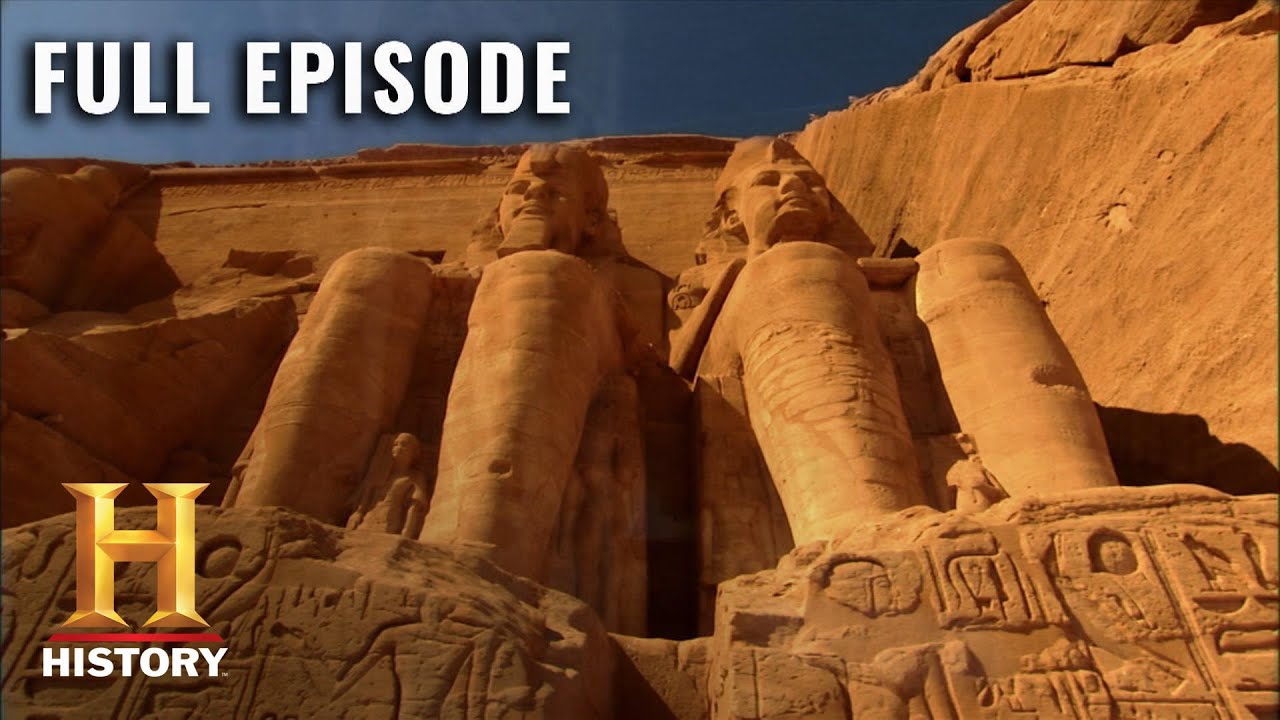
after thousands of years in existence The Monuments of Nubia are at risk from flooding the most prestigious of all the archaeological Treasures are the Abu symol [Music] temples Richard lebau is a French Egyptologist he found his calling at the age of 14 when when he visited the tutun Kon exhibition in Paris in 1967 since then he has traveled to Egypt over 100 times for Richard Abu simol is still one of the most magical places in the world in front of you you have a Monumental Temple belonging to rames II it has a 20 M High
Colossus this was the first time a pharaoh had dared to represent himself as a god This Temple is a miracle it almost disappeared under Lake NASA 42 nations came to the rescue with $ 36 billion just a week or two before disaster struck the operation to save the Abu symbol temples was launched on first of April 1964 it was a race against the clock for 8 years 900 people were worked on it day in day out first they had to build a dyke to protect the site from rising flood water then workers divided Abu symbol
up into 1,035 blocks each weighing 20 to 30 tons the four seated Giants and the six other Monumental statues were dug out by hand the most delicate phase could now begin it involved transporting this giant jigsaw puzzle 64 M Upstream Jack cranes and extremely powerful winches were used to raise these huge blocks to the top of the cliff finally artificial Hills were built to recreate the original setting for the two Abu symbol Temples this is an extraordinary site in terms of technique digging up a temple is highly risky and a real challenge in those days
the world had no concept of universal it was saving the monuments of Nubia including the Abu symbol temples which gave rise to unesco's famous list of world heritage buildings the first building on that list AB this is the second temple of Abu Symol the one rames II dedicated to his famous wife Neti in addition to being a devoted lover rames II was a great politician he knew that the prosperity of Egypt depended on his domination of Nubia and at the bottom of this inscription that you see here he is presented as the master of Nubia
today and always Nubia was an important region for the Pharaohs it is rich in gold mines and Ivory and African slaves passed through here the trouble was that the Nubians were inclined to Rebel as soon as they got the chance the Pharaohs from northern Egypt tried everything to pacify this rebellious region this is a column of prisoners tied behind their back and on their knees these people are easily identifiable by their negro trait the significance of this freeze Which was on the outside of the temple was to show Egyptians that the Nubians had been conquered
and that this defeat would affect them throughout history until the end of time [Music] this world heritage site was saved but the Nubian population was forgotten there was no sign of the paradise NASA had promised them after the construction of the dam and 100,000 of them were [Music] displaced in the village of Abu simul behind the artificial Hills Sheltering the temples a few traces of this ancient culture can still be found F does all he can to preserve it he wants used to sing about this Lost Paradise now he is trying to preserve remnants of
it I am part of the last generation to have experienced Nubia back in the day I used to play in front of the temples of Abu simol when the facad stretched down towards the river we would travel by Fuca from our village on the opposite Bank we would come here to the temples to play I have happy memories of [Music] it the whole of Nubia was here that was the village of Abu Sim one of the 44 villages in nuia which stretched from the border with Sudan down to Awan the 44 villages in Nubia were
dotted all along the Nile Valley the landscape you see today between Lua and Awan remains more or less unchanged just had more palm trees there used to be millions of palm trees here but they have all disappeared 60 M beneath the [Music] lake no one can imagine what it was like today it is deserted there is a lake here now but life was different then There were on the that life has completely disappeared under the [Music] lake UNESCO hasn't done much to save it nor has the Egyptian government or anybody else for that matter if
we don't try to safeguard this part of our culture it will disappear forever Nubian culture is at risk of Disappearing and yet it has lasted for centuries in particular the architecture with its domes and vaults designed Especially to withstand the heat of the desert the music is a reflection of the People Too some of the instruments are straight out of the fonic era [Music] [Music] [Music] modern day Egypt has made the pharaoh's wish come true to bring the Nile under control whatever the price most Egyptians have had to adapt despite coming from the Delta these
fishermen at Lake nassa look as if they've been here forever however a new element has appeared in the heart of the African continent Ethiopia has also built a dam over the Nile the Ethiopians can now control the flow of the river too so the Egyptians are not the only masters of the Nile this represents a new challenge for the country where since the time of the pharaohs the Nile has been synonymous with Egypt and Egypt has been synonymous with the [Music] Nile three centuries after the first discoveries Egypt continues to Fascinate us every month that
goes by reveals new Treasures buried under the desert sand this fragment of nose was found in the area during an archaeological dig so it was stuck back it hadn't gone far temples pyramids necropolises and ancient cities are just some of the wers that bear witness to the Splendor of past pharaohs and their Hirs the Greeks used to make cakes called pyramids when they came to Egypt they found the Colossal stone structures in the shape of their cakes so they gave them the same name this ancient civilization which was thought to have been lost is constantly
Reinventing itself in the Egypt of of the 21st century we are going to travel through time and space to ReDiscover it [Music] The Cult of death played a crucial role In ancient Egypt with its necropolises pyramids mummies and sarcophaguses 34s of archaeological discoveries on Egyptian soil are directly linked to funeral rights the ancient Egyptians loved life so much that they hoped to be able to enjoy it even after their death they would mummify themselves to make their bodies last forever their burial places were built like dwellings with the walls painted in colors associated with Life
but that was not enough the deceased also had to appear before Osiris the god of the Dead who had judged their actions and decide whether or not to grant them eternal life this age-old notion of judgment after death has not disappeared in Egypt both Christians and Muslims hope to be among the Chosen Few when the final judgment comes to today as in the past death is not seen as an end for [Music] [Music] [Music] believers in luxa the wedding season has begun couples marry in the shade of this ancient Egyptian temple it is the start
of summer when temperatures rise to over 45° centigrade to protect themselves people start work very early in the morning this is the best time of day to spread the word trucks like these with their makeshift Loud speakers are often the only link between small neighboring rural [Music] communities KF mmud KF Hassan has departed may he rest in peace through the mercy of God he is from the village of n his burial will take place at 3:00 before afternoon prayers I am announcing the death of the Muslim to Villages I am making this announcement So that
everyone in the surrounding Villages knows that this person has died if I don't announce it through the loudspeakers no one will come to his funeral because no one would have been [Music] informed I've been doing this for 25 years but it is not my real job [Applause] [Music] my real job is to do the call to prayer at the mosque I was chosen because I Have a good voice is my [Music] job it is very important for people to join the funeral process and pray for the dead if they do they will be rewarded by
God but it is important for the deceased too as we say here if 40 people pray for the deceased they will definitely go to [Music] heaven kalaf mmud died in the Night in accordance with the quranic tradition he will be buried the following day this man was held in high esteem his friends gather outside his house to pay their last respects inside his family is watching over his corpse in keeping with tradition it has been wrapped in a white shroud the adult males in the family have washed and embalmed the body he is Ready for
his final Journey to the Village [Music] Cemetery if C mmud had lived in the age of the Pharaohs he would have been mummified after his death mummification was a much more complicated process than eming the ancient Egyptians believed that there was life after death in their own bodies to see mummies today you have to travel to the capital Most of them are to be found in [Music] Cairo hidden away in the center of this sprawling City this old museum is their home the Museum's incredible collection still attracts just as many Egypt Maniacs as ever but
the Undisputed stars of the museum are the [Music] mummies some are over 3,000 years old and Incredibly well preserved the bandages have been removed to show off The bodies that practice dates back to the early days of egyptology in the 19th century nowadays out of respect for their ancient religion the mummies are left in their original [Music] state at the Museum's laboratory not a day goes by without Professor mman a distinguished specialist in the restoration of Antiquities handling the mummies once they are out of their Sarcophagus he never touches the cardboard casing it is the
final protection before the bandages here we have a mummy in a wooden case shaped like a human body thanks to the funeral mask and the x-rays we have been able to confirm that this is the mummy of a young woman she was about 22 years old when she died on the x-rays we could also see that she had a fetus between her legs So that tells us about the possible cause of death given her age there is a strong possibility that she died of a miscarriage The Mummy is in perfect condition as are the drawings
on the case some are very rare here for example we have the God canum standing in front of the young dead girl it is magnificent and very rare the origins of mummification are due to chance 6,000 years ago Egyptians Used to bury their Dead in Ditches in the desert they noticed that the sand acted as a very good preservative later their belief in eternal life forced them to find more effective processes to preserve the corpse in the best state possible for the rich balms spices and bitumin were used once the entrails had been removed corpses
were soaked for 70 days in Natron which is a natural salt which Absorbs humidity all of these products cost an absolute Fortune [Music] this is another very rare piece it is the left arm of a pharaoh King unas from the fifth Dynasty it was discovered by French archaeologist Gaston maspero at the end of the 19th century later researchers carbon dat the AR the results confirm that it came from The Old Kingdom from about 2350 BC dominations under the microscope revealed the presence of the resin and linen used during the mummification process this is hard proof
that mummification was already being practiced at that time but the technique was not perfected until the Days of the New Kingdom in the 18 19n the techniques of mumification in the 19th dynasty was so effective that 3,200 years after their death we Can still put faces to the names of the major figures in Egyptian history people like seti the first and his son rames II one of Egypt's most powerful pharaohs who reigned for 67 years and died at over 90 years of age the practice of mumification carried on for centuries and was adapted by all
of Egypt's various inv [Music] ERS we are working here on a very special m a mummy with a portrait from The Roman era these are called fume mummies and they existed between the first and fifth centuries a this one is very special it is drawn on a red background there are only 20 like it in the [Music] world the idea behind the funeral masks covering the faces of Egyptian mummies is that they restore the use of the senses to the dead person at the end of the Old Kingdom The Masks were repl with Portraits the
came straight out of the Greco Roman artistic tradition these portraits were commissioned from artists by the living in anticipation of certain [Music] death it is hard to know exactly when mummification stopped but there were no mummies between the fifth and 6th Century ad that date corresponds to the rise of monotheistic religions which forbade [Music] In the region around luxa kalaf mammu's remains have reached their final resting place the cemetery in his Village only the men take part in the funeral procession according to the prophet Muhammad the hyper emotionalism of women and children would disturb the
sobriety of the funeral in the Muslim tradition the burial must take place within 24 hours of death this is a precaution which makes good sense at these latitudes the Corps must be carried over a distance of 4 km in temperatures of 45° Cen in the shade there is only one God Allah and Muhammad is his Prophet chance the crowd swelling as the procession reaches The Corpse's final resting [Music] place if the hills overlooking this tiny village Cemetery could talk they would tell us how little these rituals have changed The thean Hills Have Seen thousands of
funeral processions pass by since the days of the ancient Egyptians with over 600 tombs recorded you need a bit of help to find your way around Samy Michelle is a tour guide whenever he comes to luxa he finds time to visit Aman's book shop that specializes in egyptology and is situated in the midst of the ancient ruins I accompany groups and guide them through Egypt I tried to pass My Love of All Things Egyptian onto you have to keep your knowledge up to date there are new discoveries every year and new theories this is my
passion so I try to stay up to date to do that I need books and I need to read even for an Avid Reader it would Tak several lifetimes to uncover all the secrets hidden in the thean Hills to Help make sense of it egyptologists have divided the necropolis into three parts the Valley of the Nobles the Valley of the queens and the Valley of the [Music] Kings there are images of funeral processions on lots of graves but Sama has decided to come to the Valley of the Nobles with its Monumental staircase the tomb of
ram a viia under aenp III and a kenon is one of the largest in the area of the Necropolis reserved for [Music] Nobles at the back of the Tomb Sam finds what he is looking for an image of a funeral procession that is 3,000 years old you can see the family members War together behind the pool bearers next you've got the bearers of the Grave Goods grave goods are the treasures that are placed in the Tomb alongside the dece the de hopes to live the same life after death as they lived On only better and
more Carefree so they will need to eat and drink and entertain themselves but they also keep the same job as they had on Earth so they will need the tools necessary for performing those functions here for example you can see a leopard skin which was the attire of a high priest R was a high priest so he needs a priest's robes then there is a bed a mattress a headrest and some Boxes these eclectic grave Goods had only symbolic value they were purely functional when Howard Carter opened up Tuten carmon's tomb in 1921 the world
was amazed to discover the wealth of this young pharaoh who died at the age of just 19 nothing had been forgotten even his Chariot was buried with him in total Carter Unearthed 5,000 objects from the tomb estimated to be worth the equivalent of a billion doar but in the Great majority of cases the grave Goods have long disappeared from the tombs of the Pharaohs stolen by generations of grave [Music] robbers and here we have the MERS the MERS were very interesting here you see women showing their grief and their sorrow you can see Black Tears
tears on their cheeks Their Eyes Were heavily made up With coal so when they cried the cold run down their cheeks the tradition for mourners hasn't completely disappeared from Egypt but Islam forbids the expression of grief through loud wailing professional mourners resisted for a long time but today it is only in remote vill is that the tradition [Music] persists this scene of a funeral procession is on the side wall of the Vault as you can see it is dug out of the mountain side this ramp leads down to the Vault the mummy and its grave
goods were slid down the ramp placed in the burial chamber [Music] today as in ancient Egypt after the funeral procession the corpse is laid to rest kalaf mamm's burial is [Music] over it is time for the village of M to Recite the prayer for the dead the prayer reminds us that death is part of life and that the deceased will get his due reward on the day of the Resurrection the congregation stands to listen to this final [Music] [Music] oration throughout the centuries from the Egypt of the Pharaohs to that of Alexander the Great funeral
rights have continued to evolve Islam too has Undergone a transformation over the course of History one city in Egypt that single-handedly embodies this mixture of genres is Alexandria the city that was founded by Alexander the Great has retained its Cosmopolitan character here you see signs in many different languages French Greek Arabic and Italian the city is a thriving Mediterranean Port so its 5 million inhabitants have watched people come and go since the days of antiquity This Melting Pot of a city has always had its fans people like DOA a tour guide who specializes in egyptology
when I was young I often used to come here with my family during the summer holidays we would spend our summer holidays on the beaches of Alexandria the beaches have gone sadly they are rapidly disappearing the sea level is rising and concrete Boulders are strewn on the beaches in an attempt To hold back the sea [Music] I love Alexandria and I keep bringing tourists here sometimes Alexandria is not on their itinery but I always try to add [Music] it Alexandria is steeped in history besides the lighthouse which has disappeared but was once one of the
Seven Wonders of the Ancient World another archaeological treasure lies Hidden in the Heart of the City discovered in 1900 by accident when the weight of a donkey caused the ground to cave in the city's ancient catacombs revealed a whole other world the world of the dead it is accessed by a spiral staircase and is arranged over three levels 35 M underground visitors find themselves stepping back in time to the Egypt of the 1st to the 4th Century ad with its Cosmopolitan Funeral customs And here we are at the bottom of a well it was down
this shaft that the sarcophaguses containing corpses or mummies were lowered into the various levels of the Catacombs [Music] and this is where the digging stopped the spiral staircase would have continued down here but in 392 ad all Pagan Cults were banned and Christianity became the official religion of the Roman Empire so digging was stopped because these rituals were no longer going to be practiced the catacombs of K El Shaka to use their Arabic name are a veritable maze they contain over 300 Greco Roman tombs the majority of which are Luli these burial niches are identical
to those found in the catacombs in Rome the tomb which best symbolizes this mixture of Cults and rs is also the first one to be built here in the 2 Century ad [Music] here we are in the original tomb where the catacombs began that is the statue of a man the body is Egyptian but the head is Roman with curly hair and everything it shows a fusion of Art and religion which is very typical of that era I'm talking about the 2 Century ad first you've got these composite columns which are typically Greek and then
over here you've got this Agatha Demon which is typically Greek but the double crown is Egyptian and above it is a circle containing a Medusa which is for the protection of the Tomb according to Greek mythology Medusa has the power to turn anyone who looks at her to Stone then the center is very Egyptian here you can see a winged sun with a Cobra on either side of it and then this line of cobras which was Very typical of the time and also a symbol of [Music] protection here we come to the main tomb it
was dug out of the rock along with the lid the lid does not open the burial was performed from the back from outside the chamber and here we have a carving of Anubis the ancient Egyptian god of mummification who was the guardian of the Tombs he is depicted here as a legionary in a Roman style that has nothing to do with Egyptian art today as in the past once the funeral is over the family sits down together to eat the architects of the Catacombs thought of everything this large typically Roman room with its u-shaped bench
served as a dining room the whole family would assemble here you have to imagine a wooden table over there with waiters passing behind It family members would lie on their left hand side to make room in their stomach so they could fill it to maximum capacity it would have been wine to accompany the meal the idea was to share one last meal with the spirit of the deceased in ancient Egypt it wasn't unheard of for the mummy to attend this last meal before returning to its grave so that it could enjoy the spectacle and the
feast either the Oldest son or a priest would perform the ritual of opening the mummy's mouth it was a magic ceremony that would allow the deceased to breathe eat hear and see in the world of the Dead you were supposed to break the plates you had eaten off when you left the tomb that is an Egyptian tradition which was practiced in the age of the Pharaohs the tomb of Tuten Caron was discovered thanks to the unearthing of Pieces of pottery marked with his name these had been used during the last meal his family ate with
him before shutting up his tomb and leaving [Music] Muslims still hold funeral Banquets but there are certain conditions 3 days after kala mammu's burial the period of mourning is officially over the family can finally eat a meal in his honor it takes place in the cemetery it is a Frugal and Hasty repast with just one Dish [Music] served kala mammu's body Now lies in the ground his soul will be judged on the day of the Resurrection at the end of this world a last judgment that is customary of monotheistic religions however in ancient Egypt the
deceased were judged immediately once they were alone in their tomb they would descend into the underworld to be be judged their life would continue There Provided they passed several tests first and found a way to survive in the afterlife that was no mean feat at the small Temple of haor in the thean Hills Egyptians have inscribed instructions on the wall for the newly deceased l for the ancient Egyptians death was just a way of passing from this world to the next and for such a journey people needed a guide to tell them about the different
stages they would Encounter this is one of those stages it's the way of the heart it's in chapter 125 of the Book of the Dead the heart is placed on one dish at the scales and on the other dish there is a quill pen it is the quill pen of mar the goddess of justice and the Heart had to be as light as the feather the scales had to balance if the heart was as light as a fever that meant the deceased had a clear conscience and Could enter the field of reads which was the
ancient Egyptians equivalent of Paradise The weighing process is presided over by the god Osirus if the heart is found to be heavier the feather then it will be eaten by a beast known as the devour and then the deceased really is dead being dead means not being able to continue living in the after the deceased depending on their means had a Papyrus placed alongside Them in their grave it was a guide to their Journey having their guide with them gave them peace of mind it gave them the form they needed to overcome all the obstacles
they were going to encounter along the [Music] way for the dead to take a survival guide with them into the underworld they needed a medium for those written instructions that was easy to carry over 5,000 years ago the ancient Egyptians Invented Papyrus the Papyrus plant was the EMP of Lower Egypt images of Papyrus plants were often seen on the walls of temples and tombs this aquatic plant grew wild in the Nile [Music] Delta today it is still grown by some Farmers but harvesting it is not easy this type of farming is hard to mechanize the
farmers Harvest it by hand Their feet in the water for sibi and his son Muhammad it's hard [Music] work Mohammad bring the [Music] cart these scenes look so Timeless in reality the cultivation of Papyrus completely disappeared from Egypt in the middle a and yet Papyrus had been a luxury product the Egyptians had a monopoly over throughout the Roman Empire until it was planted by Parchment today and this is very recent it can be found in some Fields again Papyrus is a plant that the ancient Egyptians grew long before us there was nothing much growing on
this land just some very standard crops but a few years ago we decided to plant Papyrus again in the 1970s some Egyptian botanists started to show an interest in this plant Legend has it that they reintroduced it after bringing home some plants they found Deep in the heart of neighboring Sudan once the plant had been reintroduced the farmers had to revive the methods of the ancient Egyptians to transform it into a material you could write on I'm just cutting up the Papyrus stems which will be used to make the sheets of paper I am cutting
them into different lengths to allow us to make sheets of different sizes [Music] [Music] Sh now I'm slicing the stems with a fishing line I judge everything by eye the slices need to be identical more or less the same thickness the thinner they are the more beautiful the paper will be [Music] once they have been moistened the strips of Papyrus need to be aligned and carefully placed on top of one another so that there are no holes in the sheet it is a job that Demands a lot of Dexterity doing this I realized that the
technique the ancient Egyptians invented was incredibly sophisticated for me with modern Methods at my disposal it's less [Music] hard but for them it must have been very complicated yes no one knows the exact process the ancient Egyptians used to make Papyrus did they use a press like So it's hard for archaeologists to answer that question but s's Papyrus looks identical to the Papyrus that the ancient Egyptians placed in their sarcophaguses look how solid this Leaf of papyruses you can fold it and unfold it again no problem it won't break [Music] it is more solid than
a sheet of normal paper and what's more it is light and transparent I sell these sheets to printers or to artists who decorate them And sell them to [Music] [Applause] [Music] tourists painting on Papyrus takes a very special kind of skill artists who do it like ahed are real [Music] experts drawing on Papyrus is harder than drawing on traditional paper because you can't just rub it out and start Again having worked as the official artist on a number of archaeological digs he turned to this discipline which took him back to ancient Egyptian times I am
not an archeologist but I can tell you about the art of the ancient Egyptians they used deep colors and applied several layers of paint that is why their paintings are so magnificent they used natural pigments not chemicals like we use today they loved bright colors and fixed them Properly to the wall the drawing was very precise I am interested in all of that and their line drawings the fixing process and the pigments and I try to imitate their art as far as it is possible to do so color was very important for the ancient Egyptians
their temples were completely covered with paintings giving them a garish aspect that they no longer have Today the reason for this was that the pharaoh's subjects were illiterate they had to be able to recognize the gods at First Sight from their colors and costumes Osiris was painted green the color of spring to show that he had overcome death [Music] these painted representations are not lacking in realism as shown in the difference in the skin color of the two Sexes the men are brown because they Lived outdoors and the women are yellow because they stayed shut
up indoors the animals too are represented in a way that is very true to reality they will be used by the deceased in the afterlife who would want tweet to pale imitation of a Nile [Music] perch applying thick paint like this ties your hand out it's not easy imitating the ancient Egyptians But it's fascinating work and I derive a lot of pleasure [Music] from painters Stone Cutters and sculptors occupied an important role in ancient Egypt in the thean hills in the middle Kingdom they even had their own village D Elm Medina all the Artisans live
together here building tombs for the Pharaohs in the nearby Valley their own tomb reflect Their craft too they are topped with little pyramids imitating early Royal tombs a symbol of ancient Egypt the three Pyramids of Giza were erected during the Old Kingdom in about 2,600 BC back then only the Pharaoh had access to eternal life the pyramid was a sort of launching pad for his soul to join the stars but Paradise gradually became accessible to everyone every Egyptian could have a pyramid built in line with Their means at darl Medina senem Chief Artisan to rames
II didn't hold back back when it came to constructing a tomb for himself he topped his with a pyramid and paintings worthy of royalty s's favorite thing here is the painting of paradise done by senem and his contemporaries what is so distinctive about this T are these vignettes from The Book of the Dead this one is of what we call the fields of aru which is what ancient Egyptians hope to find in the afterlife they namely very fertile Fields where the wheat grows to Heights of 3.5 M and the flax is 2 m tall it's
a place of abundant we see them here working in the fields that will be one of their jobs in the afterlife on Earth they had to dig canals and build dikes and so on and in The afterlife it's exactly the same and so they invented a system to spare themselves this drudgery these ferary statues were known asati they had a magic spell cast on them to make them act on behalf of the deceased and go to work in their [Music] place you cannot compare heaven as we think of it with today's mentality to the way
it was perceived 4,000 years ago for the ancient Egyptians heaven was A place of transition from life on Earth to the AR which was Everlasting and carefree the Egyptians believed in in heaven but they also believe that the dead came back to visit the living the bar embodies the soul of the deceased it is represented by a bird with a human head the bar is a sort of double for the deceased that is set free after death like a ghost it leaves the tomb and flies over the deceased's favorite places allowing it to participate in
Life outside the tomb then the bar flies back into the tomb and settles on The Mummy [Music] in modern day Egypt it is more the living who visit the dead than vice versa Egyptians often pay their respects to their dearly Departed [Music] but the resting places of the Dead are sometimes disrupted by daily life especially in the country's [Music] [Music] capital in Cairo the population density is 10 times higher than in London your population has forced many inhab habitants out to the city [Music] cemeteries the people of Cairo are used to this strange cohabitation it
is not unusual for them to use a grave as a tea tray or a washing [Music] Line a whole way of life has developed around these tombstones Hassan is a glass blower and he lives in this workingclass District No One bats an eyelid on seeing this Artisan working here his Workshop opens directly onto one of the [Music] graves Hassan's family has lived in this Cemetery for several Generations he is familiar with the habits of all his neighbors both the living and the dead [Music] that's Hassan Arabesque and Hassan esque is me Hassan has built his
own tomb on the family plot near to his parents' grave it is not unusual for Egyptians to build their tombs while they are still alive just like in the days of the [Music] Pharaohs personally I have no problem with death if I look back I have lived a good and full life I have restored my Ancestors too and my children will be proud of what I have achieved what's more it's handy my tomb is a mere Stone throw for my house but I have to admit it's nicer here than where I live [Music] now obviously
not everyone wants to live in a cemetery but if you fall on hard times and you need somewhere for your family to live especially your children at least you could always move here you Get used to living [Music] in ancient Egypt the afterlife was not always as peaceful as it is now at the bottom of the valley of kings in the thi Hills generations of grave robbers attracted by the buried Treasures came to D Disturbed the resting places of the dead but the Pharaoh I from the 18th dynasty was the victim of another form of
Tomb raiding he was subjected to a campaign of damnation because of a Rather Troublesome forefather Aenon the pharaoh who was hostile to the god Amon and a heretic in the eyes of some of his successors I PID dearly for his k ship with the accursed Pharaoh his tomb was methodically [Music] ransacked you don't need to be a great detective to see that King I was murdered in his tomb the heart has been removed from these images of and don't forget that the heart is The conscience the penis too preventing him from reproducing and the face
which is his identity so that he is no longer recognizable then the hands and so on and so forth and so this mutilated King no longer exists because the ancient Egyptians believed in the magic power of the image if the image of the deceased was intact they existed but if it was erased they ceased to Exist the idea was to kill I even after his to eras all trace of his existence even in his tomb now he will never be reunited with his soul when his soul returns to his tomb he will no longer be
there only then is he really [Music] dead as you can see they have hammered out the name of the king which was written on this C the ancient Egyptians believed in the Magic power of the word as well as of the image raising his name meant that he no longer existed so he was killed one more time they hammered out the name but they didn't succeed in eradicating him completely 3,000 years later I'm still saying the name I and so he exists his name lives on and so those who try to kill him failed I
is [Music] Sam can name this pharaoh who died 3,000 Years ago thanks to the work of archaeologists by solving the mystery of the hieroglyphs and identifying the mummies they discovered they have ensured eternal life for the ancient Egyptians but they are not the only ones the whole world has contributed from visitors to the Egyptian Museum to tourists in the souk in Luxor every everyone is contributing to the eternal life of the pharaoh's subjects and never mind that the pharaoh Who has benefited the most from The Helping Hand of Fate is one of the least important
pharaohs in the history of Egypt he died at the age of 19 and his power was very limited and yet not a minute goes by without someone somewhere in the world mentioning the name tutan Kon the most shortlived of the Pharaohs will have enjoyed the most enduring Poss [Music] poity three centuries after the first discoveries Egypt continues to Fascinate Us every month that goes by reveals new Treasures buried under the desert sand the fragment of nose was found in the area during an archaeological dig so it was stuck back on it hadn't gone far temples
pyramids necropolises and ancient cities are just some of the Wonders that bear witness to the Splendor of past pharaohs and their HS the Greeks used to make cakes called pyramids when they came to Egypt they found colossal stone structures in the Shape of their cakes so they gave them the same name this ancient civilization which which was thought to have been lost is constantly Reinventing itself in the Egypt of the 21st century we are going to travel through time and space to ReDiscover it [Music] ancient Egypt gave the world its most extraordinary monuments its 3,500
year long history was brought to a brutal end with a Triumph of Christianity in the 4th Century but this extraordinary civilization did not disappear for all that in the 19th century when Jean franois Shan poon solved the mystery of ancient Egyptian hieroglyphs architecture necropolises ship building and the Coptic language of Egyptian Christians all have their roots in this ancient history modern Egypt is the daughter of ancient Egypt [Music] The City of Cairo with its 16 million inhabitants stretches as far as the eye can see in this month of June despite the sweltering heat the fog
of pollution hanging over it seems less thick than usual it is the middle of Ramadan and the city is operating at a slower Pace there are just a few people out shopping for Provisions getting what they need for when they can break their fast at dusk around 95% of Egyptians are Muslim Islam is everywhere it is part of everyday life witness the crowd assembled at the foot of the Al Hussein mosque in the city center thousands of worshippers are gathered there waiting for evening prayers the meals have already been dished out everyone is waiting for
the call from the muine once has said Alo Akbar for the third time fasting ends and ifar [Music] [Applause] Begins these scenes may seem Timeless but the Muslim religion didn't arrive in Egypt until 640 ad in the grand scheme of this ancient civilization that's relatively recent its cultural Roots line far more ancient fertile ground it is a very visible Heritage in Giza on the outskirts of Cairo the ancient Egyptians built what the rest of the world still considers to be the emblem of the city the pyramids these vast tombs were built During the Old Kingdom
over 4,500 years ago they are real architectural Feats the Pyramid of kops is 147 M High it is the highest in Egypt and the only one of the seven wonders of the ancient world to have withstood the test of time the Pyramid of caffra is almost as high the site of the pyramids has been visited by millions of tourists since ancient times but also numerous heads of state DOA is a french-speaking tour Guide she got the chance to give fris meeron as Jac Shirak a guided tour whether you are a president a head of state
or a simple worker the pyramids never cease to Fascinate the first Foreigner to visit the pyramids and to describe them was Greek he is known as the father of history that was Herodotus in 430 BC the word pyramid now used to describe these monuments comes from the Greek word pyramis the Greeks used to make Cakes called pyramids when they came to Egypt they found colosal stone structures in the shape of their cakes so they gave him the same name and the pyramid shape is itself sa because it mimics the sun's rays which cover the Earth
in the form of a pyramid that's why the king who was considered to be the Incarnation of the sun on Earth wanted to be buried inside this sa shape the right to be buried in a Pyramid was reserved for Pharaohs and their wives even prin and princesses didn't have that right however wealthy they were they were still buried in what we now call Maas [Music] in Giza the guardian of the pyramids is just as famous as its protes the Sphinx has watched over these Royal Graves for over 2,500 years this lion with a human head
is 74 M long and 20 M high it's a pretty dissuasive protector [Music] we are standing between the paws of this famous Sphinx whose facial features are those of Caffrey who built the second pyramid this pink Granite Steely between the Sphinx's Paws commemorates A Dream fut mosa I fourth had in the 16th century BC thex is embedded in the sand and fut Mosa was chasing desert animals he fell asleep in the shade of the Sphinx's head and dreamed that the Sun God had appeared to him and spoken to him saying if you get me out
of the sand I promised you the throne he woke up and told the story to the priest who believed him and started digging the Sphinx out of the sand that's proof that the Sphinx was continually being embedded in sand and then dug out again it was also dug out In the time of the Greeks and the time of the Romans and when Chris became the official religion of Egypt this site like any other site became a pagan site and was completely neglected so the Sphinx was buried in the sand again and that's what protected it
the cops were the first to start mutilating the Sphinx's face and then the Arabs followed suit there is a legend or a story which says that during the maml dynasty Sim Alar thought the Spinx was a pagan statue he came and mutilated the Sphinx's face and broke its nose it wasn't Obelix who broke it today the Sphinx is still the world's biggest sculpture to be carved from a single block of stone but building the pyramids required millions of blocks of stone some came directly from the Giza Plateau whereas other s came from a Quarry that
is still visible today about 10 km from the pyramids on the outskirts of Cairo the mum Hills still bear the scars of being used as quaries by the [Music] Pharaoh some Stones came from much further away thanks to a natural transport link the the Nile 700 km south of Cairo the city of luxa formerly known as thieves in the days of the Pharaohs is also home to a Gigantic [Music] Monument carak Temple like the pyramids took an impressive number of stones to build it is the largest religious complex from Antiquity and covers a surface area
of 2 square km [Music] [Music] working alongside their Egyptian counterparts a team of French archaeologist are reconstructing parts Of the temple under the direction of stone cutter and restorer antoan [Music] Garrick the statue of Tuten CaRu has been here for about 3,500 years and has seen better days it is crack we don't know why and it is missing certain elements no doubt after being coupled or looted but what remains is incredibly good condition the missing piece of nose was found nearby 10 years ago during a dig and was stuck back on again soon We're going
to take the statue down to replace the missing parts that had been patched up with cement that was done in 1912 I think they used what they had at their disposal at the time it's a prominent statue of a famous King in the middle of carac Temple so it's an interesting project and it's important for the history of the site and for Egyptians that this statue is exhibited in the best condition possible we're going to take the whole Thing apart to replace these two missing parts with beautiful carved blocks New Stone recrea the original form
of the statue the restoration of this statue is designed to be completely reversible should the missing parts of tun Caron happen to be found one day work has already begun on the restoration of the pharaoh's torso and his left leg Antoine Garrick is working on a block of sandstone that is very similar to the sort used in Antiquity it's a soft stone that could be carved in ancient times without the use of iron tools iron only arrived in about 600 BC before that the Sandstone could easily be carved using wooden mallets and bronze tools the
work I'm doing obviously uses modern day tools we could have had fun doing it with ancient tools but it would have taken 10 times as long that's known as experimental archaeology and it's done with a specific goal in Mind that isn't the goal of this operation to get the finish on the sandstone you can simply use another piece of sandstone when it's dry it works very well the two stones araid one another and you get this fine dust a very smooth finish as you can see it's very effective I might carve the stone with modern
tools but I finish it off with this to give it the exact same finish as on an ancient Statue anan's team is working on the statue but it is also responsible for restoring the walls in the secret Courtyard in the middle of carak Temple whose decorations date from the times of fut mosa III the team has already reconstructed the East wall and now they're tackling the north wall it's like a giant jigsaw puzzle with blocks of stone weighing several [Music] tons antoan is assisted by Mohammad an Egyptian stone cutter who was trained by [Music] him
I've been doing this job for 10 years now and I still have a lot to learn I don't think I'll finish my apprenticeship before I die even there is nothing nobler than working with stone there is so much to learn it's humbling I know I'm still a beginner in this profession in Egypt there have been so Many archaeological discoveries that stone cutters have several Generations worth of work ahead of them but some of the buildings that seem to be complete at First Sight are actually very incomplete the three big pyramids are a good example none
of them has retained their [Music] Peak this is the pyramidan which is meant to go on top of the pyramid this block of stone is original it was found Buried in the sand during a dig and it is the tip of the pyramid on the Pyramid of caffra you can see a substantial part of the cladding it has lost its tip but you can still imagine what these pyramids look like when they were complete they must have been beautiful and [Music] impressive nowadays it's hard to imagine the initial impact of the Great Pyramids They must
have been Majestic clad in Sparkling White and perfectly smooth but for the past 4,500 years they have lost some of their Splendor like most monuments from the fonic era Jean Fran shanon the great French egyptologist came to Egypt in around 1830 it is estimated that 70% of what he saw and described at the time has now completely disappeared the reasons are multiple erosion earthquakes the Nile floods and especially human Intervention for years the pyramid was used as a quarry and that's unfortunately how it lost its cladding the cladding disapp along with a large part of
the [Music] base Muhammad Ali king of Egypt in the 19th century was very proud of himself for having built a dam north of Cairo using the clading from these pyramids successive Generations have come and help themselves to these fonic Monuments even in ancient times some pharaohs reuse the monuments of their predecessors then the Greeks Romans and Christians also got their Stone Supplies from these ancient relics Egyptians the Majesty of Muslim Egypt was also built using debris from the fonic rain in Cairo the founder of the mamlock Dynasty in the 14th century had a huge tomb
Built this morum might never have seen the light of day without the involuntary help of the ancient [Music] Egyptians this is a blatant example of ancient Stones being reused in the mamlok era you can see the sun god at the top of the cou it's not incidental that the cou is on the ground coming from the Pagan era it was put there deliberately to be trampled over the ancient Egyptians were in the habit of Trampling over anything they didn't like placing it underfoot modern Egyptian people say I'm going to walk all over you meaning I'm
going to flatten you and they flattened everything that came from the fonic era [Music] [Music] baruk had this morim built at the height of his Reign the mlock arrived here in the 9th century ad often originating from the caucuses these emancipated Slaves were trained in the military Arts to serve Muslim sovereigns under baruk they came to power for the second time in the history of Egypt in 1382 and gave the country 49 Sultans until their downfall in the 19th century this is the mosum of Sultan B the mosum is a rather impressive prayer room it
was built for the sultan and lies above a cave in which he was later buried Islam forbids the use of Sarcophaguses and coffins so the body was wrapped in a shoud and placed in an underground chamber The Monuments we see here are just simple gravestones in the fonic era ancient Egyptians had a series of underground burial Chambers built in their must the mamluks did the same with their melim the melim of Sultan baruk is the biggest tomb in Cairo covering a surface area of over 4,500 s M rather than just a simple grave it is
a complex design to house a school with living quarters and a place for worship the mosque still hosts Anonymous burials for those seeking some of the Renown of the great mamlock Sultan when you climb to the top of the minettes you get an idea of the influence baruk had on this part of Cairo we are in the cemetery in Cairo he was among the first to build his morum here first this Cemetery was used to House just the Sultan's mams then Sultan baruk moved the donkey station from the foot of the Citadel to get people
to come here to pray for him donkeys were the only means of transport the people at the time if the main station was too far away people wouldn't come here today five centuries later because we are in the middle of the cemetry we can see people and tombs left right and center and these are not just the Sultan's tombs but the tombs of all the inhabitants of K and as you can see the dead and the living live together in harmony [Music] the cemetery surrounding the morsum of Sultan baruk is vast it occupies a large
part of Eastern Cairo the authorities estimate that half a million people live in the city of the Dead the living have adapted to this very original neighborhood they have no choice Overpopulation and a hike in rents has pushed many people out to the cemeteries of Cairo this resettlement is made easier by the fact that the City of the Dead is laid out like a proper town with streets Avenues and squares these modern necropolises literally cities of the Dead in Greek are reminiscent of those seen at the foot of the Pyramids of Giza dating from around
3,500 [Music] BC here we are in the necropolis behind the Pyramid of kops built for The dignitaries Who Lived during his Reign they wanted to live their second life under his Reign too so they asked to be buried behind their Master's [Music] pyramid it was a town with Cris crossing streets that were a hive of activity there were people coming to present their offerings to the dead then there Were the Stone Cutters the Builders of mustar the painters the tomb sculptors and the ERS a whole population lived and worked here rubbing shoulders with the Dead
who were already buried [Music] underground as well as being formidable architects the ancient Egyptians passed on other important legacies to Modern Egypt in 1950 archaeologists discovered a 150 M long cavity at the foot of the Great Pyramid it housed a 4,500 year old ship carefully dismantled into 1,224 pieces by the ancient Egyptians it took 10 years to put it back together again today visitors can admire kop solar ship close to where it was discovered this ship is linked to the burial rights of fonic Egypt it informs us of the sophisticated technological prowess of Egyptians at
the time of the Early Pharaoh the solar ship is 43 M long weighs 45 tons and was built without the use of nails or screws the planks were lashed together using rope the water tightness of the hull was assured by the fact that wood expands in water and rope retracts drawing the planks of wood tighted together this simple and ingenious system of ship building is what made Egypt great uniting this vast country along its main transport axis the Nile Traces of this shipbuilding tradition are still evident today in Rosetta on the Nile Delta on the
Mediterranean this Legacy lives on not a day goes by without a boat being launched [Music] [Music] in Rosetta there are about 35 boat yards it is an ancient local tradition we've always done it we don't learn how to build boats from books but we've all seen our parents do It in there they made small fishing boats and cargo ships nowadays the ship building industry here it's more about big Yachts or tourist [Music] boats the ship builders in Rosetta have adapted to the demand most of the boats they build are made of steel but whenever they
can they work with the same material as their ancient ancestors wood this is my wooden Boat I'm having it built for myself because I want to keep up the Traditions I want people to continue using wood it's a material that has a soul I grew up with wood I watched my parents and grandparents use it I really missed it so I decided to have a wooden boat [Music] made I dream of setting sail in this boat going fishing going on trips going on holiday God willing it will soon be ready and then I'm [Music] off
in the daytime during Ramadan the ship building activity slows down at night once people have broken their fast Rosetta resumes its intense activity to the rhythm of welders and ship [Music] Builders but Rosetta's world renown has nothing to do with its Sailors and fishing boats it owes its Fame to a single Steely the Rosetta Stone which which helped solve one of archaeology's Greatest Mysteries deciphering hieroglyphs it was found in the cadale of kite Bay in [Music] 1799 kamis has been guarding the entrance for over 25 years he knows every nook and cranny and every stone
of this [Applause] for the stronghold was where the soldiers lived and where ammunition was stored you see these fonic columns and That block of stone over there there are ancient relics like that all over the fort [Music] during his campaign in Egypt Napoleon made this maml Fortress a vital strategic point it allowed him to control access to theal and to stop the English from attacking in 1799 the French began to restore it they didn't expect to uncover the key to Ancient Egyptian thinking [Music] production of the Rosetta Stone the original is in the British museum
in London it was discovered by buha a French officer stationed in the fort during the campaign of Egypt sholon later studied it the stone is in fre languages in hieroglyphics demotic Egyptian and in ancient Greek it was the same decree from the Pharaohs written in three different Languages Jean FRA sholon deciphered the hieroglyphs 20 years after the Rosetta Stone was discovered to achieve this this talented egyptologist relied on his knowledge of several languages he had no difficult y translating the ancient Greek on the stone but another script had caught his attention demotic Egyptian a simplified
written version of the hieroglyphs for everyday use and that gave sha poon the key he was missing he noticed the similarity Between demotic Egyptian and another language he could speak fluently Coptic the language of Egyptian Christians the cops have always been present in Egypt there are about 7 million practicing cops one of their spiritual centers is in Wadi El natrun a semi-desert region about 100 km south of Rosetta [Music] like every Sunday worshippers flock to The monastery of St pasoy they come from all over Egypt to attend the mass held by the [Music] monks the
women wear makeup and their Sunday Best the monastery is a place of freedom for this religious minority descended from the pharaoh's subjects in this mainly Muslim country [Music] [Music] Be bar [Music] samay is a cop he is also a tour guide specializing in egyptology according to him the ancient Egyptian civilization is not dead it lives on in his [Music] community Coptic is a lurgical language of the Egyptian church and it is the most recent evolution of the language spoken by ancient Egyptians several Thousand years ago for practical reasons they used the Greek alphabet to write
down this language but since the Greek alphabet doesn't cover all of the sounds of ancient Egyptian they added seven demotic characters to form the Coptic alab so during mass ancient Egyptian doesn't just live on through the language it also lives on in the songs and the Rhythm and the use of incense it gives Us an idea of what the temples of the ancient Egyptians in the land of the moazin the Bells bring out a different tune the history of Christianity is linked to the history of Egypt monks have been putting down roots in the desert
of ctis for over 16 centuries at their Peak there were over 60 monasteries in the region of Wadi Al natum today only four are still active the largest being the monastery of St Pishoy founded in the 4th Century ad by the saint of the same name the architecture of the monasteries Blends in with the landscape everything here reflects the ruggedness of the desert domes to keep the air cool and thick walls to keep out the heat the climate wasn't the only enemy the monks had to contend with judging from the monastery's high walls and these
incredible fortified dungeons the Predated Fortified castles we are coming to the dungeon to reach it you must cross a [Music] drawbridge there are dungeons like this in all the monasteries dating from this era designed to protect the monks from being attacked by the bers who live in the desert around this mon The Fortress is several stories high on the ground floor there is a well with a source of water and the stor on the Second floor there is a church dedicated to the Virgin Mary then there are cells and here on the Terrace there is
another church dedicated to the Archangel Michael who protected the monks from enemy attack a Divine protection which did not prevent some monks from being martyred but despite the attacks raids and even the repression they were subjected to the Coptic monks of w El natum never lost their faith that Unshakable devotion is still written on the walls of the chapel in the monastery of elsan close to the monastery of St pasoy [Music] we are in the fifth century Church which sadly caught fire in 1990 the carpet went up in flames and and everything burned there was
a fresco there which was completely blackened so a team from the French Institute for Oriental archaeology came to clean It while they were cleaning the Fresco they discovered that there was a second freska underneath they managed to lift off the 11th century Fresco keeping it intact and found themselves in front of this Fresco dating from the 7th century which depicts Jerusalem with the Virgin Mary Sitting on a thr the angel Gabriel next to her and four other characters Moses and Isaiah on one side and Ezekiel and Daniel on The other each of the prophets is
holding the prophecy about the arrival of the Messiah [Music] here there are other frescos with two layers one dating from the 7th century and the other from the 11th century on the semi- doome above me is the 11th century layer showing a scene from the anunciation and a scene from The Nativity [Music] and here are some holy Horsemen whose names we do not know and some holy doctors this is a sth century [Music] lay here you can see the various layers in the CH there are the first second third and fourth [Music] layers these frescos
which have not been ravaged by time offer visitors a rare Opportunity to admire 1,300 year old murals in their original [Music] [Music] colors through here is P's cave that's where he lived in the 4th Century it was common for monks to live in small enclosed spaces barely large enough to move around it and above this cave lies the church which was built in the fifth Century as you can see that's not big either it's about 2.5 M by 2 m no more than that and it's where St P came to pray in keeping with tradition
he tied his hair to a rope to prevent him falling asleep so that he could pray for as long as possible so this is where St P lived and received the monks that he taught before it became prevalent throughout Christianity the notion of a monastic way of life came from this part Of the world the most fervent early Christians wanted to withdraw from worldly Temptations in Egypt they chose to settle in the deserts where they could prey undisturbed some lived in caves others used the ancient tombs of the Pharaohs in luxa in the thean Hills
in the temple of hathor monks built a small chapel and basic cells on the wall of the temple they Engrave crosses as a sign of their faith but on the borders of the cataracts of the Nile on the island of filet the presence of cops is sadly far more visible in this Bastion of the religion of the Pharaohs Christians attacked what they considered to be Pagan Idols every Egyptian God has been methodically pounded to symbolize the victory of monotheism over the ancient religions today the monks are no longer isolated in caves like the early Hermits
Instead they live in communities with very strict rules when you become a monk you break all your ties with the outside world your friends your family and your former profession we try to form an exclusive and special relationship with God this is the key to monarchism parting from everyone and forming an association with a single being for that there are three Conditions you must live in poverty Chastity and obedience those are the three Essential Elements to becoming a monk [Music] the monastic life is not only contemplative work is just as important as [Music] prayer the
monastery of St pishoy houses 120 monks and over 400 lay workers the monastery is an Enterprise With just one goal self-sufficiency [Music] see almost everything's grown or made on the spot the meals the bread the candles and especially the wine because in a predominantly Muslim country where alcohol is forbidden it is very difficult to buy wine we stick a label on the bottles with the name of the monastery and a picture of St py this one says W Elum Valley then we just need to add the cap this wine is aaka it is not for
sale we use it here at the monastery and we also give some to churches that don't have the means to procure any [Music] in the days of the Pharaohs wine was kept in anura even then it was labeled to indicate the Vintage its Provence and the names of the wine grower and sell Master grapes have been grown on the banks of the Nile for 5,000 years in ancient times wine was The Preserve of an elite but little by little it became more democratic it remains an important element of the ancient Egyptian religion it was associated
with Osiris the god of victory over death because wine is a symbol of renewal and its red color evokes blood and eternal life the Christians also used it to Symbolize the blood of Jesus Christ [Music] the great strength of the monks here today and in the past is that they have managed to tame a hostile environment and grow crops on the edge of the [Music] desert used to be an accountant I learned how to work in the fields and manage workers at the monastery [Music] This is okra you can eat our vegetables safe in the
knowledge we don't use any chemical fertilizers pesticides it's what you might call organic I've been in the monastery for 30 odd years I came here in 1990 and I didn't know anything I've learned all I know here and it suits [Music] Me I love [Music] [Laughter] this living here at the monastery of the good Lord keeps me young ancient Egypt is still relevant today it lives on in the Coptic language the architecture and certain religious monuments the Giza Pyramids are simply the standout Legacy of that time modern Egypt also sees itself as the daughter of
the [Music] Pharaohs in Cairo the Unknown Soldier Memorial is another direct dis descendant of those times under this pyramid lies one of the most important leaders of modern Egypt president anoir El Sadat who was assassinated in 1981 it is a tomb Fit For A man nicknamed the Pharaoh by his opponents [Music] [Music] this ancient past is reemerging all over Egypt and nowhere more so than in Alexandria the city was founded by Alexander the Great on the Mediterranean Coast in the 3r century BC in 2002 the people of Alexandria decided to raise From the Ashes a
monument which made this city famous over 2,000 years ago [Music] in front of the Library of Alexandria this Library building contains several million books and is Shaped like the sun rising above the Earth the S Shake evokes tur King and father of the Gods Who lit up the world with his rays and continues to light up the world with his knowledge this is a colossal project every bit as big as the temples of ancient times ancient Egyptian would feel right at home with the Sun the moon and the pyramid shape all the symbols from the
past are here today the new library in Alexandria can Only house 8 million books that's far fewer than the biggest library in the world in the American Congress which houses 32 million books but its predecessor was one of the biggest and most famous libraries in the ancient world it was a collection of the most important scriptures of the [Music] time the library was finished around the same time as the Lighthouse of Alexandria one of the Seven Wonders of The Ancient World it was built during the 3 Century BC during the reign of Tommy III it
wasn't just a library for preserving manuscripts it was also a place for study and research Archimedes uid and the man who calculated the Earth's circumference all studied here before the invention of printing in the 15th century ad Papyrus was rare and expensive to fill the shelves of the old library in Alexandria the powers that be had an infallible method they took Contributions from passing [Music] Travelers any boat docking in Alexandria was searched and any manuscript found was confiscated from the passenger and copied in the library adjoining the sarapan or Temple so that the original could
continue to enrich the library in Alexandria then the passenger took a copy the old library in alexand Andria has gone between 48 BC and 642 ad it was The victim of various fires looting earthquakes and even a tidle wave for 13th centuries it was little more than a myth but it has been revived today in modern-day Egypt ancient Egypt if we look hard enough is all around us in our daily lives this level of the library which mirrors the Sun and these well appointed columns which are reminiscent of carak [Music] Temple ancient Egypt has not
disappeared It lives on in the spirits and minds of today's Egyptians the gods of the Pharaohs still seem to be watching over the inhabitants of the [Music] [Music] Nile three centuries after the first discoveries Egypt continues to Fascinate us every month ago go by reveals new Treasures buried under the desert sand the fragment of nose was found in the area during an archaeological dig so It was stuck back on it hadn't gone far temples pyramids necropolises and ancient cities are just some of the Wonders that bear witness to the Splendor of past pharaohs and their
hires the Greeks used to make cakes called pyramids and when they came to Egypt they found colossal Stone structure in the shape of their cakes so they gave them the same name this ancient civilization which was thought to have been lost is constantly Reinventing itself in the Egypt of the 21st century we are going to travel through time and space to ReDiscover it [Music] when he was crossing the land of the Pharaohs in around 450 BC Herodotus proclaimed that Egypt was a gift from the Nile called visitors past and present he was struck by the
contrast between the luxuriance of the banks of the Great River and the aridity of the desert surrounding Them these inhospitable expanses cover 96% of of the country and only 1% of the population lives there since the dawn of time Egyptians have feared the desert it is the world of the Dead the kingdom of the god Seth who tried to kill his brother Osiris who symbolized fertile nourishing soil this religious myth reflects the ancestral weariness of the Egyptians for these hostile lands and yet no Pharaoh Sultan or modern day leader has been able to rest until
they Have attempted to tame the Sahara which means desert in Arabic it is essential to the Egyptian economy since Antiquity slaves precious woods and wild animals have passed through it along Trails linking the oases it is also a Gateway for foreign Invaders and the land of the nomads that sedentary Egyptians are so wary of despite the military presence Egyptians from the Nile have never really succeeded in controlling this arid land Today it is still a place fraud with danger and rebellion in Cairo the overpopulated capital of modern day Egypt the desert and its dangers seem
very far removed from people's day-to-day concerns and yet it is just there on the outskirts of the city as you go up River towards the South the River Nile takes on the appearance of a green snake surrounded by hostile Lands 1 hour from Cairo the fume Oasis is the first refuge for the living from the dead the desert surrounding it is particularly arid sometimes it doesn't rain for 5 years and when the heavens finally open all hell breaks loose the water hurtles in torrents along these Wy with Untold violence leaving a lunar landscape in its
wake W al-hitan hasn't always been the desolate land we see today a long time Ago it was a sanctuary for some massive [Music] animals you find wonderful bone preserved and if you go over there you will see also bone still in the Rock and you see the tissue maybe it's a vertebra uh of a whale look at here one here one there over there basically everywhere this is Why it's called Valley of the whale 40 million years ago we are standing on the bottom of the ocean so the water was covered most of Egypt at
that time and this all of these beautiful creatures were swimming all over the place [Music] here we are here looking at the most beautiful fossils in Wadi hitan this is the largest whale largest Marine Mammal 80 M long that lived uh 40 million years Ago in this place you can hear look at the skull over there and the tail is just over there so we are in the stomach area you see the arms over there the B arms AR the fins and the legs would be really over there really tiny legs uh comparing to this
this huge animal Professor Salam has crossed a vast area of the Egyptian deserts in search of fossils a few years ago he struck Lucky he was the first Egyptian to have found a new species of dinosaur he has been something of a celebrity in his country ever since in 2018 we found a dinosaur skeleton in the late Cretaceous area which is a really a 73 million years old skeleton it's a plant eater dinosaur we named it mansourasaurus after my University and also named it the species shahini after my wife name [Music] it took millions of
years for the sea to recede from Wadi alhan giving way to Tera furma a series of different climates followed in Egypt first the jungle then forests colonized this part of the world but in 5,000 BC the temperatur suddenly soed and desertification occurred for forcing the majority of the population to settle along the banks of the River Nile it is perhaps this change in Climate which is at the origin of Egyptian civilization in this confined space there was a need to organize a society creating a strong royal power around a pharaoh the desert took a while
to colonize Egypt the Giza Plateau didn't become Arab until 1,000 BC the foot of the pyramids was in the savannah Egyptians used to rub shoulders with the sort of animals now found in East Africa they are depicted in bus Reliefs offering their dead various species of gazelle and hyena which they are thought to have tamed and even eaten desert animals such as horned vipers or jackals are also present of all the Egyptian deserts the Libyan Desert is the most feared it covers an area of over 3 million square kilm the chances of survival are slim
for travelers who get lost in its vastness their only hope is to find an oasis such as the one at duckler duckler is a Veritable Peace Haven luxurians in the face of chaos The Oasis over its lushness to the work of humans who over the Millennia have irrigated it and landscaped it these Palm Groves stretching as far as the eye can see are the fruits of their [Music] labors the desert climate is perfect for dates El Noir Farm has planted 50,000 date palms this plant is the emblem of the Oases it has so many uses
even for weaving hats as protection from the Sun [Music] [Music] [Music] oist dwellers are dependent on date pars they cultivate other crops too such as wheat and rice which are mainly for their own consumption but their main source of income comes from date our dates are exported all over the World to the Arab world of course to Morocco and the United Arab Emirates but also to Russia they are even starting to be exported to Europe thanks to the quality of our dates dla Oasis is on the regional map and even the international I haven't left
the Oasis for two years before that I was traveling for 5 years I was an engineer in the oil industry I used to travel to Cairo a lot but I Prefer life in the oasis with its calm and serenity far from the crowds and the norise the technique used for picking dates has barely changed since the days of the Pharaohs dates are still popular products in ancient Egyptian depictions of their visions of paradise date palms had pride of place next to the fields of flax and wheat Laden with goodness oases like the one at daa
might well have inspired all's sensual Paradise a shady Garden in which you only need to reach out a hand to pick the juicy fruits this Oasis may not be that Nana but the 8,000 inhabitants of daa have still chosen to stay here far from a world that is in perpetual motion here there are spread over 17 Villages of which Casa is the oldest and most beautiful built on the ruins of a Roman Fortress this medieval village has retained some of the character of those Fortifications today it is virtually uninhabited Sai The Keeper of the site
is one of the very few visitors to this abandoned maze this medieval town is the symbol of the dlar Oasis lots of tourists love this ancient city is atypical and its houses and streets radiate a unique atmosphere you see this that's palmwood that's the wood was most often used [Music] Here there are very few houses of inscriptions like this wealthy people put up the these signs were poems or verses from the Quran you no longer see this type of inscription on the facad wood is hardly ever used either everything is modern CA was settled in
the 8th Century ad but it didn't reach its peak until the 16th century during the Ottoman Empire As proved by the madrasa which served as a school in the mornings and a Court of justice in the [Music] afternoons Muslim judges or cadis used to try cases in an Al Cove with the witnesses appearing before them the defendants waited in two separate prisons the women's prison and the men's [Music] prison what strikes casual visitors to this ancient city is that everything has been preserved in its original state as if the inhabitants have only just left Here
we are in a communal Mill this is how it worked there was a cow turning the millstone to grind the week the other job consisted of passing grains of wheat through this hole using this pendulum this piece of wood can be adjusted to suit the height of the millstone which determines the finess of grain of the flower this Mill has been abandoned for 100 odd years nowadays Modern Machinery Is used to grind wheat or rice everything is electric there were several reasons why the inhabitants abandoned this medieval city Adobe is a very fragile Building Material
when it rains which is rare the walls need to be rebuilt modcon also played an important role running water electricity and Main drainage managed to convince the more reticent among them today only three or four families still live in this historic City Center a few Artisans have chosen to stay here to work [Music] [Music] this Potter studio is less noisy than a blacksmith's but still for thousands of years Pottery has been essential for life in the desert [Music] we make cffs jugs and Jars anything you can make out of clay to keep water there didn't
used to be fridges or metal containers to keep water in but people are rediscovering the benefits of pottery doctors recommend that you drink water from pots for their mineral properties the ancient Egyptians use Pottery as ice boxes as backpacks and as flasks it served every purpose people Kept all sorts of food stuffs in it such as meat or dried fish without it there would have been no trade the jars were a means of exporting oil or wine wooden barrels weren't invented until much later by the [Music] GS we are sadly the last generation of Potters
after us there will be no one it's a difficult skill to master you have to learn it when you're young you can't do it when you're older it's over No one wants to learn anymore [Music] as with most oases Mass tourism and pack tourist coaches never make it as far as dla that's what meged likes about it this Egyptian guide has made a bold choice to show Discerning Travelers another sight to Egypt off the Beaten [Music] Track you travel from one Oasis to another you see only desert then suddenly you come to another Oasis with
Its Lush vegetation at that moment the Oasis takes on the full meaning of the [Music] term I never cease to be amazed by the peace and serenity by this Return To Nature the Purity I come here to cleanse myself of all the stresses of the city all the day-to-day worries I come to this region to recharge my [Music] Batteries you might imagine the inhabitants of oases to be completely self-sufficient but there are many outside influences here the most important coming from the inhabitants of the Nile Valley in daa archaeologists have discovered traces from the days
of the Pharaohs dating back to 246 BC The Majestic tombs of ancient rulers show just how important this region was For central government we are in front of the MBA of Rema who was the governor of the Oasis during the sixth Dynasty under the reign of pepy II just next to it you can see another MBA the word MBA now refers to the upper part which is this rectangular shape the MBA of Rema is missing that part its collapse is what led to the cave being protected masterb bars which are these Rectangular edifices surmounted the
tombs of pharaohs from the first and second dynasties in around 3,000 BC until a genius architect came and revolutionized these Royal burial grounds imotep who worked for the Pharaoh Jose came up with the idea of stacking the masterb bars on top of one another thus creating a pyramid shape this pyramid with its different levels was the first of its kind in Egypt there are over a 100 pyramids in the country Laterally the Pharaohs chose to be buried in the valley of Kings what all these periods have in common is that the burial grounds are always
in the middle of the desert the idea was to preserve the agricultural land on the banks of the Nile which was already limited and also to protect the mummies from The Damp which is their worst enemy so the desert naturally became the kingdom of the [Music] Dead we are now about 7 M below ground level on this wall we can see a very traditional scene the sort found on all the tombs from the Old Kingdom in the main passageway there was always a portrait of the owner of the Tomb so that's Rema with his wife
opposite him the scene is quite damaged but we can see that she is bringing a lotus flower to her nostrils to inhale its Scent from the Old Kingdom onwards the walls of these private tombs would have shown a variety of scenes depicting daily life and sometimes the funeral whereas the walls of Royal tombs featur exclusively texts and funeral scenes so if all that had remained in Egypt were the Royal tombs we would have missed out on all the information glean from these fabulous scenes of daily life for example these scenes of plowing we can see
a plow here with some C there are hunting scenes here too like everywhere else here in the middle of the desert it's even easier to go hunting it was one of their favorite sports the governors who were representatives of the king built such elaborate tombs because the oases were vital to the Pharaohs this region is situated on a very important trade route called d l ARB meaning 40-day route it was the Caravan trail that connected What is now the region of as with DAR and Sudan all the goods from Africa which were coveted at that
time eony Ivory gold and exotic animals were transported along that route and it was such an important trade route that the omnipresence and power of the state was very much inevidence there were control posts and toll booths all along the trade route which just shows how important it was to the Kings and Pharaohs who lived miles away from this region because the seat of power was in Memphis which was situated in what is now greater Cairo but they felt the need to demonstrate their power all along the darb trade route so the administration was established
in daa very early on but the same is not true of another Oasis situated over 500 km from Cairo Egypt didn't gain control of siwa until the 6th Century BC 70 km from the Libyan border SWA has long been protected by the Junes of the great sand sea that surrounds it and yet in the middle of this inhospitable world small lakes are gradually appearing they are a reminder of the sea that once covered the de desert millions of years ago Egyptian tourists love the scary experience of coming here from Cairo even with its hot water
Springs they see the desert as a place fraud with Danger in the distance we can just make out leg sewer the water is so abundant here that due to a lack of drainage it forms saltwater Lakes [Music] the Town Center is a calm place the series are by Nature Placid this is a far cry from the frenzy of the big cities this Serenity is embodied in the 7th Century Charlie Fortress which overlooks the town built from blocks of clay mixed With salt it is gradually crumbled over the centuries DOA is a tour guide who encourages
tourists to take their time and appreciate this special atmosphere when tourists first came here they are fascinated by the fact that there is barely any transition between the interminable desert and this lush green Oasis there is a very clear divice in line between the Two there are 281 Springs here and the inhabitants of sewa live among them some of these Springs spouting up all over the Oasis serve as natural swimming pools for passing bathers there is one whose popularity has never waned because here you feel as if you are swimming in a w of Egypt's
greatest Queen we are here beside a spring known as the sun spring or Cleopatra spring some people say that Cleopatra came here to bathe she took great care Of herself she used to bathe in asses milk perfumed with lotus flowers this spring is one of the best loved Springs by Egyptians because they feel as if they're following in Cleopatra's footsteps and making themselves beautiful people love to swim around the spring these Springs are very relaxing places with the water and the palm trees that surround them clear Patra the penultimate Queen of the helenistic dynasty of
of Tommy May never have bathed at sewa but the Greek influence is apparent particularly in the oases main necropolis the hill of the Dead overlooks the town archaeologists have listed 1,500 tombs there many of them are damaged the mountain side still Bears the scars of all the unofficial digs carried out by seawe over the centuries tomb robbers removed the bass reliefs and sold them to foreigners by some miracle sier Moon's tomb remains intact The first thing you see when you go in is a typically Egyptian symbol n the goddess of the sky who eats the
Sun every night and gives birth to it again every morning in the form of a falcon the decorations on the walls evoke the helenistic era curly hair beards and mustaches Greek togers the tomb dates from the Libyan period a time when there were lots of Greek further on a godess under a syamore tree is carrying a vase from which in between Two trickles of water a chain of anks is Flowing a sign of life in ancient Egypt reminding us that in the past just like today the inhabitants of these oases were aware of their Good
Fortune but su's 3,200 inhabitants have had to learn to live a life cut off from everything it wasn't until 1984 that a Tarmac Road was built linking them to the rest of the world and it wasn't until 1987 that they discovered the joys of [Music] electricity Perhaps it is that isolation which has preserved this unique culture SWA is home to the only Berber community in Egypt the most e community in North Africa bers are present throughout the mreb as far west as morania and as far south as Niger YF is an Ardent defender of this
culture and upholds all aspects of it this lunchtime he is entertaining the children of his family during their School holidays to please his nephews nieces and his own children he has chosen a dish that is typical of sewa now that I have covered the with sand my work is done we will dig them out in about an hour's time the most important thing about this recipe is that it stays well sealed if there is a leak the chickens will be too dry when Yousef speaks to his brothers sons and nephews even though they can all
speak Arabic he prefers to use a Local Berber dialect called seawe most people here speak sewe at home some people teach their children to say dad in Arabic but I teach them the sewe word they need to learn seawe so they don't forget their Roots they will learn Arabic at school anyway [Music] the advantage of the sewa Oasis is that it is far from everything when tourists Come here and spend a bit of time with us we influence them rather than them influencing us one thing is certain if we lived near a city we would
struggle to preserve our tradition C the gentleness of the inhabitants of sewa is in stark contrast to the harshness of their environment the lake a symbol of the Oasis is not the Haven of Peace it first appears to be in this salty water no fish or amphibian can survive the salt covers the banks and The surface of the water like a shroud but the seaes have turned it to their advantage Egyptians have been eating salt since Neolithic times supplied by the inhabitants of the Oasis salt mining is still Sea's main industry you start by digging
a pond and then you hit the layer of salt at this stage the salt you extract is still Brown because it contains soil to wash it you have to rinse it in water we used the mechanical Digger to give it About 15 rinses when the salt is nice and white we pile it up and leave it to dry salt from seawa is appreciated for its flavor but large quantities of it are exported to Europe or Canada where it is simply used to deise the roads in winter this big machine is a grinder this is where
the salt crystals are ground this is a 12 caliber grinder there are lots of different calibers from the highest to the lowest which is used to make table Salt for us salt is a gift from God ever since it was discovered here in sewa everyone has profited from it moreover whatever we mine is replaced every year thanks to sedimentation in the lakes nearby it really is a godsent for the Oasis and for the local economy exporting salt has been going on for a long time in the first century ad this product started circulating around the
Mediterranean basin The sewa Oasis like all the oases makes Most of its income from trade ever since Antiquity sewa has been forging links between North Africa and Egypt exporting salt dates olives oil and wine four kilos for a tenner four kilos for a tenner four kilos for just a tenner you heard four kilos for a tener this is as good as it gets boss you won't find cheaper you won't find cheaper elsewhere Egypt's Caravan Trails have been trade routes for 4,500 years nowadays goods are transported along tarmak roads all you need is a lorry but
for a long time the Caravans consisted of donkeys until they were replaced by another animal which only came to Be Tamed later in 1,000 BC dromedaries have adapted to the desert this animal brought wealth to the oases it can carry a load of 250 kg and swallow 135 L of water in just a few seconds allowing it to last several days in the hot sun the BNS have made it Their mascot these Nomads rarely come near the oases unless it is to tend to the well-being of their favorite animals we have rented this plot of
land The Oasis to use as pasture the dromedaries need to eat fresh grass we accompany the animals this is more than a job it is our life we take care of our animals because our lives depend on these [Music] dromedaries in the past everything was Linked to the meat [Music] milk they even protected humans from storms and [Music] hardship people used to ride on their backs they transported people's worldly Goods even crops dromedaries can carry anything [Music] I'm getting them ready to spend the Night here I have to tie them up otherwise they might wander
off and get lost to be honest with you I don't really have anywhere to put them I'm not really settled in the region that's just how it is I don't settle anywhere every day I stay somewhere new [Music] in theory all BNS know how to take care of dromedaries but the younger generation is losing this Expertise take young Mahmud here his grandfather kept drar but he didn't have time to teach he's been accompanying me for a month now he is learning techniques for approaching them and communicating with them but he's still a bit scared of
them he'll soon get used to them Nomads from the eastern and the Western desert filled ancient Egyptians with fear and Mistrust they had a reputation for being versatile quick to help Invaders and to take up arms no matter what the occasion Invaders often arrived via the desert with a ubian coming from the south and the libyans from the West in the Medan at Haru Temple in luxa bass reliefs praising rames III tell the story of his victories over the desert people the libyans can be recognized by their beards and the Nubians by their black African
Traits further on a scribe is carrying out a maab task he is counting a pile of soroff hands to draw up an inventory of the number of enemies killed throughout their long history the Egyptians haven't always succeeded in holding off Invaders the Persians Greeks and Romans all settled for long periods in the land of the Pharaohs they all tried to control these arid stretches a source of instability For the country but very few conquerors dared to go there in person it was the desert stretching back thousands of kilometers behind this Lake that nearly killed Alexander
the Great when he finally arrived here he consulted the Oracle of the God of sewa this was in around 331 BC Alexander the Great had just toppled the Persian Empire which Egypt was a part of to legitimize his rule he appeared before the Oracle of Ammon in SWA which along with the oracle and Deli was the most prestigious Oracle of the ancient world in this Temple the Greek conqueror hoped to direct his questions to Ammon the most important god in ancient Egypt like anyone else who came here including the priests who worked in these temples
Alexander the Great had to go down into this well to perform his ablutions before he could go and consult Ammon [Music] this is the sanctu in the middle stood the statue of the god Ammon Alexander the Great went to ask his questions he had two questions in mind the first was to ask the name of those who had killed his father and the second was to ask whether he could avenge his father Ammon told him repeatedly that his father wasn't dead his father was with the gods Alexander Really liked that response and the second response
he got was that he was the son of a God that was the ideal response thinking he was like the Pharaohs he thought he had the right to govern the whole country these questions weren't just personal they were also political he needed validation and the agreement and accept of an Egyptian god Alexander must have heard an actual voice answering his questions but it wasn't the voice of a God the Priests at the oracles used various devices to trick their visitors some even hid inside Hollow statues and made them speak in sewa the system was more
rudimentary but just as effective when Alexander the Great came here the statue was over there the priest accompanied him to the Statue and then climbed up there by a back rout that was hidden of course the priest was able to speak without Alexander the Great seeing him though he thought it Was the voice of the God speaking to him in reality more than the god Ammon it was the clergy that interested Alexander by finding favor with the priests he was assured of their precious support to Reign Over these mystical Egyptians in the Kaa Oasis in
southern Egypt other Invaders have left their Mark the Romans were the last conquerors of the kingdom of the Pharaohs following the example of their predecessors they did their utmost To protect this distant foner of their vast Empire the imposing Roman Fortress overlooking the Oasis protected the nearby Caravan Trail like Alexander the Great the Romans were willing to reconcile with Egyptian beliefs in the middle of the Fortress they erected a temple in the best ancient Egyptian tradition it is dedicated to Ammon for the Egyptians and to Jupiter for the [Music] Romans a new religion soon upset
this established order from the 3r century ad The kaga Oasis became a refuge for early Christians fleeing violent persecution by the Romans the necropolis of el bagawat with its 200 tomb chapels Bears witness to a surprising continuity like the ancient Egyptians the Christians came to bury their dead in the [Music] desert the oldest tombs on this site Date back to the late third early 4th centuries ad later in the fifth century the nestorians came in nestorius was the bishop of Constantinople and he was declared a heretic at Ephesus in 431 so this site was occupied
first by Christians fleeing persecution by Roman pagans and later by Christians fleeing persecution by other Christians who had different ideas about the nature of Christ historious declared that Mary was the Mother of mankind and not the mother of God this site is remarkable un as you can see these tomb Chapel were more or less elaborate depending on the wealth of the families some even have Courtyards with columns at the entrance to the whereas others are really quite [Music] modest some of these tomb chapels have been painstakingly Decorated visitors can still admire these 1600 year old
paintings reflecting the faith of these early Christians here we see Moses guiding the people of Israel to their fate of having to wander in the wilderness for 40 years in the Sin pursued by an army of pharaoh this is the scene that has made this Chapel famous there is perhaps a link to be made between this flight into the Sinai desert and the flight here towards Another desert with its oases here we have a very interesting detail there are two normal Christian crosses here but underneath them we have this shape derived from the ancient Egyptian
the symbol of Life adopted by early Christians in Egypt when they were unable to declare their Christian faith they substitute their crosses for this an or ansate cross inherited from ancient Egypt the exiled Christians finally got used to their life in the desert there are traces to be found at the kaga Oasis which suggest they stayed here until the 7th Century ad for modern Egyptians living in the desert is not an obvious choice 94% of the population still lives on the banks of the Nile but demographic problems have caught up with them in 1900 Egypt
had 10 million inhabitants it has 100 100 million inhabitants today and it is predicted that that figure Will rise to 200 million by the end of the century leaders have no choice but to free out more agricultural land as they try to feed everyone and relieve the congestion in The Old City of Cairo with its 20 million [Music] inhabitants 45 kilm from Cairo a new capital is emerging like a mirage in the mid middle of the desert there is a massive project underway to build a city seven times the size of inner [Music] Paris we
are building a new capital for Egypt behind me you can see the site of the new Parliament over there in front of me is where the Ministries will be they are currently scattered all over Cairo this way all the Ministries will be grouped together in the same [Music] place every day around 200,000 to 300,000 people come to work here both Engineers and Builders it is a good way to solve the problem of unemployment obviously it's easier to live on the banks of the Nile than in the middle of the desert but with 100 million inhabitants
concentrated around the Delta and the river banks it was time to act it was time to decide to conquer the desert work has begun on the first residential neighborhood it covers a surface area of 420 hectares and 25 blocks of flats are being built with the help of publicity campaigns the authorities are hoping to attract some of the inhabitants of Cairo in 20 years time the new capital should be able to accommodate about 6 million people convincing 6 million people to leave the historic City of Cairo to live in the middle of the desert won't
be easy but we are relying on our ability To transform this patch of desert into a paradise and that's what will make them want to come [Laughter] [Music] here like the Pharaohs before them successive presidents of modern Egypt have all tried to build their city in the desert most of these new metropolises haven't been the success they hoped for whether they like it or not Egyptians are one day going to have To make the desert habitable they should seek inspiration from the BNS and berbers who have lived there in harmony with nature for thousands of
years [Music] oh [Music] oh [Music] oh [Music] oh [Music]