[MYSTERY TUBE] [THE MARS MYSTERY] The purpose of this video is to expose to the public the findings of scientists around the world about the recently discovered anomalies of Mars and the serious and urgent catastrophe of the planet. The public would not have known this without the dedicated and adventurous research of scientists who want to bring the facts to the public. I learned a shocking truth from the very beginning when I was synthesizing evidence and data in the same way as investigative techniques.
The fact that the current state of Mars as a whole and the fate of the Earth have an amazing connection. In other words, the study of Mars had to do with Earth's past as well as its future. It's like a parallel world.
Mars' mystery series, here we go. Despite being separated by tens of millions of kilometers of empty space, Mars and Earth have a mysterious commonality. The exchange of matter between the two planets has been repeated.
The most recent example is the Mars landing of spacecraft sent from Earth since the 1970s. Similarly, we now know that rocks ejected from the surface of Mars fall to Earth on a regular basis. As a result of analyzing the chemical composition, it was officially confirmed that about 100 meteorites came from Mars.
These meteorites are technically named SNC meteorites. Three of them are named after Shergotty, Nakhla, Chassingy, the names of places in India, Egypt and France where first three Martian meteorites were discovered. Currently, researchers around the world continue to search for Martian meteorites.
According to the calculations of Dr Colin Pillinger of the Planetary and Space Sciences Research Institute in UK, 100 tons of Martian matter arrives on Earth each year. One of the Martian meteorites, ALH84001, was discovered in Antarctica in 1984. This meteorite contained cylindrical structures.
NASA scientists analyzed on August 1996 that the structure may be a microscopic fossil of a bacterium-like organism that may have lived on Mars 3. 6 billion years ago. Scientists at the Royal Society of UK have discovered that a second Martian meteorite, EETA79001, also contains life-like chemicals.
In UK, it was even more shocking by claiming that it was a life form that could have existed on Mars up to 600,000 years ago. NASA has a "soil-making" plan in place to pioneer Mars into an Earth-like environment. The plan also includes moving a variety of greenhouse gases and simple bacteria from Earth to Mars The Martian atmosphere has been altered by the greenhouse effect of gas streams over centuries and the metabolism of bacteria to make the environment more suitable for the more complex species of higher plants and animals that will either migrate from Earth or evolve on Mars.
How big can humanity's plans to sow life's "seeds" on Mars be? Success or failure may be just a matter of raising funds. The technology needed for such a business already exist.
However, the fact that life exists on the Earth itself remains one of the greatest mysteries that science has not solved. No one knows when, why, or how life began on Earth. It seems that life suddenly appeared out of nowhere at a very early stage in Earth's history and began to grow explosively.
The Earth itself is thought to have formed 4. 5 billion years ago, but the oldest rocks are only about 4 billion years old, making them much later than Earth. Traces of microorganism have been identified as far back as nearly 3.
9 billion years. The transformation of inanimate objects into living things is a miracle that cannot be repeated twice. Many state-of-the-art scientific laboratories cannot replicate this.
Can we believe that the astonishing miracle of cosmic alchemy happened by chance in the first few hundred million years of Earth's long history? Professor Fred Hoyle of the University of Cambridge doesn't think so. He explains that life appeared on Earth so quickly, shortly after the Earth was formed, because life was introduced from outside the solar system by large comets traveling between the stars.
When the fragments of some of those comets collided with Earth, spores that were dormant in the comet's ice, which ceased to function, were released. The spores spread and took root throughout the newly formed planet. The earth has become a habitat for microbes with strong vitality to grow densely.
And these microbes slowly and diversely evolved to create the staggering number of life forms we see today. Another far more extreme theory, supported by many scientists, suggests that 3. 9 billion years ago, it was possible that the Earth was designed to "form the soil" to create a habitable environment for life.
In other words, it is no different from what we are currently preparing for the composition of the Martian soil. This theory presupposes that there are many advanced civilizations in the universe that can travel between stars. Most scientists don't think comets or extraterrestrials are necessary.
Their theory, which has become established as a scientific theory, is that life arose by chance without any extraterrestrial interference on Earth. They further argue that, based on widely accepted calculations of the size and composition of the universe, it is possible that there are hundreds of millions of Earth-like planets randomly distributed among the stars within billions of light-years away. With so many planets suitable for survival, they point out, it is unlikely that life evolved on Earth alone.
Mercury, the smallest planet in our solar system closest to the Sun, is thought to be unsuitable for the survival of any imaginable form of life because its surface material is in a high-temperature fluid state. Venus, the second closest to the sun, also rains concentrated sulfuric acid from toxic clouds all day long. Earth is the third furthest planet from the sun.
The fourth planet, Mars, is believed to be the most similar to Earth in the solar system. Mars' axis of rotation is tilted 24. 935 degrees from the cross section of its orbit around the sun.
Earth's axis of rotation is tilted by 23. 5 degrees. For Mars to complete one complete revolution around this axis it takes 24 hours, 39 minutes and 36 seconds.
Earth's rotation period is 23 hours 56 minutes 5 seconds. Mars, like Earth, exhibits an inclination of its axis of rotation, which astronomers call precession. Like Earth, Mars is not perfectly spherical, its poles are rather flat, and its equatorial belts protrude.
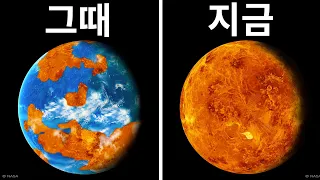
Like Earth, Mars has four seasons, and there are frozen bipolar tubes, mountain ranges, deserts, and sandstorms. Today's Mars is an extremely cold, hellish environment, but there is evidence that it was a living star that had oceans and rivers in ancient times and enjoyed a climate and atmosphere very similar to that of Earth. How likely is it that the flash that sparked the spark of life on Earth left a trace on its similar neighboring planet, Mars?
Whether the Earth was deliberately "soiled", seeded with life spores carried by a comet that collided, or life occurred spontaneously. It is reasonable to expect that the same kind of process could be traced back to Mars. If such traces do not appear, the possibility that human beings are unique in the universe increases, and the possibility of finding life in extraterrestrials will drastically decrease.
This means that life forms are not likely to be repeated even on other neighboring planets in the same solar system, since the various life forms on Earth appeared randomly under intensive, special, and unique conditions. In that case, the possibility of life on the exoplanet orbiting a distant star would be very low. This is why the question of the existence of life on Mars should be regarded as one of the greatest philosophical riddles of modern times.
With the rapid advances in Mars exploration, such a mystery is likely to be solved sooner rather than later. To date, evidence suggesting the existence of life on Mars has, in principle, taken four forms. 1.
Results of observations using a telescope on a sphere 2. Results of observations and photographs taken by spacecraft orbiting 3. Results of chemical light radiation testing of soil samples on Mars taken by NASA's Mars landing spacecraft 4.
Results of close inspection of meteorites known to have arrived from Mars Few people know that a series of experiments conducted by Viking landers in 1976 confirmed the possibility of life on Mars. At the time, NASA's official statement announced that no organic molecules were found at both locations where the Mars probes landed, giving the impression that Mars is a barren land for life. However, analysis results from soil samples taken from Mars that confirmed that it was the product of metabolic processes such as photosynthesis and chemical synthesis related to life made people bewildered.
An experiment called "gas exchange" also yielded positive results, showing that when soil samples were treated with organic nutrients, significant amounts of oxygen were released. [labelled release metabolic function] Another positive result from the "labelled release" experiment was not seen with the hot treated control sample. This was completely different from what would be expected when a biological factor triggered the initial reaction.
Now only the observations of the orbiting spacecraft remain. Strangely familiar figures were found in photos sent by Mariner 9 and Viking 1. Some scientists interpreted the figures not only as signs of the existence of life, but also as evidence of the existence of intelligent, civilized creatures on Mars.
The earliest images of anomalies discovered were acquired in 1972. It is contained in a photograph of an area known as the Elysium Blind Spot on Mars. Researchers didn't pay much attention to the video at first.
Then, in 1974, a brief observation was published in the professional journal Icarus. In the article written by Mack Gipson Jr. and Victor K.
Ablordeppey are: Triangular and pyramid-shaped structures have been observed on the surface of Mars. Located in the eastern center of Elysium's blind spot, these features are shown in images taken by the Mariner probe. These structures create triangular and polygonal shadows.
Several crater types, or impact basins or craters, formed by the impact of meteorites with steep volcanic peaks are several kilometers away. The average diameter of the base of the triangular pyramid shapes is about 3 km, and the average diameter of the polygonal structures is about 6 km. Another picture of the Mariner clearly shows the shape of the four giant trihedral pyramids.
Cornell University astronomer Carl Sagan mentioned this group of pyramids in 1977. The largest one has a base diameter of 3 km and a height of 1 km, which is much larger than the pyramids of the Earth, such as those in Sumer, Egypt, and Mexico. The figures appear to have been created and eroded long ago.
The four figures captured in the photo below deserve special attention because they either show a certain pattern on the surface of Mars, or are arranged in a position very similar to Earth's pyramids. In this respect, these four figures have much in common with the "pyramid group" distributed in the region of Cydonia, about 40 degrees north latitude, almost opposite Elysium. The Cydonia Pyramid Group was identified by Dr Tobias Owen in 1976 when the orbiting spacecraft, Viking 1, was photographed at an altitude of about 1,500 km.
Covering an area of approximately 55 kilometers by 50 kilometers, this photograph reveals a number of possible features of man-made structures. If you look at it superficially, you can only see the topography of mountain peaks, impact basins and cliffs irregularly. However, if you look closely, as if a veil is removed, the blurred landscape gradually begins to give a sense of organization and structure.
It is too intellectual to be the result of random natural change. Although much larger, some archaeological sites on Earth may look like that when photographed from 1,500 kilometers above. The closer we look, the stronger the idea is that it might be a harmonious landscape of massive ruins on the surface of Mars.
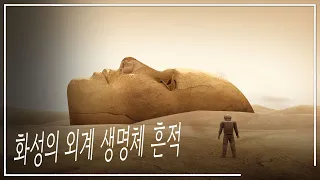
The most dramatic of these is the giant sphinx-shaped "Face". NASA has officially denied this as an illusion created by light and shadow. However, this explanation was seriously challenged when Vincent DiPietro, a computer scientist at NASA's Goddard Space Flight Center in Maryland, discovered another image of a face in a 1980 photograph.
This second video was taken under different lighting conditions 35 Mars days after the first was taken. It allowed comparative observation and detailed measurement of the face. With a clearly visible head, this face is nearly 2.
6 kilometers long from head to chin. It is 1. 9 kilometers wide and 800 meters high.
How many mountains can be exactly like this structure on the left and right sides? Analysts say the "mutual symmetry" of the face closely resembles the natural appearance of humans. It is very unlikely that such an image was created by chance.
This impression was consistent with other features that were later confirmed by increasing the resolution of the image with a computer. Among the features discovered later included "teeth" in the mouth, symmetrical crossing lines over the eyes, and regular lines on the sides of the hat. Some researchers thought these characteristics were reminiscent of the Nemes, a hat worn by the pharaohs of ancient Egypt.
As Dr Mark Carlotto, an expert in photo-image reprocessing, pointed out: These characteristics, which appear on both sides of the Viking images, are clearly identifiable forms and form a structural unity with the object. Therefore, it is highly unlikely that these features were created randomly or in the process of artificially reconstructing an image or increasing the resolution. It is safe to say that it is a gathering place of abnormal topography that is difficult to see as a natural phenomenon.
The same is true of the "D&M Pyramid". About 16 kilometers from the face, the pentahedral structure is almost perfectly aligned north-south toward Mars' axis of rotation, like the Great Pyramid of Giza in Egypt. Its shortest side is 1.
5 km, its long diameter is 3 km, and its height is almost 800 m. Its volume is estimated to be more than 4 cubic kilometers. American researcher Richard Hoagland raised this question when he commented on the proximity of the face to the D&M pyramid.
"What is the probability that an exoplanet with similar features to Earth's relics" "exists in essentially the same location as Earth's? " After studying the details of the photos, Hoagland discovered additional shapes that were likely artifacts. Among them are the so-called "Fort" and "City", with two straight angled sections clearly visible.
He described these figures as large structures in distinct straight alignments with several smaller pyramids and smaller conical structures dispersed therein. Some of the smaller pyramids are at right angles to the larger structures. Hoagland also pointed out another surprising fact about the city.
In other words, the city appears to have been deliberately positioned where the virtual residents can almost completely see their faces as they perform the ceremony. The impression that the city is like a central part of a great ritual buried in dust for many years is further enhanced by other characteristic figures of Cydonia. Among these features are the "Tholus", center which resembles the great hill at Silbury Hill in UK, and the "City Square," a group of four hills centered on the fifth small hill in the The shape, reminiscent of the sighting crosshairs of optical lenses, was found to be centrally located on the side of the city.
In addition, a group of British researchers based in Glasgow recently discovered what looked like a giant tetrahedral pyramid. Called the "NK Pyramid," this figure is located 40 kilometers west of the face. The D&M pyramid and latitude are the same at 40.
8 degrees north latitude. Chris O'Kane, who works for the UK Mars Project, said: Looking at all of Cydonia and its structures as a whole, I think they are artifacts. I cannot believe that such a complex arrangement system was created by chance.
O'Kane's intuition is supported by the fact that most structures are not naturally irregular shapes. In other words, in modern warfare, the state-of-the-art computer technology used in aerial reconnaissance photographs to identify the location of camouflaged tanks or cannons was used to precisely observe and analyze the appearance of the structures It was evaluated as close to an artificial structure. This was O'Kane's summary: Therefore, we can conclude that it is unlikely that an irregular phenomenon will form such a set by chance.
The figures appear to be deliberately arranged. The structures, which form distinct groups, are not of a natural irregular shape. We cannot help but regard this as a very unusual phenomenon.
Cydonia and Elysium are not the only regions that provide photographic evidence proving the existence of structures that appear to be unusual artifacts. Among other features of Mars "not in its natural irregular shape," are a series of miniature pyramids that line up for nearly five kilometers, and towering pyramids next to large crater-like areas, wall-shaped structures that soar over 600 meters, such as the gigantic rhombic fence-shaped spire in Antarctica. Efforts should be made to take a closer look at the pyramids and the shapes that people call faces and cities.
The shapes are worth observing up close with a high-resolution camera. If you can take more detailed photos, You solve problems related to symmetry. It will help resolve the debate over whether it is a geological phenomenon or a remnant of an artifact.
However, NASA's policy statements regarding pyramid groups and faces are often inconsistent or contradictory, complicating matters even further. Our goal is to explore Mars itself and to approach a number of enigmatic phenomena. The biggest puzzle is the question of why Mars died.
If you enjoyed this, please like and subscribe!