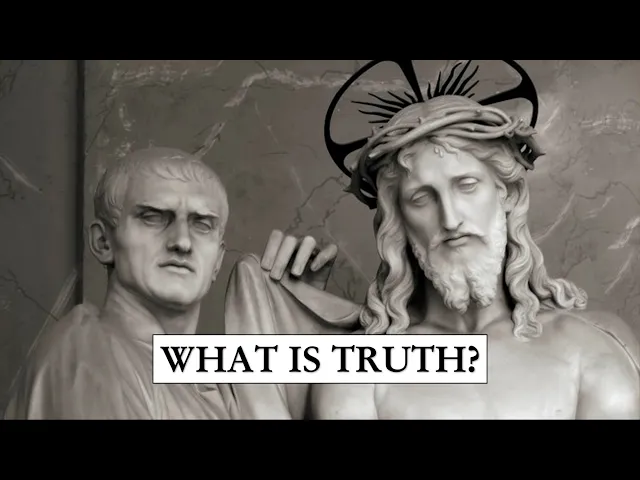
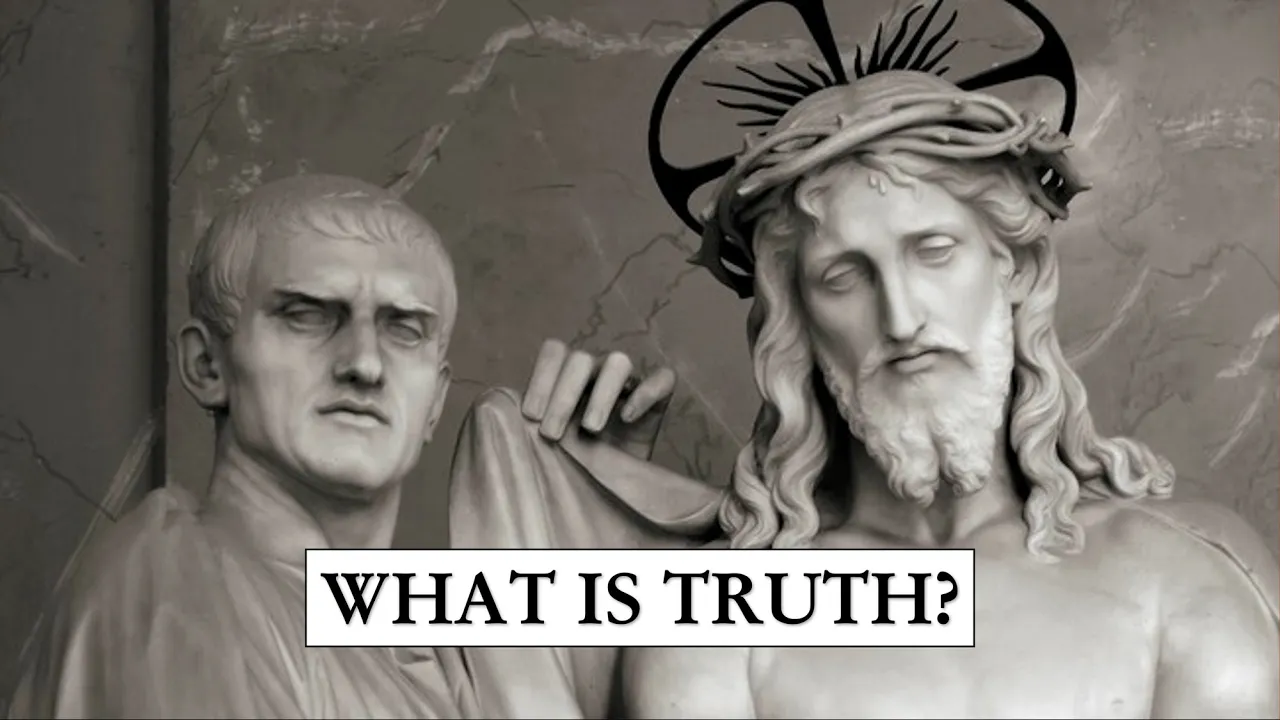
Okay so welcome to Orthodoxy 2011 uh today's topic as uh I've sent out in the email is the true Faith uh so we'll look at these topics not all tonight but over the next number of weeks and we'll begin with the question what is truth this is punches pilot presenting the Lord to the people after he has that dialogue with in which he raises that question what is Truth so if I could ask maybe for a volunteer to read this first slide Mariam the truth on trial I have spoken openly to the world Jesus answered
I always taught in the synagogues and at the temple where all the Jews come together I said nothing in secret why are you asking me ask those who heard my message surely they know what I said Jesus said to Pilot for this reason I was born and have come into the world to testify to the truth everyone who belongs to the truth listens to my voice pilate said to him what is truth John 1837-38 thank you Maran this question what is Truth uh has been asked and posed by mankind since the beginning until today and
will be posed until the Lord comes back and reveals himself fully and perfectly and everyone will see the truth face to face Because the truth is personal right God is the truth and he reveals himself in Jesus Christ we know the words Lords the the words of the Lord I should say who on many occasions uh gave teaching that no one had ever given before with an authority that no one ever had uh and yet at the same time in great humility references his father as the source of his teaching uh he says my Doctrine
is not Mine but his who sent me if anyone seeks to do his will he shall know concerning the doctrine whether it is from God or whether I speak on my own authority he who speaks from himself seeks his own Glory but he who seeks the glory of the one who sent him is true and no unrighteousness is in him I am the way the truth and the life if you continue in my word you are truly my disciples then you will know the truth And the truth will set you free and this is eternal
life that that they know you the only true God and Jesus Christ whom you have sent so in this collection of verses from the gospel of St John we see the Lord revealing the union between truth and life the union between truth life himself and his father he's speaking about these uh things and speaking about the mystery Of the Holy Trinity uh who also includes of course the spirit of Truth who who he will send from the father he's speaking about these things to his disciples so that they might not only know the truth but
also might abide in that truth they might live by that truth now this uh teaching of the Lord uh is presented here in the gospel of St John in its most lofty form um and the realization of the uh of these truths of Christ would would only come though uh for the disciples uh when the spirit of Truth is given because it's the spirit of truth that will bring them into all truth into the fullness of Truth so the Revelation is from the father through the son and it's communic ated in the Holy Spirit this
is the one Triune God the true God who is the truth and who shares his life with us now stepping back a little bit from Our Christian Theology and entering into the realm of just human thought philosophy um we should look at the study of knowledge right epistemology is just that uh it's the study of knowledge the theory of knowledge and um we should talk about this because if we're going to have an intellectual conversation with somebody conversation that leads to truth we have to understand the discipline of how Communication works uh we have to
understand a little bit of philosophy perhaps um but we have to you know be able to engage with people where they're at and some are Christians and you could already you know jump into doctrinal matters but others are not but all people Christian or not are reasoning people everybody has been gifted with intelligence by God and everybody appreciates the to some VAR degrees the importance of logic Rationality reason right and these are the the basis of all intellectual disciplines the study of epistemology is the study of knowledge and how we might pursue that knowledge and
come to understanding so can I ask for somebody to volunteer to read this slide for us please geia there we go sorry about that okay epistemology epistemology is the branch of philosophy concerned with the nature scope sources and validity of Knowled know it explores questions about what knowledge is how it is acquired and how we can differentiate between knowledge and mere belief epistemology investigates the nature of Truth justification evidence skepticism and the limits of human understanding the term is derived from the Greek epistem I guess knowledge and logos reason and accordingly the field of sometimes
referred to as the theory of knowledge thank you georan so you'll Notice in the diagram uh some things that we're all familiar with right senses reason intuition and Revelation Revelation touches upon all of those capabilities that the human being has been gifted with and if you look at the kind of flow of the diagram things begin with the senses right we observe things they come into our mind we reason with them and after processing Things reasonably we develop a certain intuition and then we rinse and repeat we begin that cycle again and all of that
is the the process of coming to knowledge and knowledge is revealed to us by God God is the creator of all things including the human person whom he has called to come to knowledge and not just knowledge of mundane matters but knowledge of course of himself and the Revelation that God gives is not just natural or not just material or Even just spiritual it's divine revelation it's a revelation of who he is as Creator as Redeemer as the life of the age to come uh all of this is is being poured out to us through
our senses through our reason and through our intuition and again this is a repetitive process so we continually go through this all the time uh not once a day you know not once an hour but all the time uh every moment every second we're continually processing continually Learning and hopefully we're continually growing in the knowledge of who God is and if there are any questions just uh stop me so moving on uh since you know we've looked at epistemology and its discipline let's talk a little bit about the details here so belief knowledge and justification
uh these are terms that are used within this realm of thought and they have um kind of definitions Which are which are important for us to look at so can I ask for a volunteer to take this slide Matthew belief is the acceptance that something is true or exist it's a mental state State wherein an individual holds a proposition to be true or likely true beliefs can range from mundane everyday beliefs the sun will rise tomorrow to deeply held convictions as in I exist justification refers to the reasons Evidence or rational grounds that support or
provide warrant for holding a belief justification is crucial because it distinguishes mere opinion from knowledge a belief is Justified when there are good reasons or evidence to support it knowledge typically requires more than just belief it also involves truth and justification in the traditional analysis knowledge is defined as Justified true belief the JTB account This means that for a belief to qualify as knowledge it must be justified supported by evidence or Reason true corresponding to reality and believed by the knower thank you Matthew so many times when we think about belief and in the context
even of our our Christian belief uh people kind of will assume of you know the Christian that it's something not based in evidence not Something that is substantial not something that's Justified uh and there can be certainly beliefs that uh do not fall within that category however the the Christian faith uh is different from all other beliefs because the Christian faith is not only justifiable but it's also true the Christian faith is true knowledge now that we take as you know a matter of our Doctrine um however that is also something that people can themselves
Become convinced of and part of the job of the Christian is to make a rational justifiable case for why we believe what we do believe right and present that knowledge to others so that they might acquire it for themselves but it's it's important you again to Define these things in such a manner because we have to see the overlap the overlap is extremely important uh I don't know if you can see that diagram well enough but for Instance you know if you have uh a belief that um you know is not overlapping with the truth
or something that is Justified that's a false belief um beliefs that are Justified meaning that you have good reason to believe it but they are not true that's also a false belief right so the final option of of belief that would be problematic would be a belief that is true but not Justified now what what could be an example of that that would be something that you might believe and it might be true but you can't make a case for it you can't present it as something that's justifiable and if that's the the situation for
the Christian we're we're in trouble right because we have to be willing and able to give um the give the the reason for the hope That is within us right we have to always be really ready to give witness to give account and to do it in a way that is rational well presented well thought out and could then lead others to come to the acceptance of that same knowledge that that we have acquired for ourselves so uh truth belief and um you know this idea of of this uh knowledge being justified are kind of
key terms to look at as as we begin any thoughts or Questions on that is that making sense uh could I just uh point out uh something that I see sure so um so I just took a course actually in critical thinking which kind of touches on um I guess beliefs so for example the sun will rise tomorrow or I exist um so these are um they're inductive uh propositions so they're saying you know it's like it's written likely to be true It's probably true um so you know before all this stuff these are very
like simple propositions but if someone would say like the sun will rise tomorrow because for the last for my whole life I've seen the sun rise every day you know then they would have kind of like a premise to to kind of lead to the conclusion to uh make people you know kind of think okay you know I've seen that too and uh kind of join in um I just wanted to yeah that's a good Point that out and that that's kind of what you're saying too that we that people need to have like premises
um for their you know they call it arguments today there it's not an argument it's just kind of like a a dialogue or you know trying there are reasons why we why we believe certain things and those reasons can be rather convincing uh so much so that you know not only do we believe them but others as well so uh that's the case of the sun Rising right uh but it's also case of other more spiritual things pertaining to to the so let's let's move on okay now let's look at two different schools of thought
um anyone want to take this slide empiricism and rationalism Suzanne empiricism empiricists assert that knowledge comes primarily from sensory experience obser obervation and Experimentation according to this view the Mind At Birth is a blank slate tabula rasa and all knowledge is derived from experience prominent empiricists include John Lock George Berkeley and David Hume lock for instance argued that the Mind begins as a blank slate upon which sensory experiences right knowledge rationalism this perspective holds that knowledge is primarily gained through reasoning Intuition and innate ideas rationalists argue that certain truths exist independently of sensory experience and
that reason is the chief source of knowledge thinkers like Renee Des deart baroo Spinosa and gotfried wilham libbets were notable rationalists they cart for instance fam famously asserted Kito Ergo suum I think therefore I am suggesting that self-evident truths can be discovered through introspection and reason rather Than sensory experience thank you suzan so these two uh philosophical approaches U are kind of opposites of one another right uh empiricism and r ISM One deals more with those things that are let's say tangible and concrete that can be observed and weighed out and tested with the physical
senses and instrumentation and then the other rationalism deals more with those um ideas or concepts the uh kind of truths If you will behind uh the world the invisible truths uh the these are you know more dealing with the uh the immaterial world so these two schools of thought are actually you know opposites of one another but they should be considered to be complements of one another right because for uh we who are Christians uh we don't believe that you know the physical world is all there is or the spiritual world is all that there
is but The two uh together were created by God and both uh you know have their truths and have their their particular disciplines uh what happens though if you consider yourself so much so an empiricist uh that you reject rationalism or a rationalist that you reject empiricism what what would be the result of that well let's take a look so you'd end up with these other two uh Kind of extremes right materialism and idealism can ask someone to take this next SE section okay I could I could take this one oh L nany did you
wanna okay I'll take it materialism holds that the physical world including matter and energy is the fundamental reality and everything including Consciousness and mental phenomena can ultimately be explained in terms of material components and physical Processes I ISM argues the exact opposite of materialism that the foundation of reality consists only of what is mental such as the mind unlike the physical brain Spirit reason and will both materialists and idealists are onedimensional thinkers and that's the reason for the Flat Earth graphic right uh those who believe in the Flat Earth are missing a dimension right there's
something not Complete in their worldview and that's the same for those who are materialists and idealists uh this is when you take those two disciplines of empiricism and rationalism to their extremes right and they uh have you know polarized uh themselves so much that uh they create a worldview that isn't consistent with reality anymore so what would we say about this as Orthodox Christians but that we are both And people right sometimes you hear you know that it's Faith or works right or it's um you know science or religion uh we don't have that kind
of dichotomy we don't have that opposition uh we accept both so we can take the the benefits of empiricism and rationalism uh and see them as disciplines that are useful and helpful and complimentary uh to understanding the universe uh which itself points to the creator of the universe so we are not single Dimensional thinkers right and we're both and uh if you want to think about uh the the way that we approach these questions so since we're asking you know about the nature of knowledge um it's good to talk about you know the limitations that
we have with regard to certainty so I I pose these questions what is real can anyone be 100% certain about Anything and if absolute certainty is not possible what does one rely on so first uh can anyone be 100% certain about anything anyone want to take uh a chance at getting that question correct or wrong no I I think in terms of like material things and you know life on Earth I think it's 100% certain that someday I'm going to you know die and leave this earth well Uh that may be a strongly held belief
that you have but can you be 100% certain about it you can be certain that you're going to die can you how would how would you 100% certain because everybody before me died I know about resurrection of Jesus only okay that and that's that's a very good answer um you know when when we think about that initial uh point of believing That the sun will rise tomorrow we have good reason to believe that it will we have good reason to believe that we will die however can we be 100% certain that's the question so if
you look at the images to the right of this slide you'll see that they're all from the Matrix right has anyone seen The Matrix yes okay some of you have maybe some of you haven't so anyway in in The Matrix uh it's talking about uh a world That's vastly different than our own a world in which human beings are plugged into Central computer and they live plugged into this computer in an imaginary world a virtual world right and all of their relationships that they think they have their professions uh what they eat what they drink
uh everything that they do it all happens in this virtual world and they Are 100% convinced that it's real H is it possible and I'm not suggesting that it that this is the case right I think we have a lot of reasons not to think this is the case but is it possible that we ourselves are in The Matrix but we can think about this about everything right now a lot of people confused who they are they're not swiching what their gender is but if you always leave that maybe you can be Certain about anything
but if you're certain about something live it with the faith that that you're going to die because proof showing that every person before me died except Jesus of course so you have a proof that it certainly will happen to you certainly what if all of that is part of the Matrix I think so what I mean I'm kind of trying to read between the lines here it's it's kind of like you know all the Great um philosophers of Greece you know like Plato and you know you'd always ask why and always question everything like you
know what is truth like like he would just question everything so I mean that's that seems kind of like with the knowledge that we have you know from the Orthodox Church kind of like a rabbit hole that you know maybe someone wants to go down when they're like a a young kid and question everything but Um like for me I mean I'm I'm maybe not 100% certain about anything but uh through faith and experience the certainty of of someone could definitely uh grow I think yeah I and what I want to submit to everyone is
that no one can be 100% certain about anything it's impossible however we can have Justified reasonable belief about things right and all of every single person's worldview is a belief it is not a Certainty a lot of times Christians get put in the camp of they're oh they're the Believers they have their own you know uh Faith about this or that uh everybody has a certain belief a certain Measure of Faith about so know I'll give you an example um you know how many of you have been to Europe I've been to Europe those of
you who have been to Europe Have a higher level of justification than those of us who haven't been I haven't been uh I mean one a fly over it doesn't really count um so I haven't been there so I I believe that Europe exists because other people have been there right at least I've seen pictures they tell me about it and all that you know I believe that that's the case but I've never never been there even if I was there who's to say I wasn't dreaming Who's to say you know that I don't have
a mental illness where I was imagining things um you know many times we we think that it's only people who are schizophrenic or who have you know you know mental disabilities are living in a world that is not real uh all of us are living in a world that in our own perception is not real uh it's somewhat inaccurate right we don't have uh certainty about things we don't have the fullness of knowledge About things we have our perceptions and we do the best we can and we try to be rational we try to have
Justified beliefs but all of it really is is a matter of faith I remember I had a conversation with somebody who struggles with schizophrenia and they were telling me that you know they they don't know what voices are real and what voices are not they see people and sometimes they're there and sometimes they're Not and they they don't have a a handle on things now that's that's an extreme right but we all don't have a handle on lots of things you know we we might think so and so's mad at us or so and so
hates us when maybe so and so is just busy with something else going on in their life right and and we can get caught up in our own heads and we can you know try as best we can to kind of sort things out and rationally come to kind of uh a conclusion that we hope is Going to be accurate but to what degree is it actually the case um and that's you know going to be something that's never going to be 100% it's always going to be something that is uncertain so we do the
best that we can uh and there are strategies question number two is you know if absolute certainty is not possible what does one rely on and we do need to rely on right so we have to have some kind of bearing we have to be Tethered to something um so let's continue uh I'll explain the the Jim Carrey reference in in a moment uh but can someone take this slide Matthew navigating uncertainty involves weighing evidence probabilities expertise and practical considerations to arrive at beliefs or decisions that are reasonable and justifiable given the limitations of human
knowledge evidence and Reasoning we rely on evidence from our senses experience or excuse me experiences and scientific observations to form beliefs and make decisions reasoning allows us to interpret this evidence and draw conclusion though it's always subject to potential flaws probability and likelihood we assess the probability or likelihood of events based on available evidence and past experiences while we might not be absolutely certain we can still make Informed judgments about the likelihood of certain outcomes consensus and expertise we often defer to the expertise of others or the consensus of a community such as trusting the
conclusions of of scientists doctors or other specialists in their respective Fields while this doesn't guarantee absolute certainty it can provide a reliable basis for belief practical considerations in many situations we Rely on practical considerations and risk assess assessments we might act on what seems most reasonable or beneficial given the available information intuition and gut feeling while relying on intuition can be influenced by unconscious biases or emotion it can also be a valuable tool for quick decision making in certain situations thank you m so um lacking complete certainty we try to grab on to that which
we can to stabilize ourselves To have a worldview that is rational and intelligent and uh we use various different means to accomplish that so this is a list of some of those things and we all make use of them and this isn't just in the realm of let's say religion but it's in the realm of of every other aspect of human life uh you know medicine The Sciences uh Sports um every every kind of interaction that we have with other people it's all influenced by by these Things because we uh in and of ourselves are
not able to perceive things 100% accurate and have 100% certainty so we have to reach out we have to rely on others and there's a certain measure of of trust there a certain measure of of faith in uh in the community in the world in which we abide in for those who are believers in you know the in in the Lord himself the the creator of all things but for those who are not believers Uh those who don't have you know faith in in God those who might be atheists or agnostics they also have a
worldview right they're also still trying to process things as best they can because they don't have 100% certainty the agnostic obviously doesn't right because they by definition don't know um The Atheist though does claim that there is no God right and where is the certainty where's the evidence for that uh many times the onus has tried to be put on on The Christian or the believer the theist you know to say you know what what's your evidence for there being a god well what's the evidence for there not being a God that a case has
to be made in on both sides and whichever case is more convincing more rational more justifiable uh should presumably carry the day right and and that's a challenge though for us because if we're in Arena of debate we have to be equipped to be able to uh to debate you know to have These conversations and to do it in a way that um you know can not only maintain our own faith but also can help somebody else come to Faith come to the realizations that you know our our forefathers have come to themselves when they
pass down the faith to us but all of this is we're dealing with probability and here's the Jim Carrey reference so what's the movie that this is referencing Dumb and Dumber Dumb and Dumber yeah and then there's there's a Sequel I think it's like uh Dumb and Dumberer something something like that anyway um so in in the movie this this guy he's interested in this beautiful woman and he comes up and and he asks her you know so what's what's like the the probability of a guy like me and a girl like you you know
getting together and falling in love and all that stuff and her her response to him is one in a million so he he's thinking to himself you know because this is again not an Intelligent man he's thinking to himself oh I've got a chance right so you're telling me there's a chance um and many times um you know people believe things things that are unlikely you know that that are the odds of them being true are actually less than one in a million and what I'd like to do in in this class is look at
some of those things um with regard to atheism or with regard to naturalism um and and kind of EX expose The highly improbable nature of these things that are so probable they tend towards being really categorized as impossible um now that's that's a big claim to make um however you know I I believe that there's evidence that can back that up and that'll be part of the presentation you know in in the class but everything everything is a matter of probabilities everything is a matter of faith and belief for every single person there's not one
person Outside of the members of the Holy Trinity right who are lacking absolute certainty that is if you will a Divine quality okay questions on any of this uh comment Father John yes um a couple of people mentioned before that that there's a certainty that um that they'll die because you seen other people die before and um people age and they die uh but death is not a certainty uh the scripture tells us that when our Lord comes back there'll be those that Are still alive and that there'll be change in the twinkling of an
eye so uh that's not defined as death it's defined as going from corruptibility to incorruptibility so there's no guarantee that each and every one of us will die if the end of the world comes it comes so absolutely yeah and it's the same for paying your taxes too right that's the other thing that you you can't avoid people say but um as Father James says You know the Lord can come back at any time and those things that we take for granted even getting up tomorrow you know living another day uh might not be there
for us we don't we should not have a false certainty that tomorrow will be there for us uh it may not so we have to maximize the the present moment right that's why the message of the Gospel is that today is the day of salvation now it's at hand right we have to seize the present Moment and not procrastinate not P push off to tomorrow the things that are super essential the things that are for our eternal life okay um so we concluded the first section uh what is truth I'd like to get into perception
if if I may um so shall we continue and this will build upon what we've just covered so to move us along I I'll read this myself it was Aristotle who first Came up with the five categories of the senses or more formally sensory modalities Vision hearing taste smell and touch but that was not the whole story we certainly have more than five and depending on how we slice and dice the different categories we might have as many as 53 okay I bet nobody I'm I'm almost 100% certain that nobody can name the 53 different
senses that we have right um Almost 100% certain it could be done Some of you are probably on Google Now looking up that list so uh you know but the the idea is you know that we have we have a lot of ability to receive information data from the created order right and and that all comes into us and it has to be it has to be processed okay well let's talk about some things that don't come in through the physical senses uh do you believe in Love not everything can be observed by the physical
senses even with the aid of scientific instrumentation love while deeply experienced and profoundly influential in human life cannot be found under a microscope because it's not a physical substance or phenomenon that can be observed or measured in the same way as biological entities or chemical reactions while love may not be observable under a microscope its impact On human behavior relationships and well being is undeniable understanding love often requires interdisciplinary approaches that integrate insights from psychology Neuroscience sociology anthropology philosophy and theology among other fields right so if you are an empiricist in uh at heart in
an extreme way right if you're a materialist you don't really have room for love as far as um something beyond that Which is just physical chemical reactions right and of course you know those who do believe in love also believe in the physical manifestation of that right that the way the heart pitter patters or way the mind works right or the way the body functions all of that is tied to love right but love is something that is more than something that is material love is something that is also spiritual or immaterial and we know
that There are lots of non-physical realities so emotions and feelings are observable through their effects on Behavior facial expressions vocalization and physiological responses thoughts and mental states are observable through verbal reports written communication brain Imaging techniques and behavioral indicators Concepts and ideas such as theories mathematical principles and philosophical ideas can be observed indirectly through their expression in Language symbols and behavior social con constructs such as Norms values institutions and cultural practices are observable through their manifestation in social interactions behaviors and cultural artifacts spiritual and metaphysical beliefs including experiences and practices related to spirituality religion and
metaphysics involve non-physical aspects of human existence that are often considered beyond the realm of empirical Observation yet the effects themselves are often very tangible right so there are so many things that exist in our world that cannot be picked up by the physical senses or by uh any types of uh you know instrumentation no matter how um you know much technology advances and and makes progress there are certain things that you know will not be able to be to be picked up and read and measured because They are themselves IMM material so any ideas of
of some of those things that that truly exist that uh you know do not fall in the realm of physical things some of those are on that little diagram there and by the way things that you know do exist immaterially um you know they can have and and in just about every case do have effects on the physical World right we're not dualists we're not separatists uh that there there's interaction between the physical and the spiritual between the material and the immaterial but these certainly are as real and tangible as you know a rock or
a plant right the uh experience of all different types of emotions is very real um mathematics very real right uh and if you're talking about by the way things that get close to provable uh in the Realm of logic and Mathematics and other certain disciplines in science uh you know you you have um kind of Greater Clarity and a higher level of precision and also a greater even almost certainty about some of these truths right has anyone studied logic okay how about mathematics at at a high level so there are certain things you know in
in logic and and in mathematics that can be uh given as a proof right something that that you could walk Through step by step by step and it and it all lines up and it all makes perfect sense um and and it's provable it's definite um things of of the other Sciences whether it be you know biology or botony uh they're not quite the same level of precision and certainty that you would have in mathematics or Logic for instance anyway we can look at some of that if if you really want to but uh there
are these uh non-physical Realities that uh are if you excuse the expression as tangible and concrete as those things that are part of the physical world they're as they're as real so mathematics so is that a 100% certainty uh well the whole question of certainty isn't so much about the the discipline as it is about the person who engages in the discipline right the certainty uh that that we have is always going to be limited because we're human Beings right there are certain thing like for instance um you know we might believe that a triangle
exists or a circle exists well uh that might just be in our imagination or you know um other types of things that you know we could we could prove well you know maybe we can prove them in the sense of being able to convince others and you know spell that out in as logical a way as possible uh yet it could also be just something that You know is something that we've made a mistake on uh and there have been cases where you know people have tried to to prove certain things and then later come
to the realization that actually they they were incorrect um that's the nature of of science but with mathematics um it's it's more stable than the other uh forms of science but the person who's conducting and doing the work uh will you know always be limited and because of that limited capacity there's always The potentiality for someone to to not understand things fully does that make sense yeah so there there could be some high level of certainty in the system that was developed for people to follow that's very uh accurate and um you know the most
accurate system that humans have probably is is mathematics like from from a material yeah from a material standpoint um and What and and what humans created um so yeah that makes sense so now this is looking at the human person right who as we know from you know our our Christian anthropology uh is psychosomatic right what does it mean to be psychosomatic psycho isn't like crazy right yeah psychoi it's it's like the soul right uh that we have a soul and Soma is the body so we're soul and body so we have both The physical
senses the 50 whatever it was right and then we also have non-physical senses um and this is a chart that kind of indicates some of these things so under the category of the Mind execution efficiency analysis accuracy under the heart conviction authenticity Harmony connectedness right under the soul Insight meanings exploration possibilities and these all have intersection points with each other they Have there's overlap so that's what this chart is showing so for instance overlapping between the the mind and the the U the body would be um that which is in the kind of the St
category um and if you're looking at at the body the the SE the experiencing right is also kind of uh close to the mind because when we experience something through our sensory uh function it also is connected to the mind right uh when we're thinking of things m mentally and we're Structuring that's the te it kind of tends towards uh The Ordering of the Soul which gives us insight and meaning and exploration right so all of this uh all of these non-physical senses are interconnected with one another right they're interconnected with the physical senses and
then the mind uh the soul and the heart are also interconnected okay so that's an interesting diagram right yeah it Is okay here's another one and this is this is where we're going to start to transition into our next topic uh but if I can there's two more slides here and maybe we'll finish them today and we'll get to the next stuff tomorrow or next week I should say so has anyone ever heard of the DI KW model okay so this is way uh that we can make progression from data to information to knowledge and
wisdom so we kind of know this even if you haven't Seen the chart we know that how this kind of operates right uh data is just you know um sensory types of things observations that that you know come in to us uh that collectively uh can be kind of structured into information right and that information when processed uh reveals patterns and it gives us knowledge about a particular subject and when we have knowledge about subjects uh we understand the principles behind them And how they're structured and how they can be implemented in in you know
use that that knowledge could be used in a way for the good right and that that's wisdom so there's a natural progression uh and it's a progression you know really from the physical to the non-physical right the material to the immaterial uh now this lays the framework the groundwork uh this phenomenon I should say right this lays the groundwork and the and the framework For philosophy right and also this is what is behind uh theology as well right where where we're moving from the creation uh to the Creator that God has created uh the world
and put us in it so that he might create an opportunity for for us to come to to the knowledge of him so there's a progression from the Lesser to the greater okay the dikw model represents the relationships Between data information knowledge and wisdom each building block is a step towards a higher level first comes data then information next is knowledge and finally comes wisdom many authors think that the idea of the DI KW relationship originated from two lines in the poem chuses by TS Elliot that appeared in the pageant play The Rock in 1934
and this is the quote where is the wisdom we have lost in knowledge where is the knowledge we have lost in Information right and don't we experience that today I mean where we're flooded with so much information and yet we don't have too much knowledge um and if we have knowledge do we know how to apply that do we have The Virtuous attitude and disposition to use that knowledge wisely uh you know there there are many questions in our age of technology and and advancement um that You know uh I think um you know expose
the fact that we are not doing this very well you know uh I think it was who was it that mentioned uh about you know we don't even know the gender uh of children anymore uh is it possible in our day of science that we don't know the gender of children um and that you know we use the capability ities that science affords us in a a way that is the exact opposite of Wisdom to cause harm to others uh how is that how's that happening it's because we are not functioning in in the proper
way we don't have this hierarchy in place we're not making an Ascent to to that which is uh for the good uh so we can be you know immersed in our data and in information and could be lacking knowledge and wisdom uh and in that way we regress rather than make progress so continuing with this DW uh model there's two other ways to Present it uh well two ways to present it uh one was that kind of uh the chart that we just looked at and then the other is to look at uh pyramids so
data information knowledge wisdom all leading up to the top right and we think of data who what where right knowledge is more of how wisdom has to deal with why right there's a progression in in our thought um and then there's also a progression from the past hopefully to the Future right so we We Gather the data we connect it and we you know in in information if it forms knowledge uh and that knowledge uh hopefully leads towards wisdom um and that allows us to create a a better future right so we research and absorb
we we do we interact and we reflect this is this is the process of ascent right an intellectual Ascent uh a spiritual Ascent um and then after we repeat the process again going back to that first slide where we looked At the senses right and then after the senses we rationally process that we begin to have some kind of intuition right which is the emergence if you will of wisdom all of that has been given to us you know by God as part of his Revelation to us everyone following yeah sure okay have you memorized
these charts yep okay um so that that I screenshotted the charts so that I memorize them okay good um so next we'll move on to metaphysics and Philosophy I do want to apologize you know I I was imagining that some people probably came to this class looking for just straight theology right and didn't want to get into all of this other stuff um unfortunately I I don't think we can we can do that uh and I don't think we can do it for a number of reasons one we we will not understand we will not
understand the theology in its fullness without processing through these things um Through these other disciplines which are less than theology without a question but which are building blocks and are supportive right it's part of our our training many of the Great fathers they went to to school they studied the classics you know rhetoric The Sciences of the day uh they they studied logic and and all all of these disciplines that we might consider to be philosophical right or metaphysical they they immersed themselves in these things Not because they found uh eternal life in them but
they they saw these things as uh stepping stone and building blocks uh to the development of the mind so that the mind could through the grace of God be enlightened uh much further um I remember the case of St Gregory palamas who uh he was he was raised by his parents uh in in two primary ways uh one is he was given the highest education possible and two he was exposed to uh monastics who came from the Holy Mountain and other places uh and he had this kind of dual um this dual upbringing this dual
training and it was even said by the way that of of his secular studies that his teacher thought that St Gregory uh reminded him of Aristotle except for there was one difference St Gregory was better than Aristotle right and what St Gregory did is after completing his studies he left uh the world and went to the monastery and he Prayed uh a very specific prayer he prayed that God would Enlighten his Darkness right this was a guy who was more brilliant than Aristotle and considered himself to be abiding in darkness right all all of the
preparation that he had done was incomplete because he lacked uh what is only found in the divine nature and the human being is is not meant to be uh on his own human being is not Complete without God so uh when we when we look at these things you know um the nature of of knowledge or philosophy metaphysics and and and this and the like um know this is part of you could put in the realm let's say of of humanism uh however uh it is can be Preparatory towards higher things the seeking of the
things of God and also the knowledge of these things in addition to helping us in our own advancement will help us in interacting With other people who are immersed in in this right this is this is where they they they live uh if you ever you know um debate with people um about God and about you know the nature of existence and things like that they're they're very knowledgeable about philosophy and and metaphysics and we do well to be educated on it at least to some degree uh so that we can we can interact but
um our job is of course to bring people further and I think that enjoy perhaps More uh not next time but the time after when we get into the logos and Revelation and then Orthodoxy and holy tradition uh but again it's just setting a kind of a framework for our further studies but don't you think that's because they went so much deep in Psychology they stopped believing in God I'm sorry but question like that because all these people super smart they all of a sudden stop believing in God they're super smart one who getting In
all this depth of psychology of a human mind trying to uncover human mind but the result is they fall so far away from God they feel themselves a little too high she's like yeah I I think that um initially when someone pursues these uh disciplines in a humanistic way right in a way that's not in reference to God they they feel like they're acquiring knowledge they feel like they're acquiring understanding and Because of that they feel kind of self-sufficiency uh an egotism and pride in that Pride they they don't SE God however what happens is
as they continue they realize that these disciplines are dead ended still that the knowledge that they think that they're acquiring is actually uh more ignorance than knowledge and you know it it humbles people when they try to go down an Avenue and they spend their whole life going down that Avenue and then realize It's a dead end and well see when we get when we look at this section on philosophy uh that that's largely what happens with some of the greatest Minds you know in in the history of the world the the great philosophers realized
um Socrates is is a great example that you know he realized he he was the wisest man in in Athens because he came to realize that he knew nothing that's what made him the wisest man that He knew nothing um ah so I remember his expression yeah Molina do you have a question or a comment I have both yeah please I first of all I want to thank uh Father John for such an very informative class and uh if you can call it class because uh although you said it's something we probably didn't expect I
think it's real helpful in understanding of our faith and beliefs um I was actually who doesn't Know me I was raised in Soviet Union where it was very strong atheistic idea although most of the people probably were more agnostics versus atheists um but bringing back what Marina just said about philosophy studying philosophy in college a lot I found out that a lot of philosophers especially fairly of modern history they were very religious people and their idea of philosophy were finding the truth about Faith and they didn't stop believing vice versa it brought them to the
fact that um of our Christianity that it's a true faith and the first person who made me thinking was it was 90s and I was taking classes of one professor of philosophy who was actually also historian and being raised as atheist being very like groomed in this ethic eth Society he shared with us without Any he even said I don't want to anybody of you oh you my students to think that I'm promoting Christianity but he shared his experience and how he came through his studies extremely intelligent know knowledgeable person who had PhD in philosophy
and history came to believe that Christianity exists and it has a lot of Truth and support to what Christianity teaches so that what first thing that made me probably more seriously because I am very logical Person and made me think that way so I want to thank you and experien what you just brought up during this class thank you for you know the the complimentary words and then also for sharing that that experience um yeah I I I I would like to say you know because I spoke about the limitations of philosophy um you know
philosophy is the love of wisdom and you know it it is something that um you know can point to God and as we look uh in the coming um You know classes at a little bit more at the great philosophical Minds uh in in history we'll see how you know God was actually enlightening them and he was preparing them for the Revelation that would come in Jesus Christ so when when people study philosophy now uh it it is a worthy discipline it's like reading the Old Testament to understand better the New Testament right philosophy does
point to Christ because Christ is as the scriptures say the wisdom word and power Of God right so the the philosophers although they they couldn't name who it is that they were seeking or what it is that they were seeking uh they were seeking Christ and as St John says in the gospel he's the True Light that enlightens every man coming into the world so if anyone comes to any kind of realization any kind of knowledge um you know a belief that that's Justified and true it's it's happening through the Revelation of God uh so
you when we look at metaphysics and we look at philosophy those two next subjects uh I I want you to look at it in the sense that uh you know these are Pointers to God too uh it's not the same level as um you know let's say theology um but it it's nonetheless important any other thoughts or comments questions uh Father John yes I just wanted to know um are you planning on actually covering any of those uh I guess you could say Those um the ways in which logic and philosophy specifically point to God
because I've I've heard a number of different um I guess you could say arguments in in favor of that I'm curious if uh that's going to be part of what you're what you're doing yeah absolutely so like under metap physics um there there's a number of uh Arguments for God that we'll look at and and they're good and they're solid and they actually Bring uh people to the faith right so these These are are tools you know that are are are are at our disposal uh to interact with people um a lot of times you
know if somebody has has a love of philosophy um but not an interest in theology and you start to talk to them about the gospels or or the scriptures or you know the lies of the Saints they're they're not going to listen to you but if you can talk to them about a subject that they're very interested in And you can present Christ in that um you know they they can really uh have their interest piqued and then they'll go beyond you know metaphysics or philosophy and and they'll be able to to arrive at theology
but you have to meet people where they're at um and and the arguments that that are for God uh they're reasonable they're rational right they are convincing and and we as Christians should know them too um in addition to what we receive from you Know our our Christian tradition um in kind of it's uh in its maybe more theological sense uh we should also have at our disposal that which is from the philosophical tradition which supports our Christian faith too okay thank you yeah absolutely so any more questions or comments before we close tonight okay
um shall we pray in the name of the father and of the son and of the holy spirit amen [Music] all New Jerusalem the glory of the [Music] Lord exalt now exal and be glad o Zion be radiant oh pus in the resurrection the resurrection of your son Christ is risen everybody thank you and have a Good night you too father thank you have a good night thank you thank you have a good night you as well