"Gut Dysbiosis - Starving Our Microbial Self" For many years, it was believed that the main function of the large intestine was to just absorb water and dispose of waste, but nowadays it is clear that the complex microbial ecosystem in our intestines should be considered as a separate organ within the body, and that organ runs on a MAC, Microbiota-Accessible Carbohydrates. In other words, primarily fiber. One reason we can get an increase of nearly two grams of stool for every one gram of fiber is that the fiber fermentation process in our colon promotes bacterial growth.
The bulk of our stool by weight is pure bacteria, trillions and trillions of bacteria, and that was on a whimpy, fiber-deficient British diet. People who take fiber supplements know this— a few spoonfuls of fiber can lead to a massive bowel movement, because fiber is what our good gut bacteria thrive on. When we eat a whole plant food like fruit, we’re telling our gut flora to be fruitful, and multiply.
And from fiber, our gut flora produce short-chain fatty acids, which are an important energy source for the cells lining our colon. So, we feed our flora with fiber, and then they turn around and feed us right back. These short chain fatty acids also function to suppress inflammation and cancer.
That’s why eating fiber may be so good for us. But when we don’t eat enough whole plant foods, we are in effect starving our microbial self. On traditional plant-based diets, like Dr Burkitt described: lots of fiber, lots of short chain fatty acids, and lots of protection from Western diseases like colon cancer.
Whereas on a standard American diet, where we’re eating highly processed food, there’s nothing left over for our gut flora. It's all absorbed in the small intestine before it ever makes it down to the colon. Not only may this mean loss of beneficial microbial metabolites, but also a loss in beneficial microbes themselves.
The biggest issue presented by a Western diet is that not leaving anything for our bacteria to eat results in dysbiosis, an imbalance where bad bacteria can take over and increase our susceptibility to inflammatory diseases or colon cancer, or maybe even metabolic syndrome or type 2 diabetes, or cardiovascular disease. It’s like when astronauts return from space flights having lost most of their good bacteria because they had no access to real food. Well, too many of us are leading an “astronaut-type lifestyle,” not eating fresh fruits and vegetables.
For example, the astronauts lost nearly 100% of their Lactobacillus plantarum, which is one of the good guys. But most Americans don’t have any to begin with, though those that eat more plant-based are certainly doing better. Use it or lose it.
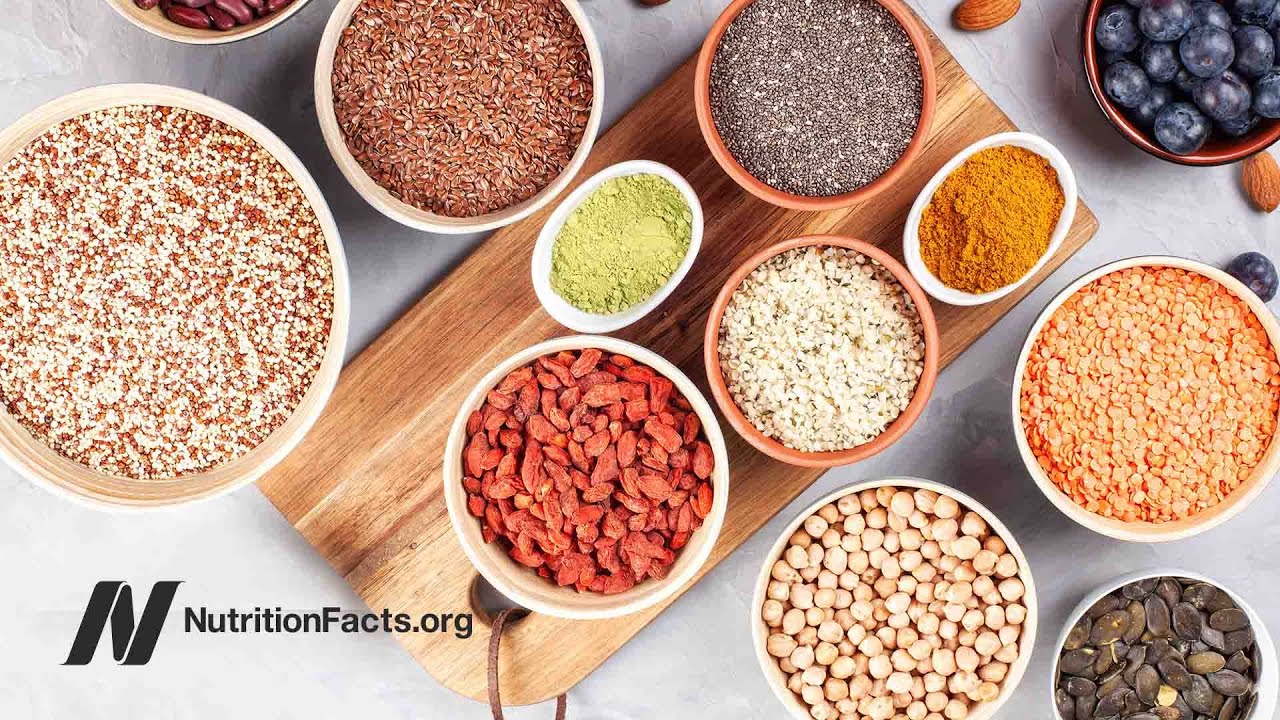
If you feed people resistant starch, a type of fiber found in beans, within days the bacteria that eat resistant starch shoot up, and then die back off when you stop eating it. Eating just a half can of chickpeas every day may modulate the intestinal microbial composition to promote intestinal health, by increasing potentially good bacteria and decreasing pathogenic and putrefactive bacteria. Unfortunately most Americans don’t eat beans every day, or whole grains, or enough fruits and vegetables, so the gut flora, the gut microbiota of a seemingly healthy person may not be the equivalent to a healthy gut flora.
It’s possible that the Western microbiota is actually dysbiotic in the first place, just because we’re eating such fiber-deficient diets compared to populations that may eat five times more fiber and end up with like 50 times less colon cancer.