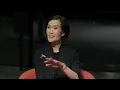
- Good evening and welcome to the 33rd Sir Gordon Wu Distinguished Speaker Forum, hosted by the Chazen Institute for Global Business. I'm Joshua Safier, Managing Director of the Institute. Thank you all for joining us this evening and it's truly wonderful that you all have made it into the event. And I want to give a special welcome back to alumni as well. Thank you for all being here in attendance. As you may know, the Chazen Institute serves as the hub for global business here at the school. And tonight, we are delighted to continue a series that
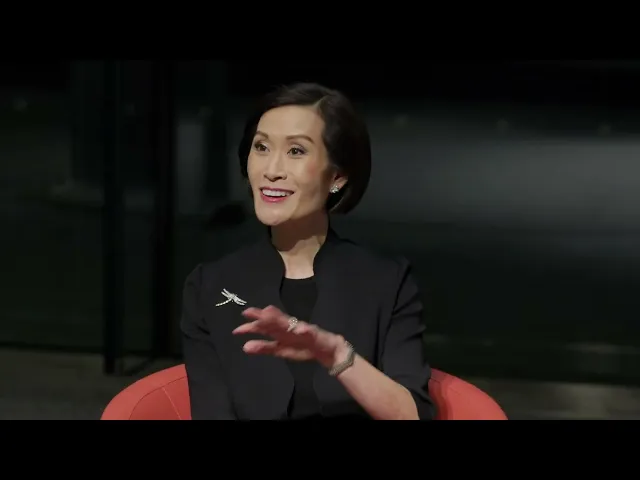
brings together two of our flagship programs on China, the Sir Gordon Wu Distinguished Speaker Forum and the Lulu C. Wang Asian Business Leadership Program. Now, both programs are dedicated to fostering the intellectual and intercultural understanding exchange between China and CBS, connecting our community with outstanding Asian business leaders to share insights, not only on business practices and opportunities ahead in the 21st century, but also their personal and professional journeys. Continuing this meaningful tradition, we're thrilled to welcome Ida Liu as our distinguished speaker tonight. Ida joins a long line of accomplished speakers including Daniel Xu, co-founder and
CIO of Tencent, Ma Weihua, the visionary president of China Merchants Bank, and Wei Christianson, former CEO of Morgan Stanley China and co-CEO of Asia Pacific, just to name a few. Before I introduce Ida more fully, let me share a few words about our exceptional moderator, Lulu Chow Wang. Lulu is not only a highly respected leader in global finance, but also a passionate champion for women and education. Her trailblazing career on Wall Street paved the way for countless others and her unwavering commitment to philanthropy, community, and mentorship has been a beacon for so many. All of
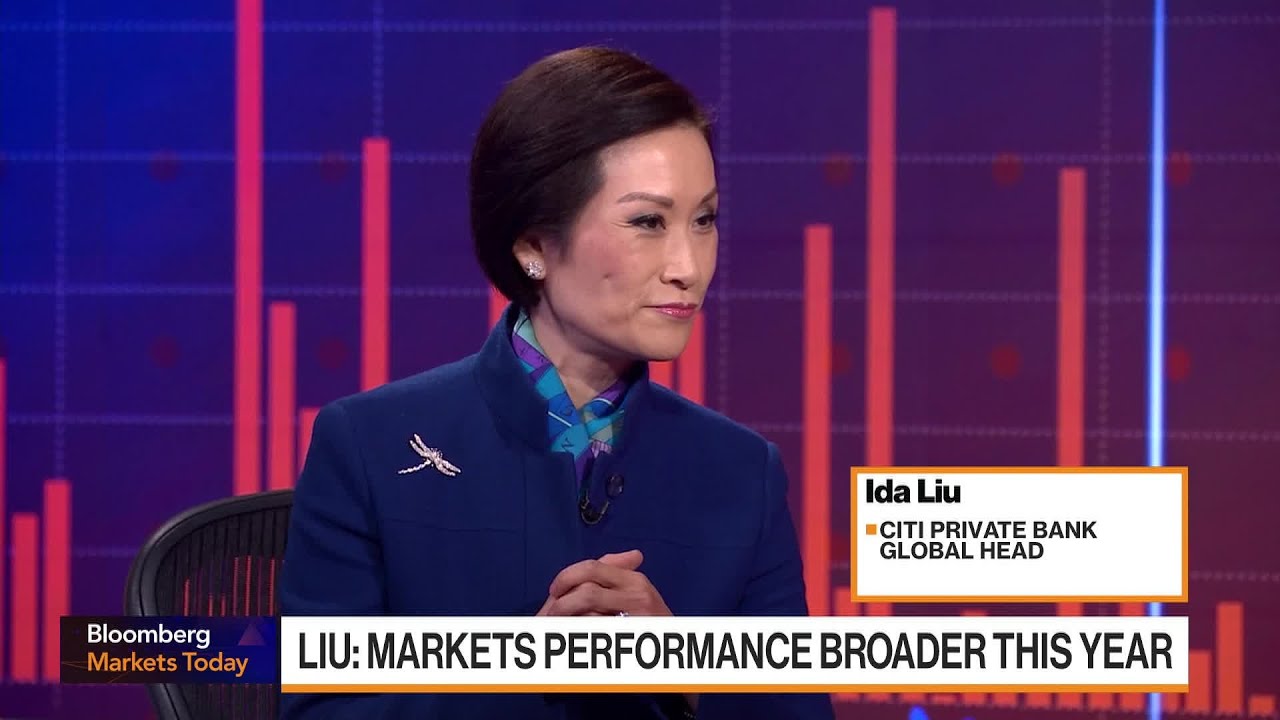
this is underscored by Lulu's public service, long support of institutions and causes that are deeply meaningful to her, and importantly, her genuine generosity of heart, time, energy to building communities like this one tonight. We're very thankful, Lulu. Lulu's also the CEO of Tupelo Capital Management and serves on the board of the Metropolitan Museum of Art, Rockefeller University, the Asia Society, Columbia Business School, and to my personal gratitude, the Chazen Institute's Global Advisory Board. Now quickly, let me turn our focus to tonight's honored guest, Ida. As Global Head of Citi's Private Bank, Ida leads teams across
52 offices in 20 countries delivering wealth management solutions to ultra-high net worth families and their businesses across the globe. Since joining Citi in 2007, she's held a variety of leadership roles at Citi and her career also includes work in both finance and fashion. Ida has earned numerous accolades over the arc of her career, including Barron's 10 most influential women in wealth management and Crain's notable women on Wall Street. Beginning in 2019 and every year since then, Ida was named Barron's 100 most influential women in US finance, as well as America Bankers 25 most powerful women
in finance. And then of particular note, Ida's also the recipient of the Ellis Island Medal of Honor, which recognizes individuals who have made it their mission to share their wealth of knowledge, indomitable courage, boundless compassion, unique talents, and selfless generosity. So we are a truly in terrific company this evening. It's such a treat. And without further ado, let me welcome both of you and please give a warm welcome to Ida and Lulu. - Thank you. Thank you so much. - Thank you so much for that kind introduction, Josh. I am really excited to be all
with you and also to have a chance to talk with my old friend, Ida. I've known Ida for many, many years. We both hail from the same college, Wellesley College. - [Ida] Go Wellesley. But she didn't go to Columbia, she went to Wharton, right? - [Ida] I did, right. - Anyway, better luck next time. But it's wonderful to have seen the great success you've carved out and carved out, not only for yourself, but other women in a very competitive field. But going back to the very beginning, I find so many of us are defined by
our early lives, our families. And I know your father and I know you've learned a great deal from him, successful businessman. So maybe you can tell us a little bit about your early life and where there are things that you recall that might have given you an inkling that you might want to be in business, you might want to be in finance. - Perfect. Well, firstly, it's such a pleasure to be with you all this evening. And a huge thank you, Lulu, to you for including me tonight. Lulu, for those of you who don't know,
is a mentor for me. She is a leader that so many of us look up to. And by the way, I've always had the pleasure of moderating and asking her the questions. So the things are flipped tonight and it's a real pleasure and a privilege to be here with all of you. So just by way of background, my brother and I were born and raised outside of San Francisco, California. We are ABCs, what they call American born Chinese. My mom is from Shanghai, my dad is from Beijing, and they immigrated through Taiwan. And my brother
and I, as I mentioned, were born in the San Francisco Bay area, but very bicultural upbringing. Every summer, we would spend in Asia, and during the school year, of course, we were in the US. And that bicultural upbringing has been incredibly helpful for me along the way in my career. And I always attribute many of my leadership characteristics today to my early beginnings as a child being raised by my mom and my dad. My mom is one of the simply kindest people you will ever meet. The biggest heart. She always taught my brother and I
to be kind to everyone and respectful to everyone. And my father is one of the most optimistic can-do attitude types of individuals that you'll ever meet. He started a business when we were very young and it failed, but it did not falter him one bit. He instead always looked at the glass half full, very optimistic, a very ambitious, a very positive attitude. And I think that that combination of his leadership and instilling those values in me and my brother at a very young age, in addition to the very, very deep passion and kindness aspects that
my mom also exuded are what shaped me and my brother to the leaders that we are today. - Well, it's wonderful to hear about that. And also, as we share, my mom is also Shanghainese. And they say there's nothing stronger than Shanghai women. That's true. Their husbands learn very quickly. So we know a little bit about what shaped you when you were growing up. So right now, when you ask any person, young or old, what's shaping the world, the AI. It's all about AI. It's all about digital technology. So you lead a very large business
center at Citi Corp. How do you see AI beginning to get into shaping the way you do business? And are there any ways that might differentiate you at Citi Corp from what you're doing with AI? Vis a vis other businesses. - Yeah, so there's not a single conversation that we're having with our clients or investors or teams around the world where AI doesn't come up. AI is already touching 80% of the jobs today. It's probably going to displace close to 20 to 30% of the jobs in the next five years. And so it is a
very powerful force. Now, the advancements that are happening in AI today are so fast and so exponential that the regulations are playing catch up. So it is imperative for us at Citi and as a large global institution that we deploy AI responsibly and ethically and with the right guardrails in place. I think it is also very important and imperative for all of us to make sure that the future generations of leaders are getting equipped with the right training around utilizing AI. And that we, again, we set the right guardrails and expectations for the use of
AI. But what I will tell you about private banking is a lot of individuals ask me on a regular basis, are you concerned that AI is going to replace your private bankers around the world? And my response is absolutely not. There is no replacement for the face-to-face personal interactions that we have with our clients. The way that you look at your clients face-to-face, the way that you can read their emotions, feelings, expressions, that is not going to be able to be replaced by AI. However, there are so many tasks that can be replaced by AI
and will create numerous amounts of efficiencies for all of us globally. That includes things like onboarding processes for our clients around the world. It includes call logs for our clients and our team members around the world. So these types of tasks, of course, we want to deploy the AI to unlock again the productivity and efficiency of our team members around the world and we're well underway. - You mentioned that AI will not be replacing everybody, but there's certain characteristics of people who will survive AI and actually triumph over AI, because I think the very best
of humans are always going to be ahead of AI. And are these characteristics something that you're trying to look for as you hire young people and bring them in? And even after you've brought them in, are there ways in which you can help them to fine hone their abilities to outperform the robots? - Yes. So one thing that's really critically important in the way that we're looking at our next generation of talent is that we are constantly emphasizing the importance to embrace lifelong learning. That we all have to be agile. That the way we are
going to lead in the next 10 years is very different from how leaders led in the last 10 years. That we have to adopt a mindset that embraces change and rapid change and quick change. So it's up to us as leaders of the organizations to make sure that we have trained, as I said earlier, the right next generation leaders with the right skillset that we are looking at what does this mean in the future? Because AI will displace jobs, but in addition, it will also create numerous different types of jobs as well. So really leaning
in and helping our teams that way. - Right. What are the kind of jobs that you think will exist in the future that don't exist now? Because they can only be done by humans and done well by humans? Or those are the jobs you're trying to prepare your people? - Yes, and as I said, you know, I don't believe that any kind of AI robot is going to replace a private banker. We work with a third of the billionaires around the world. We help ultra high net worth individuals. The average net worth of the clients
that we serve is over 400 million. So you can imagine the level of customization, sophistication that our clients demand from us. And that is not something a robot can replace. There are other parts of the wealth continuum that could be complemented and displaced where we're talking about mass affluent or non-custom solutions on the wealth side for clients as well. So we're definitely examining those types of efficiencies and looking at where can we scale up where the personalized matters a lot and where can we utilize AI and some of the intelligence on the broader areas where
you might not need as much personalization. - Might there be another way in which we can prepare young people for a very automated world? And I've heard this from a number of CEOs, they say it's very efficient. You hire a young person, they're engineers, they're accountants, they hit the ground running, and they can earn their income very quickly. But you get them to mid-level management, they seem to top out, because they have focused so much on job training, they have forgotten to have a very strong grounding in the humanities, liberal arts. We come from Wellesley
College, we know the value of a strong liberal arts education. If you don't have the context of history, if you don't have the context of human psychology and not neuroscience, you may not be able to understand the complexities of dealing with very, very mixed groups of people who have different value sets. How do you motivate them? How do you get them to collaborate when they come from totally different historic and cultural backgrounds? So be prepared in that realm is an important thing. And do you look for that when you're hiring young people and do you
give them some advice if they don't quite cut it, that maybe this is something they should be putting some importance in? - Lulu, I mean, I couldn't agree with you more. I think that my background itself speaks volumes about how unconventional my background is for a private bank leadership role. Having started as an investment banker, ran a fashion company, and then pivoted into private banking. So I think that it's very important for us to think about different experiences, skill sets of the talent that we're developing. As I was sharing with a group of MBAs before
this discussion, I think it's really important that you gain the right kinds of exposures geographically and otherwise that you think about your career and where your experiences are and what are those voids and gaps that you could continue to explore gaining more knowledge and experience. And so I think it's more about being well-rounded, being open-minded, and again, being a bit resilient, and a bit open to change and especially how quickly things are moving. - Exactly. I think resilience is something that's going to be extremely important, because in a world that's so rapidly changing, to be
able to be resilient regardless of what happens is so important. But also I was thinking, I was talking to some engineers about software and AI, and they were saying that... One said it's going to be 15 years before a robot can really feel the way a human being feels and be able to engage productively in a situation that has a lot of valuations involved. Another one said, "Oh no, five years, we got it down pat." I think the difference could be is that how much research we're doing on the left brain, right brain. As we
know left brain is very much the linear, quantitative objective part of our thought process. The right brain tends to be more qualitative, more subjective, more intuitive. And the truly brilliant business leaders use both spheres of their brain and they have a very active documented... by scans, you can see there's a very active neural passageway between the two brains. They're really toggling back and forth and really able to manage the situations that require empathy and other areas that require just pure analysis. And this is something that I've always passed on to young people. I talked about
how to succeed and it's something that... I don't know, is Citi Corp sort of making a point of that to their young people? - Of course. I mean, yes. And Citi is very much helping us all, as I said, with the right kind of training and leadership and development. And Lulu, one of the things we did in the private bank is make sure that we have an apprenticeship model so that our senior bankers are covering the matriarch patriarchs of the client base, our junior bankers are covering the next gen, and our associate bankers are covering
the millennials, so that we can build almost an inherent sort of apprenticeship model and an inherent talent pipeline for the future early on. So they're learning on the job sooner. - Absolutely. And I think one of the strengths at Columbia Business School is we have very strong school of social enterprise, also a school of family business center of that. And I think we know that the numbers tell us that the greatest origins of startups is family businesses and entrepreneurs. And they often play out of the box. They don't prescribe. They don't buy into the kind
of formulaic controls and growth patterns that the Fortune 500. And it's more of the growth of our country and our culture is going to be coming from that kind of business startup. We really have to understand how those people think. And I know that we're doing a very good work in our centers to carry that on. But imagine you are doing that as well at Citi with your clients. - Yes. So we have a very large family office practice within the private bank. It's about 1,800 of our largest, most sophisticated clients around the world. And
what we've seen is that the family office clients tend to do more in alternative investing. So roughly 40% of their asset allocation is in alternatives versus on average, the rest of our client base is about 30%. So more and more in the illiquid bucket, more and more in direct investing as a way to gain some exposure into these clients' portfolios. Another very interesting shift that we've seen, as I just mentioned, we are in the midst of one of the largest wealth transfers in history today. So $80 trillion is passing to next gen and millennial clients,
not to mention women clients, over the next 10 years. And women will control over 50% of global wealth in the next 10 years. So as the money is moving, behaviors are changing. So next gen and millennial clients are definitely interested in investing with purpose, impact investing, doing good with their investments. So I suspect Lulu, that in the next five years, we're not going to be talking about ESG as a separate sleeve, it's going to be core to our clients' portfolios going forward. - Absolutely. And I think when you're dealing, especially with family- owned businesses, and
they can be multi, multi-billion dollar companies, not just small little startups, the lines of communication, the lines of authority can be quite different. And if you come in as a business manager, as an expert brought in from outside, because some of the family business you feel is good to have external talent, you really have to be prepared. And we try to do that at Columbia to understand how things operate in a family-owned business. It may seem to be similar, the numbers may seem similar, but the qualitative elements are quite different, and it's something that I
think many business schools are putting more attention to. - Yeah, I would imagine so because what is the single most important thing to most of our clients is their family and it's their legacy. So helping them think about how to pass and maximize the wealth transfer to their kids, to their grandkids, help establish and really help them lean into any charitable endeavors that they're passionate about on their legacy side. Those are very much top of mind in terms of what clients are looking for. And that's where we lean in on a lot of the guidance.
- Exactly. I was talking to a friend at lunch today. She has a very multi-billion dollar client and they're into their third generation now. And she said it's not so bad when you're going from the first to second generation, the sense of all for the family, what's good for the family, there's a sense of unity among the generations. But when you get into the third generation and you don't have quite that sense of collectivity, it really becomes difficult. So now, they're looking to bring in outside consultants to sort of speak objectively to the family. But
these are the challenges which will be very common as we go forward, regardless of the political overstructure in our country, I think the family business will continue to be a very important part of our economy. It'd be interesting to hear from our audience there, if any of you are parts of family businesses, because I know I did a talk at the Tamer Center with Alice Chen, who's recently just joined our board, and she had the daunting experience of gotten her MBA at Columbia. Went to Goldman Sachs, was on a fast track at Goldman Sachs. And
then her father said, I need you back in the family business. And this is after her older brother, and this is an Asian family, older brother, uncle, cousins, older than she, had already been slaving away in this company hoping to do well. And here, she's brought in from Goldman Sachs and Columbia Business School to sort of run the show. I mean she tell us, oh gosh, that's like walking to the lion's den. And she said it was amazing. If you take the time to understand the culture, take the time to respect the people you work
for, eventually, it can be fine. And I thought to myself, which the mantra of listen and respect, it's not just only family businesses, it's really true for any business. Even if you're a younger person breaking into a company where you might be put in a position where older people report to you, people who've been there longer than you, how do you win them around? How do you get them to accept your leadership? How do you get them to work with you and other people and when they're feeling resentful? These are all things that are part
of leadership and understanding of the culture of any business you're in. And hopefully, we'd be learning a little bit of that at Columbia. So we were talking about leadership and it's something that there are different styles of leadership, and there's the collaborative style, then there's also the me or the highway style that you see from some corporate leaders. Have you been thinking about it? And given we've talked about AI, we also talked about different culturals effects in our companies. What's the best way for someone who's new to company to get a sense of the culture
in a firm, so that he or she can lead well without the least amount of stress? - So for me, I think, it's incredibly important that we are at a firm that is so global, so inclusive, so diverse. I truly believe that's one of our superpowers here at Citi. You know, I come from a very unique vantage point. I have the glass ceiling on the one hand and the bamboo ceiling on the other. I think the glass ceiling we can effectively say is shattered at Citi, given we have the first female CEO, Jane Fraser, running
a global financial institution. 50% of our board are women, 50% of our employee base are women. And we were the first global financial institution five years ago to put out our gender pay gap numbers because we believe that what gets measured gets done. And I'm really pleased to share with you that that is equal today because of those initiatives. So I would say on the glass ceiling side, incredibly shattered. And I think it's, again, speaks volumes to the inclusivity at our firm. On the other hand, we've got the bamboo ceiling, and I don't know if
you know this, but Asian women are the least likely minority group to get promoted to executive management positions. And I am co-head of Citi's Asian Heritage network as well. And we've been examining the challenges with the bamboo ceiling within financial services more broadly and partnering with all of the other financial services firms to address this very issue. And what we find is a lot of the cultural values that we are brought up with are exactly counter to what you need to be successful in corporate America. So the idea that we all should be really stellar
individual performers is very contrary to what you need to succeed in corporate America. You need to be the most amazing team player. You need to realize you're not going to win on your own. You need to recognize the talents and bring those out of your team to do well together. And again, in the Asian heritage and cultural upbringings, it's really about individual achievement, which I think is a mindset change for many. Secondly, it's working hard, putting your head down and not speaking up, not boasting, not bragging, not talking about your accomplishments, but that is exactly
counter to what you need to do to keep making it up the corporate ladder, so to speak, right? You have to talk about your accomplishments, you have to talk about your achievements. And, you know, you are your own best cheerleader. If you're not going to ask for it, you're not going to get it. And don't expect your managers to be mind readers. You know, they don't know exactly what your goals and ambitions are. So my advice would be please make it known to your managers what your goals and aspirations are, so that they can help
you achieve your objectives as well. So those are some of the things that we saw as gaps in addition to very importantly communication skills. So we've been rolling out a series of public speaking and communication skills, 'cause I think that everybody would agree with me that your ability to effectively communicate is something that will differentiate you from the rest. - You make such a good point. I've heard this made about not only Asians but women in that both groups of people tend to not want to be the ones to boast to pound their own chest.
At the same time, you have to take credit, you have to own what you've done. And I find that the best way to do that, I, for myself, and I've encouraged other Asian and women to do this, is that, grab the credit for the team, because I don't think we like to say, well, I did this and I'm so good. I did that and I was so smart. But you could say, wow, I've got the best team and our team works so well together. Grab it for the credit of the team. And then you feel
better about doing it. And also at the same time the team will benefit. It's something that I think increasingly, you know, you're starting to see more of that. But before the time runs out, I know we- - Just one more comment on that note because I think it's important, it's also fine to share facts. So I brought in a new client that brought in 200 million, period, end of story. But it's sharing a fact, it's not bragging, it's not boasting, it's not making any presumptions. But sharing facts about progress is incredibly important. - Absolutely. I
know one question I've always been asked of you, and I'm going to do that before we run out of time, but then we'll have time for Q and A, but I think, so many our of our students, both women and men, they worry about the balance in life, because we all know we work very hard. And I think kettle and the pot, we always tell each other don't work so hard and we work so hard. But if you love your work, you work very hard, how do you then balance your life so that your family
doesn't feel they're neglected and they're the B team versus your company's, the A team. How do you make them feel that your success is their success too? - Well, listen, behind every successful individual is a very, very strong family foundation and a big, big, very, very strong support network. So that's first and foremost. But I have to say that it's not easy. It's a constant juggle. Many times, I feel like I'm wearing three different hats on any given day. I could be a caregiver. You know, I could be an educator to my kids or also
navigating my team through lots of challenges. So I think being very conscious about the numerous responsibilities that we have as leaders and making sure that the shadow that you're casting for your team is reflective of your own values and what what you want and hope for your team, being understanding when one of my female leaders has to leave early for a sporting event or for some other personal matters. And likewise for the males as well, being super supportive and encouraging of that, fostering this culture that you want of inclusivity and understanding that balance is very
important. But having said that, I haven't mastered it at all. I really struggle very candidly with the balances of having two young children, eight and 10, and also running a global business with very demanding travel and hours. So what I try to do is keep my weekends completely free and that is my 100% be here now with my family, absolutely present. And Monday through Fridays of full focus on the work. - Right. Well, I know you do it very well. And I'm sure students will have a lot to learn from you. But I do want
to go into Q and A. I think we'll have Q and A until about 7:15 and then we'll take a break for the reception. I think, yep. Hey, gentlemen, the center. - Ida, thank you very much. You'd mentioned sort of your non-traditional path, the investment banking, the fashion, now the private bank. Can you tell us how you sort of spin all that together and when you present yourself and were there particular experiences from all of those different ventures that helped you do what you do now? - Wonderful. So I had two job offers at Wellesley
College. One was to be a fashion buyer and the other was to be an investment banker. And so I went the investment banking route, spent seven years in investment banking with Merrill Lynch, half the time here in New York, half the time in Asia based out of Hong Kong, working on China, Taiwan, and Southeast Asia tech media and telecom deals. Seven years straight of investment banking, going straight on up from analyst through was very, very rigorous. It was 120 hour work weeks really back in the day where there was no work-life balance. It was an
all-nighter or two all-nighters a week, seven days a week. And at the end of seven years, I was quite candidly burnt out and I really needed to make a pivot for my personal wellbeing to something that I hoped would be allow a little bit more balance in my life. And therefore, I switched into the fashion industry. And while I didn't take the fashion offer out of college, I kept really close contact with all of my connections at Neiman Marcus group, which then made an introduction for me to meet with Vivienne Tam. And for those of
you who don't know Vivienne, she is the first Asian designer to make it in the US and meld that east meets west aesthetic together as she was a role model and an icon for me at a very young age. I used to wear her designs and feel so empowered in her beautiful designs. So the pleasure of spending time with Vivienne, helping her think about her global business strategy, opening up her European markets for her, opening stores for her in China and Shanghai and Beijing, launching a new dress line for her, which doubled her top line
profitability, and exploring collaborations for her with Mandarin Oriental, Cathay Pacific was incredibly rewarding for me. It was a whole new skill set. I did financial valuation analysis of companies and I moved into operating a small private company globally, which is a skillset that I think is incredibly important, getting the exposure there. But when I was in the fashion industry, every global fashion designer that I would meet would ask me, what stock should I buy? What bond should I buy? How should I invest my money? And I would always say to them, timeout, I was an
investment banker, I can give you corporate advice, but not personal wealth management advice. But nonetheless, it was a huge aha moment for me. And I realized that there was a massive void in the wealth management industry for the fashion sect. So I actually proposed and pitched to Citi 18 years ago to launch lead and head a newly created industry group for private banking at the time, focused on fashion designers and entertainment individuals, and the rest is history. So I took an opportunity that I saw in the fashion industry, pitched it to Citi and built a
business in private banking focused on the fashion, retail, and entertainment practice. So again, taking an opportunity, thinking slightly outside of the box. And people always say to me, well, can you be entrepreneurial at Citi? It's such a large global institutional firm. And yes, absolutely, they've embraced me in launching a new business focused on fashion and entertainment designers. And then moving again in 2011 to launching the mega wealth Asian clients practice for Citi. Since we'd been on the ground in Asia for over half of our existence, 115 years on the ground with deep client relationships. But
we weren't capturing the flows of diversification around the world. So I, again, proposed a new group focused on capturing the global flows of our largest Asian clients around the world. And that is the precursor to today what we have in the private bank called the global client services, which is our single most competitive advantage and unique to Citi, our ability to serve our clients, their family members and their companies seamlessly around the world in every geography through one relationship contact. So that's how it all came together along the way, spotting opportunities, bringing it together, thinking
a little bit outside of the box, and really examining where I had experiences, where there were some gaps, and trying to fill those along the way. - And that's such a good example that even very large companies now that they're burdened by scale and it's harder for them to achieve growth, they're looking at their businesses and their segmenting, segmenting, trying to find opportunities for smaller organic growth by just segmenting their businesses and looking for what are their primary skills in developing smaller businesses within their large subset. And I think Citi did it beautifully. So if
you don't want to go into small companies, 'cause you don't want the risk, you can look for big companies, but look within the big company how you can be something special and carve out a growth niche for yourself. Here, someone in the middle. - So question I have for you is you mentioned about how important it is to talk about really what you do, because men are actually very good at that in terms of the talking about their accomplishment. One question I have for you is based on my career in Fortune 500 companies, I'm finding
that it's not just a matter of working hard, it's not just a matter of being able to talk about your accomplishment, but what matters a lot as well, who do you work for and whether you have enough support. So what I want to... You probably have done that because you wouldn't have gotten where you are if you wouldn't have great supporters, right? What I wanted to ask you, how, especially at a senior level, when you're progressing, you build relationship within organization and kind of building relationship and looking for people who really support you, and who
would understand what you achieved and who would support those accomplishment and promotion. - So I think it's a very important distinction between having sponsors to open the door for you and having mentors. So for me, mentors are really three dimensional, senior mentors, peer mentors, and junior mentors. And it's important that you establish mentors from different industries as well to provide you unbiased feedback, different perspectives, and some of the best, most creative ideas I've gotten from my junior mentors. So folks that have just come out of school with the most creative, most innovative, I would say,
ideas. So I think mentors are very important and they play a different role than what you're talking about. So what you're talking about is having sponsors, very senior leaders that will advocate for you that when they're sitting in a room will discuss you or raise you as somebody that they should be thinking about for a special project or for more visibility across the firm. And that goes back to the point that I was making earlier. You need to make it known what your desires and your ambitions are. You need to make sure your manager understands
your goals, your aspirations, so that he or she can help you get there. And part of that is the sponsorship element that I think you're alluding to is making sure that you have the right level of seniority in rooms that are being discussed about where are those opportunities going, who's going to run these types of projects for us, and making sure that your name is surfaced. So I would say again to the communication side of making sure people know exactly what you want, so that we can help you achieve those goals and objectives. - I
think there's a gentleman here in the white shirt. - Ida, my question is, you mentioned AI being an enabler in wealth management and financial sector and instead of replacing jobs, it's actually going to create, but one of the things that I think across the industry is prevalent is the education of how to best use AI. How do you think is the best way to resolve that and how does Citi practice that? - So exactly what I said earlier is that we're training our teams to effectively use AI. I mean, incredibly, you would be surprised at
the knowledge base about how to unlock the potential of AI, asking the right question, asking the right prompts, the follow-up prompts, et cetera, are really important. So the training around that is very, very critical. But the way that we're utilizing AI today is on more of the mundane tasks, as I talked about earlier. Not the highly personalized conversations that we're having with the clients, but for example, using Zoom AI capabilities. So when I'm zooming with a client, it automatically does the transcript and the follow ups for me the next best actions right away. You know,
those are the types of things that save a lot of time, hours, and provide a lot of efficiency from my frontline client organization, and unlocks more opportunity for us to spend time in front of our clients. So that's where I'm really leaning in the most. - I think there was a question there earlier, the young lady with the black and white suit. - Hi, Ida. My name's Joy. I am currently a EMBA student. I'm also working in wealth management, so I'm very inspired by you as a Asian Chinese woman. So I have two questions for
you. One is personal level. Thank you for sharing your like career journey. What key factors have empowered you to transition into your careers and grow into an exceptional leader? And at a company level, what core strategy has driven Citi private banking success and set it apart from the other institutions and how do you navigate and overcome challenges through dynamic global changes? Thank you. - Okay. So let me start with what are Citi's priorities and how are we navigating against some of the global dynamic challenges? So first and foremost, when I took over as the global
head of Citi three years ago, the first thing I said is that we want to be the number one private bank for families, not individuals, but for families, because we want to build a sustainable wealth management business for decades ahead, not just the years ahead. And what we noticed is the average age of our client population was approaching 70. So we wanted to make sure that we also leaned in very heavily to the family, which means the partner, the spouse, the kids, the grandkids. So by leaning in just on that element, we were able to
grow our business incredibly substantially over the last few years capturing more of the family wallet. I think secondly and very importantly is leveraging the capabilities that we have across the Citi franchise. So when I meet with a client, I don't just meet them with a private bank lens, I meet them with the Citi lens, because we have a truly most robust global network that's able to serve our clients and their families on the wealth side and on the private bank perspective. But we also leverage the capabilities and the competencies of our investment bank, our commercial
bank, our markets franchise on behalf of our clients' companies. So the ability for us to do that globally and institutionally is unparalleled, right? So we're going to lean into the strengths there. And surprisingly, almost a third of the new clients that we brought into the business comes from within our four walls at Citi, just by the referral opportunities that we're generating across each of our five interconnected businesses at Citi as well. So, you know, some really important ways that we're growing the business going forward. I would say, you know, some of the challenges that we're
facing in the industry today. I mean, first and foremost is that my talent is the most important thing to me in the business today. We have some of the most exceptionally talented private bankers on the street globally, but as you can imagine, it's been a war for talent. And so it's really important to us to focus on developing our talent, retaining our talent, making sure that our talent has a clear pathway to growth within our organization. That's why I talked about a little bit earlier the apprenticeship model, which is very important to us to make
sure that our younger leaders are getting engaged earlier on and see that pathway clearly and getting on the job training right out of school all the way on up to private banker. So I would say that that's one of the most significant, in addition to everything we've been talking about throughout the conversation tonight, around the disruptive technologies that are coming and continue to come, including AI and how do we unlock the efficiencies in the fastest, most efficient manner with AI and adoption of technology and change there. And I'm sorry, what was the first question that
you had asked? - Thank you. The first question was personal level. How does it really empower you on a personal, like your personal values, or how do you overcome, you know, your career transitions? Like, why does it make you to transition your careers and everything? - So the reason why I transitioned careers is to make sure that I was a more well-rounded professional, because as I mentioned earlier, if you know that you have ambitions to run a large company in the future, you have to think about your skillset, your career experiences thus far, and where
are those gaps that you can fill. I also really think that it's important for us to take calculated risks from time to time, be willing to make changes like moving from investment bank to fashion, which was a drastic change by the way. And sometimes you have to make these changes to progress even further forward. So taking some calculated risks along the way, not being afraid to pivot, thinking outside of the box a bit, particularly in the idea to launch the fashion practice for the private bank, which didn't exist before. I think that kind of all
made sense as I explained the story to how I made all these pivots along the way. - I think what you said is so wise because I think sometimes our young people feel that they've got to sort of decide what they want to be when they grow up and they go on this linear path. And life has surprises. And go with the flow. It's not that you need to have an idea of where you want to go, you need a North Star, but you also need to be open. Also, before I went into money management,
I had to start really in financial writing 'cause that was my major in Wellesley. But I very quickly realized it was much more fun to be investing than to be writing about it. So I made that pivot. And then somewhere along the way, as an analyst, meeting a lot of CEOs, I had one CEO said, "I really like the way you think. Why don't you come and work for me and be in my strategic planning group and then you can rise through the ranks that way?" And for a young person, it was very intoxicating to
have someone say, wow, you're smart. And you have immediately a big jump in pay and big jump in title. But I thought to myself, I really love investing and it may take me a little bit while longer to move my way up into investing 'cause I eventually wanted to be move from analyst to be portfolio manager, to have my own firm, but don't be seduced by short term enticements. That might seem really great. Your friends say, oh, wow, how can you turn that down? Do what really makes sense for you for the longer term. Something
that makes you want to wake up and say, I can't wait to go to work. So be resilient. Be open to change that life can bring you. I think we maybe have one more question. Let's see. The girl, young lady in the blue shirt. - My question, Ida, is when, I guess, what was the tipping point when you're working in fashion that kind of catalyzed you now is the right time to maybe pitch this to Citi? And then also was it you had this idea and you were thinking, okay, if Citi doesn't want to hit
the bid, I'll check Goldman. I'll check other players. Or maybe if you don't mind speaking a little bit more about that process and time for you. - So what happened is having spent a few years in the fashion industry, and as I mentioned earlier, almost every global fashion designer would start asking me, what stock should I buy? How should I invest my money? And I thought, wow, okay, there's a massive opportunity here. And when I thought about the characteristics of the designers that I was speaking to, they were incredibly global. They had global businesses. And
I thought about which institution would be best for this type of clientele. And no question it was Citi because Citi is the most global financial institution that exists today. Our private bank is the most global private bank in the world today. And that globality was so critical to what we were trying to achieve with fashion designers that have enormously global businesses and had those kinds of challenges around the world. So that's how I brought it to Citi. And obviously, it was an opportunity that I just heard so much. It was like loud and clear right
in front of me and I thought I got to do this. It's incredible. So that's how it happened. - Well, I think there's one gentleman back there who's been very resilient. He's had his hand up all the time... We'll end with you, thank you very much. - I wanted to ask you on a commercial, financial, economic perspective, what do you expect of the US-China relationship under the new Trump administration? - Well, that is probably one of the number one questions from our investors globally is, you know, I think 10 years ago, no one would've expected
geopolitical concerns to be at the top of everyone's list. And today, it is absolutely by far number one next to AI. So when we talk about US-China, unfortunately that relationship has been bifurcating and more strained than ever, frankly. And we've just got to be able to navigate that appropriately for our clients around the world. But with this bifurcation has come a massive change in the supply chain around the world. And so when we look at, so what are the benefits of the different countries around the world from that bifurcation? It's Southeast Asian countries. Thailand, Vietnam,
Malaysia, you know, to a lesser extent, Japan, India, right? You've got the nearshoring that's happening here with the US with Mexico and different areas of Latin America. So from an investor standpoint, we're making sure that there is enough geographic diversification and enough in the portfolio to shield from the bifurcation. And not to mention, you know, helping them think about navigating AI and how to invest in AI when China's R&D is number one in AI, US is number two in AI. And then looking at what are the implications there in terms of growth in GDP for
both countries down the road. And then, of course, the question around Taiwan. So these are the types of conversations that our clients are leaning into us to advise them on what do I do with my portfolio at the moment? We've got to give our clients a regular health check and remind them about some of these evolving changes that are happening geopolitically and otherwise in the markets and help our clients position accordingly. - Well, on that note of reason and sound rational behavior, we both thank you all for coming tonight. And please help me thank Ida.
- Thank you so much. Thank you to Lulu. Thank you all very much.