The most, let's say, ultimate form of engagement is people replying to your emails. So, what I do in the welcome series very early on is I try and get reply to my emails. So, I'll give a couple examples. This is an amazing email that we use to get people to reply. So, definitely fitting that into your welcome series is very important. Kyle Distingo Marketing Another thing I know some really good marketers do is if you have an email campaign promoting your product that did amazing, maybe you can take that same angle, that copy, and even
turn it into an ad, like a Facebook ad, a YouTube ad. So, that's really another cool strategy. >> That's actually a very good tip. It's an awesome tip. There's two different ways that we do email marketing to yeah have that backend revenue dialed in and making a lot of money on the back end to Really be profitable. There's mailing from your internal list. The second strategy is it's called list duplication. >> What I would like to do is to ask your help to figure out how to build the internal list and then after we go
to the external list. >> The external list there's no extra cost to acquire those customers. So everything that you make from the duplicate list in my opinion is just Extra money in your pocket. Whether you want to buy a Rolex every month or you want to reinvest it back into the business, it's just extra extra monthly profit. One big thing I would really tell people to focus on cuz I see even the best companies in US don't do this well is forch. So Kyle, first of all, thank you so much, man, for being here. Am
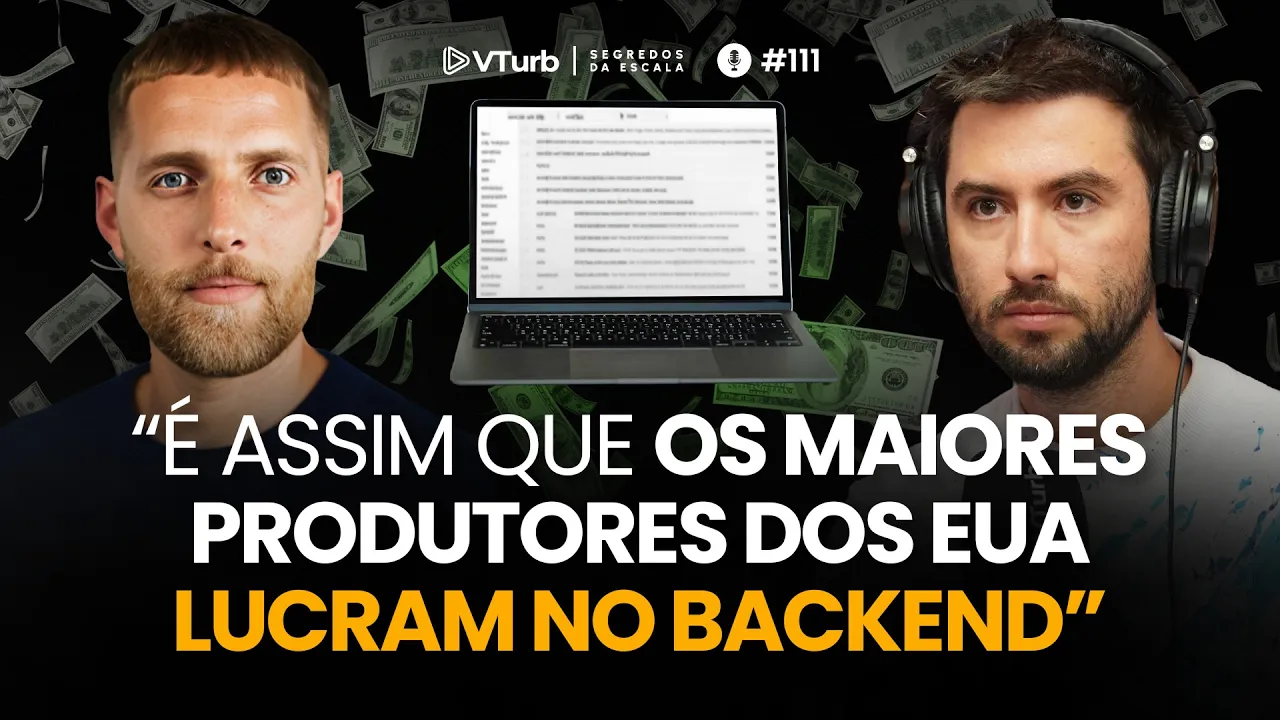
I pronouncing your name right? Is it Kyle Like this? >> Yeah, Kyle. Yeah. Okay. Somehow even though four letters so many people get it wrong but uh yeah you got it perfect. >> Well my name is four letters too but people always get wrong like 100% of the time. Yeah only Brazilians can pronounce it and yeah so first of all thank you so much man for being here at the Vtor podcast. I really appreciate it. So the first question that I usually ask is Just just the same which is can you tell the audience here
for the few people that don't know you? I mean probably in Brazil people don't know you a lot but for the people that don't know you can you just tell us what you do, who you are, what's your like specialty and then from that we can begin the podcast please. >> Yeah for sure. So most people know me for two different things. First off I'm head of marketing at Digi Store 24. So Probably a lot of the Brazilians know Digi Store 24, but it's one of the world's largest affiliate marketplaces in the world. Also a
full uh service online sales platform. So we work both with vendors as well as thousands of different affiliates. So I'm the head of marketing there. And also for several years now, I've worked with a lot of the top offer owners, vendors to help them make more money with email marketing. So definitely email marketing is the second Main thing that people know me by. again working with all the different advertisers mostly in the supplement kind of neutra space to help them make a lot more money from their email marketing. >> I got it. And how did
you learn this email marketing thing? Why did you get started doing this? >> Yeah, it's an interesting story. >> So I was working in a different industry before. I was working it was in sports Betting, online casino, online poker. It was the biggest ones in North America. and you know was making the company like millions and millions but they weren't paying me any of that money. >> It would give me like a free breakfast after we would generate like $30 million from one event. So I wanted to kind of change I wanted to kind of
change industries. I was also dating a girl on my team and we broke up. So that didn't go well. So I had to find I had to find Another industry to work in. Uh and uh yeah my uh my old roommate was was working for this guy who also owned a email company. He owned like a email list management company. >> Yeah. >> Went there. I didn't know anything about this industry. Didn't know anything about kind of direct response style email. But yeah, I went there, you know, wanted to take on a new opportunity. And
then kind of the rest is history. From Day one, I I became very obsessed with email marketing and there's so much to learn with email marketing. So that was probably maybe six years ago. >> Yeah. >> And I fell in love with it. Like email marketing can sound very boring, but there's a really a science to it and I became Yeah. quite obsessed with it. And why do people I mean there there are a lot lots of things you can do with Email marketing but for these kinds of people that you just uh told me
about the these vendors that sell uh supplements neutral products this kind of stuff they usually use this to increase the uh LTV of their clients right so to sell more products to the list is it okay >> yeah that's correct I would say so for me there's like there's two different ways that we do email marketing marketing to yeah have that backend Revenue dialed in and making a lot of money on the back end to really be profitable. >> There's mailing from your internal list. So let's say let's say your brand is a diabetes offer
and it's called glucco 20. So mailing to your email data from the glucco 20 brand there yeah you're trying to generate more internal revenue. Maybe you have other products you want to sell to them. At the same time with your internal list, if you do Good email marketing, you can reduce refunds, you can reduce chargebacks because you can teach people how to use the product. You can welcome people to your brand, build that kind of relationship, which a lot of people fail on that. They think email is just revenue generating, but you can reduce refunds
and chargebacks, which does the same thing as generating more sales and makes you more profitable. >> Yeah. >> And then the second strategy is we it's called list duplication. So we also duplicate the list. So those people that are buying that same diabetes offer, there's the internal list. We also add them to a second list. It's like a second community and there we get to know them what are their problems, what other issues do they face in their life that we can maybe solve with different affiliate products and then we use that list to just
send affiliate products. So I like keeping it se like separate internal list is your products and different content and things like that. Second list, duplicate list is more just affiliate products which is really just make a lot of revenue uh consistently. >> That's really interesting. Here in Brazil, we only have like automated funnels to make the sales process better. For example, to recover like cancel payments that that kind of stuff, you know. Here in Brazil, we have one Thing called bolto which is like a paper that they print and then they after they pay that.
So if they print but they don't pay, we also send them an email. If the cards decline, we send in an email to so we have this funnels and then we have uh after they buy, we just send an email later say hey buy more this. So we don't have like this division of internal list, external list. And I I'm pretty sure that nobody here is building a relationship. Only When it comes to these guys that are running direct marketing offers when it comes to like content producers. We also have a lot of clients like
this. Then they have like a whole uh relationship strategy that they use. But then yep, I don't know exactly what they're doing, but I know that that they do that. So uh these are the two like main lists that you recommend that people create the internal list and the external list right do you think that's the optimum Like way to monetize your list when you create these two and then the internal list will be used to send your own offers >> and the external list will be used to send other people's offers to to the
list is that correct did I understood it right >> yeah for sure at a high level for sure between each list there's different intricacies and and specific specific strategies that you should be Implementing. >> But yeah, sure, for sure that's the optimal way. People think that, oh, duplicate list, they can duplicate it 10 times and work with 10 different mailers. No, like at one point it's going to start hurting you and you're going to have people complaining and stuff like that. But as long as the duplicate list, you frame it as like, hey, this is
a bonus. This is like an added bonus, a community where you You're you're going to teach them other products, other tips, tricks to help them, you know, let's say in the neutra space live a healthier, happier life, right? You're not really People think like duplicate list, you're you're maybe spamming them, you're just selling them, but no, you can do it in a way where you're still building that relationship, giving value to people. Um, and yeah, those are really the main two strategies, but it's hard to be doing Both internally and doing both, right? That's why
sometimes there's different list managers that are very good with internal lists or some that are very good with duplicate lists. There's not that many that are good at both. So, it's >> yeah, it's strategy that it's good to work with kind of experts who really know the ins and outs of of each strategy because they're actually quite different. >> That's really interesting. And which one do you do you recommend that people build first? the internal list or the externalist? >> Ideally, both because I have so many people like reach out to me, including Brazilians, and
saying, "Hey, I have 250,000 people on my list, but I'm not really mailing them." In 2025, it's very hard to go backwards and start to re-engage them and mail them. So, ideally, I recommend being proactive and If you think you have a offer that's going to be super hot, it's going to sell very well, try and set things up in advance. >> Yeah. I would say yeah definitely you can generate more me uh more revenue with the internal list but what's nice about the the duplicate list is we say we we kind of say in
like let's say I'm in Canada we say like that's all gravy that's all extra that's that's all profit right the external list there's No extra cost to acquire those customers so everything that you make from the duplicate list in my opinion is is just extra money in your pocket whether you want to buy a Rolex every month or you want to reinvest it back into the business. It's just extra extra monthly profit. So yeah, I think both are are super important. >> And which one do you think is the hardest to to actually create the
internal or the external? >> Not not create but to to maintain, you know, to to actually make the list work and get profit from it. >> Yeah, it's a very good question. I would say I would say in the initial phase the duplicate list because if you're mailing to them from a new brand they might be like I have no idea what this brand is right like what the hell is this so I'm going to make a spam complaint and then you're just going to kill that list. So I think to first like let's say
onboard And welcome people to the new list. It's a challenge. You have to do it in a proper way to make sure that they're still opening clicking they're not making complaints. Once that is done, it's pretty easy once you have the relationship sending affiliate offers, right? It's not too difficult. >> Yeah. >> Uh internal list, I would say although it sounds quite simple to really do it effectively and and making good revenue Consistently, there's definitely a challenge there. The cool thing I think about at least a lot of the Brazilians I've worked with is they
don't just have one product. They have several different products. And with different products, you can sell more to a list. You can create even bundles with those products. Something I even recommend for internal lists is you know this amazing companies like ship offers like eagle labs where you can do on demand. So let's say you Have a mail list. Let's say I know male enhancement men's health is is very big for Brazilian vendors. Maybe you realize that hey a lot of these guys have issues with balding, right? So you can create a product just to
sell to your email list. If you have the trust it's a lot easier to to sell products at email list. So, um, yeah, both both kind of have their challenges, but hopefully that kind of answers things, but definitely both have have their own unique set of of Challenges, let's say. >> Got it. Got it. So, you just told me that ideally we should have both of them because then we can make the most profit. >> So, what I would like to do is to ask your help to like figure out how to build the internal
list and then after we go to the external list. I think this will be a good content for this amazing VB audience that is watching us right now. Love you guys. Actually pretty fun to do podcast in English. I've done quite a few right now. Maybe eight or nine. Yeah, I know my accent is a little bit crazy, but I'm working on it and it will be fine. So, yeah. So let's say that we have some vendor and then he started making some sales and he's getting people into his email list but he's not doing
anything right. What do you think are the first very few emails that he should implement? What are like the the process That he should start to to build in order to make a profit from this internal list? >> Yeah, I would say the first thing which you you kind of mentioned earlier is automations. >> Yeah. So, I wouldn't just focus on a couple specific emails. I would really focus on automations because automations, right, it's going to save you a lot of work in the future. And if you can set up very good like automated Sequences,
just those sequences in itself can be very effective. So, you know, you can have welcome series, which is when someone buys your product, they're going to go through a specific welcome series. If someone abandoned cart, you can have your own separate welcome uh sorry, your own uh separate automated sequence for that, right? >> Yeah. >> If someone if someone goes to your sales page or your order form and abandons, There's different sequences you can have there, which is like order form abandonment or browser abandonment. So, um you know, maybe your your product is out of
stock, you can have, you know, a back in stock automation. So, there's a lot of different automations. I would say that's what you should first focus on. >> Yeah. >> Um, in terms of the welcome series, I think the biggest thing is like don't Try and go crazy selling in the welcome series. In my opinion, you have 365 days in the year to sell. So, those first few emails, I would focus really on building the relationship, building the trust, um, and then you'll be able to sell to people a lot more effectively in the future.
>> Yeah. Um, one one big thing I would really tell people to focus on because I see even the best companies in the US don't do this well is in that welcome Series teach people how to use your product. So teach people how to properly use it to get the best benefit. Um, maybe give some case studies on how others have benefited from the product. Um because again really the main goal in the business isn't to make revenue, it's to make profit, right? So if you can do these kinds of things to reduce refunds, to
reduce chargebacks, to really teach these people how to use the product effectively, that's not only going to Help reduce refunds, it's going to help them trust you more and then they'll probably buy more of that product and buy more of your other products. Um so that's really where I would first put the focus on. >> Yeah. Uh because to me selling via email it's not that hard but you really want to first build that relationship, build that trust um before Yeah. you know selling them all your other products. >> Yeah. No, it makes completely sense.
So For for these automations that you just say automations I have to say with the proper accents automations I think it's better right. So for this here in Brazil, it's pretty easy to do them. Actually, most people they have like these little templates that you can just plug and play. So you just uh integrate your email provider with your payment platform like Hotmart here in Brazil, but people that are running in the United States are Probably use the dig store. So with you guys, and then yeah, and then that's it. And then the emails, they
keep just uh going to the clients. And do you guys in the US do you do the same or does it change like from vendor to vendor? Is it more? Is it less? Because I think that once it's done, right, once this structure is done, these emails, the the time time the email is going to be sent, the day >> like A maybe a big picture of of the copy that is going into the email. I think it's pretty easy to just to apply these automations, right? because you just plug it plug and play and
ch change the subject to your product and then that's it, right? Or am I missing something? >> Yeah. No, it makes sense for sure. I would always make sure that you're optimizing those those first emails, those those emails part of the Automations because of course so many people are getting those first few emails, right? Those are the emails that people are going to engage with the most. So like let's say a welcome series versus just, you know, a campaign you send during the week, right? the open rate might be three times what just some random
email will be, right? Because they're fresh to the list, they're new, they're excited about your product. >> Yeah. >> Um, but I would say there's there's no necessarily exact length in terms of the automations and how many emails. Abandoned cart, for example, I like to keep it shorter. Maybe it's three emails. Maybe you're also going to try and do SMS, which is getting big in the US, uh, or even phone sales to retrieve those abandoned carts. for the welcome series. I mean, I've seen people have 60-day welcome series. >> Of course, you're not necessarily Emailing
them every day for 60 days. Maybe sometimes there's two-day break, three-day break, >> but yeah, welcome series. I mean, you can you can maybe start with seven days, but then you can you can keep adding on. That's usually how I like to work. So, okay, make sure you have certain emails that you need to have, like the first welcome email. Um, but then keep adding on to that. uh and trying to see, you know, maybe you send a a campaign one Day and it works really well and I'm like, "Oh, you know what? Let me
see how I can add that to the welcome series because it performed very well as a campaign." So, that's kind of how I like to work is start with a few emails and then just keep keep adding on to it. >> Okay. So, Okay. I have two questions. First of all, you say that the abandoned card sequence is only three emails, right? Why why do you like it to make it short shorter than the others? >> Yeah, I like to keep it short. I mean, for me, after three attempts, if they didn't purchase the product
and as long as they saw the emails, to me, they're not that likely to purchase it. I know there's some like other marketers that have a different frame of mind that say, "Hey, you know, maybe they wanted to buy it, but their dog was barking and they had to take the dog out and then maybe he didn't have his credit card and then maybe he got Another work call and he got busy." So, there's different kind of I guess thoughts on that. But for me, if I send three different emails three straight days that are
getting very good, you know, delivery deliverability after that, I don't think they're really going to buy too much. Also, usually the engagement on the emails uh might start going down. That's why I would maybe recommend like you do email, but maybe there's other channels that You can use to uh you know, do cart abandon uh cart abandonment like you know, phone sales is very good. So, maybe you also get some of those people's phone numbers and then you have a phone sales team who are calling them. So, you're hitting them from from different angles. >>
Got it. Got it. And then my second question is that you just say that when you do a campaign and it works well, you add this campaign to your welcome Sequence se sequence so it keeps like getting bigger. >> So my question is what exactly is this campaign and how Yeah. Let's go with this. What is this campaign that you're creating? How does it work? When do you send because this is like other some other thing that is not an automation, right? >> Yeah. So, so basically generally how I work is after after the welcome
series Um I'll take people that have opened who have clicked in the welcome series and then I start to send them campaigns every day. >> Every single day. >> Yeah. Every single day. Yeah. >> Okay. >> Yeah. My thought process there is a lot of these people are on other lists or on other competitor lists. So if you're not emailing them, probably someone else is. Let's say it's a 10,000 person list. Every time you don't mail, you're kind of losing out on like, let's say, 10,000 impressions. And as long as you're sending people emails that
they're interested in, like, you know, that relates to why they subscribed or purchased in the first place, right? They're not going to get mad at you for for sending them emails. And even in the US, it's crazy now. Like, I love shoes. Maybe you can see some shoes in the background. I like clothes. Now, all Those big companies, I get daily emails from them, right? Some emails I'm interested in, I open. uh some emails that I'm not interested, I don't open, but it's not like I'm going to, you know, make a spam complaint because they're
sending me campaigns every day. Um and then from those campaigns, I kind of mix up content or, you know, selling a product. >> Yeah. >> Um and from there, I'm really kind of Trying to see what campaigns are working really well. So, let's say it's an amazing article I sent out about the link between coffee and diabetes and it has like 60% open rate, but my open rate is usually 30%. I might say, "Oh, you know, it's a very good content email. Maybe I'm going to add that to the welcome series." Um, so that's yeah,
that's kind of how yeah, how I like to work. On the duplicate list, I send two campaigns a Day, morning and uh evening. So that's even yeah more than the internal list. >> Okay, that's cool. We'll get to the to the other list soon to the external one, but the duplicate one. But so for for this one, the the internal, you send an email every day with with this thing that you call a campaign, which is just an email that has some content and then at the end of the the email, it sells something. And
then you just keep doing that every single day. And when some of Of these emails they perform well, you add them to your automations to your welcome sequence so that everyone that joins your list, they will automatically receive this email, this specific email. >> Yeah. >> And yeah, and then the the thinking is that this will increase revenue, increase AOV, LTV, all the good metrics that we want. That's awesome. And yeah, I think that we you can do that when you have emails that are not like specific To a period of time. For example, a
Christmas email. You you cannot add that to your welcome sequence. Of course, that would be a bad idea. >> And so you have all these contents that you just like, oops, sorry. You have all these contents that you grab their attention, then you create some copy, then you transition to the offer. uh that that at least was the example that you just told us about the coffee. How do you think that people should uh Structure these emails? Like do you think that they should maybe write a lot of subject headlines and then test them or
do you think that they should like test the body? And what what like structure do you recommend for people to create these emails that have content but also have sales? because sometimes they sell too much, sometimes this they don't sell a lot, they just put uh a lot of content there and then they end up losing sales. I would like to get an Idea of how to actually implement these strategies so people can uh get to work on them and then start applying them right away. >> Yeah, for sure. So I would say you're correct,
but some but some emails I'm actually not selling anything. Some email is just is just content. So, for example, like I was working with a tea company >> and one email was just, let's say, nice recipes that you can use with that tea. We're not selling anything because of course, if you're selling something every single day, you know, it's it's kind of a lot. Um, >> so a campaign, >> Kyle, just so I get to understand, right? So, so a campaign is just some content that you're saying that it can either sell or not sell,
right? >> Exactly. Yeah. So yeah, I call it a broadcast campaign. So a broadcast campaign is basically an email that You're sending once to your audience. So let's say let's say Digi Store sent a a email today to our users. We call that like a broadcast campaign, a standalone email basically. >> Got it. Got it. >> Um >> Okay. So go ahead. Sorry. >> Yeah. So, I mean, generally when I was selling products, when I was selling affiliate products via email, we had the main body, which was some copy that was Of course getting people
to click and hopefully go and purchase that affiliate product. And then at the bottom, we used to usually have two blog articles. So, whenever we create a domain to send emails, we generally have it attached to a blog. So, this way we can send our own blog articles. So, generally how I like to have it was it was the body which was copy that was pushing people to click and go buy and then right below there was let's say you know two interesting Blog articles that we might think might get them to open because it's
always good to get uh sorry clicks cuz it's always good to get you know a lot of clicks. >> Yeah. >> Um at the same time that this is where email gets tricky. At the same time you don't want to have too many links in your emails because that might hurt your deliverability. So there's kind of a fine balance. A big thing I would tell People which they might be very surprised about is the emails are very very simple. Usually the emails are just copy and then the link that you want them to click is
just hyperl copy. We're not using big CTA buttons. We're not using fancy banners. Uh one main reason is for for deliverability for inboxing. If you have all these nice banners, you know, Gmail might be like, "Oh, you know, this is a promo email, so we're not going to send that in the inbox. We're going to send it in the promo tab." So, the more simple your emails, the less code, the less banners, the better chance it has at inboxing. And in terms of older audiences, which usually the people buying, you know, these different products is
an older audience. What works for them is just clicking clicking basically. So that was that was a big shock for me. Like I came from other industries where like we made the the emails beautiful, These nice fancy banners, these buttons. Then the first I went to the old email company I used to work for, I was like, >> "What the hell is this?" And I like instantly started designing super nice emails just using Canva because I was like, "Hey, this is going to improve so much." And they're like, "No, right. We've tested this." It's the
same thing. I mean, maybe with some VSSLs is >> Yeah, man. They they like it ugly. >> Yeah. Like some like very simple VSSLs Are working well and then some vendors will be like, "Oh, I'm gonna go spend 50,000 to make amazing production." And the original VSSL works better. So, it's the same thing. I mean, >> at the end of the day, but usually simple emails work very well. >> Um, and in terms of analyzing, >> um, I like to look at the open rate. So let's say the subject line the the open rate. I
like looking at the email body Separate. So seeing how well the email body is is doing at generating clicks. And then I look at kind of both together. So this is a bit sophisticated but we had created uh our own software where we were like essentially assigning points of importance. So like the subject line was worth let's say one point. The body was worth two points. Revenue was worth three points. So we we basically created some crazy calculation where it analyzed all these different Aspects and then looked at each creative as a whole and said
okay this this is like A+ this is B this is B minus but at the end of the day I would really yeah be looking at a lot of different metrics but to me like to make it simple for users I would look at an email campaign and and just look at revenue versus average revenue. So you can look at a 100 different metrics, but if if that email campaign, you know, generated a lot more revenue than your average Campaign, to me, that's a winner, right? So there's there's so many things you can look at,
but to me, I like using average revenue as kind of my benchmark if you're, you know, just starting out and like you want to keep it very simple. >> Yeah. Awesome. And how do you think it should be the like share of content to the share of actual sales in the in your email marketing process because you cannot Sell every day, right? So you actually have to add some content on it. So, how do they work? Like 50/50, half content, half sales or how do you do? >> Yeah, I think for internal something like that
probably makes sense. My uh my main expertise is duplicate list. So, duplicate list, we were probably selling like 90% of the time. >> Sometimes, sometimes we would mix content in. So, like I said, having blog articles at the bottom of the email. Um Or sometimes we would have a subject line that is very exciting but that I that's actually referencing the blog article. So the beginning of the email there'd be a link to the blog article and then below it we would sell. So I would say the duplicate list 90% of the time we were
selling it. It was maybe one out of 10 emails was just content. >> Yeah. >> Versus internal. Yeah. I would say probably somewhere in the 5050 Range makes sense. But the big thing is like you don't want to just keep selling someone the same product every single week, right? So you have to have unique ways of of kind of doing things. You can bundle products up so you can put different products together that you have and sell it as a bundle. Like of course you want to always make sure things are unique. Uh even for
duplicate list, if you're selling the same product two weeks in a row, don't send the same Email copy and creative, right? Always make sure you're changing it up so it seems it seems new to people. >> Yeah. Got it. Yeah. Makes sense. It needs to be new. Needs to be fresh. Otherwise, people will not engage that much, right? It will be boring. >> Yeah. >> So, you you just said, Kyle, that these campaigns, you call them broadcast campaigns, right? Where you just broadcast to your audience. Are there Like other types of campaigns that I did
not ask that is not like broadcast? Uh, I mean those would be automated, but maybe it's not automated sequence like a welcome series, but maybe you would just call it Yeah. some kind of automated email. So, for example, like let's say Zara, let's say there's a t-shirt at Zara that you love and it's out of stock, you can put your email and once it's back in stock, you get that automated email. So, that would be I Guess the third type of email. Yeah, very >> yeah. Very uh very like similar to let's say the abandoned
cart or welcome series. Like something that I think is an amazing one is let's say someone purchased three bottles of a supplement set up an automated automated campaign. So at around 2 and 1/2 months have an email go out to them to say you know hey Kyle I hope you're loving our product. You're Getting amazing results. from, you know, what we see, it looks like your your your stock is going to, you know, run out soon and try and get them to, you know, purchase, you know, another three bottles or sign up to subscription. So,
that would be, I guess, the third classification of emails. >> Got it. Got it. But the main one from what I'm seeing after people just do the automations, they should just work on the broadcast campaign, right? I think That's that's the main one. And when it comes to to the broadcast campaign, you say that you analyze these points in your creative, which is your email. So you analyze your subject headline uh sorry subject line, your body copy, also the revenue, and obviously if the email has a good like uh revenue, then it's a winner, then
you can add him to your welcome sequence, right? Edit, sorry. And yeah. Okay, I got it. I'm learning. Thanks, man. I really like this podcast Because I I learn learn a lot. >> Yeah. No, you're asking super good questions and I mean >> of course not not every campaign that does well you're you're going to add to the welcome series. I would see if ever you have a good campaign. I would try and question can I add this to the welcome series? Uh maybe what changes should I make to the copy so that it fits
well in the welcome series. So, of course, it's not Going to add to the welcome series 100% of the time, but it's kind of a good question to think about. Another thing I know some really good marketers do is if you have an email campaign promoting your product that did amazing, maybe you maybe you can take that same angle, that copy, and even turn it into an ad, like a Facebook ad, a YouTube ad. So, that's really another cool strategy is like email, it's kind of like an ad. Same thing if you're running ads and
there's An angle that works really well. Oh, maybe you can transform it into an email campaign. >> Yeah, that that's a actually a very good tip. That's an awesome tip. If you're not doing that, man, that's a really good thing that really nice uh action to to do to implement in your company cuz then you can, you know, stop spending money with creatives. I mean, you still test your creatives, but it's better to to not spend it, right? And then you can Just send an email to your email list and see what content engages. And
then you can create leads out of it. You can you can create ads. You can create pretty much anything that you want. So that's awesome. And yeah, so when someone is going to apply the the when someone's applying the automations, I think they'll be fine. I think that's not like a very hard content for them to to do. When it comes To the campaigns, I think people already like got the the high level vision of it, how to analyze it too. I have just two last questions when it comes to this internal list. So the
first one is what uh tip do you have for people that want to get really good at email copy? How should they structure the the the email, the subject line? Is there like a swipe file for emails that people can go to or or how do you see this? >> Yeah, there's there's there's ways where you like you can find swipe files. I think the best tip which is simple is just like sign up to people's email list. So so see who are the best sellers in like let's say your niche on Digi Store, sign
up, purchase their product and see what kind of emails they're sending. I think that's definitely the best strategy. It's the same, you know, when people are running ads, they use these spy tools. They see what campaigns Are working really well for ads. So, that would definitely be my main tip. >> Yeah. >> But some general tips like in terms of subject lines, some some kind of common things that works very very well is listical. So, for example, five ways to naturally lower your blood sugar. Three ways to, you know, lose body fat overnight. like having
those numbers listical style works very very well. Um I would say sometimes questions work Well like can this can this one secret ingredient lower your blood sugar overnight? Those those kind of questions peak curiosity. It also makes it more compliant because you're not saying hey this product actually does this. You're kind of asking a a question. Um let me think what else. I mean, at like the end of the day, you want to be very curiosity in in invoking. So, you want someone curious enough that they're going to go open, right, to see what the
Email's about. Um, some more ideas will come to me. I haven't had my coffee yet. Like, uh, you know, I think now my uh, brain capacity is slowing down. But I would say I would say really I have a big content background. So, whenever I'm writing content, I'm asking myself what's the goal? So, what's the goal of the subject line? It's just to get someone to open. Uh preheader also works well. So you have your subject line but you also have your preheader or preview Text uh pre preview text where which kind of works together.
You can even sometimes customize your from name. >> Um and then in terms of the email creative a big misconception is people try and sell in the email but you have let's say if someone's using Verb they probably have an amazing VSSL that's fully optimized to sell. >> They do. So the goal of the email creative, yeah, is just don't try and sell. It's just get someone to click. It's an extension of the subject line. Now, get someone curious enough where they're going to go click and then go to the VSSL that's optimized to sell.
So that's a big thing is understanding the purpose of the subject line, the purpose of the of the creator. All right. Got it. So ju just to be just to to be clear, you think that these kind of content like these listicles, they work fine. they work well. And when you send a listical, do you think that this is a A good way to build a relationship with the client or or no? Or you have like other kinds of emails that are designed to build this relationship with them. >> Uh I would say other kinds,
but what's nice with the listicles is if you're actually going to content or or if you're going to link to a blog article, you're giving them value, right? they have diabetes. This is an article where it's going to give them natural ways to lower their diabetes. So, of course, Naturally, that's going to help build relationship and value because you're you're helping them. But yeah, for sure there's other kind of emails that we'll send that um can build relationship, can build trust. One email I love which I have usually in my welcome series which actually it's
helping me as a marketer but for them it's also building trust is I'll send them an email that goes to a survey where I want to learn more about them. So I might say you know hey Kyle I'm so happy you're part of my newsletter community. I really want to make sure I'm sending you content and products that you're interested in hearing about. I'll send them to a survey. So for them it builds trust because they're like, "Oh, wow. They really care about me." But for me as a marketer, I'm I'm like learning specifically the
gender, the age of my list, what other issues people face, what other problems do they want to Solve? And so it kind of Yeah. achieves achieves two really important things when it comes to email, if that makes sense. >> Yeah. No, of course. Yeah, of course. That's really interesting because I was thinking since the the goal of the email I mean the the goal of the email is to get more money out of it to increase your revenues that that's the goal and I was thinking what's the best way to do that is actually to
build relationship First and then start to send these campaigns that have a CTA on it so you can make money or to just send the campaigns and the campaign itself because it has content will itself create like a relationship with with the customer. So that that that was what I was thinking, you know, because then we we we have to prioritize the emails based on that. And you probably say that I mean you you you said that in the beginning of the podcast that you Usually like to not sell in the very first emails, right?
You actually like to build the relationship so people will trust you more. And yeah, I think that's the best approach like using first principles. I think that we can conclude that this is the best approach. But do you have can you share what kind of emails do you use in the very first uh like emails in your welcome sequence with the focus of building trust with The client of making them like you of knowing you that kind of stuff. >> Yeah, for sure. One thing I just wanted to add first is even if you're, let's
say, doing content emails, I like to create my own blogs. So, let's say you're linking people back to your blogs, then you can sell in your blogs, right? You can create banners that are kind of like native ads or you can hyperlink certain copy in the blog articles or put banners within the blog Articles that actually go to certain products that you're selling. So, there's always a way where you can uh still be selling. Uh, I like to really make sure that I'm like monetizing every every real estate that I own, let's say, in the
online space. >> Yeah. >> Um, so yeah, sorry for yeah, first uh mentioning that, but uh so your question was what emails do I use in let's say the first welcome series. Uh and is that More for internal list or duplicate list? >> No, we we are 100% internal right now. I'll talk about the duplicate uh later. >> Yeah. So, I mean, the first email I always like to send is a very simple welcome email where I really want to congratulate them, right? So, if they're purchasing a product to, let's say, improve their diabetes, they're
taking a big first step to improving their health. So, I like to really Congratulate them. Uh, and I want to welcome them to the community. Um, one big tip is I like I like emails to come from a persona. So, I I like the emails to come from a person at that company. So for example, let's say it's Digi Store. Some emails come from me, the head of marketing, Francis, our CEO. >> Yeah. >> If you have a supplement company, maybe you are going to make up a persona. In general, females work a lot better.
So For example, let's say the product is Glucco 20. Maybe the email is from Sara at Glucco 20. So you want to introduce Sara from uh Glucco 20. Uh and I'll also try and kind of set expectations. So, if I'm if I know I'm going to be sending emails every day, I might not tell you specifically, hey, I'm going to be sending you emails every day, but you want to kind of be upfront about it because if you're upfront, there's a more likelihood that they're going to Enjoy your emails and and open and click your
emails. Something that we do at Digi Store, which maybe you can even do for VTurb, is uh one of the first emails comes from our CEO and we say, "Hey, just a heads up over the next 7 to 10 days, we're going to send you emails every day just to make sure that uh you know about all the best features that are going to help you make the most money with our platform. We're going to make sure that you're fully set up." So Really like that first email is about welcoming them, congratulating them and and
building that first kind of trust and relationship. >> Yeah. >> Then from there, of course, it really depends on the niche, whether you're selling a supplement or if you're selling some kind of make more money offer or if you have a software. So it kind of really uh it kind of really depends from there. But let's say we Stay in the supplement space. Again, one email I want to send is about teaching people about the product, teaching people how to use the product. So, teaching them the best kind of methods and ways to use the
product that is going to get them the best results. Um, I usually have one email that is um giving some kind of testimonials or social proof or use case even if they've already purchased the product. This will help with refunds, right? Reduce Refunds. to also um reaffirm them that they made a good initial purchase. >> Yeah. >> So that's definitely an a very important email in my opinion. Some emails again will just be content. If you can if you can have your product included in that, it's amazing. So for example, for the tea company, uh
we had some recipes, interesting recipes that that used that weight loss tea, for example. So that's always cool. And then I really like to Focus on just what content I think they're going to want to know about. So let's say it's a diabetes list. Maybe I send an email about the best foods to eat if you're diabetic or you know the best uh you know natural ways that you can you know help lower your blood sugar for example. So just different content emails that are going to get a very high open, high click is very
important because u I see the welcome series as like building the foundation of a house And getting good deliverability is very important from the start. Right? If you have people opening, clicking, going crazy with your f with your first few emails, then your broadcast campaigns afterwards are going to get good deliverability. Um one thing is try and get replies right away. So, um, to get good deliverability, I know we're going a bit technical now, but like let's say Gmail, they want people to have, >> that's what we like, man. We we like That. >> So,
they want high engagement with your emails. If people are opening your emails, clicking your emails, that's a very good sign. And the most, let's say, ultimate form of engagement is people replying to your emails. So, what I do in the welcome series very early on is I try and get a reply uh to my emails. So, I'll give a couple examples. Uh let's say you have a digital course that you're selling. Digital courses now are Making a big comeback. I just worked with a guy who were building an online course together. And so one of
the first emails actually says, "Hey, I want to make sure that I can sleep well at night and I want to make sure that you received uh access to the course because I know some people say that they don't get access. Maybe it went to spam folder, maybe it went to promo folder. Hey, if you can just do me a huge favor, reply to this email just to let me know That you got access to the course." And so many people will reply because you seem very genuine. That also helps build a relationship. We have
a email come from Francis at Digi Sort to say, "Hey, you know, I love hearing from my vendors the different goals you have with our platform. I want to, you know, know about your journey." Uh, reply to the email just to let me know what goals do you have with Digi Store. And oh, by the way, you know, you're 10 times more Likely to achieve your goals if you have them written down. This is an amazing email that we use to get people to reply. So, definitely fitting that into your welcome series is is very
important. And like I've kind of shown now, there's a lot of different ways where you can get people to reply to your emails. >> Maybe you can give a a free gift, like a free diabetes ebook, and then say, "Hey, if you're interested, reply with the Word ebook." And then you have an automated email. Send them the ebook. And uh sorry, that's also a really important thing is at the beginning of the welcome series, the best thing you can do is give them some kind of a free gift. Um, it's going to again build that
like relationship, built that trust, which is what you asked earlier. And there's also something about like reciprocity. So, if you gave them a gift, they're more likely to want to Support you, want to purchase your products because you just gave them a free gift. So, that's something whether it's internal or external. I always love to give someone a free gift right away, which now with AI, you can create a very easy, let's say, like meal plan where it's all done via AI. So it's it's like so so little cost, so little work, but such a
big benefit and reward. >> Yeah, that's awesome. I really like these tips. Actually, I I even wrote Here in my iPad. You see that I'm looking down sometimes. Not that I'm not paying attention, man. It's actually quite a contrary. I'm just writing everything that you say. >> That's awesome. >> Yeah, I can ask better questions. So, it's like maybe the the third or fourth time I don't know that you speak about email deliverability. Oh my god, that's a difficult word for >> Yeah, it's a hard one. >> Deliverability, but okay. Yeah. So, it's like the
third or fourth time that you talk about this and yeah, I even wrote it down here to ask you about it, but since we're talking about this, how how important is email deliverability? Can can you really [ __ ] up your email campaign? like can get your emails not delivered at all or like it's really hard to do that and usually you have like some average. H how important is it when it comes to email marketing? >> Yeah. So I mean I would say it's literally the number one thing because you can have the most
incredible email that you know is going to make you know $100 million but if it doesn't go to someone's inbox they're not going to see that email and then right you're not going to make any revenue with it. So yeah, that's definitely the hands down the most important aspect of email marketing is making sure your emails have good deliverability. And what that Means is making sure that your emails are going to the inbox, right? A big thing is delivery and deliverability are two different things. Delivery is just saying the email was sent to Kyle, but
doesn't matter about where it went. It could have went to spam, it could have went to promo tab, it could have went to inbox. It's still technically getting delivered. Deliverability is really how well are you going to someone's inbox in 2025 especially with the industry that We're in where where some of the emails are a bit more let's say aggressive >> deliverability is a huge huge huge challenge both internal list but especially for the external list and there's obviously a bunch of different reasons why >> yeah Y you just said that the the ultimate form
of engagement is the reply. When someone replies to your email, it means that the Email was good. People not only open it, read it, but also replied to it. So your email deliverability score increases, right? So uh this looks like one of the best ways to increase your deliverability, right? And do you have other ways to increase this metric? >> Yeah, for sure. So, I mean, first off, just I guess like a a basic, let's say quick crash course is there's a few things you want to be looking at. So, There's the domain that you're
sending from, which is your sending domain. >> So, your sending domain itself has its own reputation. Then you're using IPs to send. So, uh, you can be using a a email platform that has shared IPs where you're using the same IP pool as other mailers. I always do dedicated IPs. So, let's say I'm sending to the diabetes list we've been using and as an example, I might have one or two dedicated IPs that has its Own reputation. So, you're really making sure that those have good reputations that'll help deliverability. Some general tips is first and
foremost, segmenting is very important. So, you're you're never sending to the full list of people that you have. You're always sending to, let's say, 30-day openers or 60-day openers or 60-day clickers, 90-day clickers. You always want to do segmenting. Um, and the way that I choose my Segments is by engagements. So, let's say my benchmark is usually I strive for 30% open rate or higher for the broadcast campaigns. If I'm getting that on average by using 60-day openers, that's my default segment. That's the main segment I'm going to use. Of course, every now and then,
you might use a bigger segment to cast more, let's say, fish it into your fishing net kind of thing. >> Yeah. >> Uh you might do a tighter segment like 14-day openers that's going to get really high open rate and engagement. But you want to find out what's your segment that's going to get you, let's say, 30 35% open rate. Have that become your main segment. >> Okay. Um, and then from there I would say, yeah, I'm always looking at engagement. So, I'm always looking at trying to get high open rates, high click rates, replies,
things like that. Um, and a super big, this is kind of a a more sophisticated kind of technique that even some of the biggest mailers don't use, but uh, when you're looking at your stats, your data, your analytics, look at it broken down by ISP. So ISP is like Gmail, Yahoo, Hotmail. So um let's say we were talking right now in front of the audience in person and I said, "Hey, is is 40% a good open rate?" Probably everyone would put up their hand and say yes. But if I then go behind the curtain and
I see, oh, Hotmail's actually 50%, Verizon is 49%, Comcast is 53%. Gmail's 23% open rate. Oh, Gmail isn't getting as good deliverability as the other ones because it's sending the same email, the same content. So, the open rate should be similar across all of them. So, if Gmail is here, that means that oh, Gmail isn't doing that well. If I could improve Inboxing deliverability for Gmail, I can have way more opens, way more clicks, way more revenue. >> That's really interesting. That's really cool. >> Yeah. And then basically what you do there for Gmail is
you're going to do very tight segments for a few days. So let's say send to 7-day openers every day. Your open rate is going to start to go back up. Then go from 7day to 10day, 10day to 14 day, 14 day to 21 day. All Of a sudden you're back at, let's say, your 60-day opener segment. So again, it's really all about engagement, if that makes sense, which is open rate, click rate, things like that. >> Got it. Got it. So if your email deliverability deliverability is bad, so you just start to send emails to
a more engaged audience. So you get better metrics. Then the they the email provider will think, "Oh, this guy is fine. Look, people are opening his Emails and everything." >> So they will deliver more your email and then you can increase like your your target list and then keep doing that. Always managing the engagement because you always have to keep the engagement high. If the engagement drops, email deliverability will go down too then yeah then that's bad. Your emails will not get delivered. >> Yeah. And then and then sorry just to say yeah a big
thing with deliverability Is the actual copy the content. So like I said like you don't want to have tons of links tons of extra code in your emails tons of banners and stuff like that but the copy itself has a huge huge huge effect on deliverability. So, you know, I work with, you know, some vendors that have men's health products, right? Of course, you have the subject line where you're mentioning, you know, certain things around that. You have to be very creative with the copy. If You're sending an affiliate offer, uh like you don't want
to send the exact creative that they provide you. Uh other mailers have probably sent it. And these ISPs, they do something called fingerprinting. So, uh, let's say you've never sent that that offer, that copy before, but other people have, and their audiences have complained about it. If you send the same creative with the same link, it's going to go to spam because Gmail says, "Hey, I know that offer. I Know that creative. I don't want to have that delivered." So, really, you want to be looking at the copy and making sure that, you know, the
copy is, let's say, clean. There's different tools that like you uh you can use. Let's say one's called Glock apps. Um, and you can actually put the copy through their tool and it can give some kind of an indication of, hey, I think this will lower the inbox or hey, there's certain words in here, right? Like, uh, whether It's men's health words or if you're sending out like promotion saying so much about sales and promotion and discount and all that kind of stuff where they're going to be like, oh, this is a promotion sending it
to the promo tab. So yeah, copy is a huge indication. Even if you're sending domain reputation is high, your IP reputation is high, but you send some some crazy men's health creative that's talking about uh I don't want to swear on the on this, but >> don't worry, man. You can do whatever you want if you feel like. >> Yeah, but you know, it's talking about like a raging erection and Viagra and sex and like stuff like that. Of course, it's going to go to the spam folder. So you have to be very creative with
the copy and yeah that should be one of your big focuses outside of you know engagement and and the segmenting and and things like that. Do you have a benchmark for people at home? Like you just said, hey, Gmail is delivering only at 20%, so it's bad. These guys are at 50, so it's good. Is it like this? Like 20 20 is bad, 50 is good, or like the good ones go even higher, maybe 80 or 90% deliverability. So here here it gets a bit technical but in terms of like reputation that's one thing you
can be looking at. So for example Gmail they'll say hey your your reputation is high so of course I always want to be high especially with Gmail. Gmail is a big portion of the list in terms of your actual inbox placement like you just asked. So let's say is your inboxing 50% or is it higher or lower? That's a bit harder to see. There's different tools that you can use, but it's kind of different per ISB. So like Gmail has Google Postmaster, so you can kind of go there and try and see how you're doing.
Uh, but to be honest, me myself, I'm really looking at kind of engagement and stuff like that because If I'm working with several different lists, that's kind of a lot of work to be doing. So for me, as long as my open rates are as high as I want them to be, which I have benchmarks for, then I'm pretty happy. If that makes sense. >> Yeah, of course. But it depends. If you have one list, of course, you can be like obsessed about every single metric and like everything. But if you're, you know, a big
Brazilian vendor who has 12 different lists and then he's launching And there are three this year, it's it's a lot of work. But that's why I always recommend like hiring someone who is expert in email because as you're seeing here, there's like so many moving parts. There's so many things you have to be looking at, working on, optimizing. Yeah. Okay. So, Kyle, the last thing that I want to talk to you about is the duplicate list because we did not get into that. So, can you give me an overview of like the strategies that you
Use for example for the welcome sequence maybe or some other important things that I don't know? >> Yeah, for sure. So, uh for the duplicate list, the welcome series is the most important aspect, let's say, to have success with that strategy. uh because you're mailing to them from let's say a brand that they might not really recognize, it's very important to yeah let's say onboard them to this new list effectively um before you start Selling to them. So um basically what I do is in that first email I essentially say that hey you know congratulations
on um you know starting your journey to becoming healthier, happier and more fit you know version of you if of course they're buying a supplement. And then I say I usually don't mention your product name because I don't want it to affect your main list, but I say hey as a bonus for Purchasing a diabetes product on Digi Store. Um you're now also added to this community. I give the name of the community. So maybe it's called diabetes news today community. This community is here to help you uh on your journey. We're going to give
you different tips, tricks, content, products that I think, you know, are going to help you um in your journey. And hey, as a bonus, we also have this free meal plan here for you today. So, we give them a gift. So, Really that first email, even if they don't necessarily recognize the brand, they're like, "Oh, this makes sense. I just bought a diabetes product. I'm getting added to this community. They just gave me a free gift. So, already, you know, you're you're you're you're pretty happy." and you've started to build that relationship. >> Yeah. >>
Then from there, so I usually use a pretty short welcome series here. It's Usually around five emails. Then the rest of my welcome series is really around amazing content. So from sending so many different past campaigns and emails, I'm going to select the emails that perform the best. And so I'm going to send some different emails that go back to my blog around uh content that I think is most interesting for them. So using the diabetes examples, you know, the best foods that they should eat, uh maybe some some interesting workouts or Different natural ways
to lower their blood sugar. So again, even if even if they didn't necessarily directly subscribe to this list, I'm sending them very valuable content that they're going to want to know about. >> Yeah. >> And then the last email of the welcome series, I asked them a survey. So the subject line I think I used to use was 30 seconds of your time equals free gift. And basically I told him that hey you know I want to make sure that we're serving you with and you know customizing our our emails to exactly what you want.
Please like take you know 30 seconds to fill out this short survey. The survey asks them hey what's your gender? What's your age? uh what like which of the following uh is interesting to you? So we have like multi- multi- choice answer. Hey, do you have any other problems that you face or Or other illnesses or other diseases? So all of a sudden we might know that they also have vision issues. They also have memory issues, right? So this is a gold mine for me as a marketer because I'm going to be sending affiliate products.
>> Yeah. >> And then in terms of the free gift after they fill out the survey, it's actually a way to monetize. we send them to, let's say, a free plus shipping affiliate offer. So, I'm actually making Some sales there. Uh, and in that welcome series, it's all about building trust and then getting people to open, getting people to click, getting good engagement. And the biggest thing with the duplicate list is you want to make sure people aren't complaining if they make tons of spam complaints. So, you have to be below 3%. That's a a
a benchmark. >> So, >> um, that's the biggest thing. is like Also making sure that people don't complain in those first few emails. And then anyone who opened uh anyone who clicked in that first welcome series, I'm going to start with broadcast campaigns. So I start with one campaign a day, which is in the morning. And then eventually once my list starts to get bigger, I I start sending two campaigns, one in the morning, one at night. The night is always a tighter segment. So let's say 14-day openers. the morning Might be 60-day openers. And
then from there, it's pretty simple. I know why they signed up, right? Of course, it's diabetes. So, of course, diabetes, nerve pain is going to be interesting to them, but I also sent them a survey where I learned, oh, they have vision issues or or oh, they have joint issues. So, all of a sudden, now I know what other products to to basically send to them. And then I'm essentially sending daily campaigns, mixing content, mixing Offers. Um, and so high level the strategy is very simple, but to actually do it well, make sure people aren't
complaining. That's kind of the challenge. >> Yeah. >> And so part of that too is you want to make sure that the domain that you send from is very related to what they purchase. So for example, if it's a diabetes product, I'll create a diabetes domain and blog. If it's men's health, Maybe I'll go purchase the blog men'salthnewstoday.com. Right? So everything is kind of related to what they purchase. So even if they miss that first email, they're like, "Oh, you know, I purchased a men's old product. Ah, maybe I'm receiving an email right >> in
accepting to that product." >> Yeah, it makes completely sense. >> Go ahead. >> And then just Yeah, one last thing I Wanted to say was just in terms of like sending times, what I try and do is just picking a time where I think people are, let's say, checking their emails or on their phone. So, of course, you might have people on your list from around the world and it gets a bit challenging, but really like my goal is to send emails where maybe that person's on their phone before work or before school. So, like,
you know, 8:00 a.m. or, for example, 5:30 or 6:00 p.m. is kind of good times Because people are usually checking their phones. Uh, they're checking their emails. So, I really try and optimize kind of the send times for those campaigns after the welcome series. >> That's awesome. Thank you so much, man, for all this detailed information. Very valuable for us. And yeah, so I think I'll end the podcast now. I would like just to thank you for being here, for giving us a little bit of our time. And for the people that want to learn
more About email marketing, maybe get your help to to do this and increase their revenues, how can they contact you? >> Yeah, so Instagram works well. I know we'll probably put the details somewhere in the comments or the show notes, but it's very simple. It's it's the Kyle Dana. So, T H E, and then my first and last name, K Y L E D A N A. Uh, also direct response. We're very old school. We use Skype. So, my Skype is very simple. It's my first and last name. K Y L E D A D
A N A. If you search me, yeah, you'll see like uh Kyle Dana Digi Store 24. You'll see me there on Skype. So, those are probably the two main ways. And just mention that, yeah, you saw me on the VTour podcast and and just give kind of a short intro uh rather than just adding me and saying hi because I get spammed every day. So, just give a little bit of background in terms of like who you are and kind of what you're looking for because with Digi Store, There's so many people who know me
from Digi Store and they'll just say, "Hi, I need help." or something and it's like, "Right, I can't help thousands of people." >> Yeah. Yeah. Of course. And if you want to know more about Digi Store, there will be the link also in the description. The logo appear here on the screen too. If you're not a client yet, maybe you should consider become an affiliate, maybe something. I don't Know. And man, that's it. H I would like to give you like some space for you to maybe get a less message to the audience if you
want. You can talk about anything that you want. You can wish them a good day. You can tell them to [ __ ] themselves or whatever you want. Yeah, it's up to you, man. you have this free space here. So yeah, ju just send them a message. >> Yeah, for sure. I mean, first off, thank you so much for having me. I've heard Great things about you, about Verb. So it's it's really great to be part of this and just yeah, seeing the Brazilian wave continue to just get bigger and bigger is like is like
honestly it's so it's so crazy to see and very very impressive. And all the Brazilians I've worked with so far are like such incredible partners. So yeah, if you are a vendor, especially selling some kind of health product, a supplement, uh definitely email marketing should be Like a gold mine for you. Uh of course ads are more expensive now than ever before. So I think email is really the key to being profitable. So yeah, if you're interested in making more money with your email marketing, whether it's internal lists, whether it's duplicate list, definitely reach out
to me. And even if I don't have the bandwidth to help, I know all the top email people that I can at least put you in touch with. And then if you're a vendor, if You're an affiliate, definitely check out Digi Store 24. Uh we have some of the highest conversions in the industry. So if you're a vendor, we can not only help you improve your conversions, but we work with some of the biggest super affiliates that can help you get more traffic, get more sales, and if you're an affiliate, we have thousands of very
high converting products from pretty much every different niche you can think of. So yeah, just don't be shy whether It's relating to Digi Store or email marketing, please reach out to me. I love speaking with other people in the industry and even if it's just for some help. I'm always happy to yeah provide my kind of help uh and guidance whenever I can. >> Awesome. This was another podcast and I see you guys soon. for Gabbras.