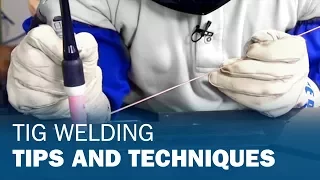
[Music] what is TIG welding TIG stands for tungsten inert gas welding the American Welding Society calls this process gas tungsten arc welding or gtaw you might also hear it called Keeley arc welding TIG welding uses a tungsten electrode and tungsten has an extremely high melting point when you TIG weld the electrode gets hot but it doesn't melt we say that it's a non consumable electrode and doesn't mean it lasts forever that just means that it doesn't melt and become part of the weld you see in a lot of other welding processes the electrode melts and
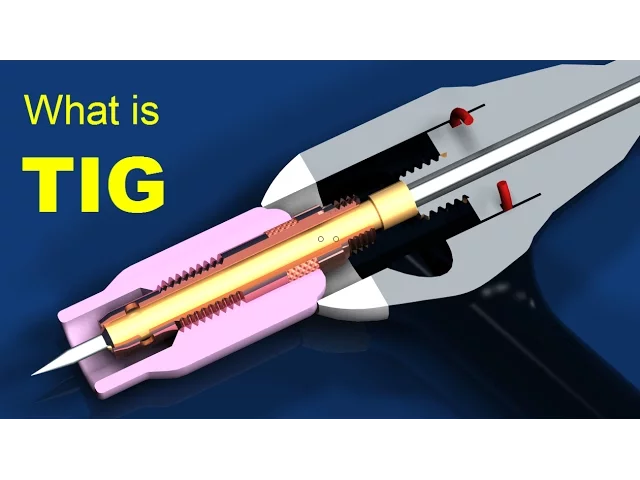
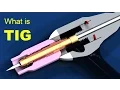
becomes filler metal those are consumable electrode processes so here's the tungsten electrode being held in a TIG torch the electrode slips into a collet and the collet tightens up against the collet body you can adjust the length that the electrode sticks out of the holder by loosening up the end cap when you tighten the end cap the collet clamps down on the electrode TIG works by melting the base metal and that is the metal that makes up the two pieces that are to be joined the heat is generated by an electric arc that forms between
the base metal and the tungsten electrode you can control the amount of heat with a foot pedal or with a thumb wheel on the torch for most metals the current is direct current or DC DC is like the current flowing from a car battery one wire is always the negative and one is always the positive DC TIG welding the electrode is usually negative and the workpiece is positive term of dcen is used for this indicating that the current is DC the electrode is negative this is also called straight polarity the DC en is a more
descriptive term dcen puts most of the heat on the workpiece and it's the most common setup when welding aluminum however AC is used in AC the positive and negative voltages switch back and forth between the electrode and the work piece this puts more heat on the electrode but it has a cleaning effect on the workpiece you see aluminum forms oxides that float to the top of the weld pool and prevent a good weld AC current helps control these oxides in an electric circuit the current flows in a loop until well ding the current has to
flow in a complete circle from the machine to the torch into the work and back to the machine a work lead is clamped to the work to complete the circuit from the workpiece back to the machine now you can TIG weld with or without filler metal and that's not a choice you have in a lot of other processes if you want to add filler metal to a TIG weld use a filler rod which is just a rod of metal with a specific alloy you want to make sure that the filler metal you're using is compatible
with the base metal and then it has the strength required to do the job in TIG welding the molten metal is protected by a shielding gas this gas usually argon and sometimes helium or other gases keeps the molten metal from reacting with oxygen water vapor in the atmosphere this shielding gas is stored in high pressure cylinders like these the pressure is reduced to a usable level by a device called a regulator the shielding gas flows through a hose and comes out right at the point of the weld so in summary TIG welding is an electric
arc welding process uses a non consumable tungsten electrode the filler metal is added separately in the form of filler rod and the shielding gas comes from a high-pressure cylinder