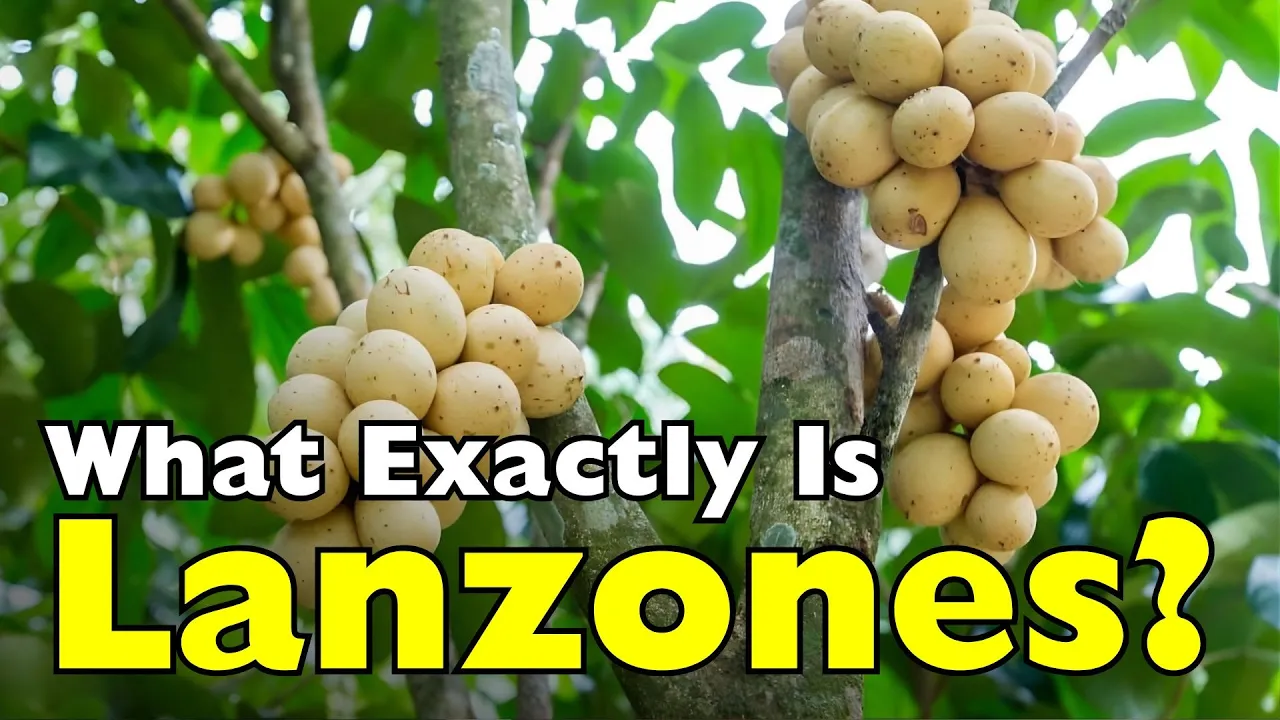
Have you ever wandered into a tropical fruit market and [music] noticed clusters of small yellowish brown orbs that almost resemble tiny potatoes [music] but somehow smell sweet and inviting? That, my friend, is lansoness, a beloved tropical fruit that's only truly understood once you [music] taste it. Often called langat in other parts of Southeast Asia, lanson is one of those fruits that transcends simple [music] description.
It's juicy, subtly sweet, and refreshingly light, yet carries hints of tartness [music] that make you want more. But what exactly is Lanson? Where does it come from?
And why do so many people across Southeast Asia cherish it? Let's dive into this tropical [music] mystery fruit and uncover all its fascinating layers right here on History of Simple Things. First off, let's talk about what lanzanes really is.
Scientifically known as lancium domesticum, this fruit grows on a tall tree belonging to the mahogany family. Yes, the same family known for fine timber. Lanzonus is native to Southeast Asia, spreading naturally from the Malay Peninsula through Thailand, Malaysia, Indonesia, and into the Philippines, where it has become especially iconic.
Now, here's where it gets a little linguistic. Depending on where you are, this fruit goes by different names. In the Philippines, it's almost universally called lanzonus, a name that may have Spanish influences, but has become deeply ingrained in local culture.
In Malay regions like Malaysia and Indonesia, you'll hear it referred to as Langsat or Duku. In Thailand, a popular variety is known as Lanc Kong, which tends to be sweeter and easier to peel. Despite the different names, botanically we're talking about the same species, just with regional variations in taste, texture, and even skin thickness.
Lanzones has been enjoyed for centuries, long before modern markets existed. Historical accounts suggest that the fruit was cultivated in the Malay archipelago and Borneo for local consumption with early traders noting its unique sweetness and medicinal uses. When Spanish explorers reached the Philippines in the 16th century, they likely introduced the name Lanzonus and over time it became widely recognized as a staple fruit of the islands.
The fruit's long association with traditional medicine and local festivals helps cement its cultural significance. In places like Kamigan in the Philippines, communities began celebrating the harvest season with festivals, highlighting the fruit not just as food, but as a symbol of prosperity and community. Through centuries of cultivation, selective breeding, and cross regional trade, Lanzona spread throughout Southeast Asia, evolving into the varieties we know today.
Picture this. You're holding a small cluster of round fruits, each about the size of a large grape or a small plum, nestled together like a tiny bunch of grapes. The skin is thin and yellow brown, a bit leathery, but easy to peel back with your fingertips.
Once you crack it open, you're greeted with segments of translucent, juicy flesh that look almost like miniature garlic cloves, but much more appetizing. The texture is tender and juicy, and the taste, that's where Lanzones really surprises people. It has a sweet yet slightly tart flavor, often described as a blend between a grape, pomelo, or even hints of lychi without the overpowering sweetness.
Some pieces might even carry a very mild bitterness if there's a seed inside, in which case you just gently spit it out. The overall experience is refreshing and light, perfect for hot tropical days when you want something cool and sweet without feeling heavy. In many Southeast Asian communities, lanzones isn't just a fruit you eat by itself, though that's arguably the best way to enjoy it.
In the Philippines, especially in places like Kamagan Province, Lanzones is a seasonal celebration. Each October, the island hosts the Lanzonus Festival where locals and visitors alike commemorate the harvest with parades, dancing, music, and of course, plenty of fruit. Eating it fresh off the bunch is the simplest and most common way, but you'll also find creative culinary uses.
The fruit can be turned into syrups, jams, tarts, desserts, sorbet, and even wine. Interestingly, some Filipino cooks use lanzonus as a souring agent in traditional dishes such as sinigang, where a bit of dark sweet tart flavor can elevate the entire meal. Aside from being delicious, lenzon packs some pretty impressive nutritional benefits.
While it's not a superfood by modern marketing standards, it's low in calories, contains dietary fiber, and provides small amounts of essential vitamins like vitamins A, B1, B2, and C. Fiber naturally supports digestion. And those B vitamins help your body turn food into energy.
It also contains natural antioxidants, compounds that help your body fight oxidative stress, which is linked to aging and certain diseases. And here's an interesting traditional twist. Various parts of the plant, like the bark, seeds, and peel have been used in folk medicine.
In some cultures, crushed seeds are used for deworming, and dried skin is even burned as a simple insect repellent. While these uses aren't widely supported by modern clinical research, they're part of the cultural heritage surrounding the fruit. Unlike apples or bananas, lanzonas is seasonal.
It doesn't grow year round. In much of Southeast Asia, its peak season falls around September to November, though in some areas you can find fruit earlier in the year, depending on local climate. That seasonality is part of what makes it so special.
When it's ripe and ready, people know it and markets light up with fresh clusters. When choosing your lanzonas, look for fruit that yields slightly to gentle pressure and has a pleasant sweet aroma. Avoid overly green fruits.
Those can be very sour. And don't go for ones that are overly soft or spotted as they might be past their best. Once you bring them home, try to enjoy them soon.
They have a relatively short shelf life compared to many other fruits. So there you have it. Lanzones isn't just another exotic fruit.
It's a seasonal treasure steeped in culture, flavor, and tradition. From the sundappled groves of Southeast Asia to vibrant festivals celebrating its harvest, Lanzon offers a sensory experience that's both simple and unforgettable. Next time you see a cluster of these sweet, juicy segments, remember you're holding a taste of tropical sunshine and centuries of Southeast Asian culinary tradition.
Thank you for watching. If you have suggestions for our next video, feel free to share them in the comments below. We'll be sure to give you an acknowledgement for your contribution.
Thank you for joining us on this journey through the history of simple things. Don't forget to like, subscribe, and stay tuned for more stories woven through the smallest details.





![What Exactly Is an Artichoke? The Truth Behind This Strange Vegetable [ID0908]](https://img.youtube.com/vi/6akN5WclKbc/mqdefault.jpg)


![Shallots vs. Red Onions: What’s the Real Difference? [ID0615]](https://img.youtube.com/vi/GYOAl7kTQw0/mqdefault.jpg)