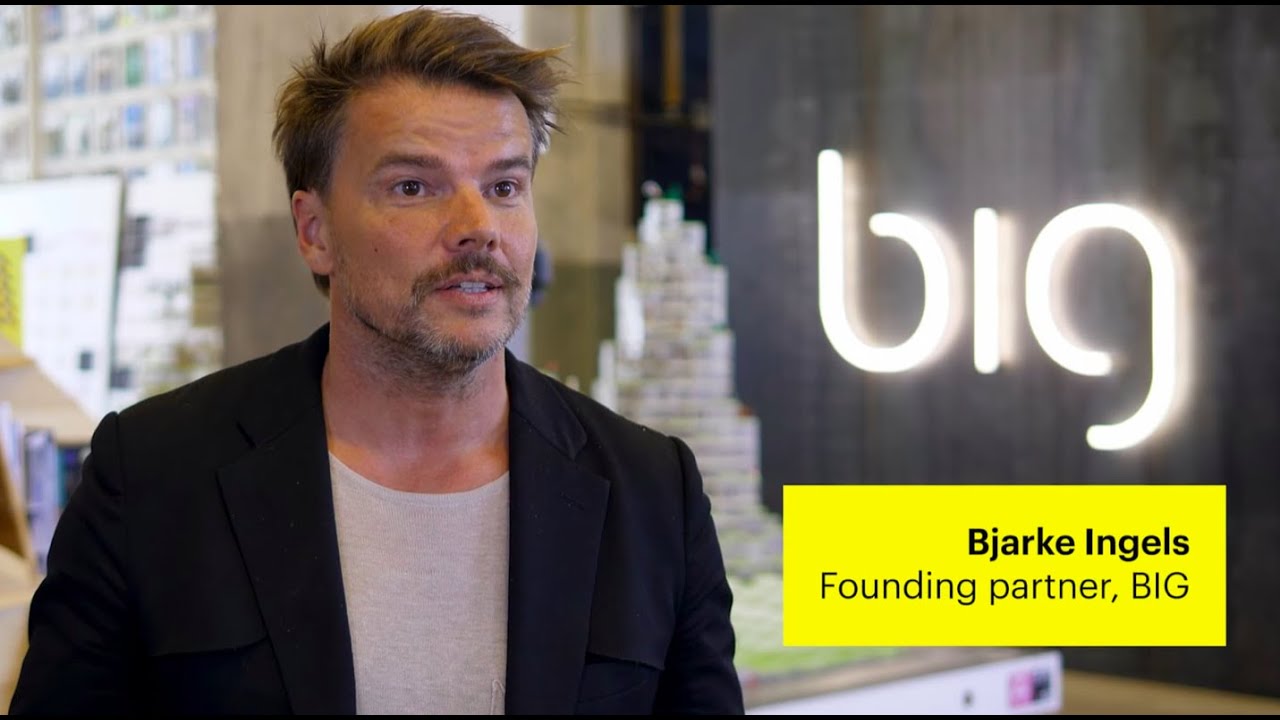
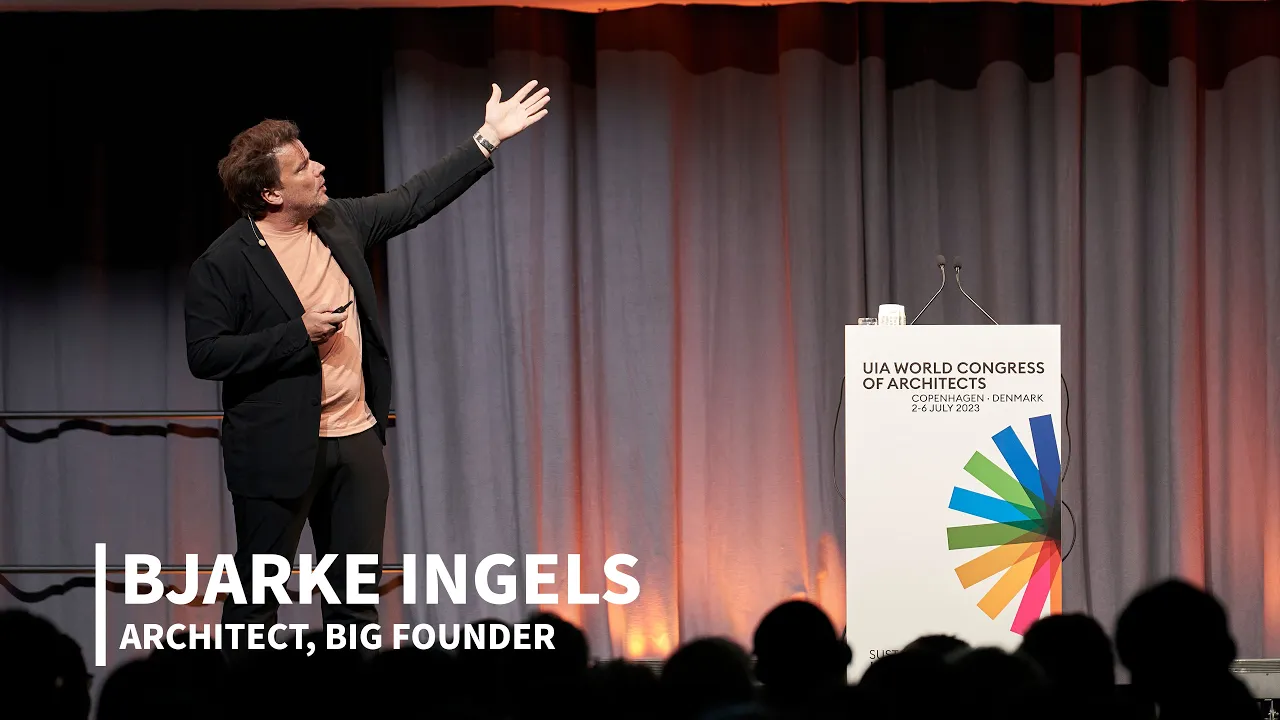
I'm Bjarke Ingels. I'm here at the UIA in Copenhagen. I'm the founder of BIG.
Architecture remains the art and science of creating the framework for the life we want to live. I think that's the most fundamental aspect. It's the art form of a combination, a combination of life.
And the question is, what kind of life do we want to live? The whole world is definitely sort of engaged and awakened by the consequences of climate change becoming more and more apparent. I was in New York City on the 7th of June, when suddenly during midday everything looked like Armageddon or looked like Lars von Trier's Element of Crime movie, like suddenly the sky became like an orange yellow, like around noon.
And suddenly, you know we're right between Dumbo and Manhattan Bridge and Brooklyn Bridge. It's downtown Brooklyn. And suddenly the bridges just disappeared into this orange haze because of the wildfires in Canada.
So, I think, and obviously because everything we do somehow revolves around the built environment: where we live, where we are born, where we go to work, where we educate ourselves. . .
Happens in and around buildings. Of course, a lot of the side effects from the built environment is making itself known, and we have to find smart and desirable ways to facilitate that energy transformation that the whole world needs to go through right now. And how would you describe the BIG approach to design?
I mean, I think actually the reason we started practicing, I started practicing in 2000, in the year 2000, 2001 we did the Copenhagen Harbor Bath as part of PLOT and we came across this idea that we call Hedonistic Sustainability, that it became apparent with the Harbor Bath in Copenhagen that a clean port is not only good for the fish, it's amazing for the people that live there, that you don't have to drive for hours to get to the beaches. You can swim in the middle of the city center. So essentially that the sustainable city is not only better for the environment.
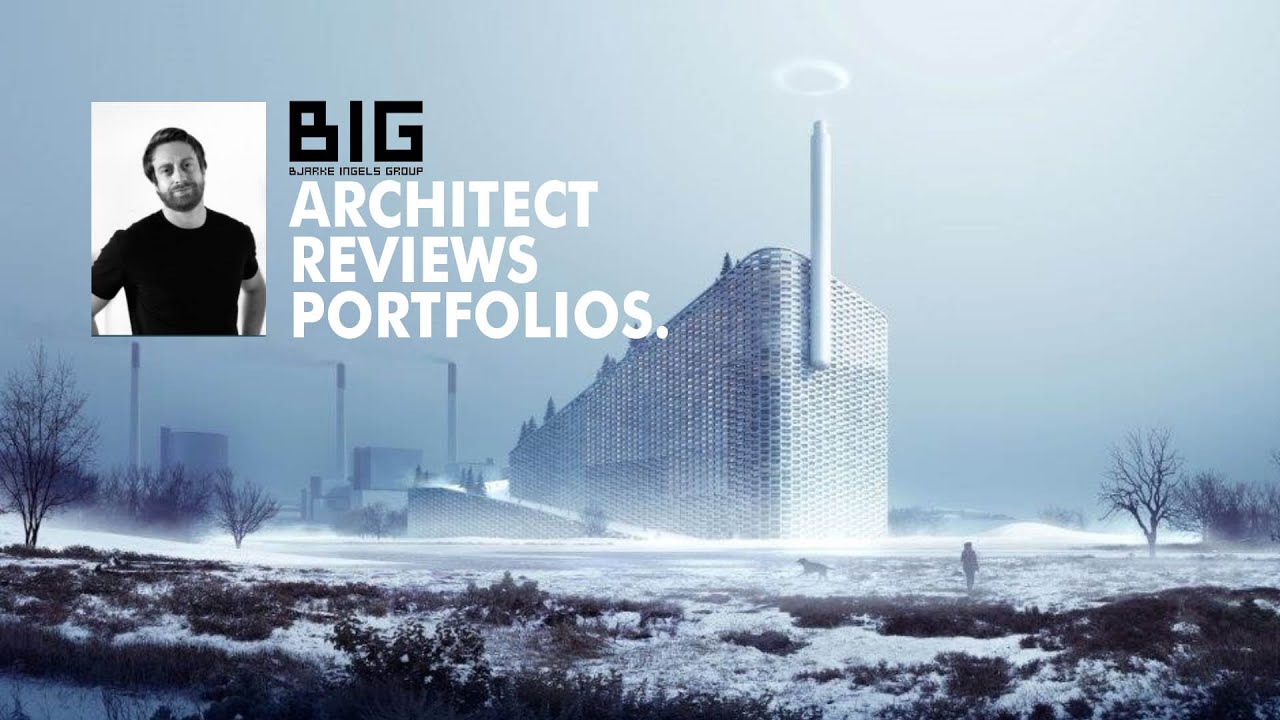
It's also better for the quality of life of the people that live in it. And I think almost in most of our work, we try to find those kind of concrete examples where by designing a building or a space in a different way, that it strengthens a certain point of view or a certain agenda by making that agenda more desirable or more enjoyable. Like the CopenHill, the power plant with the ski slope on the roof and the climbing wall, it's a vertical park in the city, but it's also where the waste of the citizens of Copenhagen is upcycled into energy and district heating.
So in a way to try to find ways to make what we know needs to happen, into what we would love to happen. Well, and this approach has gone from Denmark to the whole world. How do you see this systematic approach going around the globe?
I mean, obviously we have the whole sort of architectural community of the world here in these days. I think what people coming here will notice is that, you know, Copenhagen cannot compete with the other Scandinavian capitals like Oslo, has like mountains where you can actually alpine ski from the subway net. Stockholm is like an archipelago of rocky islands, thousands of rocky islands, in the middle of the archipelago of Stockholm.
So the kind of natural beauty, we cannot hope to compete. But in Copenhagen maybe looks more ordinary at the first glance, but once you look closer, you realize that everything is very thoughtfully designed. More than half of the Copenhageners commute by bicycle, also because it's been designed towards bicycles, like every taxi has in the back of the trunk a bike rack so you can hang two bicycles.
So, if you're caught in the rain or in the snow, which often would happen in Copenhagen, you're not stuck. The taxi can take you and your two bicycles, yours and your friend's and take you where you need to go. When you stop at the traffic light and there's a little foot plate that you can rest your feet on, so you don't tumble over as you're waiting for the green light.
So, everything has been meticulously and thoughtfully designed. So, let's say at the human scale, that's where the true beauty of Copenhagen comes out. Not so much the mountains or the fjords, but in the manmade.
As I was also talking about today, we put some energy into trying to understand the overall problem at an actual planetary scale. And a little bit to try to apply some first principles. And I think that that overview has now given us the kind of, maybe an even stronger commitment to make sure that whenever we're doing a project, that project has to be compatible with the principles of the overall plan.
Otherwise, it wouldn't make any sense. And then I think we see that, of course, legislation is catching up. EU legislation is becoming pretty, yeah, it's becoming pretty demanding.
So, from a from a demand side there is a greater and greater appetite for things that perform environmentally. And then I would say the last thing that we've always applied as a kind of general point of view is this kind of notion of humanistic sustainability, that sustainability won't win if it's, if it isn't better designed and more enjoyable to live in. The electric car existed as a concept for decades, and we had one in the eighties here in Denmark called the Ellert.
It was quite beautifully designed; it was very small, and it was very slow. So, in the end it couldn't really survive as a car. Only when the Tesla became the safest, the fastest, the most beautifully designed car, that it won on all the other aspects, that it actually forced every other automaker to start making electric cars.
So, in that sense, I think the role that design and architecture can play, is to. . .
Is to give the unfair design advantage to the good cause. And I think in that sense, we are involved in certain projects, first we're working with ICON, an Austin based 3D printing company to make affordable homes in Yucatan, to make kind of mid-market homes in Texas, but also to design the first building that will be built on the moon, using only locally available solar energy and locally available moon dust as the materials. So, you also start seeing this in, that there's an interesting confluence between the answer to affordable housing in Mexico, and the answer to how will we live on the moon?
And that answer may very well be the same technology. It's necessary to invent it in order to be able to build on the moon. But it will have an incredible impact once we apply that same technology on Earth.
Why do we need a new Bauhaus today? Yeah, I think I think the interesting idea of announcing a new European Bauhaus, this time mobilized by energy transformation and environmental performance in the built environment, is in a way how the Bahaus movement managed to take the newly available apparatus of manufacturing, industrial methods of making and producing at scale and applying art and design to making that industrial capability work to improve the quality of life of the many. And in the process evolving and refining a whole new artistic architectural language.
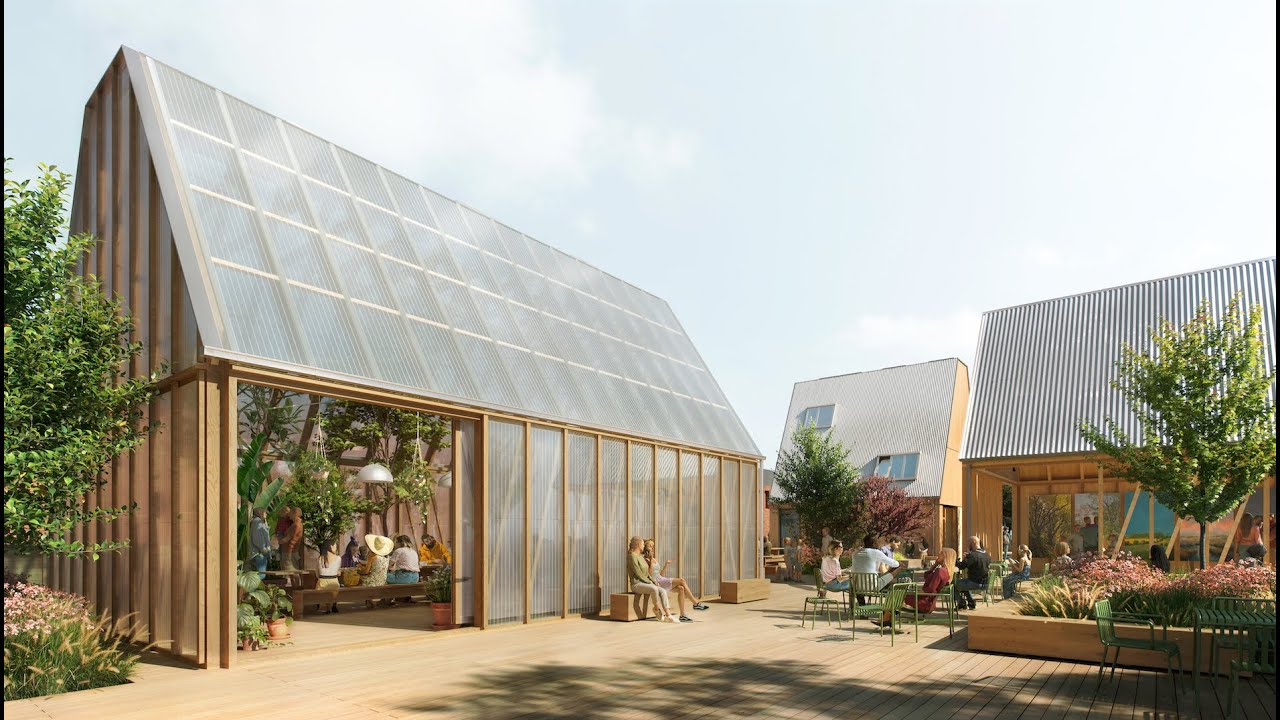
I think similarly the inside is now, now it's in addition to making quality living and working, and environments available for the many, is to do it in a way that can be sustained environmentally. And to use that necessity as an opportunity to explore new architectural languages. And it's like, today I showed the project we're doing for the Joint Research Commission in Sevilla, where we tried to sort of, in a way reimagine a southern European vernacular that not only has an esthetic and creates enjoyable outdoor space, but also produces even more energy than the building consumes.
So this idea of taking the environmental necessity as an opportunity to imagine new artificial languages.