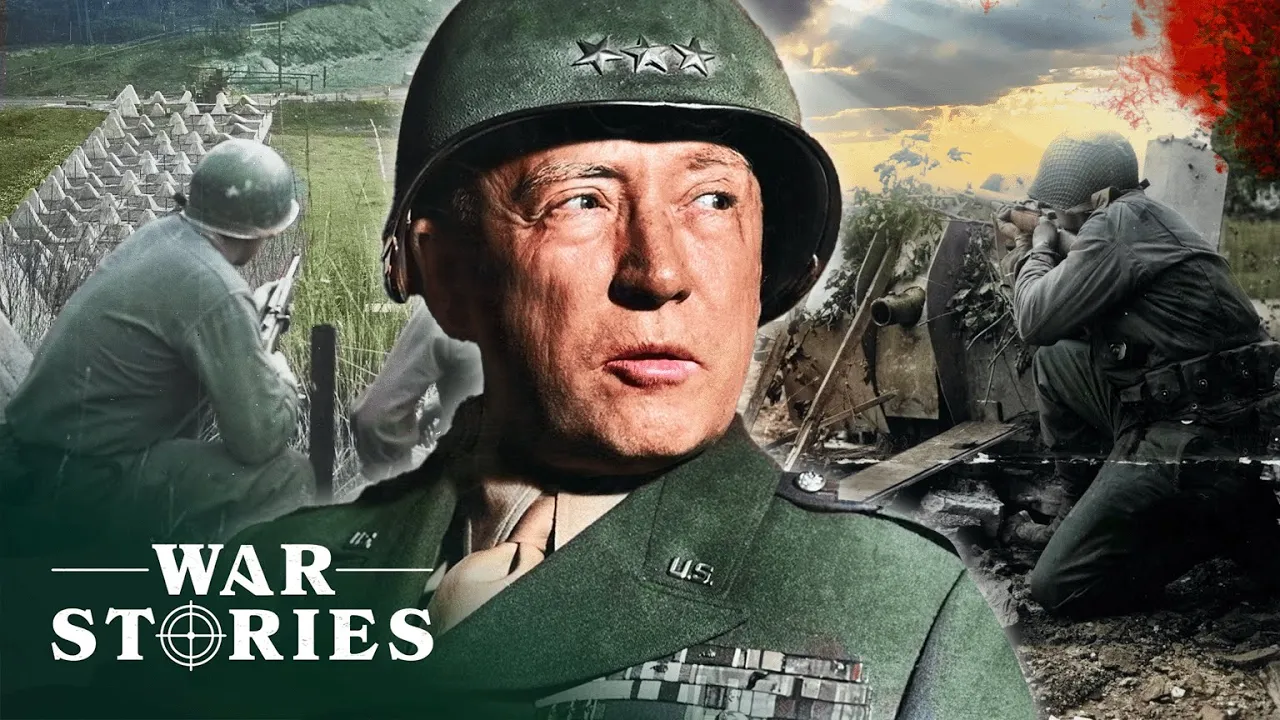
[Music] in early September 1944 when the Allied Forces were approaching the West War 14 weeks had passed since the D-Day Landings in Normandy [Music] the West Wall the fortifications protecting Germany's western border lay 300 M in land from the Normandy beaches but that was not the only way the distance could be calculated it was also measured in slog and Slaughter hardship and destruction trauma and [Music] exhaustion after the D-Day Landings in Normandy hundreds of thousands of men had been killed on both sides scores of them at a time to gain then often lose just a
few yards of ground thousands of Acres of Countryside were laid waste and littered with the burned out wrecks of Tanks guns and vehicles towns and Villages were left a mess of smoking [Music] ruins eventually German forces fleeing from the Battle of Normandy had been trapped in the fet's aan pocket those who managed to escape were pursued all the way to the German border the Germans fled in disarray often in panic but anyone who believed that they were finished was very much mistaken once they reached the safety of the West Wall the Germans took on a
new guise no longer an exhausted enemy on the run but Defenders encased in fortifications of concrete and steel which they believed to be impregnable [Music] [Music] originally the West Wall begun in 1938 had been Germany's answer to the majino line which protected Eastern France from Attack across the Rind the two fortifications faced each other across a short stretch of territory in the SAR region of Southwest Germany but the value of the West Wall at that time was diplomatic rather than military Adolf Hitler found it very useful as a frightener the West Wall later known to
the Allies as the SE freed line helped the furer scare the governments of Britain and France into making concessions so feeding their policy of [Music] appeasement it was March 1939 when Germany invaded Czechoslovakia before the British and the French at last woke up up to Reality by then the second world war was only 6 months away after the German conquest of France in 1940 the West Wall became irrelevant its machine guns and Cannon were removed and sent to the Atlantic Wall and the fortifications fell into disrepair even the D-Day Landings in June 1944 failed to
prompt the Germans to make efforts at getting the wall into better shape it was not until the following August when they'd already lost the Battle of Normandy that the Germans began to think the unthinkable the Fatherland itself might soon be invaded the potential of the West wall could no longer be ignored on Hitler's orders some 360,000 civilians and boys from the Hitler Youth were set to work repairing and rearming the dilapidated defense line considering the short time available this scratch Workforce achieved wonders when when they had finished some parts of the West Wall remained weak
but others had been greatly strengthened and even in this state the wall was still a formidable barrier the fortifications formed a band of natural and artificial defenses up to 5 m deep stretching some 400 mil from the southwest corner of the Netherlands to the Swiss [Music] border the West wall featured around 22,000 pill boxes troop shelters and command posts all interl and all mutually supportive in some places such as the rivers Ry Ru and Keel the terrain provided natural obstacles to Invasion where the LIE of the land failed to oblige concrete pyramids called Dragon's Teeth
were planted in parallel rows to obstruct attackers Nazi propag Ander of course touted the West Wall as impregnable its real purpose was not to repulse assaults but to hold up the enemy long enough for mobile reserves to arrive and Stage counterattacks even so for the Allies in 1944 the difference was academic the reality of the West Wall matched the propaganda for a very long time [Music] only about 12% of the German 7eventh army or rather its decimated remnants had managed to escape from the fet's argentan Gap in August 1944 but before long these remnants had
formed up along the west wall and were soon being joined by reinforcements the German High command had given the West defenses priority and units were transferred from the Italian front and the garrisons in Norway and Denmark they were also removed from the Eastern Front even though the Russians were fast approaching the Prussian border and were about to break into Germany nothing underlined the emergency at the West Wall more than this for the Germans the Russians were the most terrifying of all enemies and civilians awaited their arrival with Dread nevertheless the defense against them in the
East was s Ed for Manpower which was rushed across Germany to face the imminent danger in the west when all were in place the West wall and its adjacent areas were being defended as far as the river Mel by Army Group B under field Marshall valter modal and as far as Carl's Ru by Army Group G under General Herman balk the rest of the fortifications down to the border with Switzerland was defended by SS troops under their Chief Hinrich himler the enormous losses the Germans had already suffered by 1944 meant that they were unable to
build up the West Wall Garrison to the size its designers had envisaged however the problems facing the Allies gave them the chance to make the best of what they had exhaustion after the long Chase from falet was only one of these problems the Allies other difficulties were much more fundamental the Allied Forces were suffering the usual fate of modern mechanized armies that advanced too fast and too far for their support elements to keep Pace with them their lines of Supply were overstretched and petrol and ammunition were running low the Allied Air Force and other support
units were unable to extend their activities with the same speed the Americans had no prior experience of assaulting heavy fortifications and the Lessons Learned in military training proved to be of little practical use the terrain had changed too unlike the plains of Normandy The Hills and Valleys of the Lorraine area around the West Wall had few roads for tanks and armored vehicles and in places featured dense Woodland that was hard to penetrate and very difficult to fight in the most immediate problem however was the shortage of fuel it was so serious that General Patton's thirdd
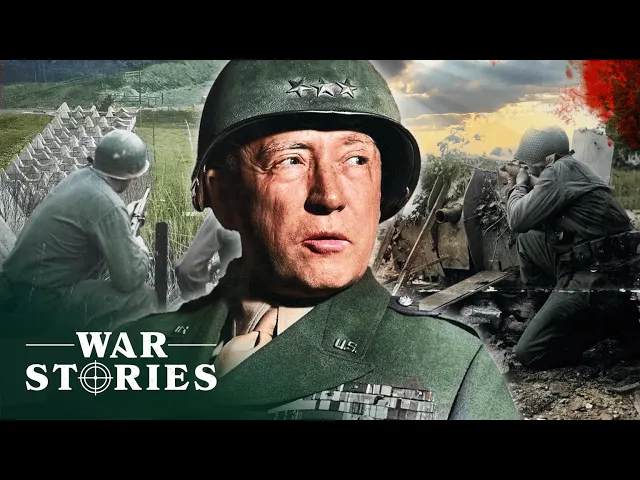
Army was brought to a halt with empty fuel tanks at the river Ms on the 30th of August Patton wanted to move on he was convinced that his forces could be through the wall and at large inside Germany within 10 days but to Patton's Fury General Eisenhower allocated what little fuel there was to his hated rival Field Marshal Bernard Montgomery for an advance into Belgium and the Netherlands by the British 21st Army [Music] group this offensive had two prime purposes first to facilitate the capture of Anor a much nearer Port than those in Normandy so
the Allies would be able to shorten their critically extended supply lines secondly if Germany could be invaded from the north through the low countries it might shorten the war and save millions of casualties this in fact had been the Allies chosen strategy when the invasion of Germany was being planned before [Music] D-Day Montgomery's offensive proved to be a tragic disaster antp was captured on the 4th of September but German resistance was very much stronger than expected the Germans blocked the Shel estery making antp useless for Allied purposes by the 26th of September the Allied air
drops at arnam had failed at a cost of 7,000 killed wounded or captured General Eisenhower had assumed direct command of ground operations from a very resentful Montgomery on the 3rd of September and now he was back to Square 1 after arnam the German defenses were still intact and assaulting the West Wall the Hardway headon was the only remaining option it was not a welcome Prospect Autumn was fast approaching and with it the chance of torrential rains mud cold overcast skies and all their attendant miseries the Allies were in for a very long Hall treat yourself
to the best gift in history this holiday season enjoy unlimited access to award-winning podcasts and thousands of hours of original history documentaries released weekly exclusively on History hit there are topics for all history lovers from Pompei to D-Day sign up via the link in the description for an exclusive discount don't miss out on this incredible opportunity to explore the past like never before with history hit Field Marshal Von runed a Prussian Aristocrat of the traditional military school was not entirely trusted by Hitler who hated his cast out of hand ronad for his part had contempt
for both the fura and the Nazi Creed despite this Mutual disdain Von rad kept well away from the plots to murder Hitler that occupied his fellow officers Hitler for his part realized that he could not afford to waste Von Rad's experience and professionalism especially after several leading officers had been removed for their involvement in the bomb plot designed to kill the fura in July 1944 Von runed had fought in the first world war where he distinguished himself in the alsas campaign and later on both the Eastern and the Western fronts in the second world war
he directed operations in France in 1940 and in Russia the following year and was supreme commander of the German forces in Normandy at the time of the D-Day Landings dismissed for daring to suggest that Hitler make peace the third time in his career he'd been removed from Duty Von runed was recalled 2 months later on the 5th of September 1944 to lead the German defense of the West War he remained on active service for the next 6 months until Germany was on the brink of defeat and retired on the 13th of March 19 4 just
as the battle of the West Wall was coming to its end after the German surrender there was talk that Von runed should be put on trial at nurburg but he was regarded more as a professional soldier who had done his duty rather than a war criminal who had abused his position Gat Von runed died in 1953 at the age of 78 Field Marshal valta mle was the complete opposite to Von runed modal shared Hitler's dislike of the Prussian military cast to which Von runed belonged and his loyalty to the fura never wavered in 1944 after
Hitler survived the bomb plot to kill him modal was the first commander on the Eastern Front to send him a telegram reaffirming his Allegiance rough aggressive and outspoken modal's loyalty earned him an advantage not given to many other officers in the verar he was able to ignore the more impossible orders ACT first and receive permission afterwards and voice some very unpalatable truths when myle took over from the disgraced Hans gav Von clug as commander of army Group B in Normandy the first thing he did was tell Hitler that defeat in France was inevitable other high-ranking
officers had been dismissed for Less mle's fighting experience in the war was considerable he served in Poland and commanded the Third hand of division in Russia as well as taking charge in Normandy in August 1944 he became known as Hitler's fireman for his skill in Shoring up broken fighting fronts his luck inevitably ran out at the West Wall myrdle directed A ferocious defense of the Mosel section assigned to his army Group B but in the end he was forced to yield to the massive Allied Onslaught in April 1945 mle's Army Group B was surrounded in
in the rure pocket rather than accept defeat he dissolved his forces and gave them the choice of going home fighting on with other units or surrendering moral had always despised field Marshall Von palus for capitulating at Stalingrad in 1943 and had no intention of emulating him instead he shot himself on the 21st of April 1945 because he had said a field Marshal did not surrender what is there left he once asked to a commander in defeat Lieutenant General Courtney Hodges was taciturn and uncommunicative he shunned the Limelight to such an extent that General Eisenhower despaired
of obtaining for him the recognition he deserved as commander of the US first Army it was possibly part of a campaign by Eisenhower to heighten Hodge's profile that his troops became the first of the Allied Forces to cross the Rind in 1945 during the interwar years Hodes was spotted as a promising Prospect by General George C Marshall future Chief of Staff in the second world war who brought him to Washington as chief of infantry early in 1944 Hodges was in England as Deputy to General Omar Bradley during the plan planning of the D-Day Landings on
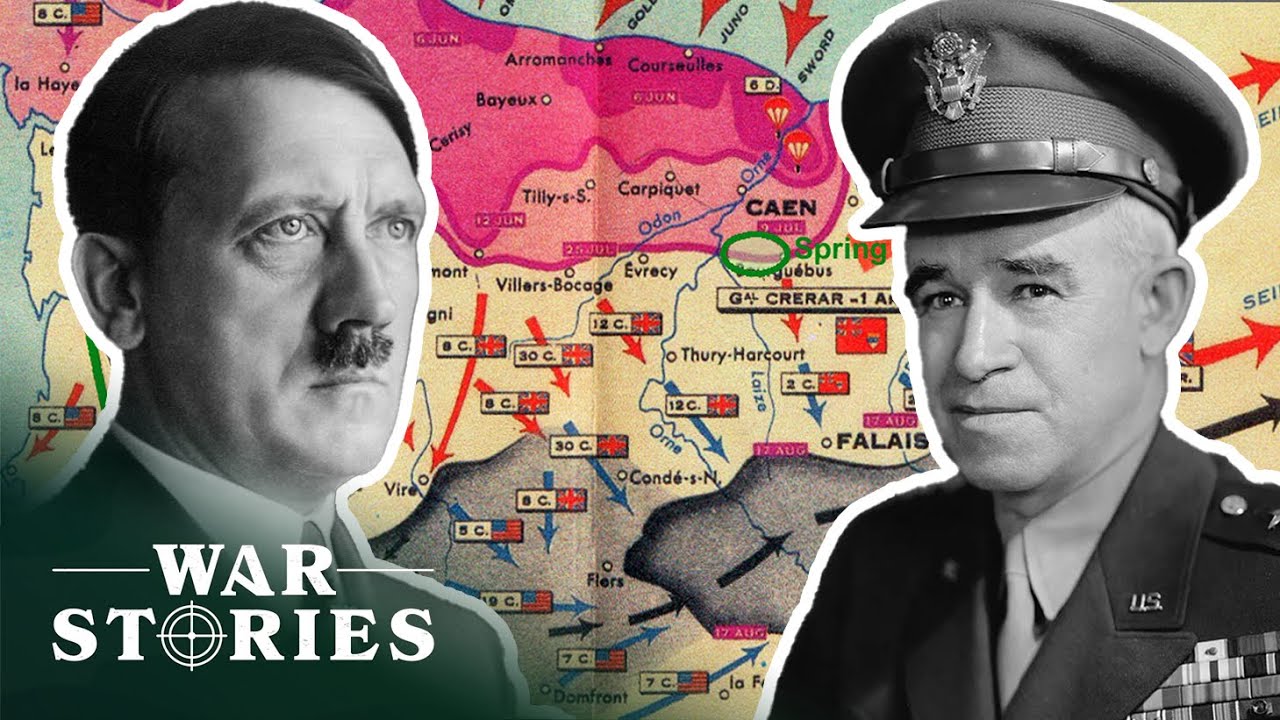
the 1st of August Hodes inherited Bradley's command as leader of the first Army Hodes retied soon after the war as a four-star general and he died in [Music] 1966 with his understated Manner and aversion to publicity Hodes was one of the quiet men of the American High command rarely raising his voice to get things done unfortunately he struck the lower ranks as cold and colorless and had nothing like the flamboyant pattern's popular appeal Bradley however appreciated Hodge's qualities especially his insistence on detailed planning and once said that he had implicit faith in hodi's judgment skill
and restraint during the second world war us infantry units received close-fit support from Mort which they called pocket artillery the largest mortar in use at this time was the 4.2 in chemical mortar which weighed 330 lb and could fire up to 20 rounds per minute though only for short periods initially the function of the chemical mortar was to provide smoke gas toxic agents or incendiaries in support of infantry operations then late in 1942 the 4.2 in Mortar was F fitted with a high explosive capability which greatly increased its usage for the 18 battalions that used
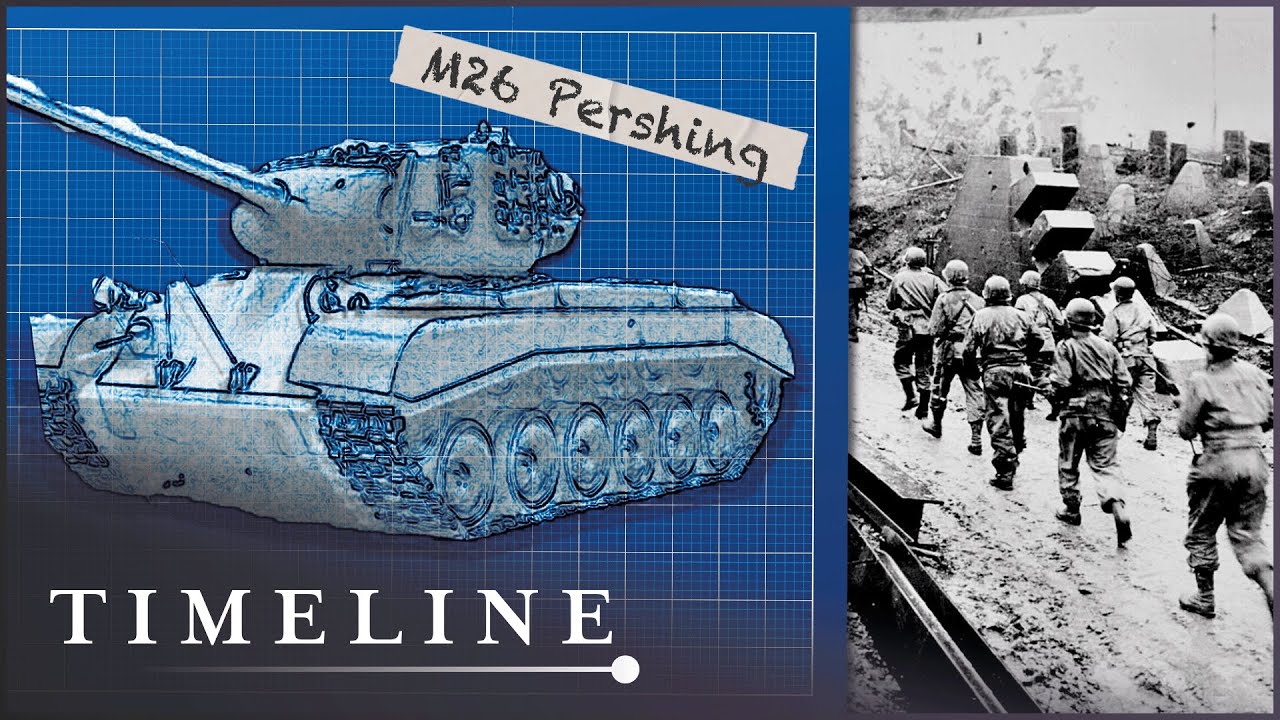
it in the European theater experiments to lengthen the range of the 4.2 in Mortar were overtaken by the end of the war in Europe but a month later in June 1945 tests showed that the weapon was now able to fire over distances of up to 5,600 y development continued until 1951 by which time the chemical mortar had won its Spurs as a legitimate in infantry [Music] weapon the pill boxes of the West Wall were strong points arsenals and underground shelters combined the reinforced concrete roofs were up to 7 and 1/2 ft thick and the walls
were more than 6 and 1/2 ft thick the roof rested on steel beams up to a foot thick and there were two 1.1 in steel doors [Music] the regular pill boxes of the West Wall were interspersed with larger multi-story structures like the cat's head armored Fort near the village of ilel in the South if fell [Music] its foundations were dug to a depth of 118 ft and the fort contained three stories with reversible turret Cannon automatic flamethrowers and machine guns the rooms were air conditioned providing plenty of comfort for its 84 man crew who could
remain at the cat's head for 6 weeks at a time [Music] [Music] the typical West Wall pill box was more compact there were two entrances with a large gas prooof chamber between them on the right a short staircase led up to The Arms Room with an ammunition bunker attached and another 37 ft Square beyond that a second Arms Room nearly 99 ft Square was cited at the [Music] rear the approaches to the pill box were protected by minefields booby traps and barbed wire the remainder of the accommodation consisted of troop quarters the first of them
was 190 ft square and the second measuring 81 ft Square had a locker attached these pill boxes were like miniature fortresses in their own right and in March 1945 one of them managed to hold up a division 15,000 strong for several hours explosive charges laid against the steel door blew a few holes but the door failed to yield it was only when grenades were tossed inside through the holes in the door that the stubborn strong point was finally overcome Colonel Charles Buck lanam was commander of the 22nd regiment the fourth division of General Patton's thirdd
Army stationed in the eel plat region of Western Germany on the 13th of September 1944 Lam informed his Italian officers of a plan for assaulting the West wall that was simple straightforward and he felt confident was going to work three battalions would attack the West Wall pill boxes cited on the black man the heights above the Hamlet of bushe then move on to the pill boxes at the small village of branched the Third Battalion was to go in first break through the wall and open the way for two further battalions to follow and complete the
attack after that the entire fourth division could surge through the wall and head for the [Music] Rind the Third Battalion led by Lieutenant Colonel Teague Advanced towards the black man Heights carefully using the terrain to keep out of sight of the West Wall Defenders some of the Americans were carrying flamethrowers meanwhile American artillery was blasting the German positions at first there was no reaction from the West Wall the Germans were evidently waiting for the right moment when it came it was devastating mortar fire plunged down on the Third Battalion and the Germans mg 42s began
to clatter out streams of bullets Americans keeled over one after the other until they lay in a pattern of patches on the hillside before long the wounded were being dragged down the hill and back to the regiment's positions All Around The Cry went up for the Medics at length colon lanam realized that his men were on the brink of losing the battle he drew his pistol and fired a couple of shot in the air yelling at his reserves to get up and go eventually they went picking their way around the bodies still lying on the
slopes Lam's plan proceded despite the ferocity of the German fightback the Third Battalion moved South to branched but it was no sleepy little village unknown to lanam or Teague the place was Spiked All Around with pill boxes a tough German battle Group C grouper kerer was there together with SS troops to dismiss the American efforts with a furor of fire Teague decided to dig in and try again the next day the Third Battalion went on trying for another 2 weeks but they got nowhere the 22nd regiment meanwhile attempted another approach reducing the German bunkers one
by one this was no small Enterprise and at first the Americans tried to get the Germans to surrender when they refused tank destroyers were driven up to the steel doors and blasted them in at Point Blank Range it was a dangerous maneuver for the attackers but it worked the survivors emerged most of them badly injured the dead were piled up inside before long American casualties had mounted to 800 men some of them killed when the Germans launched a Counterattack out of their pill boxes half of the first Battalion were killed or injured and only two
of their officers survived many casualties were physically uninjured but developed combat fatigue eventually colonel lanam was forced to call off the attack as the weather worsened and the German defenses showed no signs of lessening nothing had been gained and the vital roads leading out of the eel region to the Rind remained under German control the wall remained intact the next attempt at the West Wall was made from the duche of Luxembourg by the US 28th infantry bloody bucket division belonging to Courtney hodgy's first Army the division's reputation for record casualties was furthered at the West
Wall where they were facing a crack Force the second SS division as the Americans Advanced across the minefields the Germans saturated the battlefield with mortar and machine gun fire within a week American casualties had reached 1,500 killed and injured one entire company F company disappeared so completely that no Trace was ever found of them despite this fearsome defense the bloody bucket division pushed forward on a narrow front and captured several high points but these were of little use to them when the second SS division still held the low ground even so on the 16th of
September the bloody bucket scored a notable first in what the official history described as a pencil-like penetration they had breached the West Wall in Practical terms it meant little The Disappearance of f company had taken the heart out of the Americans efforts and they were ordered to wind up operations a further attempt at the West wall made soon afterwards by the fifth armored Victory division managed to get through the fortifications to a position 6 miles inside German territory but this initiative led to a mammoth German Counterattack overseen by Field Marshal Von rad himself outnumbered assaulted
on both flanks by German infantry and armor denied air cover when the weather turned nasty the victory division began to falter on the 19th and 20th of September they were ordered to pull back Pencil Thin penetrations were of no interest to General George Patton commander of the third Army as he told newspaper reporters I'm going to go through the wall like through a goose by the 5th of September Patton in forced halt at the river Ms came to an end as supplies of fuel to the third Army began to flow again Patton ordered the 12th
and 20th core to seize the city of nany the capital of Lorraine as a Prelude to breaking through the West wall and crossing the Rind Patton envisaged no serious difficulty the section of the West Wall immediately facing the Third third Army was manned by seven weak infantry divisions and a Panza Brigade of the German first Army also in the vicinity were seven under strength divisions of the German 19th Army hardly an impressive opposition however even with this poor showing this was one of the best defended parts of the West wall and field Marshall myle Hitler's
fireman was in overall charge elements of the third Army set out for the Mel River close to Nancy on the 11th of September the Americans crossed the river and though there was some heavy German resistance it did not seriously impede their progress Nancy was duly occupied on the 15th of September at this juncture the Americans had to Halt for 4 days through lack of supplies and Provisions and the onset of bad weather the delay gave the Germans the opportunity to regroup and concentrate reserves from their first Army at chatow Salah where they blocked one of
the main routes to the Ry this meant the Americans had lost the initiative and the fifth Panzer Army hit them with a series of major strikes at Patton's fourth Armored Division the contest continued for 10 days and took on a regular pattern the Germans attacked under cover of fog and fought a series of vigorous engagements with the Americans the Americans who were aided where the permitting by aircraft of the 18th Tactical Air Command outmaneuvered the panzas and forced them to withdrawal finally wrecked panzas littered the battle area and the Germans were down to only 25
tanks wisely they withdrew in all they lost around 280 tanks and suffered 3,000 casualties with the same number taken prisoner American losses were fewer 626 casualties but almost non-stop fighting over the past 2 months had exhausted them they were retired from the Lorraine area on the 12th of October to rest recoup and refit the West Wall remained untouched 9 days later to his shagr Patton lost the honor of making the first permanent breach in the fortifications it happened at Aran a historic City on the German border with Belgium and the Netherlands Aran was fortified but
its defenses were not unusually strong and though it Formed part of the West Wall its position was of no strategic significance nevertheless the capture of Aran the first appreciable City the Allies had encountered on German soil could prove an important boost to morale dealing with Aran fell to Courtney hodi's first Army Hodge's plan was to break through the West Wall North and south of the city surround and neutralize it while the bulk of his forces pushed on eastwards towards the rine however German resistance was so ferocious that it became impossible for the first Army to
perform these two tasks at once Hodges had to choose and he chose to assault Aran the units originally intended for the rine were to play a backup role and prevent the Germans from relieving the city Adolf Hitler fully realized the importance of Aran and issued his usual orders to the 5,000 Germans defending it fight to the last man never Retreat and die if necessary the casualties that resulted from such fanatical defense had already proved so high that Hodes attempted to cut short the proceedings he issued a surrender ultimatum on the 10th of October as he
no doubt expected it was refused hji now ordered his forces to attack they were to demarcate the battle area by artillery and Mort fire dominate the main thoroughfares and intersections with machine guns and move infantry tanks and tank destroyers along the side streets all the while they would maintain maximum fire to ensure that no German could Escape while the Defenders were being held in thrall in this fashion buildings would be collapsing all around them and it would bury them in the ruins the initial b bombardment of Aran was delivered by 12 artillery battalions which plastered
the city with 10,000 rounds in 2 days meanwhile fighter bombers of the ninth tactical artillery command dropped over 160 tons of bombs on the Target in the same period by noon heavy figh fighting was taking place inside Arkham nevertheless by the end of the day the Americans were ready to blast their way through to the city center it was not that easy for the next week arkans saw a ferocious struggle as the American tanks and tank destroyers hammered away with heavy caliber fire using the powerful 155 mm artillery pieces to blow entire buildings apart the
155 mm worked on the Germans like a terror weapon later the German commander in Aran Colonel ghard Vil condemned it as barbarous and called for it to be banned Lieutenant Colonel darl Daniel commander of the second Battalion had quite another description for the 155 mm quite spectacular and satisfying by the afternoon of the 21st of October Daniel's second Battalion had secured the business areas of Aran and were pushing westwards when they learned the fight was over contrary to Hitler's orders the Garrison of Aran had surrendered the Americans captured a thousand prisoners according to their own
reports the Germans had suffered around 5,000 casualties quite probably a lot more men were killed the Americans lost around a tenth of that number most of them among the assault troops after the battle only around 20% of aran's buildings were left standing even before the capture of Aran the ninth Infantry Division of hodi's first Army was ordered into the Huron Forest southeast of the city to clear it as security for the right flank of another effort against the West Wall a major assault across Open Country aimed at penetrating the [Music] fortifications the Huron was a
manm made Forest around 200 square miles there were few roads it was difficult fighting country certainly for tanks and armored vehicles and the Americans expected only light resistance they were wrong although the German 7th Army was not well prepared to defend the forest once the Americans entered they fought with their customary ferocity to keep them back by October the ninth Airborne Division had suffered 4 a half thousand casualties for an advance of less than 2 miles the battle in the forest now took on the proportions of a major struggle and one in which the Germans
always seemed to be One Jump Ahead in November Hodges ordered the 28th bloody bucket Infantry Division to Advanced through the forest to seize The High Ground at Schmidt Schmidt lay north of the important dams on the river [Music] Ru rain and fog intervened to cause delay giving the Germans time to Target The Invasion during the subsequent fighting the Americans lost 6,000 casualties in one of the most costly actions of any they fought in the War an action initially intended to be an easy ride had quickly turned into a nightmare the forest floor was thickly sewn
with anti-personnel mines shells bursting high in the Treetops fell down in showers of deadly metal fragments onto soldiers picking their way through a mess of broken branches and slippery leaves as the winter wore on there was rain mud sleet and snow it was all too easy to get lost in the tangle of trees and stumble into ambushes the German defense ferocious as always had an extra specific purpose the top secret watch on the Rind the deliberately misnamed offensive due to take place in the Arden in December could have been jeopardized if the Americans managed to
cross the river r which ran through the forest the RAR itself was of great importance to the Germans if the Americans crossed the river now or in the future they could be isolated by floods caused by opening the rure dams ideally the flooding might prevent them Crossing at all the cost on both sides was very high by mid October the Germans had lost around 2,000 killed and injured and 12200 taken prisoners American losses were even greater 4 and 1 half thousand men killed wounded or missing November 1944 went on as September and October had begun
massive American assaults accompanied by fighter bomber attacks did nothing to break down the German resistance which was so powerful that the bloody bucket division lost 40% of its strength in 7 days on the 15th of November 12200 flying fortresses of the US Army eth Air Force flew from the Netherlands to soften up the enemy for the US 84th division at gyen north of Aran but the result was the same a fearful Battle of attrition in which the Infantry suffered so many losses they were unable to continue [Music] by December 1944 the Americans had been dashing
themselves against the West Wall for 3 months and despite the victory at Aran they were getting nowhere the Huron Forest became a microcosm of this failure after the bloody bucket division was withdrawn another Armored Division and four more infantry divisions were sent in only to be shredded in their turn none of them lasted more than 2 weeks before they were replaced by the next the ultimate responsibility for breaking this aass lay with General Eisenhower after such a long time so many losses and so many failures he might well have felt that his job was on
the line even worse the outcome of the war could be in the balance inside their defenses the Germans had proved too strong to shift instead Eisenhower sought to leure them out of their fortifications so the Americans could meet them on open ground where they had a better chance to Prevail Eisenhower laid a trap the so-called ghost front in the Arden where the American defenses were thin and the Germans might fancy their chances of success in fact Eisenhower had 14 armored divisions waiting in the wings to fall on them once they emerged in the meantime the
frontal attacks on the wall continued there was no major breakthrough but there were some gains the Americans captured the important Crossroads leading to the defenses in the Huron forest and the Vite Crossroads north of Mona the West Wall itself was penetrated to a depth of 12200 yard on the 16th of December 1944 the Germans appeared to fall for Eisenhower's trap they came out of their fortifications but not to assault the Americans with their understrength Manpower in one of the worst cases of bad luck coincidence in military history Eisenhower's trap was preempted by the Arden offensive
the last gasp initiative by 24 German divisions to throw back the allies and possibly win the war the Allies never imagined that at this late stage in the war the Germans were capable of mastering such a force but the ardan offensive did not last long after initial successes fuel supplies ran out and in early January 1945 it was all over on the 16th of January 1945 8 days after the end of the Arden offensive British forces under Bernard Montgomery now a field Marshal took their turn at cracking the West Wall their target was the Hinesburg
Salient around 20 mi long which was defended by three lines of fortifications continuous trenches and weapons pits covered by barbed wire and liberally own with mines the Germans had two infantry divisions in the Salient with 156 guns and 18 assault guns all of them spread over muddy terrain that was difficult and dangerous to Traverse Montgomery's forces consisted of two infantry divisions the 43rd and the 52nd Lan Division and the very tough very Hardy first Commando Brigade us General Patton was not at all happy about the prosp ECT of Montgomery his hated rival gaining the honor
of being the first to reach the Rind at the end of January 1945 Patton with help from General Bradley persuaded Eisenhower to agree to an armored reconnaissance in the eil region that would take his forces across the rivers Ur and sa to close in on the West Wall the term armored reconnaissance was somewhat vague and patton preferred it that way for him it was a means to an end Patton wasn't a reconnaissance at all he aimed to get his third Army so committed to the battle at the West wall that Eisenhower would have to agree
to their participation The Guns of Patton's third Army opened up on the morning of the 29th of January 1945 and began pounding the fortifications the weather was foul it began to snow as the assault Battalion of the fourth infantry began to advance they slid across the Frozen a river and then blasted their way through branched with artillery tank fire and flamethrowers the Germans fought back but in the Ferocious hand-to-hand fighting that ensued they were pushed back although they managed to win back the village of branched there' been a partial breakthrough of the West War near
the town of prume by this time Patton had expected confirmation from Eisenhower to proceed towards mosul when contact was eventually made Patton was infuriated to to be told that the third Army must stay put to go on the defensive and await further orders orders when they came through were not of much comfort to Patton the hated Montgomery had received sanction for 14 British divisions to begin a fresh attack against the northern positions on the West Wall starting on the 10th of February all Patton was allowed to do was continue operations in the eil region until
that date after Montgomery's attack went in Patton turned to making preparations for a separate assault by his third Army on the center of the West wall but attempts at preserving the element of surprise suffered setbacks the Germans suspected that something big was a foot and they were certain of it when the third Army suddenly imposed radio [Music] silence at 0 100 hours on the 7th of February 1945 Patton's artillery including 155 mm guns began roaring out shells towards the positions across the river sa under cover of this bombardment men of the third Army's 12th Corp
set out across the river in 36 rubber boats formerly belonging to the German L buffer they ran into a massive blast of German fire which only one of the boats survived but a sufficient number of Americans managed to reach the other side of the river to form up and mount attacks on the West Wall pill boxes this time the Americans attacked them from the rear the only way of tackling them that offered a real chance of success the result was a series of blackened blasted back doors and Crews so shocked the suddenness of the onslaught
that many of them panicked and surrendered for the next week the Americans continued destroying pill boxes 40 of them to each square mile but the breaching of the West Wall in the eil region was only a local success the fortifications running from Trier on the mosul down to the Swiss border was still intact Patton unwilling to lose the momentum wanted to continue his attack cross the river mosul and assault Trier then drive on through to the rine the third Army did in fact capture Trier on the 1st of March after a very stiff fight lasting
3 days but the rest of Patton's plan did not Accord with official strategy montgomer is a in the reichal forest still had priority unfortunately his campaign had degenerated into a grim slogging match although his British and Canadian Forces had succeeded in breaking through the West wall to the north more than 15,600 men had been lost and the end of February arrived before the struggle showed signs of ending If eventually Montgomery's forces were to attack across the rine into the industrial region of the ru it would have to be on a narrow front this enabled General
Omar Bradley whose interests were much the same as patons to propose a backup position for the American forces the first and third armies would advance to the Rind before Montgomery made his attempt at a Crossing what Bradley was really doing was seeing to it that American troops were in a position to be first across the rine and first to spill out into the rest of Germany during the assault on the river sour the fourth Armored Division of Patton's thirdd Army Advanced on bitburg which they meant to use as a springboard for their own drive to
the Rind by the 5ifth of March the Allied assaults on the west wall during the previous few days had opened the way for them they left bitburg and two days later on the 7th of March the division's lead tanks reached the Rind the same morning the US 9th armor division of haji's first Army arrived at the ludendorf Railway Bridge at Remagen just as German Engineers were preparing to blow it up the Germans exploded some of their charges but the bridge survived long enough for American infantry to cross the rine and establish the first Allied Bridge
head on the other side 10 days later the bridge at Remagen collapsed into the river although much of the West Wall remained in German hands it had failed in its prime purpose to keep the Allies out of Germany the Alli drive to the rine had effectively bypassed the fortifications and made them redundant once again on the 20th of March the ninth armor division made a final assault on the West Wall the Americans approached weily expecting the pill boxes to explode with fire there was none the pill boxes were empty most of the Defenders had gone
some remained at their posts and surrendered others fled under cover of Darkness a few ransacked the ruins of houses for clothes assumed civilian guys and kept on running once the Allied Forces were across the Rind it was only a matter of time time before the Third Reich collapsed this did not prevent the Germans from fighting on and another two months passed after the crossing of the r at Remagen before their surrender on the 7th of May 1945 by then the West Wall had played its part in deciding the new shape of Europe and the nature
of post-war politics for the way in which it was finally overcome did not arise from purely military considerations the low countries and Northern ger Germany had come under Montgomery's overall command so that taking this route to invade the Third Reich as envisaged before D-Day would have brought American forces under British control however the American generals were too chauvinistic to stand for that this applied particularly to General Patton whose name for Montgomery was unprintable and to a lesser extent to General Bradley to Patton the idea that his hated rival might be the first to reach the
Rind was anatha as for General Bradley he had his own secret agenda in February 1945 when he suggested that hodi's first Army and Patton's thirdd Army should mass at the Rind to cover Montgomery's narrow front thrust across the river this was important insurance against the Germans staging another Arden style offensive but it was no coincidence that it also made sure that the Rin Crossing would be an allamerican Enterprise General Patton had made his own contribution to this state of affairs by turning his aggressive defense at the West wall into an aggressive offense he drew the
focus of American operations southwards this was the wrong position for a speedy drive to Berlin and meanwhile the Russians gained the time to move in from the East and reach the German Capital first subsequently this enabled them to claim for communism a larger share of Europe than the British and the Americans meant them to have and for the next 45 years until Communism collapsed in Europe and the cold war came to an end the world had to live with the consequences [Music]