Hello, my name is Dr Hajra Pinto, and we're going to talk about medical ethics before prima facie principles. So, what are the four principles they are based upon? For common basic prima facie moral commitments, they provide a simple and culturally neutral approach to ethical issues in clinical practice.
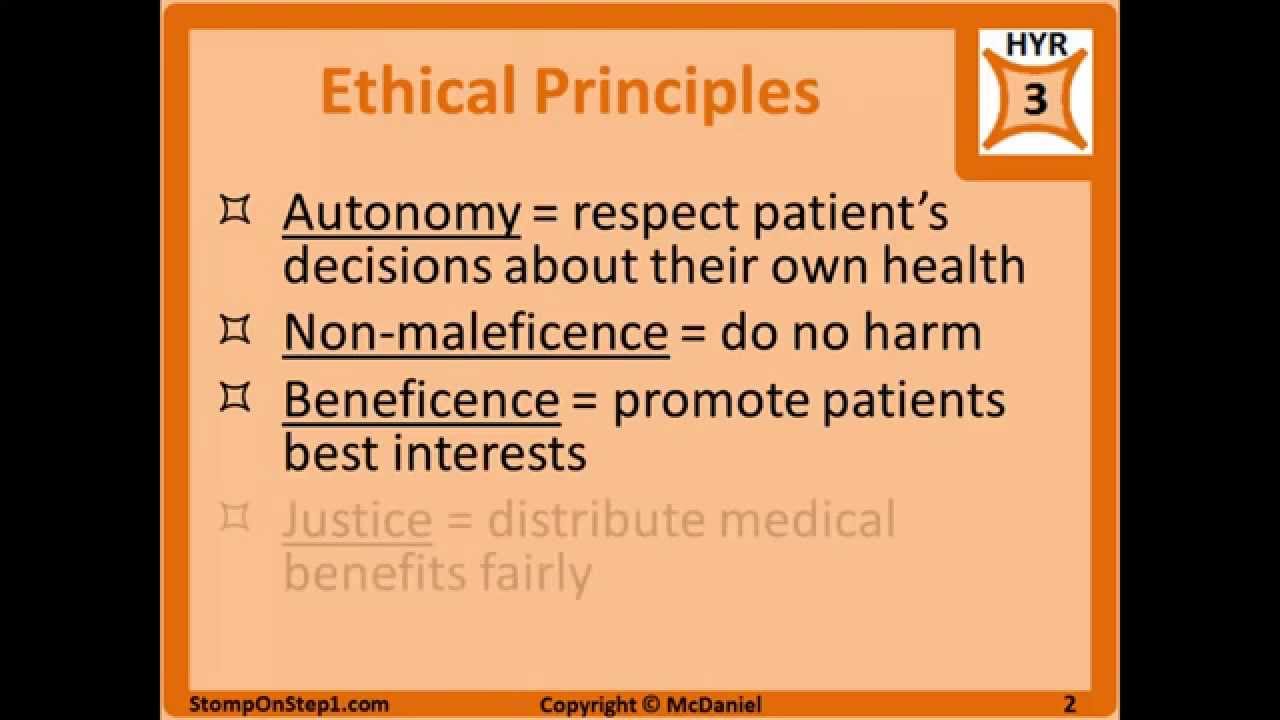
It also aids healthcare professionals in decision-making when reflecting on moral issues that arise in the workplace. The four principles are autonomy, beneficence, non-maleficence, and justice. We will consider each individually.
Autonomy is also known as self-rule. It is the capacity for patients to think, decide, or act on the basis of their thoughts and decisions, with freedom and independence. Therefore, in order for us to respect autonomy, doctors must permit patients to come to their own conclusions.
Whether or not we agree with them, they should still be respected. Beneficence means to actively do what's best for the patient. The principle is based upon an objective assessment of a doctor and what they feel is best for their patient.
A doctor's decision may be in conflict with the patient's own views and therefore can clash with a patient's autonomy, where a doctor overrules a patient's decision. This is known as medical paternalism. In practice, this never occurs.
Non-maleficence means to do no harm to our patients. When we operate, we aim to do what's best for the patient, or in other words, beneficence. However, with surgery, risks such as thrombotic events and even death exist.
Therefore, in everyday practice, we weigh the possible treatment decisions with risk versus benefit, or benefits versus non-maleficence. Justice is the principle that all patients with similar circumstances should receive the best and equal treatment. This forms a key factor in service allocation.
By providing increasing services to our accident and emergency departments, is it just to restrict funding, therefore, to mental health services? In reality, time and resource limitations mean that not all patients receive the best possible treatments. So, in summary, our day-to-day practice as doctors involves the fine balancing act of weighing each of these core principles.
Autonomy, again, is the patient's right to decide on their own treatment; beneficence is our act to do what is best for the patient; non-maleficence is to do no harm to the patient; and justice is to ensure equal access to treatment. Thank you very much for listening. I hope this lecture has assisted you with your examinations.
If you have any questions or comments, please put them in the section down below. Thank you.












![Medical School Interview [UK] - The 4 Pillars of Medical Ethics](https://img.youtube.com/vi/Xyu1JLbrYHc/maxresdefault.jpg)