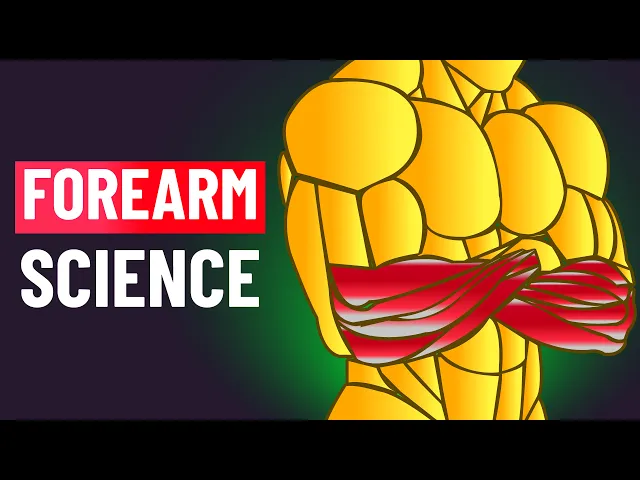
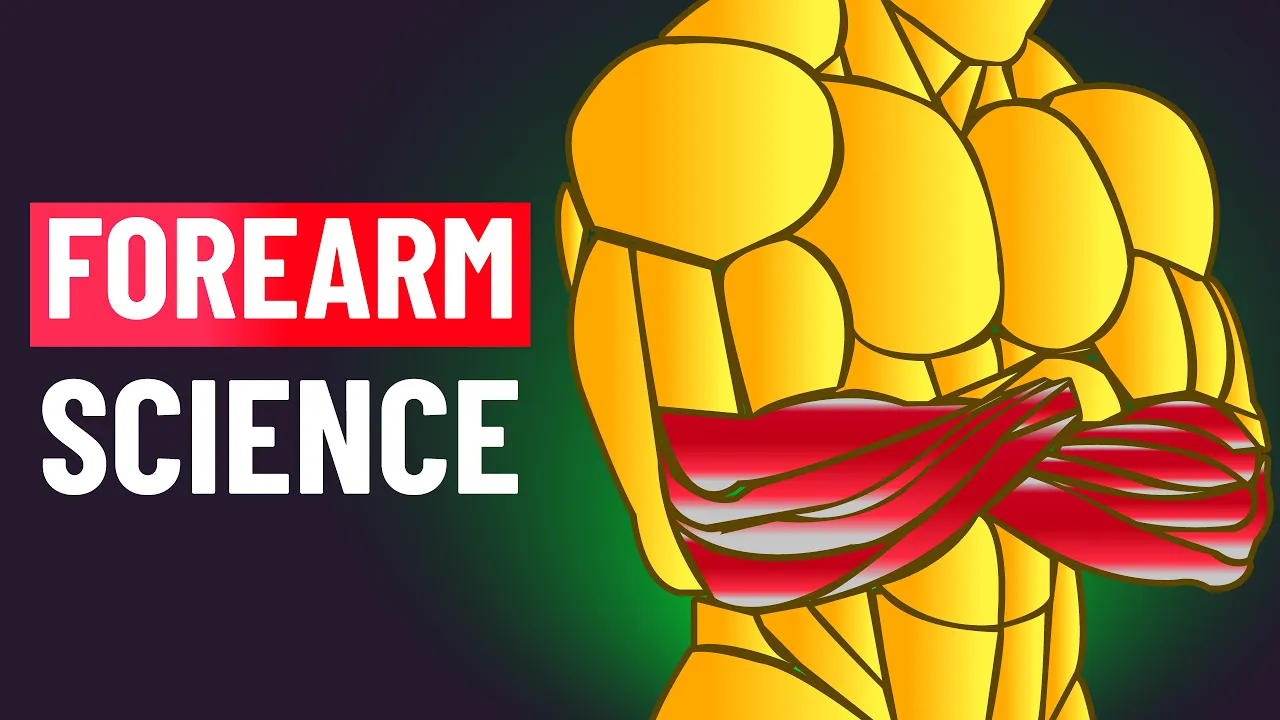
welcome to the house of hypertrophy how can we train to most effectively and efficiently maximize forearm hypertrophy with the help of the scientific literature we'll be going into great detail on this we'll mention virtually every exercise wrist curs wrist extensions isometric grip training pronation superation training radial nner deviation training and last but not least curling training let's Dive In the forearms consist of muscles on the anterior compartment and posterior compartment here's a list of all 20 muscles the brachio radialis is one many of you may instantly recognize it extends from part of the upper arm
across the forearm we'll discuss how you may maximize its growth later the anconeus is a muscle you may have never heard of It's a small muscle that is actually involved in elbow extension so will actually be trained in any triceps exercise both the pronator terries and pronator cordatus are involved in pronating the forearm while the superator is involved in suating the forearm with the anterior compartment muscles that have flexer in their name tell us they are involved in flexing the joints they cross with all the flex and muscles here they all cross the wrist joints
so Flex the wrist which is where where the angle between the palm and forearm decreases it is worth noting the palmaris longus also flexes the wrist as a fun fact not everyone has the palmaris longest muscle according to this text it can be absent in up to 26% of people various tests involving flexing the fingers and or wrist aim to see if you have a visible palmaris longest tendon or not for example this test involve you bunching your fingers and then flexing at the wrist to see if the palmaris longest tendon becomes visible it is
also interesting to know some people may have the muscle in one of their forearms but not their opposite forearm anyhow the names of many of these forearm muscles may sound complex and intimidating but let us quickly break down the meaning of the terms so we can enhance our understanding of the forearms it's not essential for you to memorize the names since I'll remind you of the functions of the various muscles as we detail what exercises May optimize their hypertrophy when a muscle has pocis in its name it tells us it can move the thumb so
the flex of pocis longus in addition to flexing the wrist can Flex the thumb when a muscle has digitorum in its name it tells us it can move the fingers or toes if we're talking about the foot so both the muscles with flexor digitorum in their name tell us besides flexing the wrist they can Flex the fingers superficialis is Latin for near the surface while profundus is Latin for deep so the flexa digitorum superficialis is on top of the flexa digitorum profundus finally for the anterior compartment what about radialis and naris the lower arm has
two bones the radius and olna radialis refers to the radius the flexor Cary radialis besides wrist flection can perform radial deviation which is movement of the hand towards the radial side when you're standing like this radial deviation looks like this naris refers to the Nar the flexor carpy naris besides wrist flexion can perform nner deviation which is movement of the hand towards the Ula side when you're standing like this ol deviation will look like this note carpy just refers to the wrist with the posterior compartment muscles that have extend in the name can extend the
wrist which is where the angle between the palm and the forearm increases and you can probably guess the functions of many of these muscles based on what we've already described remember we're talking about extension with a posterior compartments so for example the extensor digitorum can also extend the four fingers there are only four things that will very quickly expand on digy minimi translates to little finger so the extend sensor digity minime besides extending the wrist also specifically extends the little finger indices translates to index finger so the extender indices besides extending the wrist also specifically
extends the index finger longus is Latin for long and brevis is Latin for short so the muscles with longus are longer than their counterparts with brevis in the name such as the extensor pocis longus being longer than the extents of pocis brevis now some of you may be thinking I see the abductor pocis longus but where's the abductor pocis brevis the abductor policis brevis belongs to the hand so it's not a for a muscle and thus isn't on the list anyhow speaking of the abductor policis longus this is our fourth and final Point as it's
a little confusing and worth clarifying abductor policis tells us it can ab D duct the thumb but it actually can also extend the thumb and contribute to radial deviation here's a table that some may find useful that details the functions of all the for our muscles once again you don't need to memorize this but feel free to replay this section if you do wish to memorize any of these [Music] details nearly all of the exercises most people perform in their training program since they involve gripping onto the load already involves some forearm stimulation vertical pulls
horizontal pulls and deadlift variations involve a fair degree of static finger flexion strength to not lose grip and remember of all the fora muscles it's the flexor digitorum superficialis and profundus that Flex the fingers so these two muscles are stimulated with the static finger flexion involved in these exercises in fact it's not super uncommon for people to get sufficiently strong on these movements to the point where these forearm muscles become the limiting factor in this scenario assuming your goal is to most effectively stimulate the muscles these movements typically intend to using something like straps can
eliminate grip as the limiting factor during many curling exercises with our base Knuckles face down if you were to shut down the forarm muscles the weight would pull us into wrist extension so your forearm muscles specifically the muscles that perform wrist flexion are work to combat this from happening during lateral raises our base Knuckles are faced upwards if you shut down the forarm muscles the weight pulls us into wrist flexion so your forarm muscles the ones that perform wrist extension are working to combat this from happening depending on your goals training experience and genetics you
might actually be happy with the forearm gains you see from your regular training however we can be pretty certain if your goal is to accelerate and maximize forearm development direct forearm training is required the reason for this is pretty straightforward based on the current scientific literature we know to maximize growth of a muscle we want to attain High muscle fiber recruitment levels and tension this is simply achieved by training two or close to failure during most exercises your forarms are typically not the limiting factor so are far from theoretical failure but during direct Forum work
they are always the limiting factor the anterior compartment of the forearms is generally larger than the posterior compartment when dissecting the anterior compartment except for the pronator terries and quadratus which are not super large we know the rest of the muscles all contribute to wrist flexion some of them have additional functions but the fact is all of them have been established have great leverage for Pure wrist flexion for those unaware leverage in this case refers to a muscle's moment arm the biceps can simply illustrate this to know a muscle's moment arm we need to know
its line of force and the center of the joint it moves then we simply draw a perpendicular line between these two things to get the muscle moment arm here we see the biceps has a fairly long moment arm which tells us it has great leverage and potential to perform its function of elbow flexion and generally the longer the moment arm the better leverage and potential a muscle has to perform movement since all these muscles have great leverage for wrist flexion wrist curling exercises which involves wrist flexion will be very effective for training all these muscles
if you could only perform one forarm exercise some wrist Cur would be it simply because this trains the greatest amount of forarm muscle tissue currently there's no research directly comparing different rist Co variations for muscle hypertrophy despite this we can hypothesize what the best risk of variation might be based on the available literature on other muscle groups growing evidence suggests training muscles at relatively longer lengths produces greater hypertrophy than shorter lengths what on Earth does this mean when we move our muscles change lengths for example the biceps is at a longer length when the elbow
is straight but at a shorter length when the elbow is bent two areas of the scientific literature demonstrate the benefits of training muscles at longer lengths the exercise comparison research and the range of motion research with the first one example is this 2021 paper from Japan comparing seated to Lang Leos for hamstrings hypertrophy the hamstrings consist of four muscle heads all of them cross the knee joint so are involved in bending the knee called knee flexion however three of them also cross the hip joint this design means these three hamstring muscles are going to be
stretched more and thus at a longer length when we bend them the hip which is done on seated leg hes lying leg H Coes involve no Bend at the hip it was found seated leg hes grew these three hamstring muscles more than lying leg holes while growth of the biceps for more a short head which is the one that just crosses the knee and thus is trained at the same muscle length between both exercises was similar between the two exercises in past House of I perch for videos we've seen selecting exercises that train the quads
and triceps and long lengths can build more muscle as for the range of motion research this refers to the Joint ankles you move through so with a normal biceps curl moving the elbow from zero to around 130° is a full range of motion but we can divide this into two parts moving from around 0 to 65° is what we may call a partial at long muscle lengths while moving from 65 to 130° is what we may call a partial at Short muscle lengths this 2022 study compared car phrases with a partial at longer muscle lengths
partial at shorter muscle lengths and a full range of motion that moved across all angles gastr nmia hypertrophy was greatest with the partial at long lengths being even better than the full range of motion in the spirit of scientific accuracy we need to recognize this literature on Long muscle length training is emerging and developing and more studies are needed to answer specific questions for example is a partial at long length always better than a full range of motion is there a threshold of the long length needed to maximize muscle growth Beyond which further lengthening provides
no further benefit finally all of the research on Long muscle lengths for hypertrophy has been done on untrained individuals across the web some suggest there are mechanisms that mean trained individuals would not see greater benefits from training at long muscle lengths but as I've thoroughly described in this article I think there are problems with this argument and we simply need studies on trained individuals luckily there's at least two studies in the works exploring if trained individuals benefit from longer muscle lengths when they're published I intend to update you with the results at the house of
hypertrophy nevertheless allow us to use this available data to at least speculate on what may be the best forearm exercises focusing on the forearm flexing muscles we know they Flex the wrist so are going to be shortened when the wrist is flexed but at a more lengthened position when the wrist is extended withstanding wrist curve variations we don't get into an extended wrist position rather we're largely moving the wrist from neutral to a flexed position conversely with wrist hes that have our forearm resting across a surface with a base Knuckles down our wrist successfully reaches
an extended position therefore we may hypothesize this variation may be better for hypertrophy thanks to it attaining longer lengths this movement can also be performed with your lower arm across a bench or on your thigh but that's not all we might be able to make this exercise even better recall that the flexor digitorum superficialis and profundus besides flexing the wrist also Flex the fingers as a result these two muscles are going to be at a relatively shorter length when the fingers are flexed but at a longer length when the fingers are extended consequently if we
allow the fingers to extend during the wrist curl we will be able to lengthen the flexor digitorum super falis and profundus even more here we're predominantly extending our fingers at something called the metto caroal joint while the load rolls down our fingers we still have some Bend in the distal and proximal interanal joint so the load does not fall out then we Flex the fingers while simultaneously flexing the wrist to lift the load we'll call this a finger flexion wrist curl here's an example of what this exercise looks like in real life some of you
might be thinking what if I just performed wrist Co with fat grips for those unaware fat grips are attachments that increase the diameter of the bar you need to grip thus compared to using a normal grip using fat grips automatically places your fingers into a more extended position therefore when compared to normal rist Holes without fat grips using fat grips will train the flexa digitorum superficialis and profundus at comparatively longer lengths but when comparing them to finger flexion risk holes they generally don't attain as much finger extension so finger flexion wrist holes generally still achieves
longer lengths for the flexor digitorum superficialis and profundus making the speculative assumption this extra lengthening is beneficial for growing them more this could be quite an important thing because the flexor digitorum superficialis and profundus are actually the two largest forearm muscles so play a large role in your overall forearm size you may be wondering by introducing this finger flexion into our wrist curl although this may enhance the stimulus to the flexor digitorum superficialis and profundus through placing them at longer muscle lengths does this not compromise the stimulus to the other forearm flexor muscles my best
guess is probably not although this is not an identical comparison recall we saw of this study comparing cated to lying leg holes seated leg Coes lengthen three hamstring muscles more and grew them more but it was no less effective for growing the biceps for more a short head which is trained at the same length between the two exercises in the same way perhaps finger flexion wrist CES effectively grow the flexor digitorum superficialis and profundus more while not being any less effective for growing the other Forum flexor muscles now you're not going to be lifting as
heavy as you can compared to other rist Co exercises but this likely does not matter we don't want to make the mistake of thinking that heavier weights means a greater stimulus a great example of this comes from this 2022 paper from Japan that compared overhead extensions to push Downs due to the precise anatomy of the long triceps head it is actually trained at a longer length with overhead extensions and it indeed grew better with this movement even though subjects lifted heavier loads on the push Downs throughout the study so this is how I'd rank the
different rist Co variations remember this ranking is based on inferences from the scientific literature on other muscles so it would be wrong for me to to say this is 100% correct also if you dislike or cannot train with any of the best ranked movements throughout this video and you find it more enjoyable or practical to train with lower ranked movements that is absolutely okay provided you train these movements to or close to faila you are absolutely still going to experience hypertrophy the data still shows meaningful hypertrophy in exercises training muscles at shorter positions I'll also
note with standing wrist hes you can also introduce finger flexion which play reles the flexor digitorum superficialis and profundus at relatively longer lengths of course since the wrist remains neutral during this it doesn't reach as long of a length as this variation a time efficient way to implement any form of risk hes into your training is to superset them supersets involve you performing two exercises back to back and then rest before performing this for however many more sets you desire based on the current literature we at least have evidence implying suers setting exercises that that
train different muscles is perfectly fine for muscle growth generally Su setting rist holes with an exercise that doesn't involve a grip component is probably a sound idea such as super setting leg extensions with them or any of these other [Music] options recoil the anterior compartment is larger in size so training them is the main priority but the posterior compartment isn't terribly small and likely still worth training to truly maximize forearm size much of the extensive muscles of the forearm have great leverage for wrist extension so it's no surprise wrist extension training is an excellent way
to train them the extensive muscles of the forearm are at a shorter length when the wrist is extended and at a longer length when the wrist is flexed standing wrist extensions don't attain a flexed position rather we're moving the wrist from neutral too extended conversely wrist curs with a forearm across a surface and the knuckles facing up successfully reaches the flex position so we may hypothesize this variation may be better for hypertrophy the fingers are already flexed thanks to gripping the load and in this scenario this is perfectly fine some of the extensive muscles have
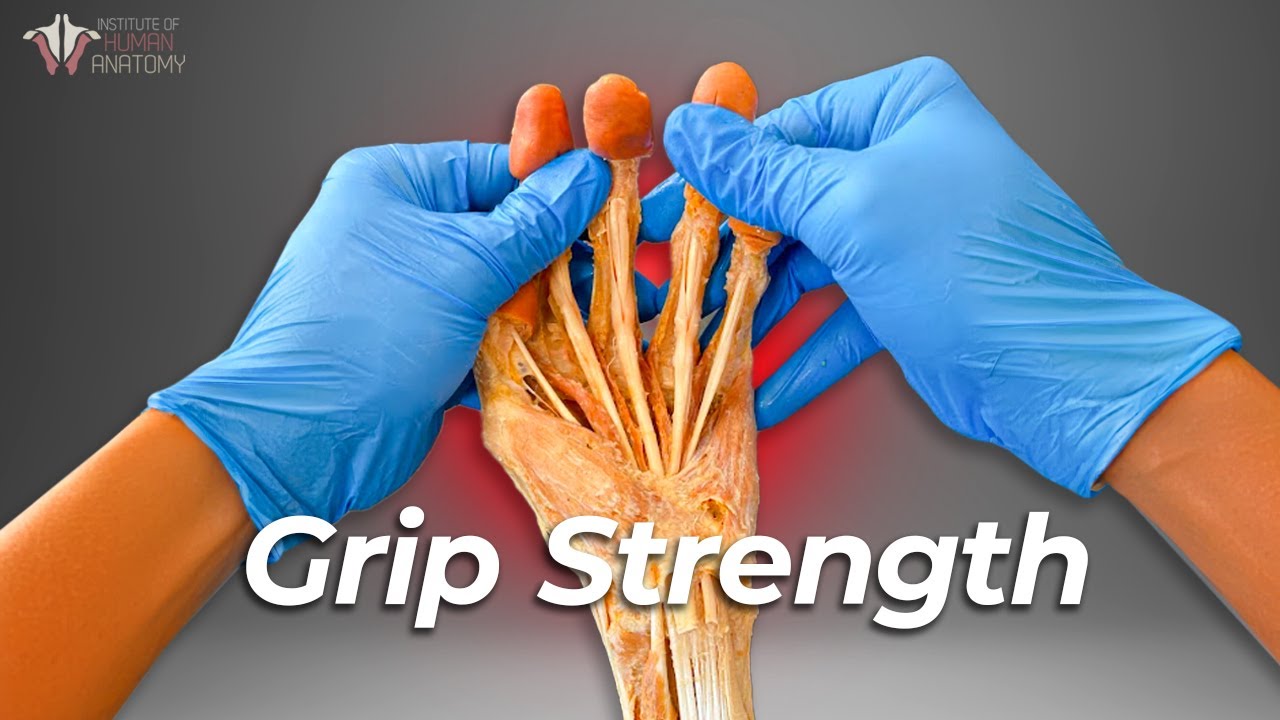
attachments on various fingers and are at a longer length when the fingers are flexed a convenient way to add wrist extensions into your program is simply to supet them with another exercise or even a wrist curl variation [Music] another popular way to train the forearms is through isometric grip training isometric refers to our muscles working but not moving I'll straight away mention that grip training is probably not essential for forearm hypertrophy simply because grip training trains finger flexion and thus just trains the flexor digitorum superficialis and profundus various intrinsic hand muscles are involved too but
they are not our Focus today if your thumb is in contact holding the mod then we will also additionally recruit the flexa pocis longus but all these forign muscles are already going to be trained extremely well with the risk hold variations we've dissected but since grip training is popular and since some of you may enjoy training variety let us dissect it in general there are two common categories of grip training the first is normal grip training which involves you holding on to a standard dumbbell barbell or pull-up bar to or near failure far walks involve
simultaneously walking all normal grip training trains the muscles at moderately short lengths why remember the flexor digitorum superficialis and profundus are placed at the longest length when both the wrist and fingers are extended the flex of pois longus will also be at its longest length when the wrist and thumb are extended but during normal grip training our wrist is virtually neutral and our fingers and thumb are flexed this isn't a disaster research conducted on other muscle groups demonstrates that isometric training at Short muscle length still evokes hypertrophy but unsurprisingly growth is better with isometric training
at relatively longer muscle lengths the second category of grip training grip training with the fingers extended gets us to comparatively longer lengths these involve grip training with fat grips added to dumbbells barbells or a pull-up bar and pinch training with plates or a dumbbell there are subtle differences between these but the main thing is all of them place our fingers and thumb into a more extended position thereby training the muscles at a longer length relative to normal grip training so this is the speculative ranking for isometric grip training some of you may be wondering how
does isometric training compare to normal Dynamic training for hypertrophy there only seems to be two studies comparing them the first one was published all the way back in 1957 including the comparison of this biceps is symmetric exercise to dumbbell curling upper arm circumference gains ended up being better with the dumbbell curling yet upper arm circumference is far from a precise measure of muscle growth and we don't know if the results would have been different if isometric training at longer lengths would have been used the second study comes from 1986 and this paper compared isometric to
concentric only and eccentric only leg extensions from the references my best guess is the isometric training was performed roughly around the long muscle length positions achievable with a leg extension quad hypoy was not significantly different between all three suggesting isometric training may be able to produce similar gains although I would have liked to have seen a normal Group performing both a concentric and eccentric motions also this is just one study so future studies are necessary to truly determine how effective isometric training is right now my best guess is isometric training particularly at longer lengths might
be able to produce similar Hy pery to normal Dynamic training although if future research finds isometric training isn't quite as good as Dynamic training for hypertrophy I don't anticipate the differences would be that large anyhow as we at least know you can grow muscle from isometric training it's absolutely fine to include isometric grip training in your training program if you desire but let's say you wanted a dynamic alternative to isometric grip training in this scenario as isometric grip training involves static finger flexion we would be looking for a dynamic finger flexion exercise when dissecting wrist
Coes we introduced finger flection risk holes which already involve finger flexion combined with risk hurling in fact one option on the table is to perform finger flexion wrist curs until you get to the point where you're struggling to curl the wrist up and then you squeeze out a couple of pure finger flexion repetitions with a wrist maintained in an extended position but if you're not a fan of this you can just perform pure finger flexion repetitions as a standalone exercise this is likely an excellent exercise since our wrist and fingers attain extended positions we're training
the flexor digitorum superficialis and profundus at long lengths besides this hand grippers and standing finger curls also train finger flexion I anticipate these C be quite effective for growth but since the wrist is in neutral it's possible they are not quite as great as finger flexion with the wrist extended note these Dynamic finger flexion exercises tend to involve the thumb not in contact with the weight so the flexor pois longus isn't going to be trained so this is how we may rank Dynamic finger flexion training again it's not Crystal Clear how isometric compares to Dynamic
training but I will say as finger flexion with the wrist extended reaches the longest length of all these it's possible this could be the best having said this if you prefer to train with any of the lower ranked exercises rest assured they're not going to decrease your muscle size as alluded to at the start of this section dedicated finger flexion training is likely not essential since the muscles involved are already going to be trained effectively in wrist Cur variations but since some of you may enjoy training variety this certainly can be part of an overall
highly effective muscle building program if you wish moreover the flexed digitorum superficialis and profundus are after all two of the largest for our muscles so extra finger flexion training is not what I'd call a waste of time finally there are some convenient ways finger flexion training could fit into a training program besides just performing pure finger flexion reps after failing to perform wrist flexion let's say you're training pull-ups on your final set you could just hang on the bar for a while if you're training dumbbell or barbell standing curls on the final set assuming the
load isn't too heavy you could perform a couple of pure finger curl repetitions with hand grippers these can be performed at any place and time so it can be a highly convenient and simple way to train your forearms [Music] more performing exercises that involve radial or inner deviation will effectively train these forearm muscles that have leverage for this movement but five of these seven muscles are already highly trained with risk holes and extensions the two exceptions are the abductor pocis longus and extensor polius brevis which are probably better trained with radial deviation these two muscles
are pretty small so maximizing their growth is probably not high on anyone's priority list and growing them will probably have a trivial impact on your physique so I don't consider radial or in deviation essential but I understand that not everyone thinks the same or has identical goals so if you do wish to train radial or ol deviation here's some solid [Music] options direct pronation and superation training isn't involved in most programs some of your exercises may be performed with a supered or pronated grip but these are not resisted pronation or superation training direct pronation training
will effectively train the pronator terries and quadratus while direct superation training will effectively train the superator and even biceps since they function as a superator too these three forign muscles aren't going to be trained with wrist Coes or extensions the pronator terries has some leverage to perform elbow flexion so will somewhat be involved in exercises that involve elbow flexion yet it likely experiences a better stimulus with direct pronation training so if we wanted to maximize the growth of these muscles direct pronation and superation training would be required but considering that these muscles are a small
fraction of the forearm muscle mass they are far from the most important thing for overall forarm size and for the vast majority of people that simply care about building an overall developed physique direct pronation or superation training is not what I deem essential but again not everyone thinks the same or has identical goals so perhaps you do want to train them some of you might know that pronation training is common in the arm wrestling world and it's quite interesting to see that Devon larett one of the best armed wrestlers in the world has a highly
developed pronator terries anyhow with your forearm across a bench or on your thigh and using an uneven dumbbell moving the hand in this way trains pronation while moving your hand in this way trained super Nation you can also perform both in one smooth [Music] motion as mentioned near the introduction many of you are probably familiar with the bracho radialis some data indicates when the forearm is pronated the bracho radialis helps return to neutral while when the forearm is supinated the bracho radialis again helps return to neutral yet as implied by this paper the primary function
of the muscle may be elbow flexion as a result the Brau radialis is going to be trained well in any exercise that involves elbow flexion including horizontal pulling exercises vertical pulling exercises and of course curling exercises it is widely thought using a neutral or pronated hand grip during any elbow flexion is superior for growing the Brau radialis this belief partly stems from the idea that the biceps seem to have their best leverage to perform elbow flexion when the forearm is supernate and indeed a fair few electromyographic studies find the biceps display higher activity when elbow
flexion is performed with the forearm in superation surely this then means the braal radialis has a smaller contribution to Elbow flexion with a supinated grip but a larger contribution with a neutral or pronated grip quite fascinatingly the overall electromyographic literature fails to support this although I did come across two studies finding the brao radialis displayed higher activity when elbow flexing with the forearm pronated three found no difference between different forearm positions and four actually found better Brach your radialis activity with the forearm in a supern position for example the most recent paper had 10 competitive
bodybuilders perform cable curls with a supern pronated or neutral grip and both biceps and bracho radialis activity tended to be higher with the supered grip as discussed many times at the house of hypy before electromyographic data has limitations so it's possible this explains the surprising results however my current belief is that electromyographic data May potentially be more accurate when we're comparing exercises that only have slight variations such as curling with different grips my reasoning for this comes from research on other muscles some electromyographic research on the coughs finds that cough raises with slight variations between
them successfully predicted muscle growth outcomes while other electromyographic research that compares very different exercises doesn't always translate into muscle growth outcomes thus I think it is worth considering the surprising idea that a supered grip trains both the biceps and break your radialis extremely well in fact we at least have one study demonstrating that supernate curl training can be superb for braak your radialis hypertrophy the study recruited previously untrained individuals to train dumbbell and machine preacher cods with these variables both of these exercises are typically performed with a supinated grip this training was not compared to
anything else as the aim of the study was simply to explore the relationship between muscle hypertrophy and strength gains it was ultimately found that the B BPS brachialis and bracho radialis all significantly and similarly grew as this study didn't directly compare supern to neutral or pronated grip training it doesn't prove a supernat grip is sufficient for maximizing brachy radialis hypertrophy but it at least demonstrates how significant growth of all these muscles can occur with a supern grip for those interested the study did find somewhat of a relationship between muscle hypertrophy and strength gains but the
relationship ship was far from super strong we might have future videos at the house of hyper view that explore the overall literature on the relationship between hyper Fe and strength anyhow if we assume for a second that supinated grip is sufficient for the braak your radialis I think it's possible that some people who report feeling their break your radialis more with pronated curs are getting confused with the wrist extensor muscles during pronated curs the weight is trying to flex your wrist so your wrist extensors are working to prevent this from happening some of the muscles
involved in this are around the bracho radialis so you may be deceived into thinking it's working more than usual when you're actually feeling these extensive muscles now this is a controversial take I'm completely open to being utterly wrong here if future research finds Brach your radialis hypertrophy is better after training with pronated or neutral grips but right now my current interpretation of the available evidence is that neutral or pronated grips may not be essential to Max break your radialis hypertrophy thus if your current program includes some form of vertical and or horizontal PS Plus at
least one curling exercise I expect this will absolutely contribute to substantial braak your radialis development and might indeed be enough but let's say you have been doing this but you are not happy with its development well assuming other aspects of your training and lifestyle cannot explain your lack of break your radialis growth then you could try to increase the volume of your curve or even though the present evidence doesn't support it you could experiment with neutral or pronated coals as you don't have much to lose before we wrap up some have suggested regardless of forearm
position certain curling exercises could be better for the Brau radialis there are two different lines of thoughts the first one is that some analyses find the difference in elbow flexion leverage between the Brau radialis and the other elbow flexors tends to be largest as the elbow becomes increasing L flexed which is at the top portions of a curl due to this some say curling exercises that are harder at higher elbow flexion angles May elicit Superior Breaky radialis growth many regular free curls are already quite challenging at the middle to top parts of the curl and
adding a resistance band on top will make the top part of the curl even harder thus perhaps this effectively increases the stimulus to the break your radialis the second line of thought opposes this it suggests since the breaku radialis leverage isn't that bad in lower elbow flexion angles and since we've seen that training muscles at longer length seems to be better for building muscle exercises that are harder in the bottom part of the curl when the muscles are at longer lengths could be best cable curl variations and free weight preacher curls do this that is
they are relatively more challenging in the bottom part of the curl compared to regular free weighs and resistance banded curls I will note from the biceps perspective since it has attachments on the shoulder and can be lengthened during shoulder extension it will be at relatively longer lengths with the cable curl compared to preacher Coes whereas since the Breaky radialis doesn't have attachments at the shoulder its length is similar between both exercises so which of these two lines of thoughts is correct there is currently no published research that can help answer this but fortunately I'm aware
of at least one study that's in the works that may help answer this once it's published we will update you at the house of hypotrophy until then I wouldn't overthink this too much and I would just select the curling exercise or exercises you prefer if you're searching for further guidance on programming to obtain your desired physique it can be tricky and timec consuming however our highquality partner the alpha progression app can help you generate an evidence-based training program that's 100% customed to your needs in less than 3 minutes simply specify the equipment you have how
often and how long you want to train for and if you want to focus or neglect certain muscles there are even Advanced options to periodize your training and Implement D loads there are over a quadrillion input combinations on which your plan is based and with a touch of a few buttons you can customize things further through analyzing your past performance the app provides Progressive overload recommendations during your workouts to help you continue making gains the app automatically generates graphs that display your long-term progression thereby saving you time from having to manually track your progression the
link in the comments and description gives you a 2E free trial of all the premium features and if you like it and decide to go beyond the link gives you 20% off a subscription I truly believe the app is awesome and the reviews speak to this before concluding remember that although science is absolutely a powerful way to understand the world our knowledge is provisional that is we are open to changing what we think might be true in light of new and stronger evidence as mentioned in this video there are some studies currently being conducted that
may help us better understand how we may more effectively build muscle and if further new evidence emerges that may support or challenge anything detailed in this video or anything else at the house of hypertrophy I plan to update you all to conclude we've covered a lot of information feel free to replay the video or use the timestamps in the description and pined comment to jump to specific sections but based on everything detailed we can see there are probably a quadrillion ways you could go about training your forearms as some examples if you only wanted to
train with one forearm exercise some form of risk hold variation will help you train the most amount of forearm Mass we specifically saw how finger flexion wrisk curls due to them training all the flexor for our muscles at longer lengths might be best for hypertrophy if you're happy to perform more than one exercise adding in a wrist extension exercise likely helps you enhance growth of many muscles belonging to the posterior compartment of the forearm if you're someone who prefers even more variation besides these two exercises you could add in some form of grip training Dynamic
finger flexion training or other specific exercises that generally Target the smaller muscles of the forearm finally we know the break your radial is part of the forearm to and this muscle is highly involved in elbow flexion a motion that occurs in exercises that are already present in many training programs such as vertical pools horizontal pools and any curling exercises thank you for making it to the end of the video feel free to check out the alpha progression app or our recent dive into growing the triceps and chest