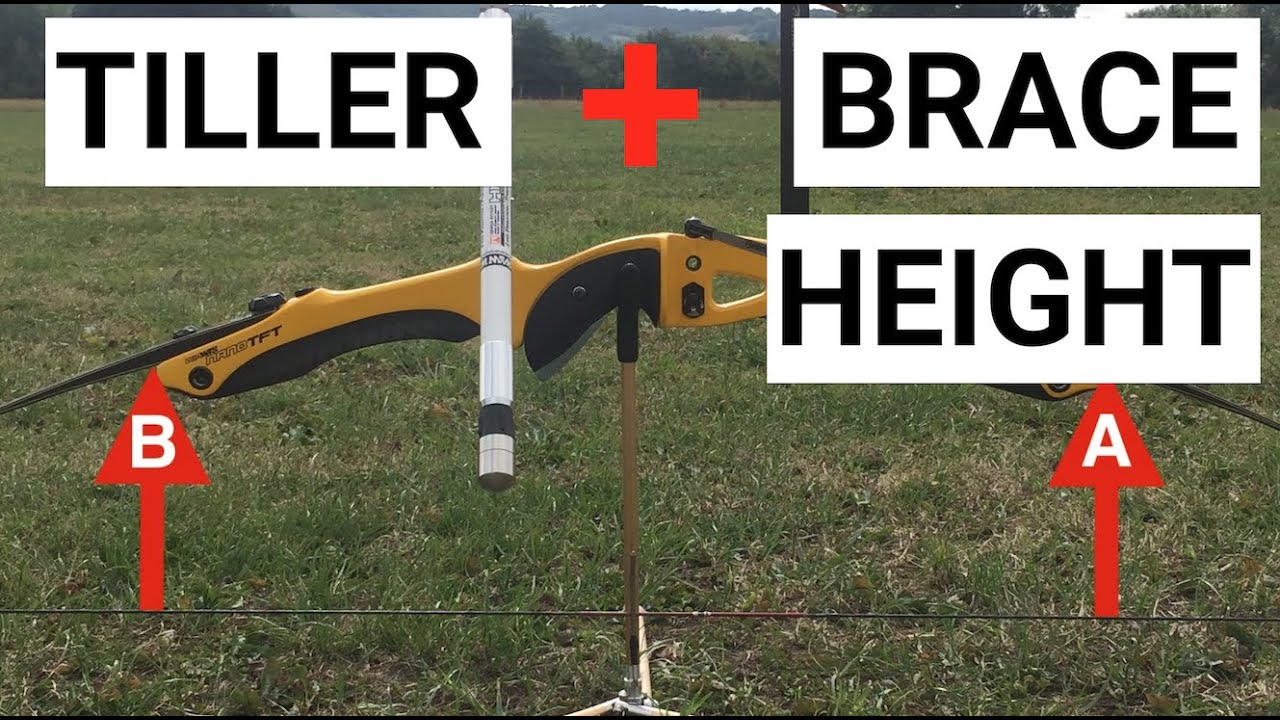
brace height what is how do you adjust it what does it do how does it affect your tune your speed your performance and your forgiveness all of that I'll cover in this video if you're new here my name is Jake Kaminski I'm a two-time Olympic silver medalist in the sport of archery I'm working to make this channel a great resource to all facets of archery specifically I've been talking about a lot of recurve stuff lately within this tuning series I'm also doing a forum series teaching people how to strength train for the sport of archery
and a whole bunch of other stuff links to all of those series will be in the description below hit that subscribe button an oat ofin bail to be notified when a new video is uploaded because it will be happening at least twice a week and with that over let's talk about brace height what it does and how to adjust it you're watching the document ski youtube channel [Music] before we get too far into what Bray site is and how to adjust it I will always recommend that you must have a bo square this is an
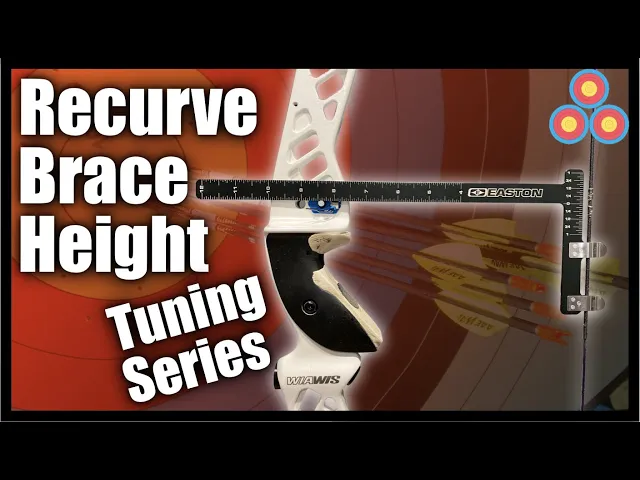
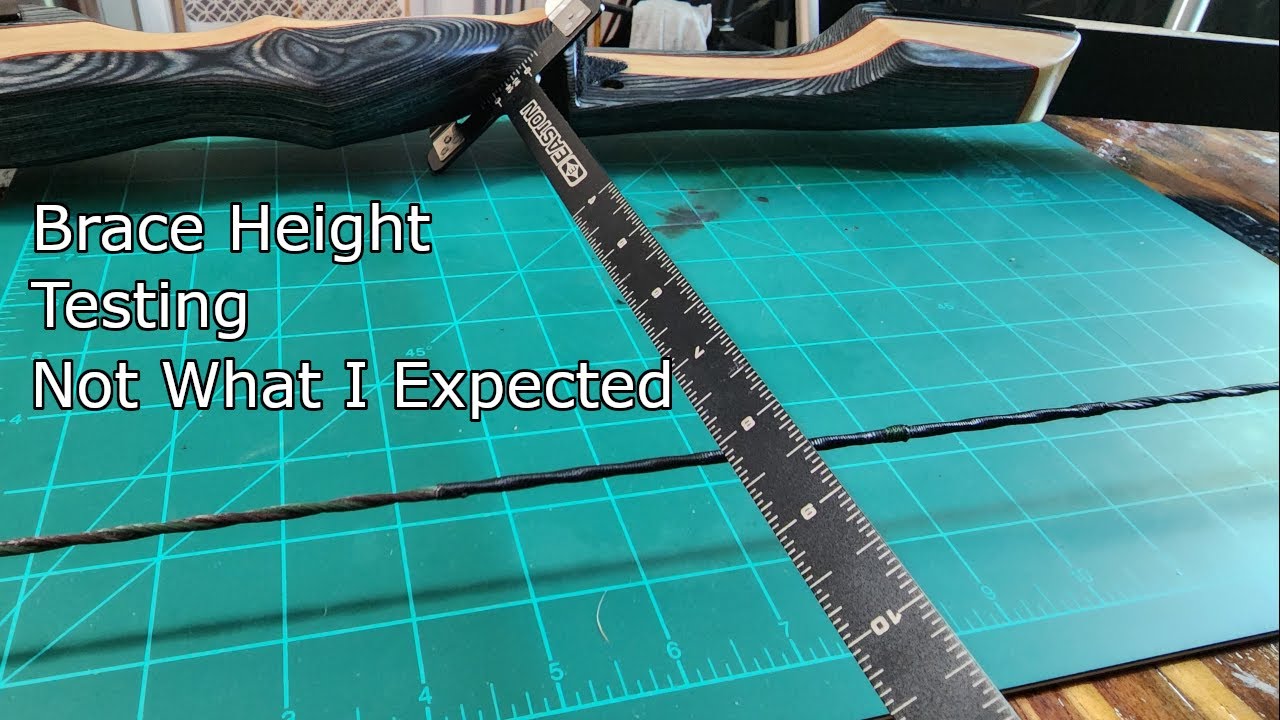
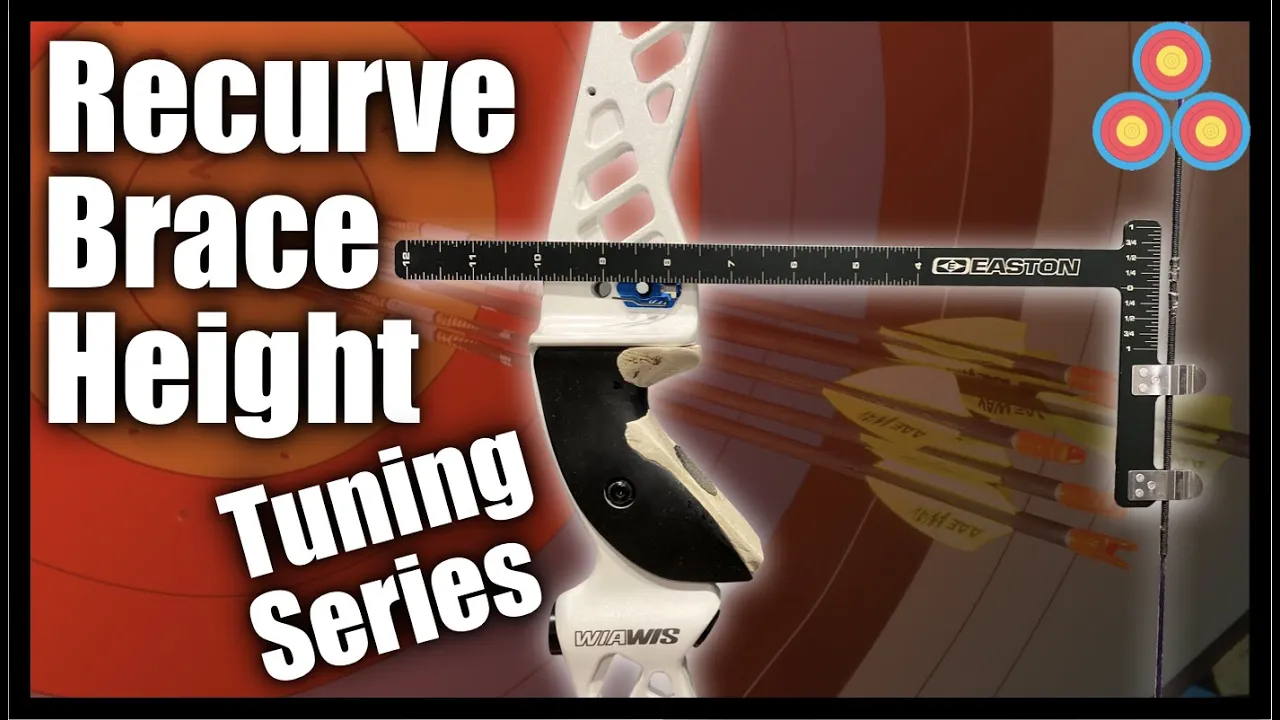
L square there is something that's called a t-square so this one's in the shape of an L the T Square instead of it having the two connections down here below it has the two connections on either side of the actual bo square I'll put a link in the description below where you can grab a cheap affordable bo square I prefer this L square especially when I'm tying on my knocking points because I can access the knocking points from this side without having to snake my serving in through the in between the two actual clips so
like I said I just prefer the L square some of them have laser etched markings like this Eastern one does some of the other ones have actual marks that are stamped into it so no matter how scratched up old dinged up painted bent whatever you'll still have marks that are easily able to be read so this side it's got inches imperial this sides got metric so you'll see that there is a scale on this side that measures your brace height and then there's also a scale on this side that measures your knocking point I'll always
recommend that somebody shoots the brace height within the manufacturers recommended range specific to the actual limb itself not to the riser okay it depends on the riser and each individual riser and I preface it by saying you must go by what the limbs say especially when you're going with something like an exotic type of limb like a boarder due to the way that the limbs recurve they have a slightly different recommended brace height range than other limbs and because the limbs are the object that is actually flexing and storing the energy and basically doing all
the work that is the thing that's going to be most critical especially for longevity performance so how durable it's gonna be how long the limbs will last whether or not they will fail on you in the future some of that stuff will really depend on the brace height that you are using so I always recommend use the manufacturers recommendation for the brace height itself not the riser with the exception of the Hoyt HP geometry risers like when the HP X came out it was a different D flex amount so D flex is well recurves don't
have D flex recurves have reflex so if you measure and draw a straight line between where the limb pockets are and then you measure from that line to the pivot point of the grip how far forward that is of the limb pockets that's called reflex a compound like this as d flex so that means the grip is actually behind where the limb pockets are so it compounds typically you have D flex recurves always have reflex however with the height H P geometry like I said the hpx it has seven hundred thousandths of an inch less
d flex so seven hundred thousandths of an inch is just under 3/4 of an inch so if you're measuring your brace height from your string to your grip or your string to your plunger you need to remove seven hundred thousands off of that measurement seven hundred thousandths of an inch is about 17 millimeters or 1.7 centimeters for you people that use metric on that side of the pond but over here in America we use inches generally except when I switch to win and when I use metric as well to measure my brace like just cos
it's easy so HP geometry risers need seven hundred thousands of an inch less that's the HP X the I on X go down the line I forget all of the ones that run the HP geometry but they all have to be 700 thousands of an inch less if you do not run them that much less you're essentially running a brace height that's 3/4 of an inch higher than you should be so this is a 25 inch riser with long limbs and the brace ight that I ran if I remember correctly it was right around 22
and 1/2 centimeters which is about 8 and 3/4 inches but nobody in their right mind would ever run about nine and a half to 9 and 3/4 inch brace height on this bow but people that shot the HP geometry riser would shoot the standard brace height that they are always used to because they didn't understand that there was less D flex and the actual design of the handle but they were shooting their limbs at almost an inch more brace ight than they should be not ideal and not recommended generally your manufacturer recommend about a 3/4
of an inch range of brace height from the low end to the high end that's about two centimeters of adjustment which is a whole lot so what does a different brace I like a low brace height do that a high brace height doesn't or what does a high brace I do that a little brace height doesn't there's a quite a few effects that brace height has on the actual bow itself it's going to have a sound difference in feel so some can feel a little quieter some can feel a little louder less vibration more vibration
more punch less punch there is a lot of different things which we'll talk about in a little bit the next thing that it would change would be your tune so a lower brace height generally will make your arrows stiffer a higher brace height will make your arrows weaker what that does and why that is it just simply has to do with when the arrow decouples from the string in its cycle so everybody has seen arrows flexing downrange right and how they Bend and due to the archers paradox especially with a recurve well when you change
when that arrow comes off the string up to three quarters of an inch difference it changes how much that arrow or when the cycle of the arrow is happening thus affecting the tune so a lower brace height is stiffer a higher brace height is weaker due to that effect it also changes the speed so with your brace height being lower it's going to weaken your arrow so to keep your arrow in the same tune you can bump your bow way to up a little bit to make sure the arrow is still flying well and then
what that's doing is you're putting more weight behind the arrow and gaining more speed and the opposite is also true you raise the brace height arrow goes weaker you have to lower your bow weight to compensate therefore slowing the arrow down and then within that there's also the forgiveness in theory many people will say a higher brace height is more forgiving the only reason that I can wrap my brain around that from an engineering mechanical standpoint is simply because the arrow is on the string for less time less distance meaning you know if the arrow
decoupled here verse here because of the change in brace height the arrow is on the string for three quarters of an inch less when it is at a higher brace height so that means there's less chance of an effect for you twisting and torquing the bow dropping your arm making a mistake things like that that could affect the flight of the arrow and therefore the forgiveness that like I said is the only standpoint from an engineering standpoint or from it like a real-world standpoint that makes sense to me if you think that there's another reason
please don't hesitate to comment below because I'd like to learn as well how do I set my brave sight or how does it affect the feel of the vibration the punch things like that I mentioned that earlier so the way that I set my brace height in the way I recommend everybody set their brace height is to go to blank Bale all right you have your bow that is rough tuned as I've talked about it's really close your stabilizers are set up fairly similar to how you want them to be you know you've got everything
relatively close nothing is like super fine-tuned because you want to set your brace height before you go into fine-tuning again because I said Brahe side affects your tune right so typically I will get my bow close I'll go shoot some bear shafts get my arrows acceptable tune wise stabilizers make sure my bow is holding well and then I'll go to blank bail set my brace height the way I'm about to tell you and then go back to 230 meters get my bear chefs set again especially if I change my break size a whole lot and
then do my walk back tuning my fine tuning and then I'm done with tuning but anyway so how do I set my brace height the way I prefer and the way I recommend everybody to do it as well go to blank bail take your brace height and set it to the manufacturers recommended low end so or high end doesn't matter just start at one end of the spectrum get to the very edge of it okay I will start on the low end just because I like to increase up from there instead of going down I
don't know why but anyway I go and say that say like say if minimum was 8 inches or 8 and quarter I set my brace I'd eight and a quarter shoot an arrow or two I get to feel it I get to hear it whatever then i'll unstring my bow and this is how you change brace height by the way you can unstring it like I did or with a stringer stringer is probably safer but I've done this for years anyway so you done string it and then to change your brace height you just add
twists to increase or remove twists to decrease people will say well what direction do I twist it just look at the string you'll see which direction it's already twisted I see that if I keep twisting counterclockwise I will increase twists so I'm at the low into my brace height I've shot a narrower two I then will add one two three twists put my string back on restring my bow look how I'm not looking at my limb tip when I string my bow and then I'll shoot another couple arrows maybe one is all I really need
I'm string the bow add three twists shoot another arrow I'm string the bow add three twists shoot another arrow and you do that until you get to the maximum brace height that's recommended and throughout that brace height range you will feel and hear very distinct differences in your bow especially at the lower brace Heights it will probably be a bit louder then you may like and then at the high end you're going to have a much more calm less aggressive setup at the higher brace height but I typically find that there are two very distinct
spots within that brace height range that are distinct compared to any other set up but they're different alright there's a low one and a high one the low one feels like it's got a lot of punch like it really when I let go the string the string just really comes out of my hand quick and slams into the limbs and then the bow jumps really hard but then after the arrow is gone there's a lot more limb flutter so the limbs are doing this a bit more it's a little bit a little bit louder it's
a bit more harsh in the vibration but that's after the arrow is gone okay so at the low brace height it has a very distinct punchy feel a very aggressive delivery of the arrow and then residual vibration after the shop whereas the higher brace height setting has a much softer delivery of the arrow or at least a softer decoupling of the arrow from the string then compared to the lower brace height but the bow is much happier there's less limb flutter it's much quieter less vibration and all of those things but again that's after the
arrow is gone me I want to have the best-performing setup when the arrow is being delivered when the arrow is coming out of the bow not after the arrow is gone so what I do is I always pick that lower brace height so I've get a couple benefits from that lower brace height I get more speed and I do have that advantage in my head and my feeling that the arrow is being delivered nice and crisp and another advantage to having an above that is crisp on the delivery yet harsh on the finish is you
can use that harshness to your advantage how how is after you make a shot sometimes you know even at my level I'd make a shot and I would feel like you know and that's it's okay I don't see really an issue you know it's just like every other shot but my bow goes bang instead of going right there's a big difference in the way the bow sounds sometimes when you let go of the arrow and you can use that as a reference to how that shot went so sometimes you know you feel like what did
I do wrong I don't know felt fine shot a seven instead of my normal 10 I don't know but the bow definitely didn't sound good so at least I know that I did something wrong so I have a bit of an extra outside tell that says hey that shot wasn't nearly as good as it could have been or there was something lacking so I began prefer that lower brace height range it gets me a little bit of speed because it's lower I can have a higher bow weight gain that speed back I believe it's punchy
ER so it's delivering the arrow more crisp I don't mind the residual vibration because it can tell me a bit more about the shot and that's ultimately what I end up so again make sure you set your brace height if you're gonna do it this way set your find your optimal brace height and set it before you go do your walk back tuning and your fine tuning and all of that stuff because I find that brace height can affect your tune quite a lot especially when you're tuning it the way to the level that I
was tuning it I would never adjust my brace height after I fine-tuned because it changes too much in my opinion not only you know you can go fine-tune your brace height at distance and twist your string up and down as you're shooting and see if your groups are getting tighter or bigger and then make decisions there but I find that if I have the bow that is set up optimally working and how exactly how I want it how I want it to deliver the arrow and then all I do is change my Knock position or
my rest height independent of my plunger tension then I can have two options to fine-tune as opposed to just changing my brace height and hoping for the best thanks for watching be sure to subscribe and hit that notification bell so you get notified every time a new video is uploaded for seminar and book code info head to Jay Kaminski comm or click on the link below and yeah I appreciate you guys watching if you would please share this video and really help get the word back out that I am back out there thanks again take
care