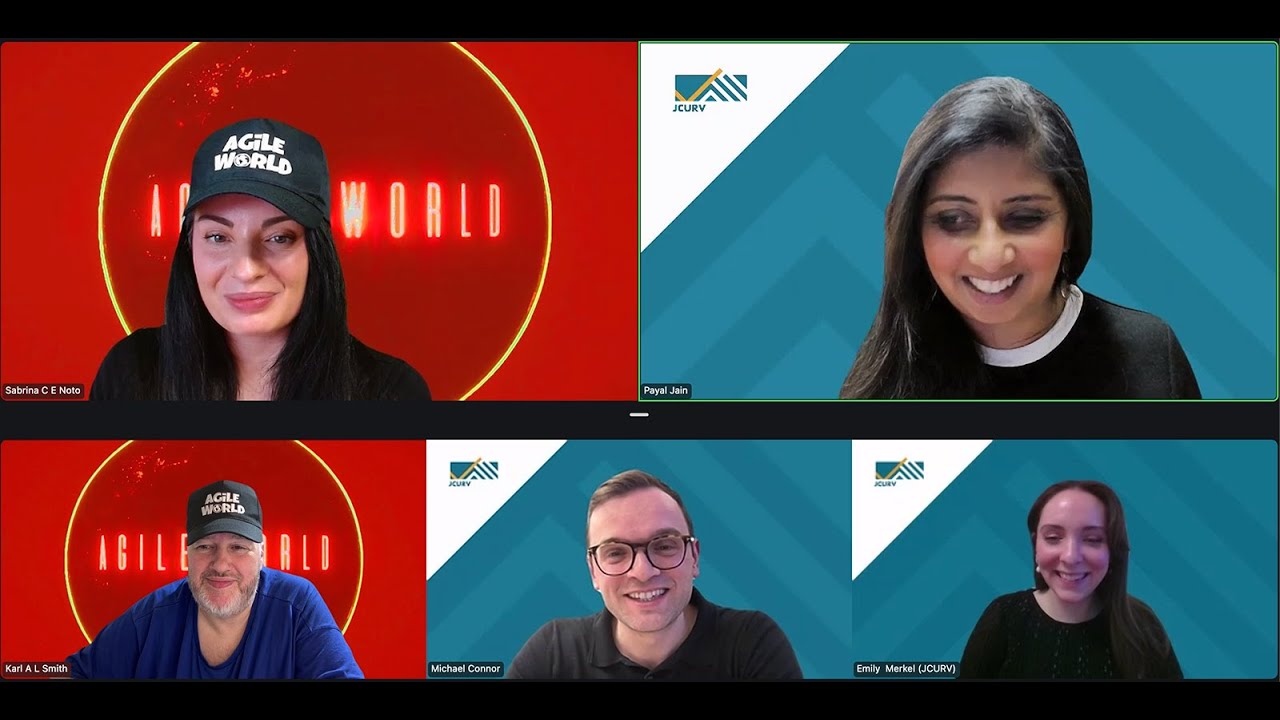
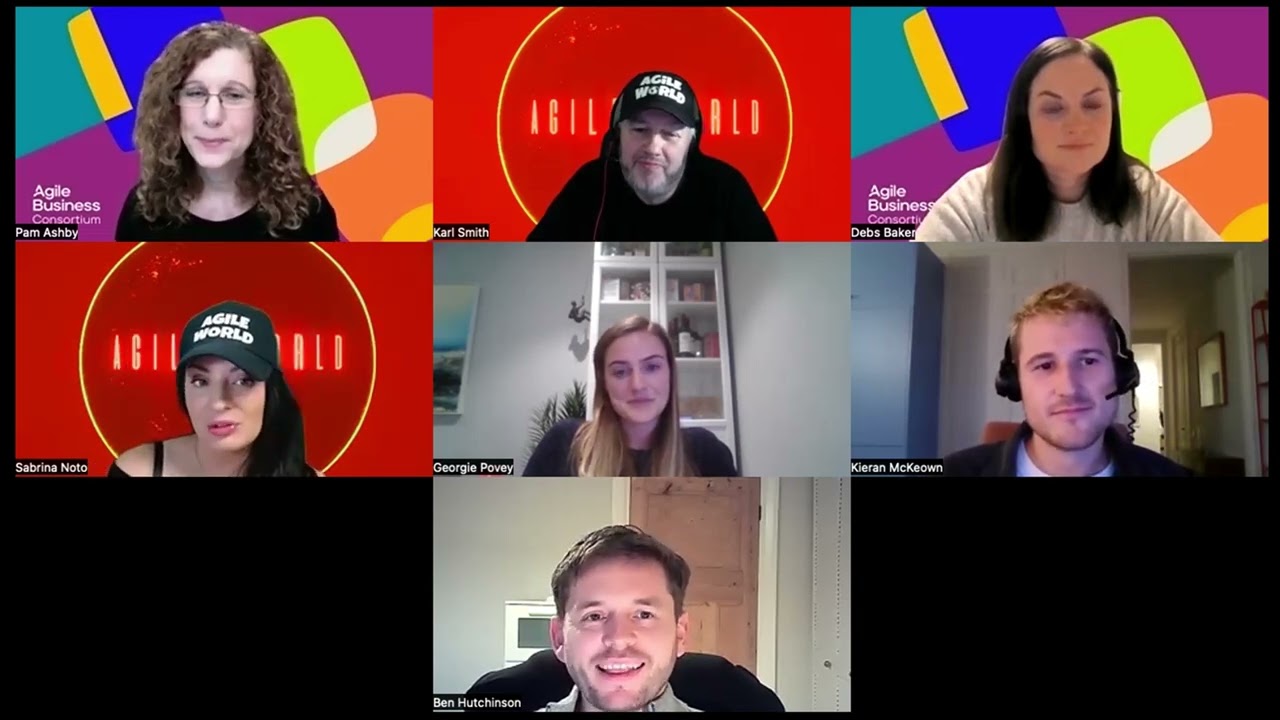
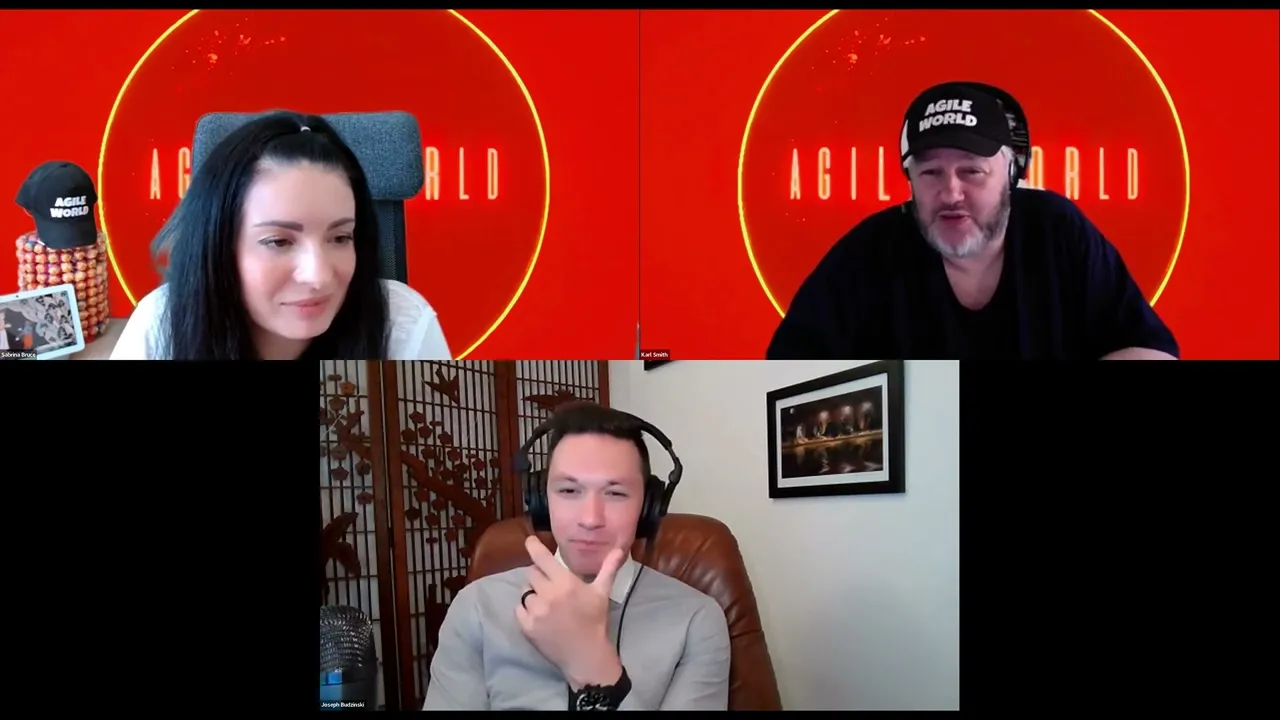
hello and welcome to agile world how are you carl have you caught the sun is is is is there a sun we don't have sun in scotland this is me trying to get up the stairs i i'm just rubbing it in because i've heard that you don't have sun in your area the country or heat apparently no i mean that's that's the marketing that uh visit scotland uses to to keep everyone away while we actually spend most of the time in swimming trunks wow well [Laughter] isn't it you almost feel that you regularly got it
i'm gonna do it you're confirmed that you are wearing trousers oh no i'm not doing that oh well it's another agile world show and we've actually got our good old buddy our friend joe how are you doing hey doing great thanks thanks for having me on so we're intrigued tell us a little bit more about yourself we want to know your background well first let me start by saying i do have pants on i'm not going to show them to you but but for the english audience that that means something else so uh let's say
you've got trousers on instead [Laughter] we all should be wearing pants but are we wearing trousers i know in other states they're called pants and just uh just do your translation there yeah so uh in case you couldn't tell from how i sound i am from the us uh yeah grew up in philly uh moved down to dallas texas about uh i don't know january of last year so um for anybody that's wondering back in philly i have not switched i am still a philadelphia eagles fan i just want to put that out there where
mortal enemies you know you gotta you gotta rep the team that's what i grew up with those were the rules are we gonna get some uh eagles hate from putting this video up i don't know eagles love unless you're a cowboys fan i don't know most of the media they don't really like us um yeah we don't care though so that's that's fine just be yourself yeah so anyways yeah when i was growing up it's only two rules in the household you root for the eagles you root for whoever's playing against the cowboys so there's
the only two rules in the house yeah um but yeah anyways i uh i moved down right around the same time that uh you know that ibm moved us down here so that's that's where i came from i've got about i don't know 10 years of experience in sales i started off selling door-to-door uh in in philadelphia selling verizon fios which was uh a trip but uh just thinking you know walking around with one of those ibm machines under your arm must be really hard work you know yeah no no i was to walk around
with like the mainframe under my under my armpits but yeah um yeah i started off door-to-door then uh then sold you know i was a financial advisor for a while and then i was like hey you know what i really like the idea of having a base salary so then i went over to i went over to uh ibm through a referral and then i've been spending probably the past six ish years out of 10 uh at ibm selling you know technology and software so um one of the that's that's really where i got my
first uh exposure to agile i really didn't know what it was or you know i mean you wouldn't obviously being a financial advisor or uh being a being a door-to-door salesperson but um yeah i was kind of like the tip of the spear when ibm came in and one of your previous guests i want to give him a shout out anthony coppage he's uh you know when he talks i listen he's uh he's a brilliant agilist and he's a you know a member of this podcast he's been here a couple times so a lot of
what i know i would say i don't know probably 75 percent of what i know about agile is probably from anthony so okay stop the show now we've heard it all before then what's new so what's new so so i'm the young blood coming in i i've got the new ideas i kind of took what he came with and uh kind of i'm gonna give you the remix of anthony cappage's takes on uh on some a couple different things so cool oh i'm gonna mix this up a bit you you've got billy and then you've
mentioned remix and do you know what comes into my mind right now i have to add that in add that in we're not trying to be culturally uh um uh sound by the way i am down with the kids fair enough here by the way here's here's a fun fact about uh about the fresh prince of bel air so in that opening scene right when they're shooting some hoops in west philly that's not actually west philly that's fair amount that's where i used to live that's roberto clemente park actually so um yeah anyways if you're
from philly you probably get that reference if you don't no worries but um but anyways going back to uh yeah um so yeah i was you know based in based in north america you know i'm down in dallas um i was part of the digital sales organization it's kind of like part of their sales and marketing strategy and uh like i said i was kind of part of this pilot program where anthony came in and he was kind of tasked with coming in and figuring out what's going to take to be agile in this like
digital sales space so he rolled you know he and you know the ibm higher ups rolled it out to some of the managers and the sellers and i had just inherited a new team i just got promoted to uh manage the cloud and data platform team for the travel and transportation industry so when when he came in and kind of pitched this idea to us it was how do we take this one way of thinking to another way of thinking and of of course with that there's going to come some framework and his idea was
that that he you know that he pitched me that i followed was if you could change the mindset then the behaviors are going to follow so that's how i trained my reps was kind of on the mindset first on how are we going to apply agile for sales and take the really good ideas for over from software development it's not just for software and project to manage software in project management right it's it's like it's a lot different in in this digital sales organization obviously so um we took some of the ideas from kanban and
scrum and uh the the whole idea is just like being agile at the core and it's not just the it's not just the framework right so um anyways uh i what i do how does that affect your sales i mean you know i i can understand how it affects the people did it improve did it slow down sales did it you know because normally when you apply agile or a new framework it damages things to start with before you start getting any value i'm gonna i'm gonna tell you this it got worse before it got
better carl so like anything like it we went through a little a little dip in productivity as we were trying to you know figure out how to incorporate this mindset and a big part of it was instead of bolting on something extra onto what you're doing already right it's fundamentally changing how you are doing what you're doing so a good example that i'd like to give is pretty much every good employee does this they take a look at what what is the stuff that i got to do for the day let's rank order those in
terms of priority and then do them priority wise and then um you know like eisenhower matrix we we came up we learned about that in the early days of like what's in what's urgent what's important if it's both then we do it now if it's neither then we delete it and if it's uh one or two of the others then we would either delegate it or um otherwise the the uh the eisenhower matrix and the the prioritization of work is something that i feel like everybody really does if they're if they're a good employee instead
of just logging on seeing what's at the top of my inbox working my way down according to you know chronologically of when it landed in my inbox um that's not a it's not a very efficient way of doing it it's a way of staying busy but it's not a way of you know prioritizing your work um one of the one of the big things that came in with uh with this as far as framework was the structured feedback mechanism and i could kind of get into that in a little bit but i think you know
in my experience i think that you know what we're kind of seeing today is kind of a common thread and and all these different profitable customer-centric agile native organizations what what do all these guys have in common and from what i can tell what what a lot of them have in common is is a way of understanding what's working and what's not in a holistic and a scalable way from sales that's super important because then that's taken not just a bun it's kind of like a track team you know where the sprinter doesn't really talk
to the high jumper on like what they're doing but they're all kind of working on the same team together in their own independent kind of way that's that's like kind of what we were trying to avoid is how do we how do we take that track team style and go to a collaborative thing where we're saying hey what this is this is what i did this week this is what was working for me this is what didn't work for me here's what i'm going to be changing for the following week and then when all the
reps are sharing and a b testing and doing like the things that are running an experiment coming up with a hypothesis and testing it and then saying hey this is this is what i this is the results of the the uh the science experiment at the end of the week that's that's really kind of where we started shifting so i'm kind of fascinated because sales is sales people consider what they do to be high art you know it's it's all about me it's i'm individual what i do is unique uh i build a rapport with
my clients and that's why they let me uh into their offices to do the business and you're what you're actually indicating is you're creating templates and sets of behaviors that anyone could use i mean how do they respond to that because i mean surely the high flyers are like i don't want this and i don't want to tell you what i know yeah so i liken it to baseball kind of right where if you uh if you just learn how to if you if you take somebody in that's brand new and you teach them how
to throw a fastball reliably and it's just a very systematic approach you're going to get a percentage of people that you know respond well to that fastball okay and once you it's not a perfect analogy but once you start learning as a pitcher all right i know that i have to throw a curveball if i want him to hit a home run where if i have to throw this or that specific type of pitch um which actually actually no pun intended pitch sales pitch then then you uh you're coming up with a more customized approach
that's based on the person and you have to do a lot of very active listening while you're doing it and okay okay so that says core capabilities that they build on unique skill sets from and then that obviously impacts the sales process yeah pretty much you're starting off very systematic and you're working your way to a more customized pitch um but when somebody comes in new to the organization you got to teach them how to throw a fastball and you got to teach them how to throw the things to do the things that work and
um that's that's kind of where we started collecting the data on is like all right what's what's working and what's not and are and starting to actually measure it and seeing okay if i change this little thing what's gonna what are the side effects is it gonna be better is it gonna be worse it's gonna be any difference whatsoever and i taught them because i came from a science background i came from a biology major i was pre-med at in college before i you know my series of mistakes led me on to a sales career
uh isn't that how that happens i think that's the entire life experience of most people is it's a series of unfortunate events right right yeah it's i always says what what serious mistakes well i do know the sales career anyways um so anyways taking that and actually testing is this statistically significant what i'm doing the uh you know testing the null hypothesis right um so anyways yeah going back to um you know what's working and what's not seeing it both at the team member level and at the vp level and everywhere in between and it's
a tough thing to do um it it needs the proper mindset and the proper frameworks in place for the stuff to happen so in in order to to do all the things that you know any agile company would want to do like like let's expose inefficiencies and let's try to fix these broken legacy systems that are getting in the way and all these blockers and start bubbling those up to the to the higher levels um then you're able to start solving those structural problems and then you're able to actually get twice the work done in
half the time once you get those out of the way if you want to do that though every person needs to be able to make data-driven decisions so you need to start having the discipline and the frameworks in place to collect those data points i feel like everybody agrees with this you know at this point where the aggregation and the organization and the analysis of said data um so yeah going back to you know what my mentor anthony coppedge stated that means kind of taking those qualitative insights and representing them in a in a quantitative
way so that's kind of where collaboration platforms kind of came into play for us they started introducing a couple different software tools for us so it's kind of like you know kids playing together in a sandbox it was kind of like uh the the collaboration tool became for us on the sales team it was like a visual collaboration hub it was a dynamic adaptive place for all the team members all the managers and and even executives they were in on that too they all had access to it to be able to share ideas and then
have these feedback systems and you know you're able to see all this relevant information in a single single source of truth as they say so um all the while uh aligned on objectives and key results the okrs so uh there's a really good episode on agile world by the way if you uh if you're listening so check it out live i think yeah there's a good one on okr so i i reckon i learned a lot about that it kind of it's the the north star so to speak for for the company for your organization
but anyways the the idea the ultimate beneficiary is the customer here right that's that's what it's all based on it's that's the north star is how do we help the customer and by the way you know what the side effect of serving and benefiting the customer is uh profit money so i don't know do you think that's irrelevant i don't know i if you think that's relevant i think it's very relevant i mean it's it's you know for some reason people are a bit weirded out by talking about making money but actually you know none
of us would exist without being able to pay for stuff so let's be realistic about it uh yeah you're literally making a really good pitch here that uh agile helps you make more money which is not one that anyone's ever said before in in explicit terms which is actually cool because actually it does if you do if you work better you produce uh higher quality outputs your customers are happy they come back and they want more higher mps scores means more money guys that's yeah that's yeah man um i i think it's i think it's
super relevant i think it's super important um and and it's valuable and i think we should know all that stuff and if if we don't know those data points we don't know how to assess reality right i cut you off sabrina where were you going to ask me i was just moving my mic as well so come on in show us how did you do it yeah okay give away how it all works so that we can go away and do it as well we go here we go all right i'm going to share my
screen out and i'm going to show you an example of something that i took an idea that we implemented back at ibm and we took i took it and kind of ran with it a little bit so can you see what i'm looking at right here yeah okay cool so in the top left hand corner what we have are the okrs so we've got targets we got objectives we got key results you kind of think of this in terms of like a parent-child relationship again so this is just like a display board like miro or
mural or one of those sort of products yeah yeah yeah exactly this is my own personal whiteboard that i'm using to kind of demonstrate all these different ideas in this kind of like a single source of truth if you will and the way of like i said of representing qualitative insights in a quantitative type of way cool so um all right let's check it out in the top left hand corner here you're gonna see the targets the objectives and the key results and key results being defined as actions and activities the success criteria what the
things that we're going to do to achieve each objective the parent of the key results if you will um down here i have the explanation of what this is right what are retrospectives why are we doing them how does it work okay and the the idea is to say what's working what's not where we're gonna change for the next print and it gives all of these different insights and bubbles them up to the surface and it takes this kind of role of master commander where the the manager is given that it's like all right we're
going to storm in through the front you guys are going to flank from the sides it's like no let's get all the soldiers together and figure out all right here's here's what we're trying to do what do you guys think right and kind of delegating the power down to the team member level which is kind of a almost revolutionary idea in my opinion um and this is how we came up with with feedback because like uh you know what's what's the issue why is it the case and what do you want me to do about
it if i'm your manager you're bubbling up a some feedback it can't just be like ah salesforce sucks or you know like you got to give me some something real to work with here so if i'm going to be bubbling it up to to bat it to upward management i can't just be like all right five out of six guys just said that salesforce sucks um what's the issue what why is this the case do you think and then what do you think leadership should go ahead and do about it and this is great for
trying to figure out how to you know fix legacy systems or you know like like i was saying more if we want to do twice the work and half the time here's how i think we should go about trying to do it so this is uh the what went well what are we going to improve and what are the action items and you could kind of drag these feedback boxes down and you could take stuff like you know in a in a sticky note just like i did and start putting in all the information so
i have it divided up by sprints you could copy each of these things it's all it's all pretty modular where it has it broken out into these little uh blocks but um yeah so you have sprint two sprint three sprint four so on and so forth and then if it uh catches up to where my mouse is hang tight let me scroll up so up here is the kanban part of it right this is where we're managing the prioritization of work where i was like all right i want to be able to go down and
see all right what is john smith doing right now and i could see okay okay he's got this or it looks like it's it's tagged to ryan i don't know who ryan is anyways this is what he got done for the day this is what he's working on now and this is what's in the to-do column for uh the rest of the day and i could see like hey why are you working on this this is the higher priority item the easier more urgent item this this should have been over here in the dun column
by noon today that type of so it's taking a look at the the prioritization of work is super important and and managing that as opposed to inspecting the work right that's it it's um it's kind of like a kind of paradigm shift if you will you could also do it at the weekly level you could do it at the monthly level i have it all up here at the top so that anybody can just go and see how how is the team managing the work and then after we do the retrospective can i just ask
a question on that so in in terms of prioritization so you're not micromanaging what you're doing is you're observing that certain kind of works have a higher priority how how do they feedback that there are problems with it then how did they give feedback of uh blockers yeah so during stand-ups we would be like okay hey here's every you know 15 minutes every morning we'd get on the phone and we'd be like all right here's what i got done yesterday here's what i'm working on today if there were any blockers that would be the time
to bubble them up and say hey this this training might get in the way of blah blah blah or that you know the guy's not been in the office for three days and no one knows where he is yeah yeah that um this is also super cool too because you don't need to be in the office for it when kovid hit we had to kind of change what we were doing but it wasn't changing that dramatically like we were we already had the systems in place to adapt to that and and just roll with the
punches so when we all went it you know that being in a room and being co-located and and that was all part of the agile mission at the start when covet hit and we had to change it we were able to just roll with the punches and keep it keep it moving um which which was great because we didn't have to re-figure out what we were doing it was just like hey look instead of doing it in a in a room now we're doing it all uh sharing our screens out um so yeah that's kind
of the whole idea of this is this this central hub where everybody goes in and sinkers synchronous knit synchronously or asynchronously can sorry got my words all jumbled up can uh can i all get in here and work at the same time on the same whiteboard um so yeah let's uh let's drag down here and how do you get buy-in was a big question where so we're like okay let's let's make up the rules ourselves so how long our stand-ups are going to be when are they going to be how often are we going to
do them what else do we have on here i had thou shalt arrive to stand-ups on time uh thou shalt not be distracted with cell phone during standups yeah we we came up with kind of like our commandments of what we're gonna do and what we're not gonna do and at the time i'll i'll give you i'll give you my free one that said be attitude actually blessed are the short-winded for they shall be invited back i love it i love it i love that this is everything on a single page it is your way
of working it's what the works coming up it's what the work you're currently working on it's how you can actually improve all on a single view that is interactive i just dated that one in blessed are short-winded but they will for they will be invited back yeah is that a freebie carl it is a freebie because it's quite an important one because actually you can't get to the point quickly you can't get to the point there you go all right let me get to the point then so uh over here this is this is the
meat and potatoes of the uh of the thing that i'm showing you guys here after you come up with the feedback and you drag it down kind of in long form like they're they're typing out into a sticky note and they're just putting down hey this is you know something that we all need to start doing now where maybe um nobody's utilizing linkedin and we have access to linkedin navigator and they're paying for licenses and nobody's leveraging it maybe that could be a way to start conversations to say oh uh to a potential prospect instead
of trying to sell them and hey hey ask for a meeting maybe be like uh here i read your blog i thought that this was insightful and i found another youtube video on agile world that you might find uh also insightful we're enjoying the marketing thank you yeah you're welcome that could be by the way like subscribe hit the notification bell [Laughter] anyways so that could be your foot in the door to a conversation in a way that one of the reps on the team is getting their foot in the door into organizations where other
people are just trying to spam out a bunch of emails and it's not getting anywhere so we could we could do start doing and a3 control by the way this is how this works all the a column is this is based on steven covey's circles of control but i put it out into like a matrix because i just like that visually how to see it and it breaks down a little easier for me it's all personal preference but a1 this is what you can control b this is what your manager can influence and c this
is what you would like senior leadership to address so all the team members all the sales reps are reporting up to me the manager and then i'm saying them put stuff in the middle column this is what they want me to deal with this is what they are have the ability on the left-hand side what they have the ability and the authority to go ahead and deal with themselves and um that's that's also kind of like an agile at its core thing that we adopted yeah at the highest level though if i see stuff that
they're putting into my thing and then i'm like all right maybe maybe they want less of this but i don't even know where to start to deal with that i'll move it over here from the middle column into the right hand column so then the business unit executive comes in and sees oh okay that's that's my that's on my plate of things to figure out how to do now or maybe that could start we could have a meeting about it and we could say hey look all the reps are asking for less of blah blah
and then i just i want you to know that i moved this into your c2 um so it's start doing stop doing uh wait more of less of start doing stop doing and keep doing that covers all your bases pretty much of all the things all the types of feedback that could that could come up and then here check this out over here on the right let's say we're getting a lot of like stop doings over here on the c4 senior leadership box that could be like hey maybe there's a broken system something structural some
kind of legacy system that's getting in the way of the high value work that we want them to to do so then let's have a brainstorming session about it actually i don't i don't know what's in this it's something from a previous call so oh build a doghouse we're doing a uh epic deconstruction of let's let's build a dog house here so um what is it location in the yard how big is it going to be we got to get some lumber here's another valuable idea right and then it looks like they created jira tickets
out of it too so this little this will you in in theory you could have a whiteboard tie into a jira system where you could actually manage the tickets that way which is pretty cool so you you go into here and then it's really good because i know i've mentioned this earlier but the fact that it's it's everything on one screen and you can always go back to remember it's almost like a lot of teams ways of working you'll have multiple different workshops you know you'll use one tool for a retrospective you use one tool
to actually plan your next set of working loads you've got one tool with your ways of working this is templated out in a format where everything is on one page thus meaning that if you need to remind yourself you need to update it you need to add something if you've got someone new who comes in everything is in one place that you can work around and you're constantly i can see you're constantly improving and working out ways of improving if you're in a meeting and you're discussing you know this is the workload we've got the
moment but actually i've got an idea so you have just brainstorming functionality in one easy accessible place and it stays in that place and that's what i love about it it's very clever thank you thank you i uh again it was it was not my original idea i just kind of took the idea and ran with it you know um when you know moving from in person to remote like that that just meant that the whole fabric of how we gathered and and engaged and collaborated at work it fundamentally changed and we saw people from
solo consultants all the way to you know fortune 100 organizations they're they're adopting these types of workspaces to meet their collaboration needs and then when we're as we're moving back into the office again um that means continuing to marry the physical whiteboard experience with the the power of the online collaboration right because it in the old days what was it you take a sticky note you put it up on the whiteboard right and then you would have somebody with their iphone take a picture of it at the end of the day or you would have
somebody like sitting there and like putting it all into excel at the end of the day like that or you'd leave it overnight and the cleanings would come in and remove it all and throw it away which is more common than you might imagine yeah or yeah somebody opens the door and augusta wind just knocks off all the i thought you shouldn't use cheap post-it notes you should use the real mccoy there you go but um yeah this this felt obvious for us you know beyond whiteboarding a lot of people have seen this need for
collaboration tools across different types of projects different initiatives so now it's it's more than just the simple whiteboard this is just now this is your visual hub for all your team's projects that you could all get in on you could work on it together and uh yeah a lot of these collaboration companies they've their business has expanded aggressively obviously during covid like just digitally transforming the whole value proposition that's all those all those things are now working in the their their favor so like one of what are the big pain points i'll i'll just talk
to this point real quick um everybody during the pandemic like got real tired of zoom meetings real quick um a lot of us got real it just feels less connected since uh moving to remote work and you know for me personally i i experienced a lot of video fatigue of no no offense to you guys i love you know being on here with you but but yeah that's what employers have been seeing as this pain point it's like how do we help our employees feel more connected how do we have this good culture how do
we reduce that meeting fatigue so having a single place for everybody to come in and jump in and contribute that reduces a lot of that pain of traditional video meetings rather than one person given one stand and deliver on a powerpoint for an hour like no everybody's on everybody's on their phones you know so it's it's a it's a yeah well right there because even though i mean i was uh collaborating with a colleague with me today and unfortunately it was it was due to technical issues it was a situation where it was me sharing
my screen and actually doing all the work while the other person was viewing and you don't feel satisfied you are getting bored you lose concentration because you have that need that you want to collaborate and these tools are absolutely amazing to better do and it's great that there's a temporary format here to be able to do it but you're right we need to collaborate there needs to be ways of collaborating and otherwise you will just turn your video off and technically your class says i'm there but are you ready yeah are you really exactly i
would love to know what the numbers are on like what perspective i'm still here i'm still here i'm i'm uh i'm having dinner no i'm not just joking he's checking his twitter right now um but yeah the uh the other thing the other point to that is uh it's obviously you know a place for idea sharing and people don't actually have to jump in verbally either if like if i'm on a phone call and i've got like a bunch of alpha personalities and they're all dominating the conversation i can't get a word in edgewise like
if we have a place like like uh a whiteboard where i could just put sticky notes with my ideas up on there that's the option of providing valuable feedback also anonymously if i choose right there in the workspace so you get a lot of introverts on the call maybe you're not going to hear them speak up when you've got one person dominating the whole conversation for an hour on a powerpoint but when you're all in there working and you know sharing ideas that's uh you're going to get the introverts opinions and valuable feedback that way
too so i think that's i think that's a game changer this has been absolutely amazing thank you ever so much for showing us this it's been a really really good conversation good fun as usual on that lot and thank you very much for joining us in agile world anything else you want to add before we go um no that's it i uh i'm down here in dallas uh i'm looking for a new job opportunity if uh you're hiring right now feel free to reach out uh i'm sure uh she'll put my uh my details in
there and uh my contact information so yeah that's so cool thank you very much joe thank you guys have a great day [Music] you