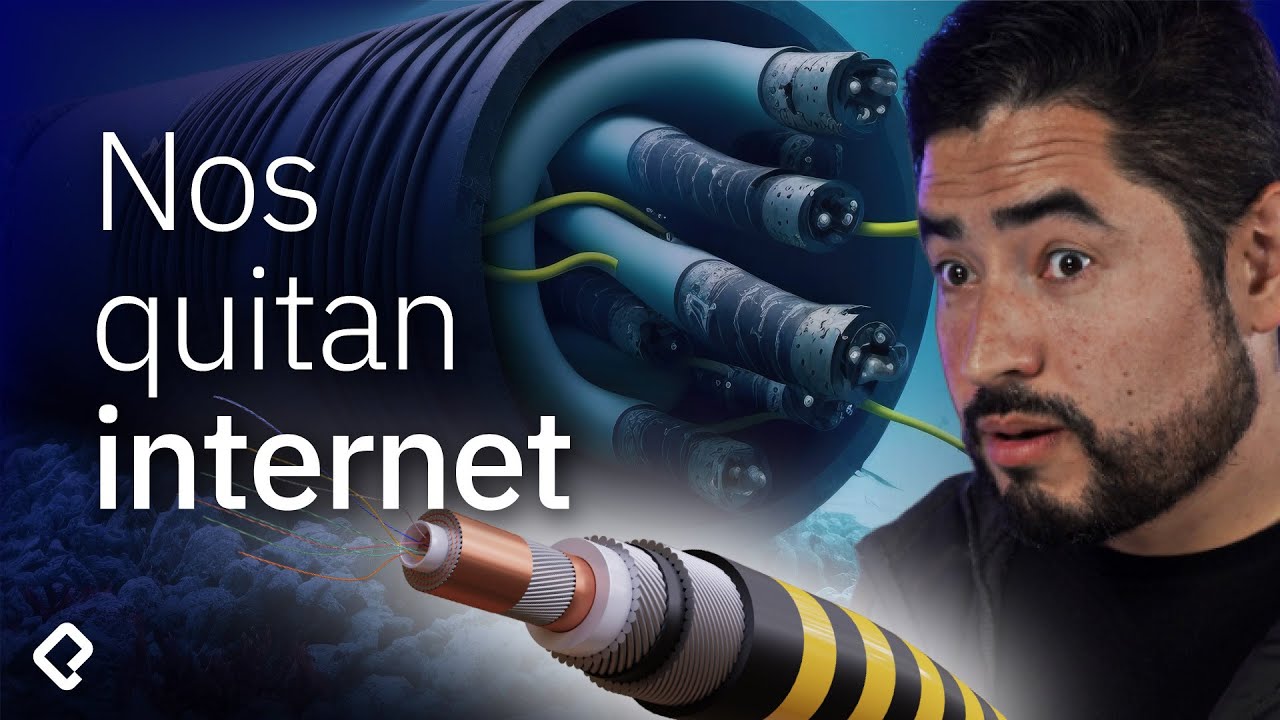
When we connect to the internet, a thing that happens almost all the time, we don't usually think in all the engineering that exists behind. We communicate in seconds with any place of the world, and we probably think that all the information circulates through the air or by satellites. But is not like this: there are a million kilometers of submarine cables that able us to use the internet How does this technology work?
Before we find out, don't forget to subscribe to our channel and activate notifications. 97% of the information circulating through the internet does it through underwater cables that cross the oceans from one end to the other. That is, satellite technology is marginal and simply serves for places that are really very isolated.
This is because the distance traveled is much smaller. For example, between Japan and the United States, two distant points on the map, there are about 9,000 kilometers. A satellite is located about 36,000 kilometers high.
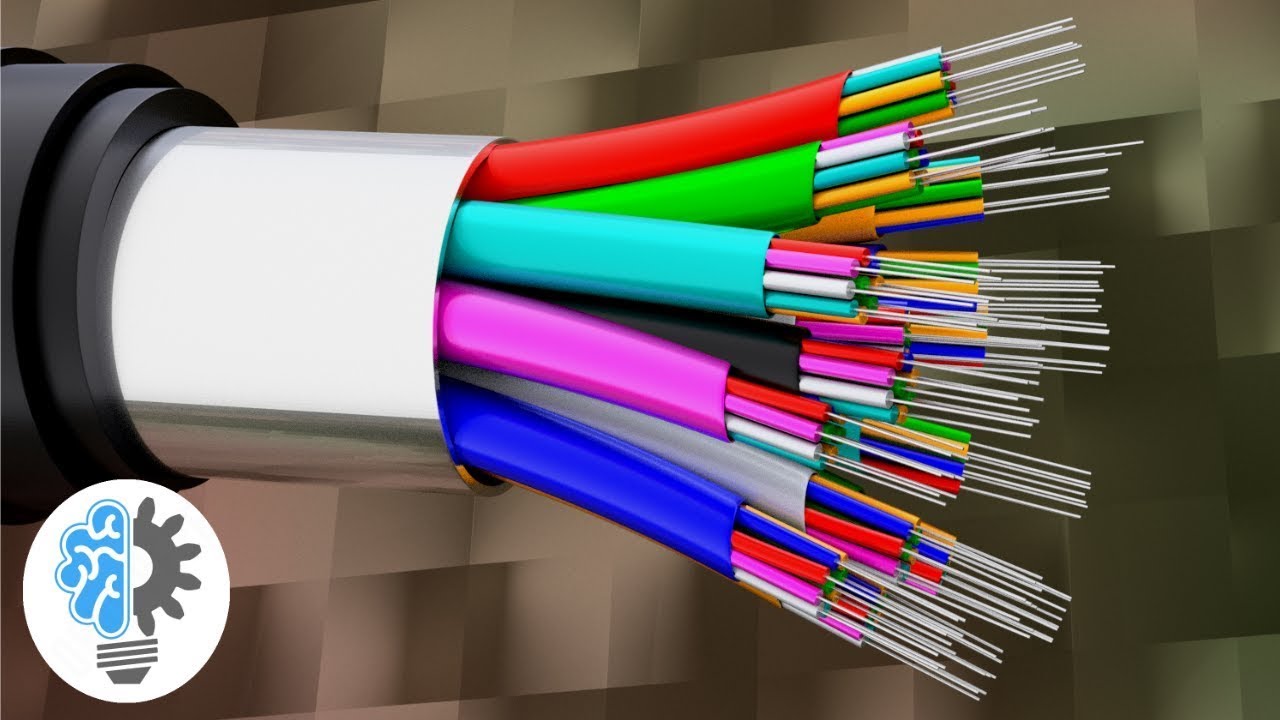
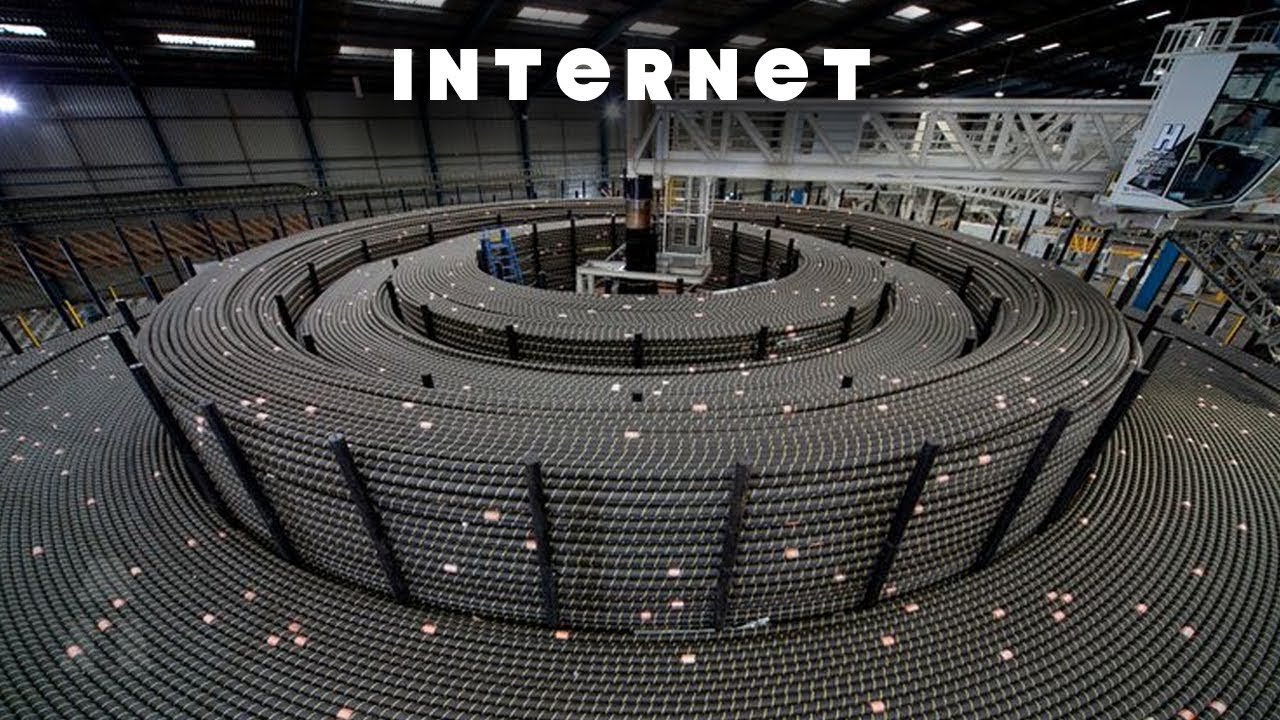
And besides, the data would have to come and go, so the distance would be double. These optical fiber cables are really very small. They have the thickness of a hair and are coated by seven different layers of protection.
The closer they are to the shore, the more thick they are, because the dangers are greater. On the high seas and under great depth, the risks of any failure are less. These cables achieve a transmission speed increasingly important.
For example, the cable that since 2018 connects Bilbao, in Spain, with Virginia, in the United States, transmits 160 terabytes per second. That is to say that in a second it can be transmitted 160,000 movies of 1 giga each. And while they are not yet installed, it was achieved to develop wires that transmit a petabyte per second.
That is, 1000 teras. To have a parameter: all photos that Facebook has in its file worldwide scale, weigh about 1. 5 petabytes.
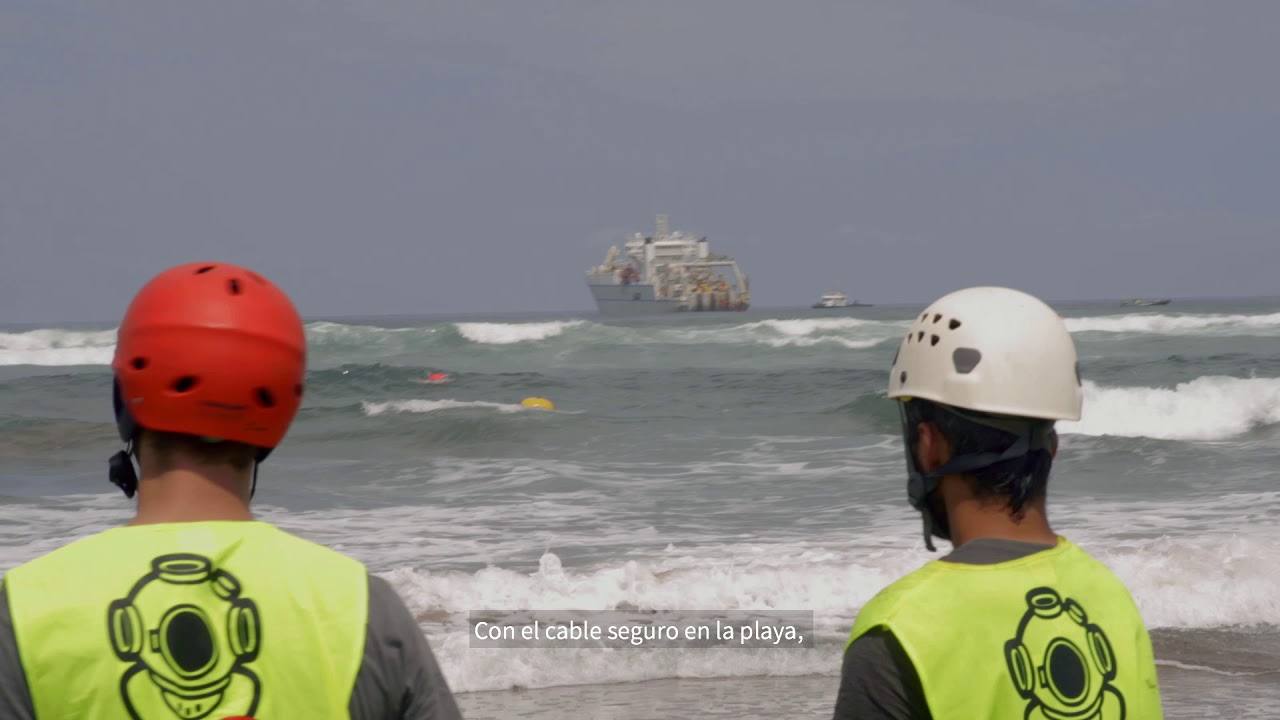
Installing these cables is not a simple task. And it can take a few years. To do this, the cable is prepared on land, the extension it must have is calculated, and a ship from the surface circulates and unrolls that cable from one end to the other.
In the last section before arriving at destination the wires are usually buried, to avoid any human or animal interference that can affect them. In addition, sandy coasts are often used, because it is easier to bury the cables. In this way, large cities and busy ports are avoided to reduce the margin of error.
Likewise, although today it is used last generation technology, the technique that is used, actually, dates from the 19th century. In 1852 a cable was installed and it crossed the English Channel, between England and France, for telegraphs. In the following decade the first transatlantic cable arrived: it connected Ireland with the island of Newfoundland in Northern Canada In the middle of the 20th century telephone connections began to take place But the great revolution came with optical fiber, in the 1980s, which allowed connections such as we know them today.
Currently, there are 437 submarine cables, among those that are already installed and those projected, according to the submarinecablemap. com site. There you can see the current network status and notice some peculiarities.
For example, the highest cable traffic is find between Europe and North America, through the Atlantic. Although something similar happens between the western coast of United States and Japan. In fact, between Southeast Asia and Japan there is one of the most developed areas.
Internationally, it is striking that the historical trade routes are respected. For example, from the Mediterranean, going underground, the Suez Canal is crossed, to connect Europe with the Middle East, India and the Far East. In Latin America, although it is not the more developed area, there are also several peculiarities.
Brazil has its own cable, linking Rio de Janeiro with Natal and connecting 14 cities. In addition, it inaugurated a cable that connects it directly with Angola, so that communications between South America and Africa do not have to go through Europe. It is also projected a cable that connects South Africa with Brazil in 2021, going through the islands of Tristán da Cunha and Ascension, which are currently disconnected.
Chile, meanwhile, has projected a cable to improve the connectivity of the entire Chilean patagonia, which will link Puerto Montt with Puerto Williams. It would be the southernmost cable in the world, since none reaches Antarctica. Currently, the southernmost cable is very small, which connects the island of Tierra del Fuego with Santa Cruz, on the mainland of Argentina, and it works since 2012.
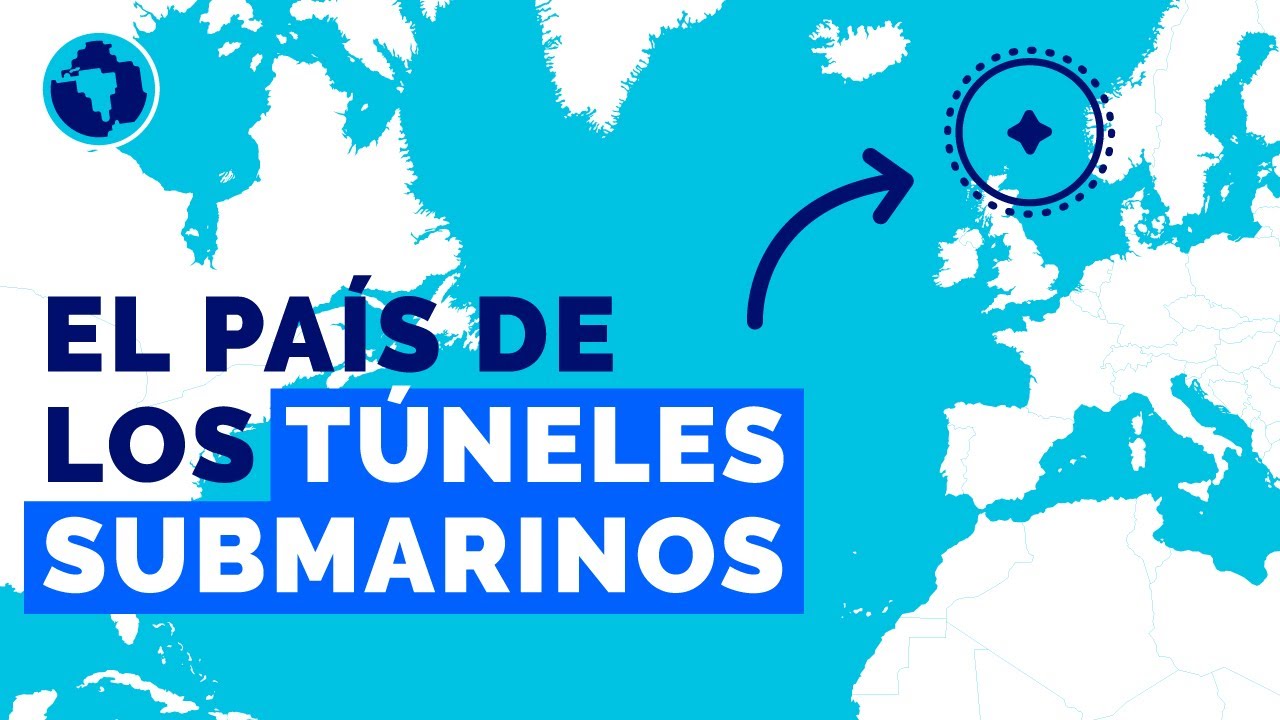
All the rest of the Argentine network reaches a small coastal town called Las Toninas. That place was chosen because it is where the sandy coasts start and is less traveled than Buenos Aires, near the port. If we go to the other end of the map, one of the most striking connections is the one that goes from northern Norway to the Svalvard archipelago.
It's just that the connection has more than 1300 kilometers, and only 2500 people live in the archipelago. Likewise, there are several places in which the cables do not arrive yet. For example, Easter Island, the Galapagos Islands and the Falklands.
As much as the cables are quite stable and the problems that are reported are infrequent, Everything is not bright. There are earthquakes that have caused major inconveniences. For example, in 2006, one broke eight wires in Taiwan, and affected communications in China.
To solve it, eleven ships worked in repair for 49 days. In 2011, Armenia went offline because a person cut with a shovel the cable coming from Georgia. He was looking for copper, but he found optical fiber.
In 2018, Mauritania spent two days without internet because a cable that was broken near the coast of its capital It also ran out of internet Sierra Leone, Liberia, Guinea-Bissau, Guinea and Gambia, although the cut lasted less. In January 2019, a magnetic storm and a lightning left Tonga without internet. This country receives the cable from Fiji, and from one day to the next was disconnected from the world, at the mercy of a very basic satellite network.
You couldn't even use a credit card, and it was speculated that the arrangements could take three weeks. Did you know that internet depends on these cables? What would you do the one from your country's is cut and you stay three weeks without connection?
Leave your comment below.