hey everyone this lesson is on ethanol absorption and metabolism so and this doesn't want to talk about factors that affect the rate of absorption of ethanol and we're also going to get into a step by step analysis of pathways involved in ethanol metabolism so when we ingest ethanol there's a couple of factors that affect the rate at which ethanol is absorbed one of those is the gastric emptying rate or the rate at which our stomach empties its contents the other is ethanol concentration so with the gastric emptying rate an empty stomach such as during times
of fasting would actually increase the gastric emptying so on a emptier stomach when we ingest ethanol we actually increase the rate of absorption because the gastric emptying rate is increased now any foods such as carbohydrates fats and proteins will actually reduce the rate of gastric emptying which would reduce the rate of alcohol or ethanol absorption so when the ethanol is absorbed it enters into the portal vein and travels to the liver now in the liver it undergoes a specific effect known as the first pass metabolism or the first pass effect now first pass metabolism is
metabolism of ethanol before it reaches the systemic circulation and this occurs in the liver now this actually is higher in men than women and this is one of the reasons why men on average can tolerate alcohol a bit better than women so when ethanol does get absorbed into a cell it it does so by passive diffusion and passive diffusion itself is related to the ethanol concentration which means that with increasing ethanol concentration you have an increased rate of diffusion so all of these factors affect the absorption of ethanol when ethanol is absorbed in the body
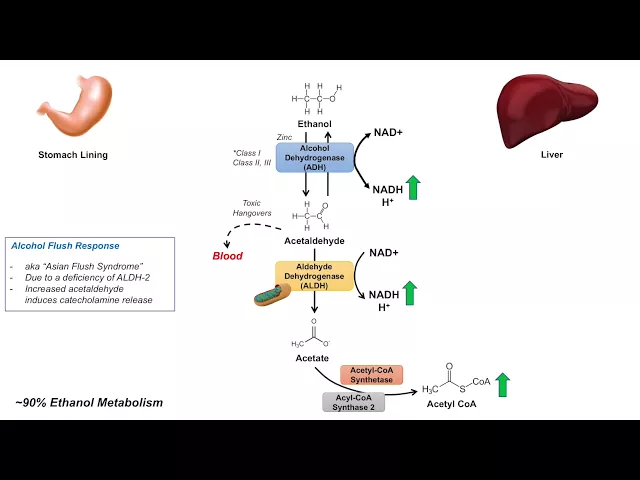
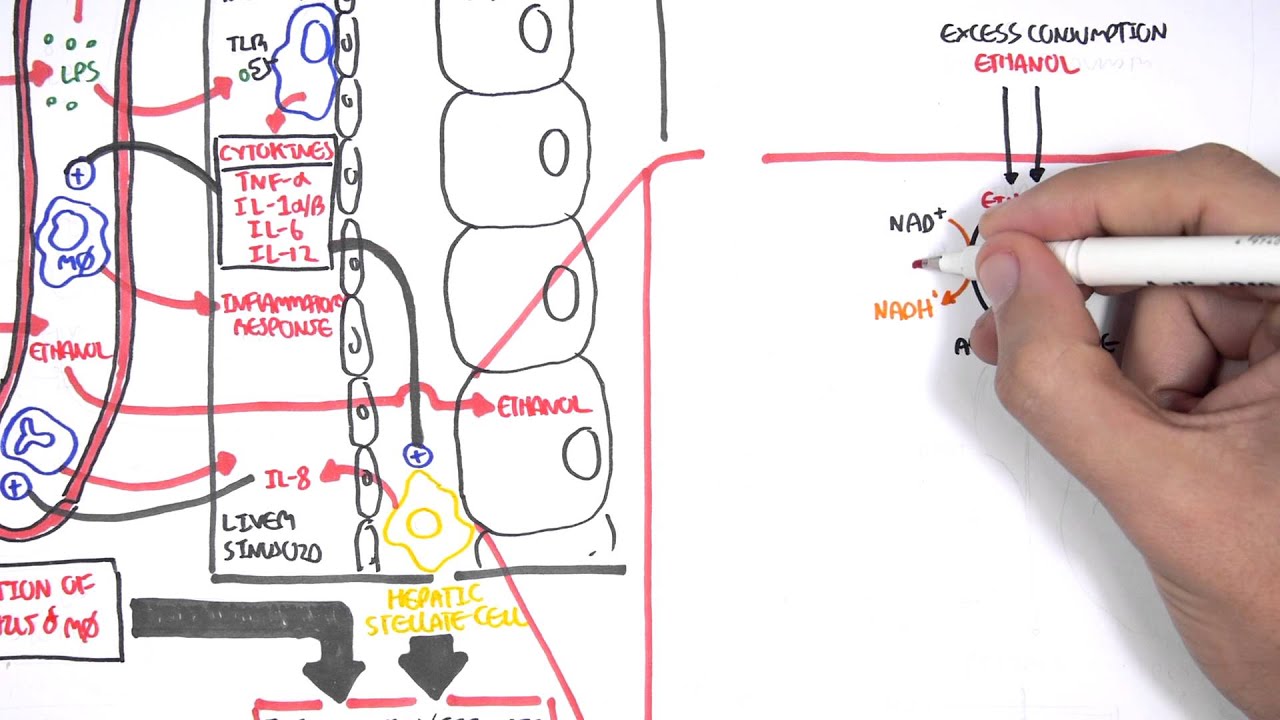
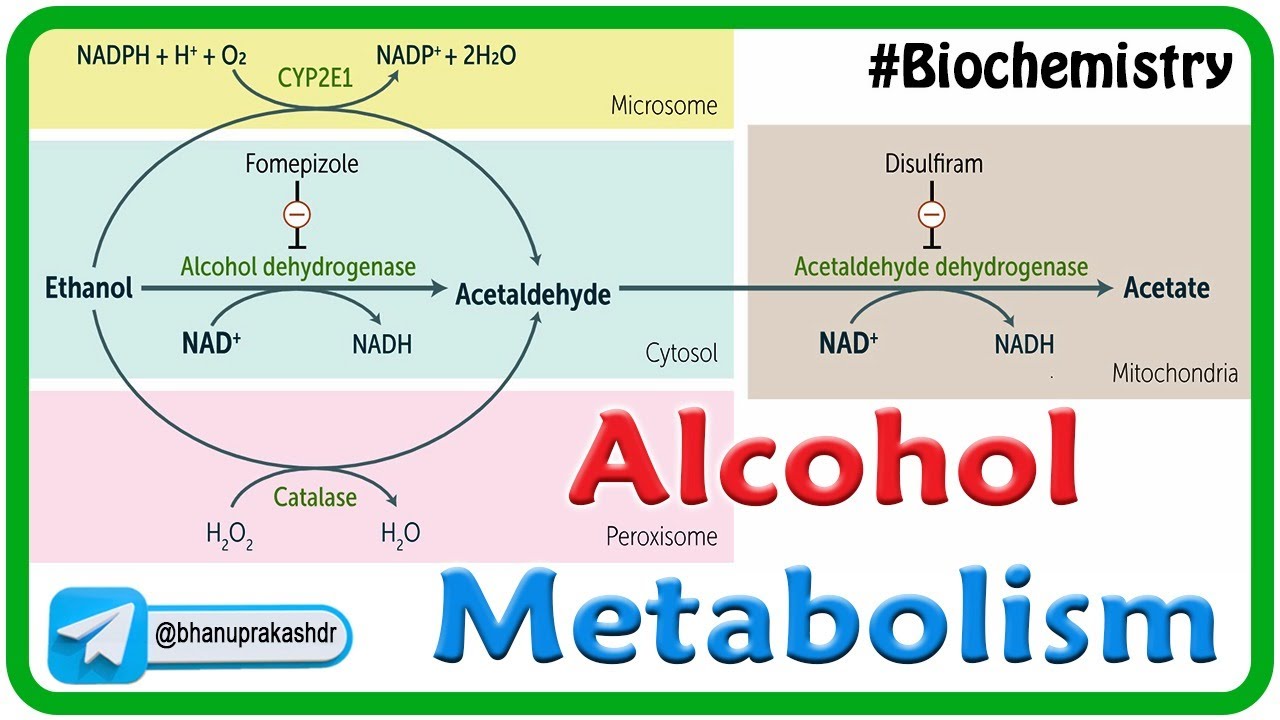
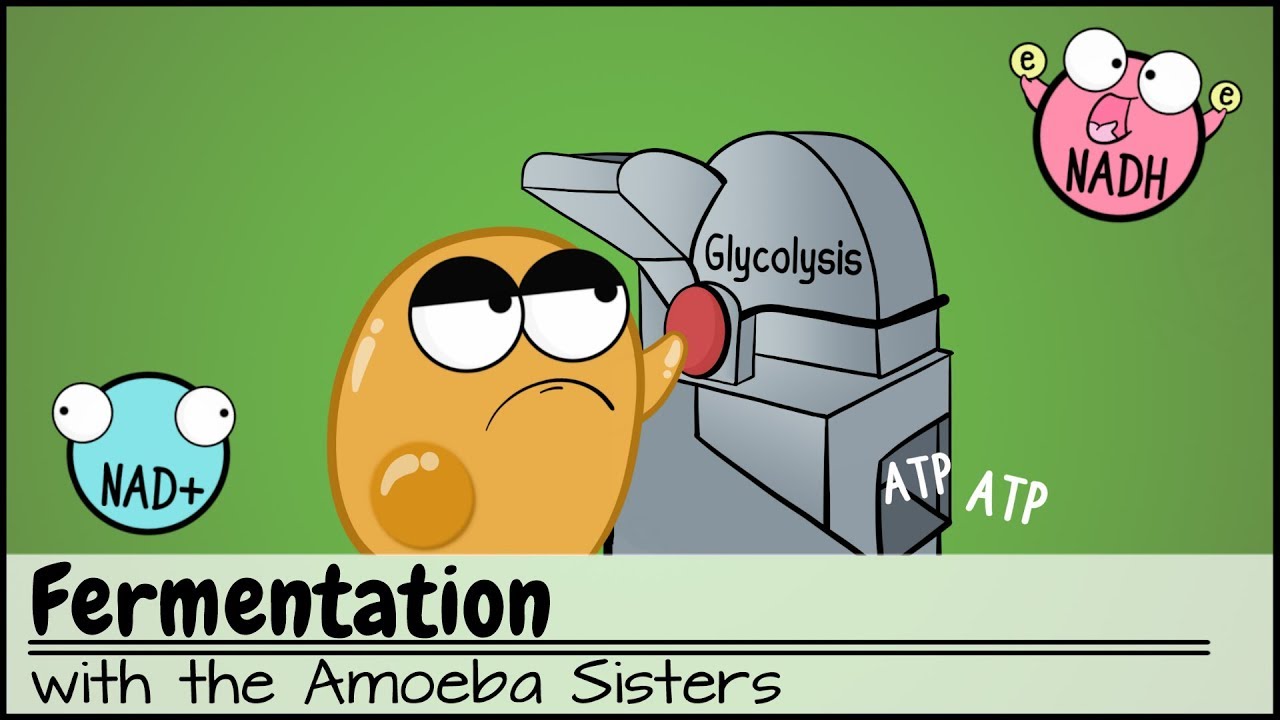
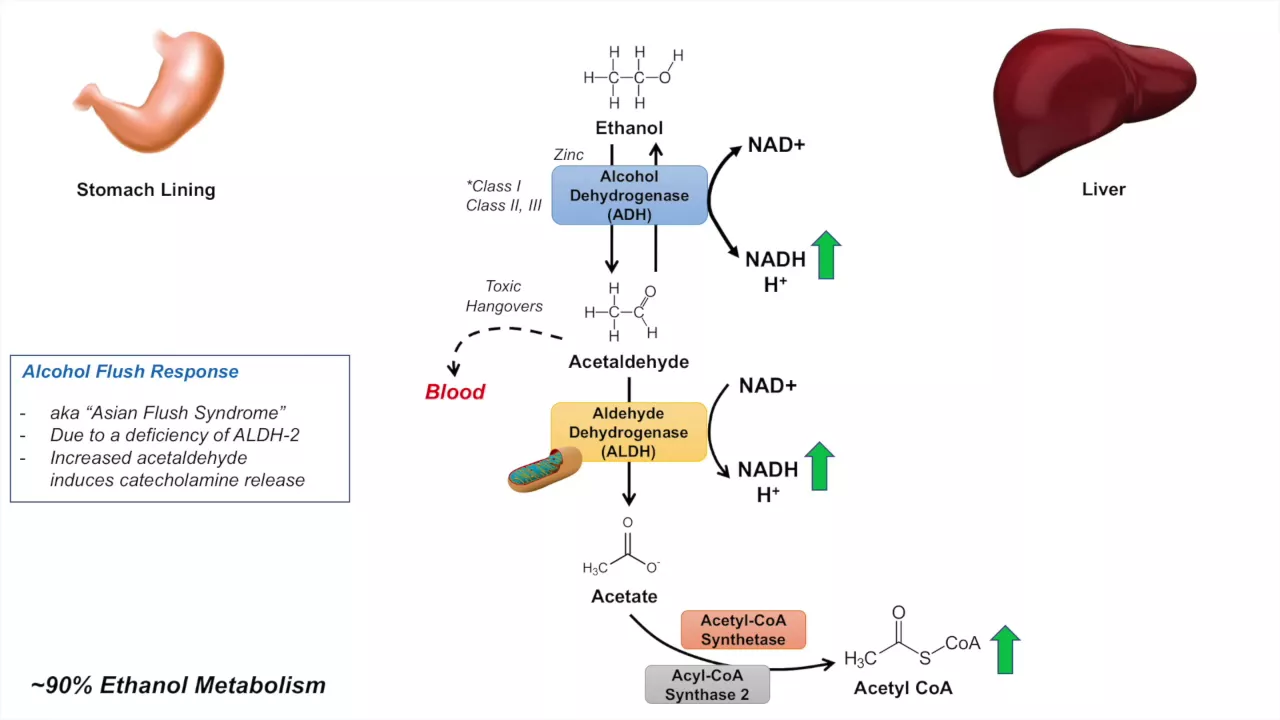
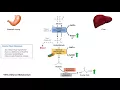
there are two primary locations where ethanol is metabolized one is in the lining of the stomach however the vast majority of ethanol metabolism occurs in the liver so since the stomach lining contributes very little to metabolism of ethanol we'll focus mostly on liver metabolism of ethanol the metabolism of ethanol begins with the enzyme alcohol dehydrogenase or ADH which processes the ethanol into acetaldehyde now this enzyme requires NAD+ as a cofactor and what it does is when the ethanol is processed into acetaldehyde the NAD+ is actually reduced to an eighth NADH and alcohol dehydrogenase require zinc
as a cofactor for its function as well now there are several classes of alcohol dehydrogenase in class one is by far the most important in ethanol metabolism class one has the highest affinity for ethanol so the majority of ethanol is actually metabolized by a class one alcohol dehydrogenase in the liver however it's important to note that class 2 and class 3 both have important roles to play in ethanol metabolism especially during high concentrations of ethanol so class 2 and class 3 alcohol dehydrogenase actually have a lower affinity for ethanol but when ethanol concentrations are very
high costume class 3 become more important and they can actually bind to ethanol more readily and actually help to process ethanol into acetaldehyde so when ethanol is processed into acetaldehyde se tilde is a very important chemical because it is actually toxic and it is actually associated with the hangover symptoms that people experience after ingesting ethanol now acetaldehyde can actually leave the liver and enter the bloodstream and have other toxic effects on other tissues so it's very important for the liver to get rid of this chemical and the way it does it is that it actually
utilizes another enzyme and that enzyme is aldehyde dehydrogenase and this enzyme is actually located in the mitochondria and what it does is it actually metabolizes acetaldehyde to asset and again this process requires nad plus as a cofactor and it reduces NAD+ to NADH now the aldehyde dehydrogenase reaction is irreversible as opposed to the alcohol dehydrogenase reaction which is is a reversible reaction now there is a medical condition that is associated with aldehyde dehydrogenase enzyme and that condition is known as alcohol flush response or the alcohol flush reaction which is also known as the Asian flush
syndrome now in this syndrome the syndrome is actually due to a deficiency in aldehyde dehydrogenase two enzyme and what happens in this syndrome is that this deficiency in this enzyme leads to an increase or a buildup in acetaldehyde which actually causes an induces catecholamine release which causes that characteristic flushing response in the skin of people that are affected in this condition is typically found in people of Asian descent now once we have acetate produced from acetaldehyde via the enzyme aldehyde dehydrogenase the acetate can either leave the liver enter the blood and be picked up by
peripheral tissues or it can actually stay in the liver and in either case if it gets picked up by peripheral tissues or it stays in the liver it can be processed into acidic away and this involves a couple of different enzymes it can be processed by the enzyme acetylcholinesterase synthase - depending on if the acetate is in the mitochondria or in the cytosol as more and more ethanol is metabolized more and more NADH is produced the alcohol dehydrogenase reaction is a reversible reaction that occurs in the cytosol and it leads to an increase in cytosol
of NADH the aldehyde dehydrogenase reaction is an irreversible reaction that occurs in the mitochondria and this leads to an increase in mitochondrial NADH and as more and more ethanol is metabolized more and more acetate and more and more acidic away will be produced and we'll get an excess of acetylcholine and finally this metabolism pathway is responsible for approximately 90% of ethanol metabolism the remainder of ethanol metabolism is accomplished by the micro so more oxidation system microsomal oxidation of metabolism of ethanol also occurs in the liver and it occurs by the enzyme cyp2e1 which is a
cytochrome 50 ends I'm so excited from p450 to e1 and this is located in the smooth endoplasmic reticulum this enzyme will actually process the ethanol into acetaldehyde now it's important to note that cyp2e1 is not a major contributor to ethanol metabolism in fact it becomes very important when ethanol concentrations are very high so normally most of the ethanol metabolism occurs with alcohol dehydrogenase but when we have situations where the ethanol concentrations are very high this enzyme becomes extremely important to remove excess ethanol now one important aspect of CI p 2e of optional species or ro
s and this can be a problem when a lot of ethanol is being metabolized no reactive oxygen species itself at aspects especially at higher levels can cause DNA damage and other organelle problems such as mitochondrial dysfunction so it's a very toxic by-product to the cell and what's interesting about the cyp2e1 enzyme is that when this enzyme is exposed to high levels of ethanol over long periods of time it can actually be up regulated so it's actually one of the mechanisms the up regulation of enzyme is actually one of the mechanisms by which people can gain
tolerance to alcohol and it's known to actually be higher in people with problems with alcoholism so acetaldehyde can be processed with the same enzyme CoAP 2 we want to acetate again producing our OS but by far the majority of the acetaldehyde is actually metabolized by aldehyde dehydrogenase to acetate so CIAP 2 e1 is not as important for acetaldehyde metabolism as aldehyde dehydrogenase is and again when we use aldehyde dehydrogenase we are again producing an NADH from the reaction and the two acetates can also be processed into acidic away now again this leads to high of
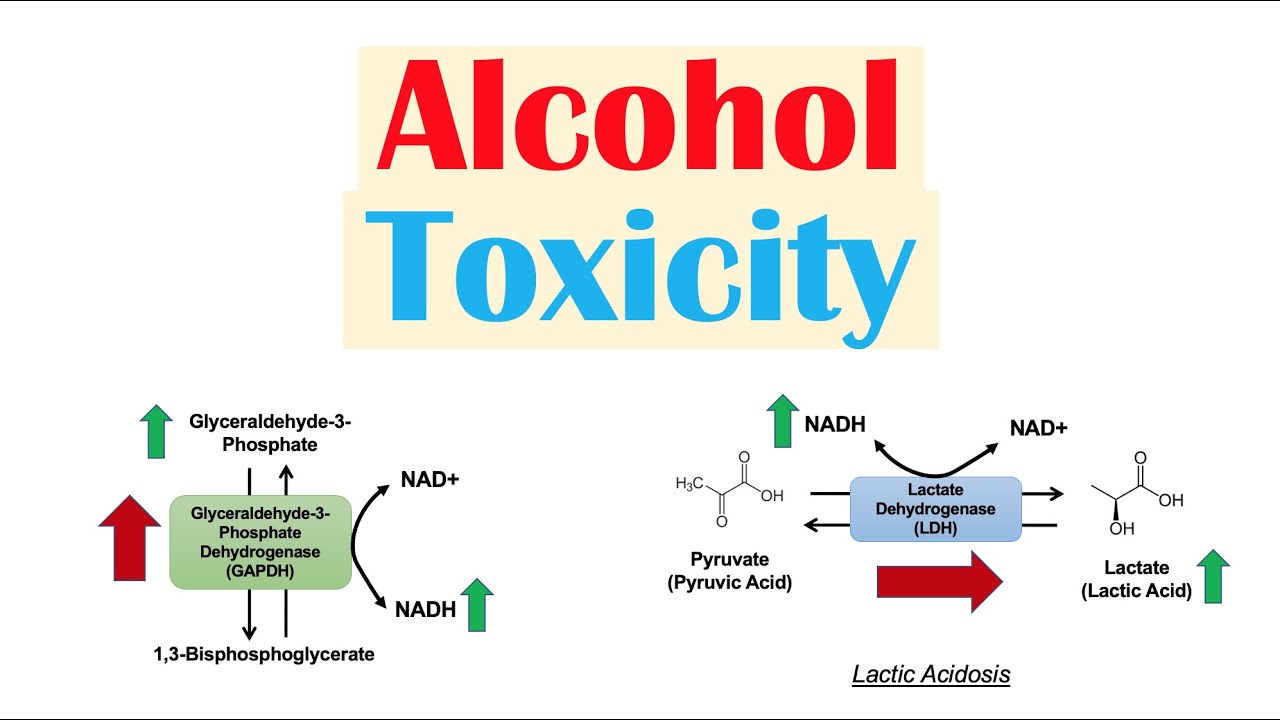
nadh in high levels of acidic away this type of metabolism accounts for approximately 10% of ethanol metabolism so when we look at total ethanol metabolism the metabolism from the pathway involving alcohol dehydrogenase and this pathway involving cyp2e1 both pathways together culminate in a total rate of ethanol metabolism of seven grams per hour in an average person which is about one alcoholic drink per hour anyways guys that was a lesson on ethanol absorption and metabolism I hope you found this video helpful in the next lesson we're gonna talk about the consequences of ethanol metabolism and we're
gonna look into other cellular metabolic pathways and see how ethanol metabolism affects those pathways in anyways if you like this video please like and subscribe for more videos like this one and as always thank you so much for watching and I'll see you next time