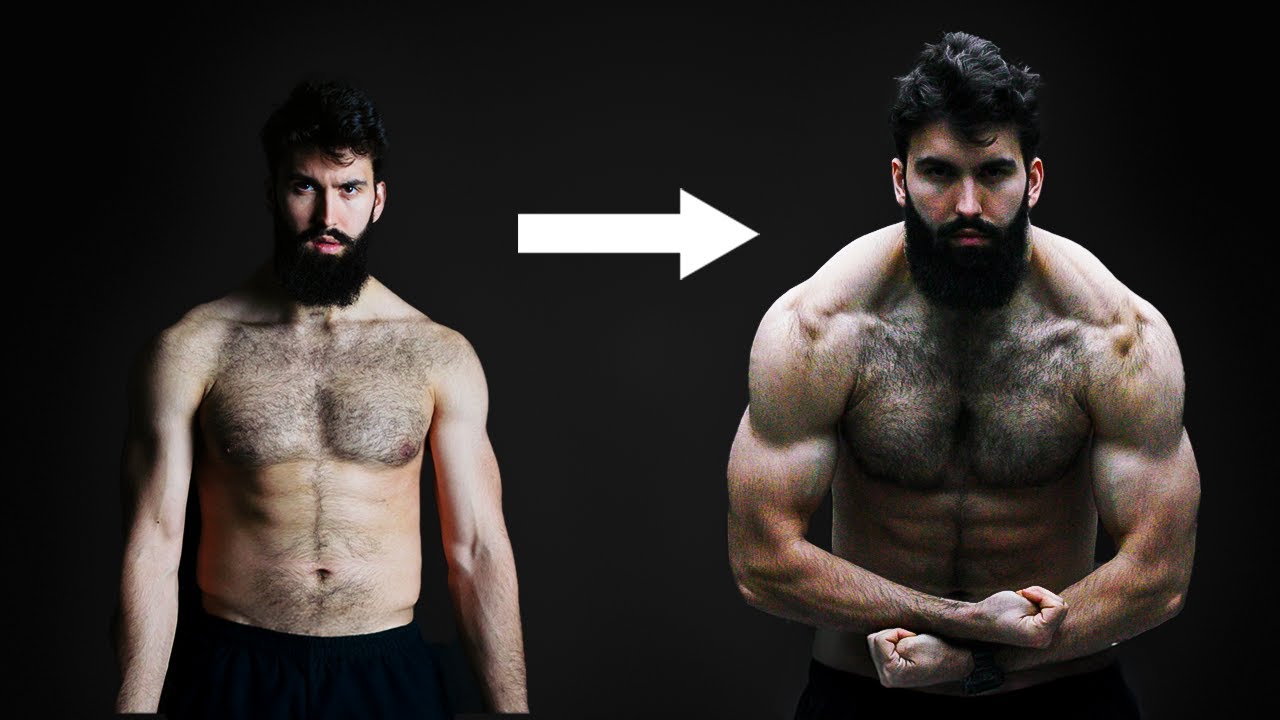
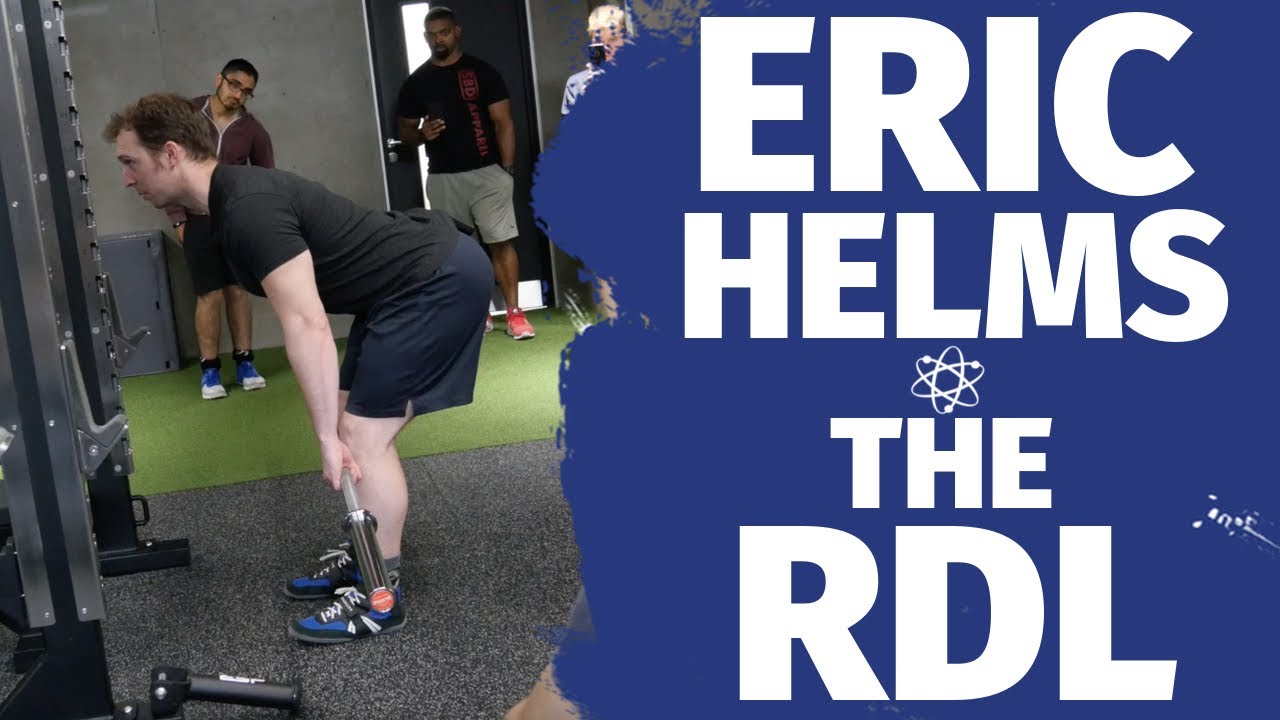
Dr Eric Helms you're one of the biggest experts in the world on building muscle and in fact look at those Peaks Eric hit a little front bicep of the camera proof to the audience you know what you're talking about that's Eric Helms author of the muscle and strength pyramids muscle building expert and natural bodybuilding Pro in this video I wanted him to teach you how to maximize muscle building you have a pyramid I do you'd like to tell me about I have what's known as the muscle and strength pyramid uh ironically this was something that
I created all the way back in 2012 through 14 because I found myself on Skype calls with clients at the time when I was a full-time coach saying the same things repeatedly because people didn't have a lack of knowledge but they were not able to put all of those pieces of knowledge in context and prioritize them into kind of a usable hierarchy to where they could apply it to training Eric first created the muscle and strength pyramid to clear up some confusion around which parts of training were most important and how best to train to
build muscle after all there are so many variables T retention proximity to failure Tempo technique excess selection volume and so much more the pyramid serves to tell you what to focus on so the base of the pyramid in say you know the hierarchy of evidence that we use in evidence-based practice is the least important but in this pyramid I think of things as we're building a foundation so the things at the top of the pyramid they only sit there because they rest on a solid foundation so the base of the pyramid being the most important
thing for training is adherence and one of the biggest issues that I would frequently see is that people would try to construct a quote unquote optimal program but it wouldn't align with their lifestyle and it's because they didn't have the critical thinking skills and the knowledge to know how to adapt a program so they would go right well here's this 5day per week program this prob bodybuilder follows they're a prob bodybuilder I want to look like that let me do it by the way I have a full-time job two kids and prior injuries and the
Gym's 45 minutes from my house where I want that stuff to work it'll go fine and they unable to follow it pick a program that is going to be sustainable for you only you know what that looks like since you're at the center of your own life you need both the motivation and time to follow the routine the best program is the one you actually do once you've considered your practical constraints where do you go from there like what do you look for first what's the most influential variable yeah from there we're essentially looking at
the stimulus um and when I originally conceptualized the pyramids I described that as volume intensity and frequency uh modern data would indicate that when you equate for volume frequency is not a major player as far as the actual stimulus for strength or hypertrophy but you absolutely can manipulate volume by manipulating frequency but when you equate for volume that no longer becomes a significant factor based upon multiple meta analyses that we have now but there are are intrinsically linked you know when you manipulate any one of these it has a potential Downstream effect on the other
but more or less what we're looking at is the dose we're producing overload by manipulating the variables of volume intensity and frequency and we're organizing it with frequency volume corresponds to how many sets you do for a muscle in a given training week you simply add all the sets you're doing up for each walkout in that week for a muscle relative intensity refers to how close to failure each set is taken how many more reps could you have done for hitting failure finally frequency refers to how often a muscle is trained in a given training
week to build the most muscle here's what Eric recommends doing start somewhere in the ballpark of 10 to 20 weekly sets for a given muscle this will be a decent starting place for example for your back that could be three sets of pull Downs in rows on Monday for six total back sets and three sets of pull Downs in rows on Thursday for another six back sets for a total of 12 weekly back sets which falls into this range of 10 to 20 sets what what about trading to failure um we have some awesome recent
data there's a great uh not yet peer- reviewed and fully published but I've heard through the great find that it has been accepted uh meta regression uh that was done by now Dr Zack Robinson and colleagues uh where they looked at proximity to failure Quantified by rir and hypertrophy looking at the general relationship but also some really interesting moderators and one of the most interesting moderating factors is that load once you're getting around roughly 80% % of 1 RM it seems to make that relationship between getting closer to failure inducing more hypertrophy much less meaningful
and potentially maybe not even a thing and this makes sense when you think about it if you're lifting heavy you're already close to failure because you can do fewer reps additionally when you do higher reps a met analysis by our own lab suggests that you tend to overestimate how close to failure you really are so Eric recommends training farther from failure earlier when going heavier perhaps leaving two to four reps in the tank and pushing a bit closer to failure perhaps to one or zero reps in the tank when training lighter Eric also recommends not
going to failure on big lower body compound lifts like squats since those tend to wreck you for the rest of the workout so two to four UPS in reserve earlier into a walkout for lower body compound movements for upper body compound movements around 1 to three UPS in reserve earlier into the walkout from there for isolation movements perform delay during to a walkout taking them somewhere between a couple reps and all the way to failure is solid importantly Eric also mentioned the importance of a person's past experience I would prefer that someone actually use good
welltrack prior training data to inform their volume selection but in the absence of that then the meta analysis in my opinion is the best guess as far as frequency goes Eric recommends muscle groups be trained 2 to three times a week with roughly one day per week of frequency for every 5 to 10 weekly sets you perform for a muscle as an example if you're aiming for 15 weekly sets for your chest you'd want to train it at least twice a week but could train it three times a week this could be an upper lower
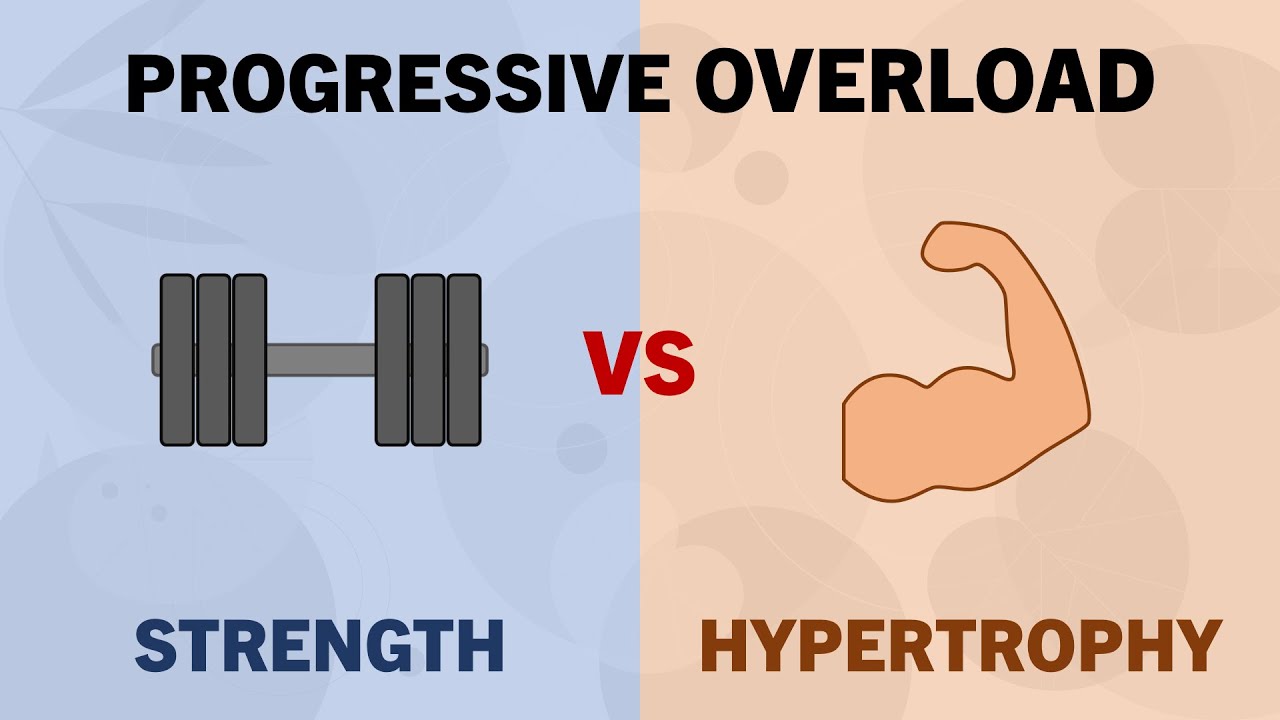
split 4 days a week a push pull leg split 6 days a week for two days of Chess training per week or an upper lower split 6 days a week for 3 Days of chest training per week are there are other variables besides these that might be less influential but that we still want to consider yeah absolutely I think this is the one that people get confused about where I I put progression as The Next Step Up in the pyramid and I think the misunderstanding here is that Progressive overload is a foundational principle of all
adaptation but people misunderstand Progressive overload um especially in the context of hypertrophy they get really focused on the weight on the bar and they really start to borrow principles from strength training ultimately I think a useful way of conceptualizing progressive overload for hypertrophy is that if you produce overload you should see progression and then if you continue to match the demands of overload which would mean still trading relatively close to failure still training in reasonable rep ranges that means your loads will go up or you'll need to do more reps with that same load if
you're achieving the same rir and now all of a sudden you're realizing that the overload allows progression and since we don't actually care about the rate of strength gains or the absolute gain in strength which we've seen in multiple studies is not directly related to hypertrophy but is associated with over time okay now Progressive overload is I can progress because I've overloaded and now I can use strength gains or increases in performance as a diagnostic criteria of going am I producing enough overload in other words you need to present a sufficient stimulus to elicit an
increase in muscle size and Improvement in strength because you presented the stimulus you'll be able to lift more in the future and Achieve Progressive overload Progressive overload is an outcome of trade but for hypertrophy it's more of a diagnostic tool where you want to see listen if I've been training for 12 weeks and I'm an intermediate and I'm doing the same reps the same load at the same RP on all my movements I'm probably not making progress and I should do something about that sure so that's very important it's kind of like to check to
make sure that the the the level of the pyramid below which is the the stimulus is actually stimulating an adaptation let's say you're doing three sets of t or pH or Tri and would you try to add reps week to week to say you go to 11 reps or would you add weight is there a preferred method I think a good method that works for a lot of different rep ranges and that is a little more built-in Auto regulation that I really like is what I describe as double progression and you can even call this
an auto regulated double progression model so double progression just simply means that your progressing load once two other factors have gone up right so let's say I prescribe 8 to 12 reps at a two r right that means you're going to select the load at where the set ends you're performing somewhere between 8 to 12 reps and you think you're about two reps from failure once you can actually do either your first set 12 at a two rir or your last set which means you the first set was probably easier than you thought it was
at that same guidance or that same within those same guidelines it's time to increase the load and this means that you don't have to force anything week to week because again for hypertrophy it's not about the rate of progress It's about can we observe it happening in a reasonable time frame that we think is appropriate for your training age the double progression method has a few benefits first jumping weight on lateral raises for example every week is nearly impossible however if you just add Reps for a few weeks before trying to add weight this becomes
much more feasible and easier exercises with a low absolute weight to smallest weight increment ratio benefit from double progression the most second double progression sets realistic expectations for Progress beginners might be able to progress in weight every week more advanced lifters won't once you've sorted out your Progressive overload where do you go from there what other variables yeah so this this is a contentious one exercise selection is the next one we have up in our hierarchy of training so long as you're stimulating the muscle it doesn't matter but then you're like well what does that
mean because clearly if I was to compare a leg extension to say like a lying back very rare form of a leg extension we're going to see more Rec fem growth or a seated leg curl versus a lying leg curl so we can't just interchange any exercise but the argument I would take and the way I would set up the parameters of this this uh organizational structure is that if a given exercise meets what we think are the appropriate principles for hypertrophy then where you place exercise selection is far less important than things like frequenc
volume and progression so instead of worrying too much about the exact exercise you're doing Eric recommends thinking of exercises as categories while a leg extension can't easily replace a squat in a program any squat like motion like a split squat or a front squat will get you most of the way there however some exercises may still be better than others so I think some of the most important things are one that it meets the uh i' say Orthopedic demands of the individual and also the adherence demand so do you have access to it regularly you
don't have to drive two hours to do it um and do you have the ability to perform the exercise heavy reasonably heavy close to failure with reasonably High volumes without it creating joint pain discomfort or mental fatigue so I think that's really important is the ability to it be to to be loadable which is not just can I add small amounts of weight which is I think is you can also consider but also can I load this in a sustainable way for my body and mindset okay another one I would say is that it places
tension at as long of muscle length as possible we had to go there right folks so no I think your research and others like ma like you know stasinski all these other studies there's a ton out there that overall would collectively suggest that if we can train a muscle to longer length and ideally also Place tension at that longer length that's ideal MH now often you have exercises that will do one but not the other um so generally you're trying to get as much tensent at a longer muscle length as possible have it be loadable
and then ideally have that muscle be the limiting factor in performance uh and then I would say even though we don't have a tremendous amount of evidence on this generally having sufficient stability so that you can push the target muscle to failure I think is important uh we have related evidence on say like you know stability ball training or things like that um and I think it makes plenty of logical sense but we don't have necessarily the same level of empirical support check out this checklist while some variables should probably be more important than others
stability as a concept has relatively little evidence and probably shouldn't be at the top of your priority list here are some example exercises that do a good job for these factors what other variables are there that might play less of a role but still play a role in maximizing approach yeah the top two ones of the pyramid are rest periods and Tempo and I always describe the these as things you can potentially screw up and only then do they become big players like if you really really limit your rest intervals to where you're not even
resting say a minute or 90 seconds between sets of hypertrophy training exercises uh and we've seen that in multiple studies now and I think the most recent data would indicate somewhere between 1 to two minutes is probably sufficient for rest so generally I recommend people are resting like say 2 minutes or longer between sets for hyper training Eric also noted that he suspects that more advanced lifters performing lower body lifts especially might need a bit more rest than our metanalysis would suggest but there's a lot of ways to work around this um I've talked a
lot about antagonist paired sets there's a recent study that actually did find that antagonist parot sets are a great way to reduce training time without sacrificing hypertrophy I've made a whole video on the topic you can check out but antagonistic paired suets refer to supersetting or interspersing two exercises inv in opposing muscle groups like The biceps and triceps chest and back or quads and hamstrings an example would be a dumbbell press and a dumball row by supersetting these two exercises you can cut down on workout time by 50% or free up time to do more
volume what about Tempo yeah Tempo is a funny one so uh Tempo is traditionally been screwed up by people who are focusing too much on quote unquote time under tension to the point where they're not thinking about the actual magnitude of of tension just the time spent Contracting now if I want to use a uh an explanation by going extreme here we live in a gravity well on the planet Earth we're always under some degree of tension do we count all of that at what point do we count it so then the real question is
is do I need to be performing my exercises in such a way on the Ecentric isometric and concentric to try to get more out of each rep so what's relevant here is that we know eccentrically were typically stronger when you see someone sink a squat you don't know if they're going to fail unless they're really overloaded past their capacity until they start to get in out of the bounce into the hole in a powerlifting meet that's because they can control probably 20% more on average load eccentrically than they can concentrically right so this means that
we can train slower on the Ecentric without sacrificing too much performance on the concentric but there's probably some limit to that indeed based on some of the most recent review papers out there rep's last much longer than around 8 seconds per rep probably won't be ideal for muscle growth no matter the tempo the more important thing seems to be training closer to failure volume and other bigger players Eric did mention one more Point made in the latest research but what you don't want to do is one purposely slow down the concentric for one generally performing
the concentric with as much effort is possible and letting the concentric speed be dictated by the load is going to mean the highest muscle forces so I think so long as the Ecentric is under some control whether it's fast or slow which the data supports and then putting maximal effort into the concentric should be your default you could make an argument in some cases for say maybe a slight pause and in the lengthen position so my general recommendation is some control on the Ecentric appropriate for the load your comfort the exercise and then an explosive
concentric that is also going to be at whatever speed is appropriate for the load you're using that's going to maximize outcomes when I press Eric for specific recommendations instead of being so godamn nuanced he recommended a 2 to 4 second decentric and a concentric that's as quick as possible which usually means around 1 to 3 seconds have we built the Pyramid we have and don't let anyone tell you that supposedly Egyptians did this long long ago no time travel stole my idea still trying to figure out how to get my Delaware Corporation very real lawyers
back in time I've watched the Terminator at least six times this week to figure it out we're almost there but ancient Egypt you're getting sued you watch out Eric where can people find your walk you can find me at a few different places probably the best One-Stop shop is 3D muscle journey.com that is the number three the letter D that the words muscle journey.com from there you can find links to mass research review the muscle and strength pyramids our YouTube channel our blog posts that we don't update anymore more but there's still some great blogs
to read and then any other content that I put out where I'm on other amazing channels like maybe wolf coaching will be on my Instagram at Helms 3dmj shout out to mass research review I bought a lifetime subscription as a first time first year undergrad my man my little money went to mass and it was money well spent well I can't tell you how much I appreciate that so all of you undergrads who only have a few hundred to your name take out a loan and buy a lifetime subscription cuz that's what we want to
do here at Mass it's bankrupt undergrads take out more credit cards pay Eric Helms we'll see you next time peace