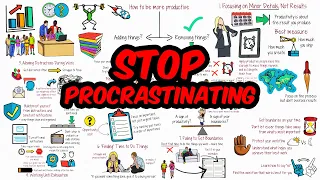
Procrastination isn’t laziness—it’s science. That heavy, amotivated feeling you can’t shake? It’s rooted in how your brain processes dopamine.
Crazy, right? The same chemical that sparks your drive to binge your favorite series also leaves you stuck in a loop of endless delays. While you chase those quick hits of pleasure, your ability to tackle meaningful tasks quietly slips away.
Feels unfair, doesn’t it? Here’s the kicker: it’s not the task itself that’s holding you back. It’s the friction—your brain’s silent tug-of-war between staying comfortable and taking action.
But what if I told you there’s a way to override that resistance? Not with willpower alone, but with practical, counterintuitive strategies. It’s about hacking your mind, using discomfort as a tool, and rebuilding momentum, one small step at a time.
Sound impossible? It’s not. In fact, what you’re about to learn could be the missing piece to unlocking your productivity and finally breaking free from the cycle of procrastination.
Curious? Good. Let’s dive in and start rewriting the rules.
Dopamine, that sneaky chemical in your brain, is both your cheerleader and your biggest distraction. When its levels plummet after a high peak—like binge-watching your favorite series—it’s no wonder you feel amotivated to get back to tasks. Imagine this like a roller coaster: the steeper the drop, the harder it is to climb back up.
To bounce back, you need to recognize this pattern. Understanding how your brain's reward system works can keep you from spiraling into procrastination. So, how do you navigate this?
One trick is to moderate your dopamine highs. Think of it as balancing treats; if you’re indulging in too many small rewards—scrolling endlessly on your phone, perhaps—you’ll drain your energy for meaningful tasks. Instead, save those dopamine bursts for when you actually accomplish something substantial.
This could be as simple as delaying your favorite snack until you’ve completed a 20-minute work sprint. The rewards will feel so much better, trust me. Now, the million-dollar question: how do you climb out of a trough when you’re already there?
The answer lies in action, no matter how small. Start with something ridiculously simple—like tidying up your workspace or jotting down a quick to-do list. Each little victory sends a signal to your brain that you're ready to recover.
It’s like flipping a mental switch that moves you toward the next topic: leveraging pain as a game-changer. Here’s the deal: comfort zones are the ultimate productivity traps. To break free from that amotivated state, you sometimes need to embrace discomfort—yes, I’m talking about a little controlled pain.
Think about activities like cold exposure; it’s not exactly pleasant, but it triggers your body to release dopamine as a recovery mechanism. The magic here is in choosing challenges that are safe yet push you beyond your current lethargy. It's like kickstarting your system with a shock.
Let’s break it down. Imagine sitting at your desk, unable to focus, feeling that heavy fog of procrastination. Instead of waiting for motivation to strike, take action by jumping into something physically demanding.
A cold shower, for instance, might sound dreadful, but within seconds, it jolts your body awake and primes your brain for action. It’s not just about the cold—it’s about signaling to yourself that you’re in control. Even a brisk walk can have a similar effect.
Now, don’t overthink this. The goal isn’t to suffer but to disrupt the cycle of inaction. Choose a challenge that feels hard yet manageable—like a quick workout or even holding a plank for a minute.
These small wins teach your brain to associate effort with progress. It’s all about building momentum. And once that initial resistance is broken, you’re better equipped to tackle what comes next: overcoming that mental tug-of-war we call limbic friction.
Limbic friction, that inner tug-of-war between "I should" and "I really don’t want to," is a familiar foe. It’s the mental resistance you feel when deciding whether to start that task you’ve been avoiding. This friction often comes from two places: lethargy, where your body craves rest, or anxiety, where the thought of starting feels overwhelming.
The key is to trick your brain by introducing manageable discomfort that shifts your focus. Think of it this way: you’re stuck on the couch, scrolling endlessly on your phone. Instead of trying to will yourself into work mode, disrupt the cycle with something physical—yes, again, a cold shower or a quick set of jumping jacks.
It doesn’t have to be complicated; even standing up and stretching can break the inertia. The goal is to bridge the gap between “I can’t start” and “I’m already doing something. ” Action is the antidote to overthinking.
Now, what if anxiety is the root of your friction? In that case, focus on breaking the task into tiny, bite-sized steps. For instance, instead of thinking about writing an entire report, just aim to write the first sentence.
Once you’re in motion, the resistance fades. It’s like priming an old engine—it sputters at first, but soon, it’s running smoothly. With that momentum, you’ll be ready to dive into actionable strategies to sustain this energy.
When you’re stuck in that amotivated rut, the first step is deceptively simple: just start. Not with a grand plan, but with something so small it feels silly to resist. For example, commit to one minute of activity.
Set a timer and do a task—whether it’s organizing your desk, jotting down one idea, or even stretching. That one minute can snowball into ten, then thirty, as your brain warms up to the idea of action. For those deeply stuck, you might need a stronger push.
A cold shower can be a game-changer—it’s uncomfortable, yes, but it’s also invigorating. It forces your body to wake up and your mind to shift gears. Another option is physical movement, like a brisk walk or a quick workout.
These activities aren’t just about breaking procrastination; they’re about telling your brain, “Hey, we’re doing something now. ” Once you’ve activated that initial spark, you’ll find it easier to tackle more complex tasks. The secret lies in momentum.
Break your to-do list into micro-tasks. Instead of “write a report,” start with “open a new document. ” Instead of “clean the house,” start with “pick up one item.
” Each small win builds on the last, and before you know it, you’re in flow. Momentum is addictive, and as it grows, it sets the stage for a new rhythm of productivity. And with this rhythm, you’ll begin to see how all these strategies tie together into something powerful.
Breaking free from procrastination isn’t just about motivation—it’s about understanding how your brain works and using that knowledge to your advantage. Now that you’ve learned how dopamine plays a role, how discomfort can drive action, and how tiny wins create unstoppable momentum, it’s time to put this wisdom into practice. Imagine how much you could achieve if you stopped letting procrastination control your days and started taking charge instead.
So, here’s the challenge: what’s one small step you can take right now? Is it organizing your workspace, planning your next move, or even just standing up and shaking off that lethargy? Whatever it is, commit to it.
The change you want doesn’t come from waiting—it comes from doing. And remember, the hardest part is starting. Once you’re in motion, the rest becomes easier.
If you’re ready to keep learning, growing, and turning knowledge into action, don’t stop here. Subscribe to the channel, turn on notifications, and join this journey to mastering your mindset and building the life you deserve. The best version of you is just a few steps away—are you ready to meet it?