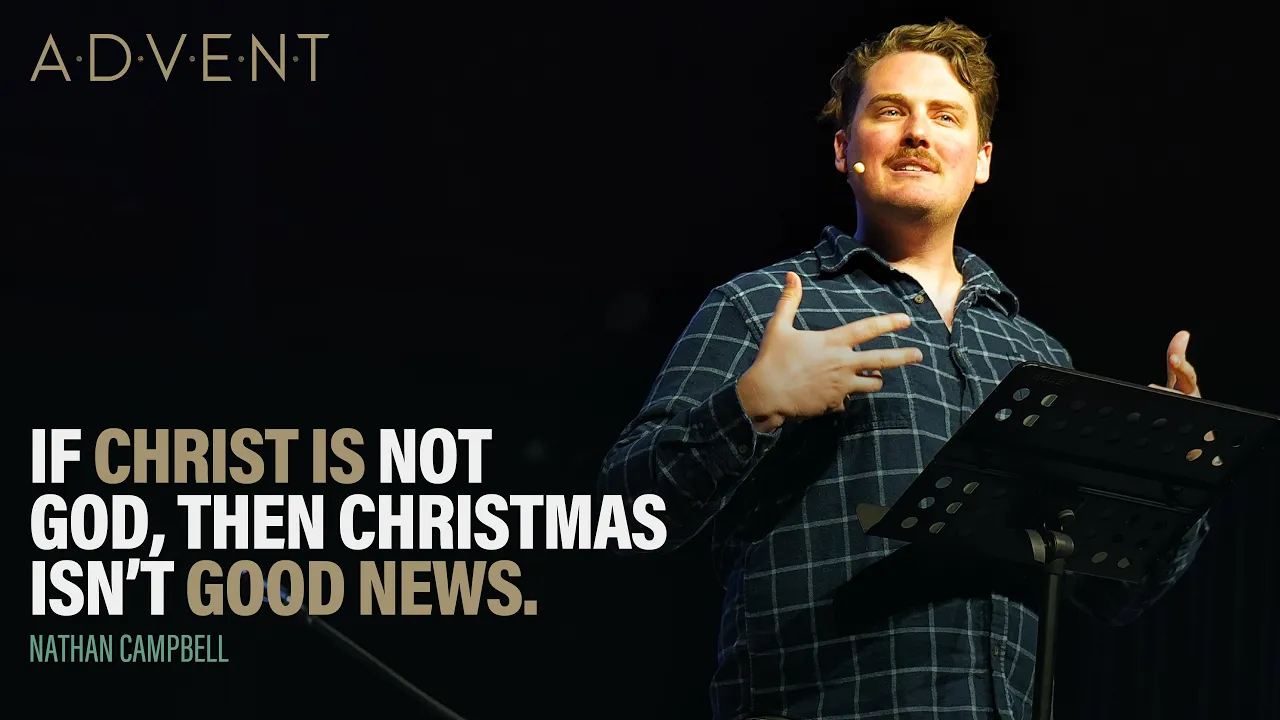
[Music] Yeah, my name is Nathan Campbell. I am the spiritual formation pastor here at Journey, and the frost this morning kind of reminded me a little bit of my home in Ohio, where I grew up. I have very fond memories of the Advent season, driving through the snows of Ohio, listening to Delilah on the radio.
I don't know about you, but I love listening to Christmas music. One thing I've noticed about Christmas music is that there are really only three types of Christmas songs. You know, there's one song that pop stars want more things in; there's another song that essentially old-time jazz guys want to see the snow; and then there's the third type of song, which is that Jesus is the king of all the Earth.
I don't know about you, but I love the nostalgia. I love the novelty of Christmas music, but the sort of consumerism of Christmas has begun to wear on me in recent years. When I look around me and I see grief and pain in this world, singing songs about getting more stuff or longing for colder weather hardly seems to answer the deepest longing of my heart or the hearts of those I see around me.
I want something more from this time of year, and the season of Advent is the church's answer to that deep longing. Advent is an opportunity for us as Christians to look at our lack and long for its fulfillment. As we begin this Advent season on the first Sunday of Advent, I want us to know this simple truth: Advent begins in the dark before the Light of Christ ever comes.
Advent begins in the dark. As Christians, we can lean into the darkness of this season, knowing that the Light of Christ is coming. For those we are going to read about in Matthew chapter 1 today, we’re going to read about those who are longing for the first Advent of Christ.
But for us, living on this side of the first Christmas, it's the light of the second Advent, or the second coming of Christ, that we hope for. Christ has come once, and that is good news, but the better news is that Christ will come again and make everything sad untrue. So, there may still be darkness in the world today.
Our invitation this morning is to start in the darkness and look with hope at the light. Our message this morning is a message of hope: God is with us; do not be afraid. So, if you will, would you turn with me to Matthew chapter 1 and stand with me for the reading of God's Word?
We’re going to be reading from Matthew chapter 1, verses 18 through 2. And as we stand together, let me just remind you that we do this not out of right or ritual, but we do this to honor the Word of God, set apart as different from everything else in our lives. Read with me, beginning in verse 18: "Now the birth of Jesus Christ took place in this way: when his mother Mary had been betrothed to Joseph, before they came together, she was found to be with child from the Holy Spirit.
And her husband Joseph, being a just man and unwilling to put her to shame, resolved to divorce her quietly. But as he considered these things, behold, an angel of the Lord appeared to him in a dream, saying, 'Joseph, son of David, do not fear to take Mary as your wife, for that which is conceived in her is from the Holy Spirit. She will bear a son, and you shall call his name Jesus, for he will save his people from their sins.
' All this took place to fulfill what the Lord had spoken by the prophet: 'Behold, the virgin shall conceive and bear a son, and they shall call his name Emmanuel,' which means God with us. When Joseph woke from sleep, he did as the angel of the Lord commanded him. He took his wife, but knew her not until she had given birth to a son, and he called his name Jesus.
" This is the Word of the Lord. Thanks be to God. Amen.
You can have a seat. There’s a certain danger of familiarity when it comes to the Christmas story. Many of us have heard the story for so many years that the details begin to get lost.
As one author has said, familiarity tends to rob us of our wonder. What you once celebrated, now you don't even notice. It's sort of easy to say in a service like this, "Yeah, yeah, I got it—Christ came, angels, manger, sheep, all the things," and we miss the Christ in Christmas.
I think one of the ways we’ve become so familiar with the story of Christmas is we’ve forgotten the shame and the scandal of Christ's birth. There's a reason the angel appears to Joseph and tells him, "Do not be afraid. " Why?
Because Joseph is fearful. He’s afraid of the shame that will come from the situation. I mean, put yourself in Joseph's shoes.
Can you imagine what that would have been like? Can you imagine the way things seemed to him? According to verse 19, he’s a just man, or he's faithful to the law, but apparently, from his perspective, it seems like Mary is not.
I mean, Joseph took freshman year health class; he knows how babies are made, and he knows this is before they had come together. So, she must have done something with someone else in order for her to be pregnant. From Joseph's perspective, it seems like everything has gone wrong, and so he weighs his options.
There are two options here: either he can break off the engagement with Mary, knowing that. . .
People start to talk, sort of compounding the shame and the scandal; or he could marry a seemingly adulterous woman and consign himself to a lifetime of betrayal and pain. That Joseph, in this moment before the angel shows up, was afraid. There seems to be no good option for him, and apparently Joseph is actually wrestling with these options.
In verse 18, Mary is found to be with child. He resolves to divorce her quietly in verse 19, but notice that as late as verse 20, Joseph is still considering these things. I mean, the fact that the angel appeared to him in a dream means Joseph is at least sleeping on this decision; he's waiting some time between when he receives that news and when he acts on it.
Can you just imagine what that decision-making process would have been like? Some of you in this room know the heartbreak of betrayal. You've had a spouse or a boyfriend or a girlfriend betray you and cheat on you, and you know the heartbreak and hopelessness that that feels like.
Joseph must have been feeling rejected in this moment; he must have been feeling betrayed and alone. If he can't trust his fiancée, who can he trust? And if this is an arranged marriage, which it almost certainly was, that means his parents, whose job it was to pick the girl for him to marry, failed.
Joseph can't even trust his parents. In this moment, Joseph must have felt so alone. I don't know how Joseph was thinking about things, but if I were Joseph, if I were in his shoes, I'd be planning out my whole future.
I've begun my engagement, and I'm thinking about my future. I'm thinking, "Oh, maybe once I get married to Mary, now it's time to finally get our own place. If I keep making these chairs and tables, then maybe I can get that nice corner house over there by the market.
Maybe we can start trying to have kids, and a year from now maybe we'll have a little baby in our home. " But now that Joseph finds out about Mary's situation, all that hope goes out the window for him. Joseph is scared; Joseph is hopeless.
And maybe you've been there before; you felt like there is no way out. Maybe you had a plan that you were going to get promoted up the ladder at work, and your boss comes to you and says, "Hey, I'm sorry, but we had to make some cutbacks, and your job is one of the ones that was eliminated. " Maybe you hoped to have kids, but the doctors tell you that barring some miracle, that kids aren't going to come.
Maybe your community was consistent and kind, but then one day you look up and find that either people have all left you, or maybe there's been sort of a rift formed in your friend group. I'm sure all of us have been there before when it seems like there is no way out, when everything seems lost and hopeless, and your dreams are dashed. Joseph, in this moment, was feeling all of these feelings.
He was feeling hopeless personally, and I think also he was feeling hopeless nationally as well. We see this especially in the way that Matthew tells the Christmas story. Luke, if you read the Gospel of Luke, begins with the birth of John the Baptist and the prophecy about the birth of Jesus, but Matthew starts in a different place.
If you still have your Bibles open, look up to before where we started this morning—what is that? That's the genealogy. And when we read the Christmas story around this time of year, rarely do we actually stop to read the genealogy out loud.
To be fair, there are a lot of names in there that are hard to pronounce, and there's a lot of names—name after name after name: 14 generations, and then 14 generations, and then 14 generations. But the point is that's actually supposed to sort of wear on us. We're supposed to be reminded that it's a long time between the promise that God gives to Abraham and the fulfillment in the person and work of Christ.
Many generations have passed. God promised to Abraham back in Genesis 22, "In your offspring shall all the families of the earth be blessed. " From the last biblical prophet of which we have record to this time of Joseph, there are 400 years of silence among the people of God.
Their land had been conquered by foreign powers; they had been scattered all across the world. They're feeling hopeless, and as we read the genealogy, we're supposed to wonder, "Is this the one who God had promised all those times ago? " We read, "Is this Isaac?
" No, not him. "How about Jacob? " No, not him either.
"What about David? " Not him either, and so on and so forth as we work our way through the genealogy until we get to verse 16. We read about Joseph, the husband of Mary, the mother of Christ.
The people were waiting year after year after year for the Messiah to come, and it seems like God isn't listening. The cry of the people of God is the cry of Psalm 13: "How long, O Lord? Will you forget me forever?
How long will you hide your face from me? " And even on this side of the first Christmas, to a certain extent, that is still the cry of our hearts. We think about Advent as a sort of happy and merry and cheerful time, but historically, the season of Advent has actually been a season of waiting for the people of God.
Since around the fifth century, Christians have been seeing the season of Advent as a season of anticipation, both looking back towards the first Advent of Christ and identifying with the people of. . .
Israel and also Al are looking forward to the second Advent of Christ, the second coming of Christ, which has not yet happened. We live in a time in between the Advents. Yes, Christ has come the first time, but in between the times we're still awaiting his second coming.
This reminds me of the song "O Come, O Come Emmanuel," which I think captures so well the spirit of Advent. You can hear the longing in the song: "O Come, O Come Emmanuel, and ransom captive Israel, that mourns in lonely exile here until the Son of God appears. " We need rescue from our captivity and our exile; the story of the people of Israel is our story as well.
Or take the often neglected fourth verse of that song: "O Come, O Branch of Jesse's stem, unto Your own and rescue them from depths of hell; Your people save and give them victory over the grave. " We need this sort of deep longing for salvation; this is the rescue of Christ at his second coming. The world is not yet as it should be.
There are still divisions and wars, there is still disease and death and divorce and cancer and boredom and homesickness. We live in a time in between the times, and we need hope; why? Because we live in a time that is devoid of it.
The Apostle Paul talks about it this way: "Now hope that is seen is not hope, for who hopes for what he sees? But if we hope for what we do not see, we wait for it with patience. " We are still waiting with patience for the ultimate fulfillment of our hope: the return of Christ.
This world is not yet as it should be, and we need the same reminder that Joseph receives here in our passage: "Do not fear; God is with you. " Our reasons for fear might be different, but the feelings are the same. Sometimes it feels like Christmas is the last time of year that is safe for melancholy or grief, but I would argue that Advent is built exactly for that.
Fear often arises in our hearts when hope is delayed. So maybe this morning your hope is shattered because you placed your hope in the wrong object. Maybe you hoped that your team would make it to the college football playoffs, and now it's clear that they're not going to make it, and so you feel crushed.
Maybe you hoped that your kid would make the team, your kid would get the part, your kid would make the grade, and now you feel like a failure as a parent because they didn't make it. Or maybe your hope is crushed because of something outside of your control. You thought that that Christmas bonus would come, but it's clear that bonus isn't coming this year, and you can't provide the kind of gifts that your kids are asking for.
Maybe you hoped that your wayward kids would finally come and join you last week for Thanksgiving, but you don't even know where they are today. Maybe this is the first year that your husband is now your ex, or maybe you're like my own mother, who is recently widowed, and it's the first Christmas that you are now spending without your spouse. If you feel alone this morning, you are not alone.
If you feel hopeless and stuck, torn between making what seems to be an impossible decision, you are just like Joseph in our story this morning. And just like Joseph, we can be reminded that despite the way it might look right now, in Christ there is actually a reason to hope. We can hear again the message of Christmas: God is with us; do not be afraid.
Even Joseph, even though he felt alone, he never really was alone. Look with me at verse 20: "But as he considered these things, behold, an angel of the Lord appeared to him in a dream, saying, 'Joseph, son of David, do not fear to take Mary as your wife, for that which is conceived in her is from the Holy Spirit. '" God sends an angel to Joseph to remind him that God is still in control; this is beyond anything that Joseph could have ever asked or imagined.
Here, in this Son, is the hope of the world. Through the birth of this boy, hope itself is born. How?
The clue is in the names. He shall be called Jesus—God saves. He shall be called Emmanuel—God with us.
God saves; that’s what He does. God is with us; that’s who God is. So let’s look at both of these names one at a time, because in these names we find the hope of Advent.
First, the name of Jesus. Now, when we hear the name Jesus, we rarely stop to think what that name actually means. Hopefully, it’s a name we use every day; hopefully it’s a name that we use in prayer, in singing, in encouraging one another.
But as I’m sure you’ve noticed as you’ve read the New Testament, the name Jesus pops up all over the place—yes, talking about our Lord, but even in people who are not actually the Christ. Think about Colossians 4:22; there is a man there identified as Jesus who is called Justice. Or there’s a man in Acts 13 called Bar-Jesus.
Or you’ll find in the footnotes to many of our Bibles in the Gospel of Matthew the criminal whom the crowd chooses to release instead of our Savior is this man in Matthew 27 called Jesus Barabbas. Beyond the obvious ones, though, this name Jesus is hiding in plain sight all around our Bibles. The name Jesus is the English way to say the Greek name Yeshua, and that Greek name was the Greek way to say.
. . The Hebrew name Yeshua— the name Yeshua— was the post-exilic or just the way the Hebrew language had morphed over time to say the Hebrew name that we know as Joshua.
Some cultures have Joshuas; others have Jesuses; others have Jesus's. According to one first-century author called Josephus, among all the men mentioned in his entire work, there were 21 men named Jesus, 18 named Joseph, and 11 named John. The point is, the name Jesus is a very common name at this time.
The name Joshua, the name Jesus, was a very common name at this time, but when it was applied to this baby, that name took on special significance. Though Yeshua means "Yahweh will save" or "the Lord will save," here in Matthew he takes that name to mean, in verse 22, he will save his people from their sins. He—that is, this child—will save his people, that is, the child's people, from their sins.
Or, in other words, the way one commentator puts it: the Old Testament name of God— the name Yeshua— meant the Old Testament name of God is Savior. But here, Mary's son is himself the agent of salvation. Matthew is taking this boy to be the agent of salvation; this person is the Lord.
The point of Christmas is Easter. The point of the cradle is the cross. Jesus is born to die that he might save his people from our sins.
This is the answer to the long-awaited cry, "Deliver us! How long, O Lord? " Here, finally, God answers that question.
We might feel torn up with the weight of our sin, guilt, and shame sort of racking us up inside, but in the person and work of Jesus, we can actually be saved. Though all the other things that we might hope for have their place, there is nothing more fundamental; there's no cry of the human heart that is louder than this cry—that we might be saved, that our sin might be forgiven, and that the path of destruction that sin sets us on we might be rescued from that. From day one, that is exactly what Jesus set out to do—to save his people from their sins.
He lived the life that you and I could not live, and he died the death that you and I deserved in order that we might be set free and forgiven from our sins and live a life with him. Jesus accomplished what he set out to do; he saved his people from their sins. But the question is, how could he do it?
Look with me at the second name given to Joseph, starting in verse 22: "All this took place to fulfill what the Lord had spoken by the prophet: Behold, the Virgin shall conceive and bear a son, and they shall call his name Emmanuel," which means "God with us. " So the second name given to this child here is Emmanuel, which means God with us. In the genealogy, we see the people year after year, generation after generation, hoping that the prophecy given to Isaiah would finally come true, and here Matthew declares, the angel declares, God declares that this has finally come true.
The name of Jesus says what he does: he will save his people from their sins. The name Emmanuel tells us who he is: he is God with us. Now, we can easily lose sight of how striking that claim is—that this is actually God in the flesh.
This message of Christianity is wholly unique among world religions. Islam says God is above us; humanism or secularism says God is below us; Hinduism says God is within us. But only Christianity says God is with us.
The message of the Gospel is not just that God sends somebody else to save us, but that God himself comes to save us. That God is set apart; he is transcendent; he is holy, and we are not. But the message of Christianity is not just that God is above us (which he is), but also that he comes below to dwell with us.
One of my favorite authors paraphrases this: he says, "The Word became flesh and moved into the neighborhood. " When God moves in, everything changes. Think about it this way: this is a time of year when we have a lot of visitors to our house.
Maybe you have a mother-in-law or a cousin or a friend who is staying in your guest room during the holidays, and when they're in the house, the way you operate in the house is different—or at least it should be. You might normally wake up in the middle of the night and walk around the house in your underwear, but if your mother-in-law is staying with you, you probably shouldn't. We change the way we live in the house if someone is staying with us.
It changes the way that we live. In a similar way, when God moves into the neighborhood, it changes the way that we live. If God is in your guest room, you will live a life of peace and hope and love; you won't live a life of division and hate.
If God is next door, you won't hoard treasure, but you'll give it away. Why? Because God is with us, and that changes everything.
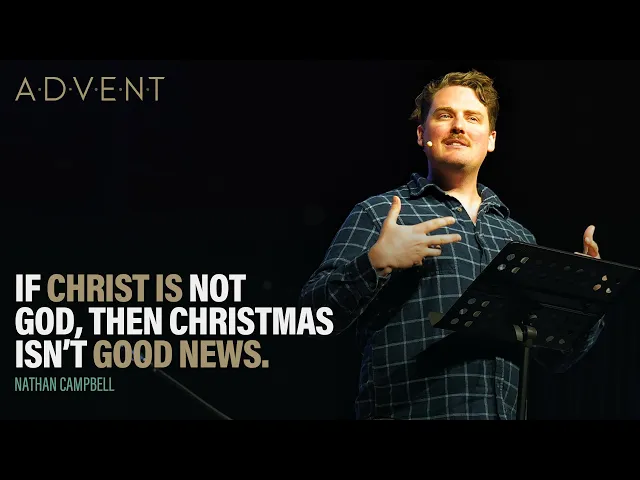
This is key: unless you confess him as God with us, everything remains the same, and you are without hope and you are stuck in your sin. There are plenty of people around this time of year when the loudspeakers at the store start playing "O Holy Night" or some other Christmas song; they'll sing along with that but only in December. But if Christ is not God, then that night is not holy.
What holy night are you speaking of? You might celebrate Christmas, but. .
. Do you celebrate the Christ of Christmas, not just once a year but January through January, all year, even in the off times? If Christ is not your Lord, then Christ is not your Savior.
If you do not confess Jesus as Emmanuel, as God in the Flesh, as God With Us, you might celebrate Christmas, but you are not a Christian. Notice that those who are saved by Jesus are not all people everywhere, no matter what; there is a specific class of people who should have hope, according to verse 21. Who does Jesus save?
He saves His people; that is, those who belong to Jesus, those who confess Him as God With Us. This message is not good news unless you belong to Jesus. Christmas is not good news unless this is actually the Christ.
It's nice to get gifts around this time of year, but the excitement around your newest toy doesn't last very long. Your new jewelry is going to lose its shine; even memories begin to fade after a while. The only reason for celebrating this season is if the long-awaited Christ has actually come.
But Christ has come! The miracle of the Virgin Birth that we see here proves exactly that. He is Jesus; He is Emmanuel, and both of these names are absolutely essential.
If God is with us but we are still in our sins, that means we are judged. Or, if we are without sin but God is not with us, that means we are abandoned. But the good news is that if God is with us and we are forgiven of our sins, that means we are saved.
It’s only because Jesus saves us from our sins that God can dwell with us. So here again is the hope of Advent: God is with us; do not be afraid. So maybe you came in here feeling hopeless today.
Maybe the doctor said there is no cure. Maybe yet another Thanksgiving ended in a fight. Maybe it feels like no one notices you, or you're so angry you want to be left alone.
You might feel overworked or discouraged; you might be unemployed or waiting in the wings. All of us can hear the message of hope again this morning: God is with us; do not be afraid. You are not truly alone.
There is no grief that He cannot bear. He will provide all the rest that you need; He will give you everything that you actually need. Why?
Because He cares enough about us to be with us. He has proven Himself in the past; therefore, we can trust Him in the future. As Christians, our hope is secure even when our world is not.
Hebrews 6:19 says that we have this hope as an anchor for the soul, firm and secure. That means even when the waves of the world around us are chaotic, the storm is raging; our anchor remains the same. It is firm and secure.
How? Because our hope is in God Himself, not the quality of our hope, but the object of our hope that remains the same. Sometimes my hope might waver a little bit, but in a bigger sense, my hope remains steady.
Why? Because Christ remains the same. We boast in the hope of the glory of God, as the apostle Paul says.
The question of hope is a question about the character of God. Do you believe that God is who He says He is? Do you believe that God does what He says He will do?
If so, that is hope. It’s faith about the future. It’s faith that’s leaning forward.
But don't get me wrong; the call for Christians for hope is not a call to blind optimism. That's what J. Packer calls a wish without a warrant.
If there is no observation of the past, you can have no confidence in the future. But there’s only one person who has a perfect track record of coming through in the past, and that person is Jesus. Your spouse will let you down; your kids will disappoint you; and you know how much you personally miss the mark.
But you can have hope today, not because of anything you can do or what you cannot do, but because of what Jesus can and has done for you. In the end, Joseph might have gone to sleep worried, but he woke up hopeful. Look at verse 24: "When Joseph woke up from sleep, he did as the angel of the Lord commanded him; he took his wife, but he knew her not until she had given birth to a son, and he called his name Jesus.
" Joseph received the message of hope at the first Advent of Christ: that message of hope that says God is with us; do not be afraid. Joseph knew that God had come through in the past. He trusted that God would come through in the future, and that moved him to action.
He did as the angel commanded and named his son Jesus. And so too, if we have hope for the future, that should move us to action as well. If it's true that Jesus has actually saved us from our sins, if it's true that God is actually with us, we can have hope as well.
But even in this time between the advents, we know that our hope can be easily extinguished. So, maybe for you, this Advent season is a time of renewal for you—of waiting and hoping in the Lord, increasing your prayers of "Come, Lord Jesus! Would you come again at your second Advent?
" Knowing that when He comes again, everything sad will be untrue. We are given a reminder, though, of the hope of the presence of God every single week when we gather together and partake of the Lord's Supper. Though we might have been racked from.
. . Guilt because of what we did last night.
When Sunday comes around, if you are in Christ, you can hear the assurance of pardon that your brothers and sisters speak over you: the blood of Christ was shed for you, the body of Christ was broken for you. You can be assured of your pardon if you are in Christ. Jesus has saved his people from their sins; there's nothing more that we have to do.
But if you don't belong to Jesus this morning, if you celebrate Christmas but you know deep down you don't actually celebrate the Christ of Christmas day after day after day, my invitation to you is to consider: Is this truly God with us? Is this man who he says that he is? And if he is, then consider the question: How should my life then change?
Merely celebrating Christmas is not enough; claiming to be a Christian isn't the idea. Rather, it is living with God, living for God, and that changes everything. But if you're here this morning and you're in good standing with Journey Church, if you're a partner here at Journey Church in good standing with our church, or you're in good standing with the church that you're visiting us from, your invitation this morning is to come and receive the reminder that Jesus has saved you from your sins, that here is Emmanuel, who is God with us, and that is truly good news.
As we partake in the family meal this morning, there are going to be four stations around the room: two up front and two in the back. Gluten-free options will be up here as well. When you come up to the front, you can tear off a piece of the bread and dip it in the juice and be reminded that we share a common loaf together, that God has come to say that he is God with us, not just God with me; he is God with us.
So as you tear off a piece of the common loaf, be reminded of that fact: that God is with us. When you take the cup and drink it, remember that his blood was poured out for you for the forgiveness of sins. It's a tangible expression of the lengths at which he is willing to go to save us from our sins.
So come and taste hope that is yours. The message of Advent: do not be afraid; God is with us. Let's pray.
Father, we come to you acknowledging all the ways in which we are afraid, all the ways in which it seems like the brokenness of the world, the darkness of the world, is overwhelming. And God, we thank you that you hear us, even when it seems like we can't hear you. We thank you that even when we feel hopeless, we know that deep down you have given us a hope that is firm, secure, and eternal—an anchor for our soul.
So God, I pray that you would bind up weary hearts this morning. I pray for the hopeless that you would remind them of the hope that is in the person and the work of Jesus. God, for anyone who is far from you this morning, Spirit of the living God, would you come and invade our hearts?
Would you remind people that you truly are God with us, that you truly are the hope of all the world? Would you give people the bravery this morning to respond in faith? And for those of us who are yours, who are your people, would you remind us again this morning of the assurance of pardon that is yours through Jesus, the one who has saved his people from their sins?
God, we need your help; we feel hopeless. We pray that you would give us again the message of hope that God is with us; therefore, we do not have to be afraid. We love you and we thank you for these things.
It's to you, our Father, and through the Son and by the Spirit that we pray. Amen.