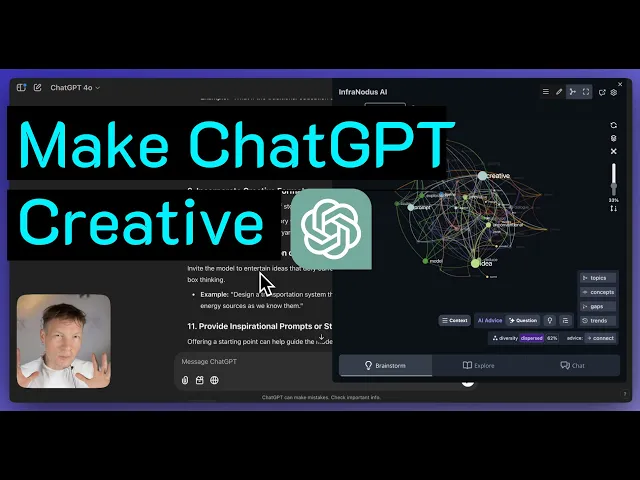
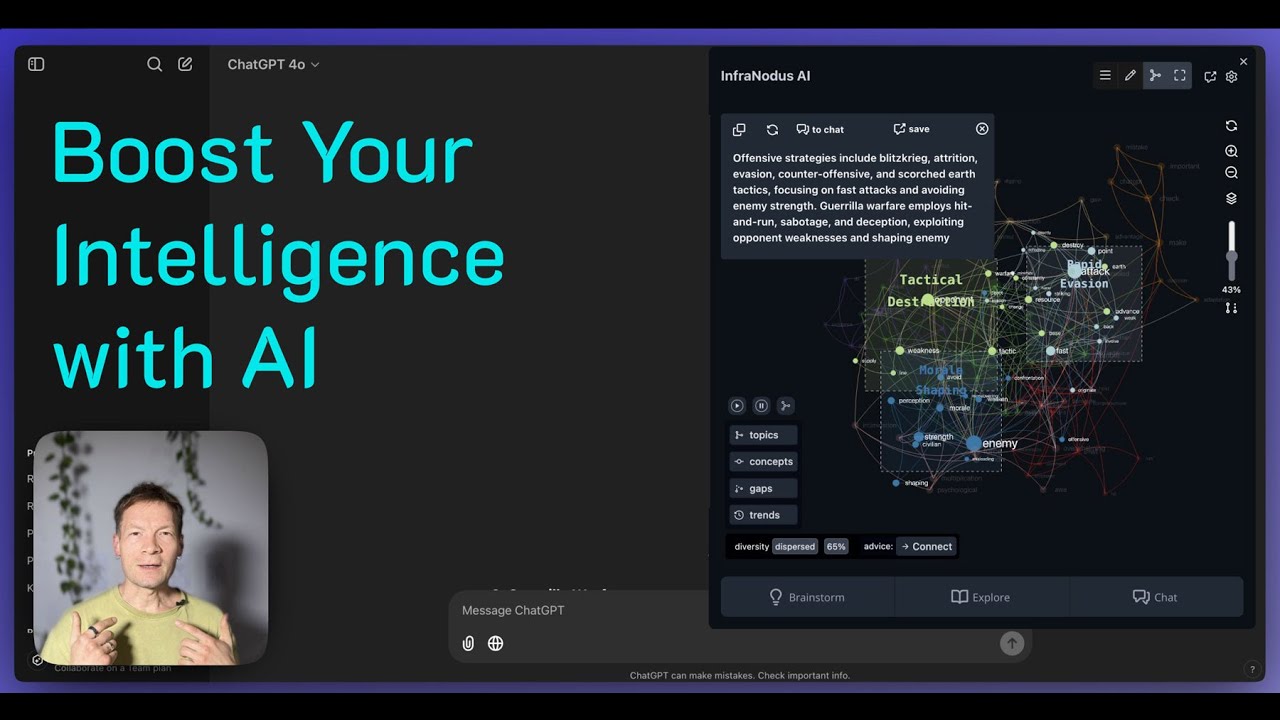
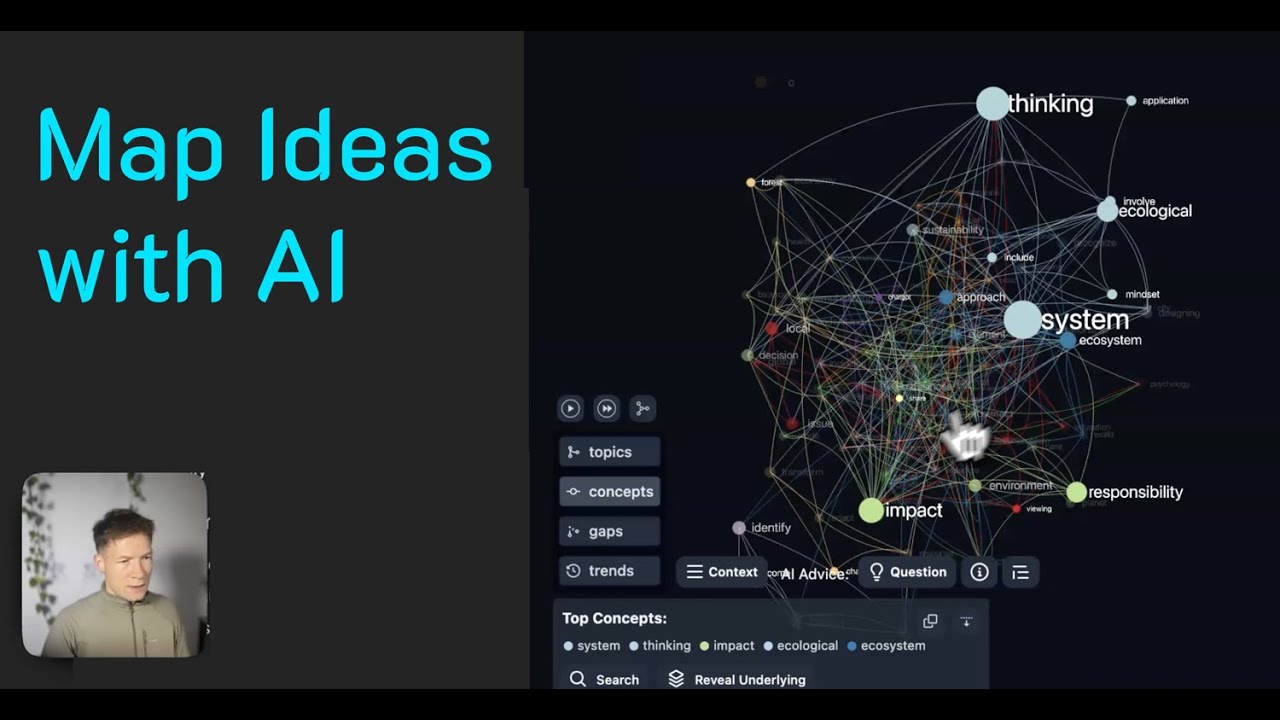
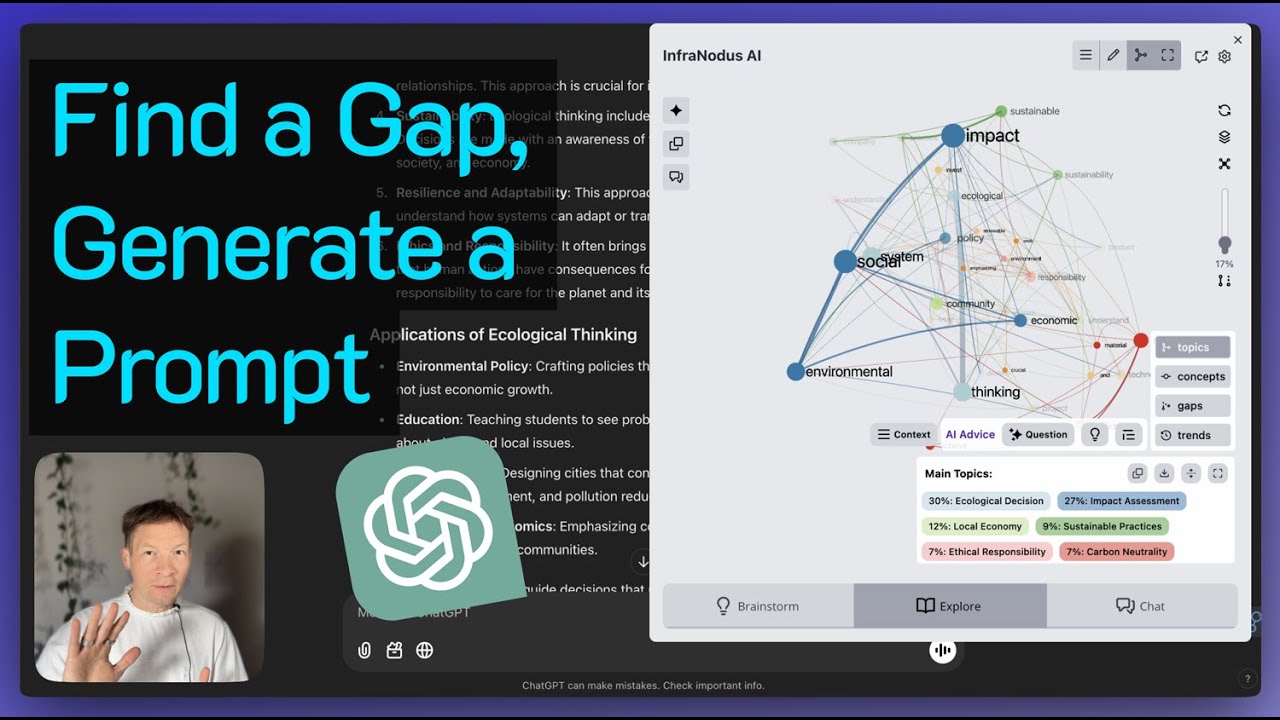
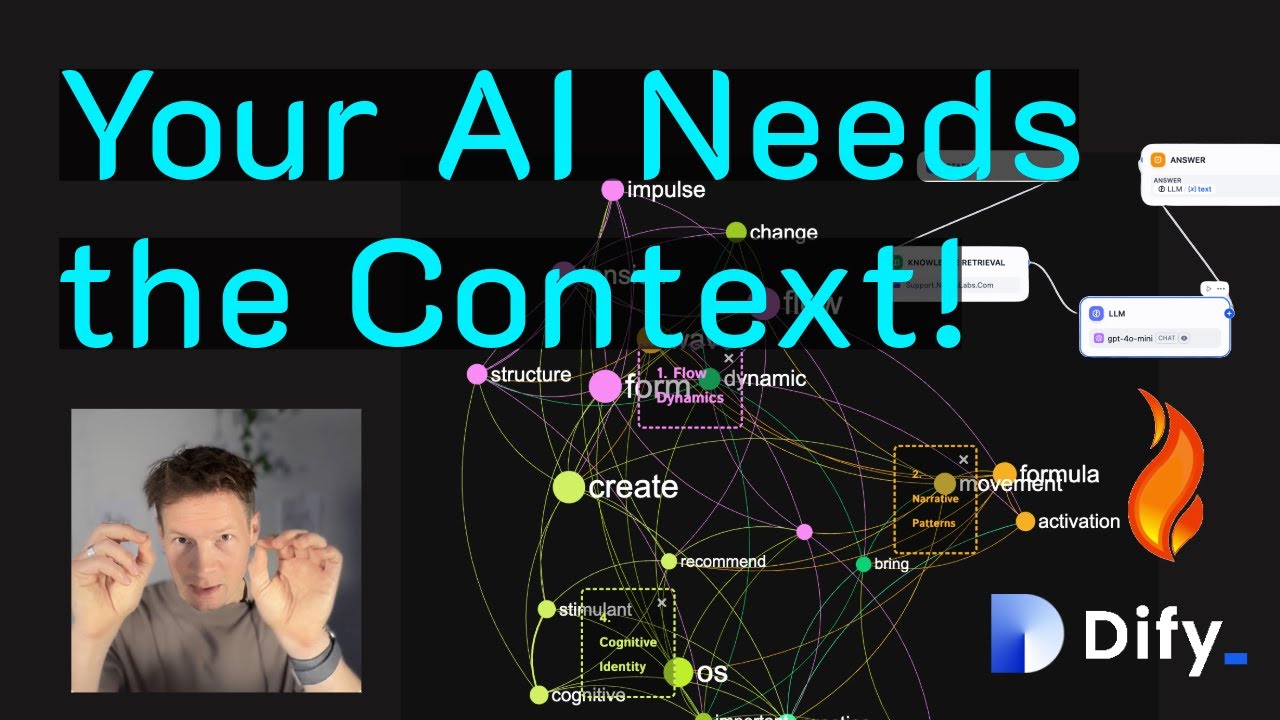
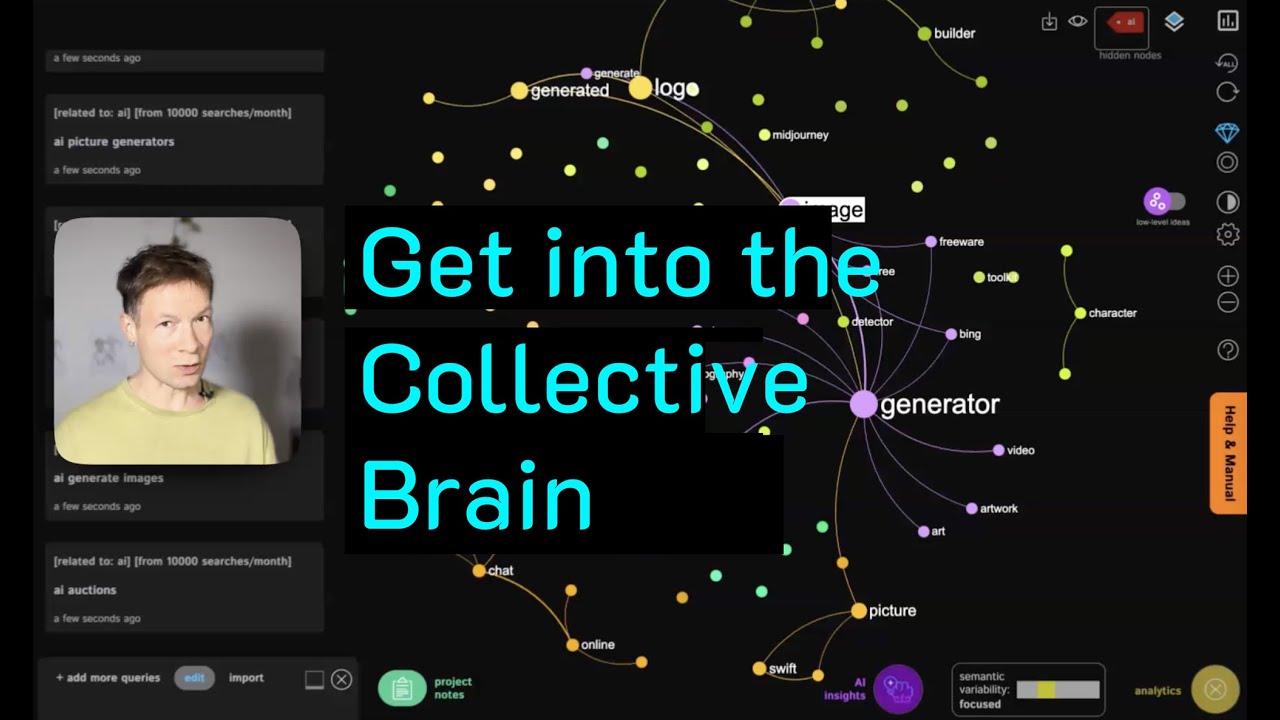
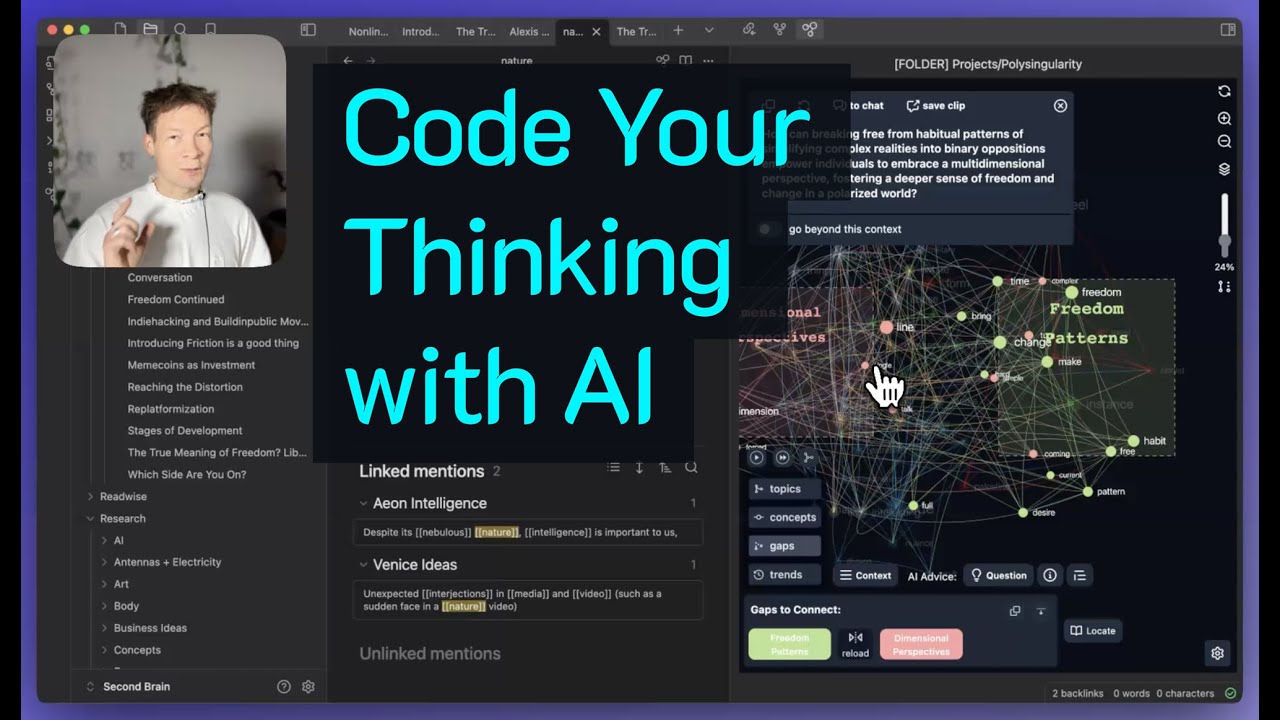
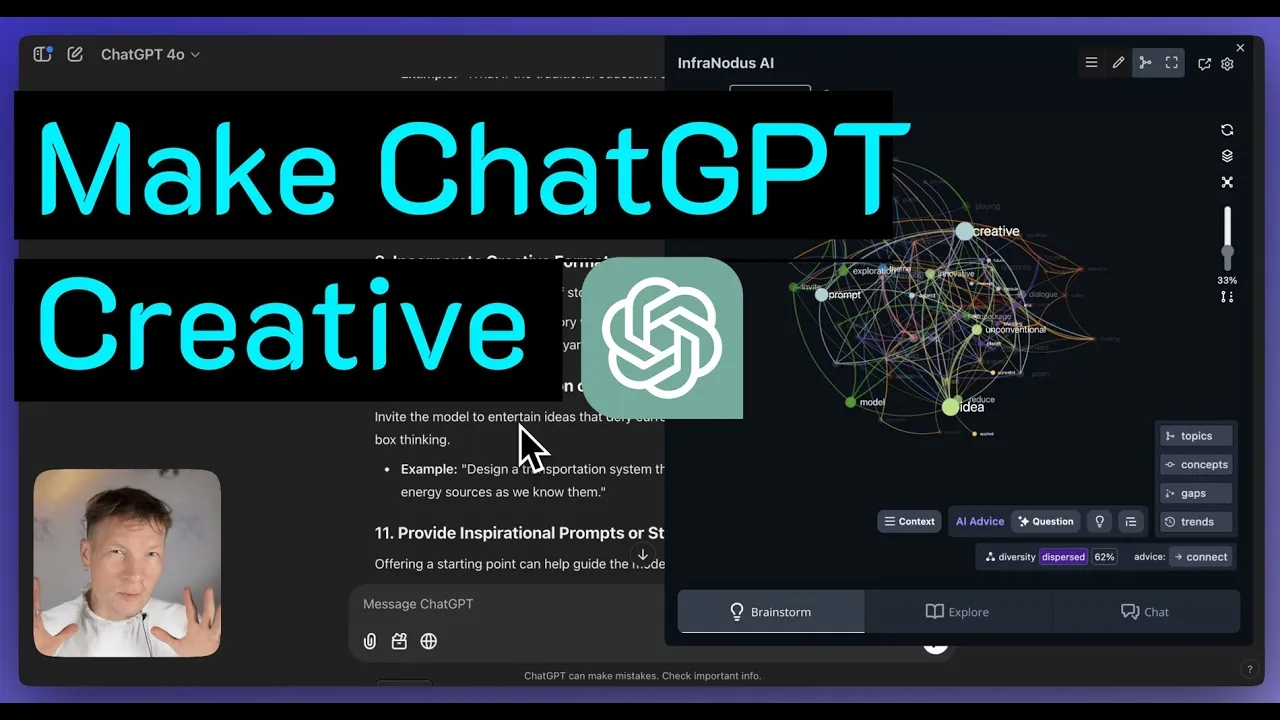
In this video, I'm going to demonstrate how to make Chat GPT think outside of the box so that when you're having a long conversation like this one you can prevent it from going in circles and being too focused on the context and encourage it to think beyond the periphery to connect the topics that are not connected yet to think in a way that is more creative. And you can use this approach not only with AI but also with your own ideas and in the second part of the video I'm going to show you how you can also apply it to your own thinking as well using the main version of InfraNodus — the app that I developed that I'm using in this demonstration as well just to give you a quick idea of how it works here is a conversation I'm having with ChatGPT it's visualized as a Knowledge Graph where the words are the nodes and the concurrences are the connections so you can kind of see how AI sees information this way it's a very simplified way because AI usually uses multi-dimensional embeddings but it's kind of the same concept it's looking at the space and seeing how those concepts are aligned and then we can build a graph from it and we can see what the structure of this graph is so for example here we see that it's quite dispersed it's focused on creative and prompts and then the rest of the structure is kind of all over the place a little bit there's a lot of different topics but they're not very well integrated and this is what InfraNodus is telling us that the diversity of this graph is dispersed and then it's giving us an advice that we should connect those different clusters a little bit better so when we click on this advice we can see some of the topics that we can better connect that that we can bridge that are not bridged yet and this is already a way to make ChatGPT think in a way that is more coherent and to avoid it focusing on the stuff that are not relevant right so for example here it says okay think of a connection between surrealist art and alternative transportation these are the two topics that it mentioned but it didn't really link them well together so when we ask it to do that we we can click on the bridge button on the question button here and then it's going to generate a question which is also a prompt that we can send back to ChatGPT and then it's going to try to answer that question because it relates to the original conversation but it will do it in a way that will also make it more coherent connect it better and then once it's finished answering the graph will be regenerated and we will see how it affects the structure and then gradually we can apply different approaches to see how we can develop this graph further so for example if what we just did now was to focus on the Gap we can also do something completely different we can say okay let's focus on some Topic at the periphery like for example here there's one on spaces and hubs and gadgets so it's at the periphery of the graph and we can ask it to develop it further and that means that we will go beyond the periphery of the conversation so as you can see it can be really helpful to think in this spatial way because you can really quickly see are the thoughts interconnected or are they too dispersed if they're too dispersed InfraNodus will encourage you to connect them if they're too connected InfraNodus will encourage you to make them more dispersed and then on the other hand it allows you also to focus on some of the Clusters at the periphery and if you're interested to explore them further you can use the built-in AI to generate some interesting ideas that can help you think in this direction this is how we will be using it with chipt as well so let me show you how it works you can try it on your own conversation I will begin from opening a new conversation in chipt and I will use the 01 Mini model but I recommend to use gy T4 because it's more precise I will just use mini for the sake of brevity because it's faster and then I will ask how to make chat GPT think outside of the box please provide some methodologies no examples I'm writing no examples and I'm being more specific because usually you will get better results like this I I want the examples of the PRS I rather want the techniques that I can use according to ChatGPT to think it in a way that is more creative so once the answer is generated I can then launch the InfraNodus browser extension and then it shows me this conversation as a graph the word are the nodes so for example I can see it's talking about encouraging a model to do something right here and then I can also see the main topics inside so for example here it's talking about creative constraints outcome mechanisms diverse perspectives and then also just by looking at the graph I can see what's happening with the structure so here it says that it's quite interconnected the diversity is optimal so this is pretty good but we can definitely improve it by either exploring the different topics and going in more detail or focusing on the gaps between them so these are the two main approaches that we will use to make CH PT think outside of the box or even ourselves first to focus on the gaps here so for example here I detect some of the topics that could be better connected usually it's better if they're further apart from each other on the graph because as you remember these are cooccurrences and if the topics are not connected yet it means there's an interesting idea that could be generated between them so here for instance there's something about outcome mechanisms and creative constraints if I click on the context I can see what are actual statements in the answer that relate to those topics and if I want to generate an interesting idea I can click on AI question and then it's going to generate a question that will try to link these two topics together so for example here how can a structured feedback mechanism incorporating unconventional constraints guide a creative model to progressively explore multiple solutions for complex problem de composition and varying situations so actually it's a really good question to make ChatGPT continue thinking in this direction because it it was talking about structured feedback mechanism and unconventional constraints so here we're asking exactly that and then we ask that question and then it's going to come up with a response and then in frodus once the response ends regenerating it's going to regenerate the representation of this conversation and then we will see what other topics exist out there and what are the main ideas for example now as you can see it became focused maybe even too focused on a specific idea of model an approach and feedback mechanisms so now it's time to explore beyond the periphery this is the second approach if the first approach was to focus on the gaps and try to bridge those gaps the second approach is to focus on the topics so you click on the topics here and then you can choose some of the topical clusters that were identified and then try to kind of see how you could explore them further and basically the way that it works I'm just going to regenerate the the graph so you can see it a little bit better you will look at the graph and then you will kind of see what's at the edge of the graph it means that these are some Concepts that are not connected to the central ideas of the conversation and usually it could be really interesting to explore them further so for example as you can see creative methodology here is on the very edge and it might be interesting to see how you could develop it further and it's a little bit like in a normal conversation you would be talking about some stuff over and over again but then you touch on one topic that is very very interesting and that's kind of like something new in the conversation of course you will be interested to explore it further especially if it's an interesting one and here it's exactly the same approach you you would click on this topic creative methodology you can see what is the context so what were the statements that relate to it and then you can generate a prompt that would make chpt think further in this direction and kind of go beyond the periphery of this graph of of the graph of the conversation but focusing on this topic so here it's saying how can integrating diverse methodologies for promoting creativity enhance Char's ability to generate unconventional Solutions in specific context so that's becoming very interesting because if we get a good answer to this question we can even use it in scientific research so I'm just going to feed it to the model and then it's going to generate a response and once the response is generated then it's going to regenerate the graph and show me what changed so for example here it's still focused but we're exploring a little bit more all those ideas of being a little bit more creative with prompting now we're also talking a lot more about solving different problems and using models to solve them also thinking creatively and so on so you see the graph is becoming much more diverse but it also stays interconnected and this is kind of like a thing that we're trying to achieve we want to make sure that we cover a lot of different topics but we also do it in a way that connects to the main ideas and this is why this kind of visual feedback on the conversation in the form of the graph is very useful because you can always track what's what's going on and if you see that for example it's becoming too focused on some ideas like it's happening here the advice is to diversify so it's going to show me that maybe you can remove some of the notes this is what it's doing it's removing the central notes first this is a very interesting approach it's like we slice off the top layer and get rid of all the most obvious Concepts in the conversation and then it's going to show us what are the topics underneath so there we can once again apply this approach of either focusing on the gaps so for example contextual development complex Solutions then cognitive strategies you see the topics are becoming much more specific here and this is another approach so first was to focus on the gaps then go beyond the periphery the third one now is to cut off the top layer of obvious stuff to see what's hiding underneath this is very powerful you can even do it yourself by just clicking on this button here reveal underlying Concepts and then it's going to slice off the top layer and get to the deeper and more latent topics so for example here iterative exploration unique perspectives let's generate a question based on that so here it says how can integrating unconventional constraints within a structured feedback loop enhance the identification and utilization of diverse perspectives to Foster innovative solutions in complex problem solving I mean this is super interesting because you can even apply to your own thinking process I'm going to copy this into chup T and see what it has to say so here it's talking about how you can use abstract limitation resource constraints perspective shift and also how it impacts creativity and how we can also enhance feedback Lo so you see the conversation is becoming very deep you would never get to this if you just asked J how to make it think outside of the box now you're really guiding the conversation in the direction that relates to your interests but also creates an interconnected structure which is original and that explores both the gaps the periphery and that is not too much focused on this surface layer of ideas that everyone is talking about because each time you slice off the top layer you get to the deeper and deeper stuff and you go more and more and more underneath and then you discover some really interesting Concepts there like that so this is how you would use it with chip I also promised you in the beginning of the video to show you how you can apply the same approach to your own thinking so you can do this in the main version of InfraNodus once you go on the main version of InfraNodus on InfraNodus. Com.
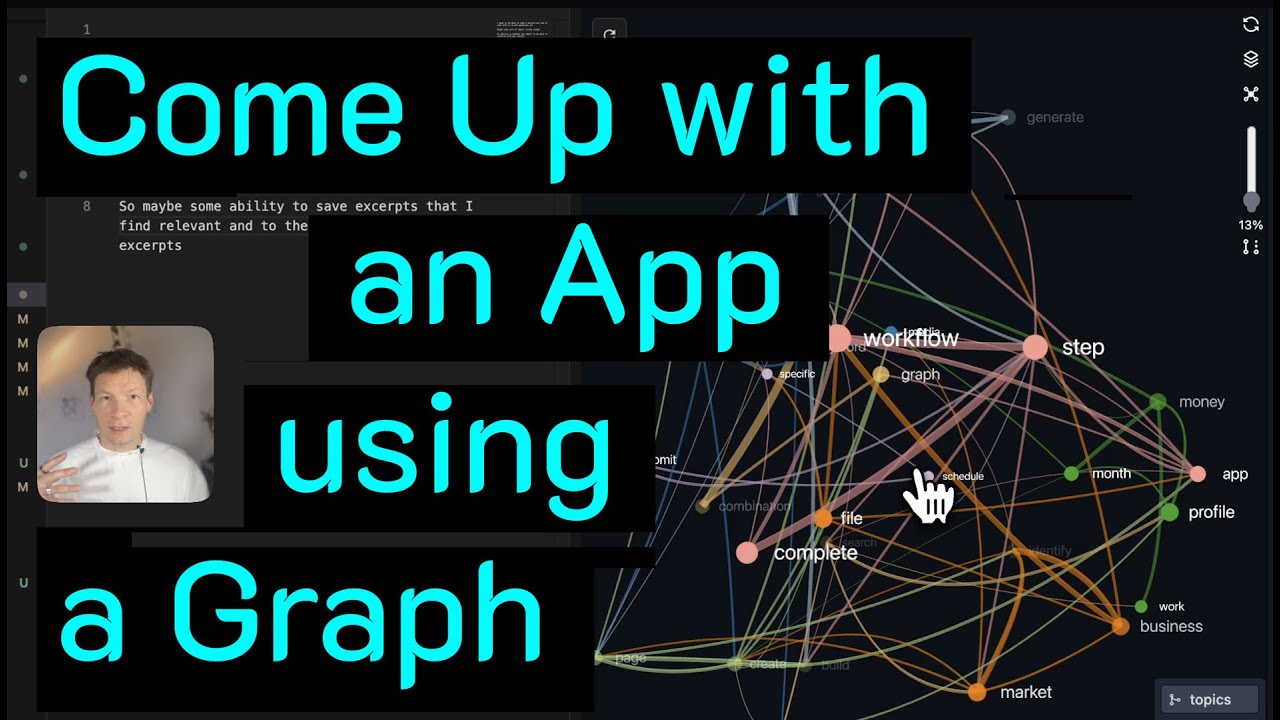
You can go to the apps page and then what you do is you go into brainstorm ideas and then you start and you say how to make Chat GPT think outside of the box let's just use the same example and then what you do is you click on AI generated and then on AI ideation mode this mode allows you to think step by step so you can sort of control how the responses are made so here it's going to say okay first prompted with unexpected interdisciplinary questions or scenarios that blend different fields challenge its assumptions or the common patterns and data that it was trained on so that's an interesting thought I can add it to the graph and what's going to happen is that the content that is added is visualized just like we had it in the previous application in chat PT but here we're doing it step by step so we have much more control of the thinking process and we will think together with AI rather than letting it think and then somehow questioning it and guiding it so here is much more human in the loop approach and then let's say if I want to kind of develop it a little bit further I can click on U AI chat and then be like just ask elaborate and then I will say focus on this context so it's going to take this graph structure and then try to generate some interesting insights that I can then add into the graph and continue moving on so for example here it says introduce scenarios where typical boundaries of knowledge don't apply merging art with science or technology with Philosophy for instance to push Beyond usual datadriven response that's a great answer also I'm going to visualize it and then I can go into the chat mode and then it says okay so select a node so for example I will choose scenario data instance and maybe boundary so as you can see I'm kind of selecting the graph structure that I want to develop further and then I can ask it to generate some idea based on it but because I'm relating it to the original context of the is always going to be related to the original subject here so here it says in the scenario where the boundary between instance and data blurs we navigate through fluid Landscapes of knowledge redefining limits by intertwining empirical data with experiential instances this is very interesting because it's telling me okay if you want to think more creatively or if you want to make chpt think more creatively try not to only focus on data but also on how it feels like because this is not the the actual data it's used to and as you can see I just added this here here and now those those nodes are much more interconnected so this is how I'm kind of bridging gaps here exactly the same thing that I was doing here where I was Bridging the gaps in this more dense graph right here I'm doing the same by just focusing on the not so it's exactly the same approach and just like in the previous example I can also go into topics here and I can say okay let's explore the periphery so for example here knowledge Fusion or empirical boundaries let's say knowledge Fusion this is at the periphery of the graph I want to develop it further so I select this topic and then I click on AI insights I will select it again and then I will ask it to generate a response that relates to this topic and here it's kind of exploring this in a little bit more detail and I click save to graph and as you can see this topic now becomes much more developed so this is the approach that use and this is why it's very nice to have this graph visualization because it allows you to see what's actually going on on the structural level that if you want to think outside of the box you can focus on the peripheral topics and develop them further you can focus on gaps or like we had in this previous approach we can slice off the top layer of the most influential nodes like here data boundary scenario we remove them we hide them and then the things that are underneath they pop up much more so for example we can see here this interdisciplinary challenges and maybe blending assumptions and then we can focus on that more and then generate a response and it's exactly the same approach you slice up the top layer you kind of pretend like you don't want to talk about the main ideas anymore you get to the more specific ones and then you develop them further once you've done that you add them into the conversation and then you can always zoom out you know and see how it affected the general structure usually it will become much more diverse and much richer in fact if you want to read more about this approach you can go to InfraNodus and we have a section in the about us on cognitive variability and this whole approach is kind of explained there how it works step by step with some links to more details and also the concept of ecological thinking so there is this chart here that shows that it's about disrupting ideas and connecting them focusing and exploring diversifying focusing and then getting rid of the stuff that you don't need and zooming in again again on a specific topic to develop it further so it's this kind of like a thetive approach that goes in Cycles but that allows you to combine zooming in with zooming out focusing with exploring and based on this approach you can really create a very diverse set of ideas and that can be very useful if you're doing research if you're thinking about a certain topic or also for marketing applications as well because you want to think in the ways that others are not and this can be a really useful tool for that so feel free to try it out on InfraNodus. Com where you can get an account and then download the extension if you have any questions please let me know and also I have another channel where I will soon post a video with more detailed instructions on how you can do this step by step so if you're interested also subscribe to this other channel so you can get informed when the video is out and if you have any questions please leave them in the comments to the video below and I will happy to respond. Thank you!