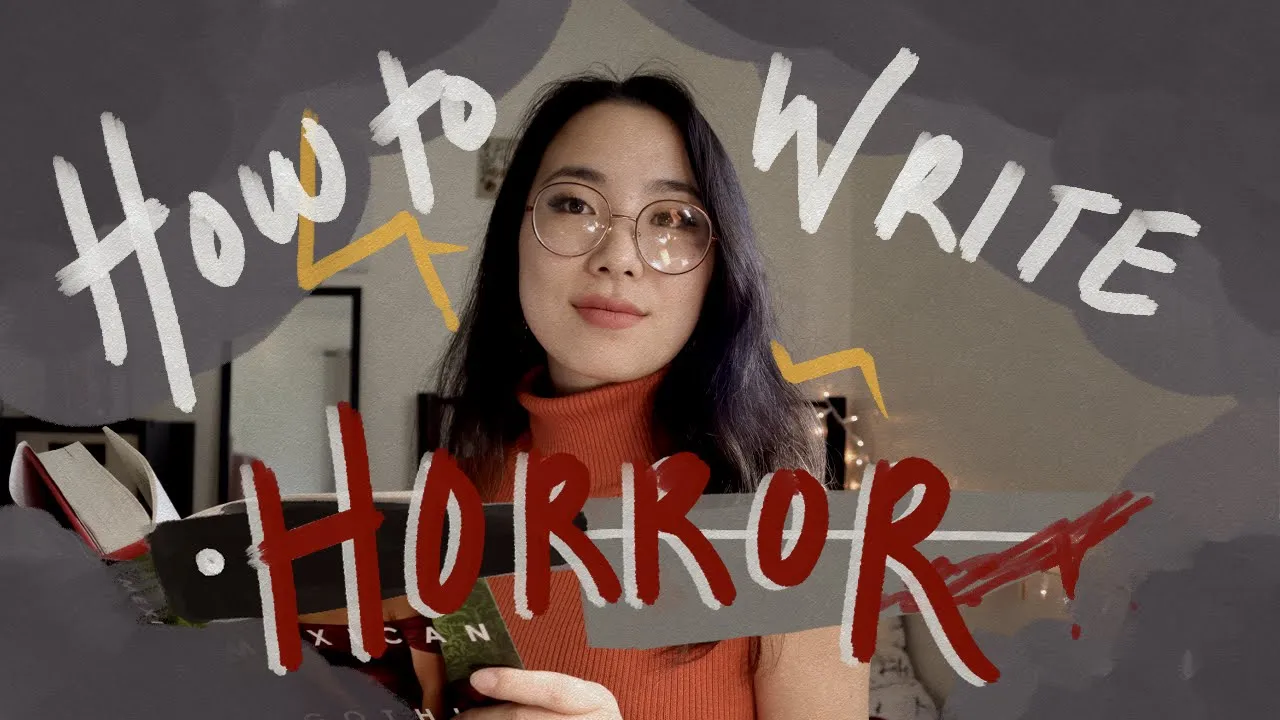
So, Halloween is coming up in just a couple days, and I figured I'd sort of get into the spooky mood by sharing a couple of tips and tricks that I've picked up over the years of writing horror and horror-adjacent fiction. I also dressed up like a pumpkin because I can, and I think I look really cute. Okay, so getting more into this topic even though i'm definitely like a coward and i'm not a coward i actually find myself writing quite a bit of horror though none of it is really pure like it's not pure horror
books it's horror fantasy or horror comedy just horror adjacent or sub-genres of horror really appeal to me especially in the past couple of years i feel like particularly in literary spaces horror is something that gets brushed aside or looked over almost but honestly a really good horror book has the potential to stick with you in a way that i feel like no other genre really can anyway i'm sort of weird so i've done a lot of research into what makes horror so effective at least good horror and i figured i'd share some of my findings
with you guys so let's get started with these nine tips and tricks for writing effective horror tip number one is to tap into your own fears and lived experiences this is just really common writing advice across the board obviously write what you know is one of the most cliche writing tips that you can ever find out there in the wild honestly even though i don't necessarily prescribe to the write what you know advice for other things because i write a lot of specific in particular it's super important for horror and i feel like this advice
sort of gets misconstrued as like you should only write your own life experiences what's happened to you personally which is why it's brushed aside and specfic but i sort of see it as advice that tells you to tap into your emotions your development i almost said character development but your approach to things you want to draw the emotional depths of your story from a place that you actually have experienced personally so it's more true to you so even if you're writing a story about fighting a demon which i mean like i hope you've never had
to do what you want to draw from is that experience of fear that you have felt in your life in a different situation if that makes sense and honestly if you're writing horror and you're not at least a little bit unsettled by what you're writing i think you might be doing it wrong also when you're thinking about your own personal fears i feel like it's sort of to draw from the obvious things like fear of dogs fewer spiders fear of car crashes think about the deeper fears that you may have horror is honestly at its
best when there's that undercurrent of existential dread so we're thinking about like fear of failure loss of control that sort of thing the big fears and i'll be circling back to this concept in a little bit but basically just think about what is the underlying true fear you're not afraid of a ghost you're afraid of the unknown you're not afraid of a demon someone is laughing outside you know symbolism theme all that good stuff tip number two is to make your perspective close i'm like doing so many hand gestures i'm so sorry anyway my second
tip is to make your perspective close i think it's really super important to put your reader into the character's shoes and honestly i think this is part of why horror movies are almost always a scarier experience than books and video games even more so oh my god because like most human beings are visual people or very sensory so we experience things better if we're seeing them or you know in a game hearing them just sort of immersing ourselves in that moment through all our senses and it's a lot easier to do that with films and
television obviously because you're not having to imagine the situation based off of words on a page so writers are faced with this challenge of creating so immersive an experience through words alone that the reader actually like fears for their life wait no that the reader experiences true fear and that's really tricky the trick to this if you can swing it is to pull the perspective as close and tight as possible i think this is why a lot of horror protagonists and main characters are everyman and are very boring and basic and tend to not have
a lot going for them as characters because they're designed to be that paper doll for the reader to draw themselves onto honestly i can't i don't know where i was going with that metaphor but you know what i mean so we're moving on my third tip is to not get too schlocky with the violence and gore this might be like controversial but i personally find that unless you're going for that whole final destination like over the top almost hilarious gore aspect yeah a lot of the time if you're going overboard it just comes off as
ridiculous and zany you risk desensitizing the reader to what's going on so honestly most of the time a smaller act of violence is like far more visceral than someone getting decapitated or split in half or whatever else like think about reading about someone getting their head cut off versus someone snapping their finger in half or biting down on a rusty nail or like ripping their fingernails out like that is so much worse because it is localized honestly like i don't even know why it's worse but the small things can be really effective obviously grand gestures
of violence have their time in place but i feel like those should be your big dramatic moments as opposed to what you're basing or hinging your horror experience off of what you're building the story off of i don't know that's just my two cents tip number four is to do your research feel like specfic authors speculative fiction authors maybe don't like research as much as they should sometimes because they're like i'm making it up so i'll just make it up for horror and especially gory horror it really bothers me as someone who's sort of medical
field adjacent when there's like an injury that shouldn't kill the person or should kill the person it doesn't or does and it doesn't make sense or if like blood is spurting and that doesn't make sense a lot of the violence in movies and tv cannot be counted on you can't base your experience off of that yeah i just think like if you're going to be doing anything medical like just know what's what what's real and what's just some misconception that we have from television like you don't have to go ahead and watch a bunch of
surgery videos i know that's like not everyone's cup of tea which i don't get but whatever maybe like just do it for me like if i'm reading your thing and the medical stuff is inaccurate i'm just gonna be annoyed so also sort of in this vein of doing your research if your horror has anything to do with like ghosts or demons or other entities that people actually believe exists then i recommend looking up true encounters uh whether or not you believe in the validity of them there's a lot of like scary [ __ ] in
there some of the best horror writing you can find is in those encounters i'm not joking tip number five is to just keep in mind that humans actually really fear the unknown we're scared of ghosts because to date like a lot of people still aren't [ __ ] sure if they're real or not we're scared of the dark because we don't know what's in there we don't know if the lump or seeing in the corner is our desk chair or like a murderer see i feel like over explaining your horror monster ghost or whatever sort
of takes away the fear so yeah take advantage of our innate fear of the unknown tip number six is to make your reader paranoid with power of pacing so going back to my hill house example uh mike flanagan does this really cool thing where he uses long panning shots to sort of like make you fear for your life you're sort of like surreptitiously checking every shadow to make sure it's not moving sometimes you see something move out of the corner of your eye or a painting is different from this shot before i don't really know
how to put that into words but you should utilize that that type of pacing of making your reader unsure of what's going to happen next um the suspense pacing basically it's really powerful if you're able to keep your reader on their toes and then bust out the scary thing when they're sort of least expecting it but there is a lot of power in making your reader fear without actually doing anything or having anything jump out or happen in that moment and honestly like this is a matter of opinion but i feel like this is more
effective than just busting out scare after scare and making them desensitized and like not care as much anymore because they're almost expecting it they're expecting to be spooked in that way my seventh tip is to think about theme and don't be afraid to get meta with it i feel like this goes more into like again my ghosts and demon fixation i don't really think about slasher horror that much because it's just not really my thing so we're thinking about why are we afraid of ghosts why are the characters afraid of these ghosts in particular like
yes all ghosts are scary so we're thinking about a one big true fear as opposed to just being afraid of the ghost in the house theme is really important in horror like way more important than people think i feel like it is one of the most simple genres in terms of thematic expression and cohesion because it is a lot of this focus on just one singular large fear being manifested in the form of a demon or a ghost all these monsters come from things that previous generations had an innate fear of like which is powerful
women ghost death itself once you sort of are keyed into that mindset it becomes a lot easier to craft your own sort of beasts or ghosts or whatever entities based around a singular large fear honestly i think that's one of the aspects about horror that i love the most i love thinking about theme i love considering it especially in genre work the fact that horror has so consistently utilized it is like just really cool to me so my eighth tip is to not forsake the entire story or story as a whole for the sake of
a couple of scares again and sort of touching back on my point about theme good horror just like everything else has to have a good story to support it that means solid relatively coherent plot structure thematic cohesion solid pros like relatively compelling characters i feel like the ghosts and demons and murderers if you have them can be the more interesting of the characters as opposed to like the victim set but characters nonetheless tip number nine which sort of relates to this is your ending also matters a tendency that a lot of horror has is to
just not really have an ending that means anything or says anything important which like your story doesn't necessarily always have to say something important that's you know ridiculous we would never get anything done if that were the case i think you should at least try to say something or try to have some sort of conclusion beyond just like everyone died or they got away you know and that's the end of it like what did your characters learn from the experience or what should we take away from the experience what does this story say about you
know the one true big fear the under i keep doing this and like i don't know why what does the conclusion of your story say about that one true big fear endings for me have always been one of the most challenging parts of writing and crafting a story so this is no exception horror especially i feel like it's tough to come away feeling satisfied and not just like scared and i feel like this is how a story lingers with you you remember the ending the most unless it's a bad ending you know okay i think
that about covers it i don't know how long that was but i guess i'll figure it out in editing thank you so much for watching i upload a new video every thursday i haven't skipped a single week yet so subscribe to keep up with all of my like writing videos i'm also doing nanowrimo starting next week wait what that is too soon that is too soon for that and one of the projects i'm working on is a horror comedy so i'll be utilizing a lot of these tips as i'm moving forward with it so basically
for the month of november i think my plan is unless i can like pump out a script which i don't think i can i'll just be like making little update videos maybe i'll do a couple vlogs if i have the time anyway that was a lot of useless information but thank you again for watching and i will see you guys next week