Welcome to this events hosted by the European Institute here at the London School of Economics. Uh my name is Kevin Featherstone and I'm a uh retired professor in the European Institute. Uh and it's my pleasure to be um chairing this uh event. Of course, the the title could hardly be more resonant with the dramatic events of 2025. Uh I don't know about you, but some days I feel as though a meteorite has hit the planet in 2025. Uh the presidency of Donald J. Trump has been uh profound in its impacts uh both in terms of
uh different policy sectors, domestic and foreign policy um but also across different uh so-called crisis uh regions. Um to say that history will note that he has made his mark in 2025 seems to be uh a charming British understatement. And of course uh there is almost an industry having been created uh to try to interpret uh Donald Trump and his presidency. Um what extents does he have strongly held beliefs? Are they ad hoc uh beliefs? Is he instinctive in his political actions or is there a coherent program a united set of beliefs uh which can
uh have some predictability uh about them? Others have speculated uh about Donald Trump's uh relations internationally uh his relations with um Vladimir Putin in in Moscow uh in particular. Um but of course Donald Trump came to the presidency uh having written the book The Art of the Deal. uh a belief that he had um exceptional skills of negotiation. And uh we see this calendar year uh that uh he has been engaged in many uh crisis situations across the world and he would argue that uh he has resolved a number of these crises been a peace
broker and of course there was a speculation about him uh potentially receiving the Nobel Peace Prize. the arch negotiator. But this arch negotiator, as I say, is he simply instinctive? Is it ad hoc? Is it or is there something more substantive behind that? And our talk this evening, Trump's 10 revolutions, the remaking of politics in the West, seems to me to capture the spirit of the moment as we speculate, as we try to delve into the Trump presidency, to understand it better, perhaps to understand uh his perspective legacy and um impact uh better. And I'm
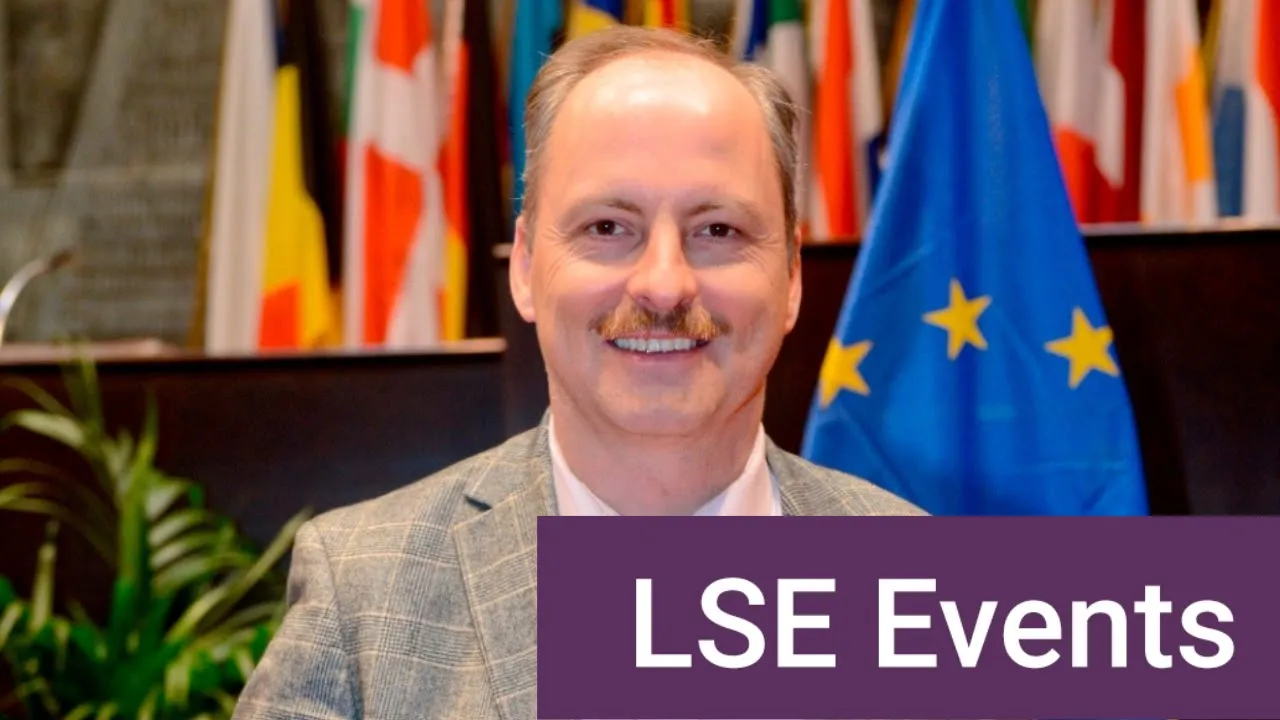
delighted to uh welcome um Claus Vela who is a visiting professor in the European Institute therefore my LSE colleague and Claus Comes to uh this topic with a breadth of international uh experience. Uh he has been secretary general of the European Parliament. Uh he has held a number of roles in Brussels serving as the chief of staff to the presidents of the European Parliament. director general for EU internal policies in the Parliament's administration and as Secretary General successively of the European People's Party and of the EP political group uh in the European [clears throat] uh
Parliaments. So we look forward very much to uh what he has [clears throat] to say and um I'm also let me admit intrigued why 10 revolutions, why not nine? Why not 11? uh we'll look forward to uh that elaboration and as is usual with these events can you do as I have just done that is to put your mobile phones on mute uh please so we don't have the interrupt interruptions Um we're going to invite Klaus to speak uh for a while after that there will be uh a discussion between Klaus and myself and then
we're going to open it up to questions from to the audience. So, please do think of your questions and I know that some are watching online and we will uh take as many of those as we can as well. Let me uh before we begin uh also uh thank u Natalie Grace and the European Institute events team for organizing this uh event. uh it has Attracted you here on a rather dark winter's evening in the middle of reading week when the number of possibilities uh for what you might be doing were almost limitless. So thank
you for coming and we now look forward can you please help me welcome Klaus. Yes. Uh thank you very much um Professor Kevin Featherstone. Thank you also for your uh interest in the topic. Um the 10 revolutions of Donald Trump. Um Why was I interested? I'm interested because there seems to be a kind of consensus emerging that with Donald Trump everything is at hawk. And because everything is ad hoc it's not previsible. And because it's not previsible, we cannot prepare and we cannot know. And maybe in three months it's the opposite. So I've tried to
identify uh whether it is possible to identify some long lines, some strategic Decisions, some new orientations which are really a break with the past and which are therefore also probably going to stay with us. And um in order to do this with a little bit of a degree of more certainty, I've tried to identify who are potentially the strategists behind and have they put something on paper because if they are strategists behind who have been putting something on paper And who are let's say not just working in a think tank but working in the administration
in the decisive position then we have a relatively likely high likelihood that uh you know in fact this is driven by intent and by strategy and not just by uh you know the mood of um the mood of the day. So um these major shifts in policy I call revolutions and I have 10. You ask me why do I have 10? because I was trained in the German Christian Democrat union central office and uh there we always had to have 10point plans which you know we are not very imaginative uh for my excuse I can
say this was the time when Chancellor Hm had a 10-point plan for the urification of Germany so uh at least some of them were working uh pretty uh pretty properly so that's my training um I recently published a paper called the 7Ds for sustainability with The Martin Center. So I can show some degree of flexibility concerning the numbers but the 10 is always a nice figure. So um what are these 10 revolutions? Um the first three I see in the approach to the economy and my strategist is called Steven Moran. Steven Moran wrote a paper
which I can really recommend to everybody who is interested in the topic called a users's guide to Restructuring the global trading system published in November 2024. He was still working as senior strategist Hudson Bay. Very quickly he became the chief economic the head of the team of economic advisers of Donald Trump. And I think on the 15th of September, he was kind of promoted to become one of the seven members of the several of the Federal Reserve of the United States, Which is a pretty quick career. And given that the president of the Federal Reserve
will be replaced in February, he's already one of the potential candidates for succession. So what I want to say is this is not just you know somebody with some voice but this is somebody who is really in the center of the system who obviously has the trust of the president otherwise he wouldn't Have gotten this role and who is now in an absolutely critical position to define economic policy in the United States. So uh if you read his paper you see that uh he starts with a problem definition. So what is the problem of the
United States uh economy? Uh his key thing is he's saying our key problem is which uh was called in the past the exorbitant privilege. Our key problem is That we are the reserve currency country. That's quite a shift to past uh appreciation. And why is it a problem? The problem is that if you have the reserve currency then every other country has to keep dollar reserves because that's where international exchange is happening and that leads to a situation where your currency is developed more highly than if you wouldn't be the reserve currency. So the exchange
rate is higher. Is there an indication for this in reality? Yes, there is because you can also have a look at purchasing power parities uh of for exchange rates among currencies and there the fair value of thei of the US dollar towards the euro would be that for one euro you would need to pay about $150 purchasing power parity. When Trump took office they only had to Pay $15 $15. So quite a gap between purchasing power parity which could be considered as a kind of fair value and the real exchange rate which was 105 to
um to $1. So he says we are reserve currency our currency is overvalued and because it's overvalued we have a lack of competitiveness because our currency is so expensive that people don't buy here they buy somewhere somewhere else and therefore We have de-industrialized that's the starting point because first we have to understand before we come to the cure what is his problem. What is the problem from his point of view? So they this administration wants to go against de-industrialization. They want to increase competitiveness. So they have identified the exchange rate as one of the key
problems and that's linked to the fact that they are reserve currency. So what is he suggesting as a cure? The first thing he's suggesting as a cure is something we have seen over the last half a year. Tariffs. Why could tariffs be a cure? A they bring some income. I think the value is about 600 billion up to now dollars. So it's not to be neglected. But it's especially meant as an incentive if you want to have cheaper access to the American market to move production To inside the United States. Of course, you will only
do that if you think these tariffs are stable for a long time, that you can find the appropriate workers in that country and so on. But it's meant as an incentive to move production of industrial goods from outside the United States to inside the United States. So to address one of the problem he has mentioned which is de-industrializations. And also you all remember that these Tariff negotiations were not just on tariffs. It was a kind of package deal. For example, in the case of the European Union, they were also expecting a commitment to bi-American especially
armament and energy liqufied gas. So uh by uh American and support the American industry. uh he's also outlining in his paper that in the tariffs and where they are put at which level it should be a difference whether some country is an ally or not. China obviously is not considered an ally. We found that out. So that means 15% is generous for allies. 10% it's very generous. Huh. Um but in fact they had an surplus with the UK so it's Not that it's not that generous and they want to in order to be successful because
you remember November 2024 he says how can we impose those tariffs he says with our allies we have to link tariff negotiations with defense guarantees the same time frame and when were the tariff negotiations finalized around the NATO summit. Maybe two weeks difference but not more. So that means countries were put in front of the alternative. Can you agree to those tariffs? But you know if you are all if you want to remain allies we see these issues very closely linked. So the first revolution is tariffs. Of course, the UK, the United States had already
been working very much with terrorists, but that was under President Hoover, and that's about 100 years ago. So, it means they are going back to a tradition which existed before the introduction of income tax in 1913. Before the introduction of income tax in 1913, basically the federal budget was financed with tariffs. So 1913 2025 it's sometime ago. What's the second revolution? The second revolution has not happened yet. So you're getting exclusive information In advance or I prove to be completely wrong can also be but he's saying we have to do things in two phases. The
first phase is tariffs but the second phase he doesn't use that word but I would like to use that word word. The second phase is debt restructuring. Now you know why he doesn't use that word. He says what's the problem? We have Enormous debt. Why do we have enormous debt? Because we have guaranteed the free passage of the world. We've been guaranteeing defense. We have been spending too much. Others have been, you know, avoiding this expenditure. So it's only fair that [clears throat] other countries share into our debt burden. And how do we do that?
We do that with a debt swap. So those who are owning those public institutions which are owning American Debt maybe with four or five or 6% interest they exchange this debt against very long-term debt with very low interest rates. That's what happened to Greece. So the Greek debt was exchanged against long-term debt with very low interest rate and you know if you have a debt for 50 years with 1% uh the real value is half maybe maximum very beneficial as we can see now in the case of in the case Of Greece. So he says
it would only be fair if countries would swap uh their higher level interest rates which might be short in uh their higher uh interest rate papers against long-term papers with the long interest rates and that's called the maago accore. Why is it called ma olago accore? Because of course the president has a place in Maago. But there was also a precedent a little Bit different which was the Plaza Accord I think in 1987 where already countries came together and kind of supported a devaluation of the United States and um but it was limited uh in
time. So why should other countries agree to do this? come back to the same issue. You want to be ally. You want to profit from our security guarantees. We ask you to consider a debt swamp for the moment. That's his idea. But there is something which makes it a bit more likely that this is in preparation. And this the following. He says look this will be very difficult to do if the Federal Reserve is hostile to it and therefore it's better to do after the changeover of the president of the Federal Reserve and we should
have a president of the Federal Reserve who is positive to this. After 6 months, he has entered the Federal Reserve as one of the seven members of the Federal Board. And there is a new president of the Federal B of the Federal Reserve to be appointed in February. Maybe it's him, I don't know, maybe it's somebody else who is more favorable. But for the moment, if you follow his paper, everything is still according to plan. and he has been moved to the Federal Reserve who would be critical for this kind of um operation. Revolution number
three is dollar devaluation. So up to now you know United States was proud to have a strong currency but because de-industrialization is deeply worrying a for electoral reasons because these are the voters but secondly also in the security context of competition with China. China is the main industrial producer. So if the United States is not able to produce you know beyond services in the in the industry that will be a strain to every kind of uh war effort or rearmament um effort. So the United States is looking for a dollar value which is weaker in
order to increase competitiveness. And of course any discussion about the potential maago accore or a kind of pressure to sell your higher interest uh papers against Low interest papers will lead to a devaluation of the dollar because people will try to get rid of their papers in good time. So these are the three proposals. Uh two have made progress. The dollar is about 10% weaker than it was at the beginning of the year. We are now 1.15 if I remember this correctly. Um we have gone through terrace. Uh but the Mao Lago aore is still
a project. Second area foreign affairs. So my strategist for foreign affairs is called Elbridge Colby. Who is Elbridge Colby? Elbridge Colby is the number two in the Pentagon. He is the under secretary in the Pentagon for policy planning. That means Elbridge Kby drafts the defense strategy of the United States. And by the way, under Trump one, Elbridge Kby did already draft the defense strategy of the United States under Trump one. So what he is thinking Of the future defense strategy of the United States or foreign affairs of United States and where that they should put
their uh their efforts matters. not only as a thinker but he is putting pen to paper. He has been putting pen to paper. Uh and uh of course he has it has to be approved but he is the one who is developing the defense strategy of the United States under Trump too. So what is the paper? The paper I make reference to is called There is only only one priority makes sense for American foreign policy. Only one priority makes sense for American foreign policy. And in the subtitle it's becoming clear that's China. So what is
his problem perception? His problem perception is that China prepares for a largecale confrontation with the United States. But the United States is not prepared for this for different reasons. A he says there We have the linkage to the first. A fiscal crisis is looming in the United States. Let's not forget the annual deficit is 7% of GDP in the United States. That means the overall debt is quickly rising 7% of GDP with a federal budget which is about 25% or something like this or 28% of GDP. It means a quarter of the federal budget is
debt financed which is a lot. So he's saying our problem is a a fiscal crisis is looming. So it would Come in very handy if there would be if we would take over part of this burden. Secondly, de-industrialization. The same argument as we have heard before from Steven Moran. Warw weariness. Danistan. Remember this. China is the far larger industrial power. So have to work against de-industrialization. The United States is not prepared for more than one war at the same time. So a scenario where it has to somehow Engage and even if it's indirectly in Ukraine
and at the same time in Gaza and at the same time with the Houthis and at the same time in Taiwan is asking too much. So one conflict at a time is the maximum and the allies are weak. So the weak allies that's us. So what is the target? The target is not to humiliate China but a balance of power in Asia. A modus vendi with China and there's no Need to dominate Asia for the United States. So it's he calls this conservative realism. So he's saying we have to choose our battles more carefully and
we can only choose one and that's the that's the challenge that China is posing. So secondly he mentions as a second priority but doesn't go very much into detail the as a strategic priority the homeland. So uh in my words now this is indicating a a new focus on what is traditionally called in American foreign policy the western hemisphere. So from the Monroe doctrine in the 1820s to we could say the second world war with interruption of the first world war but it was engage and withdraw. The United States foreign policy view was look we
should not mingle into European affairs very much. We have to protect Our own area. But Monroe doctrine, the European shouldn't mingle in our environment. It's out of the Caribbean, for example. Don't want to be too unfriendly in London. I know where I'm spending. So, we focus on the Western Hemisphere and somehow this fits to what we are hearing. um focus on Canada, Greenland, the Arctic, Panama Canal, Venezuela. So a lot what we see in practical action fits to a refocus on the Western Hemisphere. Even his friendship with President Stup of Finland. >> Why? Because Finland
is the only country that has unused capacity to build ice breakers. And if you want to play a role in the Arctic, useful to have an icebreaker. So the Americans have just made a major command of ice breakers in Finland. It's good be beyond the Gulf, huh? It's good to be in good relationship with Finland. So two priorities. a not hum to humiliate but balance out China in Asia. Why? because that's where the GDP is 60% of global GDP and western hemisphere and that has a consequ as a consequence for Europe that Europe becomes a
kind of third priority and this means that after 80 years Since 1945 where American and European strategic interest was more or less aligned And the key strategic interest as of now is going into different directions. Our key interest is still to deal with our own security with an aggressive Russia that's having imperial ambitions again. But that's not the main problem of the United States. The main problem of the United States is a challenge they perceive by China in Asia. So our Strategic interests for the first time in 80 years are going in different are going
in different uh directions and we could see this in the no how Ukraine is treated. Yes, there are still weapons delivered but they are not paid. They have to be paid by the Europeans. Um the way um let's say they try to arrange things with Russia. the NATO agreement which meant that basically the Europeans have to take over for the conventional defense of our continent Speaking about the nuclear component and we are going to see shortly uh the new plan for the strategic force deployment. So where will American troops be situated? We know already um
from some days ago that the presence in Romania will be reduced from 2,000 to 1,000. So that means halfed. We don't know what's happening in Estonia. We don't know what's happening in Poland. So all these countries are very much exposed as we All know. We don't know what's happening in Germany. But Germany is also more destined for the Middle East. We don't know what's happening in Britain. But I think especially the countries in central eastern Europe will watch with a lot of attention uh whether the force presence will be reduced uh in an important way
or not. But if Elbridge Colby has his way, it is rather likely that forces will be considerably reduced. What is Interesting is that he had to deliver his plan for strategic force deployment until the 31st of August uh to the secretary of war Hexet. And it was expected that the paper would be published in September. That was the announcement. But it has not been published in September. It has not been published in October. Instead there was a major conference with lots of generals where the generals were told they have to respect the Political guideline. So
that tells me that there are diverging interests conflicts on how this force deployment uh should exactly be done and where the strategic priorities of the US should be settled. And also of course, President Trump has been asked explicitly by the Polish president that the at least in Poland the forces should remain as they are. He has promised to the German chancellor that they would not be reduced in Germany. So we will say how This plays out. But that will be a reality test. The reality will not be in words. The reality will be in force
deployments. So very shortly from now we will see where this is going. So these were revolutions four, five and six. How many are missing? >> Four. >> Unless I have 11 as a surprise could always be. So my third block is Institutionally who is the strategist? My guess is Steve Miller. Steven Miller is the White House deputy chief of staff and the Homeland Security Adviser, but he doesn't write papers or cannot give you a paper, which is maybe also prudent if you're in such a function to not write um papers. Revolution number seven, the cultural
counterrevolution. What do I mean? There are long-term trends also in political developments and let's say there is a cultural revolution which maybe we can date back to 1968 which then was kind of mainstreamed. So that cultural revolution now has 57 years of age 1968 2025. I'm not saying it's close to retirement age. See 65 is retirement age. So I'm not saying but maybe at least historically We have very often seen that let's say if we study Hegel we know that you move in one direction and then you get a counter movement and then you find
a kind of new compromise. So what we are seeing is a cultural counter revolution starting in the United States. I don't know whether it will be like Berkeley which led to 1968 here but we have a cultural counterrevolution on issues like gender on issues like climate On issues like migration and the focal point of many of those issues are the universities. You have all followed the debates on university financing. You want public money to change your policy on gender, on health, on climate. Also, the debate about free speech. Who could be against free speech? But
our point is what if free speech is hate speech? That's not taken over there. Remember the talk of Vice President Vance at the Munich Security Conference this year where he was saying his main concern is not China and his main concern is not Russia. His main concern is that the free speech in Europe is not respected. Revolution number eight, concentration of power in the institution of pres of the presidency. So if you have been dealing a bit with the history of the institutional Development in the United States, the ideas of the founding fathers, the main
concern of the founding fathers was that the president could become too powerful. Why? Because they didn't want another king. They had had a British king and they were not very happy with the king. That's why they started a revolution. So they didn't want an American king back. So they wanted a weak presidency And checks and balances with the Congress and also with the Supreme Court but a weak presidency and no power should be too much in one hands. That's also why you have different electoral cycles between the Senate, between the House, regular renewals. Uh and
very often then you have a president who might not have a parliamentary majority different to the Situation in our states. So it means on balance they prefer no decision to too much power of decision making in the system. What we are seeing now is that the presidency tries to go to the limits of its power and sometimes beyond. Beyond is a decision of the legal system. We just have the hearing on tariffs where it seems that the Supreme Court in the hearing was relatively skeptical whether the president had not Exceeded his powers. But until you
have a court rulings, there is time you know and facts are being created. Also, the legal system is pressured. If you were a law firm and you advised Hillary Clinton, you were maybe put under pressure to pay 20 or 30 million in damages because you had defended uh you had defended Hillary Hillary Clinton. A couple of representatives of the Biden Administration are personally prosecuted. um and to would have thought even some uh leading representatives from the very conservative side of his own administration um are under legal prosecution. The use of the military within the country
and explicitly against the enemy within and big cities California, Chicago. So the eighth revolution is the the Attempt to concentrate the power in the institution of the presidency and to overcome the division of responsibilities between the president, the congress and the legal system. Revolution number nine, the fusion of technological, economic, media and political power. So normally in a in a pluralist society you have the differentiation of the pluralist society into different subsystems into an economic sub Subsystem in a political one a technological one science and so on and this is one of the guarantees of
the functioning of a pluralist society. If this division of power in the different areas is overcome and these powers are fused, it's again a process of of of fusion of power. So what do I what do I mean? What do I mean? If you have been very successful in Silicon Valley, you have a lot of money. You might be the richest person in the World. For example, you have technological power which might even be military power because we see with Elon Musk his satellites are now absolutely critical for every war effort and you can acquire
media power like Twitter which is now called X and all of that might give you political power because if you invest $300 million into the campaign. Maybe you have a say on who is becoming The vice president and maybe you can have an impact on which kind of regulation are continued and which kind of regulation are not being continued. You can see this also starting on the other side from President Trump yet economic power develop media power. We can argue about the apprentice whether that's media power but uh Trump's social is media power he has
military power technological power I don't know but what we can see as the that these Different spheres of power which are normally separated are growing together which is a revolution I leave it up to you whether you think it's a good revolution or bad revolution anyhow revolutions normally can only be judged with a couple of years or sometimes time some some decades or centuries um afterwards. Revolution number 10, communication. So think about it. Uh Donald Trump manages to be in all our minds including this evening and in the minds of millions, hundreds of millions, billions
maybe every day. Every day because there's every day a a story. So he has not been a very successful businessman in construction because he went bankrupt several times. But he has been extremely successful in Reality TV because The Apprentice was running for 14 years. Which other reality TV show was running for 14 years? So he has an outstanding talent. That's not to build apartment blocks or hotels. He has an outstanding talent. That's reality TV. So what we are getting still on a daily basis sometimes is you're fired you know which was his key sentence in
the apprentice. But he is managing to keep our attention On a daily basis. He works with suspense. Next Monday I will make a very important announcement and please switch on your television or uh YouTube channel. I don't know which channel. Um it permanently repeats the same message which is very important. No, if people think they are sophisticated if they say something new every day but it means they haven't understood the laws of communication. You have to repeat so That people understand what you want. And you have to be very simple. You have to be simple
and repeat. He is very simple and he repeats. And he is working publicly with carrots and sticks which is making it uh interesting all the time. So these are my 10 revolutions. Maybe you have an 11th or 12s or you think one or two of my revolutions are not so revolutionary. that can be. But uh one responsibility I Would still like to fulfill because I never want to finish without saying what to do which I normally call Lenin 1902. Nor Lenin wrote a book in 1902 saying what needs to be done and in politics if
you don't come to what needs to be done if you just have a problem analysis you're not going to where you should go in political analysis from my point of view. So a couple of consequences from my Point of view. The first thing is our mental map of the world has to change. In our map of the world, we still have Europe in the center. That's the world we are looking at. The map of the world we have to see and which are now which is now where the Americans are also moving to is putting
Asia into the center. Why? because it's 60% of GDP and economic power leads to political power leads to military power. So in the analysis of the Trump administration, we are on the fringes of the world. We are not the center of the world. We are on the fringes of the world. Do we still believe we are the center of the world? Not really. So our mental map has to change. We have to understand that what was true maybe in the 1960s or in the 1920s is no longer true. We should change the way we are
looking at the world and with a Europe on the fringes. We also have to understand that we are in this new situation largely on our own not fully but largely on our own. So what was true for 80 years which is that we could always rely on is no longer the case. We are third priority not first priority. So we have to address our own issues Ourselves. If we don't do it nobody else will do it for us. So what we have to do is to assure a safe transition. We need time to do a
transition to be prepared for this new situation. And that's for me the sense of the NATO agreement, the NATO summit of the 5%. We are basically buying time an agreement over 10 years where the Europeans try to Develop key capabilities which currently they didn't have but the Americans had but they want to use it increasingly in Asia. So we need a safe transition to a new situation. We will need to integrate for ourselves all dimensions of strength. It's not just defense. It's technology. It's economy. It's also culturally that we are able and willing to resist
and to defend ourselves. So Europe can be a regional power, but do we have the will? I think that's the question in front of us. Thank you very much. Well, I don't know about you, but I felt that the central heating must have gone off in this room. all the feel much much cold there and um rather uh that's was rather a wakeup call and the shock but uh thank you for this um exposition and the way that you have Very clearly analyzed the different aspects of the uh Trump agenda um inable phrase it was
said the French Revolution a good thing or a bad thing it's too early to tell uh you're suggesting that we we can delve and understand much more the substance of the uh Trump uh revolutions let me uh pursue a couple of uh points and then I'm going to invite the audience to uh contribute your thoughts Who doesn't have an opinion about Trump uh and his presidency. I'm sure be uh many questions. Um you outline the thinkers behind Trump. Uh not necessarily suggesting that Trump himself is great in film. And of course uh we read reports
of uh a rather chaotic white house and we have seen that already this uh year this first year uh Trump changing his mind even within The same day of setting levels of of tariffs. Uh, and I just wonder what significance you give to what seems to be an erratic set of announcements by Trump on a key aspect like tariffs and or whether you see this as simply part of a a tactic of confusing the opposition and um uh disempowering the uh the opposition. Uh so I take the point that there are people uh with great
thoughts behind Trump. Uh but we're not entirely certain are we uh to whom Trump feels most attached and whether Trump has actually been consistent in listening to these uh different ideas. So would you like to comment on the difference between the individual and the thinkers behind it? >> Yes. >> Yeah. First uh I didn't mention it specifically but um we knew already that this probably has been the best prepared Presidency for several decades. It was published in project 2022. >> Yes. >> Yes. So that means the whole ecosystem behind came together over many many months
and discussed what needed to be done. Uh and I heard from somebody that beyond that there was even a scripting of the first 180 days in office of this day I did. So there was a huge effort behind uh to not waste that opportunity Content wise but also when it comes to personnel appointment um I I don't remember a presidency neither republican or democrat where so much preparation has been going into uh so that's maybe a pre-reark uh on what we are seeing um in the military field uh you differentiate between tactics uh operations and
strategy and I think we are well advised to also Differentiate between tactics operations and strategy and the difference is the time horizon tactics as you said you can change your position twice a day and you can also change back doesn't matter so much for me. That's the reality TV star thing which keeps us uh you know tuned in um tuned into the emission operation is a longer time frame 3 months 6 months maybe Uh there I would see uh how how he's dealing with put uh we started with a carrot phase couple of months it
was very very nice Then we had a stick face where he was threatening all kinds of things. Then again he tried carrots very recently and then he saw it doesn't work. So back to the sticks. So operational for me means what what kind of uh tools is he using? So he's trying to have leverage and you can have Leverage through carrots or through sticks and operationally over a couple of months he's ready to change between carrots and sticks and then we have the strategic which is the long term where he wants to end up and
that's what I've tried to outline. Uh I think it is clear where this administration wants to go. uh these are not syncing papers unrelated to actors but these are at least in the first two cases Uh detailed papers of the current [snorts] decision makers I mean the head of Trump's economic advisory team should be important especially if after a couple of months he's getting promoted to one of the seven members of the Federal Reserve the under secretary for defense responsible for policy is important in where the United States is going in the area of defense.
So uh I I I see that point. Can I just follow up with a small aspect but Trump won his first presidency was criticized for uh the speed and unpredictability with which he might sack people. your fire was something that actually he applied quite regularly. Um why should we think that his second presidency is going to be more loyal to his appointees? >> Um I mean in the first presidency he fired his press spokesman Scaramuchi I think after 10 days. >> And how many people has he fired up to now? Why do you think he's
changed in that respect? >> I think he has changed because he has the experience of power because [clears throat] there was much more careful betting from his policy perspective. Uh that's why project 2025 Was very important. He had experience with actors for the first presidency especially in terms of loyalty and ideological positioning. So I think we see a much increased degree of maturity in personnel selection and those who now came through uh I think we can consider that they represent uh the Trump uh strategy which was not the case the first time around we remember
all the generals which then were considered the grown-ups and so on which were put there To to balance them out. >> Okay. I wonder if we could shift to Trump's place in history. Two aspects, the past and the future. The the first aspect. Um I've heard it argue that the Trump effects is not so much revolutions [clears throat] but that Trump gave history a push. uh that is a momentum a drive is already apparent in terms of the relative decline of the United States power the uh backlash of voters particularly in the so-called rust belt
areas for de-industrialization uh and Biden himself was highly critical of China uh in those trade policies etc. So um it's an impossible question but I wondered uh if Trump hadn't happened when uh actually there's momentum in that direction anyway and it isn't so much Trump's revolution but it is some kind of societal shift in the United States that he is the agent of something Much bigger and others might have have in pursuing the same agenda. >> Yeah. >> Um I mean these [clears throat] are maybe big shoes but um Eagle and I think also Jakob
Pok were writing about world historical personalities and uh they were saying that sometimes people are chosen for these roles which are a bit surprising. So uh it might be uh such a case and in fact we should not forget that the Policy agenda he's suggesting is a left right agenda. No we we always like to to think in terms of horizontal >> from the left to the right but it's a left right agenda because his trade positions that's traditionally what was defended by the left wing of the Democrat party. >> Yes. >> For example. >>
Yes. Um his uh you know his his willingness to focus a bit more at home wouldn't call it pacifism even though he's very proud to have settled already nine conflicts even though there's some creative accounting I think in the nine conflicts in the nine conflicts uh uh involved but um he is not the continuation of George Bush and Robert >> yes >> it's a break with that tradition And he has he's combining elements from the Left. We think of Steve Banner. He's very proud that his father was a trade union. And that's why he's so
element against migration because he say they are they are putting pressure on our wages. the fact that he has been able to uh conquer the rustbale states uh when the democrats are now more concentrating on big cities and uh let's say um issues which are not so close to the heart of the work. >> Yeah. >> Uh so it's a left right agenda which he is embodying. >> Okay. So um let's talk about Trump and his historical uh legacy then that um as you say he has crossbound with and his appeal to um Trump's support
for example amongst Hispanic uh supporters Hispanic voters was the highest of any Republican presidential candidate and made a major negative impact on the Democratic uh Coalition. However, we're talking this week and we've seen the elections uh of this week. Um this entire Trump uh revolution depends, doesn't it, on having two houses of Congress on his side. And uh in about a year's time, there's going to be the midterm elections. wouldn't if we were betting on the outcome of those midterm elections. Uh many Republicans this week are Speculating that it's almost a forgotten conclusion that the
Republicans would lose the House. If the Republicans lose the majority in the House of Representatives, uh then that has a significant impact in terms of financial matters, budget legislation, etc. as well as in other areas. So, uh what's the prospects do you think of this political revolution actually being derailed pretty soon? And add to that, Of course, uh the opinion poll suggests that the the approval ratings for Trump are the lowest of any United States president in in recent memory. >> Is there Yeah. Um I I think the the the problem of the Democrats is
and I um I was in New York in spring and we were speaking to the leadership of the Council on Foreign Relations who most background in Democrat administrations and we said okay what's the Democrat Party line and they said we will know in three years when the next presidential candidate is nominated because he will determine the V which is And this has to do with that political parties in the United States are not like ours. They are electoral machines and and it's really the personality that determines the line. So once that candidate is nominated, we
will know all of this a little bit better because will he reverse everything or will he be Party in continuity? also but it was also perhaps before that the midterm elections could derail Trump by the house losing the house. >> Yeah, I personally I don't think that because uh it simply would mean that the house and the senate would not be able to decide anything >> and as long as they are blocked the president is alone at home. He cannot get decisions through the Congress but he will act with presidential decrees Basically like already some
presidents before had to do and then of course the Congress will be blamed for for the stalemate. So I don't think that uh he will have nightmares just because the Democrats win the house. >> Okay. Thank you. conscience of the time I promised that we would open it up to questions and contributions from the audience. We have uh microphones and we have people online as well. When I call You, could you simply say your name and uh what your affiliation is and try to keep the questions reasonably short and we'll take as many as we
as we possibly can. there are microphones so that uh the recording can pick you up and those listening online can hear the questions as well. Who'd like to make the first uh the question? >> Hi, thank you so much for coming here today uh and introducing this really important and interesting talk to us. My Name is Victoria. I'm actually a student from UCL and I just had uh a concern about one of your uh 10 revolutions, the one that stated that uh the US could not handle or won't handle or is trying not to handle
uh more than one armed conflict at a time. Um, and looking at Donald Trump's actions and his administration's actions, like for example, renaming the Department of Defense to the Department of War, funding uh Rwanda troops to go into the Congo uh for their minerals, um, and like basically funding a genocide there. Um, there's also like this unstable situation with Venezuela, funding weapons to Israel, uh, for Gaza, bombing Yemen. All of these different actions don't speak that he's only trying to avoid all conflicts except for one. I think that they mostly have to do with uh
natural resources and what corporations within America that have a lot of power in the government can get From those conflicts. Um I may be wrong and definitely you do have good points but I'm just concerned about that. >> Okay. Thank you. You want to respond to that now or should we take a couple more? Okay. Um the uh back please. >> Uh thank you very much for your talk. Uh my name is Thailand Turkman. I'm a post-graduate student here at the department of economics. So you mentioned that these revolutions and especially their main architects are
Redefining the US EU relations with two actors having strictly different security concerns for the first time since post second world war uh world order. For US as highlighted many times by Trump himself and his advisers the main concern is China but for EU it remains as Russia. So my question is given the sudden realization by the European Union that the US is no longer a reli reliable ally for the for their defense against Russia proven by Trump's Speeches and actions. Uh could that be used as a fuel for first federalization for the EU uh and
the United States of European Union and second uh possible enlargements with actors involving Turkey, Ukraine which could possess the necessary military capacity to deter against Russian actions. >> Thank you. And the next question sorry can be have several rounds. >> Hello. Hi. Uh Tam Lenvik is Salex and I Used to be at the European Institute. Um just building on what you said, I I I'm in entire entirely in agreement with Europe being on its own, but to bring a UK angle to this. Um you skirted around the issue of whether UK was part of Europe
in that definition. And if you look at defense in particular, there's obviously a negotiation going on around safe and UK's participation. And um I'd be very interested to know your sense of where you see that ending Up. It seems to me the EU's um quite torn. You've got members like France, for example, probably pushing quite a hard line for its own strategic interests. But from a from an EU perspective, do you see uh a a an outcome where both sides are able to overcome their their sort of scars from Brexit to come together and and
really you provide a united front? >> Thank you. Do you want to take this? >> Okay, maybe I take it in reverse order. I think that um defense is now really the open door where everything everybody wants to go through and have to go through. Also in here both I think the government and the opposition accept that there has to be closer cooperation in defense and the UK has gained a lot of credibility especially through the support of Ukraine uh with the current government but but also with Boris Johnson. So uh a kind of leadership
role and um that has also helped to push a Bit the Brexit experience into the background. The new experience is kind of replacing an old an old experience. Uh so I think defense is definitely the area for cooperation. Yes, there has to be a negotiation. I mean there's 150 billion put together in cheap loans from the European Union. Uh so yes, what will be the UK financial contribution? All of these issues are truly thorny. Uh but it makes a lot of sense for both the UK and European Union to cooperate as closely as possible in
the area of of the defense industry in defense. Um I'm you'd be optimistic. I'm optimistic. Yeah. Um because there's objective necessity. It's not an ideological issue. That's objective necessity. Um I'm also active as the chair of the academic council of the Martin Center and we've been [clears throat] proposing um or we are developing the idea of the European security council which uh would be dealing with security issues in Europe which should be opened up also for the UK, Norway and Ukraine. Uh because just coalition of the willingness is too unstable. uh inside European Union we
have quite some rigid decision making um uh rules. So I remember during the financial crisis I think it was the ESM uh when it came together once 50 member states had ratified Uh it came into existence and I think we need to give us an instrument which is able to decide which means qualified majority but should also be open for participation from the UK and Norway which bring a lot onto the table as as equally for uh for Ukraine. And that brings me then to the uh other issue uh u the other question um what
are the opportunities in all of this? I think uh huge risk and huge opportunities normally go together very often very Often. Uh I mean low risk means normally low opportunity and high risk normally means also high opportunity. Um European integration it's my deep conviction is uh necessitydriven because for member states to make a step which means give sovereignty to the European level they only do this if there's absolute necessity and I've seen this during the financial crisis what was regarded impossible became very possible on a Sunday if the alternative Was that on Monday the banks
wouldn't open anymore and all the lawyers had to eat up their own papers which had written before and come up with the legal construction that would make it possible in defense. We are now in a similar situation. I would argue the [clears throat] problem is the preparation and reaction time is much longer. uh you can establish a fund at least a Decision for a fund in a day but to build up a defense capacity you probably need 5 to 10 years. So and therefore the NATO agreement is buying us a lot of time and uh
helping the member states develop the necessary capacity. But we also have to understand that uh the Europe the Ukrainian army is the European army. [snorts] If we had to think away for a second the 800,000 Ukrainian soldiers Uh and we would just be confronted with I don't know 1.5 million Russian soldiers. Good luck or better not good luck. So that means that um Ukraine is decisive and that Ukraine has to be integrated into the European security structures. Um also also and especially at the end of this war to provide us uh a bridge uh to
our to develop our own defense capacity. We will also have to learn from Ukraine. We have to learn from the practical Experience. We have to learn from the fact that uh this is now we are now living in times of drone wars of take wars and the experiences in Ukraine with it's not with us but you would see it following the question you would see it as being incremental steps necessitydriven uh a federal Europe United States of Europe is not uh something we're not on the verge of a major transformation >> um I'm um my
personal confession is And Yeah, I'm I'm thinking of Europe already today as a federal Europe because of my idea of federalism because federalism means dis means division of power. It's not one center of power to [clears throat] divide the decision making between different levels of the system vertically let's say the European the national and the regional but also on the federal level you don't have one strong decision maker in a federal system we have the commission we have The council we have the European parliament and they all keep themselves a bit in check that's for
me federal federal for me is not centralized it's it's the opposite And it's the it's the way we've it's the only way you can run such a divided space of 27. But it means that we do integration steps but always based on necessity. So we learned that the original settlement on the euro was not enough. We added up a banking supervision. We we Added certain funds in times of crisis to deter financial markets to to take us for easy prey. Uh and we are learning this now in the area of defense and the European Union
is doing providing a lot of complimentary capacity what NATO cannot do from military mobility to production capacity to cooperation in times of crisis to research. Um for example two strategic enablers the European Union has the uh capacity for space. The European Union is responsible For space. So without space you have isolated armies which are blind basically in the battlefield. So uh we are coming now to a situation where EU and NATO become complimentary and the EU is growing to certain functions which are the precondition for our own capability to defend ourselves but necessitydriven not ideologydriven.
So I'm a pragmatic federalist. Okay. I've now made my confessions. the the the first question Was about um Trump seems to be involved in more than bombing military. >> Yes, that's that's uh and I think you're absolutely right. I think the u strategist understand that there has to be a focus [clears throat] and a focus also on conflict but you're right US for the moment is involved in many. They try to get out of Ukraine as much as possible which is a major one. Um but um of course um you cannot always choose uh Israel,
Gaza, Palestine Dropped up came up in parallel. The woody came up in parallel. Uh so uh it's exactly the situation they didn't really want. Um but you have also mentioned Venezuela which I think fits into this f new focus on the western hemisphere. Panama, the fact that they force the sale of um companies, Chinese or Hong Kong or Singapore owned companies to American um owners in the Panama is another pool that they give a lot of attention to This. uh but you're right in the sense that uh it's there are still many many conflicts where
they are engaged and the policy planners who said just focus on China for the moment have not been have not been fully heard. >> Okay. >> Other questions comments please. Uh we take the um gentleman here in this side. I'm James undergraduate student at OSC have a question about so uh you talk About how the US and uh Europe but there's also a power within Europe so we see the far right or the uh populist parties like Nigel fraudge and also in the Europe is acting as a major force and do you think if Niger
fraud become maybe if the reform take over would that change the ally relation between the uh now the you said diverging interest but would that change if the Europe Europe within the European politics went to a different direction and how does the European politics plays within this US China and world situation. Thank you. >> Okay, I think we had some questions online. Um Oh, excellent. You can so question online. That's it. >> Perfect. Thank you. Um this is a question from Abby. She is studying at LSE but she's from America. She says, "As an American,
this presentation was very informative. I'm interested to know if the introduction and implementation Of project 2025 played any role in the development of your analysis. And are there any specific parts of that document that stood out to you as being most important in terms of control in his presidency?" >> Thank you. And um next question, can we take the maybe? Yes. Thank you. >> Hi. Um thank you for the presentation. is very informative. I'm bell uh OSC alumna. Uh a question I have is on the tariff because you mentioned that uh the Tariff is used
to readress the uh trade situation and also help to uh uh the dollar situation. But uh looking at what happened um like this year is that uh it seems to be a tool for uh uh Trump to actually negotiate with foreign countries in terms of foreign policy because he could uh put up a really high tariff and then retract it later after negotiation with a foreign uh country. So I'm just wondering whether this tariff is for economic uh uh uh purpose Or whether is for foreign policy related. >> Thank you. Can we take one more
question because we're going to run out of time uh from the very >> My name is Luke. Uh I'm an American uh studying government as a postgraduate at LSU. Um I'm curious about the question three years from now, what comes after Trump? Um given recent Democratic momentum uh last night and even looking at the last few years of American Politics, it looks like the pendulum swings in presidential power every election cycle from Republican to Democrat. It's likely in three years from now we're going to have a Democratic president. How do you feel or how do
you view the alliances that Trump has put under I guess tension um in Europe and do you view them as being as being um reparable after his um departure from office? >> Thank you. [clears throat] Okay, [clears throat] I can start in in reverse order. So I think the fact uh that now the Europeans are investing in their own defense is a positive outcome and that should be maintained uh because um we had accumul accumulated vulnerabilities which were not good in our own interest. Um so is the relationship repable? Yeah, I think it was repaired
after the first presidency, Donald Trump as well under Biden. But [clears throat] um I don't see presidencies as such a clean break uh in the US. So if we think for example about the first term, Biden more or less continue the sanctions or the measures against China which were introduced under under Donald Trump. And um that's also because as I said Donald Trump has a kind of leftright policy u uh policy mix. So some of them were quite welcomed let's say by the trade Union base for example in the United States. Some might some issues
might be reversed but some will not be reversed. And I think the fact that the Europeans have to take um key responsibility for their own conventional defense, I think that will remain and that's even in our even if it's not pleasant but I think it's in our own um in our in our own interest. Um then your question was uh terrorists Aren't they used uh rather as a negotiation tool? I think uh they are also used as a negotiation tool. Uh I think they have this economic um rationale behind because the idea is to establish
a tariff wall so that companies say I don't want to be outside that tariff wall. I want to be inside that tariff wall. So I want to produce there. But they will only do that if they know that these tariffs are stable. So they will wait a little bit. But it's Also clear that uh Donald Trump used this as a negotiation tool uh you know like like like a good old trade unionist you know was asking 8% salary increase to get three and then everybody is is thankful that it's only a 3% salary I mean
on the employer side it's only a 3% salary increase and not and not eight but it was very clear we would not go below 10 we would not go below 10 but but tennis was I think basically basically reserved For those countries where the US had a trade surplus like Britain and 15 as kind of a baseline for those where the country set surplus. So I think it's both. It's a negotiation tool. It's uh it's a power instrument. Uh it's a it's a stick but also a carrot, you know, becoming a bit nicer. But I
think it has also this economic rationale because in this um in this upcoming competition with China, uh I'm Sure that the United States is convinced that its own industrial base is too weak. If you really have to go and do a conflict, you you will not solve this with the services industry. Uh you need uh you need industrial production capacity and uh they visibly feel uncomfortable that this is concentrated in China and I think Germany still has 20% of its GDP from industry. If by now they pick up the United States 10 which is very
little. So they want to Re-industrialize and they want to force companies and by the way that's a continuity with Biden but the difference was Biden offered huge suspensions to come into the country whereas Trump is saying no suspensions uh but we punish you if you don't because we lose your market access uh but the basic motivation behind uh is not so uh not so dissimilar and then the question was I think from the um from the audience digital Audience what about project 2025 um I've not been looking now in for this in detail into it
but I think that purely the whole personnel part of project 2025 uh created a huge difference that's exactly what we discussed uh all these nominations were now kind of vetted in advance There was a list established in advance which was not only Republican by history but mana in principle Uh and especially for key positions. So in that sense I think project 2025 has been having a big impact and I've heard um via somebody else the original source seem to be in the heritage foundation that they said that project 2025 has served to um to script
the first 180 days in office day by day on messaging and on decision. Um so uh my impression is that that's why I said it this was a very wellprepared presidency contentwise one can agree or disagree uh but we are Not uh we are not inism and then the first question was on the discussion on Trump and yes on Trump and what would um change u no in in politics one of the basic rules is never to speculate about uh about the future. Uh but beyond this, my view on this is the following. We have
both in the US and in Europe um quite consistently now about 25 to 30% of populist white. This is enough in the United States to Take over one of the two major parties and marginalize the Ottomans but not in Europe except where you give a bonus to the biggest party. So these countries are more vulnerable I would say to a takeover from the populist right and beyond Hungary where has already happened this is France and the United Kingdom because we see that Labor currently with 34% of the votes has more than 60% of The seats
[clears throat] and we know that in France if you are having the first round 30% unless everybody else unites you have an absolute majority in the parliament. elections. So I would argue contrary to the traditional wisdom that first pass the post is very protective that first pass the post or the French system or the uh UK system provides with special vulnerabilities. Um but that doesn't mean that um you Know a party which has currently five members of parliament would next time have the absolute majority. Three and a half years is a very very long time
in politics and many things can happen and we see many things happening also with Nichu Farage uh he has left his party in the past he has destroyed his party in the past he has regretted the party in the past so uh I think this idea that this is just you know we can extrapolate a current opinion PS into a situation in Three and a half years from now uh I would not share that opinion Right. I'm conscious of the time, but it seems to have gone very quickly because u we've been discussing so many
different aspects which are highly uh topical. Um thank you for your questions and contributions but can you please join me in thanking our speaker? I thought this was a very informative and very lucid presentation. Thank you.