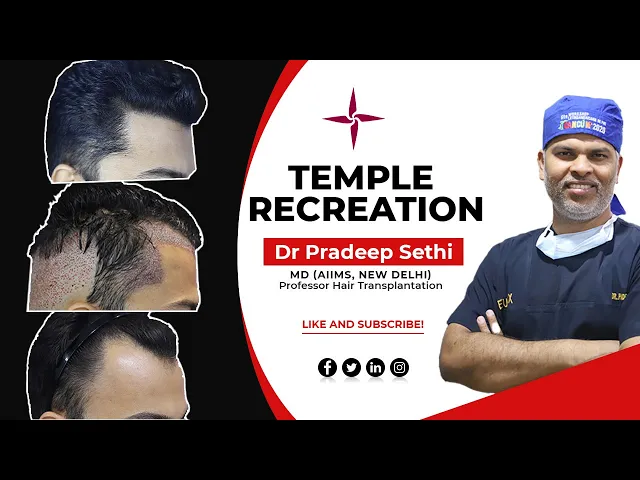
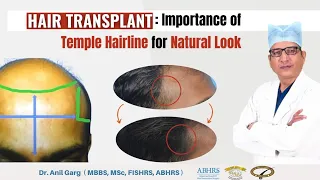
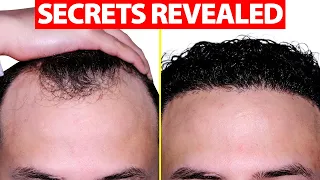
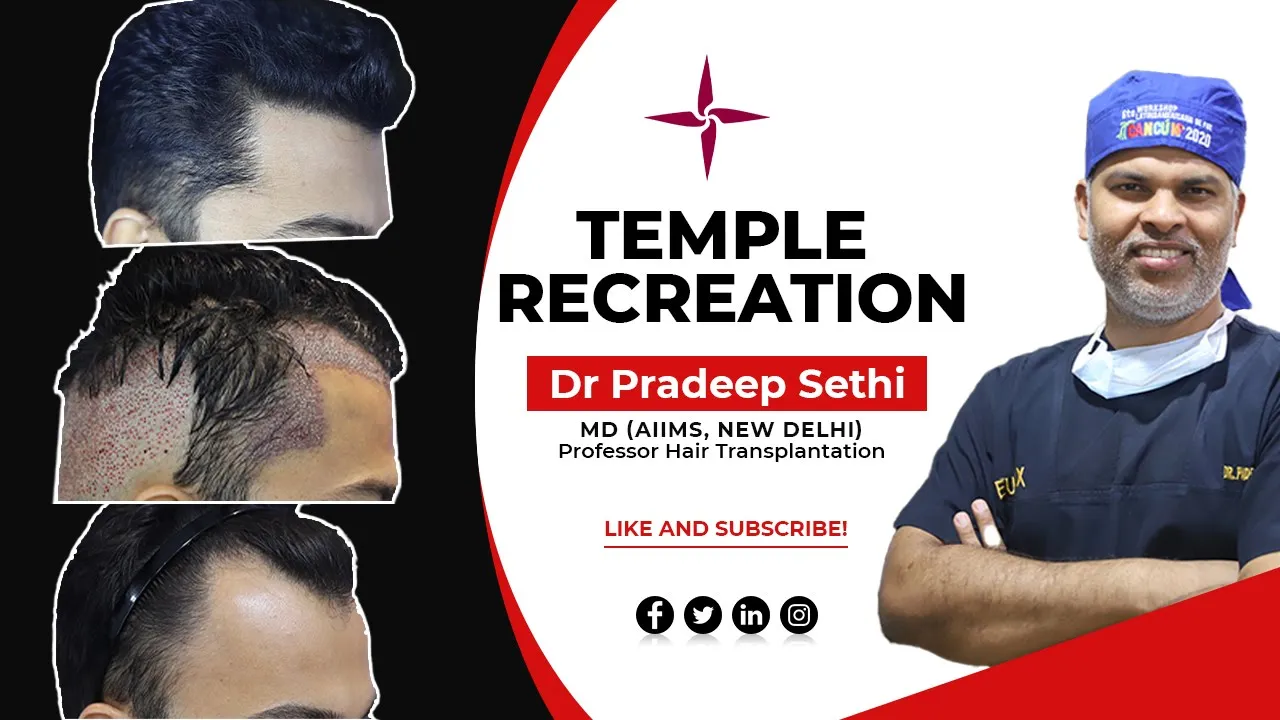
today i will be discussing about something which is very close to my heart that is temple recreation or temple reconstruction this is the temple which is on the sides of the face which give a framing to the face and in addition to the hairline which is the gateway to the face temple is very very essential to get the right kind of definition of the face when the temple is receded or washed out due to baldness then the forehead looks bigger because the hairlessness gets increased if somebody has a receding hairline as well as he has
got a receding temple then that both would kind of you know that will end up giving a bigger forehead because of you know the hairlessness both horizontally and vertically if it is rightly present then the face looks very articulated kind of looks like an poetry if it is not there then you know it is disproportionately the face looks uh bigger and wider something it looks like something is wrong on the face if the temple is not there temple when reconstructing if you are not doing a lot of things correct like the angle of the hair
the amount of the hair the direction of the hair the quality of the hair then it will be catastrophic if anything goes wrong then you know the new hair on the temple you know they they would be growing but they would be kind of you know very bizarre kind of safe the temple would be bizarre kind of the hair would be growing outward they would be growing kind of you know very unruly so that would be more catastrophic than not having a temple typically temple is a triangular structure it has got a like vertical arm
it had a horizontal arm and opposite i got a angle the apex each and every element of the temple is very very important the uh the vertical line is not exactly vertical it is kind of you know in a vertical line and uh depending upon the facial cut the temple varies sometimes it is you know really standing sometimes this is a little bit angulated uh you have to understand that it is always customized to any individual face and the horizontal line is not exactly horizontal line but mostly uh it goes as if like the lower
portion of the temple goes as if parallel to the eyebrows not always true but mostly it is true and the angle the apex of the temple that is angle it is usually acute now the temple the outer side of the the temple that is the outer side of the both vertical line horizontal line and the apex the hair quality is very very different the hair is usually there like singles they're very very thin very slow growing and they don't grow long and they're very very lighter maybe around four to five layers of hair both you
know the outer side of the temple the both up and below they're very very lighter and they don't grow long so they are baby kind of hair so when we're reconstructing the temple we should be aware of all those things picking those category of hair from either nap of the neck or just above the ear or maybe behind the ear on the front of the ear you have to and it is not always that it is the nape of the neck that we should be searching for a patient you have to search all those areas
where the hair is this kind of like thin slow growing and you know very light so whether to do a temple or not that is very very important if a patient is young and the speed of the boneless is very rapid then you should not be attempting the temple because you know that you know he will become grade seven grade six and uh this is also received then we'll have if you are done that procedure on the temple the young is then you'll have hair over here and the bottle should be behind that and there
will be hello around the grown hair that look very very ugly and if somebody is let's say 40 not very young but if the baldness is very rapidly progressing then also we should not be touching the temple area so you should be knowing when to do it when not to do it and what kind of hair that are really required to recreate the temple and you know the angulation uh and the direction the angulation here comes something called curl curl is very that is the curvature of the hair what happens is any hair that goes
out of the skin it has got a angle to the skin angle to the base of the skin and after the certain angle the angle of exit it falls on the skin and if it is grown more than one centimeter two centimeter then you can start directing it to any direction like if you see my hair they all have the frontal layer they're around 15 to 25 degree to the skin but after they have grown i've kept them up i could have kept them on the side left or right so that means the direction of
the hair or the parting of the hair is decided or done aesthetically or cosmetically later on but anatomically the angle of exit is fixed so also in the temple the anatomically the angle of exit is close to 5 degree or maybe less than 5 degree to the skin it is almost slips on the skin it is very flat and once this the hair has left the skin it goes and falls back on the skin this is the curl it falls on the skin back if the curl is not done properly then hair would you know
it will be like this it will be upside down it will be standing that will be very very catastrophic so the curl has to be correct the angle has to be correct and then come to direction the hair over here the vertical line the hair is a little bit they go back and downward and you know if you go to the lower side of the vertical line they gradually they become little bit transverse or they become parallel to the ground or maybe parallel to the eyebrows that is very very essential or to understand otherwise if
all the hair are going backward and downward till the lower portion of the vertical line then you know that will not match so gradually once they go down down and down the you know the direction goes uh transversely and the lower portion as i said lower uh part like the transverse line around four to five layers of the hair they all are almost transversely placed parallel to the ground or parallel to the eyebrows and after that it goes very smoothly gets kind of you know merged with the side locks so we have to understand each
and every hair that we put on the side locks uh that counts that is very very essential uh this would be thoughtful we should not be putting any random hair over there then again if you put thicker hair on the front like you know the outer side of the vertical line and the horizontal arm what will happen is the thicker hair with the weight of the hair they will fall down they will fall and they will look very unruly they look as if something is hanging you know the mangoes are hanging from the trees so
that look very very ugly so the hair cannot be very thick as i said the hair has to be very very thin there should be slow growing less pigmented and you know and right angle right direction then only it will go and another thing is the the temple should merge with the uh hair behind that or the pre-existing hair the merging also very very important we should not be putting too much of thick hair over there should not be putting too much of hair over there and otherwise you know the merging will be very very
bad so uh if the temple is recreated well according to you know if you respect the anatomy respect the angle respect the color and respect the future of the baldness or you know the the progressive of the baldness then we'll do it well and it has to be under corrected if you over correct it then no sometimes i will be repenting about that later and then we'll have to extract the grafts so do some kind of under correction and we should know when not to do it like i just said young patients and when the
boneless is very rapidly progressing then we should not be doing it if we you know respect all these things then we'll be creating something very very gratifying and as i said if it is rightly done then there is nothing better than this in terms of gratification that we get out of hair transplant and if you done badly then it will be the most catastrophic thing to the patient because it's just in front of the face here it is standing it is looking so temple is also important in case of females it is not that prominent
as like males but a lot of females they are very small subtle temple and you have to respect that and if you recreate that temple in the females then you know that is the best thing in my experience of of more than 10 years of hair restoration now with more than 6000 patients as a whole in our group we have realized that temple recreation the most artistic thing most challenging thing also very gratifying so you know we uh almost we end up doing four or five temples uh every week and we'll be writing a paper
upon how to do the temples and i always say do it once do it right choose the right doctor and go through his old patients go through his old record and do the right decision thank you [Music]