this video is sponsored by iron order join us in this free online pvp strategy game and experience a combination of several genres like strategy war and rpg iron order has a massive multiplayer base that allows players to play real-time matches for weeks on realistic world maps with breathtaking scenes based on world war one choose your country and use the nation's resources effectively and efficiently to fight up to 100 other players in real time battles combine your skills with numerous different units that can range from infantry tanks and planes to even mechs like flying fortresses and titans and become the ruler of the world forge alliances engage in epic battles in this realistic augmentation of world war one and fight for world dominance with a new generation of deadly technologies play iron order with the same account on both pc and mobile clinch the victory and fight for world supremacy check the link in the description to get an exclusive gift of 13 000 gold in one month of premium subscription for free so hurry up the offer only lasts for 30 days life inside a tank the mark v tank 1918. the arrival of the tank in world war one heralded a whole new kind of warfare that helped to break the bitter and bloody stalemate of trench warfare that had plagued the western front for years and it was the british who pioneered the way in the introduction development and use of these fearsome armored fighting machines they were first introduced during the battle of the salve in september 1916 much to the shock and disbelief of the german soldiers these british main battle tanks were a series of heavy so-called land ships that all had a very similar layout with over 2 000 of them being built before the war had ended in november 1918. there were five main models with the ultimate wartime one being the mark v this was introduced in july of 1918 and had been designed by major w.
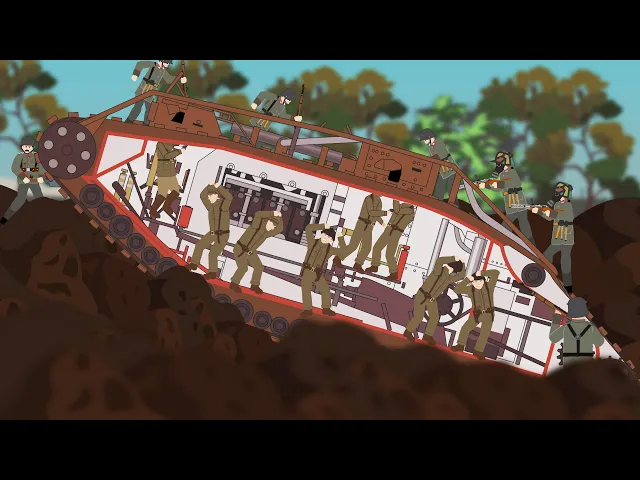
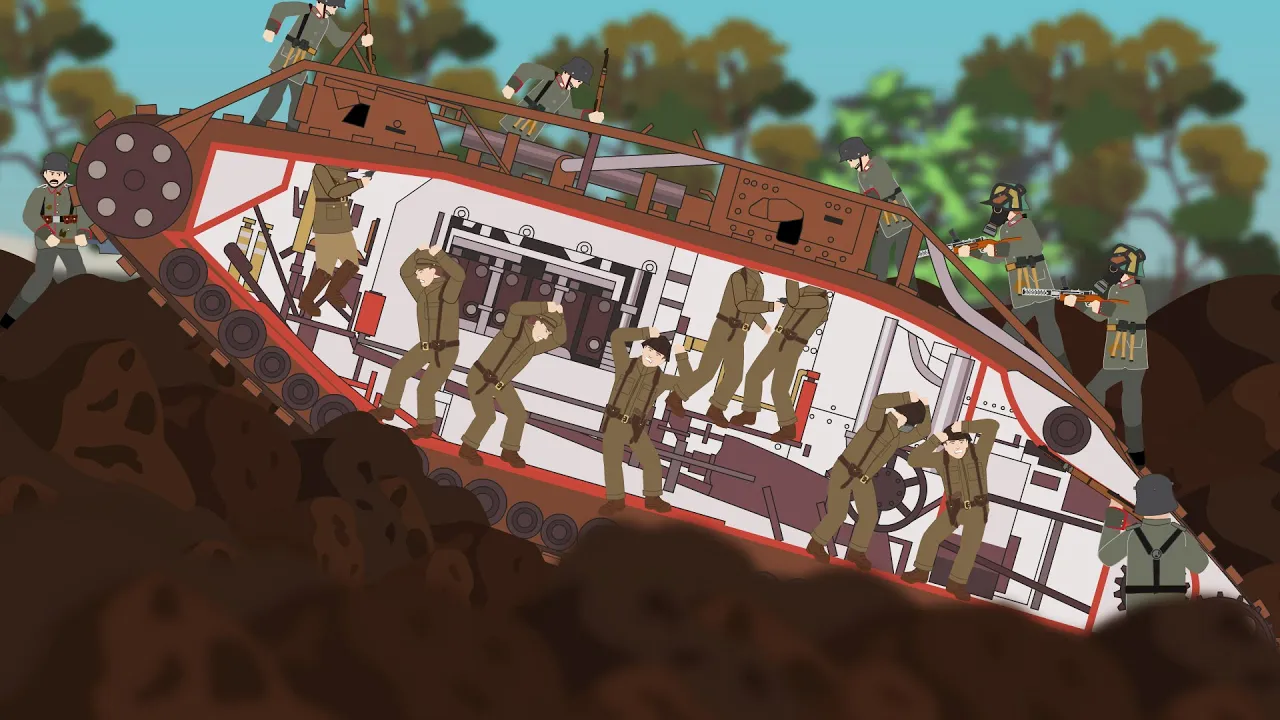
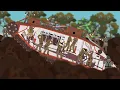
g wilson a british royal naval air service engineer and produced at the metropolitan carriage and wagon factory at saltley and oldbury in the west midlands of england the mark v tank was not a radical new design just more of an updated version of the earlier mark iv tank four hundred of these mark fives were built and consisted of two versions the six pounder gun version which was called the male variant and the all machine gun version which was called the female variant two hundred of each were produced the crew compartment like all the other tanks in the series they were incredibly hot inside cramped and noisy with very little ventilation the crew of eight were forced to communicate by shouting using hand signals and writing notes to one another to make matters worse the mark v had a serious design flaw and that was the new engine layout which meant that there was the constant threat of carbon monoxide poisoning throughout the tank from badly vented exhaust fumes and it wasn't unusual for crew members to collapse unconscious inside the tank the driver's cabin the one revolutionary and unique feature of this new model was that it was controlled by just one driver using a gearbox with four forward gears and one reverse gear this was unlike earlier models that needed four gear men two to control each of the tank's tracks this previously clumsy setup had led to much confusion when driving the tank resulting in many mistakes and accidents the mark 5's driver had just a small slit to see out of so if the tank was not operating in battle conditions the tank commander would often get out and walk in front of the vehicle signaling to the driver where to go and pointing out any potential hazards set next to the driver was a gunner who operated the forward firing machine gun toilets and showers or lack of them despite the tank being 26 feet or eight meters long there was simply not the space to install any kind of onboard toilet or washing facilities and it didn't help that the tank was already woefully overloaded with all sorts of equipment and ordnance so despite missions often lasting for days all that was provided for the crew were some rags and buckets for washing and other bodily functions to empty out one of the buckets a crew member had to open the escape hatch to throw out its contents but in the middle of combat these waste-filled buckets would have to stay inside for hours at a time adding to the stench of sweat and fumes in the poorly ventilated and hot interior dinner service often food like bacon and eggs could be cooked on board by being wrapped in tin foil and placed on the top of the hot engines to slowly cook but the ability to make the all-important cup of tea in a british tank didn't occur for another 30 years with the introduction of the boiling vessel in the british centurion tank so the crew had to boil their water outside of the tank and makeshift petrol burners the engine the 29-ton tank was powered by a massive 19-liter six-cylinder in-line ricardo petrol engine the engine produced 150 horsepower which is the equivalent to that of a modern-day harley-davidson motorcycle this gave the mark 5 a top speed of 5 miles an hour about the same speed as that of a person walking briskly fuel tank despite holding 93 gallons or 420 liters of fuel the tank only had a range of 45 miles and though the fuel tank was armored it could easily be penetrated by enemy heavy machine gun fire as the tank was powered by petrol it could explode when hit setting the tank on fire disabling it completely so many crews were incinerated in this way that specially trained salvage crews had to be formed to retrieve their bodies out of the charred hulks the starting handle the tanks had to be crank started internally using a large starting handle that had to be vigorously rotated with both hands in order to get the tank engine to start the semaphore system the semaphore system allowed for communication between tanks using a primitive signaling system of levers and disks on top of the tank but this relied heavily on good visibility therefore adverse weather conditions like rain or early morning fog made it next to useless battlefield smoke was also a problem too the tanks also carried wicker baskets containing carrier pigeons that would have messages strapped to their legs and were released outside of the tank to fly back to base with messages the armored exterior the mark v's armor had 16 millimeter or . 63 inch thick steel plate on the front with 12 millimeter or 0. 47 inch on the sides along with eight millimeter or 0.
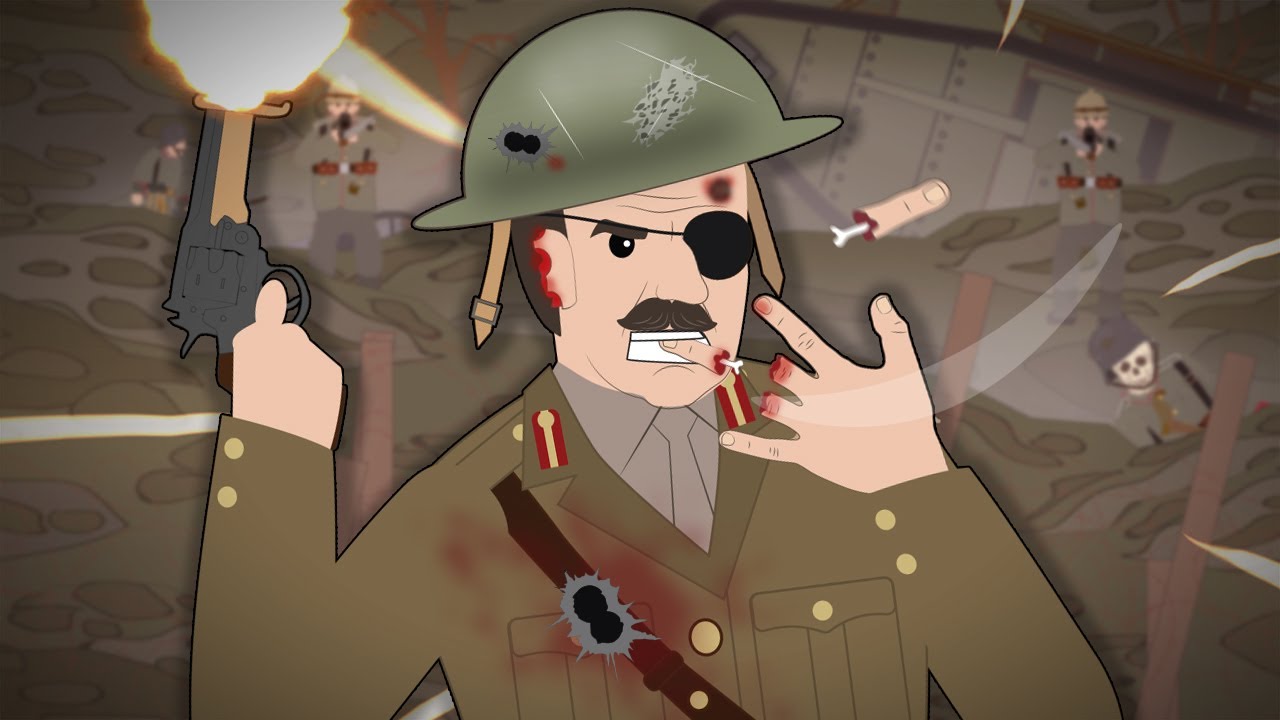
31 inch on both the rear and the roof this meant that it was totally immune to all types of small arms fire and it could also withstand heavy machine gun fire and grenade blasts on all but the rear and roof of the tank the steel plate was just normal industrial grid and therefore quite brittle so if the plate was penetrated it was prone to splintering if this happened it resulted in small red-hot shards of metal shooting around the crew compartment with devastating effects the crew would wear medieval looking chain mail masks to protect their eyes and gas masks were always close at hand weaponry the male variant had a six pounder gun in each of the forward-facing portions of its sponsons as well as a further 4. 303 inch machine gun scattered about the tank one machine gun was located on each side of the sponsons another facing backwards at the rear of the tank and a fourth in the driver's cabin facing forward the female variant was the same except the six pounder were replaced with machine guns six pounders were a short-barreled version of a british naval gun so they didn't get stuck in the mud as they crossed the trenches or shell craters the machine guns were the hotchkiss m1909 which could fire as many as 10 rounds a second in short bursts but the drawback was that the odor from the chordite propellant used in the machine guns rounds though smokeless caused irritation to the eyes and lungs of the gunners inside the cramped and poorly ventilated interior of the tank ammunition [Music] the 207 rounds for the six pounder gun was centrally stored whereas the thousands of rounds for the machine guns were distributed about the tank next to the weapon ports for quick and easy access the side sponsons turrets for tanks had yet to be fully realized therefore sponsons were used at first there was one located on either side of the mark v tank each house two weapons one in the front of the sponson that had a very limited arc of fire and could only fire at targets in front of the tank the other was on the side of the sponson and could only fire at targets to the side of the tank depending on the variant the gun facing forward would be a six pounder gun on the male version or a machine gun on the female one the side-facing gun on both variants was always a machine gun after the war these clumsy types of mountings were discarded as designers introduced more effective turreted designs but a notable exception was the us stop gap tank of world war ii the m3 lee grant observation post an armored cabin on the roof of the tank was used for all-around observation using a series of observation slits there was also a peephole on both sides which the commander could also fire his six-shot service revolver through if he needed to these tanks were reasonably successful though after the war they were gradually phased out of service to be replaced with new tanks that had gun turrets and smaller crew numbers and proper dedicated suspension like the vickers medium mark ii that were also equipped with radios some mark fives were used in the russian civil war that ended in 1920.