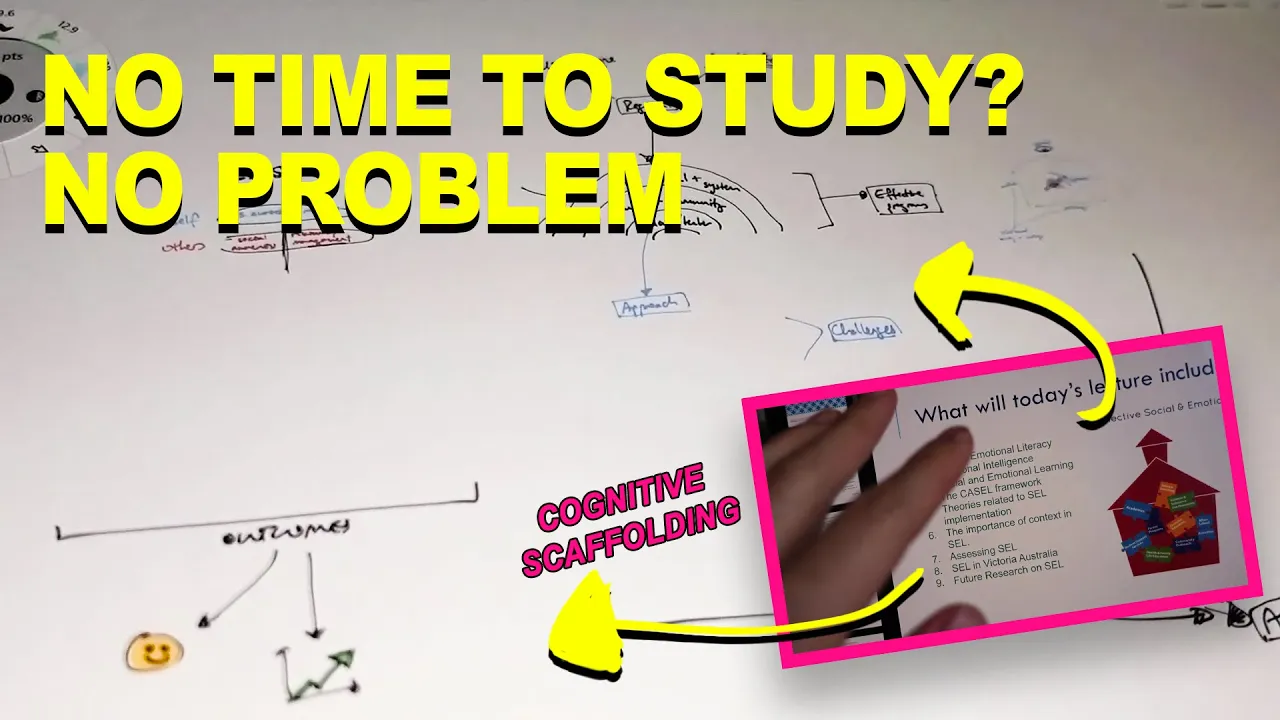
something a little different today I'm going to be doing a very very quick pre-study just priming myself on a topic I've only got basically 1 hour uh that I can spend on doing this and I want to get through as much as possible and I know that I'm not going to have time to go through everything in detail so what I'm aiming to do here is a little bit of a different technique but it's really leveraging off the layers of learning idea that I talk about in the course and showing how really a small amount
of time can be leveraged to increase your learning Effectiveness by quite a lot so the idea here is that I'm just going to build that basic organizational structure and so like I always talk about in my videos you know your brain is like a warehouse you want to make sure that you try to organize things as much as possible and even if I'm not able to get the fine nitty-gritty details of exactly how everything is organized you know at the at the final level and even if I'm not able to actually put the information in
the shelves correctly you know metaphorically speaking I can still at least evaluate what it is that I'm about to be learning and then hypothesize various different organizational structures and then fill them with really the biggest items the biggest heaviest kind of items and what that will do is it reduces the load it it gives me time to consolidate and it means that later when I'm introducing smaller packages smaller details smaller facts and when there is a discussion or a lecture or or a class about it I'm in a much bit position to engage in that
and get out a lot more from it it's hard to engage in a learning experience or a class or a lecture or even a conversation if you're going into it with absolutely no idea about what's going on having this organizational structure teaches you how to think about it which actually equips you to learn it more effectively and something like spending time on priming and organization uh which allows you to have a higher quality of encoding is something that will pay off much more in the long run compared to just spending this hour smashing through and
creating a bunch of flash cards which at the end of the day does not teach me how to think about it creates no organizational structure information still exists in isolation High chance of forgetting it my rate of information Decay is going to be very high the only thing that I will be able to use to save it off is active recall and based repetition which we know is unsustainable when there's a high volume of content or when I just don't want to spend literally all of my time doing endless flash card so that's what I'll
be doing right now and I'll show you a quick demonstration of how I'm going to do that using a combination of textbook material articles lecture slides and recordings so uh let's try to make this a productive hour so we've got some lecture slides here and um at the very beginning there is a list um as you can see of all the different things that will be covered in the lecture now I'm going to be using this list as you know possible categorizations of the ways that I can learn it and I'm really trying to think
okay why do I need to know about each of these points why are they important and how are they related and I feel like if I'm able to understand that I'll have a really good foundation for building the backbone of what will eventually become my organizational structure so I'm I'm I'm staying I'm keeping some time on these keywords and my main questions that I want to get answered is why are each of these important how can I group them together what are the relationships between them by the way yes I know I could be screen
recording however this is just faster and easier uh and I just don't have much much time to be messing around with lots of different files and recordings so this is how I'm going to be doing it but you know there's no problem with that really now actually I want to run you through the framework of how I might be thinking about something like this in a little bit more detail so when I read these words right um I can get it already like some kind of sense of flow so for example emotional literacy what does
that probably meaning I know the word literacy and I can kind of make a guess about what emotional literacy sort of means emotional intelligence similarly I can make a guess about what that kind of means and I can sort of tell that tional literacy and emotional intelligence are going to be connected to each other right emotional literacy is probably going to allow emotional intelligence and then that is probably going to be related to Social and emotional learning like for example some aspect of emotional intelligence uh is going to be the foundation about what social and
emotional learning is about and then it's going to move on to Frameworks about it uh theories of implementation and some context about why it's important so I'm already seeing that this context of why it's important is something that I might want to have earlier on because it's going to allow me to understand why all of this stuff is important to begin with so already I'm forming some basic flows of information this leads to this which leads to this and then the final thing that ties all of this together is how do we use it in
real life these Frameworks and theories about implementation and then assessment of it so that's kind of how I'm thinking about this topic now I'm going to be doing what's called syntopical learning here now you may in the past have already heard me talk about this thing called syntopical reading which is basically reading multiple sources of information simultaneously because it's going to allow me to develop a more robust and holistic understanding of the topic more so than what would be allowed if I were to just read a single source and then read another source linearly after
that you can see how both sources may talk about similar ideas maybe from slightly different angles and then it will be actually a waste of time for me to do them one by one uh since I'm just focusing on this organizational structure it actually makes sense for me to review all the other headings and categorizations and groupings and keywords that are in the other ones as well simultaneously so that I can make sure that the organizational structure I get to at the very beginning is as accurate and as close to what it's going to need
to be in the final stage as can be so we'll have a look at some of the headings and things from the textbooks to see if it's different or if I can keep the same flow that I've theorized from just reading through that introduction slide so the textbook chapters are the first two chapters here so there's quite a lot of reading I mean this is now that one chapter finished and then there's another chapter these references and this is the next chapter which goes on for quite a bit obviously for quite a bit uh and
it's finally finished okay so that's uh decent number of pages it's like 20 something Pages uh in the text book um but I remember now you know most of the time students would feel like at this point is overwhelming there's so much information how can I possibly get through it the idea is that we're we're not aiming to read through literally everything what we're trying to do is get an organizational structure and what the remarkable thing is that when we get an organizational structure and we layer on the learning uh instead of just going linearly
one by one then actually all this information will will be processed much faster than you'd be able to think I mean you wouldn't say that 20 pages of reading like your favorite fiction book is necessarily heaps you know and cognitively draining and this because you know how to think about the story and context but usually when we're learning stuff we don't bother to think about the context and the story behind it so when we build this organizational structure in our minds um we know how to think about the topic it makes learning all this stuff
very very straightforward and and you'll be very surprised at how much easier it gets a lot of the overwhelm is actually because people are using an incorrect technique uh so I'll be skimming through this to help refine my organizational structure and I'll be looking through this article as well so I need to read this uh whole article which as you can see is also fairly long yep so those are the references so that's uh quite a long article too so I'll be reading through that uh and then I'll be reading through this article too which
is not quite as long um okay so that's not too bad uh and now I've got another 45 minutes to go to get through all of this stuff so again what I'll be doing is I'll be going through each of my um sources of information and I'll be looking at each of these and trying to figure out what the organizational structure is and the thing that's important to mention here is I'm really leveraging off of this thing called higher order learning and and the way that higher order Learning Works is that your brain has different
ways of processing and consuming and mastering information and now lower order learning according to Bloom's taxonomy or solo taxonomy generally the the themes are that the information is very isolated it's very fact-based and recall based and that's where most students sit if you're a young student going through Primary Elementary early stage of secondary school then yes it's you know you can get away with that but it doesn't really build anything for the future and also later on in your life there's very little information that you need to learn that way because of the fact that
on the job learning really you have access to that information on your phone so it's more about that conceptual understanding and also more difficult test questions especially in the later years especially in University um they do tend to test you based on your understanding and your understanding of the relationships and your ability to not view information in isolation so this way of of thinking about of these points is from the very beginning it's important to make sure that we are thinking about each thing not in terms of what is it and just trying to understand
like I'm not just trying to understand what is emotional literacy and emotional intelligence you know what is social and emotional learning that's not the point I don't know I don't care about the what I only care about the why is it important and how do I create organization with that in comparison to other ideas now most people say well how can you do that without knowing what it is and the answer is that you can't and that's the best part is that I don't have to try to know what it it is I can skip
straight away and do the higher order learning which is usually evaluative uh looking and comparing between different ideas um and by doing that it allows me to actually be through all the lower stages so your brain doesn't need to try to be on Lower order learning to do lower order learning in fact it's actually faster to achieve memorization and understanding when you immediately set your sites on a higher order learning so by doing that I'm not only saving time but I'm giving more clear and focused direction for my brain to work work which is ultimately
going to make the entire learning process much much easier so whenever I read any of these keywords that's the that's the question that's going to be going on in my mind why is this important how can I create groups around it and how can I relate these groups together if I'm able to answer that I'm happy and I'm able to move on so I'm going to go through and churn through all of this material and then by asking that question it's going to allow me to find patterns similarities differences and I'm going to end up
with various chunks and different relationships between the chunks and I'll represent that in a flow on my mind map it's not really a mind map so I call it a chunk map because I'm not really sure if there is a term specifically for this process I've never really seen it before all the variations of my mapping that I've seen haven't really covered this exact process um concept mapping is also not very not the same thing process mapping is definitely not the same thing uh so I just call it relational priority chunk mapping it's the way
that I teach it um and you know it's the way that I teach my students so I'll be going through that and Di I'm putting that on my chunk map and then after that I can apply you know one of those things like my grind framework um for those of you that haven't seen the the the video my six steps to the perfect mind map you know that's that's kind of actually a later stage version once you are able to do the basic chunk mapping so a lot of comments on that video were saying oh
this is not possible it's too difficult you know how can you achieve this and the answer is well you can't really achieve it if you don't have the fundamental cognitive process down first um so that's me sort of demonstrating this now so anyway I'm going to I'm going to go through this material and we'll see where it ends up so as a brief update um you know what I've learned so far in just a few slides actually is that uh emotional literacy and tional intelligence uh used interchangeably but um we like the idea of literacy
because it's something that uh shows that it's a learned behavior now why is that relevant to me you know this slide is called developing interest in emotional literacy now it sounds like a very boring dry topic potentially but remember in my mind I'm thinking how does that relate to everything and I'm thinking how do I use this information why do I even need to know this and I know that there's going to be something to do with the importance of context incl and like how we can use it and the the slide over here says
that students student mental health engagement improves when tud students are taught uh seal so the idea here is that you know there is a real benefit to mental health and engagement and I have experience working with students so this is something that's relevant to me and so I'm thinking okay well maybe that's one of the applications maybe I can even take what I'm learning uh and apply that to my own practice now you can't always do that for everything I've kind of locked out here and that I have a real world personal idea about how
I might be able to use this information but even if I didn't i' you have to find some link to something so this is again how I'm viewing the information and already connections are being formed in terms of mental health uh andal and then what some of those real world applications might actually be so I'm getting an idea about what potentially those other articles might even be talking about without having actually even read them and this is how the learning starts growing and snowballing and becoming faster over time now one of the things that I
want to mention is that when you study and learn in this way you'll find that it's much easier to hold on to information in your head uh without having to write down notes on everything so it's penty of research showing that when you write longer more wordy notes and especially when you're typing them you don't get as much good learning out of it and yes I'll talk about that at length in other videos maybe I already have depending on when this was uploaded uh but the idea is that we want to do as much of
the processing in our head as possible because that's actually where the learning happens you know the learning is not happening on the paper the learning is happening in our head the idea behind learning in this way is that because so much of that heavy lifting happens in our head we been trying to create that organization actually becomes easier to remember uh this information because it's actually fundamentally organized it's not as overwhelming as you might feel that it is it just means that every now and again you have to sort of stop think compress organize relate
everything together and then you can move on again and and that's actually a very normal part of learning but most students have never really learned that way and so it can be very uncomfortable as a feeling even though it is actually effective and so students can often be averse to that discomfort because they think it's it's wrong it's not meant to be uncomfortable but actually management of cognitive load and COG itive load optimization and the theor surrounding that tells us that actually there is a linear relationship between increasing cognitive load and the amount of learning
that you can get to a certain point um and so being able to manage is actually a fundamental skill of any high level learner and therefore for me being very used to the discomfort I'm I I enjoy and I thrive in the process of feeling a little bit of confusion figuring it out organizing it and then Moving on but um I recommend that you give this a go because you will feel in yourself that it's you know quite difficult now if you are struggling with any of the techniques that I'm demonstrating you know the the
learning time to learn these techniques is not you know usually minutes it's usually days to potentially weeks potentially even months if you don't have any guidance um and if you're struggling with this you want more of a step bystep uh you know handheld experience in terms of exactly what techniques you need to learn in what time uh what order and then actually get me to you know give you feedback and have that sort of um guidance then I recommend that you check out the course that I've made it's a very full-on um you know interactive
experience where you get to engage with me and get to engage with the rest of my team uh and have that sort of step-by-step guidance I can guarantee you'll improve faster than just by watching these videos uh and and and trying to do it by yourself it's kind of like learning to play an instrument or play a sport without having a coach and just being selftaught or watching YouTube videos is obviously going to be a bit of a difference so if you are interested check the links below uh in the description uh and then you
know you can sign up for that but anyway let's uh keep studying [Music] so in this slide there's quite a lot of detail and additional information and almost getting into kind of examples and definitions and things at this stage in time I'm not really ready for that type of learning and being able to control when you're ready to receive certain types of information is also a fundamental skill of a high level learner so I know that I'm going to go back to this later anyway the purpose of my current session is just to build that
organizational structure as good as possible so I don't really want to waste time on this stuff I'm just going to get the general idea and the trend from this slide and I'm going to move on uh there's no point struggling over it now it will make a lot more sense later on when the organizational structure is more in place and I'm more comfortable with thinking about the [Music] topic okay so I have just finished um reading through all of the this material uh it's been about 50 minutes roughly about 50 minutes that I've been reading
through this stuff and um over those 50 minutes I've had lunch as well I've you know I haven't been particularly stressed out in my mind or anything because what's there to stress about I'm just doing my best that I can in the hour that I've got now I've haven't written any notes yet and some of you may be thinking how is it possible not to write notes after reading things for an hour and still remember things uh you'll note that when I do write my notes that it's not not that difficult when you have the
system in your head down now you could have written a few notes partially here and there as you were going to help track your thoughts and actually for most beginners or inter even even intermediate you know unless you have a at least sort of I would say you know a couple months of practice with using this skill you may want to write a few notes as you go because it will just make it a little bit easier for you to manage that but uh when you get B and B your dependency on writing notes just
reduces more and more more um so when I write these notes you'll see that it is very simplified you'll probably think how is it that it's that simple um but if you do look really really carefully and you think about it you will probably see that there is quite a lot of um relation relationships there and it does seem like there is quite a clean structure and I feel a lot better about this topic now um I feel like I'm able to have a conversation there's definitely stuff that I missed I'm not claiming that I
learned you know this whatever like um 40 pages of reading material in the last hour um but I am saying that I I have a very good way of thinking about it now um I feel much more confident about the topic I feel like when I go back in a proper study session to go over it a little bit more um I'll be able to learn it and understand and process and remember that detail much more easily because I know how everything kind of fits in and I'll probably be a lot more engaged and curious
about it because I have you know questions that come up from other things that I know about this topic whereas before I don't know anything about this topic so I wouldn't have any of those questions one more thing is that uh I'm also more primed for when I listen to a lecture so I've got a lecture downloaded here it's pre-recorded I'm actually going to go to the dentist soon which is the reason why I'm doing this but I'm planning on just plugging in my um earbuds in the uh in the dentist while I'm getting my
stuff done uh and then I'll just listen to the lecture recording while I'm on the chair um I don't know how that's going to work because like okay I know this is strange for a doctor but I am actually terrified of needles I don't mind needling other people but um getting needles myself is something I just have an irrational fear of and I understand that it's irrational CU it's not the pain it's just it's a concept okay anyway uh that that's that's the idea so now I feel like when I listen to it I'm going
to really be able to engage with the topic through listening because there's already a good organizational structure that's primed it's more like I'm having a conversation just not saying anything with the lecturer rather than just listening to a bunch of new information and I just have no idea how to even think about it let alone what it even means so let me just go and write my notes I've got about 5 minutes left before I need to head off so I'm going to really quickly smash through these notes you'll see me do it and look
at look at my process and again if you want to see how I do this process everything that goes on in my head how I'm writing my notes the technique that I use for the mind maps a lot of that stuff is just too detailed uh and requires a very order of learning that skill so if you want to know the start to finish process of how I manage my time and how I study then you can check out the link again below to sign up for the course and uh give that a go but
for now let's write some [Music] notes so as you can see there are a lot of gaps between things leaving me room to fill it in later uh the basic structure is there you can kind of see the overall flow of information of how it kind of works together uh and I and I know that there are going to be you know a lot of things that I need to fill in here but you know this amount of structure which honestly it doesn't seem like a lot but this is actually the hardest and probably the
most important part of learning when I see students struggling with studying uh the vast majority of students are unable to get their organizational structure even close to as clean as this and usually will struggle with the just holding on to information for so long in their heads uh without writing it down but again if you are struggling with that you can just you know you can offload as you go and then you can consolidate it later like that it just will take a little bit longer you know if that's the Skool level you're at then
you got to start there and you just you know build slowly so if you're interested in seeing how that my map uh well not really my map technically but you know chunk map turns out after I finish studying everything then let me know in the comments and I can do another video going through how it evolved from that to the next stage uh and again if you're interested in learning a little bit more about this process start to finish exactly how I use the techniques and how you can train yourself from wherever what whatever level
you're at now uh to getting to the point where you're able to do this uh that that change process usually takes our students round about uh 2 to three maybe up to 4 to 6 months depending on your level of diligence and you know if you rush it obviously you're you're not going to learn it as well and so you'll have issues later on which makes it take longer ironically hopefully you enjoyed that if you did please leave a like um and if you're interested in seeing more content on how to learn and how to
manage your time more effectively make sure to subscribe if you have any ideas for uh future videos and future things that you want me to do um then please I'm I'm all ears uh I would love to know know your thoughts leave a comment down below and I'll see you in next one [Music]


![Upbeat Lofi - Deep Focus & Energy for Work [R&B, Neo Soul, Lofi Hiphop]](https://img.youtube.com/vi/THh4fT0O7IY/maxresdefault.jpg)