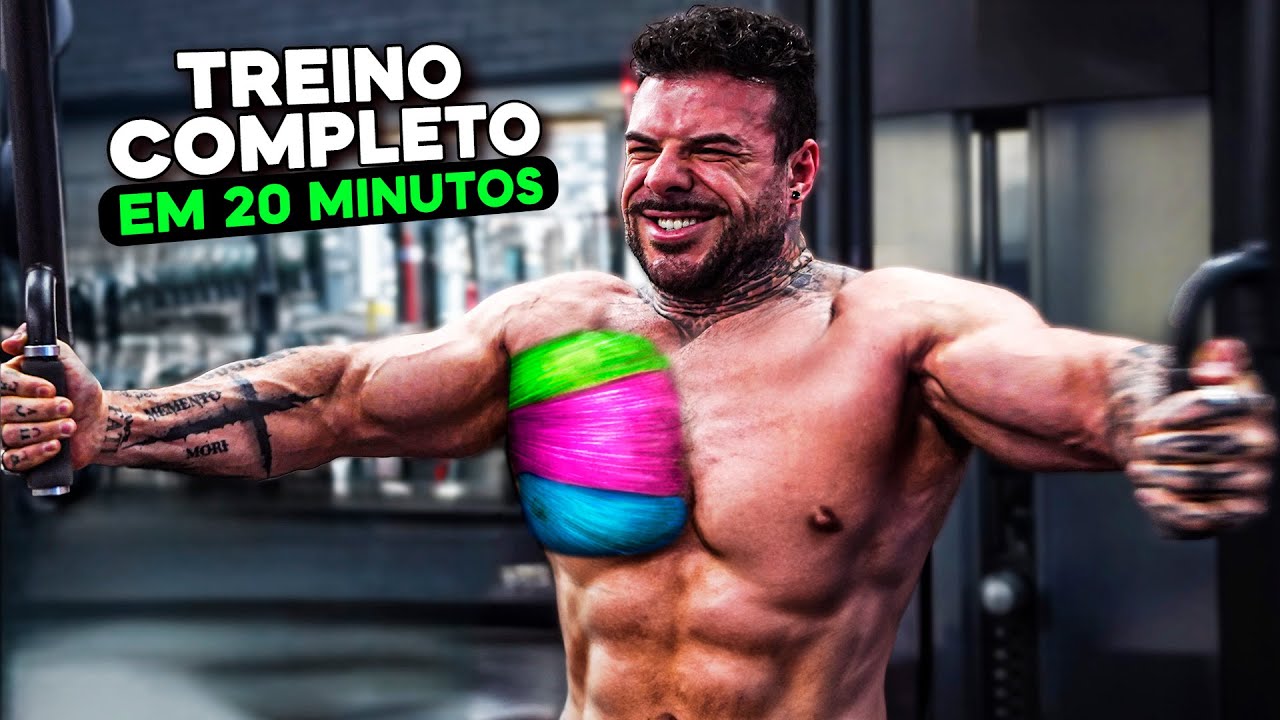
as it works only a single articulation and gives a more isolated work to the chest, and another point is interesting for the crossover, which is the maximum range of motion, as you can shorten the muscle and elongate it as well, Because of that, we say it is even better than the bench press. The first thing we need is adjusting the pulley's height, leaving it as high as possible. Can we place it lower and doing it differently?
Yes, but let's learn it like this first. Let's use a load at a level which we can have total control over the movement, so you don't get hindered. How do we hold the handles?
Some people grab one, then the other, and start it. That's not good for your shoulder. It's at an "unprepared" position, and then you force it at an elongation point where it is more fragile.
I'd advise you to do it like this, using both hands, as you have more stability and safety when holding something closer to your chest. I will grab the other, and I lock my fingers. The weight is here, at my fingers.
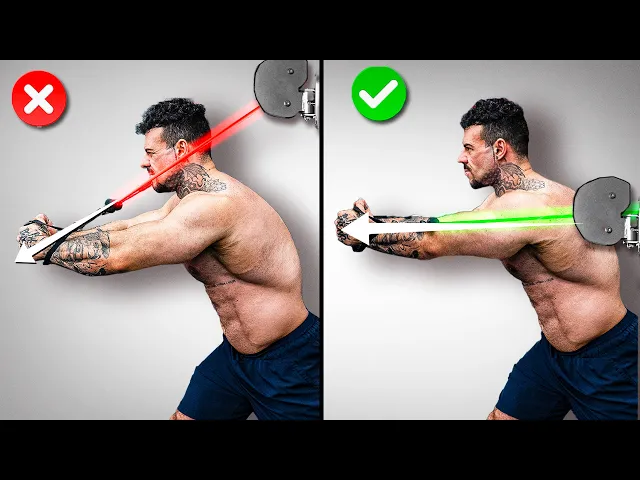
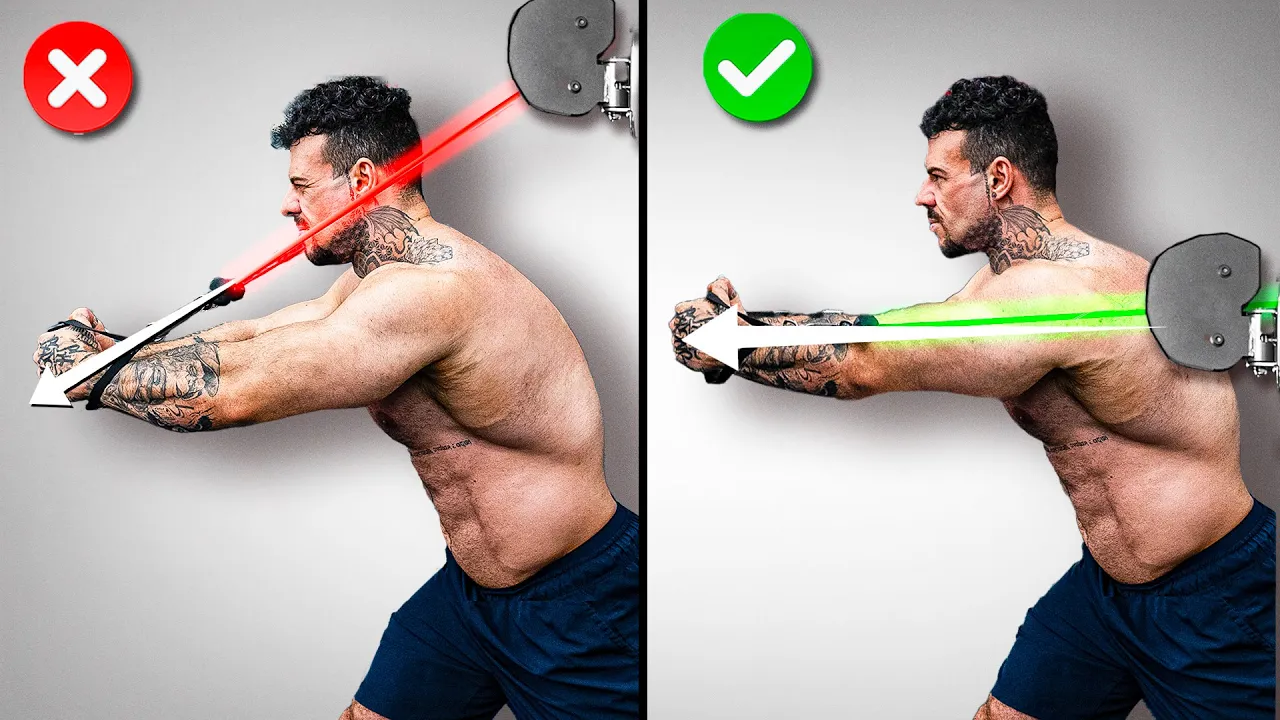
I'm not struggling to hold the handles. I look up to find the middle of the machine, and I take a step forward and will stabilize with a staggered stance. The first mistake is not aligning the force vector with the ideal inclination of your body.
We must align the vector with the chest work. If I want to work the chest integrally and giving emphasis to the middle portion, I must do it at this angle. If I move my body, I must remain with my arms at that angle.
If I move my arms up or down, I change the activation. We'll get to variations in a moment. For the crossover, it's important to do it with this angle.
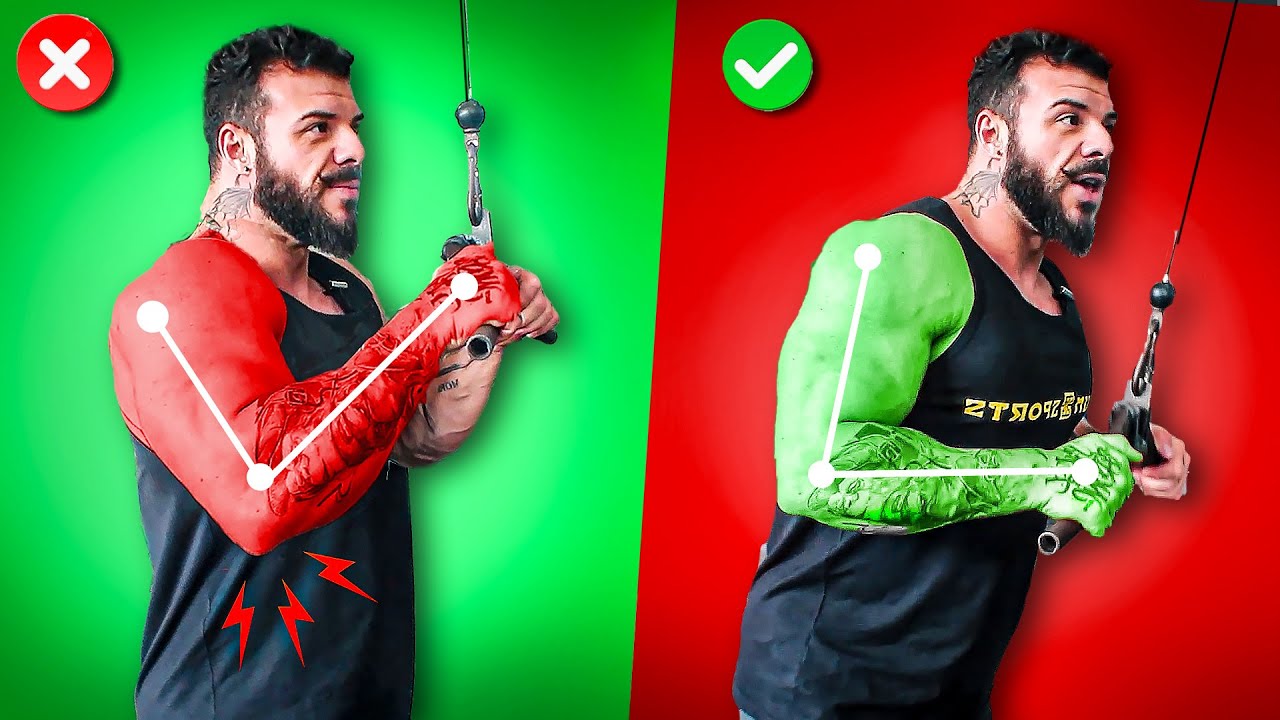
I'll do it in the cable, and it must be parallel to the line of my arm. With this inclination and angle, I have exactly all the work being directed to my chest. If I incline less, and I keep that chest angle, the cable is at a bigger angle than my arm.
If the force vector is not aligned with my shoulders, it leads to my arm rotating. There's bigger lat - and rotator cuff activation. - I am warming my rotator cuff!
I am dissipating all the work my chest does. But the opposite can also happen. If I place the pulley lower and have the posture, see how the cable is running belo my arm?
Here, it's causing a downward rotation, activating the front delts and also the rotator cuff You need to warm the rotator cuff! If you want to emphasize the lower chest, the pulley stays on top, but your posture is more straight, and you pull it to your bellybutton. If you want to work the upper chest, the pulley goes down, and you make an upward movement, taking your hands to head-height.
The second mistake is with the posture. When you have the perfect posture, you have stability. And when your body understands this, the muscles are more connected.
Without stability, your body understands this as dangerous. You take a step forward and improve your back leg base. Something important: if you have your feet one behind the other or have them too close to each other, you lose lateral balance.
My balance base is smaller. See how they are far apart here? It's a nice base, and my brain sees that it's stable, and it can push forward.
Now, the body inclination. Let's get this right. Chest outward.
It's possible that people can hunch over. So, solid base, chest outward, tensed abs to add stability, and erect spine. You are ready, your body understands there is solidity, and you can do the exercise properly.
Mistake number 3 is the cheat. - You cheat! - A basic thing people do is swinging, because it makes the exercise lighter.
What do you lose from this? Muscular activation. If instead of having proper posture and your chest is doing the work, you are swinging and taking work away from the muscle.
Thus, you need to stabilize your torso, directing the work to the chest, channeling the work - to the chest muscular. - Get a chest like this, scrawny boy! Mistake four is regarding your elbows.
The more is extended, the more the movement lever, and the bigger the lever, the more your chest works. If my elbow is flexed, the lever decreases, and if it's extended, the lever increases. What do I want?
I need you to extend your elbows as much as possible, we'll have a bigger lever and this slight bend will protect it, the elbow itself. If you lock in the joints, you'll put all that weight into it. What I'm saying is that if you extend it more, you work your chest more.
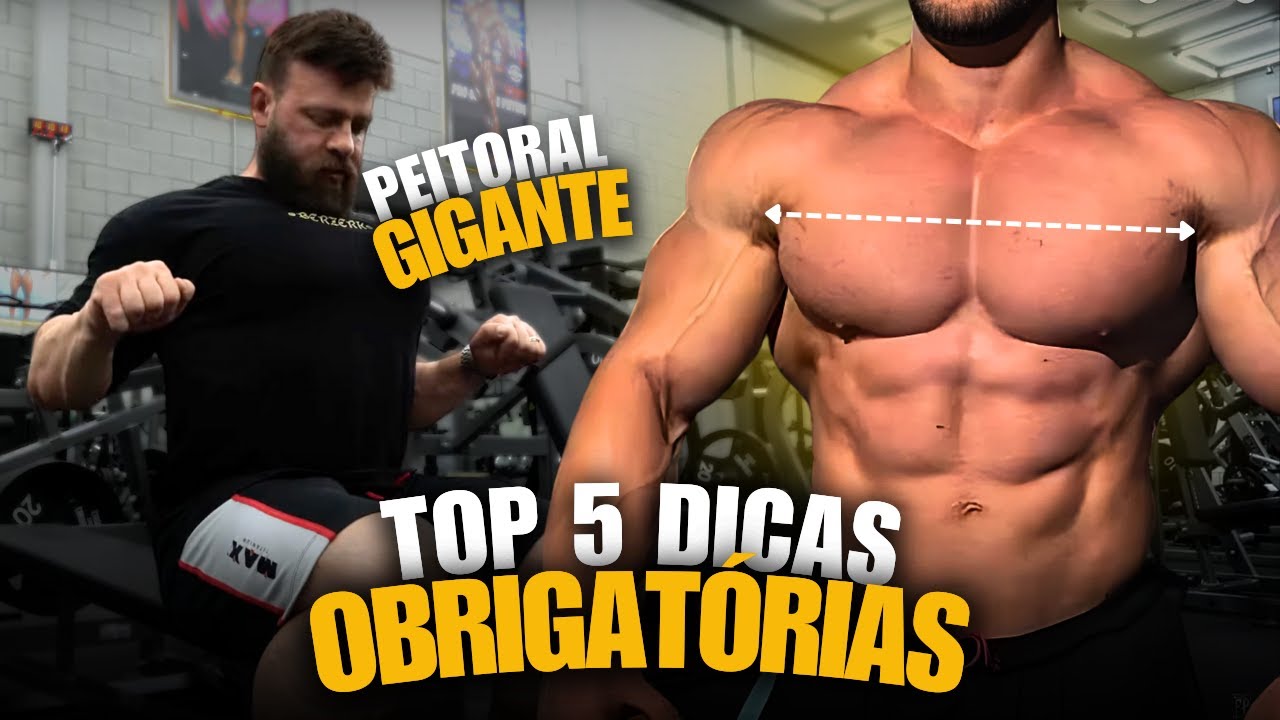
If it's bend, the work decreases. Mistake number five which prevents your chest from growing, making it puny, is not having the proper range of motion, and this breaks my heart because the ROM is the crossover's greatest strength. - You don't explore that!
- Dummy! When we talk about range of motion, you need to have the most ROM possible as long as the movement is good and you're not stressing your joints. You have to stretch and shorten the muscle as much as possible, and what usually happens?
People don't stretch as much as possible, see how it's not enough here, look where I could go. I'm losing muscular work. Some people just do this, not moving enough here.
I'm losing this entire angle here which makes a world of difference. You leave the pulley as high as possible, grab it with both hands, carry it to the other side, lock fingers, look at the middle of the machine, take a step forward, staggered stance, solid base, and extend arms. Adjust your torso's inclination to align the 90° angle in the armpits, and the cable must have the same angle as your arms.
Keep your posture, chest outward, tensed abs to give more stability, and now you will reach the biggest range of motion, stretching the most and shortening the most down below, leaving your torso as stable as possible, so you don't have to cheat. My tip to make this even better: When you close your arms, you squeeze it just that little bit more. Again, I closed them, and squeeze.
When you do this, you shorten the muscles more, leading to more active insufficiency, and more stimulus to get a big chest. This exercise is great, but it's not enough to make your chest grow if you are making those mistakes.