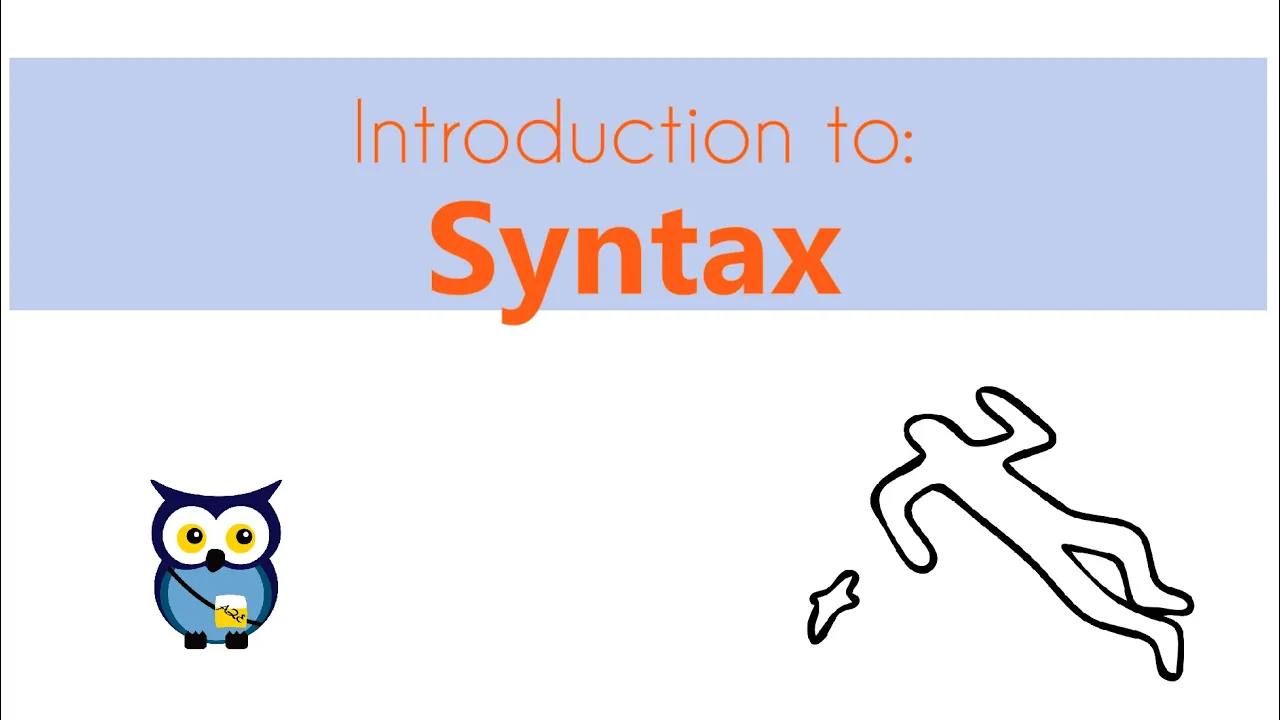
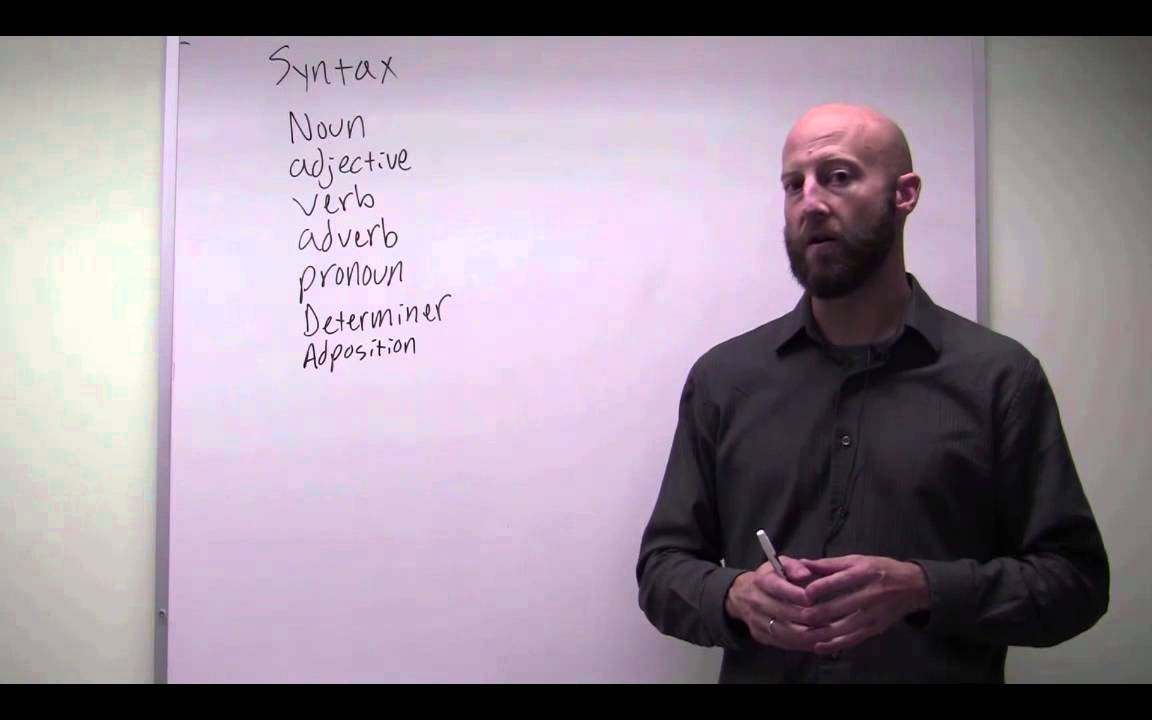
[Music] welcome to ace linguistics this channel is about all things linguistic so let's see what we've got today I'm very excited today because we are beginning the discussion of syntax it's one of the core topics in linguistics I have a mnemonic trick when I talk about sin tags you see so sint and scent what is scent is the study of scent but of course that's just a trick in order for you to remember because I can show you the etymology of the word syntax ultimately it comes from soon which means sin or together and pass
sign which means to arrange tag a sentence is not a cognate with syntax so the word sentence comes from the Middle English or word sentence which means opinion sentence means scent sentient or sentient they're not cognate but as a mnemonic device that is a mnemonic trick you can think think think of syntax ties study of sentence structure so what does that mean every sentence has a structure like look at these sentences John saw Mary as opposed to Mary saw John so they are exactly the same words right but obviously knowing English we know that they
mean two different things because John saw Mary means a different thing then Mary saw John and that's not because of the actual words used because the words are the same but it's because of the syntax of English that we interpret those two different meanings I can say the cat chased the mouse or potentially you can continue this sentence and make it as long as possible the only reason we don't do it when one reason is for practical reasons probably by the time you finish the sentence I have forgotten the beginning of the sentence but my
point here is that in a way it is our knowledge of syntax that we are applying for creating increasingly more complex sentences the syntax is part of the grammar of every language and it consists of the speaker's knowledge of sentences and their structure he has what his hot father had his father has what he had because of syntax it is possible to have two sentences with the exact same words but two different meanings in this case if you want to get more imaginative you can think of syntax as in dimension as an extra dimension that
sits on top of these words and constructs a particular relationship between the words [Music] sometimes you may actually have two sentences with two different orders that mean the exact same thing you see in the you had two sentences with the same words different orders meaning two different things but here you have two sentences with this exact same words and different orders but they still mean the same thing so here syntax allows us to have the same interpretation of two different word word orders it is also the syntax that tells us that here in this sentence
although we have the same words that we had in the above two entrances the arrangement of words we have here is not acceptable in English if you say sore judge that the citizens knew in this is not acceptable in English so although the two differing word orders above were acceptable both were both acceptable and rendered the same meaning it doesn't mean that any random order of words is acceptable that is also what is the realm of syntax so keep in mind that we are having an interfacer we are interacting with the semantics but syntax is
not about the meaning the discussion of meaning is a semantics which we will cover in the future so every sentence is a sequence of words but every sequence of words is not a sentence sometimes a sentence may be grammatical but may not be meaningful why it is nonsensical will be explained error in the realm of semantics but this sentence is grammatically well formed also if I tell you synthetic buffalo hides what a synthetic buffalo hides mean so syntax here tells us that synthetic buffalo hides its ambiguous and has the following two possible meanings it means
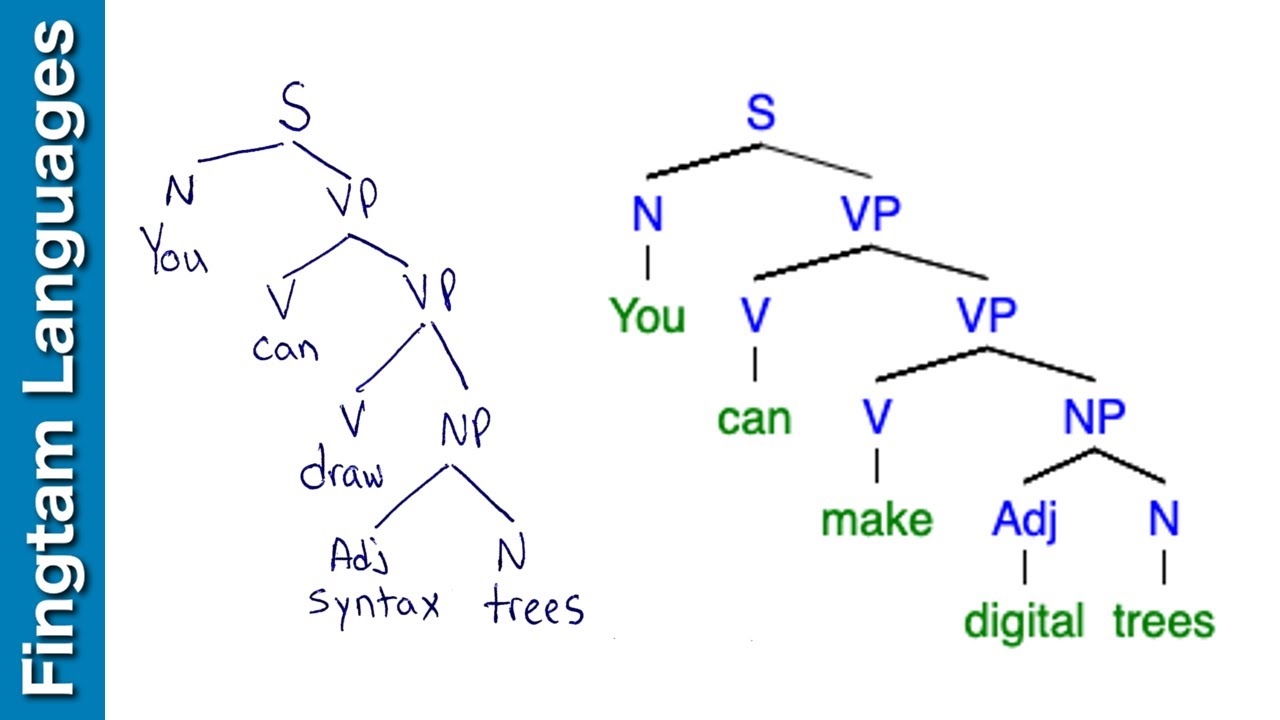
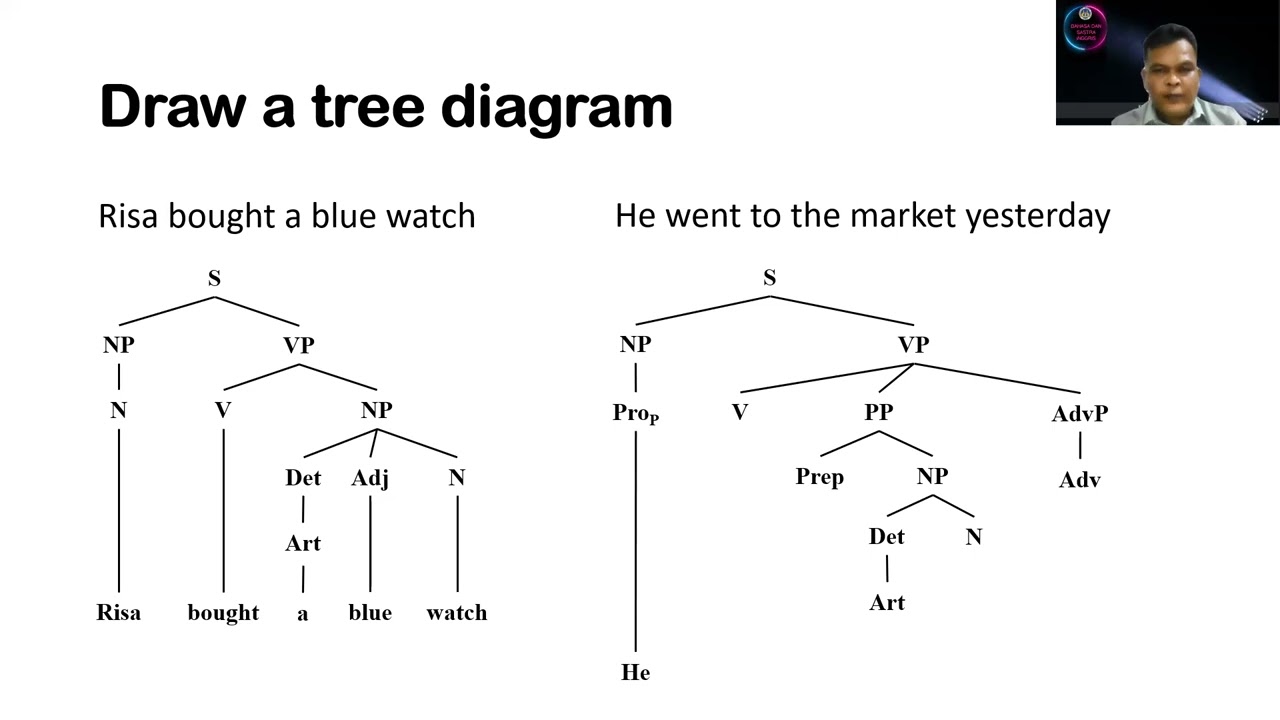
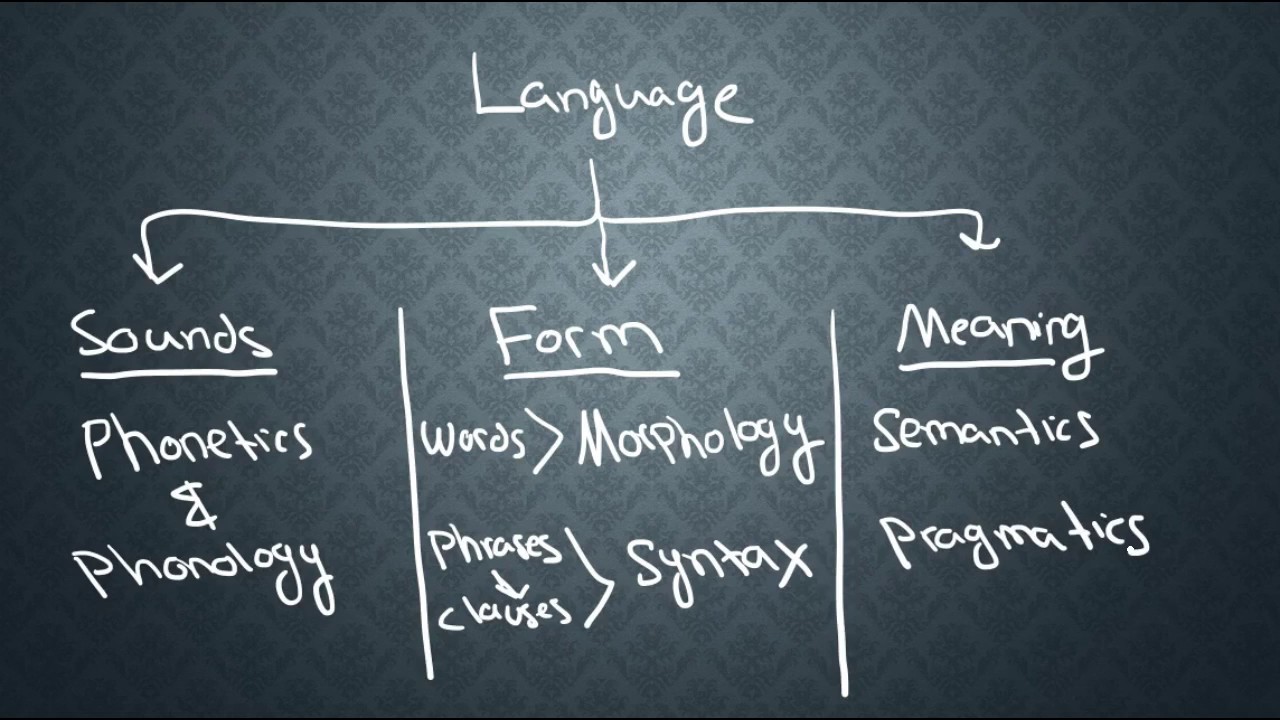
it could mean synthetic hides of buffalos or it could mean hides of synthetic buffaloes the same syntactic knowledge can be represented using diagrams the tree diagrams so these syntax trees of sentence or phrasing structure in this case phrasing structure are similar to morphology trees forward structures but here the tree structure the syntax tree this tree diagram explains the phrases structure it could explain the sentence structure and I can wrap up the discussion by letting you know that syntax uses such concepts as subject and direct object to explain the grammatical relations and ultimately the meanings of
John killed Mary as opposed to Mary killed John so in this context syntax can have serious legal consequences because you want to know who killed who in 1 John is subject and in to Mary and the direct objects are Mary and John respectively in a sense if you want to find out who what the killer was you need to find out what the subject is so in the first case John is the subject therefore John is the killer and the second context Mary is the killer because Mary is the subject so syntax uses concepts such
as such as subject and direct object to explain grammatical relations and ultimately the meanings of such sentences thanks for your time and attention see you again soon [Music] you [Music]


![[Syntax] Constituents](https://img.youtube.com/vi/Ia7d4slVL6s/maxresdefault.jpg)
![Syntax: Intro to Linguistics [Video 5]](https://img.youtube.com/vi/I9RPueD8wGs/maxresdefault.jpg)