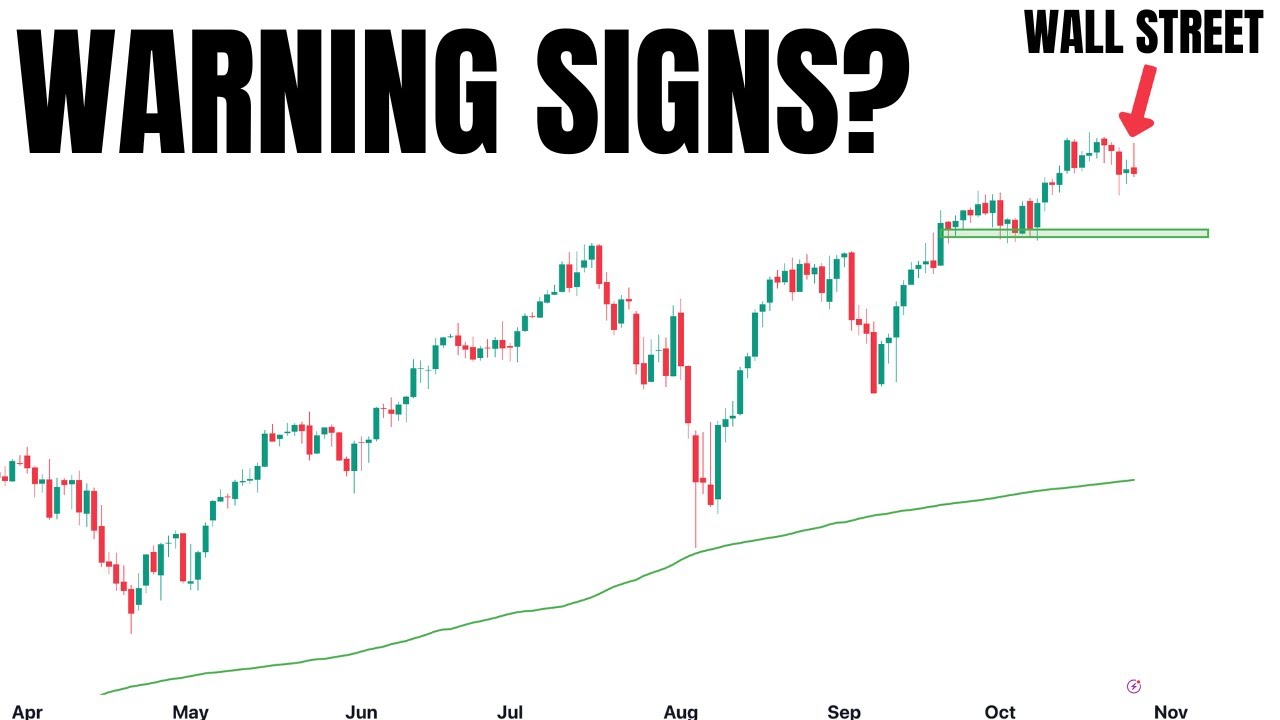
hello my friends today is October 26 and this is Markets weekly so this past week was another good week in markets we even had the NASDAQ make new all-time highs on Friday although briefly not just that as of this morning it seems like the Israel did their retaliatory strike against Iran and it was very limited and well-managed so maybe maybe that tail risk is behind us in any case today let's talk about three things first this past week we had the big bricks Summit held in Russia and they talked about ways to potentially create a
new Financial system that circumvents the dollar let's hear their plans secondly the IMF the past week released a new fiscal monitor report and they're highlighting the very very dire financial position of the United States let's see what they're saying and what they propose as potential fixes and lastly it looks like home buyers in the us finally finally are getting some reprive because according to many metrics homes in many Metro areas are becoming slightly more affordable although still much less affordable than pre pandemic let's talk about what's happening there and what might need to occur to
make homes affordable again to the average American okay starting with bricks so bricks is basically a collection of middle and low-income countries that uh it's like a group it's like a club for them to talk about their own interests and this is in contrast to the G7 which is largely wealthier and Western countries now this year bricks was hosted in Russia and you have to know front and center they're going to be concerns about the International Financial system as we all know not too long ago Russia was kicked out of the dollar system kicked out
of Swift and so global trade for them has been more difficult now nationally most international trade is conducted in dollars so if you can't transact in dollars that makes your life more difficult and we hear that Russia is conducting more transactions in R&B uh but I'm sure they life would be easier if they had access to dollars so if you transact in dollars no matter where you are at the world you are basically uh using the US Financial system and the US government has leverage over you uh let's talk about how this might work in
an example where a Japanese company uh buys something from an Indonesian company now these two parties have nothing to do with the us but uh more often than not their transaction will be in dollars so the Japanese company they would have an account at a Japanese bank with dollars and the Japanese Bank of course would have an account uh at an American Bank holding the Japanese Banks dollars and that American Bank would have an account at the Fed holding its dollars now looking to the Indonesian bank now the Indonesian company would have an account at
an Indonesian bank which would in turn have an account at a a US Bank which would in turn have an account at the Federal Reserve so this whole web of relationships is called correspondent banking so in international trade when you use the dollars at the end of the day the transactions are going to be settled at the FED through a US Bank so because of that connection the US government can really make your life difficult if it does not like you so there have been many attempts to try to find a way around this because
no country no matter whether or not you're friends with the US wants to be able wants another country to have leverage over them after all what if the US just says do this or I will make your life difficult with the dollar then you know that's going to hurt your economy now there are also though of course in bricks many smaller countries who are just far from these great power politics and don't really care about them now recently there's a paper released in Russia with involvement of the Russian government basically making the pitch to all
members in bricks as to why you should try to have a financial system that is different from the dollar one we have today now in that paper there's this very interesting chart where they say that hey guys you trade a lot with each other but when I look at the financial flows all that money you make trading with with each other that all flows to the developed countries it flows to the US to buy troes to buy Nvidia or something like that if we have a different Financial system maybe that money could stay in your
own country and finance development in your own country you know that would be so much better for you so what is this different Financial system they're proposing well first off what they're not proposing no new Reserve currency so they're thinking is that hey Reserve currency is a thing of the past today markets are much quicker much more liquid much cheaper I can look at my screen and immediately get quotes for any currency paay so we don't really need to have that Reserve currency stuff that we did in the past simply because of advances in markets
and in technology so in any case there's no chance that they could create a new Reserve currency the dollar is still super super dominant but what they want is two things one is a decentralized current decentralized uh Financial system where you can pay in local currency and two a new Clearing House called bricks clear let's talk about their decentralized payment system first now going back to that example of a Japanese company buying something from an Indonesian company again many many layers there's a long chain of correspondent respondent banking relationships and ultimately it's within the control
of the US so both it's cumbersome which makes it expensive and also it's centralized within the US Financial system now what they're proposing sounds a lot like what's something similar to project embridge which is a technology being developed by the bank of international settlements which some of the brics Nations participated in demoing so what project Enbridge or something like that is again bricks may not use project andridge but it sounds a lot like something like project andridge it's it's basically a huge decentralized Ledger system where commercial Banks would all be on part of the ledger
so going back to my example the Japanese bank would have an account on this decentralized Leisure and the Indonesian bank would also have an account on The decentralized Ledger and so they can trade directly with each other through this common decentralized Ledger and because it's decentralized it's a lot harder to kick anyone off and because it's C centralized as they trade directly with each other they can also trade in local currency maybe the Japanese company when it wants to buy something can send over Yen and the Indonesian seller if it doesn't want Yen again their
argument is you can simply you know sell Yen and buy another currency markets are very liquid and cheap today so their vision is not a new Reserve currency structure it's just this huge huge new decentralized structure where everyone trades in their local currency don't need to have anyone try to um control what they do uh financially now in conjunction with this is their second proposal something called bricks clear which is a clearing house for bricks uh what is a clearing house so if you Clearing Houses is basically what what people use when they want to
settle Securities transactions so if I want to buy a treasury security I would have an account on the okay so not me personally uh but sophisticated institutions would have an account at the Clearing House and the Clearing House would also have um and the seller of the security would also put the the treasury Security in the clearing House's uh database and so the clearing house once it sees at the seller of the security you know deposits the treasury the buyer of the security puts the money in the clearing House's account the clearing house then would
swap so give ownership of the security to the buyer and again send over the the money to to the seller so uh it's this organization that facilitates clearing settlements minimizing counterparty risk now notice that in the past when uh the US went after uh the foreign reserves of Russia you know some of that involved freezing the Securities that Russia held in Clearing Houses say Euro clear so again it's it's in the Russian interest again they're thinking about trying to create create a world where they can't be sanctioned so they're thinking that maybe if we have
this new independent clearing house that's not under the Western Powers maybe they won't have their Securities Frozen so easily but again that they can't that can't just be the pitch so the pitch is of course uh if you have a bricks clearing house maybe you could issue more debt in your local currency and so again trying to build a robust Financial system that's not just dollar based but maybe we can have Capital markets again the buying and selling of debt in your local currency as well and a bricks Clearing House could help that now having
a new Clearing House again very difficult thing to do right now odds are against it dollars to very dominant um but again this is could potentially be the beginning of something new and where there's a will there's a way let's see how that develops in the coming years very difficult of course but not impossible all right the next thing that I want to talk about is the latest IMF fiscal report so the IMF fiscal report is basically a report that talks about the fiscal situations of governments throughout the world and in do this twice a
year and in the previous fiscal report they kind of highlighted how the Chinese and the US's fiscal situation is not good well this issue comes up with some new graphs that highlights just how not good it is especially for the US now now here's a forecast of the debt to GDP for many countries now notice that for you know the sample uh looking at the quartel ranges you know it's it's okay you know it's kind of wobbling it's not great but look at the red line there that's the projection for the United States the debt
to GDP for the future and it looks like it's going to the moon it's just so so much higher than everyone else as we all know the fiscal situation in the US is not sustainable and depending on what happens at this election maybe it will become even more unsustainable there are projections that suggest a new Trump presidency could increase the deficit on top of its current estimates an additional several 10 over 10 trillion so uh the US's fiscal situation is unlike those of any other country now then now in addition to this they also made
an interesting point that when you're estimating this fiscal deficit it's not all about what's on the books a lot of things happen that are often hidden and what do they mean by this well stuff happens that you don't foresee and so when that happens the fiscal deficit gets even larger as governments react to it now a common example they give is uh problems with the banking sector if you have problems with your banking sector what happens is that the government jumps in to try to stabilize everything and the way they do that is through big
Bank bailouts that add to the deficit but you know it could be anything else as well let's say for example maybe you have a recession and maybe the government comes up with these new programs stemies or something like that to stabilize that uh or or maybe you have another I don't know some disaster that requires unforeseen spending so there's a lot of these unforeseen things that are not even uh in the official legislation and so forth that could jump out and and get you and uh to be clear in the us when we make Fisco
forecasts it's based on the current numbers if we have a recession that could really jump up much higher so the estimates that we have for the fiscal deficit for anyone has is likely an underestimation so we all know this is UN understand but what does the IMs say that we could do to fix it well it's just so easy if you look at their prescriptions uh you know all you have to do is cut spending and raise taxes and you know basically austerity some some some version of austerity and that of course is very very
difficult to do in the US political situation if you listen to what president Trump or vice president Harris are saying nobody nobody is talking about cutting spending everyone wants to spend more money now Vice President Harris talks a bit about raising taxes on the wealthiest Americans president Trump talks about cutting taxes for everyone so they are very far from the solution and I think the big big uh financial event for the coming years and you know maybe it's not even that far away is how this all comes to head in the Global Financial system and
that's what I'll think about uh for my blog post this week but we'll also note that the 10year treasury has been you know steadily Rising the past week uh seemingly in relation to the higher probability of a trump win associated with much higher fiscal deficit okay the last thing that I want to talk about is home prices now there's some interesting work by Zillow and Bloomberg showing that you know home prices across many metros this year are becoming more and more affordable there are more metros at least that are becoming affordable and afford affordability is
mentioned as mortgage payments as a fraction of income where I think the expectation is say maybe about 30% of your income is spent on mortgage payments so however as we've been talking about say fed Cuts maybe rekindling the housing market something interesting has also happened that mortgage rates have actually gone higher and in line with this we also see pretty sharp drops in home transactions now there's some interesting work by Fanny May suggesting that in order for affordability of homes today to be comparable to pre pandemic you have a few things that could potentially happen
again they measure affordability as say mortgage payments with relative to income so for things to be more affordable you obviously have to have um lower mortgage payments to income so you can do that either by home prices falling say 38% and that would make your mortgage smaller and thus more affordable or you could have incomes Rise by 60% again that could make again makes it more affordable because your mortgage payment to income ratio declines or you could have mortgage rates come down to 2.5% which would also shrink your mortgage payment now I think none of
that is very likely to occur um so but we could have a little bit of all of that happen to try to make homes a bit more affordable and what strikes me is that the most likely way that we get homes to be affordable again is actually to just have a recession and have all this reset and I know many people don't like to hear that but again there there are costs and benefits here if we do have a recession I don't think we'd have home prices drop 38% but maybe they can drop 10% maybe
they can drop 15% and mortgage rates again right now it looks like they're between six and 7% if we have a recession rates will come down maybe they can get to 5% mortgage rates right over there now again it's not going to help your income if we have a recession and unemployment is going to rise by a few percentage points but keep in mind that impacts not everyone it impacts a few percent of the people so that's a place where we would not be uh in a good place but it seems like in order to
get housing to be affordable um you know we're going to have to have movements on all three parts home prices income and um interest rates a recession is probably the only way to do this and you know maybe we'll have one in the coming months we do have some interesting data that suggests the economy is slowing although of course not yet in a recession now what we also have to keep in mind is that when there's a recession the equity Market would also decline now that's going to help affordability because it seems like a lot
of people are buying homes with cash now there's this interesting work from Bloomberg suggesting that know the in some markets the percentage of cash buyers are absolutely surging and these seem to be buyers that are investors again making a lot of money in Nvidia or something like that and then buying h homes if there was lower Equity prices then maybe there are fewer cash buyers as well less upward pressure on home prices so we're in a difficult situation for home affordability and I think the only way to get through this is a recession and it
will be painful for a few percentage of the people but overall it it may be the way uh for for people to have more home ownership than achieve their American Dream all right so that's how prepared for today thanks so much for tuning in and uh remember to like And subscribe talk to you guys next week