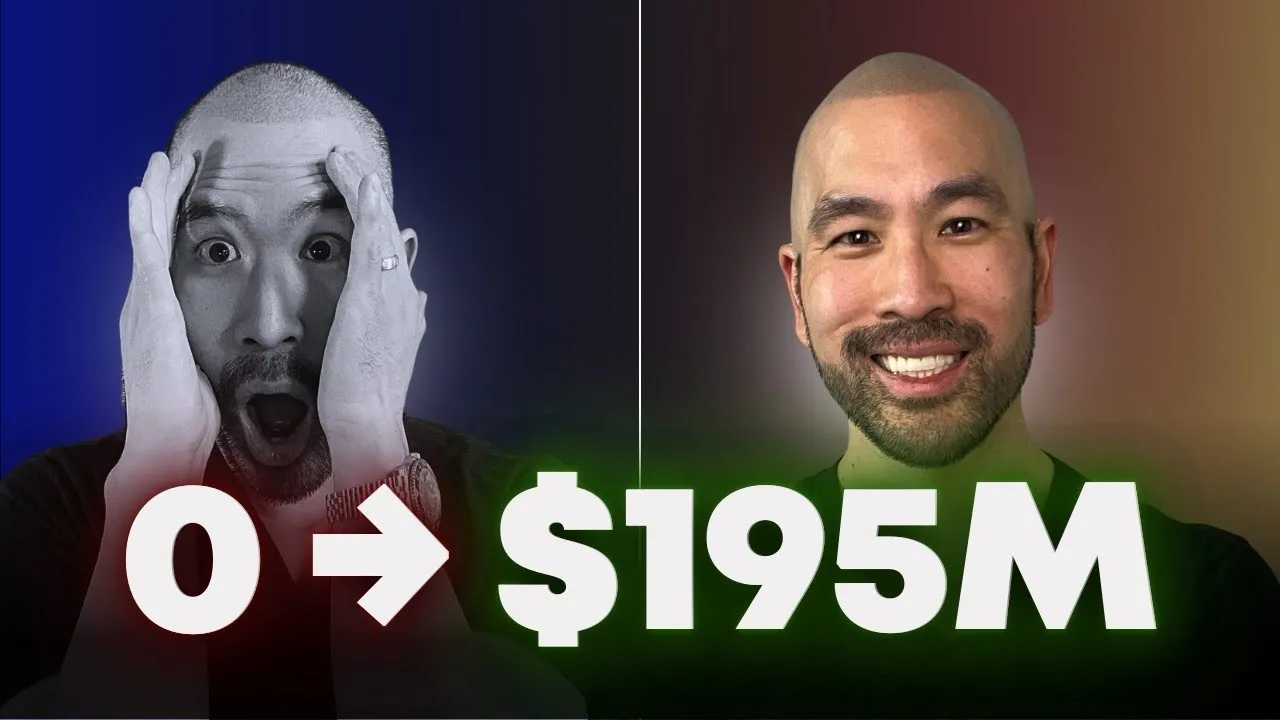
The biggest lie in sales is costing your team deals every single day. And in this interview, I'm going to break down why sales is just a numbers game. Might actually be a thing that's destroying your team's performance. Hey, I'm Marcus Shen. I've led 195 million year sales organization. I got promoted 12 times my first eight years of B2B sales and I run a Bentley Consulting Group where I help sales teams double the win rates without Just grinding harder. But here's the thing. When I first got started in sales, I was the worst rep on my
team. I made more calls. I knocked on more doors and sent more emails than anybody else. And I actually went seven weeks without closing a single deal. And I was doing more, but I wasn't getting better. And I almost got fired because of it. So today with Dylan Conroy and the AD podcast, I'll break down exactly what changed, why most leaders look in the wrong place When reps underperform, and the three questions I ask before I ever blame a rep for missing their number. Now, if you lead a sales team, that last one might save
you from losing your best people. Let's get into it. >> What's up, everybody? This episode is for all you sales savages and uh ladies out there that uh want to get the week started with some great advice from a sales trainer and a sales leader. Uh Marcus Chan is the founder and CEO of Venley Consulting Group and the creator of real B2B sales training where he helps B2B sales teams drive predictable revenue through modern buyer centric selling. He's a former enterprise sales leader himself. So he has walked the talk and sat in all of our
shoes before he went over to the training side. Uh Marcus is known for his practical nofluff approach to sales execution, coaching teams on pipeline strategy, deal acceleration, and closing complex Enterprise accounts. And he's a frequent speaker and adviser to fast growing B2B organizations looking to level up sales performance. Marcus, thanks so much for coming on, man. I'm excited to talk to you today. >> Hey, I think we'll have some fun today. I'm happy to share all my mistakes I made in my entire career. >> Let's go. Well, hey, you know, nothing like a Monday morning
at 9:00 a.m. when all of us are opening up our inboxes and Getting ready to plan out our week and attack it. And I think this will be a good uh boost of juice to all the sellers who listen to my show because they sell into the uh the marketing and media agency profession. >> But, you know, I always like to say we are we are all salespeople in some way, you know. So, >> highly transferable skill in all parts of life. >> Exactly. Exactly. whether we're dads Selling ideas to our kids or our significant
others or our immediate sphere of influence. So, uh before we get into it, why don't we start off with a little bit about, you know, your background? So, where where did you grow up? Um how did you where did what did you study? And um I don't know about you, but I never in my wildest dreams thought I would be in sales when I was going to high school or college. So, would love to kind of understand how you Found your way into the profession. >> 100%. And I think it's probably similar to you. I
mean, it's very rare ever met anybody who says, "I just want to be in sales." That was definitely not my situation either. So, I grew up in a really small town called Springfield, Oregon. And um I'm actually the middle child of uh two Chinese and Taiwanese immigrants. They actually escaped the cultural revolution. Came to America uh in the late 70s absent completely broke. So, we grew up very very poor. Uh my parents opened a Chinese restaurant in Eugene, Oregon, which is a neighboring town. So, I grew up like working in the restaurant the age of
five. So, for me, I really didn't know what I was going to do growing up. Um, but I just knew working really hard seemed to kind of help me in that in that part of my career. Now, fast forward, I end up uh, you know, uh, going to the University of Oregon because, uh, it's it's it happens To be also be in Eugene, Oregon as well, which is great because my parents said, "Hey, Marcus, you can go to any school you want to go to, but you got to pay for it on your own." So,
I went where I got the most amount of money. I said we look for so and and so at this point I mean I really didn't know what I was going to do. So like I I at first I wanted to be an architect because I was like well I loved art growing up. I drew a lot. I'm Like maybe be an architect. Had no idea. I did a job shadow before I got started in college for about a day of an actual architect in town and realized it was completely different than I expected. So
I actually threw that application away and went undeclared college. So eventually I had to pick something, right? Like I got to do something. So I end up uh graduating with a double major in marketing and Chinese. Wow. >> I didn't know I was going to do with it Though. I really didn't know. I was like, "Wow, you know, like you know, I speak Chinese at home. That should be an easy degree. Business and market kind of applies to everything." So it was still like again like not really sure what I was going to do. Now
when I graduated though, you know, I actually interviewed a number of different places. This is in 2007 and this is before the recession happened and I was actually really Fortunate because um I actually interview had had five different job offers. >> Wow. >> And it was from you know on the low end a 295 base salary role in B2B sales up to like a 60k uh year role and that was like you know like a low-level analyst in like a financial institution. And for me, I wasn't quite sure where to go, but I actually would
and end up going for a sales job, >> but not because I saw as a sales job. I saw it as I mean, the way it was sold to me was, hey, this is a startup division of a Fortune 500 company. There's zero customers. You need to go build a client base up. You'll learn how to run a business. You learn how to run handle P&L. This is a huge opportunity to really pioneer something. And that sound that sounded really exciting to me. So I didn't I didn't understand and see that as this is a
B2B sales job where there's Zero customers. You need to build from from scratch. So I jumped in head first and there was no training, there's no playbook, there's no marketers, there's no customers. It was 100% cold pure outbound. And that's when I realized on day one when I go out and knock on doors physically walk into businesses that this was a pure like cold call business. And uh that was my first taste in sales. And um I wish I could say D that was absolutely amazing. Absolutely crushed It. I was actually the worst rep for
the first like I mean I was out working everyone. I made more calls, more outreach than anybody else. >> Didn't close a single deal. Well, all my peers were closing deals. >> Wow. >> Now fast forward several month, you know, several months about two months. My boss pulled me in his office at 400 p.m. on a Friday and said, "Marcus, I'm going to fire you if you don't turn this Around." And I started getting real scared because the economy started getting bad at this point because this is 2007 if you remember. So yeah already unemployment
is already going up. I'm like I have to like I I need to figure this out. I I was like I have three choices. Number one I'm going to get fired. >> Number two I could try to quit get something else which is unlikely. Or number three I can give it 100%. And Hopefully I don't get fired. So I'm like I'll go for number three. So you know fortunately eventually figured it out. had some pretty good success. Um, ended up staying in my corporate sales career for another 13 years. In my first eight years, promoted
12 times our first eight years. Hit number one in every single role. Got to the point where I was running a 100 plus person sales or we were doing nine figures plus a year in sales. Um, had a lot of fun doing that Before I started my business 2019. And now essentially now I work with organizations across the board. usually doing at least 10 million plus that multiple layers in leadership and helping those orgs really identify where they're leaking revenue and putting in systems in place to actually improve it long-term wise. So, it's not coming
in just doing like a one-hour workshop with the team. It's figuring out what are the core constraints to the business that That that's holding back from revenue and how can we go fix that? So, been doing that for over six years now and that's been a lot of fun, but much of it is because of the mistakes I've learned early on growing and scaling businesses. >> I love it. Well, I got two questions just based on your intro in addition to my other 10. So, let's get after it. All right. Um, something that you said
was really interesting because it's something that I always held as maybe a Mis, you know, a misbelief about sales. So, um, I got one of my formative sales roles uh, in 2008 as well. I joined a boiler room. Um, I was an independent film financeier, which sounds very sexy. >> That does sound cool and sexy. But what that but what that actually meant was I had to pick up the phone a hundred times a day, call attorneys, okay, and see if those attorneys were willing to invest in a movie about a famous court case. >>
Oh. >> So we would d we would dial a hundred attorneys, we would generally get 10 on the phone and then we would try and get one to take a package and then we closed on average about 25% of those. But you know the components of that was this was 2008 and even even attorneys lost money and they weren't invest they weren't investing in anything much less a movie. That's >> right. >> So um you know my my tactic was Essentially you know we had to be in the office by 7 a.m. because we were
calling the east coast first and then we were allowed to leave by 1. So what I would do is I would get there at 7. I would stay at 1 and then I would just um talk sit in the office with my sales manager usually from about 1 to three >> and then my sales manager would leave and then I would keep calling all the way to Hawaii at 9:00 p.m. because I could call going back three hours. >> So to some degree, you know, I got more reps, I made more calls, I sent more
packages, so I closed more deals. So I outperform guys on my team that had been in the industry for 20 and 30 years. Um, but it did come down to me. I just thought I could outwork these guys. Yeah. >> But, you know, you talked about the idea that you couldn't, you know, just outwork uh your team in your first gig. Um, what was how was that realization That like sometimes inertia and sweat equity just won't cut it? And what was the calculation that you made to to turn things around? >> Great. So, I'll I'll
give you an example, right? So, I remember my very first week um Again, there's no training. They gave me a they gave me a manual written by people who had never done sales before. And uh my boss said, day one, he's like, "Hey, I want you to look like," and by The way, this is like there was no lead list. There was nothing, right? I didn't even know how to build a lead list. So, he said, "Marcus, I want you to go outside. I want you to go outside uh walk out and don't come back
till you have 30 business cards." I said, "Okay." I mean, I'm like, "All right." And he's like, "If you do that, you'll probably book at least a couple meetings." I'm like, "Okay, that sounds pretty good. Okay, let me see what I can do." I went And knocked on over 60 doors that day. I didn't book a single meeting. Didn't gen any type of lead or anything. I'm like, "Huh?" And I was like, "Whoa, I'm I'm exhausted. This is like summer time in Portland. I mean, it's relatively hot. I'm more like, you know, like a shirt
and tie, right?" I come back in the box and say, "Hey, what's >> I did it, but what do I do now?" He's like, "Great. sales is a number numbers game. Do it again tomorrow. I'm like, "Okay." So, I go I do it again the next day. Exact same result, right? So, now I have over 120 business cards like a stack of business cards. And I'm like, I did the same thing and I didn't book a single meeting. He's like, great. I'm like, what do I do now? He's like, call them. I'm like, okay. So,
I sat and I called every single one. And again, did not book a single meeting. Got hung up on, got yelled at, whatever. I'm like I'm like, "Oh my god, this is What sales is." I'm like, I'm like, "Okay." So, day four, I'm like, "What do I do now?" He's like, "Call him again." I'm like, "Okay, all right." Again, not all of them answer, right? So, I call them all again. Exact same. So, now I'm freaking out because I'm like, "Oh my god." Like, I have walked into over 120 businesses. I made a few hundred
calls so far. haven't generated any type of momentum, inertia or anything else. And this basically repeated for weeks on End. Okay, I tried making more calls. I tried to do more more more cold email. I tried to do all this stuff, but I wasn't like booking any meetings while I watched my peers and they were like booking meetings, closing. They were doing a fraction of like my inputs and I'm like, what is wrong with me? Like may I I grew up working in a restaurant. I'm like maybe I'm just good at like, you know, like
maybe that customer service background, not like outbound Trying to get people like I'm not a I I'm not a saleserson. This is not how I'm wired. Like I worked in the back of a kitchen as a cook. So I was like this is this is when I started to realize it, right? And I'm like and so after like several weeks of this. It's I start a couple meetings, but because I also didn't know what I was doing, nothing was converted to a closed deal. So what I realized at the point was you can have like
you can have a hundred qual Sales calls with a pro different prospects but if you have a 0% conversion you're still 0% of a result. Yeah, it doesn't matter, right? Like >> it doesn't matter, right? It's like the math was the math thing. I'm like this doesn't make any sense. Like because even as my boss like it's a numbers game. It's a it's it's going to take time. I'm like now I'll say also I probably had rose probably not great territory as well. So like there was at That point like I had like >> we
was zip code base. I had four zip codes and everyone else had like four times that as well. >> So like there was like little things like that but like also like number one I had not a great territory but also I was lower skilled. M >> so my conversions weren't quite there. So what I started to do during this journey as well because again when you don't know any better you just don't Know it's bad. So as part of this you know I was complaining to my wife or girlfriend at the time like hey
this is like this is a worse sales sucks. It's a bad economy you know it's it's because of XYZ whatever. I mean blame my boss blaming everything. She's like well you know like why don't you get some sales books or something because you always been a reader. I'm like yeah I should do So I started getting sales books and I started to realize like there's other Components to look at not just the inputs like conversions and funnel and process and all that stuff. So, I started like that realization started made me realize I'm like I'm
like I need to improve what I'm actually doing. Like if you're batting zero, it doesn't matter how many times you swing the bat. Like you you're just not good at the thing, right? And that was a big realization. I also realized as well like I also lacked a lot of Self-awareness because I didn't know what I was doing was good or bad. >> You can't improve if you don't know what you're doing. Like for example, if you're go if you're driving the wrong way uh on a on a road trip, doesn't matter how hard you
push that gas pedal, you're still going the wrong way. So that realization I started to realize during that that two-month time frame. I'm like, I am not skilled with this. I need to get better because what I'm Doing right now is definitely not yielding a single result. >> Yeah, that's crazy. You know, and it also makes me think about like how important good sales management is too, right? So like you know like when I was green in that boiler room, my sales manager, his desk was strategic or his office was strategically placed where he could
hear all of us and he would just sit there and listen and like he'd get his work done and he'd Just be listening to our calls. And if he heard us like, you know, just yapping on with some guy that liked to talk, he would come out and get like right in our grill and he would be like he would go like that and he would be like he would feed us a line and we would have to just stop and like drop that line and see if it worked. And that was such a like
eye opener though for me though, like when he would like be like, "All right, time to rip the band-aid off on this guy. He's he just likes to talk. He's a lawyer. Here's the line. Here's the qualifier. you say it right now and then shut the f up and see what see what happens. And that was like the most amazing uh like real-time job training was to see that you could like >> good live coaching on spot. >> Yeah. Live coaching on the spot, but but also, you know, with a sophisticated prospect like a lawyer,
you could stop them dead in their tracks with just Words. That's >> right. And the other cool part was again that you know that I mentioned that one to three o'clock hour you know where everybody else was done the phones would be hung up and I would just go in there and he would just tell me stories and give me little pieces of advice and talk about what he heard that day and he he just gave me like literally like two hours of his time per day if I wanted it. >> Wow. So I think
yeah it was it was you know it's like >> I I credit him and one other mentor to be like the formative people in my sales career at least. But um so you know I think I think that that framed the question back to you of that particular situation was like great sales managers are not just giving you advice on the metrics like I feel like so so many sales organizations can get lost in the metrics. Yeah, >> but they're not um >> they're not addressing the qualif the qualitative versus the quantitative. Um what is
the best way for managers to address uh those gaps? Like if they see like it looks like if everything on paper looks great but they're not getting the result that they want, where should they be focusing on that qualitative feedback? >> Yeah, really good, really good, good point. So I think I think the a lot of Times I find for a lot of sales leaders they're not like your leader right that you had the great mentor you had. So, like I find a lot of leaders, they maybe tell their reps the what, hey, make more
calls, right? You know, like get more meetings, close more deals, whatever, right? Uh, but they don't teach them, you know, like the how or the why. And sometime it might be because maybe they lack the skills of actually the actual role of the salesperson or they Just have no idea, right? It's it's you know, it's poor leadership. So um you know for instance like whenever here's what I think about I think there's many steps this right so there's the proact and then there's the reactive approach. So the the reactive approach is you're you're sales leader
your reps are not performing right so you see you see in the data and I always I would say before you go and you start trying to coach them or whatever the first thing you Want to do is get in the trenches and see what's going on. So, similar to how your mentor was actually listening, whether he was either side by side with you or listing like close by, he can see what you're actually doing, right? It's kind of like, you know, for like if you're going to swing a golf club, you can tell me
how many swings you're doing. But until I see you hold the club and swing the club, I can see all the components from your foot mechanics, how You're shifting your weight, your body positioning, your shoulders, your back. I can see how you're doing different things to coach you accordingly. And a really great sales leader will have the data as a signal, but then they'll go and get in the trenches and see, okay, hey, hey, if they're not performing in any part of the process, whether it's having a discovery or making calls, they're going to go
and observe and look for key patterns, right? And from there, They're going to coach and teach them in ways it's ideally a repeatable way. M >> the mistake I I find some people make let's say for example like you know I've had leaders do this too is they listen to one of my calls or they're on a call with me they get done here they're like here's 30 things to fix and I'm like overwhelmed that's like so much I don't know what to fix first right >> versus it's it's like and maybe it's a bunch
of little stuff you can teach them For sure but identify what's maybe the top one two or three things that if they just did that would solve a big chunk of the problem. M >> so like for example let's just say it's cold calling right and yes there's many scripts etc but maybe their tonality is just really like too soft lacks confidence that might be the single thing that we just worked on fixing that they're just going to book more means because they have better tonality right So you can teach them frameworks around that but
then it's it's constant it's also making sure when you're coaching them you're recognizing what they're doing well so they continue to do it and then identify those couple things to teach and train them on after right But then having them do it with you. So it's not it's not just like for example like okay we're going to go through well I'm going to teach you how to qualify a prospect on the phone. Here's the four Steps we're going to do it. Okay cool. Before you just say you know just you just like you just teach
them all or you teach it first then you say cool. Now you do it back to me. >> So you have them role play. I call them real plays. You do it live. Make it tough. So this way they get that repetition live on spot to help burn it into their brain and get it done because reality is is you don't want your team to practice on prospects. >> You practice. >> Yeah. Because you only get so many at bats, right? >> That's right. So for example, let's go back to the cold calling example. You
made 100 calls only 10 answered. Those are 10 chances you had to book a meeting. You don't want to work on you don't want to practice on those 10. You want to practice way beforehand. Right? So this is like whether it's with your sales leader or even after. But at the End of the day, if anyone's not performing like I always think I think in in actually three key steps, right? So obviously you have the data first, right? But the first piece I always say is number one, you look in the mirror. Did you as
a sales leader provide the proper training, tools, resources to ensure they're successful? So you as did you show up before them? Number two, your process. Is your process dialed for what you taught them? is in a repeatable Way that they're gonna understand or do you just babble and just talk about how you're an awesome rep just do these things right and then third is it you know the employee right are they is it them and chances majority time when I see people not performing it's some something in the mirror themselves or something in the process
>> reality get the mirror dialed which is yourself and the process dialed then it might be the employee at that point in Which you can make a different decision based off that >> yeah that's a great uh piece of advice you know those are two good um bellweathers before you start blaming the rep, you know. >> That's right. >> All right. Um is cold calling dead? Um you know, you and I just talked about formative sales roles that we learned because we got lots of reps uh and we got lots of that bats. You know,
you Door knocking uh which I've never had the pleasure of doing. It always sounds fascinating but >> but I never had the I never had the opportunity. And then you know for me cold calling it was amazing because like in in one ways it made the universe feel infinite because we had these like big lawyer encyclop books for lawyers called the Martindale Hubble and we would just we would just pull them off the wall and flip pages and like it's like oh man I Can call lawyers all day. I have an endless supply. But now
it's a lot harder to break through. It's a lot harder to get an office line. It's a lot hard to get through secretaries. Um people don't just answer the phone as much. But um you know, I also received a cold call. I only got one cold call last year that I actually took a meeting from, but it was a really kind of like a eyeopening um experience because it was from the sales development organization Called Alioop. And um I would just be curious of your thoughts like is cold calling dead and is that to the
detriment of the current rep environment? >> Great question. So what is dead is single channel outreach. >> So if for example if your only channel is purely cold calling you know like you are significantly lowering your chance to book meetings right and and part of this is understanding like where buyers Are at as well like and how they actually buy. So, like if you think about if you're only cold calling, that's not good, right? I don't say it's I mean it's pretty close to being dead at that point. It's the only thing you're doing. However,
if you are doing omni channel reachouts, so you're calling, but you're also going to be leaving a voicemail. You're also maybe message them on LinkedIn or whichever platform they Might potentially be on based off what you actually sell, you know, for whatever offer you have. You're also sending emails. Maybe doing physical gifting. Maybe you can do in-person stuff. Maybe you also engage in it with different events. Maybe you you have other marketing components as well like you know webinars or other things too. So my point is more so like if you only have one channel
it is way hard to be successful right but if you're able to Hit on multiple channels in a really strategic way increases your chances. So the data shows right now the current connect rates are typically about four to 5%. So it has like basically got cut in half. So you were at 10% was was quite good right and now it's like four to 5%. So you make a 100 calls, you have four to five. Now what does that actually mean though? Those four to five to answer that means you need to be ready to rock
that call. So that means When you make that call like do you did you did you already research in advance so you know what you're going to be talking about? What you're going to reference? Are you are you going to make it a personalized call or you just a number? Like if you just did just a computer numbers game and it's really generic. It's a little bit different. But if you're calling and you're like, you know, hey Dylan, the reason I'm reaching out is because I did a little Bit of homework and I saw your
organization has grown from, you know, you know, it's grown 25% over the last year and you added 10 more people in your marketing department. Well, the reason that recent is because I do XY Z. Well, it's like, okay, this person did a little homework in advance. That's a whole different conversation versus it just being a real generic type of conversation. So when and then on top of that, how effective are you actually on Handling objections, going through objections on the phone as well? Most people convert about 20% on the answer. So that means if they
have four conversations, they're probably going to book maybe one meeting. So if you look at a peer conversion p perspective, how can you increase that to say 50%. Okay? And there's many ways to increase it, which is like you have better research, you actually practice, you actually sound good on the phones, you actually Know what you're going to say, you've written out scripts, but you practice so many times, you have social proof on the calls, right? So like all those things can help you on the call. So if you're relying purely on just cold calling,
it's going to be it's very hard to get to where you want to go. However, if you combine multiple channels as part of your outreach, you will book more meetings. And sometimes it's going to be like you might call a couple times, Don't get any answers. Then you're also sending some emails and maybe they're opening their emails and then you see it then you call then they might be more likely to open it, right? Maybe sending a video message. So there's many ways to actually do it. I think the the issue is when people rely
on just one channel and they don't make it relevant or personalized to that person. >> Yeah, that's totally great advice. You know, in the advertising industry, we Have this um this saying I I forget what author came up with it, but it's called the blue car effect. >> And the blue car effect basically says like, you know, when I when when I I I never saw a blue car and then I bought that perfect blue car and once I have the blue car, I see blue cars everywhere. Right. Right? So the same is true like
when you see an advertisement or a marketing message somewhere in the world, you're like, "Oh, you just kind Of ignore it. We have what's called ad fatigue." >> But if in the same day I see a Facebook ad and then I see a billboard of your company, something happens in my mind where I'm like, "Wow, these guys are everywhere." And they make that they make that connection >> that the power of familiarity as a result of it. That's >> right. So, so I think that multi- channelannel aspect that you were Talking about, reps need to
think of their calls and their emails and their outreach as part of the marketing funnel. It's a touch point. It's an impression. That's right. >> So, you have to work handinhand with your marketing partners to make sure that you have lots and lots of other kinds of impression. So, I love that. >> I think it was I think it might have been trust radius. They did a study where I think it was like 11 different Touch points that they have to encounter before they book a meeting. And it's not necessarily just direct outreach, but it's
all the things you kind of mentioned before. They're like, "Okay, I feel comfortable booking a meeting." Hey leaders, if you're leading a team and you know your best reps are closing at two, three times everybody else, but you're not sure exactly why, this will help you. I put together a revenue leak diagnostic kit. And inside, I show you How to compare your top versus struggling reps by stage, analyze real calls, and quantify how much each skills gap is actually costing you. There's also a revenue impact calculator as well, so you can run the numbers on
your own team. You can grab completely free at the link in the description. >> All right. Um, should should every say every great sales producer eventually become a sales leader? Um, this is something that I Definitely have struggled with. You know, I was like you. I was a top rep at most of the companies that I worked at in my career. And then eventually they would always want me to then build a team, uh, hire and train SDRs, manage territory. And I always found that I was so focused on external relationships that I did a
bad job of focusing on internal relationships. And that's not just amongst my team members, but that's like ops and marketing and all the People who supported me in the pipeline >> or in the in the delivery for clients. And then the other thing I noticed is because I'm a salesperson, I'm also very easily sold. So when I >> True, we easily sold actually. >> So when I Yeah. So So when I interview people, I'm always looking for the half, you know, glass half full, you know, p perspective. And I because I kind of fell into
my industry by accident. I always feel like, oh, I don't care if he Was a, you know, dishwasher at a Chinese restaurant. He could be good at this, you know, and I don't and I don't spend enough time looking at the resume. So, what are your thoughts on producers becoming sales leaders and should they be interlin? >> Really good question. So, um, I've get I get asked this quite often from a lot of like individual contributors who like because that's what happens, right? You you you're crushing a deal and they say, "Hey, can you make
more of you? Can you make clones yourself, Dylan? Right. Um, and I always say the first thing I always ask someone who's maybe like wondering, should I go into leadership or should maybe say an IC individual contributor, which is what gets you more excited from a gut instinct perspective? What gets you more excited? Either closing a big deal on your own or helping someone else close a big deal and you get credit. >> So like just just that by itself can tell you quite a bit, right? And that's that's the first piece. And and by
the way, sometimes people they may be like, "Oh, I think actually helping other people be really great." Sometimes you'll see like there's great they're great at selling. They're helping their team out. They feel really good. It feels good to help people and they're like, "Maybe I do want to go into that, right?" And that might be a good signal To go and go and to jump into leadership. However, it doesn't have to be forever, by the way. I think some people think it's a forever thing. It doesn't have to be a forever thing because you
might realize it's not for you. Because as you know once you go into leadership it's actually a very different set of skills that you actually have to be really really good at like when I think about you know when you're a salesperson and this this is um Referenced in Sam Walton Sam Walton's made in America book he mentioned there's um there's people who are like an eyesshaped person in which they have one singular skill and they're really good at that singular skill. So for example they're really good at prospecting and selling. They're good at generating
business. That's like their number one thing. That happens for a lot of sales people, right? Who end up being quite good. Now, when you go to like Leadership roles, you need someone generally speaking that has they're more T-shaped, meaning there's one single thing they're really good at, but across the the board, they're also good at other core skills that they can either develop into or they're more innate to them that can help them in other functions, right? Right? So for example, like if you want to be a really good sales leader and this depends on
the sales role, but you generally need to be Really good at looking at numbers, metrics, P&Ls, forecasting, etc. That may not be a core skill for some sales sales people. So like that's a key thing you have to learn how to do. You also need to learn how to hire, train, recruit talent. >> So under even understanding that skill is going to be really really key. You also need to make sure operationally after your deals are closed like you might need to un ensure the back and Post sales process is down which means you need
to understand backend wise how does it all work because what you're do what your team is doing on the front end is going to impact the back end right and etc etc etc. So you may realize by stepping into that sales leadership role, you're like this is way more like because it's not just you being a super rat. Like if you want to be really effective in leading and scaling organizations, you need to be able to Scale people is what you have to be able to do. And that's through your level of leadership and understand
the whole business. So when someone's like, "Hey, I'm not sure if I if I can do it or not." If you're if you're if you're instinctively instinctually you're like, "Yeah, I I close big deals." Great. Absolutely nothing wrong going down the IC path and just going up up up, you know, up market as that as that path. And if you're interested, yeah, maybe You can dabble into leadership. See if you like it. And if you don't like it, that's okay. You can always go back, right? Like for me, when I first stepped into sales leadership,
um, it was a fake promotion. They said, >> Marcus, you've been doing a great job. >> We want you this other operation. They've been underperforming. We're not going to give you a different title, but we want you to manage these two people. You have your own number. We need to Make this operation profitable. So, you need to grow and scale this operation. Get them successful. And here's also your own personal sales target, too. We're not going to pay you any more money. We're not gonna give you anything else, but just show us what you got.
So, 22-year-old Marcus is like, "That sounds awesome. Great. Let's do it." Right? So, uh what what a deal, right? Um and I almost I I almost like gave up on leadership at that point because I Didn't know what I was doing because I I thought it was the same thing. I'm like, "Hey, this is here's how I run. We should all do the same thing, right?" Um so that was a realization very quickly that leadership was definitely an art to it as well. So since that point I started getting better at leadership and learning, making
mistakes as part of it, right? Just like any other art and treat like a craft >> and I think a lot of times for a lot of People who step down leadership role most of the time there is there is no playbook for them. >> They say Dylan congratulations you are now the sales director good luck hire five people and make sure they're great and you're like I don't even know where to start first right so just mentally understand that. has to be your seven sales leadership role. You need to go and develop your own
skills as a leader, you know, because there is no playbook For most companies and that's a key thing that has to be developed. Otherwise, you make it you'll find it very hard to scale next level and you're always going to be running on a on a treadmill or a a hamster wheel. >> Yeah, I think that's great advice. I think it's for me, especially on the recruiting side, I think it's a great case for using executive recruiters. That's way that way once you get down to the final three candidates, you know That all three of
them are potentially good, right? Hopefully hopefully because they want us to pay maybe 20 to 25% of the actual base salary and sometime they're just trying to get someone over the line because they're like Marcus Dylan come on just pick somebody you've seen a 100 canons. I'm like I know I know exactly what works though. >> That's a great point too. Yeah, not all not all recruiters are created equal either, especially on the sales side. >> You got to know how to find those recruiters. That's the key. >> Yeah, that's a great one. All right.
Um, so you know something else you mentioned, you talked about in person being an important channel. You know, I think of that as the perspective of like owned and operated events, you know, the conferences or the regional dinners or the things that you're doing as a team. >> Um, but I'm also thinking about, you know, the fact that, >> you know, it seems like more than ever there are so many conferences. Um, do you think that's because people are having kind of a natural um, course correction to like the AI slop of it all? Like
you're getting so much inbound now as a buyer, so much LinkedIn stuff. Um, you know, your Pavlonian wall is up as high as it's ever been. So, the uh the you know the in-person opportunity, somebody kind of takes the close sign And flips it to open for three days and they're like, "All right, I'm here for three days. I'm going to meet with people. I'm going to use the fact that we all paid a certain amount of money as the qualifier to that we're at least at this level of like, you know, common ground and
then I'm gonna take, you know, 15 meetings and then I'm not going to answer my email for another six months." Um, how important is the real world in an world of AI where you know Buyers are getting more inbound from people that they don't know or don't potentially trust than ever? >> Yeah, I think it's u I think it's absolutely vital right in the sense of which it's pretty obvious, right? But I think events are like one component, right? But it's being able to break free of like uh just the slop, if you will, and
get outside that kind of comfort zone. you get that pure focus right now. There's for sure events and dinners and All those things too, but I think about even in-person sales calls, >> right? Even flying out to your customers like location, their headquarters, having to sit down with their team with the execs and have a lot of conversations is really really important. And what a lot of people don't realize is especially for a lot of sales people who maybe have sold maybe in the last decade where maybe >> postcoid basically. >> Yeah. Well, in postco
has been primarily, you know, virtual like in tax sales, most of them have been virtual for a long time anyway. >> Oh, interesting. I didn't realize that because yeah, before co I used to jump on a plane half the time, >> right? So like, you know, and you know, you and I started in sales a little early. We were kind of already used that was already part of the kind of that Just happened, right? But for a lot of people that are in tech sales or maybe even, you know, postco, they just have never thought
to do it again, right? where that in person what we don't realize are all those small things that really build trust. So for example, let's just say, you know, it depends on the situation. If they if they they're picking up from the airport, there's that car time together, right? Uh or if you go into their lobby, there's like You're waiting, you're checking in. There's that time where you're engaging with that receptionist who's up front. You're also able to see how what's the office look like? What what are people like? What's the set? What's the energy?
What's the vibe? Right? >> There's even that like let's say you're walking from the uh waiting room uh or you know the lobby if you will to the exact office or to maybe like a main conference room. There's that Conversation and rapport building that happens right there. There is, you know, this natural like humanistic elements of when you shake their hand and you look them in the eye and you're just saying, "Hey, it's great to meet you. We've been talking the last two months virtually. Great to meet you in person." There's a level of bond
and connection that's like deeper than just the virtual component, right? And then you're you're sitting down, you're live in in that meeting Together, right? and you have your phone away, you're you're you're engaged, you're you're talking like there's body, you can see the whole body language, you can see everything that's happening and there there's something very powerful that's like beyond just like virtual with that. And then of course once you get done with all of that, there's that rapport that you walk as you walk away. So there's like all these things that that disappear via
Zoom. You hop on a Zoom call, we're here. Boom. We come we get right into a little bit of fake rapport and get right into it. Right. All right. Done. post or on to the next meeting. >> Yep. >> But the there's more um attention residue that happens when you're in person and in in in person that trust is quite is quite relevant. So I think it's absolutely vital especially if you corporate part of your sales process if The deal is worth big enough opportunity you should be flying out having live conversations with them because
that could be the difference between you versus somebody else who has not been doing that. >> Yep. I think you're 100% right. I think uh you know COVID was the worst thing that happened to the sales profession in my opinion you know kind of pushing us all to this virtual world. Um I think it's great you know from some Perspective like virtual is a great format to convey information but in person is where relationships are built. I've never in my entire career built a relationship on Zoom. I've conveyed information but the relationship really doesn't happen
until there's some type of face interaction >> starting point right so I'll give you an example right so I have a group of a group of people we become friends with and we we mastermind typically a couple Times a year and we started last year first it was a virtual thing we just kind of did one virtual right and then we met up in person and we hung out all weekend at one of the lake houses and the bond that we created was so deep because of that right >> and now and It's it's amazing
because like you can see the kind of even the the text chat engagement leading up to the ver the leading up to it. Okay. But after it's like now it's like non-stop, Right? And now we've had we've had several meets since then, right? We we you know done some done some business together as well. So it's like it's like a deeper bond because that trust is like so powerful. And there's there is something to be said. It's very old school, but when you break bread with people in person, >> I mean, there's some I don't
know how to describe it, but there's a human element to it that's so powerful. >> Yeah. It's primal in a way. A lot of times we don't we just we just don't realize how much uh our reptilian brain still, you know, we think we're so smart and sophisticated, but so much, you know, millions of years of instinct are still >> these monkey brains are not that big. >> I love it. I love it. All right. Um, have you seen an AI SDR that you would trust for the full process of prospecting? Uh, something that would
Find a lead, qualify it, create the initial outreach, book the meeting, basically do all of the pre-sell up to you as a rep showing up to a call. Um, I can say that I have not, but I'd be curious what your opinion is. >> Yeah. Uh, also no. Um, yeah, also no. Right. I think it's like so I think it's the ones I've seen it's been well let me take a step back. So >> um there's many of these AIS getting kind of pushed out right these different Tools etc. um the ones I think can
work I think in certain use cases >> if it's a little more like if it's like a more controlled contained environment right let me give you example so this is like the first time I was actually like really impressed with an AI agent and I'll say this is a B TOC example okay so this is probably four weeks ago my dishwasher stopped working >> all right it's like 700 p.m. So, I'm like, "All right, I'm just going to go Like I'm just going to call I'll just leave a voicemail, right?" Some of these are like
mom and pop shops, whatever. They might not get back to my if I message via Yelp. So, I I call the first one. And somebody answers. I'm like, "Oh." And they're like, "Hey, this is like Alice. I'm an AI agent for ABC appliance repair. How can I help you?" I'm like, >> "This will be interesting. Let's see what's going to happen." Right? >> So, I say, "Hey, you know, you know, hey Alice, here's my situation." And like it it it was like >> I was impressed. It was like, "Oh, hey, completely get that, Mark. I'm
really sorry to hear." I had some showed empathy. Really sorry to hear must sound. Sounds really frustrating. You know what we can do is we can come out. We can first do just a diagnostic to check out your dishwasher to make sure we we solve the right thing because you Might need to replace it. If you like us to book, I can book that for you. Would you like to book it? I'm like, boom. It goes right to a close. I'm like I'm like, "Okay, but I'll give object." Well, but hold on though. you know,
how much is a diag, you know, how much is the diagnostic, whatever, you know, what do they call this? She's like, great question. You know, it's $110 for the diagnostic. So, you'll get we'll get done. Takes about 15 20 minutes. We'll Figure out exactly what to solve and then we'll tell you what that's going to be. If you want us to do the repair, we b we roll that into the overall repair as well. So, this way it's all bundled together. Would you like to book the diagnostic? It goes right. I'm like, "Okay, all right."
Boom. So, I booked I'm like I was like shocked first off and then we book it. It gets gets my information. It like confirms I got the text on spot. All right. And >> no slippage. >> Oh I I mean I was blown away. So I'm like that was wild. I told my wife about she's like I'm like watch this. I'm going to call it again dinner. I called again. I just want I just want I just want to show her. Right. >> And uh >> it answers. Hey this is Lisa. I'm the AI agent
for ABC Repair. Oh, by the way, is this Marcus? I'm like, oh, >> they knew you called. They knew you calling back. >> Yeah. So, I mean, it was very impressive, right? So, um, but I think that I I say the situation where that's controlled environment because people are calling in for a specific thing and it's like they use only so many things going to call about, right? There's much more controlled versus when you go outbound, there's like the messaging can shift Quite drastically as well, right? U I've seen another use case that can get
worked quite well where if it's like reactivating old leads. So it's a reactivate the leads are already in the system. It's a there's already some sort of former engagement of some sort. So there it's a reactivation. So there's a little history already. So there's there's data around that. Again don't know how effective it actually is, but that's Something else I've seen too. But what I have seen across the board uh because we've tried building our own as well is regardless of whoever you use it's not like I pay that person pay that company and it
starts working perfectly. It's like there's a training component but there's also like ongoing management >> like making sure because it's it's going to have hallucinations. You have to keep monitoring, keep training it, keep adjusting it and making sure it's like It's you actually need to manage it like a person, right? However, the pros are it never gets sick. Doesn't doesn't get upset, doesn't get emotional, doesn't doesn't say I can't work today because my boyfriend girlfriend broke up with me. Like it's like it just works, you know, like a majority of the time, right? But it
requires constant on, you know, oversight. So I think with some of the simpler use cases where it's it's like there's less options that's Probably going to go down that path better versions for AI for that for the more complex situations like completely cold outbound. Not quite there yet. >> Good to hear. You know I am always asking other sales leaders because I want to make sure I haven't missed the boat yet. But >> I'm I'm always looking. I'm like >> Oh yeah. You gota you got to experiment. I mean, I >> you know, there there
was a time in Which I was like shooting like 200 emails a day from like nine nine different inboxes. >> Yeah. >> And what I figured out is I was just diluting my brand and I was just spamming people. So, I cut it all off and went completely back to, you know, old school and uh having way better results. It's kind of like what you're talking about like bad input out, bad results, you know. >> Yeah. Unfortunately, the AI the AI for prospect prospect has only scaled crap. It's all we've seen like it's like a
scaled mediocrity is what we've seen. It's like uh these are still not that great. >> Yeah, 100%. All right. Um for the last part of the interview, I want to uh focus on salespeople as creators because you've done an amazing job uh building a a personal brand. You know, one of the reasons I reached out to you as I self Admitted is I'll interview anybody with a blue check on LinkedIn. Um and uh you know because that's LinkedIn is basically saying okay this guy is the top of his profession. He is a trusted resource within
the LinkedIn community. He knows what he's talking about in his vertical. You know as I was doing my research on on you this morning I noticed that you had over 7,000 subscribers to your YouTube channel. 7,000 may not sound huge to a lot of People but in the world of B2B sales that's a big number. So, um I'd be curious, um did you start thinking about your personal brand or developing your personal brand before you went over to the thought leader coaching training space or was that something that you needed in order to establish credibility
in that world? Because for me, I started the podcast in 2017 really as a way just to talk to sales leaders at first and then what I found out was I can use it To talk to more sophisticated prospects, not just sales leaders and then it's provided, you know, millions of additional benefits uh outside of those two things at this point. But I'm just curious, do you think the new kind of breed of top sales rep is going to be this kind of hybrid, you know, somebody that brings an audience and a megaphone and a
channel with them as a sales professional or um do you think that is only necessary if you're going to jump The ship and and do the types of work that you're doing now in the training side? >> Yeah, really good question. Right. So, I think let me take a step back. I'll kind of share my journey, right? So when I started putting content out there and I I'll say first off, I started dabbling a little bit in the content game like 2015 or 16. I started a side hustle. So I use Instagram. I was kind
of posting on that as kind of a buildup, right? So I wasn't Even using LinkedIn at all. >> Wow. >> So but what I now I I got kind of sucked into like I came from corporate B2B sales, corporate environments, big companies. And uh I kind of stumbled upon this whole other world of internet marketing >> in like 2012 2013. This is before it got big. This is before everyone mother had like a course and all that stuff. Um, so I kind of started to stumble into that And I would hear these stories about how
people use social media as a marketing channel to bring eyeballs in. I'm like that sounds really interesting. I'm just going to do that for my Instagram for, you know, just just for fun to see what happens. Oh, I had nothing to sell by the way. >> So that started kind of building a little bit of an audience and then I created a product and actually people some people bought my product. I'm like That's kind of interesting. Now when I started my business went allin um I knew I'm like this is basically free marketing but that's
how I viewed I'm like like LinkedIn is basically free marketing but not in the sense of like hey buy my stuff because I understood the stages of customer awareness for a buyer so I could just be like hey buy my stuff. I knew there's many people in the unaware and promare stage. So by knowing that I'm like okay I'm just going to Start putting content out there that will be really high value and useful for my target market. That was my only goal, right? I wasn't trying to be an influencer. I wasn't trying to be
a thought leader. I'm like, how can I be helpful to people? >> So, I just started like posting a lot. And by the way, I took a look at all my competition and what they were doing and not doing. And I did the opposite. So, like for instance, I found at the Time majority would not put dense. It'd be very fluffy stuff, right? Not detailed and not dense. So I'm like okay that that's an opportunity for me to write really dense high value content that's very tactical exactly what to do. I also found that most
of them were not good writing stories and teaching through stories is a really powerful way. So I started writing really powerful stories as well. I also found a lot of them actually weren't that good At their job. >> They were fails. So it was very easy. I I'm just going to talk about what I did my results and my teams and what we've actually have done right like and I didn't go job. I only worked for two companies my entire career. So I started posting all the stuff as well and I also found that most
of them were not doing video. >> I started doing short form videos at the time. Right. So I found a way to Differentiate. Okay. Now over time as I start to realize everyone started kind of jumping on that bandwagon over time as well, you know, which is which is fine. So I'm like that's fine. I will now produce highly dense content to show my skills. That's as simple as that. like demonstration content is one of the best ways and that's from super dense carousels. That's high. That's super detailed and very tactical because nobody no one
was doing their post like It's like fluffy like hey like when when someone says this just say this one line sure that's great go viral that's fine but I need I want buyers. >> Yeah. >> I want people willing to pay for like that level of implementation with these core skills. So I started doing that. I started doing long form YouTube right? And like it wasn't just like a five minute video. I started doing like 45 minute, 60 minute, twohour breakdowns on YouTube, right? Very dense basically courses like I think we have probably like I
don't know 5600 hours of content on YouTube now from just a long form content not including like the shorts, right? >> Crazy. >> So like I started to make sure I was differentiating that way, right? So so that's how it kind of evolved over time. Now to answer your question, should salespeople, should they post content or Become content creators? Um, I'll say depends on what your goal is with it. So like if you want to use it to it's called build your own brand. I think that's a great idea, right? Post what you're skilled about.
However, it depends on what it depends on what you want to be known for. That's the thing. So I think a lot of sales people post about sales stuff because that's what that's what they know, right? which is that's that's completely fine, but like If they're trying to use it to get business and and and let's say they sell to like CTO's, chief technology officers, open up sales is not going to bring those people in. >> Yeah. >> Right. So, it has to be really it has to be. So, you be get really clear on
what's your goal with it and then you create for that. But if your goal is like I just want to do to kind of share my knowledge, that's great. Then post About that. Um, however, I do I do believe if you are a top 1% salesperson and you want to use content as a way to grease your pipeline and your deals, it's a great idea. But that means you you have to make sure your content aligned to it. So, I'll give you example. Let's pick up kind of a a hard one, which is like if
you sell, let's say you sell sell cyber security. So, you're selling like chief technology officers, CISOs, etc., right? You can't Pay post sales content but what you can do is you can identify what are the top problems CISOs CTO's director of IT are they worried about and stressed about in terms of cyber security and now how can you start creating content focusing specifically on those things. So your content is designed to attract those people in as a result of what you're selling to them. And then of course you you can get really strategic as well
with commenting and making sure you're Identifying certain IT thought leaders who have your audience to comment on those things to bring more eyeballs in. So there's a whole different strategy as part of that too. But using that as part of a strategy to help build your brand, position yourself as the expert, you are now selling like a more like a consultant versus just another salesperson. >> I love that. Uh, you know, one of the things that I always thought about from A sales perspective is like, hey, you know, I can only do so much outbound.
Um, you know, yeah, I can use some of these AI tools, but as I found out the hard way, that's just spam. >> Yeah. >> So, what I can do as a human is tapped out based on how many hours I can put in each day. >> But with content, you know, the content's out there working for you. Like, you know, 19,000 people saw my LinkedIn content last week. I couldn't have emailed or texted or sent DMs to 19,000 people. >> It's like a It's like a free salesperson. >> Yeah, exactly. It's kind of working
for you when you're not working. That's right. >> Um I would be curious how how and do you leverage paid to accelerate that? So, one of the things that I've been finding is if I have a piece of content on LinkedIn that performs above the mean and I put $500 of paid ads behind it, then I can actually see a false a force multiplier and a return on that ad spend. You know, like I got the chief marketing officer of Denown Yogurt and Credential Insurance to come on my podcast from a $500 ad. So, be
curious how much you were leveraging paid as an accelerant to your organic strategy. really really good. Uh so a couple things. Um I do it a little bit Differently, right? So typically if if I'm using I mean as you know there's many types of ads, right? There's like awareness ads which kind of boosting content sound like kind of like what you did which which is which is great. And then there's conversion content which you know there's direct direct target to row there's a direct rorowaz impact you we know that. So typically um all you I'll
use ads for retargeting right of conversion posts. So, if I know if I Know it's already it already converts really well with organic, it's easy for Venley to sponsor that Marcus Chen post to drive to more people that have maybe visited my booking call page, but didn't get to that thank you page. So, I can make sure we're driving towards that, right? Um, that's one component of h of how you how uh you know how we do it here. Um, now we use ads in another another way as well more on YouTube, more for top
of the funnel stuff. So, we Use um discovery ads on YouTube >> because those ads are the ads that show up on the right side of your desktop. So, it looks like a recommended video and you can't even tell it's it's being promoted. So, specifically, we had different campaigns that we run with those specifically, right? Where you know, we have one for, you know, specific keywords been searched, right? So, we each week we have a new YouTube video. If it's relevant, we'll just add To the campaign. So, it drives towards people that, you know, have
certain keywords, right? We have another one for uh competitor sites, my competitors websites. It drives towards that, right? I have another one for in market. So, it the search intent already. So, this way we're driving that kind of top of funnel and then of course we have our YouTube pretty well optimized where it goes into once they watch one video, it jumps into another video and jumps another video And now they're down this YouTube rabbit hole as part of it, right? which then cycles into different lead magnets that we have into LinkedIn back to our
site as well. So it's this whole flywheel. So we'll see people go from YouTube maybe then they'll go on to my Spotify for maybe an interview that we did then from there they'll go on to my LinkedIn send me a message about something right or they'll view my profile and then we have a whole messaging strategy behind that. So, it's this whole flywheel effect that we utilize, but we we primarily use ads for our business in the unaware stage or prime aware stage, if you will, on YouTube. Uh, we, you know, we do Google, you
know, Google ads as well, keywords as well. Um, that's more so if they're searching certain things, then we bring them in as well. But real top and funnel stuff, right? And then bottom and funnel stuff is how we utilize uh ads. >> I love it, man. Well, hey, this has been A fascinating conversation. Thank you so much for spending time with the audience today, especially our sales warriors that tune in to the show. >> So, look, here's what it comes down to. Sales is not a numbers game. It's a conversion game. You can have a
100 quala conversations, but if your team's conversion rate is stuck, more activity just means more burnout. Your job as a leader isn't to push harder. It's to find the leaks and fix them. Now, if You're a sales leader and you've been watching your team grind, watch them burn out, watching the numbers slip quarter after quarter after quarter, and you're genuinely not sure if it's the reps, the process, or something else might be missing. I want to help you figure that out. At Venley, we do something called executive revenue leak snapshot. It's a completely free 45minute
working session where we walk through your actual data, surface your Top three revenue leaks, and show exactly what's costing you deals. You'll walk with a diagnostic memo whether we work together or not. So, that sounds useful to you, the link is in the description to book your snapshot. And of course, if you got value from this conversation, make sure to subscribe. I drop B2B sales frameworks every single week. I'll see you in the next one.