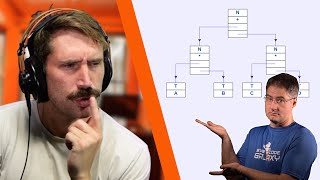
You will see comments on the internet that say something along the lines of, "What's 20% these days? Nobody cares if you lose 20% performance," which I know that Casey will probably lose some sort of sleeper hair over with that kind of comments on the internet. >> How do we get from 1 to 4x and go from that to 20%.
>> Well, because 1. 2 would be, you know, 20%, but then >> Oh, you mean the if you just took just the minimum as assuming that you were going to going to get the minimum for some reason without evidence. Okay.
>> Can I say there is another performance penalty? I'm gonna be a little bit on the rust side today, so I came prepared. >> Perfect.
>> Hey guys, it's Rustage checking in today. Um, the other problem is that there's a serious memory additional performance constraint here in the sense that it's going to allocate a lot more memory for lots of different kinds of programs. So, I just wanted to make sure that that's clear.
It's not a zeroost abstraction. Okay, it's not a zero cost. So, prime you may continue.
>> Actually, T is very very correct. It is not in fact a zero cost substraction.